Opens in a new tab
Menu

The Mystery Behind the Nazca Lines.

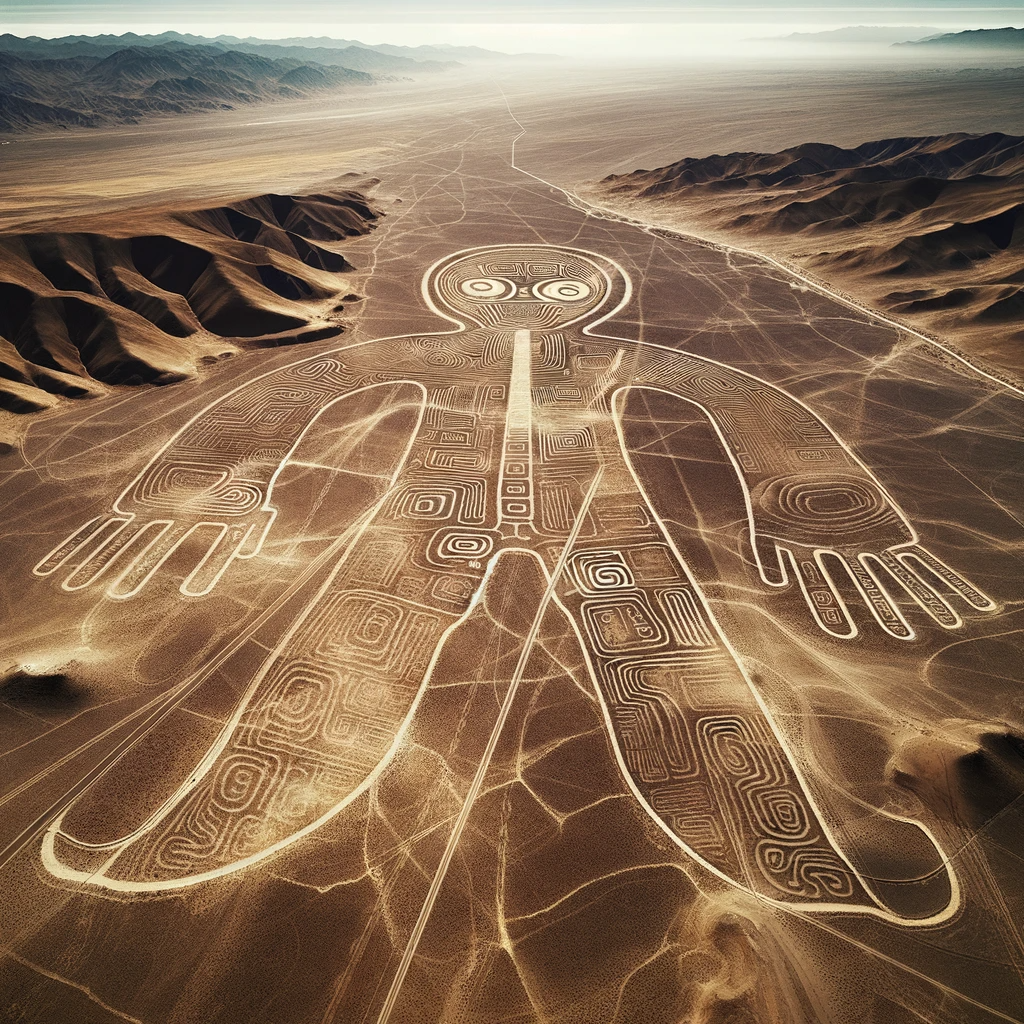
Artistic representation of a massive geoglyph in the Nazca Desert, resembling an ancient astronaut, set against a clear blue sky, highlighting the enigma of the Nazca Lines conspiracy theory." This image captures the essence of the Nazca Lines conspiracy theory, evoking a sense of mystery and wonder, and suggesting the intriguing possibility that these lines were created by or for extraterrestrial beings
Mysteries in the Desert: The Nazca Lines and the Ancient Enigma

What is the Nazca Lines Conspiracy Theory

The Nazca Lines are a collection of large geoglyphs, including figures of animals, plants, and geometric shapes, etched into the ground over 2,000 years ago. The theory that these lines were created by or for extraterrestrial beings emerges from the fact that their full designs can only be completely viewed from the air, leading to speculation about their purpose and creators.

Proponents of the extraterrestrial theory, such as Swiss author Erich von Däniken, argue that the lines served as a sort of airstrip for alien spacecraft or as messages intended for beings in the sky. This idea is bolstered by the precision and scale of the figures, which some believe could not have been achieved by the ancient Nazca people without guidance or technology from an advanced civilization.

Most Popular Explanation Behind the Nazca Lines Conspiracy

The most popular explanation within the conspiracy theory is the ‘alien airstrip’ hypothesis. This perspective holds that the lines’ geometric patterns and straight lines functioned as runways or landing strips for alien spacecraft. The presence of figures such as the spider, monkey, and astronaut-like figure further fuels this theory, as these are interpreted as messages or signs for extraterrestrial visitors.

Variations of the Conspiracy Theory

There are several variations to the Nazca Lines conspiracy theory. Some suggest that the lines are remnants of a highly advanced, now-lost civilization that had flying capabilities. Others propose that they are a form of astronomical calendar or a way to signal gods or celestial beings. Each variation centers on the premise that the Nazca people either had extraordinary technology themselves or were aided by external, more advanced entities.

Evidence Opposing the Validity of the Nazca Lines Conspiracy

Archaeological and historical evidence largely contradicts the extraterrestrial and advanced technology theories. Studies suggest that the Nazca Lines were created by the Nazca culture using simple tools and surveying techniques. The lines were likely part of ritualistic practices, possibly linked to water and fertility, as they were created in an area where water was scarce. The ability to make such large-scale geoglyphs using basic tools and knowledge of mathematics and local geography is well-documented in other ancient cultures as well.

Moreover, the idea that the Nazca Lines can only be seen from the air is a misconception. While they are indeed more visible from above, they can also be seen from the surrounding foothills. This observation weakens the argument that they were made exclusively for or by beings capable of flight.

The Nazca Lines conspiracy theory, while captivating in its narrative, starkly contrasts the evidence and understanding provided by archaeology and history. This theory, proposing extraterrestrial involvement or advanced ancient technologies, captivates our imagination and speaks to our innate fascination with the mysterious and unexplained. However, when held up against the rigorous scrutiny of scientific inquiry, it reveals a significant gap between speculation and substantiated fact.

Archaeological research presents a compelling case that the Nazca Lines were created by the Nazca people, an ancient civilization with no evidence of alien contact or futuristic technology. These geoglyphs, often linked to spiritual and ritualistic purposes, showcase the ingenuity and resourcefulness of a culture adept at working with their environment. This interpretation is supported by extensive studies of the region’s geography, the tools available to the Nazca people, and comparative analyses with other ancient cultures known for creating large-scale land art.

Furthermore, the argument that these lines and figures could only have been created or utilized by beings with an aerial view is a misinterpretation of ancient capabilities. The Nazca people could have designed these figures using simple tools and methods for creating straight lines and geometric shapes, observable even without an aerial perspective. Their creation, therefore, becomes a testament to human ingenuity rather than a product of extraterrestrial intervention.

The allure of the Nazca Lines conspiracy theory lies in its ability to challenge our perceptions of historical capabilities and to push the boundaries of our understanding of ancient cultures. However, the lack of concrete evidence supporting the extraterrestrial hypothesis and the abundance of archaeological data favoring a more grounded explanation exemplifies the chasm between imaginative conjecture and empirical evidence. This serves as a reminder of the importance of relying on well-substantiated research and scientific methods in our quest to unravel the mysteries of the past.

While the Nazca Lines continue to fascinate and inspire, their true story is likely one of human creativity, cultural expression, and the remarkable capabilities of an ancient civilization deeply attuned to its natural environment. This explanation, grounded in research and evidence, may not hold the allure of alien visitors or lost technologies, but it celebrates the ingenuity and artistry of a people whose legacy continues to captivate the world.

dive down the rabbit hole

The Mystery Behind the Nazca Lines.

Artistic representation of a massive geoglyph in the Nazca Desert, resembling an ancient astronaut, set against a clear blue sky, highlighting the enigma of the Nazca Lines conspiracy theory." This image captures the essence of the Nazca Lines conspiracy theory, evoking a sense of mystery and wonder, and suggesting the intriguing possibility that these lines were created by or for extraterrestrial beings

What is the Nazca Lines Conspiracy Theory

The Nazca Lines are a collection of large geoglyphs, including figures of animals, plants, and geometric shapes, etched into the ground over 2,000 years ago. The theory that these lines were created by or for extraterrestrial beings emerges from the fact that their full designs can only be completely viewed from the air, leading to speculation about their purpose and creators.

Proponents of the extraterrestrial theory, such as Swiss author Erich von Däniken, argue that the lines served as a sort of airstrip for alien spacecraft or as messages intended for beings in the sky. This idea is bolstered by the precision and scale of the figures, which some believe could not have been achieved by the ancient Nazca people without guidance or technology from an advanced civilization.

Most Popular Explanation Behind the Nazca Lines Conspiracy

The most popular explanation within the conspiracy theory is the ‘alien airstrip’ hypothesis. This perspective holds that the lines’ geometric patterns and straight lines functioned as runways or landing strips for alien spacecraft. The presence of figures such as the spider, monkey, and astronaut-like figure further fuels this theory, as these are interpreted as messages or signs for extraterrestrial visitors.

Variations of the Conspiracy Theory

There are several variations to the Nazca Lines conspiracy theory. Some suggest that the lines are remnants of a highly advanced, now-lost civilization that had flying capabilities. Others propose that they are a form of astronomical calendar or a way to signal gods or celestial beings. Each variation centers on the premise that the Nazca people either had extraordinary technology themselves or were aided by external, more advanced entities.

Evidence Opposing the Validity of the Nazca Lines Conspiracy

Archaeological and historical evidence largely contradicts the extraterrestrial and advanced technology theories. Studies suggest that the Nazca Lines were created by the Nazca culture using simple tools and surveying techniques. The lines were likely part of ritualistic practices, possibly linked to water and fertility, as they were created in an area where water was scarce. The ability to make such large-scale geoglyphs using basic tools and knowledge of mathematics and local geography is well-documented in other ancient cultures as well.

Moreover, the idea that the Nazca Lines can only be seen from the air is a misconception. While they are indeed more visible from above, they can also be seen from the surrounding foothills. This observation weakens the argument that they were made exclusively for or by beings capable of flight.

The Nazca Lines conspiracy theory, while captivating in its narrative, starkly contrasts the evidence and understanding provided by archaeology and history. This theory, proposing extraterrestrial involvement or advanced ancient technologies, captivates our imagination and speaks to our innate fascination with the mysterious and unexplained. However, when held up against the rigorous scrutiny of scientific inquiry, it reveals a significant gap between speculation and substantiated fact.

Archaeological research presents a compelling case that the Nazca Lines were created by the Nazca people, an ancient civilization with no evidence of alien contact or futuristic technology. These geoglyphs, often linked to spiritual and ritualistic purposes, showcase the ingenuity and resourcefulness of a culture adept at working with their environment. This interpretation is supported by extensive studies of the region’s geography, the tools available to the Nazca people, and comparative analyses with other ancient cultures known for creating large-scale land art.

Furthermore, the argument that these lines and figures could only have been created or utilized by beings with an aerial view is a misinterpretation of ancient capabilities. The Nazca people could have designed these figures using simple tools and methods for creating straight lines and geometric shapes, observable even without an aerial perspective. Their creation, therefore, becomes a testament to human ingenuity rather than a product of extraterrestrial intervention.

The allure of the Nazca Lines conspiracy theory lies in its ability to challenge our perceptions of historical capabilities and to push the boundaries of our understanding of ancient cultures. However, the lack of concrete evidence supporting the extraterrestrial hypothesis and the abundance of archaeological data favoring a more grounded explanation exemplifies the chasm between imaginative conjecture and empirical evidence. This serves as a reminder of the importance of relying on well-substantiated research and scientific methods in our quest to unravel the mysteries of the past.

While the Nazca Lines continue to fascinate and inspire, their true story is likely one of human creativity, cultural expression, and the remarkable capabilities of an ancient civilization deeply attuned to its natural environment. This explanation, grounded in research and evidence, may not hold the allure of alien visitors or lost technologies, but it celebrates the ingenuity and artistry of a people whose legacy continues to captivate the world.

Table of contents

The Mystery Behind the Nazca Lines.

What is the Nazca Lines Conspiracy Theory The Nazca Lines are a collection of large geoglyphs, including figures of animals, plants, and geometric shapes, etched into the ground over 2,000 years ago. The theory that these lines were created by or for extraterrestrial beings emerges from the fact that their full designs can only be completely viewed from the air, leading to speculation about their purpose and creators. Proponents of the extraterrestrial theory, such as Swiss author Erich von Däniken, argue that the lines served as a sort of airstrip for alien spacecraft or as messages intended for beings…

S-FX.com
Artistic representation of a massive geoglyph in the Nazca Desert, resembling an ancient astronaut, set against a clear blue sky, highlighting the enigma of the Nazca Lines conspiracy theory." This image captures the essence of the Nazca Lines conspiracy theory, evoking a sense of mystery and wonder, and suggesting the intriguing possibility that these lines were created by or for extraterrestrial beings
Mysteries in the Desert: The Nazca Lines and the Ancient Enigma

What is the Nazca Lines Conspiracy Theory

The Nazca Lines are a collection of large geoglyphs, including figures of animals, plants, and geometric shapes, etched into the ground over 2,000 years ago. The theory that these lines were created by or for extraterrestrial beings emerges from the fact that their full designs can only be completely viewed from the air, leading to speculation about their purpose and creators.

Proponents of the extraterrestrial theory, such as Swiss author Erich von Däniken, argue that the lines served as a sort of airstrip for alien spacecraft or as messages intended for beings in the sky. This idea is bolstered by the precision and scale of the figures, which some believe could not have been achieved by the ancient Nazca people without guidance or technology from an advanced civilization.

Most Popular Explanation Behind the Nazca Lines Conspiracy

The most popular explanation within the conspiracy theory is the ‘alien airstrip’ hypothesis. This perspective holds that the lines’ geometric patterns and straight lines functioned as runways or landing strips for alien spacecraft. The presence of figures such as the spider, monkey, and astronaut-like figure further fuels this theory, as these are interpreted as messages or signs for extraterrestrial visitors.

Variations of the Conspiracy Theory

There are several variations to the Nazca Lines conspiracy theory. Some suggest that the lines are remnants of a highly advanced, now-lost civilization that had flying capabilities. Others propose that they are a form of astronomical calendar or a way to signal gods or celestial beings. Each variation centers on the premise that the Nazca people either had extraordinary technology themselves or were aided by external, more advanced entities.

Evidence Opposing the Validity of the Nazca Lines Conspiracy

Archaeological and historical evidence largely contradicts the extraterrestrial and advanced technology theories. Studies suggest that the Nazca Lines were created by the Nazca culture using simple tools and surveying techniques. The lines were likely part of ritualistic practices, possibly linked to water and fertility, as they were created in an area where water was scarce. The ability to make such large-scale geoglyphs using basic tools and knowledge of mathematics and local geography is well-documented in other ancient cultures as well.

Moreover, the idea that the Nazca Lines can only be seen from the air is a misconception. While they are indeed more visible from above, they can also be seen from the surrounding foothills. This observation weakens the argument that they were made exclusively for or by beings capable of flight.

The Nazca Lines conspiracy theory, while captivating in its narrative, starkly contrasts the evidence and understanding provided by archaeology and history. This theory, proposing extraterrestrial involvement or advanced ancient technologies, captivates our imagination and speaks to our innate fascination with the mysterious and unexplained. However, when held up against the rigorous scrutiny of scientific inquiry, it reveals a significant gap between speculation and substantiated fact.

Archaeological research presents a compelling case that the Nazca Lines were created by the Nazca people, an ancient civilization with no evidence of alien contact or futuristic technology. These geoglyphs, often linked to spiritual and ritualistic purposes, showcase the ingenuity and resourcefulness of a culture adept at working with their environment. This interpretation is supported by extensive studies of the region’s geography, the tools available to the Nazca people, and comparative analyses with other ancient cultures known for creating large-scale land art.

Furthermore, the argument that these lines and figures could only have been created or utilized by beings with an aerial view is a misinterpretation of ancient capabilities. The Nazca people could have designed these figures using simple tools and methods for creating straight lines and geometric shapes, observable even without an aerial perspective. Their creation, therefore, becomes a testament to human ingenuity rather than a product of extraterrestrial intervention.

The allure of the Nazca Lines conspiracy theory lies in its ability to challenge our perceptions of historical capabilities and to push the boundaries of our understanding of ancient cultures. However, the lack of concrete evidence supporting the extraterrestrial hypothesis and the abundance of archaeological data favoring a more grounded explanation exemplifies the chasm between imaginative conjecture and empirical evidence. This serves as a reminder of the importance of relying on well-substantiated research and scientific methods in our quest to unravel the mysteries of the past.

While the Nazca Lines continue to fascinate and inspire, their true story is likely one of human creativity, cultural expression, and the remarkable capabilities of an ancient civilization deeply attuned to its natural environment. This explanation, grounded in research and evidence, may not hold the allure of alien visitors or lost technologies, but it celebrates the ingenuity and artistry of a people whose legacy continues to captivate the world.