Opens in a new tab
Menu

Subliminal Advertising: The Hidden Persuaders

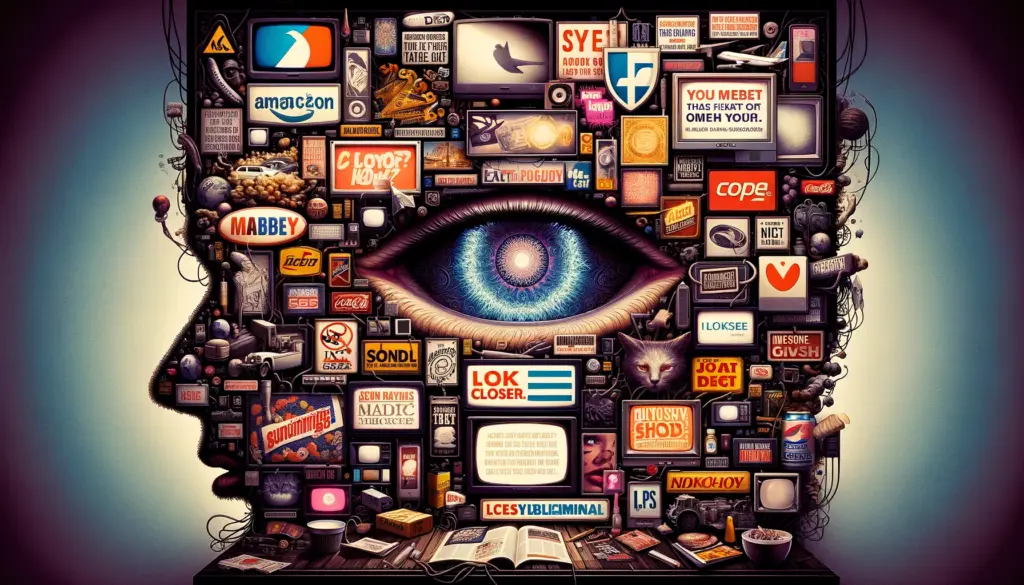
"Subliminal Advertising" hidden within everyday media, revealing covert influences on consumer behavior.
Beyond the Surface: The Hidden World of Subliminal Advertising

Most Popular Explanation(s) Behind the Theory

The most popular explanation behind the subliminal advertising conspiracy theory hinges on the psychological premise that the human mind can perceive and process information below the threshold of conscious awareness. Proponents argue that by bypassing the rational, critical faculties of the mind, subliminal messages can directly influence the subconscious, leading to changes in behavior or attitudes without the individual’s knowledge.

This theory gained traction with the publication of Vance Packard’s book “The Hidden Persuaders” in 1957, which explored the use of consumer motivational research and other psychological techniques in advertising and politics. Packard’s work suggested that advertisers were engaging in widespread manipulation of the public, using deep-seated fears and desires to sell products and ideas.

Variations of the Conspiracy Theory

Over the years, the subliminal advertising conspiracy theory has evolved and expanded to include various forms of media and technology. One variation posits that subliminal messages are not only present in advertisements but also in television shows, movies, music, and video games, with the intent of shaping cultural norms, values, and behaviors on a mass scale.

Another variation suggests that subliminal techniques have been employed in political campaigns and propaganda to sway voter opinions and election outcomes. This version of the theory often points to the use of specific words, images, or sounds designed to evoke emotional responses or associate certain ideas with political figures or agendas subconsciously.

Evidence Opposing the Validity of the Theory

Despite the pervasive belief in subliminal advertising, scientific evidence supporting its effectiveness remains scant. Many psychologists and researchers argue that while subliminal perception is possible, the impact of subliminal messages on behavior is minimal at best. Studies attempting to replicate Vicary’s original experiment have failed to produce significant results, leading to skepticism about the practical application and potency of subliminal advertising techniques.

Moreover, the advertising industry and regulatory bodies have largely dismissed the idea that subliminal advertising is a widespread or effective practice. The Federal Communications Commission (FCC) in the United States, for example, has regulations in place that prohibit subliminal messaging in broadcasting, reflecting the legal and ethical concerns associated with such practices.

Conclusion

The subliminal advertising conspiracy theory remains a topic of fascination and debate, reflecting broader concerns about media influence, consumer culture, and the potential for manipulation in the digital age. While the evidence for the theory’s central claims is largely anecdotal and scientifically disputed, the enduring interest in subliminal advertising speaks to the ongoing dialogue about the power of media, the limits of persuasion, and the autonomy of the individual in an increasingly mediated world.

For those intrigued by the psychological and societal implications of advertising, related topics such as the effects of media on body image, the role of propaganda in shaping public opinion, and the impact of social media algorithms on information consumption offer further avenues for exploration. Each of these areas, like subliminal advertising, touches on the complex interplay between media, psychology, and the shaping of human behavior and beliefs.

The subliminal advertising conspiracy theory, with its blend of psychological intrigue and cultural critique, serves as a compelling narrative that encourages us to question the messages we receive and the forces that shape our perceptions and choices. Whether rooted in fact or fiction, the theory prompts a deeper examination of the media landscape and our place within it, urging us to remain vigilant and informed in an age of ubiquitous and sophisticated communication technologies.

dive down the rabbit hole

Subliminal Advertising: The Hidden Persuaders

"Subliminal Advertising" hidden within everyday media, revealing covert influences on consumer behavior.

Most Popular Explanation(s) Behind the Theory

The most popular explanation behind the subliminal advertising conspiracy theory hinges on the psychological premise that the human mind can perceive and process information below the threshold of conscious awareness. Proponents argue that by bypassing the rational, critical faculties of the mind, subliminal messages can directly influence the subconscious, leading to changes in behavior or attitudes without the individual’s knowledge.

This theory gained traction with the publication of Vance Packard’s book “The Hidden Persuaders” in 1957, which explored the use of consumer motivational research and other psychological techniques in advertising and politics. Packard’s work suggested that advertisers were engaging in widespread manipulation of the public, using deep-seated fears and desires to sell products and ideas.

Variations of the Conspiracy Theory

Over the years, the subliminal advertising conspiracy theory has evolved and expanded to include various forms of media and technology. One variation posits that subliminal messages are not only present in advertisements but also in television shows, movies, music, and video games, with the intent of shaping cultural norms, values, and behaviors on a mass scale.

Another variation suggests that subliminal techniques have been employed in political campaigns and propaganda to sway voter opinions and election outcomes. This version of the theory often points to the use of specific words, images, or sounds designed to evoke emotional responses or associate certain ideas with political figures or agendas subconsciously.

Evidence Opposing the Validity of the Theory

Despite the pervasive belief in subliminal advertising, scientific evidence supporting its effectiveness remains scant. Many psychologists and researchers argue that while subliminal perception is possible, the impact of subliminal messages on behavior is minimal at best. Studies attempting to replicate Vicary’s original experiment have failed to produce significant results, leading to skepticism about the practical application and potency of subliminal advertising techniques.

Moreover, the advertising industry and regulatory bodies have largely dismissed the idea that subliminal advertising is a widespread or effective practice. The Federal Communications Commission (FCC) in the United States, for example, has regulations in place that prohibit subliminal messaging in broadcasting, reflecting the legal and ethical concerns associated with such practices.

Conclusion

The subliminal advertising conspiracy theory remains a topic of fascination and debate, reflecting broader concerns about media influence, consumer culture, and the potential for manipulation in the digital age. While the evidence for the theory’s central claims is largely anecdotal and scientifically disputed, the enduring interest in subliminal advertising speaks to the ongoing dialogue about the power of media, the limits of persuasion, and the autonomy of the individual in an increasingly mediated world.

For those intrigued by the psychological and societal implications of advertising, related topics such as the effects of media on body image, the role of propaganda in shaping public opinion, and the impact of social media algorithms on information consumption offer further avenues for exploration. Each of these areas, like subliminal advertising, touches on the complex interplay between media, psychology, and the shaping of human behavior and beliefs.

The subliminal advertising conspiracy theory, with its blend of psychological intrigue and cultural critique, serves as a compelling narrative that encourages us to question the messages we receive and the forces that shape our perceptions and choices. Whether rooted in fact or fiction, the theory prompts a deeper examination of the media landscape and our place within it, urging us to remain vigilant and informed in an age of ubiquitous and sophisticated communication technologies.

Table of contents

Subliminal Advertising: The Hidden Persuaders

Most Popular Explanation(s) Behind the Theory The most popular explanation behind the subliminal advertising conspiracy theory hinges on the psychological premise that the human mind can perceive and process information below the threshold of conscious awareness. Proponents argue that by bypassing the rational, critical faculties of the mind, subliminal messages can directly influence the subconscious, leading to changes in behavior or attitudes without the individual’s knowledge. This theory gained traction with the publication of Vance Packard’s book “The Hidden Persuaders” in 1957, which explored the use of consumer motivational research and other psychological techniques in advertising and politics. Packard’s…

S-FX.com
"Subliminal Advertising" hidden within everyday media, revealing covert influences on consumer behavior.
Beyond the Surface: The Hidden World of Subliminal Advertising

Most Popular Explanation(s) Behind the Theory

The most popular explanation behind the subliminal advertising conspiracy theory hinges on the psychological premise that the human mind can perceive and process information below the threshold of conscious awareness. Proponents argue that by bypassing the rational, critical faculties of the mind, subliminal messages can directly influence the subconscious, leading to changes in behavior or attitudes without the individual’s knowledge.

This theory gained traction with the publication of Vance Packard’s book “The Hidden Persuaders” in 1957, which explored the use of consumer motivational research and other psychological techniques in advertising and politics. Packard’s work suggested that advertisers were engaging in widespread manipulation of the public, using deep-seated fears and desires to sell products and ideas.

Variations of the Conspiracy Theory

Over the years, the subliminal advertising conspiracy theory has evolved and expanded to include various forms of media and technology. One variation posits that subliminal messages are not only present in advertisements but also in television shows, movies, music, and video games, with the intent of shaping cultural norms, values, and behaviors on a mass scale.

Another variation suggests that subliminal techniques have been employed in political campaigns and propaganda to sway voter opinions and election outcomes. This version of the theory often points to the use of specific words, images, or sounds designed to evoke emotional responses or associate certain ideas with political figures or agendas subconsciously.

Evidence Opposing the Validity of the Theory

Despite the pervasive belief in subliminal advertising, scientific evidence supporting its effectiveness remains scant. Many psychologists and researchers argue that while subliminal perception is possible, the impact of subliminal messages on behavior is minimal at best. Studies attempting to replicate Vicary’s original experiment have failed to produce significant results, leading to skepticism about the practical application and potency of subliminal advertising techniques.

Moreover, the advertising industry and regulatory bodies have largely dismissed the idea that subliminal advertising is a widespread or effective practice. The Federal Communications Commission (FCC) in the United States, for example, has regulations in place that prohibit subliminal messaging in broadcasting, reflecting the legal and ethical concerns associated with such practices.

Conclusion

The subliminal advertising conspiracy theory remains a topic of fascination and debate, reflecting broader concerns about media influence, consumer culture, and the potential for manipulation in the digital age. While the evidence for the theory’s central claims is largely anecdotal and scientifically disputed, the enduring interest in subliminal advertising speaks to the ongoing dialogue about the power of media, the limits of persuasion, and the autonomy of the individual in an increasingly mediated world.

For those intrigued by the psychological and societal implications of advertising, related topics such as the effects of media on body image, the role of propaganda in shaping public opinion, and the impact of social media algorithms on information consumption offer further avenues for exploration. Each of these areas, like subliminal advertising, touches on the complex interplay between media, psychology, and the shaping of human behavior and beliefs.

The subliminal advertising conspiracy theory, with its blend of psychological intrigue and cultural critique, serves as a compelling narrative that encourages us to question the messages we receive and the forces that shape our perceptions and choices. Whether rooted in fact or fiction, the theory prompts a deeper examination of the media landscape and our place within it, urging us to remain vigilant and informed in an age of ubiquitous and sophisticated communication technologies.