Menu

Operation Sea-Spray: When the U.S. Military Secretly Tested Bioweapons on San Francisco

Operation Sea-Spray: When the U.S. Military Secretly Tested Bioweapons on San Francisco

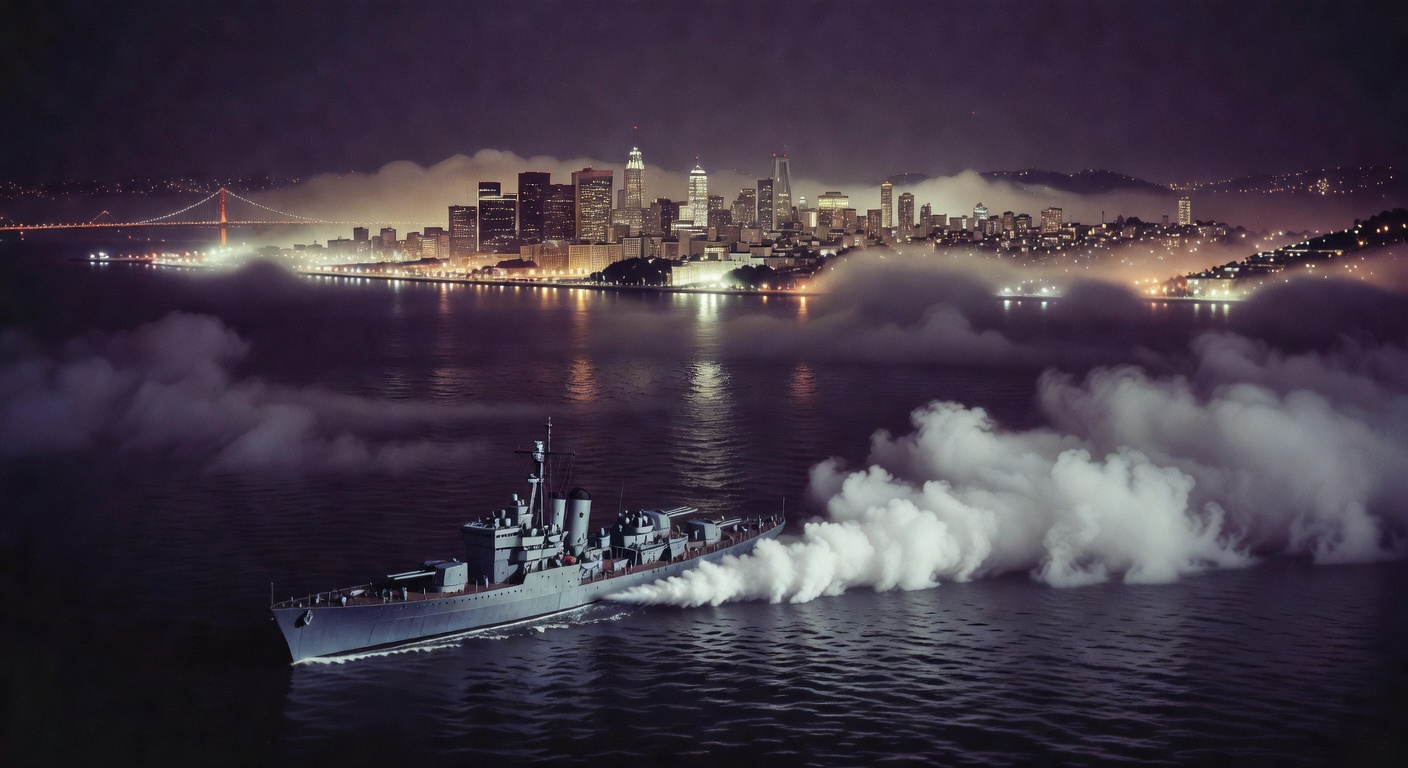
On the foggy morning of September 26, 1950, a U.S. Navy minesweeper called the USS Rodman sailed quietly along the coast of the San Francisco Bay. To anyone watching from the shoreline, it would have looked like any other naval vessel going about its business. But from aerosol hoses mounted on the ship’s deck, the Rodman was releasing a fine mist of bacteria into the Bay’s famous coastal fog — bacteria that would drift on the wind and be inhaled by hundreds of thousands of people on shore who had no idea they were being used as test subjects. The operation was called Operation Sea-Spray, and it was just one chapter in a decades-long story of the United States military conducting secret biological and chemical weapons tests on unwitting American civilians.

The Experiment: What the Military Was Testing

Operation Sea-Spray was conducted by the U.S. Army Biological Warfare Laboratories, operating out of Fort Detrick in Maryland. The stated purpose was straightforward — and genuinely important to Cold War planners: the military wanted to understand how a biological weapons attack might unfold in an American coastal city. If the Soviet Union were to launch a covert bioweapons attack on a major port city, how far would the agents spread? How would they disperse through urban environments? How many people could be affected by a single dispersal event?

To answer these questions without releasing actual lethal agents, the military chose what they believed to be a safe simulant: a bacterium called Serratia marcescens. At the time, Serratia was considered a harmless organism — it produces a distinctive red pigment that makes it easy to track in laboratory settings, which made it ideal for monitoring how far dispersed agents traveled through a target environment.

The operation, conducted between September 20 and 27, 1950, involved multiple ships releasing Serratia marcescens and Bacillus globigii (another supposed non-pathogen) into the fog rolling across the Bay. Wind patterns were monitored. The bacteria dispersed through the city and surrounding areas. According to the Army’s own estimates, nearly every one of San Francisco’s approximately 800,000 residents inhaled bacterial particles during the test period.

The Casualties: A Hospital Outbreak

What the military planners had failed to adequately account for was that Serratia marcescens is not, in fact, uniformly harmless. Within days of the test, Stanford University Hospital experienced an unprecedented outbreak of Serratia marcescens urinary tract infections — eleven cases in a single week, where the hospital’s previous records showed the bacteria had almost never appeared. One patient, a cardiac surgery patient named Edward Nevin, died after the bacteria entered his bloodstream and caused a systemic infection.

At the time, the hospital staff were baffled. They had no reason to connect the outbreak to any external cause. The Army certainly never informed them. It wasn’t until decades later, when the testing program was partially revealed, that the connection between the hospital outbreak and Operation Sea-Spray was established.

In 1977, the story began to come to light when a Senate subcommittee chaired by Senator Edward Kennedy investigated the Army’s secret testing programs. The investigation revealed that the military had conducted over 200 secret open-air tests of biological and chemical simulants on American cities and populations between 1949 and 1969. The Army has acknowledged many of these tests, though it maintains that the simulants used were safe — a position that is directly contradicted by the San Francisco hospital outbreak.

The Nevin Family’s Fight

When Edward Nevin III, the grandson of the cardiac patient who died after the 1950 outbreak, discovered the connection between his grandfather’s death and Operation Sea-Spray, he sued the federal government for wrongful death. The case, Nevin v. United States, worked its way through the federal courts in the 1980s.

The government’s defense was multilayered. First, it argued that Serratia marcescens was a harmless organism and that the hospital outbreak was coincidental. Second, it invoked the discretionary function exception to the Federal Tort Claims Act, which protects the government from liability for decisions made in the exercise of discretionary authority — including, it argued, decisions about weapons testing programs.

The court ultimately ruled against Nevin on the discretionary function grounds, finding that the Army’s decision about whether and how to conduct the tests was a protected policy decision, even if its execution caused harm. Edward Nevin’s grandfather died. No one was ever held legally accountable. The government’s secrecy had protected it from consequences.

The Scope of the Testing: San Francisco Was Not Alone

What makes Operation Sea-Spray particularly significant is that it wasn’t an isolated incident — it was part of a systematic program of covert biological testing on American civilians. The Senate investigation and subsequent research revealed that dozens of American cities were used as unwitting test subjects during this period:

  • New York City’s subway system was subjected to tests in 1966 in which researchers broke light bulbs filled with Bacillus subtilis on subway platforms and in tunnels, monitoring how the bacteria dispersed through the ventilation system and affected commuters.
  • Minneapolis, Minnesota was sprayed with zinc cadmium sulfide — a potentially toxic compound — from aircraft and ground vehicles in the 1950s and 1960s. Residents were told the tests involved harmless smoke screens.
  • St. Louis, Missouri, particularly its low-income Pruitt-Igoe housing project, was repeatedly sprayed with zinc cadmium sulfide. Researcher Lisa Martino-Taylor‘s 2012 study suggested the tests may have been linked to radiation experiments, a charge the Army denied.
  • Savannah, Georgia and surrounding coastal areas were tested with Serratia marcescens and other agents.
  • Key West, Florida and other military installation areas were also sites of testing.

The common thread across all these tests was the same fundamental moral failure: American citizens were subjected to biological and chemical experiments without their knowledge or consent, in direct violation of the ethical principles established by the Nuremberg Code following World War II — principles that the United States had itself championed in the prosecution of Nazi medical experimenters.

The Science Was Wrong — and They Knew It

The military’s defense of these tests has always rested on the claim that the simulants used were believed to be safe at the time. This defense is substantially undermined by the historical record. The scientific literature on Serratia marcescens had identified cases of human infection as early as the 1910s. By the 1940s, there were documented cases of Serratia causing opportunistic infections in immunocompromised patients.

The military researchers at Fort Detrick were aware of this literature. The choice to categorize Serratia as a “harmless simulant” reflected not scientific consensus but operational convenience — it was an organism that could be tracked easily and that produced dramatic visual results. The risk to vulnerable populations, including the hospitalized patients who were among the first to show infections after Operation Sea-Spray, appears to have been considered acceptable.

This isn’t a case of scientists working with good intentions and incomplete knowledge. The documentation suggests a deliberate decision to test potentially harmful agents on populations that included vulnerable individuals, driven by the operational needs of the biological warfare program. The result was deaths and illness among people who had no idea they were experimental subjects.

The Ethical Reckoning That Never Came

When the full scope of the Army’s open-air testing program became public in the late 1970s, the reaction was muted compared to what might have been expected. There were Senate hearings. There were denials. There were assurances that the programs had been discontinued and that the simulants had been safe. The Nevin lawsuit failed. No Army officials faced prosecution. No significant policy changes resulted from the revelations beyond a formal acknowledgment that the tests had occurred.

The ethical framework that made Operation Sea-Spray possible — the idea that the national security needs of the state could justify secretly experimenting on civilian populations — was never fundamentally challenged. The same framework underpinned MK-ULTRA, the Tuskegee Syphilis Study, and numerous other programs in which the government treated its own citizens as expendable research subjects.

In 1996, a presidential advisory committee released a landmark report on human radiation experiments conducted by the U.S. government during the Cold War. The report’s findings were damning and included a clear ethical judgment: the non-consensual use of human subjects in government experiments was wrong, regardless of the national security justification. But the report’s recommendations for compensation and accountability were largely not implemented.

What We Still Don’t Know

The Army’s open-air testing program was officially suspended in 1969 under President Nixon’s broader biological warfare policy changes. But the historical record of what was tested, where, and with what consequences remains incomplete. Many documents from the testing program remain classified. The full health impact on affected communities — particularly communities of color in cities like St. Louis, where researchers have identified a disturbing pattern of tests being conducted in low-income minority neighborhoods — has never been comprehensively studied.

The question of whether similar programs continued in classified form after the official suspension is one that cannot be answered with available public records. What we know is that the impulse that drove Operation Sea-Spray — the idea that ordinary Americans could be used as experimental subjects without their knowledge in the name of national security — was deeply embedded in Cold War government culture and never faced the kind of definitive institutional reckoning that would make a genuine “never again” credible.

Down the Rabbit Hole

Operation Sea-Spray connects to a disturbing network of government experiments on unwitting civilians. Here’s where to keep digging:

  • The Tuskegee Syphilis Study: The Public Health Service’s 40-year experiment in which Black men with syphilis were denied treatment and studied as the disease progressed — one of the most documented cases of government medical abuse in American history.
  • Project SHAD: Cold War-era military tests in which U.S. soldiers were exposed to chemical and biological warfare agents without full informed consent — a program that wasn’t acknowledged until 2000 and whose health consequences are still being studied.
  • Operation LAC: The Army’s 1957-1958 spraying of zinc cadmium sulfide over large areas of the American Midwest and Canada, testing dispersal patterns across continental distances.
  • The St. Louis Experiments: The repeated testing on Pruitt-Igoe and other low-income housing projects in St. Louis, and researcher Lisa Martino-Taylor’s findings about potential radiological components of the testing program.
  • The New York Subway Tests (1966): The Army’s covert biological release in New York City’s subway system and what it reveals about the vulnerability of modern urban infrastructure to biological attack — and about government willingness to test that vulnerability on unknowing civilians.

Disclaimer: This article is intended for educational and entertainment purposes. Operation Sea-Spray is a documented historical U.S. Army program confirmed by Senate investigations and Army acknowledgments. The health consequences and ethical implications described are based on published research and legal proceedings. Conspiracy Realist encourages readers to consult primary sources, including the Army’s own publicly available documentation and congressional testimony, and to form their own conclusions.

dive down the rabbit hole

Operation Sea-Spray: When the U.S. Military Secretly Tested Bioweapons on San Francisco

Conspiracy Realist
Operation Sea-Spray: When the U.S. Military Secretly Tested Bioweapons on San Francisco

On the foggy morning of September 26, 1950, a U.S. Navy minesweeper called the USS Rodman sailed quietly along the coast of the San Francisco Bay. To anyone watching from the shoreline, it would have looked like any other naval vessel going about its business. But from aerosol hoses mounted on the ship’s deck, the Rodman was releasing a fine mist of bacteria into the Bay’s famous coastal fog — bacteria that would drift on the wind and be inhaled by hundreds of thousands of people on shore who had no idea they were being used as test subjects. The operation was called Operation Sea-Spray, and it was just one chapter in a decades-long story of the United States military conducting secret biological and chemical weapons tests on unwitting American civilians.

The Experiment: What the Military Was Testing

Operation Sea-Spray was conducted by the U.S. Army Biological Warfare Laboratories, operating out of Fort Detrick in Maryland. The stated purpose was straightforward — and genuinely important to Cold War planners: the military wanted to understand how a biological weapons attack might unfold in an American coastal city. If the Soviet Union were to launch a covert bioweapons attack on a major port city, how far would the agents spread? How would they disperse through urban environments? How many people could be affected by a single dispersal event?

To answer these questions without releasing actual lethal agents, the military chose what they believed to be a safe simulant: a bacterium called Serratia marcescens. At the time, Serratia was considered a harmless organism — it produces a distinctive red pigment that makes it easy to track in laboratory settings, which made it ideal for monitoring how far dispersed agents traveled through a target environment.

The operation, conducted between September 20 and 27, 1950, involved multiple ships releasing Serratia marcescens and Bacillus globigii (another supposed non-pathogen) into the fog rolling across the Bay. Wind patterns were monitored. The bacteria dispersed through the city and surrounding areas. According to the Army’s own estimates, nearly every one of San Francisco’s approximately 800,000 residents inhaled bacterial particles during the test period.

The Casualties: A Hospital Outbreak

What the military planners had failed to adequately account for was that Serratia marcescens is not, in fact, uniformly harmless. Within days of the test, Stanford University Hospital experienced an unprecedented outbreak of Serratia marcescens urinary tract infections — eleven cases in a single week, where the hospital’s previous records showed the bacteria had almost never appeared. One patient, a cardiac surgery patient named Edward Nevin, died after the bacteria entered his bloodstream and caused a systemic infection.

At the time, the hospital staff were baffled. They had no reason to connect the outbreak to any external cause. The Army certainly never informed them. It wasn’t until decades later, when the testing program was partially revealed, that the connection between the hospital outbreak and Operation Sea-Spray was established.

In 1977, the story began to come to light when a Senate subcommittee chaired by Senator Edward Kennedy investigated the Army’s secret testing programs. The investigation revealed that the military had conducted over 200 secret open-air tests of biological and chemical simulants on American cities and populations between 1949 and 1969. The Army has acknowledged many of these tests, though it maintains that the simulants used were safe — a position that is directly contradicted by the San Francisco hospital outbreak.

The Nevin Family’s Fight

When Edward Nevin III, the grandson of the cardiac patient who died after the 1950 outbreak, discovered the connection between his grandfather’s death and Operation Sea-Spray, he sued the federal government for wrongful death. The case, Nevin v. United States, worked its way through the federal courts in the 1980s.

The government’s defense was multilayered. First, it argued that Serratia marcescens was a harmless organism and that the hospital outbreak was coincidental. Second, it invoked the discretionary function exception to the Federal Tort Claims Act, which protects the government from liability for decisions made in the exercise of discretionary authority — including, it argued, decisions about weapons testing programs.

The court ultimately ruled against Nevin on the discretionary function grounds, finding that the Army’s decision about whether and how to conduct the tests was a protected policy decision, even if its execution caused harm. Edward Nevin’s grandfather died. No one was ever held legally accountable. The government’s secrecy had protected it from consequences.

The Scope of the Testing: San Francisco Was Not Alone

What makes Operation Sea-Spray particularly significant is that it wasn’t an isolated incident — it was part of a systematic program of covert biological testing on American civilians. The Senate investigation and subsequent research revealed that dozens of American cities were used as unwitting test subjects during this period:

  • New York City’s subway system was subjected to tests in 1966 in which researchers broke light bulbs filled with Bacillus subtilis on subway platforms and in tunnels, monitoring how the bacteria dispersed through the ventilation system and affected commuters.
  • Minneapolis, Minnesota was sprayed with zinc cadmium sulfide — a potentially toxic compound — from aircraft and ground vehicles in the 1950s and 1960s. Residents were told the tests involved harmless smoke screens.
  • St. Louis, Missouri, particularly its low-income Pruitt-Igoe housing project, was repeatedly sprayed with zinc cadmium sulfide. Researcher Lisa Martino-Taylor‘s 2012 study suggested the tests may have been linked to radiation experiments, a charge the Army denied.
  • Savannah, Georgia and surrounding coastal areas were tested with Serratia marcescens and other agents.
  • Key West, Florida and other military installation areas were also sites of testing.

The common thread across all these tests was the same fundamental moral failure: American citizens were subjected to biological and chemical experiments without their knowledge or consent, in direct violation of the ethical principles established by the Nuremberg Code following World War II — principles that the United States had itself championed in the prosecution of Nazi medical experimenters.

The Science Was Wrong — and They Knew It

The military’s defense of these tests has always rested on the claim that the simulants used were believed to be safe at the time. This defense is substantially undermined by the historical record. The scientific literature on Serratia marcescens had identified cases of human infection as early as the 1910s. By the 1940s, there were documented cases of Serratia causing opportunistic infections in immunocompromised patients.

The military researchers at Fort Detrick were aware of this literature. The choice to categorize Serratia as a “harmless simulant” reflected not scientific consensus but operational convenience — it was an organism that could be tracked easily and that produced dramatic visual results. The risk to vulnerable populations, including the hospitalized patients who were among the first to show infections after Operation Sea-Spray, appears to have been considered acceptable.

This isn’t a case of scientists working with good intentions and incomplete knowledge. The documentation suggests a deliberate decision to test potentially harmful agents on populations that included vulnerable individuals, driven by the operational needs of the biological warfare program. The result was deaths and illness among people who had no idea they were experimental subjects.

The Ethical Reckoning That Never Came

When the full scope of the Army’s open-air testing program became public in the late 1970s, the reaction was muted compared to what might have been expected. There were Senate hearings. There were denials. There were assurances that the programs had been discontinued and that the simulants had been safe. The Nevin lawsuit failed. No Army officials faced prosecution. No significant policy changes resulted from the revelations beyond a formal acknowledgment that the tests had occurred.

The ethical framework that made Operation Sea-Spray possible — the idea that the national security needs of the state could justify secretly experimenting on civilian populations — was never fundamentally challenged. The same framework underpinned MK-ULTRA, the Tuskegee Syphilis Study, and numerous other programs in which the government treated its own citizens as expendable research subjects.

In 1996, a presidential advisory committee released a landmark report on human radiation experiments conducted by the U.S. government during the Cold War. The report’s findings were damning and included a clear ethical judgment: the non-consensual use of human subjects in government experiments was wrong, regardless of the national security justification. But the report’s recommendations for compensation and accountability were largely not implemented.

What We Still Don’t Know

The Army’s open-air testing program was officially suspended in 1969 under President Nixon’s broader biological warfare policy changes. But the historical record of what was tested, where, and with what consequences remains incomplete. Many documents from the testing program remain classified. The full health impact on affected communities — particularly communities of color in cities like St. Louis, where researchers have identified a disturbing pattern of tests being conducted in low-income minority neighborhoods — has never been comprehensively studied.

The question of whether similar programs continued in classified form after the official suspension is one that cannot be answered with available public records. What we know is that the impulse that drove Operation Sea-Spray — the idea that ordinary Americans could be used as experimental subjects without their knowledge in the name of national security — was deeply embedded in Cold War government culture and never faced the kind of definitive institutional reckoning that would make a genuine “never again” credible.

Down the Rabbit Hole

Operation Sea-Spray connects to a disturbing network of government experiments on unwitting civilians. Here’s where to keep digging:

  • The Tuskegee Syphilis Study: The Public Health Service’s 40-year experiment in which Black men with syphilis were denied treatment and studied as the disease progressed — one of the most documented cases of government medical abuse in American history.
  • Project SHAD: Cold War-era military tests in which U.S. soldiers were exposed to chemical and biological warfare agents without full informed consent — a program that wasn’t acknowledged until 2000 and whose health consequences are still being studied.
  • Operation LAC: The Army’s 1957-1958 spraying of zinc cadmium sulfide over large areas of the American Midwest and Canada, testing dispersal patterns across continental distances.
  • The St. Louis Experiments: The repeated testing on Pruitt-Igoe and other low-income housing projects in St. Louis, and researcher Lisa Martino-Taylor’s findings about potential radiological components of the testing program.
  • The New York Subway Tests (1966): The Army’s covert biological release in New York City’s subway system and what it reveals about the vulnerability of modern urban infrastructure to biological attack — and about government willingness to test that vulnerability on unknowing civilians.

Disclaimer: This article is intended for educational and entertainment purposes. Operation Sea-Spray is a documented historical U.S. Army program confirmed by Senate investigations and Army acknowledgments. The health consequences and ethical implications described are based on published research and legal proceedings. Conspiracy Realist encourages readers to consult primary sources, including the Army’s own publicly available documentation and congressional testimony, and to form their own conclusions.

Operation Sea-Spray: When the U.S. Military Secretly Tested Bioweapons on San Francisco

Operation Sea-Spray: When the U.S. Military Secretly Tested Bioweapons on San Francisco

On the foggy morning of September 26, 1950, a U.S. Navy minesweeper called the USS Rodman sailed quietly along the coast of the San Francisco Bay. To anyone watching from the shoreline, it would have looked like any other naval vessel going about its business. But from aerosol hoses mounted on the ship’s deck, the Rodman was releasing a fine mist of bacteria into the Bay’s famous coastal fog — bacteria that would drift on the wind and be inhaled by hundreds of thousands of people on shore who had no idea they were being used as test subjects. The operation was called Operation Sea-Spray, and it was just one chapter in a decades-long story of the United States military conducting secret biological and chemical weapons tests on unwitting American civilians.

The Experiment: What the Military Was Testing

Operation Sea-Spray was conducted by the U.S. Army Biological Warfare Laboratories, operating out of Fort Detrick in Maryland. The stated purpose was straightforward — and genuinely important to Cold War planners: the military wanted to understand how a biological weapons attack might unfold in an American coastal city. If the Soviet Union were to launch a covert bioweapons attack on a major port city, how far would the agents spread? How would they disperse through urban environments? How many people could be affected by a single dispersal event?

To answer these questions without releasing actual lethal agents, the military chose what they believed to be a safe simulant: a bacterium called Serratia marcescens. At the time, Serratia was considered a harmless organism — it produces a distinctive red pigment that makes it easy to track in laboratory settings, which made it ideal for monitoring how far dispersed agents traveled through a target environment.

The operation, conducted between September 20 and 27, 1950, involved multiple ships releasing Serratia marcescens and Bacillus globigii (another supposed non-pathogen) into the fog rolling across the Bay. Wind patterns were monitored. The bacteria dispersed through the city and surrounding areas. According to the Army’s own estimates, nearly every one of San Francisco’s approximately 800,000 residents inhaled bacterial particles during the test period.

The Casualties: A Hospital Outbreak

What the military planners had failed to adequately account for was that Serratia marcescens is not, in fact, uniformly harmless. Within days of the test, Stanford University Hospital experienced an unprecedented outbreak of Serratia marcescens urinary tract infections — eleven cases in a single week, where the hospital’s previous records showed the bacteria had almost never appeared. One patient, a cardiac surgery patient named Edward Nevin, died after the bacteria entered his bloodstream and caused a systemic infection.

At the time, the hospital staff were baffled. They had no reason to connect the outbreak to any external cause. The Army certainly never informed them. It wasn’t until decades later, when the testing program was partially revealed, that the connection between the hospital outbreak and Operation Sea-Spray was established.

In 1977, the story began to come to light when a Senate subcommittee chaired by Senator Edward Kennedy investigated the Army’s secret testing programs. The investigation revealed that the military had conducted over 200 secret open-air tests of biological and chemical simulants on American cities and populations between 1949 and 1969. The Army has acknowledged many of these tests, though it maintains that the simulants used were safe — a position that is directly contradicted by the San Francisco hospital outbreak.

The Nevin Family’s Fight

When Edward Nevin III, the grandson of the cardiac patient who died after the 1950 outbreak, discovered the connection between his grandfather’s death and Operation Sea-Spray, he sued the federal government for wrongful death. The case, Nevin v. United States, worked its way through the federal courts in the 1980s.

The government’s defense was multilayered. First, it argued that Serratia marcescens was a harmless organism and that the hospital outbreak was coincidental. Second, it invoked the discretionary function exception to the Federal Tort Claims Act, which protects the government from liability for decisions made in the exercise of discretionary authority — including, it argued, decisions about weapons testing programs.

The court ultimately ruled against Nevin on the discretionary function grounds, finding that the Army’s decision about whether and how to conduct the tests was a protected policy decision, even if its execution caused harm. Edward Nevin’s grandfather died. No one was ever held legally accountable. The government’s secrecy had protected it from consequences.

The Scope of the Testing: San Francisco Was Not Alone

What makes Operation Sea-Spray particularly significant is that it wasn’t an isolated incident — it was part of a systematic program of covert biological testing on American civilians. The Senate investigation and subsequent research revealed that dozens of American cities were used as unwitting test subjects during this period:

  • New York City’s subway system was subjected to tests in 1966 in which researchers broke light bulbs filled with Bacillus subtilis on subway platforms and in tunnels, monitoring how the bacteria dispersed through the ventilation system and affected commuters.
  • Minneapolis, Minnesota was sprayed with zinc cadmium sulfide — a potentially toxic compound — from aircraft and ground vehicles in the 1950s and 1960s. Residents were told the tests involved harmless smoke screens.
  • St. Louis, Missouri, particularly its low-income Pruitt-Igoe housing project, was repeatedly sprayed with zinc cadmium sulfide. Researcher Lisa Martino-Taylor‘s 2012 study suggested the tests may have been linked to radiation experiments, a charge the Army denied.
  • Savannah, Georgia and surrounding coastal areas were tested with Serratia marcescens and other agents.
  • Key West, Florida and other military installation areas were also sites of testing.

The common thread across all these tests was the same fundamental moral failure: American citizens were subjected to biological and chemical experiments without their knowledge or consent, in direct violation of the ethical principles established by the Nuremberg Code following World War II — principles that the United States had itself championed in the prosecution of Nazi medical experimenters.

The Science Was Wrong — and They Knew It

The military’s defense of these tests has always rested on the claim that the simulants used were believed to be safe at the time. This defense is substantially undermined by the historical record. The scientific literature on Serratia marcescens had identified cases of human infection as early as the 1910s. By the 1940s, there were documented cases of Serratia causing opportunistic infections in immunocompromised patients.

The military researchers at Fort Detrick were aware of this literature. The choice to categorize Serratia as a “harmless simulant” reflected not scientific consensus but operational convenience — it was an organism that could be tracked easily and that produced dramatic visual results. The risk to vulnerable populations, including the hospitalized patients who were among the first to show infections after Operation Sea-Spray, appears to have been considered acceptable.

This isn’t a case of scientists working with good intentions and incomplete knowledge. The documentation suggests a deliberate decision to test potentially harmful agents on populations that included vulnerable individuals, driven by the operational needs of the biological warfare program. The result was deaths and illness among people who had no idea they were experimental subjects.

The Ethical Reckoning That Never Came

When the full scope of the Army’s open-air testing program became public in the late 1970s, the reaction was muted compared to what might have been expected. There were Senate hearings. There were denials. There were assurances that the programs had been discontinued and that the simulants had been safe. The Nevin lawsuit failed. No Army officials faced prosecution. No significant policy changes resulted from the revelations beyond a formal acknowledgment that the tests had occurred.

The ethical framework that made Operation Sea-Spray possible — the idea that the national security needs of the state could justify secretly experimenting on civilian populations — was never fundamentally challenged. The same framework underpinned MK-ULTRA, the Tuskegee Syphilis Study, and numerous other programs in which the government treated its own citizens as expendable research subjects.

In 1996, a presidential advisory committee released a landmark report on human radiation experiments conducted by the U.S. government during the Cold War. The report’s findings were damning and included a clear ethical judgment: the non-consensual use of human subjects in government experiments was wrong, regardless of the national security justification. But the report’s recommendations for compensation and accountability were largely not implemented.

What We Still Don’t Know

The Army’s open-air testing program was officially suspended in 1969 under President Nixon’s broader biological warfare policy changes. But the historical record of what was tested, where, and with what consequences remains incomplete. Many documents from the testing program remain classified. The full health impact on affected communities — particularly communities of color in cities like St. Louis, where researchers have identified a disturbing pattern of tests being conducted in low-income minority neighborhoods — has never been comprehensively studied.

The question of whether similar programs continued in classified form after the official suspension is one that cannot be answered with available public records. What we know is that the impulse that drove Operation Sea-Spray — the idea that ordinary Americans could be used as experimental subjects without their knowledge in the name of national security — was deeply embedded in Cold War government culture and never faced the kind of definitive institutional reckoning that would make a genuine “never again” credible.

Down the Rabbit Hole

Operation Sea-Spray connects to a disturbing network of government experiments on unwitting civilians. Here’s where to keep digging:

  • The Tuskegee Syphilis Study: The Public Health Service’s 40-year experiment in which Black men with syphilis were denied treatment and studied as the disease progressed — one of the most documented cases of government medical abuse in American history.
  • Project SHAD: Cold War-era military tests in which U.S. soldiers were exposed to chemical and biological warfare agents without full informed consent — a program that wasn’t acknowledged until 2000 and whose health consequences are still being studied.
  • Operation LAC: The Army’s 1957-1958 spraying of zinc cadmium sulfide over large areas of the American Midwest and Canada, testing dispersal patterns across continental distances.
  • The St. Louis Experiments: The repeated testing on Pruitt-Igoe and other low-income housing projects in St. Louis, and researcher Lisa Martino-Taylor’s findings about potential radiological components of the testing program.
  • The New York Subway Tests (1966): The Army’s covert biological release in New York City’s subway system and what it reveals about the vulnerability of modern urban infrastructure to biological attack — and about government willingness to test that vulnerability on unknowing civilians.

Disclaimer: This article is intended for educational and entertainment purposes. Operation Sea-Spray is a documented historical U.S. Army program confirmed by Senate investigations and Army acknowledgments. The health consequences and ethical implications described are based on published research and legal proceedings. Conspiracy Realist encourages readers to consult primary sources, including the Army’s own publicly available documentation and congressional testimony, and to form their own conclusions.

Table of contents