Operation Big Buzz: Mosquitoes Over Savannah
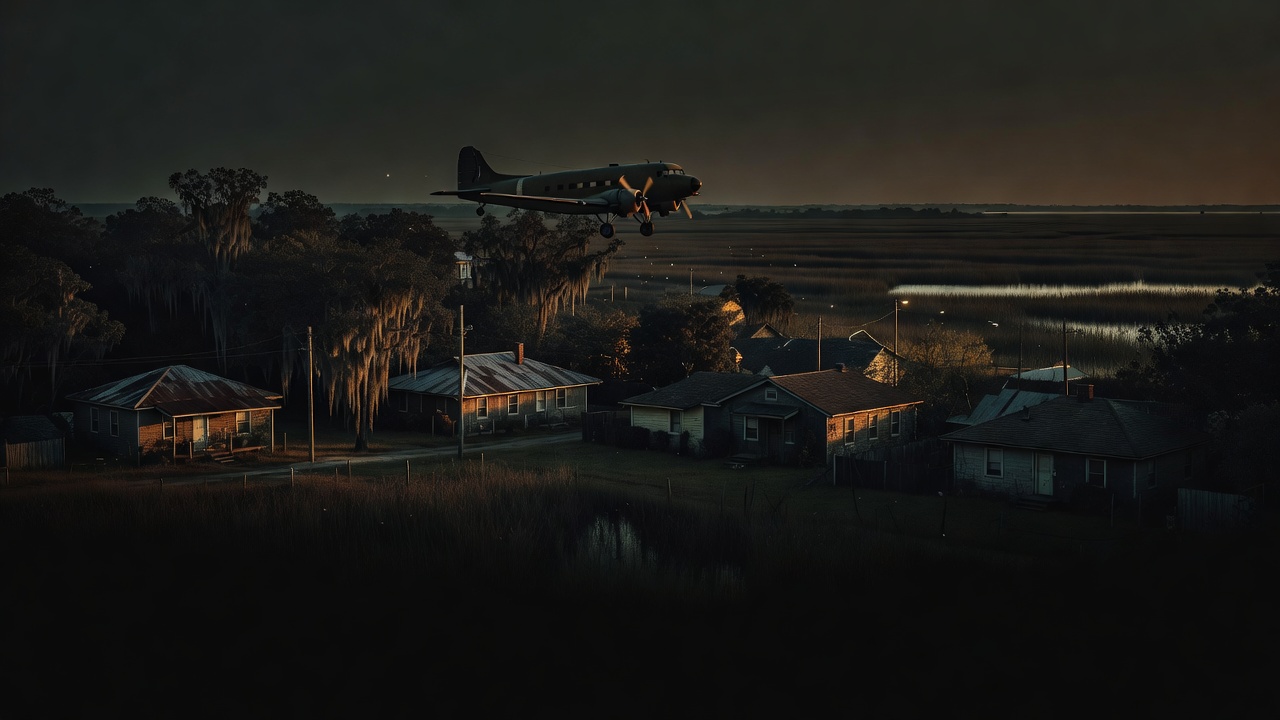
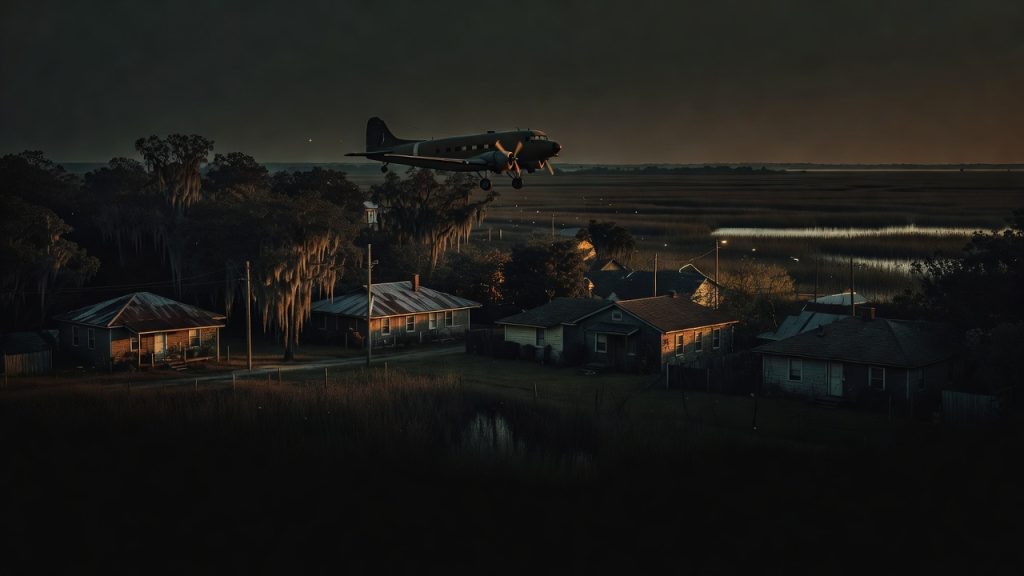
It started like any heavy Southern night: wet air, low light, and the soft mechanical hum of something moving overhead. In Savannah in 1955, most people below had no reason to imagine the U.S. Army was turning their city into a live rehearsal for insect warfare. No sirens. No warning. No public debate. Just classified planning, laboratory-bred Aedes aegypti, and a Cold War question ugly enough to survive declassification: if mosquitoes could be mass-produced, loaded into munitions, and dropped over a target, what exactly had the government proved—and what did it prove about the people it was willing to test on?
The Case For
The paper trail is real, and it points straight to weaponization research
The strongest argument for taking Operation Big Buzz seriously is simple: this is not legend passed around on message boards. A declassified Camp Detrick document, Special Report 253: Operation BIG BUZZ, identifies the program by name, lists Army-linked authors, and states that the work was completed in May 1955 and published in November 1955. Even the surviving archive summary is blunt about the subject: mosquitoes, Camp Detrick, and biological warfare. That alone moves Big Buzz out of folklore and into documented military history.
A second military source makes the purpose harder to soften. In the 1981 U.S. Army Dugway report An Evaluation of Entomological Warfare as a Potential Danger to the United States and European NATO Nations, William H. Rose summarized Big Buzz as a 1955 field test conducted to demonstrate the feasibility of mass-producing, storing, loading into munitions, and disseminating mosquitoes from aircraft, then determining whether they would survive the drop and take blood meals from humans. That language matters. It was not framed as a routine public-health exercise. It was a feasibility study for delivery.
The details sound less like theory and more like a field rehearsal
According to the same Army summary, more than one million uninfected Aedes aegypti mosquitoes were produced, and about one-third were placed in E-14 munitions and ground-release devices before being dispersed in Georgia. Rose wrote that the mosquitoes were dropped “without mortality” from aircraft and later recovered as far as 2,000 feet from the release site. He also reported that the insects were active in seeking blood meals from humans and guinea pigs. In plain English: the Army was not just breeding mosquitoes. It was testing whether they could survive transport, spread through a target area, and bite living hosts after release.
That choice of species raises the temperature of the story. The European Centre for Disease Prevention and Control describes Aedes aegypti as a known vector for yellow fever, dengue, chikungunya, and Zika, and notes how well adapted it is to human environments. Big Buzz used uninfected mosquitoes, yes. But the strategic point was obvious even then. If the delivery system worked with uninfected insects, planners could ask what it might do with infected ones.
The human geography makes the theory darker still. Later reporting from the Savannah Morning News tied Big Buzz to Carver Village, a Black neighborhood whose residents were left with the memory that the government used them without informed consent. Whether every detail of neighborhood memory matches the declassified record, the mistrust itself is evidence of what secrecy cost.
For readers tracking this wider cluster, Big Buzz fits naturally beside our Operation Sea-Spray investigation and the later mosquito-vector logic explored in Magic Sword: the Pentagon’s Mosquito Sea Test.
The Realist’s Eye
Documented weaponization research is not the same thing as a proven biological attack
This is where the record demands discipline. The loudest version of the Big Buzz story says the Army effectively attacked civilians with disease-bearing mosquitoes. The surviving documents do not prove that. The available summaries say the mosquitoes used in Big Buzz were uninfected. That distinction matters. It does not make the test benign, but it does narrow the documented claim. What the files support is a military field test of vector delivery, not a proven outbreak operation.
There is also uncertainty in how precisely the release area and consent issue should be described. Some later accounts center specifically on Carver Village. Other military summaries describe the operation more broadly as a Georgia field test with aerial and ground releases. That gap matters because conspiracy writing gets sloppy when later memory hardens into exact geography the surviving files do not fully resolve. The ethical problem is already serious without overstating what the paperwork proves.
The Cold War context explains the logic, but not the morality
A defender of the program could argue that the Army was studying a threat, not announcing intent to use it offensively. Rose’s 1981 report itself was framed as an evaluation of entomological warfare as a danger, and Cold War planners routinely studied delivery systems they feared an adversary might use. That interpretation is plausible. But it only solves part of the puzzle. Researching a threat can still mean normalizing methods that should have triggered public outrage, especially when testing touched civilian spaces and people who were not meaningfully informed.
There is another limit on the strongest claims: Big Buzz is real, but the archive we have is incomplete. We can document the operation, the species, the delivery problem, and the host-seeking results. We cannot, from the evidence in hand, prove a hidden epidemic or a body count tied specifically to the release. That does not clear the program. It means the strongest accusation is also the simplest one: the government ran a secret mosquito-dissemination test and treated the surrounding public as a problem of logistics, not consent.
What We Know For Certain
- Camp Detrick’s declassified Special Report 253 documents an operation called BIG BUZZ, with work completed in May 1955 and publication in November 1955.
- William H. Rose’s 1981 Army report says Big Buzz tested the feasibility of producing, storing, loading, and disseminating Aedes aegypti mosquitoes from aircraft.
- The same Army summary says more than one million mosquitoes were produced and roughly one-third were released in field testing.
- Rose reported that released mosquitoes were recovered as far as 2,000 feet from the release site and sought blood meals from humans and guinea pigs.
- Aedes aegypti is a known vector for yellow fever, dengue, chikungunya, and Zika.
The Unanswered Questions
- How narrowly or broadly was the civilian release area defined in the full classified planning documents?
- What, if anything, were local residents told before or after the test?
- How far did Army planning go from proving mosquito delivery to modeling infected-vector use?
- What additional Big Buzz records remain scattered, withheld, or lost inside larger biowarfare archives?
The Closer — You Decide
Some stories stay in the gray because the evidence never lands. Operation Big Buzz is more disturbing than that. The evidence did land—just not all of it. Enough survived to show a government serious enough about insect warfare to breed the mosquitoes, build the munitions, and run the release. Maybe that was defensive logic in a fearful age. Maybe it was the quiet rehearsal for something worse. The files are real. The questions are real. The evidence is on the table. You decide.