Menu

Who Reviews BWC CBM Reports?

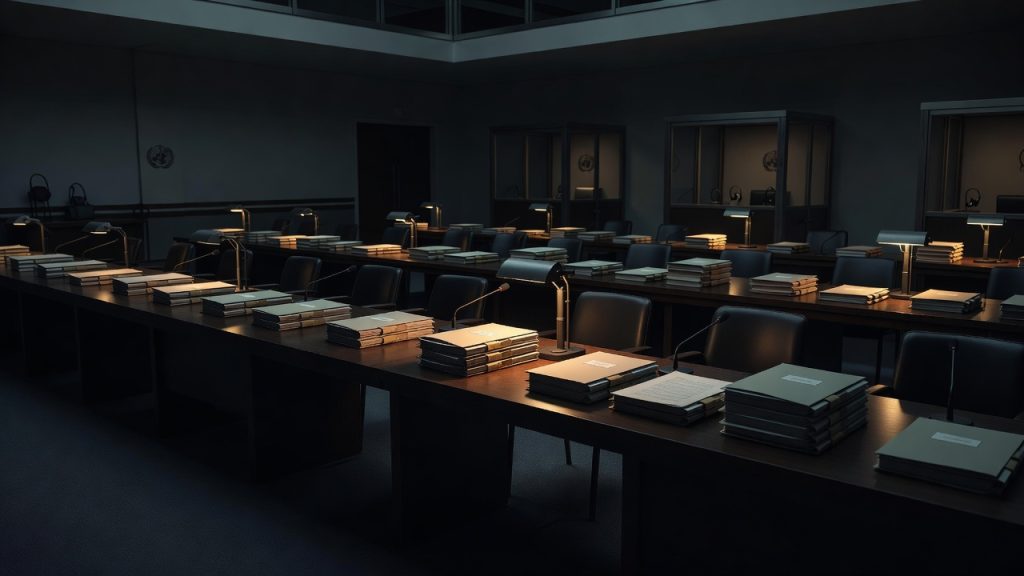
Stacks of BWC CBM reports in a dark conference chamber — ConspiracyRealist.com

Who Reviews BWC CBM Reports?

In Geneva, the paperwork arrives quietly. No alarms. No inspectors in white suits. No late-night raid on a clandestine lab. Just annual confidence-building measure reports filed under the Biological Weapons Convention — dry forms that can name research centers, biodefense programs, vaccine facilities, disease outbreaks, and old weapons work. On paper, they are the treaty’s closest thing to a transparency window. But there is a darker question behind the filing cabinet: once those reports are submitted, who actually checks them? And if no one is tasked to do that job, what exactly is the world seeing when it calls the system transparency?

The Case For

The treaty’s one formal transparency tool

The case begins with a stubborn fact: the BWC has no standing inspectorate. It has no OPCW-style organization empowered to conduct routine or challenge inspections across the biological sector. That leaves the confidence-building measures — the annual CBM reports first agreed in the 1980s and expanded in 1991 — as the treaty’s main formal transparency mechanism. For readers tracking our broader coverage of government secrecy and treaty oversight, this is the seam where trust and verification split apart.

In a 2023 briefing, the BWC Implementation Support Unit described CBMs as “the only formal transparency tool under the BWC,” while also stressing that they are not verification and not a compliance-assessment tool. That distinction matters. States parties submit reports on the previous calendar year, covering items such as research centers, biodefense research, disease outbreaks, legislation, vaccine facilities, and certain past programs. Those reports can be public or restricted.

Participation has risen sharply. According to the ISU’s 2025 background paper BWC/WG/6/2, 113 states parties submitted CBMs in 2024 — the highest total on record — and 136 of 189 states parties had submitted at least one report since 2020. That looks like momentum. A growing archive. More paper trails. It also sharpens the same tension explored in our earlier deep dive on hidden BWC reports and our review of the latest CBM reform push.

The blind spot is written into the system

Then the floor drops out. The same 2025 ISU paper states, plainly, that the ISU “is not mandated to carry out any analysis of the content of CBM reports” and can compile only basic participation statistics because formats and languages vary. In other words, the office receiving the reports is not formally tasked with judging whether the information is complete, comparable, or credible. It can track who filed. It is not built to say whether a filing tells the full story.

That gap is not just a blogger’s suspicion. It shows up in the broader expert literature too. A 2025 open-access study in Politics and the Life Sciences, “BWC confidence-building measures: Increasing BWC assurance through transparency and information sharing”, found that one of the biggest barriers to CBM value is limited analysis, noting that the ISU lacks both the mandate and the resources to analyze submission content, while states parties are largely left to review reports on their own.

If you wanted to build the strongest realist case that the BWC’s transparency system has a structural blind spot, that would be the center of it. The treaty asks states to submit information that could reduce ambiguity, but it stops short of creating a neutral body to systematically interrogate the submissions. The result is a transparency system that may generate confidence without generating much scrutiny.

The Realist’s Eye

CBMs were never meant to be inspections

This is where the theory needs stress-testing. The first counterargument is strong: CBMs were not designed to function as a mini-verification regime, so criticizing them for not behaving like one can be unfair. The BWC’s member states created these reports as confidence-building tools, not as forensic compliance audits. The 2023 ISU briefing says exactly that. They are meant to reduce ambiguity and encourage cooperation, not deliver courtroom-grade findings.

There is also a political reason for the restraint. Biology is not chemistry. Vaccine plants, public-health labs, academic research centers, and biodefense facilities often share equipment, methods, and personnel. A centralized review mechanism that aggressively questions submissions could quickly be seen as accusatory, intrusive, or commercially dangerous. That is one reason BWC states have spent decades arguing over verification without producing a binding inspection system.

And there is a practical issue. Even if the ISU had a mandate to analyze content, analysis is not validation. A paper review can flag anomalies, contradictions, or suspicious omissions, but it cannot prove what sits behind a laboratory door. More scrutiny on forms might create a false sense of security if states and the public mistake desk analysis for genuine compliance verification.

The system still produces real value

There is another challenge to the blind-spot thesis: CBMs do produce useful information even without a formal validator. Public reports can help researchers, diplomats, and civil society map national biodefense structures and legal frameworks. Restricted reports can still inform quiet bilateral questioning among states parties. The recent rise in participation, plus new investment in the electronic reporting portal, suggests many governments still see value in the system.

And when concerns do arise, the BWC does contain other pathways — including consultation under Article V and, in theory, complaint procedures under Article VI. Those mechanisms are politically cumbersome and rarely used, but they exist. A defender of the current model would say CBMs were never supposed to do every job themselves. They are one layer in a thin architecture, not the whole building.

That leaves the core tension intact. The system may be doing what it was designed to do, while still falling short of what outsiders assume it does. Those are not the same thing.

What We Know For Certain

  • The BWC’s confidence-building measures are the treaty’s main formal transparency tool, not a verification regime.
  • States parties submit annual reports covering the previous calendar year, with a standing deadline of 15 April.
  • The ISU said in its 2025 background paper that it is not mandated to analyze the content of CBM reports.
  • CBM participation has increased in recent years, including a record 113 submissions in 2024 according to the ISU.
  • States can make CBM reports public or restrict them to other states parties.

The Unanswered Questions

  • If no central body reviews CBM content, how often do states parties systematically examine one another’s filings?
  • Would a light-touch analytic function improve confidence, or would it discourage participation by making CBMs feel punitive?
  • How many politically important discrepancies or omissions can hide inside a system built mainly to count submissions?
  • Can improved forms and portal tools solve the problem, or does the BWC ultimately need a stronger institutional mechanism?

The Closer — You Decide

The documents are real. The reports are real. The growing submission numbers are real. So is the line in black and white that says the office collecting those reports is not tasked with truly analyzing them. Maybe that is a sensible limit inside a fragile treaty. Maybe it is the clearest sign that BWC transparency still runs on trust more than verification. Either way, the blind spot is not hidden in rumor. It is sitting in the paperwork. The evidence is on the table. You decide.


dive down the rabbit hole

Who Reviews BWC CBM Reports?

S-FX.com
Stacks of BWC CBM reports in a dark conference chamber — ConspiracyRealist.com

Who Reviews BWC CBM Reports?

In Geneva, the paperwork arrives quietly. No alarms. No inspectors in white suits. No late-night raid on a clandestine lab. Just annual confidence-building measure reports filed under the Biological Weapons Convention — dry forms that can name research centers, biodefense programs, vaccine facilities, disease outbreaks, and old weapons work. On paper, they are the treaty’s closest thing to a transparency window. But there is a darker question behind the filing cabinet: once those reports are submitted, who actually checks them? And if no one is tasked to do that job, what exactly is the world seeing when it calls the system transparency?

The Case For

The treaty’s one formal transparency tool

The case begins with a stubborn fact: the BWC has no standing inspectorate. It has no OPCW-style organization empowered to conduct routine or challenge inspections across the biological sector. That leaves the confidence-building measures — the annual CBM reports first agreed in the 1980s and expanded in 1991 — as the treaty’s main formal transparency mechanism. For readers tracking our broader coverage of government secrecy and treaty oversight, this is the seam where trust and verification split apart.

In a 2023 briefing, the BWC Implementation Support Unit described CBMs as “the only formal transparency tool under the BWC,” while also stressing that they are not verification and not a compliance-assessment tool. That distinction matters. States parties submit reports on the previous calendar year, covering items such as research centers, biodefense research, disease outbreaks, legislation, vaccine facilities, and certain past programs. Those reports can be public or restricted.

Participation has risen sharply. According to the ISU’s 2025 background paper BWC/WG/6/2, 113 states parties submitted CBMs in 2024 — the highest total on record — and 136 of 189 states parties had submitted at least one report since 2020. That looks like momentum. A growing archive. More paper trails. It also sharpens the same tension explored in our earlier deep dive on hidden BWC reports and our review of the latest CBM reform push.

The blind spot is written into the system

Then the floor drops out. The same 2025 ISU paper states, plainly, that the ISU “is not mandated to carry out any analysis of the content of CBM reports” and can compile only basic participation statistics because formats and languages vary. In other words, the office receiving the reports is not formally tasked with judging whether the information is complete, comparable, or credible. It can track who filed. It is not built to say whether a filing tells the full story.

That gap is not just a blogger’s suspicion. It shows up in the broader expert literature too. A 2025 open-access study in Politics and the Life Sciences, “BWC confidence-building measures: Increasing BWC assurance through transparency and information sharing”, found that one of the biggest barriers to CBM value is limited analysis, noting that the ISU lacks both the mandate and the resources to analyze submission content, while states parties are largely left to review reports on their own.

If you wanted to build the strongest realist case that the BWC’s transparency system has a structural blind spot, that would be the center of it. The treaty asks states to submit information that could reduce ambiguity, but it stops short of creating a neutral body to systematically interrogate the submissions. The result is a transparency system that may generate confidence without generating much scrutiny.

The Realist’s Eye

CBMs were never meant to be inspections

This is where the theory needs stress-testing. The first counterargument is strong: CBMs were not designed to function as a mini-verification regime, so criticizing them for not behaving like one can be unfair. The BWC’s member states created these reports as confidence-building tools, not as forensic compliance audits. The 2023 ISU briefing says exactly that. They are meant to reduce ambiguity and encourage cooperation, not deliver courtroom-grade findings.

There is also a political reason for the restraint. Biology is not chemistry. Vaccine plants, public-health labs, academic research centers, and biodefense facilities often share equipment, methods, and personnel. A centralized review mechanism that aggressively questions submissions could quickly be seen as accusatory, intrusive, or commercially dangerous. That is one reason BWC states have spent decades arguing over verification without producing a binding inspection system.

And there is a practical issue. Even if the ISU had a mandate to analyze content, analysis is not validation. A paper review can flag anomalies, contradictions, or suspicious omissions, but it cannot prove what sits behind a laboratory door. More scrutiny on forms might create a false sense of security if states and the public mistake desk analysis for genuine compliance verification.

The system still produces real value

There is another challenge to the blind-spot thesis: CBMs do produce useful information even without a formal validator. Public reports can help researchers, diplomats, and civil society map national biodefense structures and legal frameworks. Restricted reports can still inform quiet bilateral questioning among states parties. The recent rise in participation, plus new investment in the electronic reporting portal, suggests many governments still see value in the system.

And when concerns do arise, the BWC does contain other pathways — including consultation under Article V and, in theory, complaint procedures under Article VI. Those mechanisms are politically cumbersome and rarely used, but they exist. A defender of the current model would say CBMs were never supposed to do every job themselves. They are one layer in a thin architecture, not the whole building.

That leaves the core tension intact. The system may be doing what it was designed to do, while still falling short of what outsiders assume it does. Those are not the same thing.

What We Know For Certain

  • The BWC’s confidence-building measures are the treaty’s main formal transparency tool, not a verification regime.
  • States parties submit annual reports covering the previous calendar year, with a standing deadline of 15 April.
  • The ISU said in its 2025 background paper that it is not mandated to analyze the content of CBM reports.
  • CBM participation has increased in recent years, including a record 113 submissions in 2024 according to the ISU.
  • States can make CBM reports public or restrict them to other states parties.

The Unanswered Questions

  • If no central body reviews CBM content, how often do states parties systematically examine one another’s filings?
  • Would a light-touch analytic function improve confidence, or would it discourage participation by making CBMs feel punitive?
  • How many politically important discrepancies or omissions can hide inside a system built mainly to count submissions?
  • Can improved forms and portal tools solve the problem, or does the BWC ultimately need a stronger institutional mechanism?

The Closer — You Decide

The documents are real. The reports are real. The growing submission numbers are real. So is the line in black and white that says the office collecting those reports is not tasked with truly analyzing them. Maybe that is a sensible limit inside a fragile treaty. Maybe it is the clearest sign that BWC transparency still runs on trust more than verification. Either way, the blind spot is not hidden in rumor. It is sitting in the paperwork. The evidence is on the table. You decide.

Who Reviews BWC CBM Reports?

Stacks of BWC CBM reports in a dark conference chamber — ConspiracyRealist.com

Who Reviews BWC CBM Reports?

In Geneva, the paperwork arrives quietly. No alarms. No inspectors in white suits. No late-night raid on a clandestine lab. Just annual confidence-building measure reports filed under the Biological Weapons Convention — dry forms that can name research centers, biodefense programs, vaccine facilities, disease outbreaks, and old weapons work. On paper, they are the treaty’s closest thing to a transparency window. But there is a darker question behind the filing cabinet: once those reports are submitted, who actually checks them? And if no one is tasked to do that job, what exactly is the world seeing when it calls the system transparency?

The Case For

The treaty’s one formal transparency tool

The case begins with a stubborn fact: the BWC has no standing inspectorate. It has no OPCW-style organization empowered to conduct routine or challenge inspections across the biological sector. That leaves the confidence-building measures — the annual CBM reports first agreed in the 1980s and expanded in 1991 — as the treaty’s main formal transparency mechanism. For readers tracking our broader coverage of government secrecy and treaty oversight, this is the seam where trust and verification split apart.

In a 2023 briefing, the BWC Implementation Support Unit described CBMs as “the only formal transparency tool under the BWC,” while also stressing that they are not verification and not a compliance-assessment tool. That distinction matters. States parties submit reports on the previous calendar year, covering items such as research centers, biodefense research, disease outbreaks, legislation, vaccine facilities, and certain past programs. Those reports can be public or restricted.

Participation has risen sharply. According to the ISU’s 2025 background paper BWC/WG/6/2, 113 states parties submitted CBMs in 2024 — the highest total on record — and 136 of 189 states parties had submitted at least one report since 2020. That looks like momentum. A growing archive. More paper trails. It also sharpens the same tension explored in our earlier deep dive on hidden BWC reports and our review of the latest CBM reform push.

The blind spot is written into the system

Then the floor drops out. The same 2025 ISU paper states, plainly, that the ISU “is not mandated to carry out any analysis of the content of CBM reports” and can compile only basic participation statistics because formats and languages vary. In other words, the office receiving the reports is not formally tasked with judging whether the information is complete, comparable, or credible. It can track who filed. It is not built to say whether a filing tells the full story.

That gap is not just a blogger’s suspicion. It shows up in the broader expert literature too. A 2025 open-access study in Politics and the Life Sciences, “BWC confidence-building measures: Increasing BWC assurance through transparency and information sharing”, found that one of the biggest barriers to CBM value is limited analysis, noting that the ISU lacks both the mandate and the resources to analyze submission content, while states parties are largely left to review reports on their own.

If you wanted to build the strongest realist case that the BWC’s transparency system has a structural blind spot, that would be the center of it. The treaty asks states to submit information that could reduce ambiguity, but it stops short of creating a neutral body to systematically interrogate the submissions. The result is a transparency system that may generate confidence without generating much scrutiny.

The Realist’s Eye

CBMs were never meant to be inspections

This is where the theory needs stress-testing. The first counterargument is strong: CBMs were not designed to function as a mini-verification regime, so criticizing them for not behaving like one can be unfair. The BWC’s member states created these reports as confidence-building tools, not as forensic compliance audits. The 2023 ISU briefing says exactly that. They are meant to reduce ambiguity and encourage cooperation, not deliver courtroom-grade findings.

There is also a political reason for the restraint. Biology is not chemistry. Vaccine plants, public-health labs, academic research centers, and biodefense facilities often share equipment, methods, and personnel. A centralized review mechanism that aggressively questions submissions could quickly be seen as accusatory, intrusive, or commercially dangerous. That is one reason BWC states have spent decades arguing over verification without producing a binding inspection system.

And there is a practical issue. Even if the ISU had a mandate to analyze content, analysis is not validation. A paper review can flag anomalies, contradictions, or suspicious omissions, but it cannot prove what sits behind a laboratory door. More scrutiny on forms might create a false sense of security if states and the public mistake desk analysis for genuine compliance verification.

The system still produces real value

There is another challenge to the blind-spot thesis: CBMs do produce useful information even without a formal validator. Public reports can help researchers, diplomats, and civil society map national biodefense structures and legal frameworks. Restricted reports can still inform quiet bilateral questioning among states parties. The recent rise in participation, plus new investment in the electronic reporting portal, suggests many governments still see value in the system.

And when concerns do arise, the BWC does contain other pathways — including consultation under Article V and, in theory, complaint procedures under Article VI. Those mechanisms are politically cumbersome and rarely used, but they exist. A defender of the current model would say CBMs were never supposed to do every job themselves. They are one layer in a thin architecture, not the whole building.

That leaves the core tension intact. The system may be doing what it was designed to do, while still falling short of what outsiders assume it does. Those are not the same thing.

What We Know For Certain

  • The BWC’s confidence-building measures are the treaty’s main formal transparency tool, not a verification regime.
  • States parties submit annual reports covering the previous calendar year, with a standing deadline of 15 April.
  • The ISU said in its 2025 background paper that it is not mandated to analyze the content of CBM reports.
  • CBM participation has increased in recent years, including a record 113 submissions in 2024 according to the ISU.
  • States can make CBM reports public or restrict them to other states parties.

The Unanswered Questions

  • If no central body reviews CBM content, how often do states parties systematically examine one another’s filings?
  • Would a light-touch analytic function improve confidence, or would it discourage participation by making CBMs feel punitive?
  • How many politically important discrepancies or omissions can hide inside a system built mainly to count submissions?
  • Can improved forms and portal tools solve the problem, or does the BWC ultimately need a stronger institutional mechanism?

The Closer — You Decide

The documents are real. The reports are real. The growing submission numbers are real. So is the line in black and white that says the office collecting those reports is not tasked with truly analyzing them. Maybe that is a sensible limit inside a fragile treaty. Maybe it is the clearest sign that BWC transparency still runs on trust more than verification. Either way, the blind spot is not hidden in rumor. It is sitting in the paperwork. The evidence is on the table. You decide.

Table of contents