
Opens in a new tab
Menu

Quiet Skies Records: How Long Did TSA Keep Travelers?

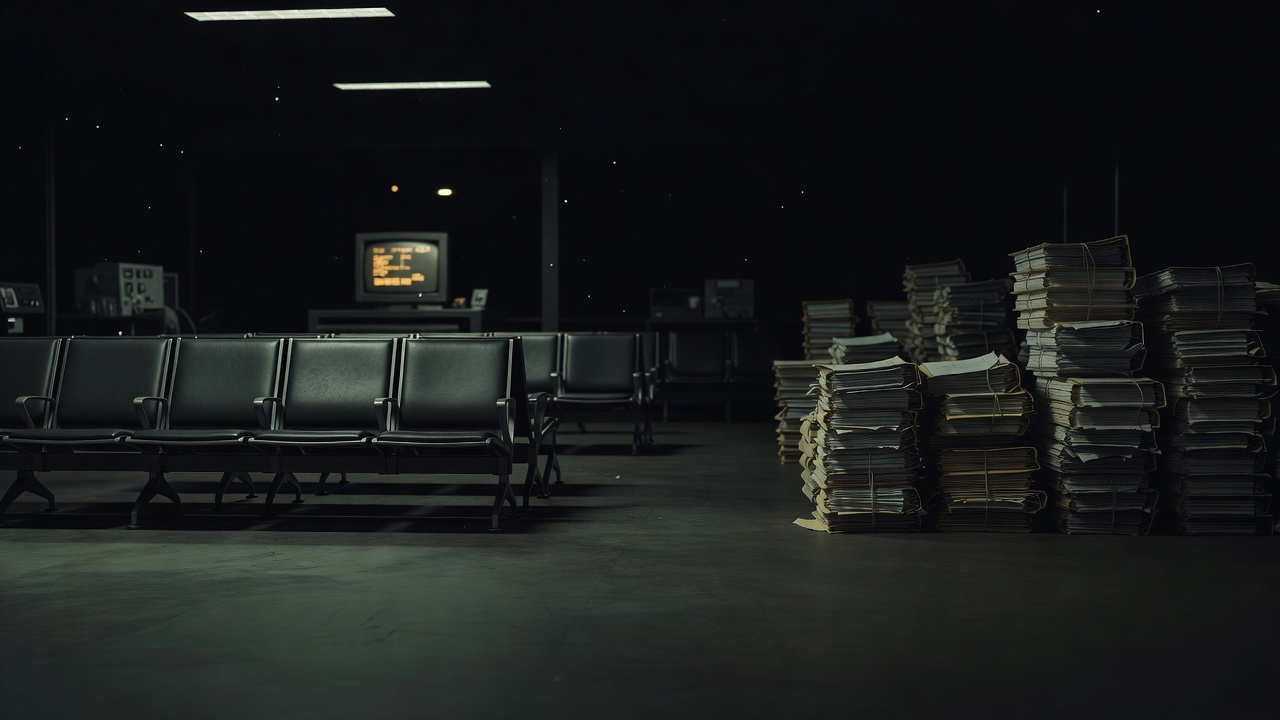
Empty airport gate symbolizing Quiet Skies data retention — ConspiracyRealist.com

Quiet Skies Records: How Long Did TSA Keep Travelers?

Somewhere after landing, after the gate opens and the cabin loosens and the ordinary world returns, the file does not end. The traveler goes home. The system keeps watching the paperwork. A name. A date of birth. A rule match. Maybe an air marshal report that says nothing happened at all. Quiet Skies was sold as a layer of aviation security for people who were not on the government’s standard terror watchlists. But buried in the official paperwork was a colder detail: even when a flight ended without incident, the record could live on for years. The checkpoint was temporary. The archive was not.

The Case For

The retention schedule was real, and it was long

The strongest argument that Quiet Skies became something larger than a temporary screening tool comes straight from the government’s own privacy paperwork. In its 2019 Privacy Impact Assessment for Secure Flight, Silent Partner, and Quiet Skies, DHS said Quiet Skies used a subset of Silent Partner rules to identify travelers for enhanced screening on later domestic and outbound international flights. The same document said the Quiet Skies list changed daily, but the records created by a match did not vanish with the boarding pass.

According to that assessment, records showing that a traveler matched the Quiet Skies list were held in the Secure Flight system for seven years. TSA Intelligence and Analysis would also retain Quiet Skies records for seven years for oversight, analysis, redress, and litigation. Federal Air Marshal after-action reports connected to Quiet Skies missions were slated to be kept for five years under an existing National Archives schedule, though TSA said it expected to seek approval to cut reports showing no suspicious activity down to 90 days. That matters because it reveals the architecture of the program: not just a one-time frisk at the checkpoint, but a records ecosystem built to outlast the trip by years.

The surveillance moved beyond the checkpoint

The retention issue looks even more serious once you remember what Quiet Skies became in practice. DHS’s inspector general reported in 2020 that since March 2018, Quiet Skies also involved Federal Air Marshal surveillance of selected passengers in airports and on flights. The government was not simply flagging a traveler for enhanced screening. It was pairing that flag with in-person observation and a paper trail about what air marshals saw. If you believe bureaucracies expand by turning temporary decisions into durable records, Quiet Skies fits the pattern almost perfectly.

The site has already tracked the front end of that machine in our Quiet Skies surveillance deep dive and the behavioral scoring behind the air marshal checklist story. The public argument for Quiet Skies was immediate security. The recordkeeping looked built for memory.

Years of storage changed the meaning of the program

A system that briefly screens a traveler is one thing. A system that stores the match for seven years, keeps associated reports for years more, and permits those records to be used for oversight, redress, litigation, and analysis starts to resemble a long-tail surveillance archive. The 2019 privacy assessment acknowledged the risk in plain language: data might be retained for an excessive amount of time. Officials said the mitigation was compliance with National Archives-approved schedules. That does not erase the concern. It confirms the government knew it was there.

The Realist’s Eye

Retention alone is not proof of abuse

A careful reader has to resist one easy leap here. Long retention periods do not automatically prove Quiet Skies was a sinister dragnet. Federal agencies often keep records for years because litigation, audits, and redress claims move slowly. The 2019 privacy assessment said Quiet Skies matches were not by themselves proof someone was a known or suspected terrorist and were not used to deny boarding.

The official record shows mismanagement more clearly than conspiracy

The government’s watchdog findings also cut in both directions. In OIG-21-11, DHS’s inspector general said TSA did not properly plan, implement, or manage Quiet Skies, did not develop outcome-based measures to prove it worked, and did not always follow its own guidance. But the report was framed around weak management, fragmented oversight, and lagging privacy controls more than a definitive finding that retention itself was weaponized. Likewise, a 2019 GAO review found TSA had not comprehensively measured the effectiveness of its screening rules and noted that the agency’s main effectiveness analysis covered only Quiet Skies, excluding about 93 percent of the rules universe. That suggests an accountability problem. It does not, by itself, prove a deliberate domestic spying scheme.

Even the 2025 DHS announcement ending Quiet Skies came wrapped in sharper political claims than the earlier watchdog reports made. The program may have drifted, expanded, and failed to justify itself. That is not the same thing as proving every retained record was abused. A realist has to leave room for both possibilities: a security bureaucracy preserving data because it always preserves data, and a security bureaucracy creating exactly the kind of durable passenger archive civil-liberties critics warned about.

The unanswered point is proportionality

The real pressure point is whether the retention matched the threat. If the government could not clearly demonstrate that Quiet Skies worked, why hold ordinary travelers’ match records for seven years and air marshal reports for up to five? If most monitored passengers never did anything suspicious, the archive begins to look less like a precision tool and more like institutional habit. That is where this story belongs in Conspiracy Realist’s Government Secrets investigations: not because the paperwork proves a grand hidden cabal, but because it shows how secrecy, longevity, and weak oversight can quietly fuse into a system the public barely understands.

What We Know For Certain

  • DHS’s 2019 Privacy Impact Assessment said Quiet Skies match records in Secure Flight were retained for seven years.
  • The same assessment said TSA Intelligence and Analysis would retain Quiet Skies records for seven years for oversight, analysis, redress, and litigation.
  • Federal Air Marshal after-action reports tied to Quiet Skies missions were scheduled for five-year retention, with TSA expecting to seek shorter retention for reports showing no suspicious activity.
  • DHS OIG found in 2020 that TSA did not properly manage Quiet Skies and lacked sufficient metrics, analysis, and controls.
  • DHS ended the Quiet Skies program in June 2025.

The Unanswered Questions

  • How many Quiet Skies records involved travelers who never triggered any suspicious finding at all?
  • Did TSA ever receive approval to shorten retention for uneventful air marshal reports, and if so, when was that change implemented?
  • How often were retained Quiet Skies records later used in redress, litigation, or broader analytical work?
  • What safeguards, if any, prevented quiet retention from becoming quiet profiling over time?

The Closer — You Decide

Sometimes the most revealing line in a government document is not the mission statement. It is the retention schedule. Quiet Skies created records designed to linger long after the traveler disappeared into the crowd. Maybe that was a defensible security precaution. Maybe it was bureaucratic overreach that only became visible when the paperwork surfaced. Either way, the documents are real, the timelines are real, and the archive was real. The evidence is on the table. You decide.

dive down the rabbit hole

Quiet Skies Records: How Long Did TSA Keep Travelers?

S-FX.com
Empty airport gate symbolizing Quiet Skies data retention — ConspiracyRealist.com

Quiet Skies Records: How Long Did TSA Keep Travelers?

Somewhere after landing, after the gate opens and the cabin loosens and the ordinary world returns, the file does not end. The traveler goes home. The system keeps watching the paperwork. A name. A date of birth. A rule match. Maybe an air marshal report that says nothing happened at all. Quiet Skies was sold as a layer of aviation security for people who were not on the government’s standard terror watchlists. But buried in the official paperwork was a colder detail: even when a flight ended without incident, the record could live on for years. The checkpoint was temporary. The archive was not.

The Case For

The retention schedule was real, and it was long

The strongest argument that Quiet Skies became something larger than a temporary screening tool comes straight from the government’s own privacy paperwork. In its 2019 Privacy Impact Assessment for Secure Flight, Silent Partner, and Quiet Skies, DHS said Quiet Skies used a subset of Silent Partner rules to identify travelers for enhanced screening on later domestic and outbound international flights. The same document said the Quiet Skies list changed daily, but the records created by a match did not vanish with the boarding pass.

According to that assessment, records showing that a traveler matched the Quiet Skies list were held in the Secure Flight system for seven years. TSA Intelligence and Analysis would also retain Quiet Skies records for seven years for oversight, analysis, redress, and litigation. Federal Air Marshal after-action reports connected to Quiet Skies missions were slated to be kept for five years under an existing National Archives schedule, though TSA said it expected to seek approval to cut reports showing no suspicious activity down to 90 days. That matters because it reveals the architecture of the program: not just a one-time frisk at the checkpoint, but a records ecosystem built to outlast the trip by years.

The surveillance moved beyond the checkpoint

The retention issue looks even more serious once you remember what Quiet Skies became in practice. DHS’s inspector general reported in 2020 that since March 2018, Quiet Skies also involved Federal Air Marshal surveillance of selected passengers in airports and on flights. The government was not simply flagging a traveler for enhanced screening. It was pairing that flag with in-person observation and a paper trail about what air marshals saw. If you believe bureaucracies expand by turning temporary decisions into durable records, Quiet Skies fits the pattern almost perfectly.

The site has already tracked the front end of that machine in our Quiet Skies surveillance deep dive and the behavioral scoring behind the air marshal checklist story. The public argument for Quiet Skies was immediate security. The recordkeeping looked built for memory.

Years of storage changed the meaning of the program

A system that briefly screens a traveler is one thing. A system that stores the match for seven years, keeps associated reports for years more, and permits those records to be used for oversight, redress, litigation, and analysis starts to resemble a long-tail surveillance archive. The 2019 privacy assessment acknowledged the risk in plain language: data might be retained for an excessive amount of time. Officials said the mitigation was compliance with National Archives-approved schedules. That does not erase the concern. It confirms the government knew it was there.

The Realist’s Eye

Retention alone is not proof of abuse

A careful reader has to resist one easy leap here. Long retention periods do not automatically prove Quiet Skies was a sinister dragnet. Federal agencies often keep records for years because litigation, audits, and redress claims move slowly. The 2019 privacy assessment said Quiet Skies matches were not by themselves proof someone was a known or suspected terrorist and were not used to deny boarding.

The official record shows mismanagement more clearly than conspiracy

The government’s watchdog findings also cut in both directions. In OIG-21-11, DHS’s inspector general said TSA did not properly plan, implement, or manage Quiet Skies, did not develop outcome-based measures to prove it worked, and did not always follow its own guidance. But the report was framed around weak management, fragmented oversight, and lagging privacy controls more than a definitive finding that retention itself was weaponized. Likewise, a 2019 GAO review found TSA had not comprehensively measured the effectiveness of its screening rules and noted that the agency’s main effectiveness analysis covered only Quiet Skies, excluding about 93 percent of the rules universe. That suggests an accountability problem. It does not, by itself, prove a deliberate domestic spying scheme.

Even the 2025 DHS announcement ending Quiet Skies came wrapped in sharper political claims than the earlier watchdog reports made. The program may have drifted, expanded, and failed to justify itself. That is not the same thing as proving every retained record was abused. A realist has to leave room for both possibilities: a security bureaucracy preserving data because it always preserves data, and a security bureaucracy creating exactly the kind of durable passenger archive civil-liberties critics warned about.

The unanswered point is proportionality

The real pressure point is whether the retention matched the threat. If the government could not clearly demonstrate that Quiet Skies worked, why hold ordinary travelers’ match records for seven years and air marshal reports for up to five? If most monitored passengers never did anything suspicious, the archive begins to look less like a precision tool and more like institutional habit. That is where this story belongs in Conspiracy Realist’s Government Secrets investigations: not because the paperwork proves a grand hidden cabal, but because it shows how secrecy, longevity, and weak oversight can quietly fuse into a system the public barely understands.

What We Know For Certain

  • DHS’s 2019 Privacy Impact Assessment said Quiet Skies match records in Secure Flight were retained for seven years.
  • The same assessment said TSA Intelligence and Analysis would retain Quiet Skies records for seven years for oversight, analysis, redress, and litigation.
  • Federal Air Marshal after-action reports tied to Quiet Skies missions were scheduled for five-year retention, with TSA expecting to seek shorter retention for reports showing no suspicious activity.
  • DHS OIG found in 2020 that TSA did not properly manage Quiet Skies and lacked sufficient metrics, analysis, and controls.
  • DHS ended the Quiet Skies program in June 2025.

The Unanswered Questions

  • How many Quiet Skies records involved travelers who never triggered any suspicious finding at all?
  • Did TSA ever receive approval to shorten retention for uneventful air marshal reports, and if so, when was that change implemented?
  • How often were retained Quiet Skies records later used in redress, litigation, or broader analytical work?
  • What safeguards, if any, prevented quiet retention from becoming quiet profiling over time?

The Closer — You Decide

Sometimes the most revealing line in a government document is not the mission statement. It is the retention schedule. Quiet Skies created records designed to linger long after the traveler disappeared into the crowd. Maybe that was a defensible security precaution. Maybe it was bureaucratic overreach that only became visible when the paperwork surfaced. Either way, the documents are real, the timelines are real, and the archive was real. The evidence is on the table. You decide.

Quiet Skies Records: How Long Did TSA Keep Travelers?

Empty airport gate symbolizing Quiet Skies data retention — ConspiracyRealist.com

Quiet Skies Records: How Long Did TSA Keep Travelers?

Somewhere after landing, after the gate opens and the cabin loosens and the ordinary world returns, the file does not end. The traveler goes home. The system keeps watching the paperwork. A name. A date of birth. A rule match. Maybe an air marshal report that says nothing happened at all. Quiet Skies was sold as a layer of aviation security for people who were not on the government’s standard terror watchlists. But buried in the official paperwork was a colder detail: even when a flight ended without incident, the record could live on for years. The checkpoint was temporary. The archive was not.

The Case For

The retention schedule was real, and it was long

The strongest argument that Quiet Skies became something larger than a temporary screening tool comes straight from the government’s own privacy paperwork. In its 2019 Privacy Impact Assessment for Secure Flight, Silent Partner, and Quiet Skies, DHS said Quiet Skies used a subset of Silent Partner rules to identify travelers for enhanced screening on later domestic and outbound international flights. The same document said the Quiet Skies list changed daily, but the records created by a match did not vanish with the boarding pass.

According to that assessment, records showing that a traveler matched the Quiet Skies list were held in the Secure Flight system for seven years. TSA Intelligence and Analysis would also retain Quiet Skies records for seven years for oversight, analysis, redress, and litigation. Federal Air Marshal after-action reports connected to Quiet Skies missions were slated to be kept for five years under an existing National Archives schedule, though TSA said it expected to seek approval to cut reports showing no suspicious activity down to 90 days. That matters because it reveals the architecture of the program: not just a one-time frisk at the checkpoint, but a records ecosystem built to outlast the trip by years.

The surveillance moved beyond the checkpoint

The retention issue looks even more serious once you remember what Quiet Skies became in practice. DHS’s inspector general reported in 2020 that since March 2018, Quiet Skies also involved Federal Air Marshal surveillance of selected passengers in airports and on flights. The government was not simply flagging a traveler for enhanced screening. It was pairing that flag with in-person observation and a paper trail about what air marshals saw. If you believe bureaucracies expand by turning temporary decisions into durable records, Quiet Skies fits the pattern almost perfectly.

The site has already tracked the front end of that machine in our Quiet Skies surveillance deep dive and the behavioral scoring behind the air marshal checklist story. The public argument for Quiet Skies was immediate security. The recordkeeping looked built for memory.

Years of storage changed the meaning of the program

A system that briefly screens a traveler is one thing. A system that stores the match for seven years, keeps associated reports for years more, and permits those records to be used for oversight, redress, litigation, and analysis starts to resemble a long-tail surveillance archive. The 2019 privacy assessment acknowledged the risk in plain language: data might be retained for an excessive amount of time. Officials said the mitigation was compliance with National Archives-approved schedules. That does not erase the concern. It confirms the government knew it was there.

The Realist’s Eye

Retention alone is not proof of abuse

A careful reader has to resist one easy leap here. Long retention periods do not automatically prove Quiet Skies was a sinister dragnet. Federal agencies often keep records for years because litigation, audits, and redress claims move slowly. The 2019 privacy assessment said Quiet Skies matches were not by themselves proof someone was a known or suspected terrorist and were not used to deny boarding.

The official record shows mismanagement more clearly than conspiracy

The government’s watchdog findings also cut in both directions. In OIG-21-11, DHS’s inspector general said TSA did not properly plan, implement, or manage Quiet Skies, did not develop outcome-based measures to prove it worked, and did not always follow its own guidance. But the report was framed around weak management, fragmented oversight, and lagging privacy controls more than a definitive finding that retention itself was weaponized. Likewise, a 2019 GAO review found TSA had not comprehensively measured the effectiveness of its screening rules and noted that the agency’s main effectiveness analysis covered only Quiet Skies, excluding about 93 percent of the rules universe. That suggests an accountability problem. It does not, by itself, prove a deliberate domestic spying scheme.

Even the 2025 DHS announcement ending Quiet Skies came wrapped in sharper political claims than the earlier watchdog reports made. The program may have drifted, expanded, and failed to justify itself. That is not the same thing as proving every retained record was abused. A realist has to leave room for both possibilities: a security bureaucracy preserving data because it always preserves data, and a security bureaucracy creating exactly the kind of durable passenger archive civil-liberties critics warned about.

The unanswered point is proportionality

The real pressure point is whether the retention matched the threat. If the government could not clearly demonstrate that Quiet Skies worked, why hold ordinary travelers’ match records for seven years and air marshal reports for up to five? If most monitored passengers never did anything suspicious, the archive begins to look less like a precision tool and more like institutional habit. That is where this story belongs in Conspiracy Realist’s Government Secrets investigations: not because the paperwork proves a grand hidden cabal, but because it shows how secrecy, longevity, and weak oversight can quietly fuse into a system the public barely understands.

What We Know For Certain

  • DHS’s 2019 Privacy Impact Assessment said Quiet Skies match records in Secure Flight were retained for seven years.
  • The same assessment said TSA Intelligence and Analysis would retain Quiet Skies records for seven years for oversight, analysis, redress, and litigation.
  • Federal Air Marshal after-action reports tied to Quiet Skies missions were scheduled for five-year retention, with TSA expecting to seek shorter retention for reports showing no suspicious activity.
  • DHS OIG found in 2020 that TSA did not properly manage Quiet Skies and lacked sufficient metrics, analysis, and controls.
  • DHS ended the Quiet Skies program in June 2025.

The Unanswered Questions

  • How many Quiet Skies records involved travelers who never triggered any suspicious finding at all?
  • Did TSA ever receive approval to shorten retention for uneventful air marshal reports, and if so, when was that change implemented?
  • How often were retained Quiet Skies records later used in redress, litigation, or broader analytical work?
  • What safeguards, if any, prevented quiet retention from becoming quiet profiling over time?

The Closer — You Decide

Sometimes the most revealing line in a government document is not the mission statement. It is the retention schedule. Quiet Skies created records designed to linger long after the traveler disappeared into the crowd. Maybe that was a defensible security precaution. Maybe it was bureaucratic overreach that only became visible when the paperwork surfaced. Either way, the documents are real, the timelines are real, and the archive was real. The evidence is on the table. You decide.

Table of contents