The Passenger Intelligence Conspiracy: How DHS Built a Travel Surveillance Machine That Outlived Quiet Skies
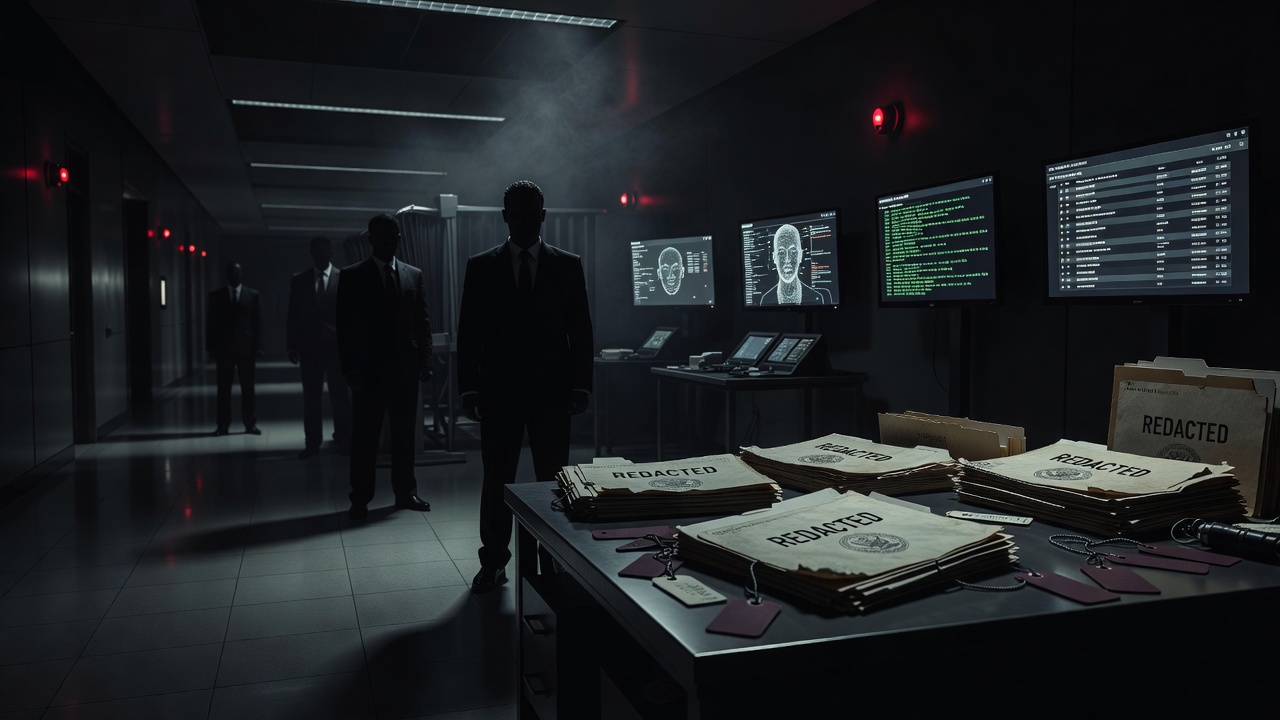
Midnight at the gate. The terminal looks asleep, but the real border is still awake somewhere else — in quiet server rooms, targeting desks, and watch floors where your trip becomes a pattern before your plane ever leaves the ground. The public sees boarding groups. The deeper system sees risk, association, and movement.
The Case For
Quiet Skies was never the whole machine
The easiest way to misunderstand modern travel surveillance is to treat Quiet Skies as the entire story. Even TSA’s own records describe something larger. In the 2019 Secure Flight / Silent Partner / Quiet Skies Privacy Impact Assessment, TSA said it used access to Customs and Border Protection’s Automated Targeting System, or ATS, to identify travelers for enhanced screening through intelligence-driven rules. Those rules did not just touch people already on federal watchlists. TSA stated plainly that individuals matching Silent Partner or Quiet Skies rules were not automatically considered known or suspected terrorists, yet they could still be selected for enhanced screening and even observation by the Federal Air Marshal Service in the airport or onboard the flight.
That is the first crack in the official story. If the government can use a system built from reservation data, border feeds, and intelligence logic to sort people who are not on a formal terror watchlist into extra scrutiny, then the architecture is broader than the watchlist itself. Quiet Skies was one visible controversy. The deeper structure was the ability to turn ordinary travel data into a live suspicion engine.
GAO’s 2019 audit GAO-20-72 reinforces that reading. The report says TSA’s intelligence-based screening rules were designed to address “unknown threats,” and that Secure Flight could classify passengers into different screening outcomes before boarding. It also says Quiet Skies was only a subset of the broader Silent Partner framework. In other words, the scandal that made headlines was nested inside a much larger rules-based ecosystem.
The passenger file became an intelligence product
That larger ecosystem matters because ATS is not a simple manifest archive. DHS’s 2021 Automated Targeting System privacy assessment describes ATS as a decision-support tool that compares traveler information against law-enforcement, intelligence, and other enforcement data using risk-based scenarios and assessments. The same document says ATS ingests or queries data from systems tied to Passenger Name Records, APIS, visa records, TECS, watchlist services, overstay systems, and other enforcement sources. That means a travel reservation no longer sits in isolation. It can be fused with identity records, border history, visa information, and prior encounters inside one targeting environment.
CBP’s own Passenger Name Record page shows just how intimate that source material can be. PNR may include contact information, payment details, itinerary, seat data, baggage information, travel agency data, and general remarks including OSI, SSI, and SSR fields. Those are not just logistics. They are fragments of a person’s habits, associations, vulnerabilities, and movement. Combined with APIS, which DHS says is used to identify high-risk passengers across air, rail, bus, and sea environments in the APIS privacy record, the picture starts to look less like border screening and more like a standing travel-intelligence pipeline.
We have followed pieces of that pipeline before in our reporting on APIS pre-departure watchlist screening, APIS Quick Query, the National Targeting Center passenger hub, and the TECS-to-ATS passenger pipeline. Read together, those records suggest a larger conspiracy frame: not that one rogue list existed, but that a permanent passenger-intelligence infrastructure was built quietly across multiple agencies and normalized as ordinary travel security.
The Realist’s Eye
The documents prove architecture, not omnipotence
A disciplined reading has to stop short of claiming the machine is all-seeing. The same government documents that reveal this surveillance structure also show limits, fragmentation, and bureaucratic confusion. DHS says travelers are not assigned a simple public-facing numerical score in ATS the way cargo can be. The 2019 TSA privacy assessment says Silent Partner and Quiet Skies matches did not themselves deny boarding. GAO found TSA still struggled to measure whether its screening rules were effective at all. A vast system is not automatically a perfect one.
That distinction matters. The most defensible conspiracy claim here is not that every traveler is individually tracked by a flawless predictive oracle. It is that agencies assembled a durable architecture capable of fusing routine travel data with intelligence and enforcement systems, then used that architecture to justify scrutiny of people who had never been formally watchlisted. That is subtler than the wildest version of the theory, but also harder to dismiss because the agencies described so much of it themselves.
The watchdogs found mission creep and weak oversight, not a smoking-gun cabal memo
The strongest grounding comes from oversight failures. GAO said TSA did not have a comprehensive way to measure the effectiveness of Silent Partner and Quiet Skies and noted that one of TSA’s main methods excluded about 93 percent of the rules it was supposedly evaluating. The DHS Inspector General’s 2020 Quiet Skies audit found TSA lacked sufficient oversight, did not always adhere to its own guidance, and had no centralized office to ensure the various components properly managed Quiet Skies passenger data. That is not proof of a master plan in the cinematic sense. It is proof that a highly sensitive surveillance framework expanded faster than its safeguards.
And even after DHS ended Quiet Skies in June 2025, the deeper infrastructure did not vanish. DHS’s own Secure Flight documentation page and the department’s June 5, 2025 announcement ending Quiet Skies made clear that TSA would continue core vetting functions tied to aviation security. That is the key high-level question. If one branded program dies but the data flows, rule engines, and targeting systems remain, did the surveillance state really retreat — or merely rebrand?
What We Know For Certain
- TSA said in 2019 that it used access to CBP’s ATS to identify certain travelers for enhanced screening through intelligence-driven rules, not only traditional watchlists.
- TSA also said those rules could lead to Federal Air Marshal observation onboard a flight or in the airport even when the traveler was not automatically considered a known or suspected terrorist.
- DHS describes ATS as a decision-support system that compares traveler data against law-enforcement, intelligence, and other enforcement information using risk-based scenarios and assessments.
- CBP says PNR can include contact data, payment data, itinerary history, seat and baggage details, and general remarks such as OSI, SSI, and SSR information.
- GAO and the DHS Inspector General both found major weaknesses in how TSA measured and managed the Quiet Skies portion of this broader screening architecture.
The Unanswered Questions
- How much of the old Quiet Skies logic survived inside other screening, targeting, or flight-coverage workflows after the 2025 shutdown?
- How often do ATS-linked travel records influence real-world scrutiny when a traveler is not on a formal watchlist?
- Which agencies and user roles can assemble the fullest cross-system picture of a traveler from PNR, APIS, visa, TECS, and watchlist-adjacent data?
- What internal thresholds or pattern rules still exist for identifying so-called unknown threats in commercial aviation?
- At what point does preflight vetting stop being border administration and become a permanent domestic intelligence function attached to movement itself?
The Closer — You Decide
Maybe Quiet Skies was the scandal because it was the piece the public could finally see. The real conspiracy may have been bigger and colder: a decades-long merger of airline reservations, border manifests, intelligence rules, and targeting systems into a single habit of governance. A traveler thinks they bought a ticket. The state may see a pattern, a network, a risk, a file. One program can be killed. An architecture is harder to bury. The documents are on the table. You decide.