Menu

The Australia Group’s No-Undercut Rule

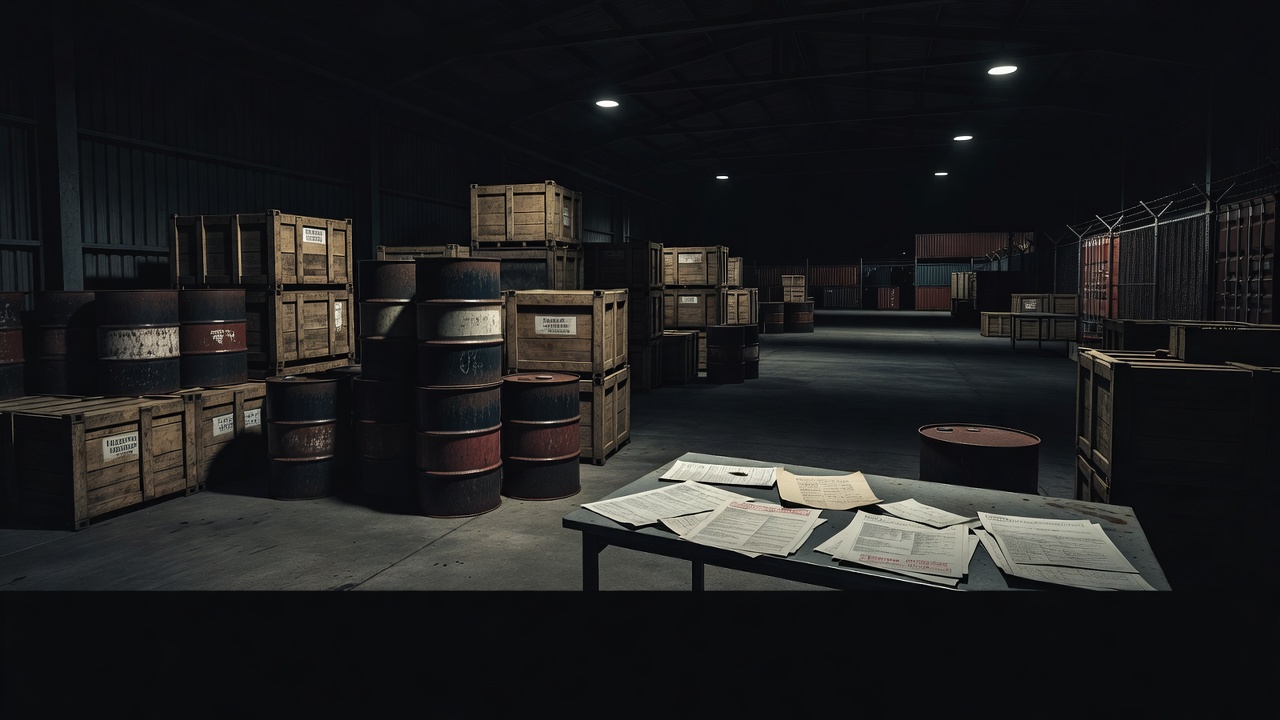
Dim export inspection warehouse symbolizing the Australia Group no-undercut rule — ConspiracyRealist.com

Some power announces itself with a treaty, a podium, and a parade of cameras. Other power works behind a licensing desk after one export application is denied. No headlines. No public hearing. No U.N. vote. Just a message through a closed network: don’t approve that shipment until we talk. That is the shadow hanging over the Australia Group’s no-undercut rule—an obscure provision that may shape sensitive trade more than most realize.

The Case For

A quiet mechanism with real reach

The Australia Group describes itself as an informal forum that harmonizes export controls so exports do not contribute to chemical or biological weapons programs. Its own guidelines for transfers of sensitive chemical or biological items spell out the no-undercut provision plainly: a participant should only grant a license for an export “essentially identical” to one another participant already denied after consulting the government that issued the denial. The rule covers the same agent, chemical, or similar dual-use equipment going to the same consignee. In plain English, one denial can follow a buyer across borders.

That matters because the Australia Group is not a treaty organization with a public court or inspectorate. It is a coordination network. If one participant blocks a sale on proliferation grounds, the no-undercut rule helps stop a determined purchaser from simply shopping the order to another supplier inside the club. The U.S. State Department said the policy was adopted in 1993 to enhance cooperation in enforcing export controls. Arms Control Association notes that by 2002 the Group’s formal guidelines paired no-undercut with catch-all controls and broader intelligence-sharing on suspicious transactions.

Why critics see hidden power

Here is why that raises eyebrows. Export denials in this realm are rarely dramatic public events. They can involve dual-use fermenters, containment gear, precursors, or technical transfers that also have legitimate civilian applications. The Australia Group’s own background paper says the arrangement depends on national implementation, information exchange, and harmonized measures rather than legally binding obligations. That gives the network a peculiar form of influence: it can shape outcomes without issuing public rulings.

If you read that alongside the Group’s broader growth, the theory gets sharper. The Australia Group now sits as a de facto standard setter for sensitive trade. Its chair’s statements have urged non-participants to adhere to its guidelines, and its common control lists are publicly presented as global best practice. Add no-undercut to that architecture and the picture looks less like a loose discussion forum and more like an inner-circle early warning system. A single member’s denial does not legally bind the others, but it triggers consultation before another participant can undercut the block. For critics, that is informal power at its most effective: quiet, deniable, and hard for outsiders to audit.

It also fits the broader pattern behind our recent Australia Group and BWC verification deep dive: when formal treaty enforcement stalls, quiet process starts doing the heavy lifting. That theme runs through the wider Government Secrets archive.

The Realist’s Eye

Consultation is not a veto

Now the stress test. The no-undercut rule sounds more sinister when compressed into a single line than it may be in practice. The text does not say one participant can permanently veto another participant’s export. It says consultation must happen first. Sovereign licensing authority remains national. The same Australia Group material repeatedly emphasizes that implementation depends on domestic law and government discretion. A consultation requirement is not the same thing as a mandatory denial.

That distinction matters. Export controls exist because chemical and biological items are unusually hard to classify cleanly as civilian or military. The same equipment that helps produce vaccines can help scale biological weapons work. The same precursor chemistry can live in legitimate industry or in a weapons pipeline. In that world, a system that alerts partners to suspicious repeat orders may look less like a cartel and more like basic risk management.

The evidence gap

There is another problem for the stronger conspiracy version: public evidence. The no-undercut policy is real. Its wording is public. The Australia Group’s role in coordinating denials is also real. But the record available to ordinary readers is thin on specific cases showing the rule was abused to punish lawful trade, target rivals unfairly, or smother developing states’ peaceful programs by stealth. Critics in the Non-Aligned Movement have long argued that export-control regimes can collide with the Biological Weapons Convention’s Article X promise of the “fullest possible exchange” for peaceful purposes. That tension is genuine and visible in international statements. What is harder to prove is the leap from structural tension to deliberate conspiratorial misuse in a particular case.

There is also a built-in counterargument inside the treaty system itself. UNODA’s summary of the Biological Weapons Convention places Article III and Article X side by side: states must not assist anyone in acquiring biological weapons, and they must also facilitate peaceful exchange. The Australia Group publicly claims it is trying to balance exactly those two obligations. You may distrust that claim, but it is not logically incoherent. A denial-consultation rule could be seen as one way states try to honor Article III without pretending every dual-use transfer is harmless.

So the realist conclusion is narrower than the darker theory. The no-undercut rule undeniably concentrates influence inside a small network of supplier states. It undeniably reduces the ability of a denied buyer to exploit differences between national systems. But the public record does not yet prove that it functions as a secret global blacklist machine. What it proves is subtler: some of the most consequential controls in the chemical and biological space do not operate through splashy treaty enforcement at all. They operate through quiet coordination.

What We Know For Certain

  • The Australia Group publicly states that it is an informal forum for harmonizing export controls related to chemical and biological weapons risks.
  • Its published guidelines contain a no-undercut provision requiring consultation before approving an essentially identical export another participant previously denied.
  • The U.S. State Department publicly described the no-undercut policy as having been adopted in 1993.
  • All Australia Group participants are also states parties to the BWC and CWC, which prohibit assistance to chemical or biological weapons programs.
  • The BWC also contains Article X language protecting the fullest possible peaceful exchange of relevant materials and information.

The Unanswered Questions

  • How often is the no-undercut rule actually triggered in practice, and how many consultations end in approval versus denial?
  • What oversight, if any, exists for buyers or governments that believe a denial was based on weak or politicized intelligence?
  • How much visibility do non-participant states have into decisions that may affect their access to dual-use goods?
  • Where is the line between legitimate nonproliferation coordination and informal supplier dominance over peaceful trade?
  • If treaty verification remains weak, will rules like no-undercut keep expanding in importance without matching transparency?

The Closer — You Decide

Sometimes the revealing rule is not the ban. It is the phone call before a second door opens. The Australia Group’s no-undercut policy does exactly that. The documents are real. The treaty tension is real. Whether this is prudent nonproliferation or quiet bloc power is still an open question. The evidence is on the table. You decide.

dive down the rabbit hole

The Australia Group’s No-Undercut Rule

S-FX.com
Dim export inspection warehouse symbolizing the Australia Group no-undercut rule — ConspiracyRealist.com

Some power announces itself with a treaty, a podium, and a parade of cameras. Other power works behind a licensing desk after one export application is denied. No headlines. No public hearing. No U.N. vote. Just a message through a closed network: don’t approve that shipment until we talk. That is the shadow hanging over the Australia Group’s no-undercut rule—an obscure provision that may shape sensitive trade more than most realize.

The Case For

A quiet mechanism with real reach

The Australia Group describes itself as an informal forum that harmonizes export controls so exports do not contribute to chemical or biological weapons programs. Its own guidelines for transfers of sensitive chemical or biological items spell out the no-undercut provision plainly: a participant should only grant a license for an export “essentially identical” to one another participant already denied after consulting the government that issued the denial. The rule covers the same agent, chemical, or similar dual-use equipment going to the same consignee. In plain English, one denial can follow a buyer across borders.

That matters because the Australia Group is not a treaty organization with a public court or inspectorate. It is a coordination network. If one participant blocks a sale on proliferation grounds, the no-undercut rule helps stop a determined purchaser from simply shopping the order to another supplier inside the club. The U.S. State Department said the policy was adopted in 1993 to enhance cooperation in enforcing export controls. Arms Control Association notes that by 2002 the Group’s formal guidelines paired no-undercut with catch-all controls and broader intelligence-sharing on suspicious transactions.

Why critics see hidden power

Here is why that raises eyebrows. Export denials in this realm are rarely dramatic public events. They can involve dual-use fermenters, containment gear, precursors, or technical transfers that also have legitimate civilian applications. The Australia Group’s own background paper says the arrangement depends on national implementation, information exchange, and harmonized measures rather than legally binding obligations. That gives the network a peculiar form of influence: it can shape outcomes without issuing public rulings.

If you read that alongside the Group’s broader growth, the theory gets sharper. The Australia Group now sits as a de facto standard setter for sensitive trade. Its chair’s statements have urged non-participants to adhere to its guidelines, and its common control lists are publicly presented as global best practice. Add no-undercut to that architecture and the picture looks less like a loose discussion forum and more like an inner-circle early warning system. A single member’s denial does not legally bind the others, but it triggers consultation before another participant can undercut the block. For critics, that is informal power at its most effective: quiet, deniable, and hard for outsiders to audit.

It also fits the broader pattern behind our recent Australia Group and BWC verification deep dive: when formal treaty enforcement stalls, quiet process starts doing the heavy lifting. That theme runs through the wider Government Secrets archive.

The Realist’s Eye

Consultation is not a veto

Now the stress test. The no-undercut rule sounds more sinister when compressed into a single line than it may be in practice. The text does not say one participant can permanently veto another participant’s export. It says consultation must happen first. Sovereign licensing authority remains national. The same Australia Group material repeatedly emphasizes that implementation depends on domestic law and government discretion. A consultation requirement is not the same thing as a mandatory denial.

That distinction matters. Export controls exist because chemical and biological items are unusually hard to classify cleanly as civilian or military. The same equipment that helps produce vaccines can help scale biological weapons work. The same precursor chemistry can live in legitimate industry or in a weapons pipeline. In that world, a system that alerts partners to suspicious repeat orders may look less like a cartel and more like basic risk management.

The evidence gap

There is another problem for the stronger conspiracy version: public evidence. The no-undercut policy is real. Its wording is public. The Australia Group’s role in coordinating denials is also real. But the record available to ordinary readers is thin on specific cases showing the rule was abused to punish lawful trade, target rivals unfairly, or smother developing states’ peaceful programs by stealth. Critics in the Non-Aligned Movement have long argued that export-control regimes can collide with the Biological Weapons Convention’s Article X promise of the “fullest possible exchange” for peaceful purposes. That tension is genuine and visible in international statements. What is harder to prove is the leap from structural tension to deliberate conspiratorial misuse in a particular case.

There is also a built-in counterargument inside the treaty system itself. UNODA’s summary of the Biological Weapons Convention places Article III and Article X side by side: states must not assist anyone in acquiring biological weapons, and they must also facilitate peaceful exchange. The Australia Group publicly claims it is trying to balance exactly those two obligations. You may distrust that claim, but it is not logically incoherent. A denial-consultation rule could be seen as one way states try to honor Article III without pretending every dual-use transfer is harmless.

So the realist conclusion is narrower than the darker theory. The no-undercut rule undeniably concentrates influence inside a small network of supplier states. It undeniably reduces the ability of a denied buyer to exploit differences between national systems. But the public record does not yet prove that it functions as a secret global blacklist machine. What it proves is subtler: some of the most consequential controls in the chemical and biological space do not operate through splashy treaty enforcement at all. They operate through quiet coordination.

What We Know For Certain

  • The Australia Group publicly states that it is an informal forum for harmonizing export controls related to chemical and biological weapons risks.
  • Its published guidelines contain a no-undercut provision requiring consultation before approving an essentially identical export another participant previously denied.
  • The U.S. State Department publicly described the no-undercut policy as having been adopted in 1993.
  • All Australia Group participants are also states parties to the BWC and CWC, which prohibit assistance to chemical or biological weapons programs.
  • The BWC also contains Article X language protecting the fullest possible peaceful exchange of relevant materials and information.

The Unanswered Questions

  • How often is the no-undercut rule actually triggered in practice, and how many consultations end in approval versus denial?
  • What oversight, if any, exists for buyers or governments that believe a denial was based on weak or politicized intelligence?
  • How much visibility do non-participant states have into decisions that may affect their access to dual-use goods?
  • Where is the line between legitimate nonproliferation coordination and informal supplier dominance over peaceful trade?
  • If treaty verification remains weak, will rules like no-undercut keep expanding in importance without matching transparency?

The Closer — You Decide

Sometimes the revealing rule is not the ban. It is the phone call before a second door opens. The Australia Group’s no-undercut policy does exactly that. The documents are real. The treaty tension is real. Whether this is prudent nonproliferation or quiet bloc power is still an open question. The evidence is on the table. You decide.

The Australia Group’s No-Undercut Rule

Dim export inspection warehouse symbolizing the Australia Group no-undercut rule — ConspiracyRealist.com

Some power announces itself with a treaty, a podium, and a parade of cameras. Other power works behind a licensing desk after one export application is denied. No headlines. No public hearing. No U.N. vote. Just a message through a closed network: don’t approve that shipment until we talk. That is the shadow hanging over the Australia Group’s no-undercut rule—an obscure provision that may shape sensitive trade more than most realize.

The Case For

A quiet mechanism with real reach

The Australia Group describes itself as an informal forum that harmonizes export controls so exports do not contribute to chemical or biological weapons programs. Its own guidelines for transfers of sensitive chemical or biological items spell out the no-undercut provision plainly: a participant should only grant a license for an export “essentially identical” to one another participant already denied after consulting the government that issued the denial. The rule covers the same agent, chemical, or similar dual-use equipment going to the same consignee. In plain English, one denial can follow a buyer across borders.

That matters because the Australia Group is not a treaty organization with a public court or inspectorate. It is a coordination network. If one participant blocks a sale on proliferation grounds, the no-undercut rule helps stop a determined purchaser from simply shopping the order to another supplier inside the club. The U.S. State Department said the policy was adopted in 1993 to enhance cooperation in enforcing export controls. Arms Control Association notes that by 2002 the Group’s formal guidelines paired no-undercut with catch-all controls and broader intelligence-sharing on suspicious transactions.

Why critics see hidden power

Here is why that raises eyebrows. Export denials in this realm are rarely dramatic public events. They can involve dual-use fermenters, containment gear, precursors, or technical transfers that also have legitimate civilian applications. The Australia Group’s own background paper says the arrangement depends on national implementation, information exchange, and harmonized measures rather than legally binding obligations. That gives the network a peculiar form of influence: it can shape outcomes without issuing public rulings.

If you read that alongside the Group’s broader growth, the theory gets sharper. The Australia Group now sits as a de facto standard setter for sensitive trade. Its chair’s statements have urged non-participants to adhere to its guidelines, and its common control lists are publicly presented as global best practice. Add no-undercut to that architecture and the picture looks less like a loose discussion forum and more like an inner-circle early warning system. A single member’s denial does not legally bind the others, but it triggers consultation before another participant can undercut the block. For critics, that is informal power at its most effective: quiet, deniable, and hard for outsiders to audit.

It also fits the broader pattern behind our recent Australia Group and BWC verification deep dive: when formal treaty enforcement stalls, quiet process starts doing the heavy lifting. That theme runs through the wider Government Secrets archive.

The Realist’s Eye

Consultation is not a veto

Now the stress test. The no-undercut rule sounds more sinister when compressed into a single line than it may be in practice. The text does not say one participant can permanently veto another participant’s export. It says consultation must happen first. Sovereign licensing authority remains national. The same Australia Group material repeatedly emphasizes that implementation depends on domestic law and government discretion. A consultation requirement is not the same thing as a mandatory denial.

That distinction matters. Export controls exist because chemical and biological items are unusually hard to classify cleanly as civilian or military. The same equipment that helps produce vaccines can help scale biological weapons work. The same precursor chemistry can live in legitimate industry or in a weapons pipeline. In that world, a system that alerts partners to suspicious repeat orders may look less like a cartel and more like basic risk management.

The evidence gap

There is another problem for the stronger conspiracy version: public evidence. The no-undercut policy is real. Its wording is public. The Australia Group’s role in coordinating denials is also real. But the record available to ordinary readers is thin on specific cases showing the rule was abused to punish lawful trade, target rivals unfairly, or smother developing states’ peaceful programs by stealth. Critics in the Non-Aligned Movement have long argued that export-control regimes can collide with the Biological Weapons Convention’s Article X promise of the “fullest possible exchange” for peaceful purposes. That tension is genuine and visible in international statements. What is harder to prove is the leap from structural tension to deliberate conspiratorial misuse in a particular case.

There is also a built-in counterargument inside the treaty system itself. UNODA’s summary of the Biological Weapons Convention places Article III and Article X side by side: states must not assist anyone in acquiring biological weapons, and they must also facilitate peaceful exchange. The Australia Group publicly claims it is trying to balance exactly those two obligations. You may distrust that claim, but it is not logically incoherent. A denial-consultation rule could be seen as one way states try to honor Article III without pretending every dual-use transfer is harmless.

So the realist conclusion is narrower than the darker theory. The no-undercut rule undeniably concentrates influence inside a small network of supplier states. It undeniably reduces the ability of a denied buyer to exploit differences between national systems. But the public record does not yet prove that it functions as a secret global blacklist machine. What it proves is subtler: some of the most consequential controls in the chemical and biological space do not operate through splashy treaty enforcement at all. They operate through quiet coordination.

What We Know For Certain

  • The Australia Group publicly states that it is an informal forum for harmonizing export controls related to chemical and biological weapons risks.
  • Its published guidelines contain a no-undercut provision requiring consultation before approving an essentially identical export another participant previously denied.
  • The U.S. State Department publicly described the no-undercut policy as having been adopted in 1993.
  • All Australia Group participants are also states parties to the BWC and CWC, which prohibit assistance to chemical or biological weapons programs.
  • The BWC also contains Article X language protecting the fullest possible peaceful exchange of relevant materials and information.

The Unanswered Questions

  • How often is the no-undercut rule actually triggered in practice, and how many consultations end in approval versus denial?
  • What oversight, if any, exists for buyers or governments that believe a denial was based on weak or politicized intelligence?
  • How much visibility do non-participant states have into decisions that may affect their access to dual-use goods?
  • Where is the line between legitimate nonproliferation coordination and informal supplier dominance over peaceful trade?
  • If treaty verification remains weak, will rules like no-undercut keep expanding in importance without matching transparency?

The Closer — You Decide

Sometimes the revealing rule is not the ban. It is the phone call before a second door opens. The Australia Group’s no-undercut policy does exactly that. The documents are real. The treaty tension is real. Whether this is prudent nonproliferation or quiet bloc power is still an open question. The evidence is on the table. You decide.

Table of contents