Opens in a new tab
Menu

The Biological Weapons Convention: Ban or Blindfold?

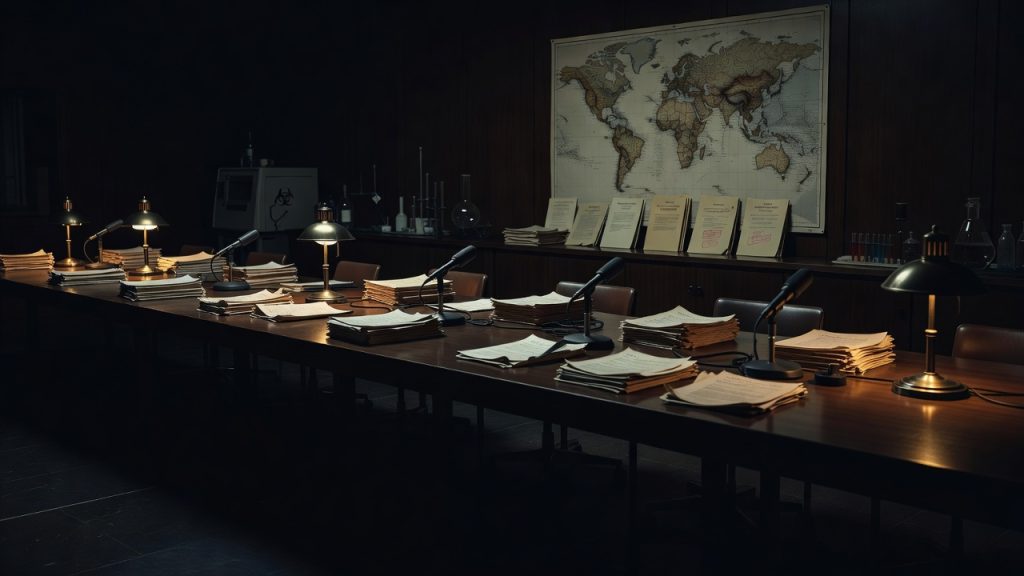
Empty Cold War treaty chamber for a Biological Weapons Convention deep dive — ConspiracyRealist.com

Geneva is quiet when the cameras leave. The delegates go back to their hotels. The translators shut off their headsets. The microphones fall dead. And somewhere in that silence sits one of the strangest documents of the Cold War: a treaty meant to outlaw germ warfare in a world that had already learned how to build it. On paper, the Biological Weapons Convention looked like civilization pulling itself back from the edge. But paper is fragile. It does not inspect laboratories. It does not open sealed freezers. It does not tell you whether a weapons program ended, or simply changed its label.

The Case For

A ban strong enough to calm the public

If you wanted to design the perfect reassurance document for a frightened planet, the Biological Weapons Convention would come close. Its core language is sweeping. States Parties undertake “never in any circumstances” to develop, produce, stockpile, acquire, or retain biological agents and toxins that have no peaceful justification, along with the weapons and delivery systems built to use them. Article II then requires those states to destroy such stockpiles or divert them to peaceful purposes.

The timing matters. President Nixon’s November 25, 1969 biological weapons renunciation publicly declared that the United States would abandon offensive biological warfare and support an international convention. Just a few years later, the BWC opened for signature in 1972 and entered into force in 1975. The sequence feels almost too clean: first a national renunciation, then a global treaty, then an official story that the biowarfare age was over.

The treaty’s weakness is exactly what troubles critics

That clean story is why some readers see the convention less as a lock and more as a curtain. The United Nations Office for Disarmament Affairs says the BWC is only 15 articles long and was the first multilateral disarmament treaty to ban an entire class of weapons of mass destruction. It is historically important. It also leaves a lot unsaid. The U.S. State Department’s own BWC overview emphasizes annual confidence-building measures meant to reduce “ambiguities, doubts and suspicions” about national biological activities. That wording is revealing. If a treaty needs annual confidence-building exchanges to calm suspicion, suspicion clearly survived the signing ceremony.

Critics of the official story point to the structure. The treaty bans offensive programs, but it does not eliminate the overlap between offensive know-how and defensive research. A state can shut down a weaponization line and still keep the scientists, the fermenters, the aerosol expertise, and the high-containment labs. That is part of why the biowarfare cluster on this site keeps circling back to the same uncomfortable terrain, from Nixon’s biowarfare renunciation to the broader archive of government secrets and black-site history. The official prohibition is real. The infrastructure underneath it can also remain real.

That is the core conspiratorial case: the BWC may have helped end open stockpiles while also giving major powers a cleaner vocabulary for keeping sensitive capabilities alive under biodefense, public health, or deterrence logic. If you already distrust state secrecy, the treaty does not necessarily erase that distrust. It refines it.

The Realist’s Eye

A weak enforcement system is not proof of hidden arsenals

This is where the theory has to survive contact with the record. The convention’s existence is not evidence of a cover-up. It is evidence of a genuine arms-control achievement. UNODA is clear that the BWC established a strong international norm against biological weapons and now has near-universal membership. That matters. So does the fact that Article II explicitly requires destruction or diversion of prohibited materials. A treaty can be imperfect and still be historically significant.

It is also too easy to treat every biodefense program as a disguised offensive one. The treaty does not ban prophylactic, protective, or other peaceful biological work. That was deliberate. Governments do need to study pathogens, vaccines, diagnostics, and response systems. The same ambiguity that unsettles conspiracy-minded readers also reflects a real problem of biology itself: research can be dual-use without automatically being illicit.

The unanswered problem is verification, not automatic guilt

Still, the hardest realist criticism cuts both ways. Arms Control Association’s survey of the treaty calls the lack of a robust verification regime one of the BWC’s major weaknesses and notes that the push for a stronger protocol collapsed in 2001. That does not prove states were hiding active offensive programs. It does show that one of the world’s most consequential bans has long depended more on declarations, consultations, and political pressure than on the kind of routine inspections people associate with harder-edged arms control.

That gap matters because biological weapons are uniquely easy to discuss in abstractions and uniquely hard to police in practice. A missile silo is visible. A pathogen freezer is not. A bomb plant announces itself in steel and smoke. A suspicious biological capability can hide inside a facility that also does legitimate research. So the real problem may be less dramatic than “the treaty was fake” and more troubling in its own way: the treaty may have been sincere, while never fully solving how the world would verify sincerity.

That tension is where the conspiracy survives. Not in proven secret stockpiles attached to every major signatory. Not in a document that means nothing. In the narrow, stubborn fact that a ban can be morally clear, legally serious, and still operationally difficult to prove.

What We Know For Certain

  • The Biological Weapons Convention opened for signature on April 10, 1972, and entered into force on March 26, 1975.
  • The treaty prohibits states from developing, producing, stockpiling, acquiring, retaining, or transferring biological weapons and related delivery systems for hostile purposes.
  • Article II requires prohibited stockpiles and equipment to be destroyed or diverted to peaceful purposes.
  • The treaty allows peaceful, protective, and prophylactic biological research to continue.
  • States Parties exchange annual confidence-building measures intended to reduce ambiguities, doubts, and suspicions.

The Unanswered Questions

  • How should the world distinguish legitimate biodefense research from covert offensive preparation when both can use similar facilities and expertise?
  • Why has the BWC remained far lighter on inspections and verification than many people assume an anti-weapons treaty would be?
  • What capabilities, data, or technical pathways from Cold War biological programs quietly migrated into modern defensive institutions?
  • How much confidence should the public place in annual declarations when trust, not intrusive verification, still carries so much of the burden?
  • If a state violated the spirit of the treaty without obviously violating its paperwork, how quickly would anyone know?

The Closer — You Decide

The Biological Weapons Convention may be one of those documents that is both more noble and less comforting than it first appears. It drew a line the world needed. It made the old biowarfare logic harder to defend in public. But it did not abolish secrecy, dual-use science, or the temptation to call something defensive when outsiders might use a harsher word. The treaty is real. The ban is real. So is the gray zone around how nations prove they obey it. The evidence is on the table. You decide.

dive down the rabbit hole

The Biological Weapons Convention: Ban or Blindfold?

S-FX.com
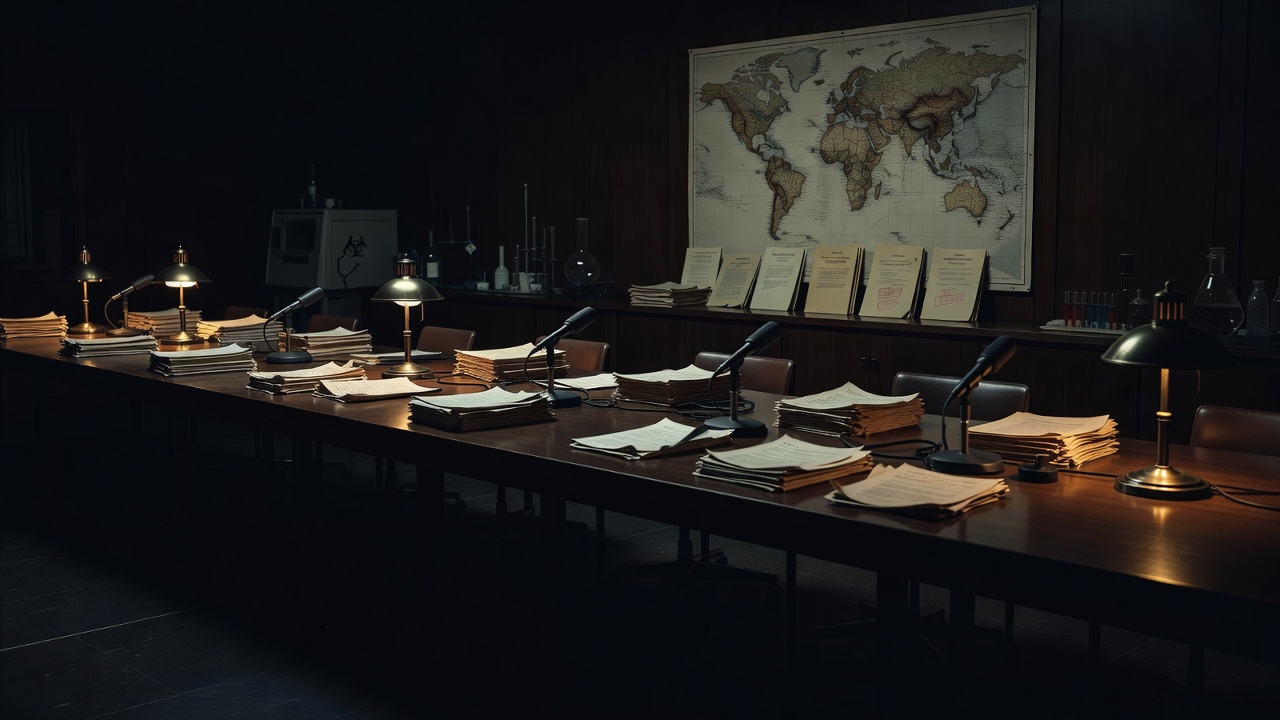
Empty Cold War treaty chamber for a Biological Weapons Convention deep dive — ConspiracyRealist.com

Geneva is quiet when the cameras leave. The delegates go back to their hotels. The translators shut off their headsets. The microphones fall dead. And somewhere in that silence sits one of the strangest documents of the Cold War: a treaty meant to outlaw germ warfare in a world that had already learned how to build it. On paper, the Biological Weapons Convention looked like civilization pulling itself back from the edge. But paper is fragile. It does not inspect laboratories. It does not open sealed freezers. It does not tell you whether a weapons program ended, or simply changed its label.

The Case For

A ban strong enough to calm the public

If you wanted to design the perfect reassurance document for a frightened planet, the Biological Weapons Convention would come close. Its core language is sweeping. States Parties undertake “never in any circumstances” to develop, produce, stockpile, acquire, or retain biological agents and toxins that have no peaceful justification, along with the weapons and delivery systems built to use them. Article II then requires those states to destroy such stockpiles or divert them to peaceful purposes.

The timing matters. President Nixon’s November 25, 1969 biological weapons renunciation publicly declared that the United States would abandon offensive biological warfare and support an international convention. Just a few years later, the BWC opened for signature in 1972 and entered into force in 1975. The sequence feels almost too clean: first a national renunciation, then a global treaty, then an official story that the biowarfare age was over.

The treaty’s weakness is exactly what troubles critics

That clean story is why some readers see the convention less as a lock and more as a curtain. The United Nations Office for Disarmament Affairs says the BWC is only 15 articles long and was the first multilateral disarmament treaty to ban an entire class of weapons of mass destruction. It is historically important. It also leaves a lot unsaid. The U.S. State Department’s own BWC overview emphasizes annual confidence-building measures meant to reduce “ambiguities, doubts and suspicions” about national biological activities. That wording is revealing. If a treaty needs annual confidence-building exchanges to calm suspicion, suspicion clearly survived the signing ceremony.

Critics of the official story point to the structure. The treaty bans offensive programs, but it does not eliminate the overlap between offensive know-how and defensive research. A state can shut down a weaponization line and still keep the scientists, the fermenters, the aerosol expertise, and the high-containment labs. That is part of why the biowarfare cluster on this site keeps circling back to the same uncomfortable terrain, from Nixon’s biowarfare renunciation to the broader archive of government secrets and black-site history. The official prohibition is real. The infrastructure underneath it can also remain real.

That is the core conspiratorial case: the BWC may have helped end open stockpiles while also giving major powers a cleaner vocabulary for keeping sensitive capabilities alive under biodefense, public health, or deterrence logic. If you already distrust state secrecy, the treaty does not necessarily erase that distrust. It refines it.

The Realist’s Eye

A weak enforcement system is not proof of hidden arsenals

This is where the theory has to survive contact with the record. The convention’s existence is not evidence of a cover-up. It is evidence of a genuine arms-control achievement. UNODA is clear that the BWC established a strong international norm against biological weapons and now has near-universal membership. That matters. So does the fact that Article II explicitly requires destruction or diversion of prohibited materials. A treaty can be imperfect and still be historically significant.

It is also too easy to treat every biodefense program as a disguised offensive one. The treaty does not ban prophylactic, protective, or other peaceful biological work. That was deliberate. Governments do need to study pathogens, vaccines, diagnostics, and response systems. The same ambiguity that unsettles conspiracy-minded readers also reflects a real problem of biology itself: research can be dual-use without automatically being illicit.

The unanswered problem is verification, not automatic guilt

Still, the hardest realist criticism cuts both ways. Arms Control Association’s survey of the treaty calls the lack of a robust verification regime one of the BWC’s major weaknesses and notes that the push for a stronger protocol collapsed in 2001. That does not prove states were hiding active offensive programs. It does show that one of the world’s most consequential bans has long depended more on declarations, consultations, and political pressure than on the kind of routine inspections people associate with harder-edged arms control.

That gap matters because biological weapons are uniquely easy to discuss in abstractions and uniquely hard to police in practice. A missile silo is visible. A pathogen freezer is not. A bomb plant announces itself in steel and smoke. A suspicious biological capability can hide inside a facility that also does legitimate research. So the real problem may be less dramatic than “the treaty was fake” and more troubling in its own way: the treaty may have been sincere, while never fully solving how the world would verify sincerity.

That tension is where the conspiracy survives. Not in proven secret stockpiles attached to every major signatory. Not in a document that means nothing. In the narrow, stubborn fact that a ban can be morally clear, legally serious, and still operationally difficult to prove.

What We Know For Certain

  • The Biological Weapons Convention opened for signature on April 10, 1972, and entered into force on March 26, 1975.
  • The treaty prohibits states from developing, producing, stockpiling, acquiring, retaining, or transferring biological weapons and related delivery systems for hostile purposes.
  • Article II requires prohibited stockpiles and equipment to be destroyed or diverted to peaceful purposes.
  • The treaty allows peaceful, protective, and prophylactic biological research to continue.
  • States Parties exchange annual confidence-building measures intended to reduce ambiguities, doubts, and suspicions.

The Unanswered Questions

  • How should the world distinguish legitimate biodefense research from covert offensive preparation when both can use similar facilities and expertise?
  • Why has the BWC remained far lighter on inspections and verification than many people assume an anti-weapons treaty would be?
  • What capabilities, data, or technical pathways from Cold War biological programs quietly migrated into modern defensive institutions?
  • How much confidence should the public place in annual declarations when trust, not intrusive verification, still carries so much of the burden?
  • If a state violated the spirit of the treaty without obviously violating its paperwork, how quickly would anyone know?

The Closer — You Decide

The Biological Weapons Convention may be one of those documents that is both more noble and less comforting than it first appears. It drew a line the world needed. It made the old biowarfare logic harder to defend in public. But it did not abolish secrecy, dual-use science, or the temptation to call something defensive when outsiders might use a harsher word. The treaty is real. The ban is real. So is the gray zone around how nations prove they obey it. The evidence is on the table. You decide.

The Biological Weapons Convention: Ban or Blindfold?

Empty Cold War treaty chamber for a Biological Weapons Convention deep dive — ConspiracyRealist.com

Geneva is quiet when the cameras leave. The delegates go back to their hotels. The translators shut off their headsets. The microphones fall dead. And somewhere in that silence sits one of the strangest documents of the Cold War: a treaty meant to outlaw germ warfare in a world that had already learned how to build it. On paper, the Biological Weapons Convention looked like civilization pulling itself back from the edge. But paper is fragile. It does not inspect laboratories. It does not open sealed freezers. It does not tell you whether a weapons program ended, or simply changed its label.

The Case For

A ban strong enough to calm the public

If you wanted to design the perfect reassurance document for a frightened planet, the Biological Weapons Convention would come close. Its core language is sweeping. States Parties undertake “never in any circumstances” to develop, produce, stockpile, acquire, or retain biological agents and toxins that have no peaceful justification, along with the weapons and delivery systems built to use them. Article II then requires those states to destroy such stockpiles or divert them to peaceful purposes.

The timing matters. President Nixon’s November 25, 1969 biological weapons renunciation publicly declared that the United States would abandon offensive biological warfare and support an international convention. Just a few years later, the BWC opened for signature in 1972 and entered into force in 1975. The sequence feels almost too clean: first a national renunciation, then a global treaty, then an official story that the biowarfare age was over.

The treaty’s weakness is exactly what troubles critics

That clean story is why some readers see the convention less as a lock and more as a curtain. The United Nations Office for Disarmament Affairs says the BWC is only 15 articles long and was the first multilateral disarmament treaty to ban an entire class of weapons of mass destruction. It is historically important. It also leaves a lot unsaid. The U.S. State Department’s own BWC overview emphasizes annual confidence-building measures meant to reduce “ambiguities, doubts and suspicions” about national biological activities. That wording is revealing. If a treaty needs annual confidence-building exchanges to calm suspicion, suspicion clearly survived the signing ceremony.

Critics of the official story point to the structure. The treaty bans offensive programs, but it does not eliminate the overlap between offensive know-how and defensive research. A state can shut down a weaponization line and still keep the scientists, the fermenters, the aerosol expertise, and the high-containment labs. That is part of why the biowarfare cluster on this site keeps circling back to the same uncomfortable terrain, from Nixon’s biowarfare renunciation to the broader archive of government secrets and black-site history. The official prohibition is real. The infrastructure underneath it can also remain real.

That is the core conspiratorial case: the BWC may have helped end open stockpiles while also giving major powers a cleaner vocabulary for keeping sensitive capabilities alive under biodefense, public health, or deterrence logic. If you already distrust state secrecy, the treaty does not necessarily erase that distrust. It refines it.

The Realist’s Eye

A weak enforcement system is not proof of hidden arsenals

This is where the theory has to survive contact with the record. The convention’s existence is not evidence of a cover-up. It is evidence of a genuine arms-control achievement. UNODA is clear that the BWC established a strong international norm against biological weapons and now has near-universal membership. That matters. So does the fact that Article II explicitly requires destruction or diversion of prohibited materials. A treaty can be imperfect and still be historically significant.

It is also too easy to treat every biodefense program as a disguised offensive one. The treaty does not ban prophylactic, protective, or other peaceful biological work. That was deliberate. Governments do need to study pathogens, vaccines, diagnostics, and response systems. The same ambiguity that unsettles conspiracy-minded readers also reflects a real problem of biology itself: research can be dual-use without automatically being illicit.

The unanswered problem is verification, not automatic guilt

Still, the hardest realist criticism cuts both ways. Arms Control Association’s survey of the treaty calls the lack of a robust verification regime one of the BWC’s major weaknesses and notes that the push for a stronger protocol collapsed in 2001. That does not prove states were hiding active offensive programs. It does show that one of the world’s most consequential bans has long depended more on declarations, consultations, and political pressure than on the kind of routine inspections people associate with harder-edged arms control.

That gap matters because biological weapons are uniquely easy to discuss in abstractions and uniquely hard to police in practice. A missile silo is visible. A pathogen freezer is not. A bomb plant announces itself in steel and smoke. A suspicious biological capability can hide inside a facility that also does legitimate research. So the real problem may be less dramatic than “the treaty was fake” and more troubling in its own way: the treaty may have been sincere, while never fully solving how the world would verify sincerity.

That tension is where the conspiracy survives. Not in proven secret stockpiles attached to every major signatory. Not in a document that means nothing. In the narrow, stubborn fact that a ban can be morally clear, legally serious, and still operationally difficult to prove.

What We Know For Certain

  • The Biological Weapons Convention opened for signature on April 10, 1972, and entered into force on March 26, 1975.
  • The treaty prohibits states from developing, producing, stockpiling, acquiring, retaining, or transferring biological weapons and related delivery systems for hostile purposes.
  • Article II requires prohibited stockpiles and equipment to be destroyed or diverted to peaceful purposes.
  • The treaty allows peaceful, protective, and prophylactic biological research to continue.
  • States Parties exchange annual confidence-building measures intended to reduce ambiguities, doubts, and suspicions.

The Unanswered Questions

  • How should the world distinguish legitimate biodefense research from covert offensive preparation when both can use similar facilities and expertise?
  • Why has the BWC remained far lighter on inspections and verification than many people assume an anti-weapons treaty would be?
  • What capabilities, data, or technical pathways from Cold War biological programs quietly migrated into modern defensive institutions?
  • How much confidence should the public place in annual declarations when trust, not intrusive verification, still carries so much of the burden?
  • If a state violated the spirit of the treaty without obviously violating its paperwork, how quickly would anyone know?

The Closer — You Decide

The Biological Weapons Convention may be one of those documents that is both more noble and less comforting than it first appears. It drew a line the world needed. It made the old biowarfare logic harder to defend in public. But it did not abolish secrecy, dual-use science, or the temptation to call something defensive when outsiders might use a harsher word. The treaty is real. The ban is real. So is the gray zone around how nations prove they obey it. The evidence is on the table. You decide.

Table of contents