Menu

Building 7: The 9/11 Collapse That Still Divides

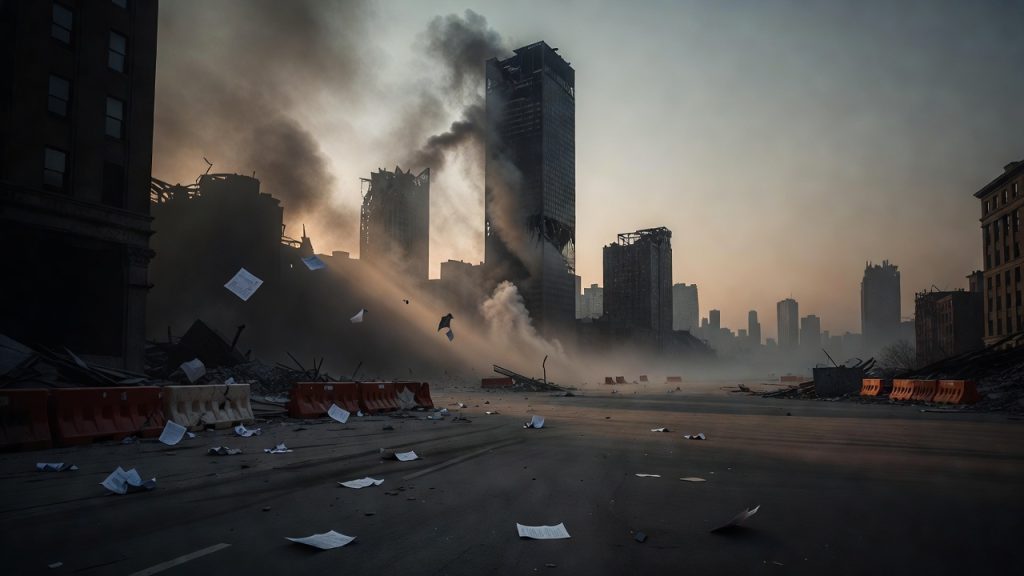
Smoke-shrouded view evoking the Building 7 collapse debate — ConspiracyRealist.com

At 5:20 in the evening, lower Manhattan had already been turned into a ruin. The Twin Towers were gone. Smoke rolled through the canyons of glass and steel. Sirens had thinned into a distant metallic ache. Then another skyscraper dropped straight into its own footprint — not after a plane strike, but after a long burn that millions would later struggle to fit inside the official frame of the day. For some viewers, World Trade Center 7 became the loose thread that could unravel everything. For others, it became the most misunderstood engineering failure in modern American history.

The Case For

Why Building 7 became conspiracy fuel

World Trade Center 7 was a 47-story office building north of the main complex. It was not hit by an airliner. It collapsed at 5:20:52 p.m. on September 11, 2001, after fires burned for nearly seven hours. That alone was enough to make it an enduring flashpoint. For years, skeptics of the official 9/11 story pointed to the building’s visual descent — especially its brief period of free fall — as evidence that something more than office fires had to be involved.

The official record gave conspiracy researchers material to work with. FEMA’s early performance study called the best available explanation only a preliminary one, and NIST did not release its final WTC 7 report until 2008. In the years between, a vacuum opened. Into that vacuum rushed theories about pre-planted explosives, intelligence foreknowledge, and a cleanup operation disguised as structural failure.

Those theories drew strength from a few stubborn facts. NIST itself later acknowledged that video analysis showed a roughly 2.25-second period of free fall during the collapse. To critics, that looked less like a fire-damaged high-rise failing unevenly and more like columns being removed in unison. Add in the building’s government tenants, the chaotic destruction of evidence across Ground Zero, and the broader climate of mistrust surrounding post-9/11 secrecy, and Building 7 became more than a structural question. It became a referendum on whether the public had been told the full story.

That suspicion did not stay on the fringe. A four-year reevaluation by the University of Alaska Fairbanks, funded by Architects & Engineers for 9/11 Truth, concluded in 2020 that fire did not cause the collapse and that the observed descent was more consistent with a near-simultaneous failure of every column. For people already convinced the official explanation was incomplete, that study looked like academic reinforcement. It gave the Building 7 argument a fresh afterlife long after the first wave of 9/11 investigations had closed.

And the deeper logic is hard to miss: if one building on the perimeter of the disaster collapsed in a way the public still does not intuitively understand, what else from that day might have been simplified, sanitized, or buried? That is the emotional engine behind the Building 7 theory, and it has kept running for nearly a quarter century. It also sits comfortably beside Conspiracy Realist’s broader archive on government secrets and official concealment, where the story is rarely just the event itself, but the long afterlife of the explanation.

The Realist’s Eye

Where the theory runs into hard limits

The strongest challenge to the conspiracy case is also the most mundane one: there is a long, heavily documented federal investigation that did not just dismiss Building 7 with a shrug. NIST’s final WTC 7 report, its WTC 7 FAQ, and the broader World Trade Center investigation describe a specific failure sequence. According to NIST, debris from the collapse of the North Tower ignited fires on multiple floors, sprinkler protection was compromised, and thermal expansion of floor beams and girders around Column 79 triggered a progressive internal failure that eventually took the whole structure down. NIST says this was the first known tall-building collapse driven primarily by uncontrolled fire, which is exactly why it looked so alien.

That explanation is not universally accepted, but it is far more detailed than the caricature often presented by critics. NIST interviewed survivors and responders, examined structural steel, reviewed design and maintenance records, analyzed thousands of videos and photographs, and released about 1,000 pages of WTC 7 reporting after years of study. Its conclusion was not that nothing strange happened. Its conclusion was that a rare event happened.

There are also weaknesses in the alternative case. The University of Alaska Fairbanks reevaluation is frequently cited as a knockout blow, but it was funded by an advocacy organization whose explicit mission is to challenge the official 9/11 narrative. That does not automatically invalidate the work, but it does mean the study should be handled carefully. Its conclusions were provocative, yet they did not overturn NIST’s findings in any formal governmental or code-setting sense. NIST, for its part, has publicly said it is aware of other studies and stands by its original findings.

The explosives theory has its own evidentiary gap. NIST says it found no evidence of blast events inside WTC 7 and deemed thermite highly unlikely as a mechanism for severing the columns. Critics answer that NIST did not test every imaginable residue question, but that still leaves the central burden unresolved: a controlled demolition claim requires positive evidence of demolition, not just dissatisfaction with a fire model.

In other words, the realist problem is this: Building 7 is visually shocking, institutionally suspicious, and technically disputed — but a technically disputed collapse is not the same thing as proof of a covert operation. The questions remain real. The leap from anomaly to orchestration is where the evidentiary floor gets thin.

What We Know For Certain

  • World Trade Center 7 was a 47-story building that collapsed at 5:20:52 p.m. on September 11, 2001.
  • NIST concluded in its 2008 final report that uncontrolled fires, not explosives, caused the collapse.
  • NIST acknowledged a brief free-fall phase within the overall 5.4-second descent it analyzed.
  • The University of Alaska Fairbanks reevaluation concluded in 2020 that fire did not cause the collapse.
  • NIST says it is aware of competing studies and stands by its original findings.

The Unanswered Questions

  • Can NIST’s collapse initiation model be independently replicated in full without access to every withheld modeling file?
  • Why did Building 7’s collapse remain so poorly understood by the public compared with the Twin Towers?
  • What weight should investigators give to the UAF reevaluation given its outside funding and its technical scope?
  • Did the long delay between the collapse and NIST’s final WTC 7 report deepen distrust beyond repair?

The Closer — You Decide

Building 7 lives in that dangerous space where public trauma, technical complexity, and institutional mistrust overlap. The federal report is real. The counter-study is real. The free-fall debate is real. So is the fact that a collapse this unusual arrived on the most politically radioactive day of the century. Maybe that points to a hidden hand. Maybe it points to a catastrophic chain of failures the public still finds hard to believe. Either way, the documents are on the table. The questions are still standing. You decide.

dive down the rabbit hole

Building 7: The 9/11 Collapse That Still Divides

S-FX.com
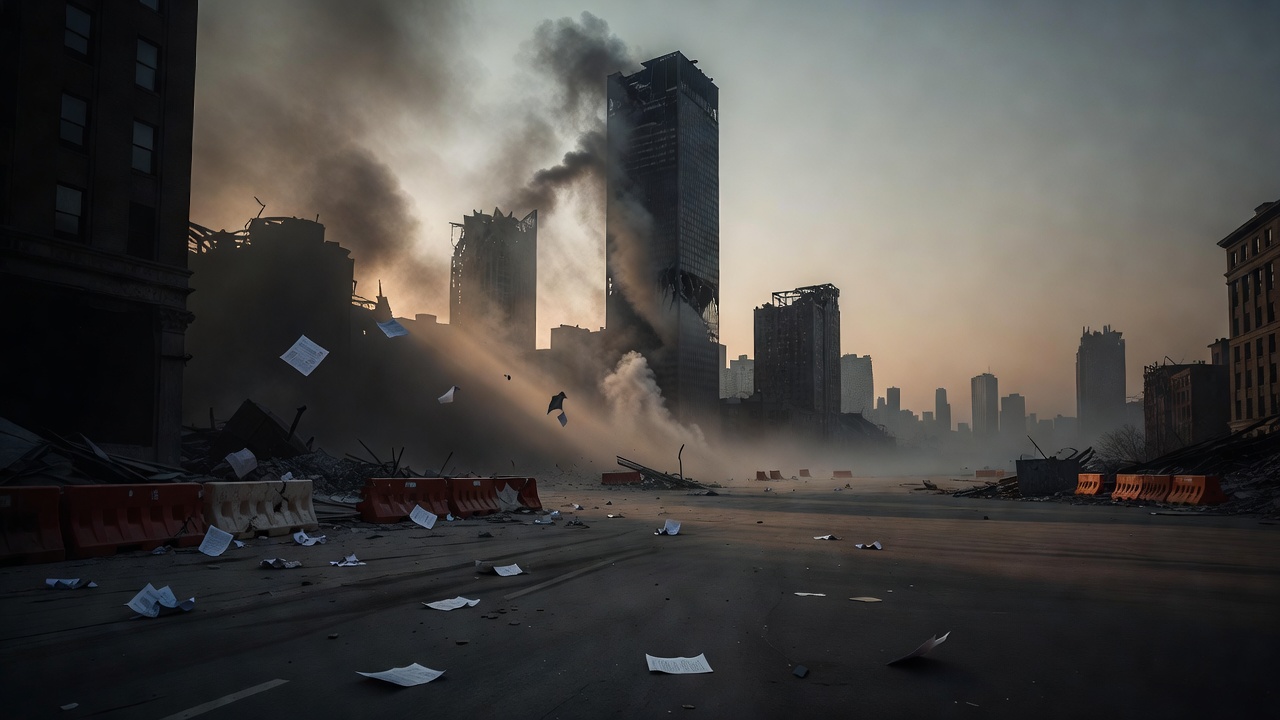
Smoke-shrouded view evoking the Building 7 collapse debate — ConspiracyRealist.com

At 5:20 in the evening, lower Manhattan had already been turned into a ruin. The Twin Towers were gone. Smoke rolled through the canyons of glass and steel. Sirens had thinned into a distant metallic ache. Then another skyscraper dropped straight into its own footprint — not after a plane strike, but after a long burn that millions would later struggle to fit inside the official frame of the day. For some viewers, World Trade Center 7 became the loose thread that could unravel everything. For others, it became the most misunderstood engineering failure in modern American history.

The Case For

Why Building 7 became conspiracy fuel

World Trade Center 7 was a 47-story office building north of the main complex. It was not hit by an airliner. It collapsed at 5:20:52 p.m. on September 11, 2001, after fires burned for nearly seven hours. That alone was enough to make it an enduring flashpoint. For years, skeptics of the official 9/11 story pointed to the building’s visual descent — especially its brief period of free fall — as evidence that something more than office fires had to be involved.

The official record gave conspiracy researchers material to work with. FEMA’s early performance study called the best available explanation only a preliminary one, and NIST did not release its final WTC 7 report until 2008. In the years between, a vacuum opened. Into that vacuum rushed theories about pre-planted explosives, intelligence foreknowledge, and a cleanup operation disguised as structural failure.

Those theories drew strength from a few stubborn facts. NIST itself later acknowledged that video analysis showed a roughly 2.25-second period of free fall during the collapse. To critics, that looked less like a fire-damaged high-rise failing unevenly and more like columns being removed in unison. Add in the building’s government tenants, the chaotic destruction of evidence across Ground Zero, and the broader climate of mistrust surrounding post-9/11 secrecy, and Building 7 became more than a structural question. It became a referendum on whether the public had been told the full story.

That suspicion did not stay on the fringe. A four-year reevaluation by the University of Alaska Fairbanks, funded by Architects & Engineers for 9/11 Truth, concluded in 2020 that fire did not cause the collapse and that the observed descent was more consistent with a near-simultaneous failure of every column. For people already convinced the official explanation was incomplete, that study looked like academic reinforcement. It gave the Building 7 argument a fresh afterlife long after the first wave of 9/11 investigations had closed.

And the deeper logic is hard to miss: if one building on the perimeter of the disaster collapsed in a way the public still does not intuitively understand, what else from that day might have been simplified, sanitized, or buried? That is the emotional engine behind the Building 7 theory, and it has kept running for nearly a quarter century. It also sits comfortably beside Conspiracy Realist’s broader archive on government secrets and official concealment, where the story is rarely just the event itself, but the long afterlife of the explanation.

The Realist’s Eye

Where the theory runs into hard limits

The strongest challenge to the conspiracy case is also the most mundane one: there is a long, heavily documented federal investigation that did not just dismiss Building 7 with a shrug. NIST’s final WTC 7 report, its WTC 7 FAQ, and the broader World Trade Center investigation describe a specific failure sequence. According to NIST, debris from the collapse of the North Tower ignited fires on multiple floors, sprinkler protection was compromised, and thermal expansion of floor beams and girders around Column 79 triggered a progressive internal failure that eventually took the whole structure down. NIST says this was the first known tall-building collapse driven primarily by uncontrolled fire, which is exactly why it looked so alien.

That explanation is not universally accepted, but it is far more detailed than the caricature often presented by critics. NIST interviewed survivors and responders, examined structural steel, reviewed design and maintenance records, analyzed thousands of videos and photographs, and released about 1,000 pages of WTC 7 reporting after years of study. Its conclusion was not that nothing strange happened. Its conclusion was that a rare event happened.

There are also weaknesses in the alternative case. The University of Alaska Fairbanks reevaluation is frequently cited as a knockout blow, but it was funded by an advocacy organization whose explicit mission is to challenge the official 9/11 narrative. That does not automatically invalidate the work, but it does mean the study should be handled carefully. Its conclusions were provocative, yet they did not overturn NIST’s findings in any formal governmental or code-setting sense. NIST, for its part, has publicly said it is aware of other studies and stands by its original findings.

The explosives theory has its own evidentiary gap. NIST says it found no evidence of blast events inside WTC 7 and deemed thermite highly unlikely as a mechanism for severing the columns. Critics answer that NIST did not test every imaginable residue question, but that still leaves the central burden unresolved: a controlled demolition claim requires positive evidence of demolition, not just dissatisfaction with a fire model.

In other words, the realist problem is this: Building 7 is visually shocking, institutionally suspicious, and technically disputed — but a technically disputed collapse is not the same thing as proof of a covert operation. The questions remain real. The leap from anomaly to orchestration is where the evidentiary floor gets thin.

What We Know For Certain

  • World Trade Center 7 was a 47-story building that collapsed at 5:20:52 p.m. on September 11, 2001.
  • NIST concluded in its 2008 final report that uncontrolled fires, not explosives, caused the collapse.
  • NIST acknowledged a brief free-fall phase within the overall 5.4-second descent it analyzed.
  • The University of Alaska Fairbanks reevaluation concluded in 2020 that fire did not cause the collapse.
  • NIST says it is aware of competing studies and stands by its original findings.

The Unanswered Questions

  • Can NIST’s collapse initiation model be independently replicated in full without access to every withheld modeling file?
  • Why did Building 7’s collapse remain so poorly understood by the public compared with the Twin Towers?
  • What weight should investigators give to the UAF reevaluation given its outside funding and its technical scope?
  • Did the long delay between the collapse and NIST’s final WTC 7 report deepen distrust beyond repair?

The Closer — You Decide

Building 7 lives in that dangerous space where public trauma, technical complexity, and institutional mistrust overlap. The federal report is real. The counter-study is real. The free-fall debate is real. So is the fact that a collapse this unusual arrived on the most politically radioactive day of the century. Maybe that points to a hidden hand. Maybe it points to a catastrophic chain of failures the public still finds hard to believe. Either way, the documents are on the table. The questions are still standing. You decide.

Building 7: The 9/11 Collapse That Still Divides

Smoke-shrouded view evoking the Building 7 collapse debate — ConspiracyRealist.com

At 5:20 in the evening, lower Manhattan had already been turned into a ruin. The Twin Towers were gone. Smoke rolled through the canyons of glass and steel. Sirens had thinned into a distant metallic ache. Then another skyscraper dropped straight into its own footprint — not after a plane strike, but after a long burn that millions would later struggle to fit inside the official frame of the day. For some viewers, World Trade Center 7 became the loose thread that could unravel everything. For others, it became the most misunderstood engineering failure in modern American history.

The Case For

Why Building 7 became conspiracy fuel

World Trade Center 7 was a 47-story office building north of the main complex. It was not hit by an airliner. It collapsed at 5:20:52 p.m. on September 11, 2001, after fires burned for nearly seven hours. That alone was enough to make it an enduring flashpoint. For years, skeptics of the official 9/11 story pointed to the building’s visual descent — especially its brief period of free fall — as evidence that something more than office fires had to be involved.

The official record gave conspiracy researchers material to work with. FEMA’s early performance study called the best available explanation only a preliminary one, and NIST did not release its final WTC 7 report until 2008. In the years between, a vacuum opened. Into that vacuum rushed theories about pre-planted explosives, intelligence foreknowledge, and a cleanup operation disguised as structural failure.

Those theories drew strength from a few stubborn facts. NIST itself later acknowledged that video analysis showed a roughly 2.25-second period of free fall during the collapse. To critics, that looked less like a fire-damaged high-rise failing unevenly and more like columns being removed in unison. Add in the building’s government tenants, the chaotic destruction of evidence across Ground Zero, and the broader climate of mistrust surrounding post-9/11 secrecy, and Building 7 became more than a structural question. It became a referendum on whether the public had been told the full story.

That suspicion did not stay on the fringe. A four-year reevaluation by the University of Alaska Fairbanks, funded by Architects & Engineers for 9/11 Truth, concluded in 2020 that fire did not cause the collapse and that the observed descent was more consistent with a near-simultaneous failure of every column. For people already convinced the official explanation was incomplete, that study looked like academic reinforcement. It gave the Building 7 argument a fresh afterlife long after the first wave of 9/11 investigations had closed.

And the deeper logic is hard to miss: if one building on the perimeter of the disaster collapsed in a way the public still does not intuitively understand, what else from that day might have been simplified, sanitized, or buried? That is the emotional engine behind the Building 7 theory, and it has kept running for nearly a quarter century. It also sits comfortably beside Conspiracy Realist’s broader archive on government secrets and official concealment, where the story is rarely just the event itself, but the long afterlife of the explanation.

The Realist’s Eye

Where the theory runs into hard limits

The strongest challenge to the conspiracy case is also the most mundane one: there is a long, heavily documented federal investigation that did not just dismiss Building 7 with a shrug. NIST’s final WTC 7 report, its WTC 7 FAQ, and the broader World Trade Center investigation describe a specific failure sequence. According to NIST, debris from the collapse of the North Tower ignited fires on multiple floors, sprinkler protection was compromised, and thermal expansion of floor beams and girders around Column 79 triggered a progressive internal failure that eventually took the whole structure down. NIST says this was the first known tall-building collapse driven primarily by uncontrolled fire, which is exactly why it looked so alien.

That explanation is not universally accepted, but it is far more detailed than the caricature often presented by critics. NIST interviewed survivors and responders, examined structural steel, reviewed design and maintenance records, analyzed thousands of videos and photographs, and released about 1,000 pages of WTC 7 reporting after years of study. Its conclusion was not that nothing strange happened. Its conclusion was that a rare event happened.

There are also weaknesses in the alternative case. The University of Alaska Fairbanks reevaluation is frequently cited as a knockout blow, but it was funded by an advocacy organization whose explicit mission is to challenge the official 9/11 narrative. That does not automatically invalidate the work, but it does mean the study should be handled carefully. Its conclusions were provocative, yet they did not overturn NIST’s findings in any formal governmental or code-setting sense. NIST, for its part, has publicly said it is aware of other studies and stands by its original findings.

The explosives theory has its own evidentiary gap. NIST says it found no evidence of blast events inside WTC 7 and deemed thermite highly unlikely as a mechanism for severing the columns. Critics answer that NIST did not test every imaginable residue question, but that still leaves the central burden unresolved: a controlled demolition claim requires positive evidence of demolition, not just dissatisfaction with a fire model.

In other words, the realist problem is this: Building 7 is visually shocking, institutionally suspicious, and technically disputed — but a technically disputed collapse is not the same thing as proof of a covert operation. The questions remain real. The leap from anomaly to orchestration is where the evidentiary floor gets thin.

What We Know For Certain

  • World Trade Center 7 was a 47-story building that collapsed at 5:20:52 p.m. on September 11, 2001.
  • NIST concluded in its 2008 final report that uncontrolled fires, not explosives, caused the collapse.
  • NIST acknowledged a brief free-fall phase within the overall 5.4-second descent it analyzed.
  • The University of Alaska Fairbanks reevaluation concluded in 2020 that fire did not cause the collapse.
  • NIST says it is aware of competing studies and stands by its original findings.

The Unanswered Questions

  • Can NIST’s collapse initiation model be independently replicated in full without access to every withheld modeling file?
  • Why did Building 7’s collapse remain so poorly understood by the public compared with the Twin Towers?
  • What weight should investigators give to the UAF reevaluation given its outside funding and its technical scope?
  • Did the long delay between the collapse and NIST’s final WTC 7 report deepen distrust beyond repair?

The Closer — You Decide

Building 7 lives in that dangerous space where public trauma, technical complexity, and institutional mistrust overlap. The federal report is real. The counter-study is real. The free-fall debate is real. So is the fact that a collapse this unusual arrived on the most politically radioactive day of the century. Maybe that points to a hidden hand. Maybe it points to a catastrophic chain of failures the public still finds hard to believe. Either way, the documents are on the table. The questions are still standing. You decide.

Table of contents