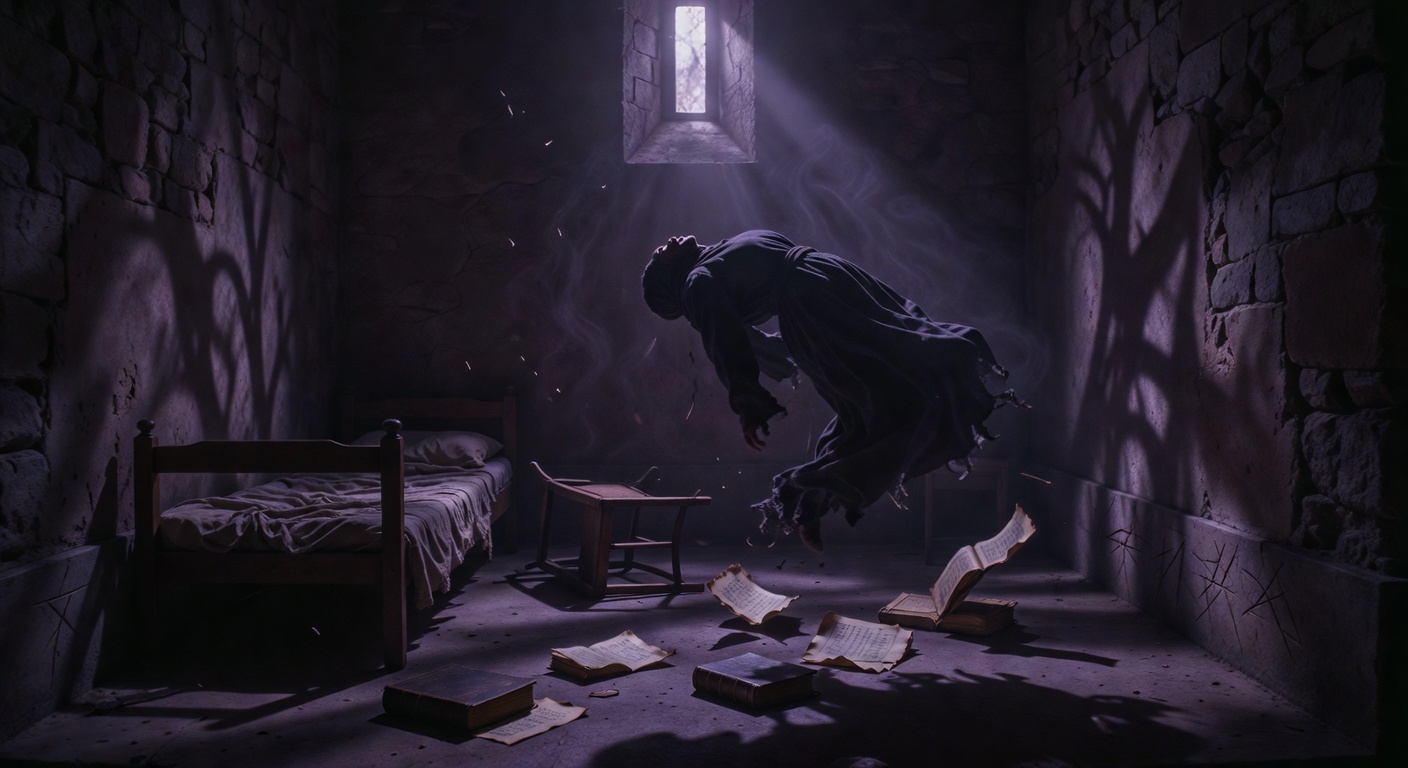
Imagine a 16-year-old girl in a remote South African mission school, suddenly levitating off her bed, speaking fluent Polish and Latin she never studied, and snarling at priests with a voice that wasn’t hers. This wasn’t a Hollywood horror flick—it was 1906, and Clara Germana Cele was at the center of one of the most documented cases of alleged demonic possession in modern history. Eyewitnesses, including nuns and priests, swore they saw her climb walls like a spider, reveal hidden sins of onlookers, and even spit objects like nails and scissors from her mouth. What started as teenage rebellion spiraled into a battle against what many believed were actual demons, ending in her untimely death after two harrowing exorcisms. Buckle up, because as we dive into this rabbit hole for ConspiracyRealist.com, we’ll peel back layers of faith, folklore, and the unexplained, connecting it to cases that still haunt us today.
The Making of Clara Germana Cele: A Devout Girl in a Spirit-Filled World
Let’s set the scene. Clara Germana Cele was born around 1890 (some sources pinpoint 1893) in Natal, South Africa—not 1906 as some retellings fuzzily claim. Growing up in the shadows of the Drakensberg Mountains, she was immersed in a melting pot of Zulu traditions and strict Catholic missionary zeal. Her family sent her to St. Michael’s Mission School in Tokologo, run by the Oblates of Mary Immaculate, a French order of priests determined to convert locals amid colonial tensions.
Clara wasn’t your average teen. Described as intelligent and devout, she was known for her piety—singing hymns, helping at Mass, the works. But beneath that facade, whispers suggest she dabbled in the forbidden. Local lore, echoed in church records, claims Clara made a pact with the devil. Picture this: a curious girl, influenced by tribal stories of tokoloshes (mischievous spirits) and witch doctors, experimenting with the occult. One account from missionary Father Erasmus Hörner alleges she confessed to summoning demons for power or revenge after a falling out—perhaps over a romance or school drama. Whatever the trigger, by August 1906, things went south fast.
South Africa’s cultural cauldron amplified everything. Zulu beliefs in ancestral spirits (amadlozi) clashed with Catholic demonology, creating a perfect storm for interpreting mental breakdowns as possession. Historians like those at the Catholic Encyclopedia note how colonial missions often framed local shamanism as satanic, blurring lines between psychology and the paranormal. Was Clara’s “possession” a clash of worldviews, or something darker? We’ll circle back.
The Onset: From Pranks to Poltergeists
It started subtly. Clara’s behavior flipped like a switch. One night in the dormitory, she woke screaming about black shadows clawing at her soul. Nuns found her bed soaked—not with water, but what they described as a foul, oily liquid smelling of sulfur. By morning, she was hurling obscenities in guttural tones, attacking classmates, and claiming demons named her new masters.
Word spread like veldt fire. Sister Magdalene, a key eyewitness, documented Clara levitating three feet off the ground, her body rigid as she floated toward the ceiling. Attempts to pull her down? Futile—she was feather-light yet immovable. This wasn’t hysteria; multiple accounts corroborate superhuman strength. Clara, a slight 16-year-old, allegedly lifted a 150-pound iron bedstead single-handedly, bending iron bars like licorice.
Then came the voices. Witnesses heard her converse in Zulu, English, Latin, German, French, Polish, Italian, even isiXhosa dialects—languages alien to her education. Priests tested her: “Recite the Lord’s Prayer backward.” She did, flawlessly, in multiple tongues, mocking them. Father Ernest Hartzer, who later led the exorcism, noted her revealing private sins: “She named adulterers in the congregation, secrets only God should know.” Chilling? Absolutely. Skeptics today point to cryptomnesia—subconscious absorption from overheard missionary chatter—but in 1906, with no Google, that strains credulity.
Escalation: A Body at War with Itself
As weeks dragged into September, Clara’s body became a battleground. Her eyes bulged unnaturally, pupils dilating to black pits. Skin stretched taut, face contorting into animalistic snarls. She spat sharp objects—scissors, nails, broken glass—up to 20 times a day, per Father Hörner‘s diary. Doctors examined her; no trickery found. X-rays? Not around yet, but rectal searches confirmed no hidden props.
Animal mimicry kicked in. Clara growled like a lion, barked like dogs, even hissed like snakes, contorting into their shapes. She’d climb walls headfirst, sticking like Velcro, defying gravity. One nun swore Clara flew across the room, crashing into a crucifix that burned her flesh on contact—leaving welts shaped like crosses. Holy water? She recoiled, vomiting black bile. These aren’t one-off tales; a sworn affidavit from 12 witnesses, including Bishop James Lennox of Durban, details it all.
Psychological angle? Modern shrinks might diagnose dissociative identity disorder or schizophrenia, exacerbated by malaria (rampant in Natal) or epilepsy. But contemporaries, including medical consults, ruled out illness—no fever, no seizures matching the feats. This case predates Freud’s peak influence, so supernatural explanations dominated.
The First Exorcism: Priests vs. the Abyss
By late September 1906, the mission called in reinforcements. Father Hartzer and Father Hörner, backed by nuns and lay witnesses, launched the first exorcism on the 24th. No big production—just Roman Ritual prayers, holy water, crucifixes. Clara thrashed wildly, her voice booming: “We are leaving… but we’ll return stronger!”
Phenomena exploded. Objects flew: Bibles shredded mid-air, chairs toppled without touch. A guttural cacophony filled the room—howls, shrieks, laughter. Clara’s body swelled grotesquely, then shrank. Midway, relief: she collapsed, weeping, claiming freedom. Priests declared victory. For two days, normalcy reigned—Clara confessed sins, attended Mass meekly.
The Relapse: Demons’ Revenge and the Fatal Second Rite
Hubris? Underestimating the foe? On October 5th, it returned with fury. Clara relapsed harder—levitating higher, voices multiplying into a demonic choir. She cursed Christ explicitly, declaring herself “queen of hell.” Priests reconvened for round two, this time invoking St. Michael and relics.
Eyewitnesses described horror: Clara’s tongue elongated unnaturally, lashing like a whip. She defecated profusely, the excrement forming words like “I HATE JESUS” on the floor before evaporating. Invisible forces hurled people; one priest was choked by phantom hands. After 48 agonizing hours, on October 7th, Clara convulsed, expelled a final black cloud (witnessed as smoke), and begged for baptism anew.
Exhausted, she seemed cured—but her body was wrecked. Lungs ravaged (perhaps from screams or “bile”), she slipped into pneumonia. On October 10th, Clara Germana Cele died at 16, buried quietly at St. Michael’s. Cause? Officially illness, but whispers persist of exorcism strain.
Echoes in History: Parallels to Modern Nightmares
Clara’s saga doesn’t stand alone. Compare to Anneliese Michel, the 1976 German teen whose exorcisms—documented in tapes—mirrored Clara’s: multilingual ranting, super strength, holy object aversion. Anneliese starved to death; her case inspired The Exorcist. Then Michael Taylor, 1974 UK, whose botched rite led to his murdering his wife, hacking her face off. All share patterns: piety preceding fall, xenoglossy, physical impossibilities.
Conspiracy lens? Vatican archives (sealed post-Roland Doe/1949) suggest thousands such cases. Was Clara a victim of overzealous clergy? Colonial racism framing African spirituality as demonic? Or proof of principalities and powers? Declassified mission logs, per researcher Trevor Stokes in Demon Possession (1980s), affirm the affidavits’ authenticity—no retractions.
Skeptics cite mass hysteria or ergot poisoning, but timelines don’t align—no fungal outbreaks. Neuroscientist Dr. Richard Gallagher, consulted on modern cases, argues in Demonic Foes (2020) that xenoglossy defies psychology alone. Clara’s feats demand explanation.
Wrapping the Enigma: Faith, Fear, and the Unseen
Clara Germana Cele’s story lingers because it defies tidy boxes. A girl torn between worlds, her possession—real or perceived—exposed raw human terror of the unknown. In a rational age, it challenges: What if demons are real? Her death closed one chapter, but fuels endless debate. Next time you dismiss the supernatural, remember: 30+ eyewitnesses, under oath, bet their souls on it.
Down the Rabbit Hole
1. Anneliese Michel’s Tapes: Dive into the audio horrors of the real Exorcist inspiration—listen to the demons’ voices yourself.
2. Roland Doe: The Original Exorcist: 1949 U.S. boy whose case birthed blockbuster cinema; hidden Vatican files revealed.
3. Michael Taylor’s Bloody Rampage: UK exorcism gone wrong—murder, dismemberment, and a killer’s acquittal.
4. Modern Demonic Encounters: Dr. Richard Gallagher’s frontline battles with possession in NYC—psychiatrist vs. demons.
5. Zulu Spirits vs. Christianity: How South African tokoloshes blur shamanism and satanism in colonial lore.
Disclaimer: This article explores historical accounts and eyewitness testimonies for informational purposes. It does not endorse supernatural claims; readers should approach with critical thinking. Sources include missionary affidavits and scholarly analyses—no endorsement of religious views implied.