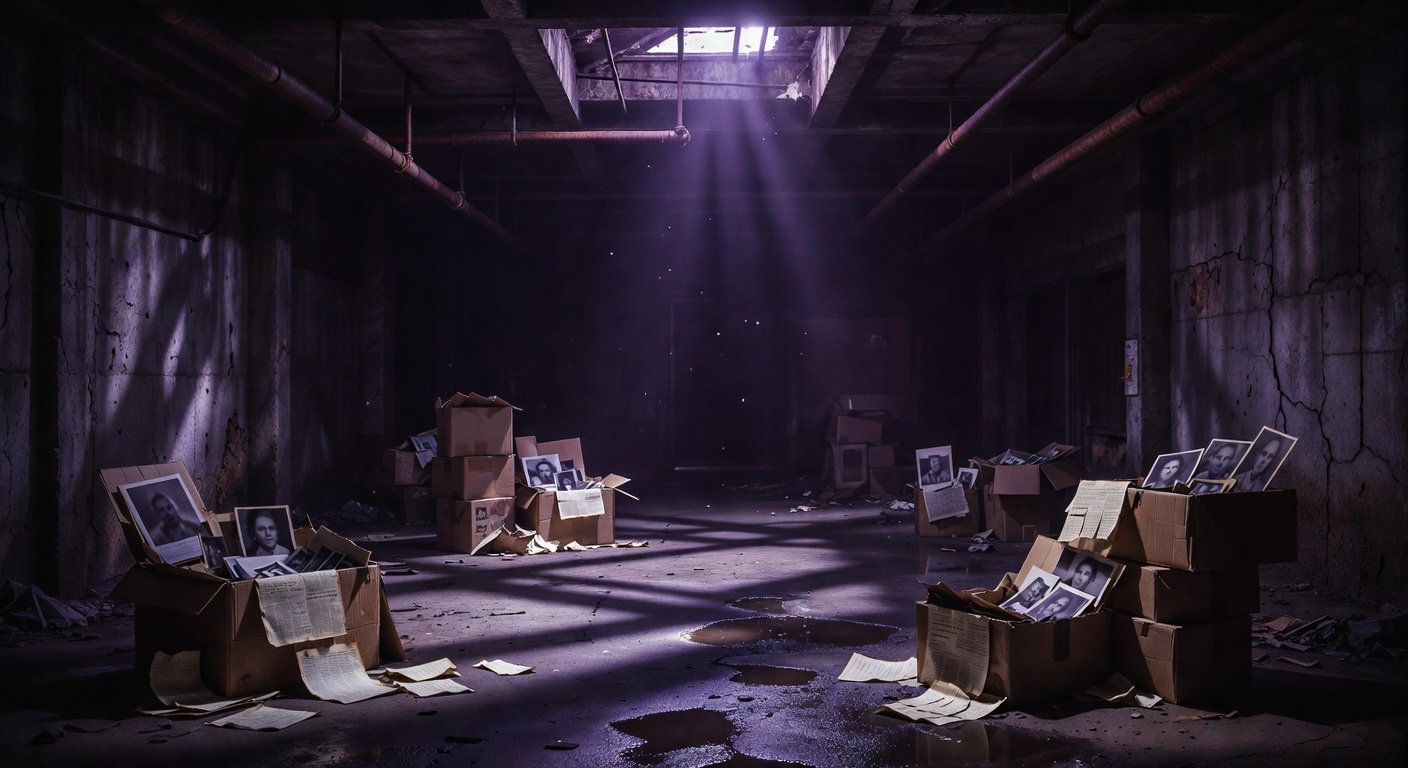
Imagine this: You’re scrolling through your family photos, and a wave of inexplicable dread hits you when you see your great-grandmother’s stern face. You never met her, but suddenly, you’re sobbing over stories of famine she survived. No logic, just raw emotion. What if that’s not just sentimentality—what if it’s collective trauma whispering from the grave, etched into your very cells? Buckle up, because we’re diving deep into the shadowy undercurrents of shared human suffering that don’t just haunt history books; they rewrite our biology, memories, and maybe even our souls.
What Exactly Is Collective Trauma—and Why Should You Care?
Let’s start with the basics, but not the boring textbook kind. Collective trauma isn’t some abstract psychobabble; it’s the gut-punch shared by entire groups after horrors like genocides, wars, pandemics, or even cultural erasures. Think Holocaust survivors and their kids, or Indigenous communities post-colonization. It’s not just “those people over there”—it’s the invisible force tweaking your worldview, your phobias, even your vote.
Unlike solo trauma, where one person’s nightmare festers privately, collective trauma bonds a community in grief. It warps social fabrics: trust erodes, myths form, identities harden. Picture post-9/11 America—fear rippled out, birthing surveillance states and endless wars. Or Native American boarding schools, where kids were stripped of language and spirit, leaving generational scars in addiction rates and broken families today.
But here’s the kicker: it doesn’t stop with eyewitnesses. It leaps generations, like a ghost in the family tree. Researchers now say your ancestors’ pain could be tweaking your stress responses before you’re even born. Intrigued? Good, because science is catching up to what shamans and elders have known forever.
The Science That Shook the World: Epigenetic Trauma and DNA Memory
Okay, let’s geek out on biology. Forget Lamarckian heresy; modern epigenetics proves trauma can hitch a ride on your genes—without rewriting the DNA code itself.
Epigenetics 101: These are chemical
Landmark proof? The Dutch Hunger Winter of 1944-45. Starving pregnant women birthed kids (and grandkids) with higher obesity, schizophrenia, and heart disease rates—70 years later. No calories shortage for them, yet genes “remembered” famine via epigenetics.
Then there’s the mouse study from Emory University in 2013. Mice got zapped with cherry blossom scents paired with shocks. Their pups—and pups’ pups—froze in terror at the smell alone, brains rewired sans shocks. Published in Nature Neuroscience, it showed fear memories encoded in sperm DNA. Human parallels? Israeli Holocaust survivors’ kids have altered stress hormones, per Mount Sinai research.
DNA memory takes it further: Not just switches, but actual experiential echoes. A 2019 study in Scientific Reports found roundworms inheriting avoidance of pathogens their ancestors “learned.” Bacteria? Nope. Trauma? Check. Critics cry “correlation, not causation,” but converging evidence—from 9/11 widows’ kids with PTSD-like cortisol spikes to Rwandan genocide descendants’ anxiety clusters—paints a picture: Your bloodline carries baggage.
Pacing yourself? This isn’t random; it’s evolution’s dark hack. Hyper-alert ancestors survived ice ages or pogroms. Today? It manifests as chronic anxiety epidemics or polarized societies, where one group’s trauma fuels another’s.
Intergenerational Ripples: Real-World Echoes
Let’s humanize this. Meet Rachel Yehuda, trauma expert at Mount Sinai. Her work on 9/11 responders’ offspring revealed lower cortisol—paradoxically worsening PTSD risk. “It’s like the body anticipates danger,” she says. Or consider Australian Aboriginal Stolen Generations: Epigenetic markers link forced adoptions to today’s youth suicide crises.
Globally, COVID-19 might etch the next layer. Early data shows infected moms birthing kids with tweaked immune genes. We’re all in this petri dish now.
Reincarnation Recall: When Trauma Defies Death?
Now, veer metaphysical. What if trauma isn’t just biological but spiritual freight? Enter reincarnation recall, where kids spout past-life memories laced with collective wounds.
Ian Stevenson‘s University of Virginia Division of Perceptual Studies cataloged 2,500+ cases. A Lebanese boy recalls dying in a militia explosion—birthmarks matching entry wounds. Druze communities report 20% recall rates, often trauma-themed: drownings, beheadings.
Link to collective trauma? These memories cluster around historical atrocities. Tibetan kids recall monastic purges; Irish famine ghosts. Jim Tucker, Stevenson’s successor, analyzed 2,000 U.S. cases—many tied to Civil War or slavery wounds. Statistically improbable? Tucker’s book Life Before Life crunches numbers: Odds against chance? Astronomical.
Skeptics scoff “cryptomnesia” or coaching. But verified details—names, locations unknown to families—challenge that. Could collective trauma magnetize souls back to unresolved group karma?
Morphic Resonance: The Field That Binds Us All
Enter Rupert Sheldrake‘s morphic resonance—a controversial theory positing non-local memory fields. Habits and traumas groove into a “morphogenetic field,” tuning future members like radio waves.
Sheldrake’s experiments: Rats learn mazes faster if predecessors did elsewhere. Chickens sync pecking rhythms trans-oceanically. Humans? Twins separated at birth crave same obscure foods; collective proof in cultural shifts post-trauma.
Tie to collective trauma? Fields amplify group suffering. Armenian Genocide descendants share phantom pains aligning with massacres. Japanese internment echoes in Nisei anxiety waves. Sheldrake’s The Science Delusion argues science ignores these fields, but data mounts: Prayer studies show healing at distance; mass meditations drop crime stats.
Rabbit hole alert: If morphic fields exist, collective trauma becomes a planetary hum, explaining synchronicities like global unease post-Ukraine or Gaza.
Weaving It Together: Why This Changes Everything
Picture the tapestry: Epigenetics hands you loaded genes; reincarnation drops soul-scars; morphic fields vibe the collective hum. Collective trauma isn’t curse—it’s call to heal. Therapy like EMDR works group-wide; rituals reclaim narratives.
But ignore it? Societies fracture. American racial divides? Slavery’s epigenetic shadow. Middle East cycles? Millennia of expulsions.
Arm yourself: Journal family lore. Test phobias against ancestry ( AncestryDNA’s trauma maps emerging). Psychedelics like ayahuasca dissolve blocks—clinically, per MAPS.
This isn’t doom-scrolling; it’s empowerment. Your echoes shape tomorrow.
Down the Rabbit Hole
1. Ancestral Altars: DIY Rituals to Break Trauma Cycles – Practical guides blending shamanism and epigenetics.
2. MKUltra’s Hidden Legacy: Government Mind Control and Inherited Paranoia – Declassified docs meet DNA echoes.
3. Pandemic Prophecy: Did COVID Unlock Ancient Plague Memories? – Morphic fields and global fever dreams.
4. Soul Contracts: Reincarnation Clusters in Trauma Hotspots – Case files from war zones.
5. Quantum Healing Fields: Sheldrake Meets Modern Physics – Entanglement as trauma’s antidote.
Disclaimer: This article explores emerging science and theories for informational purposes. Consult professionals for mental health concerns. Views are investigative, not medical advice.