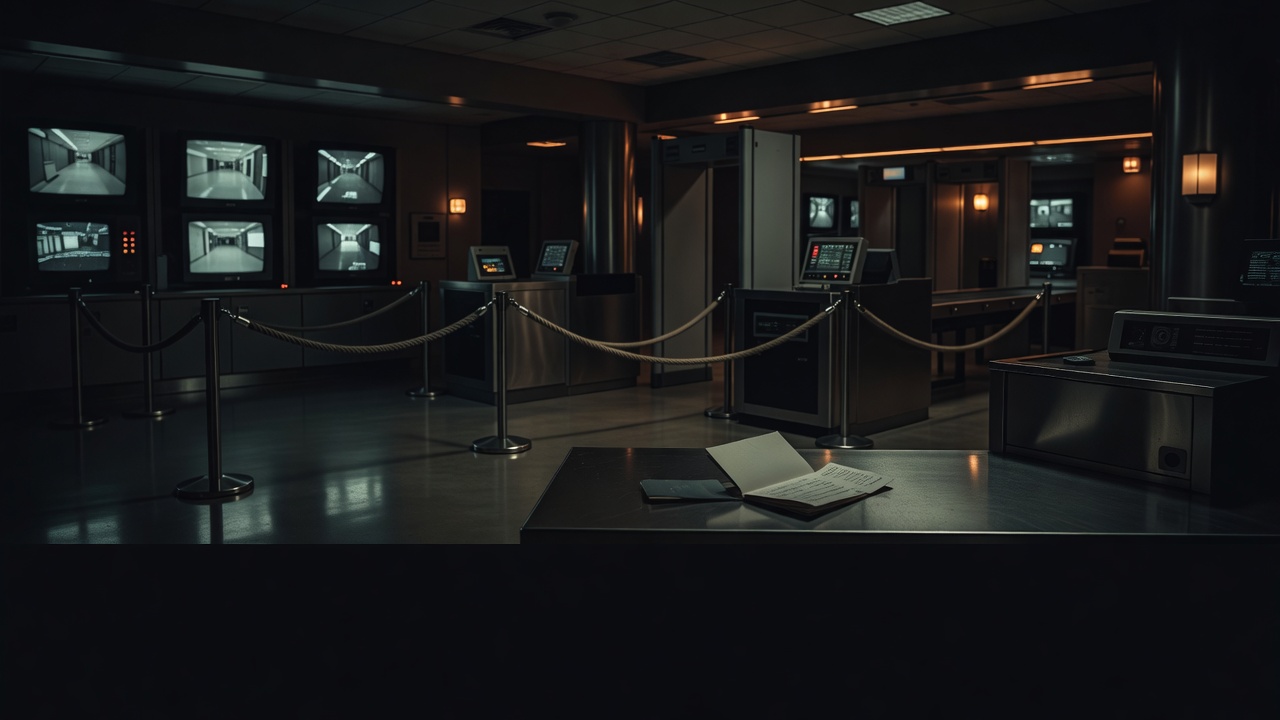
Fluorescent light has a way of making power look ordinary. A passport slides across an airline counter. A boarding pass refuses to print. A traveler gets waved aside again, then again, then again. No agent says the word watchlist. No one explains what system made the call. Somewhere behind the checkpoint, databases talk to databases, names are compared against names, and a person with a perfectly legal itinerary can start to feel like a suspect in a case they are not allowed to see. That is where DHS TRIP enters the picture: not at the front of the machine, but at the narrow door marked redress.
The Case For
A one-stop fix for a sprawling security state
The Department of Homeland Security says the Traveler Redress Inquiry Program, or DHS TRIP, is the federal government’s single point of contact for people who have been denied or delayed boarding, repeatedly pulled into secondary screening, or delayed at a U.S. border crossing. On paper, that sounds almost humane: one portal, one case file, one place to challenge a problem that can involve TSA, Customs and Border Protection, USCIS, and the FBI-linked watchlisting ecosystem.
That promise matters because the screening architecture is fragmented by design. The FBI’s Threat Screening Center says it maintains the federal terrorism watchlist and shares information across agencies. It also states that most people who appeal travel problems through DHS TRIP are not actually on that watchlist. That sentence cuts two ways. It reassures the public, but it also confirms a larger point: the machinery can hit people who are not the target.
Congressional auditors have documented the same tension. In GAO-14-647, the Government Accountability Office reported that passengers misidentified against Terrorist Screening Database-based high-risk lists could seek relief through DHS TRIP and, if cleared, be added to TSA’s Cleared List so they would avoid future false matches nearly 100 percent of the time. That is not a minor administrative detail. It is an admission that the error rate was serious enough to require a formal escape hatch.
The deeper argument from redress critics is not that DHS TRIP proves a conspiracy in the cartoon sense. It is that the program exists because a national-security system powerful enough to quietly disrupt travel also needed a pressure-release valve. The watchlist world has become so broad that a traveler may feel its effects without ever being told which list, which record, or which agency triggered the flag. That puts this story squarely inside the site’s broader government-secrets investigations. We have already traced how that ecosystem works in pieces through the NTC-P watchlist nomination pipeline and DHS Watchlist Service’s hidden screening layer. DHS TRIP looks, from this angle, like the public-facing apology desk for a system that remains largely opaque.
The Realist’s Eye
Redress is real, but secrecy still sets the terms
There is a risk of overstating what DHS TRIP is. The official record does not show a giant secret tribunal routinely trapping innocent travelers on a whim. It shows a formal administrative process that was built because misidentification and adverse screening events do happen, and because those events needed somewhere to go. The existence of a complaint channel is not itself proof of abuse.
It is also true that DHS and the FBI openly frame DHS TRIP as a civil-liberties safeguard. The FBI says people cannot be watchlisted based on race, religion, First Amendment activity, or “guesses or hunches.” DHS says travelers receive a Redress Control Number that can be used to track a case and, after resolution, entered into future airline reservations to reduce repeat trouble. Those are concrete procedural features, not myths.
But the strongest skeptical challenge cuts in the other direction: if the process is meaningful, how much can applicants actually learn? Historically, not much. A 2009 DHS Office of Inspector General report on the effectiveness of DHS TRIP found fairness and privacy concerns in how the program functioned. More recently, GAO’s 2025 review of watchlist nomination and redress for U.S. persons found that from December 2021 through September 2023, U.S. persons filed roughly 20,000 DHS TRIP inquiries, yet only 289 were tied to terrorist watchlist issues. Of those 289, about 31 percent resulted in removal from the watchlist, 7 percent were cases of misidentification, and 59 percent produced no change in watchlist status. Those numbers do not prove the system is reckless, but they do show that redress can involve real underlying watchlist placements, not just harmless confusion.
That is where the realist tension lives. DHS TRIP can correct some errors. It can also absorb complaints without giving the traveler a full map of what happened. The government’s own framework protects sources, methods, and watchlist criteria from broad disclosure. That may be defensible in counterterrorism terms. It also means the person seeking relief often has to trust a process whose evidence remains mostly behind glass.
So the hard question is not whether DHS TRIP is fake. It plainly exists, and official audits show it has changed outcomes. The harder question is whether a redress portal meaningfully balances a screening regime whose logic is still largely hidden from the public. That is not a conspiracy theory. It is the unresolved design feature at the center of the system.
What We Know For Certain
- DHS says DHS TRIP is the government’s single point of contact for travel-screening complaints involving delays, denials, or repeated secondary screening.
- The FBI says the vast majority of travelers who dispute screening through DHS TRIP are not on the federal terrorism watchlist.
- GAO reported that travelers misidentified against TSDB-based high-risk lists can receive relief through DHS TRIP and may be added to TSA’s Cleared List.
- GAO’s 2025 review found that some DHS TRIP cases from 2021 to 2023 resulted in removal from the watchlist, misidentification findings, or downgrades in watchlist status.
The Unanswered Questions
- How often do travelers experience repeated screening because of data mismatches or rule-based risk scoring rather than actual watchlist status?
- How much explanation can DHS TRIP provide to applicants without exposing classified watchlisting methods?
- What percentage of redress applicants keep encountering friction even after receiving a Redress Control Number?
- How much of the broader screening logic sits outside DHS TRIP entirely in systems like Secure Flight, CBP targeting, and downstream agency watchlist integrations?
The Closer — You Decide
Some doors in the national-security state are built to stay closed. DHS TRIP is one of the few marked entrances where an ordinary traveler can knock back. The records show that the door is real. They also show that it opens only partway, on terms the system still controls. The missed flights, the extra screenings, the cleared cases, the silent no-change letters — those are real too. The evidence is on the table. You decide.