Menu

Gain-of-Function Research: The Science That Could Engineer the Next Pandemic

Gain-of-Function Research: The Science That Could Engineer the Next Pandemic

In the quiet corridors of high-security laboratories scattered across the globe, scientists perform experiments that most governments don’t want you to know about. They take viruses — already dangerous — and make them more so. They enhance transmissibility. They boost lethality. They test what happens when a pathogen jumps between species it was never supposed to touch. This is gain-of-function research, and it sits at the center of one of the most consequential — and least discussed — scientific controversies of our time.

The question isn’t hypothetical anymore. When COVID-19 emerged from Wuhan, China in late 2019, the world was forced to reckon with a possibility that had long been dismissed as fringe: that a pandemic-level pathogen could escape from a laboratory. Whether that’s what happened remains officially unresolved. But what we do know about the kinds of research being conducted — and who was funding it — is enough to make anyone pause.

What Is Gain-of-Function Research?

The term “gain-of-function” sounds almost innocuous — like something you’d read in a tech product description. But in the context of virology, it refers to experiments that deliberately enhance the capabilities of a pathogen. Scientists might make a virus more transmissible between mammals, more resistant to existing treatments, more capable of infecting new host species, or simply more deadly.

Proponents argue this research is essential. By understanding how viruses could evolve naturally, they say, we can stay ahead of nature — developing vaccines and countermeasures before the next pandemic strikes. It’s the scientific equivalent of knowing your enemy before the battle begins.

Critics, including many respected virologists and biosecurity experts, see something darker: laboratories engineering worst-case scenarios that nature might never have produced on its own — and then keeping those creations in facilities that have documented histories of accidents and leaks.

The NIH Connection: Following the Money

Here’s where the rabbit hole deepens considerably. In the years leading up to the COVID-19 pandemic, the National Institutes of Health (NIH) — America’s premier biomedical research agency — was funding coronavirus research at the Wuhan Institute of Virology (WIV) through a New York-based nonprofit called EcoHealth Alliance, led by Dr. Peter Daszak.

The grants, totaling millions of dollars, were ostensibly for surveillance of bat coronaviruses in southern China — the kind of field work that seems unambiguously valuable after decades of emerging infectious diseases jumping from animals to humans. But buried in the grant descriptions and the research that followed were experiments that critics allege crossed the line into gain-of-function territory.

A 2021 letter from the NIH to Congress — initially denied, then quietly acknowledged — admitted that EcoHealth Alliance had indeed conducted limited experiments that “could be” considered gain-of-function under certain definitions. The NIH‘s own definition of the research had been revised in ways that critics argue were deliberately crafted to exclude the most controversial experiments from regulatory scrutiny.

Meanwhile, Dr. Anthony Fauci, who served as director of the National Institute of Allergy and Infectious Diseases (NIAID) for decades, repeatedly testified before Congress that the NIH did not fund gain-of-function research at the Wuhan lab. Those statements have since been challenged by multiple scientists and lawmakers, leading to referrals for criminal investigation — though no charges have been filed as of this writing.

The Moratorium That Wasn’t Enough

This isn’t new territory. In 2014, following a series of alarming accidents at U.S. government laboratories — including incidents at the CDC where live anthrax and H5N1 influenza were improperly handled — the Obama administration imposed a moratorium on federal funding for gain-of-function research on influenza, MERS, and SARS viruses.

The moratorium was lifted in 2017 under a new review framework called the P3CO Framework (Potential Pandemic Pathogen Care and Oversight). But critics noted that the framework lacked teeth: it relied heavily on self-reporting by institutions conducting the research and had no independent enforcement mechanism.

More troubling: even during the 2014-2017 moratorium, some research continued under exemptions. And the funding flowing through intermediaries like EcoHealth Alliance to overseas labs like the WIV was arguably never subject to the same oversight rules that would have applied to domestic research.

The Lab Leak Hypothesis: From Fringe to Mainstream

For most of 2020, suggesting that COVID-19 might have originated in a laboratory was enough to get you labeled a conspiracy theorist. Major social media platforms suppressed such discussions. Science journals published letters signed by prominent virologists calling the idea a “conspiracy theory” — letters that, it later emerged, were drafted with significant coordination among scientists who had potential conflicts of interest.

Then the dam broke.

By 2021, the Wall Street Journal was reporting that U.S. intelligence had assessed that three researchers at the Wuhan Institute of Virology became sick with COVID-like symptoms in November 2019 — weeks before China officially acknowledged any outbreak. The FBI and the Department of Energy — which oversees America’s national laboratories — both concluded that a lab leak was the most likely origin of the pandemic, though with varying degrees of confidence.

A declassified intelligence community assessment released in 2023 revealed that multiple agencies remained divided on the question — but the mere fact that a lab origin was being seriously evaluated by the U.S. intelligence community represented a seismic shift from the official narrative of just two years prior.

Biosafety Theater: How Safe Are These Labs, Really?

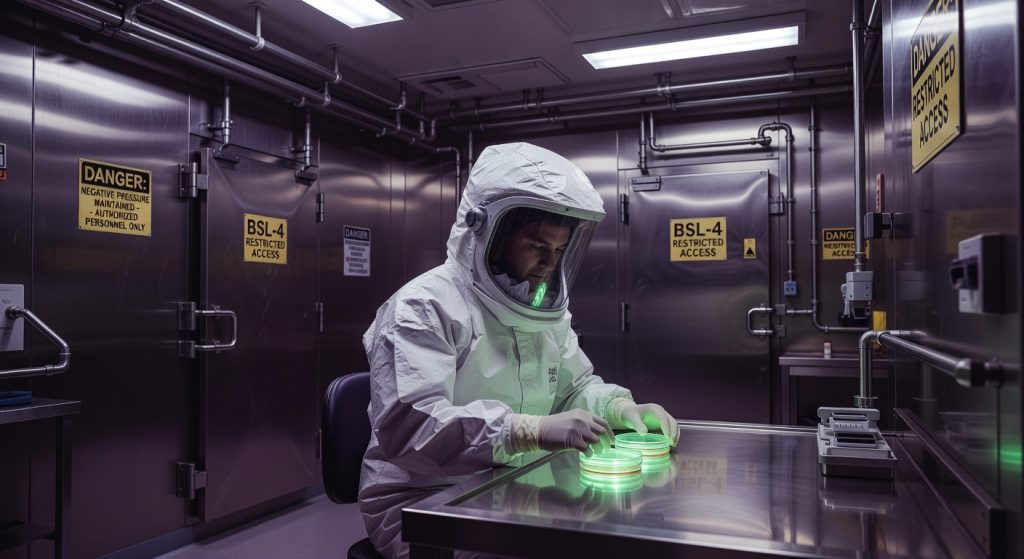
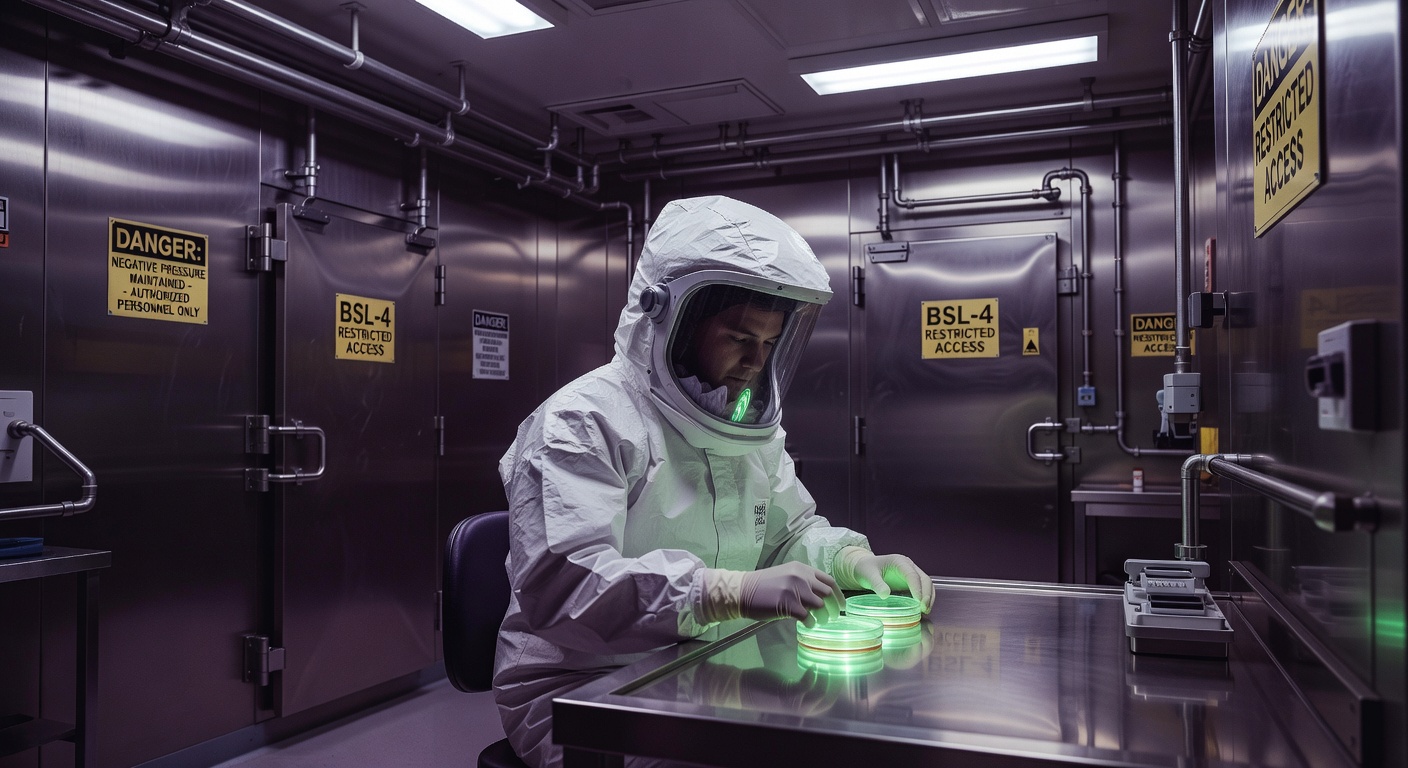
The official assurance has always been that BSL-4 laboratories — the highest biosafety level, designed for the most dangerous pathogens — are essentially impenetrable fortresses of safety. The reality is considerably messier.

A 2019 State Department cable, declassified and reported by the Washington Post, raised serious safety concerns about the Wuhan Institute of Virology’s BSL-4 facility, describing inadequate safety practices and a shortage of trained technicians. The cable was sent just months before the pandemic began.

But the WIV isn’t the only lab with problems. Between 2014 and 2016, U.S. government laboratories reported over 200 potential release events involving select agents — pathogens and toxins deemed dangerous enough to require special regulatory oversight. These incidents ranged from improperly handled samples to actual exposure events involving personnel.

Fort Detrick, once home to America’s biological weapons program and now a major biosafety research center in Maryland, had its high-containment research suspended by the CDC in 2019 after inspectors found deficiencies in its wastewater decontamination system. The timing — just months before COVID-19 emerged — has fueled endless speculation, though no credible evidence connects Fort Detrick to the pandemic’s origin.

The Dual-Use Dilemma

At its core, the gain-of-function debate is a manifestation of one of science’s oldest ethical tensions: the dual-use dilemma. The same knowledge that could help us defend against a pandemic could also be used to create one deliberately.

In 2011, two research groups — one led by Ron Fouchier at Erasmus Medical Center in the Netherlands and another by Yoshihiro Kawaoka at the University of Wisconsin — independently created versions of the H5N1 bird flu virus that could spread between ferrets through the air. H5N1 kills roughly 60% of the humans it infects. Making it airborne-transmissible was, by definition, creating something nature hadn’t produced.

The U.S. government briefly tried to suppress the publication of those findings over national security concerns. They ultimately failed. The research was published. The knowledge is now out there.

Which raises the uncomfortable question at the heart of the gain-of-function debate: if we create a blueprint for a more dangerous pathogen in the name of science, and that blueprint becomes public — or leaks — have we made the world safer or more dangerous?

What We Don’t Know

Perhaps the most disturbing aspect of the gain-of-function controversy is how much remains hidden. Research conducted at classified facilities, both in the United States and abroad, operates entirely outside public scrutiny. International partnerships — like those between U.S. universities and labs in countries with weaker biosafety regulations — can serve as channels for research that wouldn’t be approved domestically.

We know that DARPA, the Pentagon’s research arm, has explored biological research programs. We know that the Soviet Union’s Biopreparat program, which employed tens of thousands of scientists working on biological weapons well into the 1990s, produced some of the most dangerous engineered pathogens ever created. We know that several former Soviet scientists eventually emigrated to the West, carrying expertise with them.

We don’t know what classified programs may currently exist, in any country. We don’t know the full scope of what’s being researched in dual-use facilities operating under national security classifications. And we don’t know, definitively, where COVID-19 came from.

Conclusion: The Question We Have to Ask

The gain-of-function debate isn’t really about science — it’s about accountability, transparency, and the relationship between powerful institutions and the public they claim to serve. When billions of dollars in research funding flow through networks of nonprofits, foreign laboratories, and government agencies with minimal public oversight, and when the most basic questions about pandemic origins are suppressed rather than investigated, something has gone fundamentally wrong.

You don’t have to believe in any particular conspiracy theory to find this situation alarming. The documented facts — the funding, the exemptions, the safety incidents, the suppression of legitimate scientific inquiry — are alarming enough on their own.

The next pandemic is coming. Whether it emerges from nature or a laboratory, the institutions responsible for protecting us from it are currently more interested in protecting themselves from scrutiny. That’s not a conspiracy theory. That’s a documented pattern.

Down the Rabbit Hole

  • The Pentagon’s PREDICT Program: USAID funded a decade-long global virus hunting program. What did they find — and what did they do with it?
  • Biopreparat’s Legacy: The Soviet Union’s massive covert bioweapons program officially ended. Did all the knowledge disappear with it?
  • The Select Agent Program: The U.S. government maintains a list of the world’s most dangerous pathogens. Who has access — and under what conditions?
  • DARPA’s Insect Allies: A DARPA program to use insects to spread genetic modifications to crops drew comparisons to bioweapons development. What’s the line?
  • The Furin Cleavage Site: COVID-19’s unusual genetic feature that makes it so effective at infecting humans. Did it evolve naturally — or was it engineered?

Disclaimer: This article is intended for educational and entertainment purposes. The Conspiracy Realist presents documented facts, credible reporting, and open questions for readers to explore independently. Draw your own conclusions.

dive down the rabbit hole

Gain-of-Function Research: The Science That Could Engineer the Next Pandemic

Conspiracy Realist
Gain-of-Function Research: The Science That Could Engineer the Next Pandemic

In the quiet corridors of high-security laboratories scattered across the globe, scientists perform experiments that most governments don’t want you to know about. They take viruses — already dangerous — and make them more so. They enhance transmissibility. They boost lethality. They test what happens when a pathogen jumps between species it was never supposed to touch. This is gain-of-function research, and it sits at the center of one of the most consequential — and least discussed — scientific controversies of our time.

The question isn’t hypothetical anymore. When COVID-19 emerged from Wuhan, China in late 2019, the world was forced to reckon with a possibility that had long been dismissed as fringe: that a pandemic-level pathogen could escape from a laboratory. Whether that’s what happened remains officially unresolved. But what we do know about the kinds of research being conducted — and who was funding it — is enough to make anyone pause.

What Is Gain-of-Function Research?

The term “gain-of-function” sounds almost innocuous — like something you’d read in a tech product description. But in the context of virology, it refers to experiments that deliberately enhance the capabilities of a pathogen. Scientists might make a virus more transmissible between mammals, more resistant to existing treatments, more capable of infecting new host species, or simply more deadly.

Proponents argue this research is essential. By understanding how viruses could evolve naturally, they say, we can stay ahead of nature — developing vaccines and countermeasures before the next pandemic strikes. It’s the scientific equivalent of knowing your enemy before the battle begins.

Critics, including many respected virologists and biosecurity experts, see something darker: laboratories engineering worst-case scenarios that nature might never have produced on its own — and then keeping those creations in facilities that have documented histories of accidents and leaks.

The NIH Connection: Following the Money

Here’s where the rabbit hole deepens considerably. In the years leading up to the COVID-19 pandemic, the National Institutes of Health (NIH) — America’s premier biomedical research agency — was funding coronavirus research at the Wuhan Institute of Virology (WIV) through a New York-based nonprofit called EcoHealth Alliance, led by Dr. Peter Daszak.

The grants, totaling millions of dollars, were ostensibly for surveillance of bat coronaviruses in southern China — the kind of field work that seems unambiguously valuable after decades of emerging infectious diseases jumping from animals to humans. But buried in the grant descriptions and the research that followed were experiments that critics allege crossed the line into gain-of-function territory.

A 2021 letter from the NIH to Congress — initially denied, then quietly acknowledged — admitted that EcoHealth Alliance had indeed conducted limited experiments that “could be” considered gain-of-function under certain definitions. The NIH‘s own definition of the research had been revised in ways that critics argue were deliberately crafted to exclude the most controversial experiments from regulatory scrutiny.

Meanwhile, Dr. Anthony Fauci, who served as director of the National Institute of Allergy and Infectious Diseases (NIAID) for decades, repeatedly testified before Congress that the NIH did not fund gain-of-function research at the Wuhan lab. Those statements have since been challenged by multiple scientists and lawmakers, leading to referrals for criminal investigation — though no charges have been filed as of this writing.

The Moratorium That Wasn’t Enough

This isn’t new territory. In 2014, following a series of alarming accidents at U.S. government laboratories — including incidents at the CDC where live anthrax and H5N1 influenza were improperly handled — the Obama administration imposed a moratorium on federal funding for gain-of-function research on influenza, MERS, and SARS viruses.

The moratorium was lifted in 2017 under a new review framework called the P3CO Framework (Potential Pandemic Pathogen Care and Oversight). But critics noted that the framework lacked teeth: it relied heavily on self-reporting by institutions conducting the research and had no independent enforcement mechanism.

More troubling: even during the 2014-2017 moratorium, some research continued under exemptions. And the funding flowing through intermediaries like EcoHealth Alliance to overseas labs like the WIV was arguably never subject to the same oversight rules that would have applied to domestic research.

The Lab Leak Hypothesis: From Fringe to Mainstream

For most of 2020, suggesting that COVID-19 might have originated in a laboratory was enough to get you labeled a conspiracy theorist. Major social media platforms suppressed such discussions. Science journals published letters signed by prominent virologists calling the idea a “conspiracy theory” — letters that, it later emerged, were drafted with significant coordination among scientists who had potential conflicts of interest.

Then the dam broke.

By 2021, the Wall Street Journal was reporting that U.S. intelligence had assessed that three researchers at the Wuhan Institute of Virology became sick with COVID-like symptoms in November 2019 — weeks before China officially acknowledged any outbreak. The FBI and the Department of Energy — which oversees America’s national laboratories — both concluded that a lab leak was the most likely origin of the pandemic, though with varying degrees of confidence.

A declassified intelligence community assessment released in 2023 revealed that multiple agencies remained divided on the question — but the mere fact that a lab origin was being seriously evaluated by the U.S. intelligence community represented a seismic shift from the official narrative of just two years prior.

Biosafety Theater: How Safe Are These Labs, Really?

The official assurance has always been that BSL-4 laboratories — the highest biosafety level, designed for the most dangerous pathogens — are essentially impenetrable fortresses of safety. The reality is considerably messier.

A 2019 State Department cable, declassified and reported by the Washington Post, raised serious safety concerns about the Wuhan Institute of Virology’s BSL-4 facility, describing inadequate safety practices and a shortage of trained technicians. The cable was sent just months before the pandemic began.

But the WIV isn’t the only lab with problems. Between 2014 and 2016, U.S. government laboratories reported over 200 potential release events involving select agents — pathogens and toxins deemed dangerous enough to require special regulatory oversight. These incidents ranged from improperly handled samples to actual exposure events involving personnel.

Fort Detrick, once home to America’s biological weapons program and now a major biosafety research center in Maryland, had its high-containment research suspended by the CDC in 2019 after inspectors found deficiencies in its wastewater decontamination system. The timing — just months before COVID-19 emerged — has fueled endless speculation, though no credible evidence connects Fort Detrick to the pandemic’s origin.

The Dual-Use Dilemma

At its core, the gain-of-function debate is a manifestation of one of science’s oldest ethical tensions: the dual-use dilemma. The same knowledge that could help us defend against a pandemic could also be used to create one deliberately.

In 2011, two research groups — one led by Ron Fouchier at Erasmus Medical Center in the Netherlands and another by Yoshihiro Kawaoka at the University of Wisconsin — independently created versions of the H5N1 bird flu virus that could spread between ferrets through the air. H5N1 kills roughly 60% of the humans it infects. Making it airborne-transmissible was, by definition, creating something nature hadn’t produced.

The U.S. government briefly tried to suppress the publication of those findings over national security concerns. They ultimately failed. The research was published. The knowledge is now out there.

Which raises the uncomfortable question at the heart of the gain-of-function debate: if we create a blueprint for a more dangerous pathogen in the name of science, and that blueprint becomes public — or leaks — have we made the world safer or more dangerous?

What We Don’t Know

Perhaps the most disturbing aspect of the gain-of-function controversy is how much remains hidden. Research conducted at classified facilities, both in the United States and abroad, operates entirely outside public scrutiny. International partnerships — like those between U.S. universities and labs in countries with weaker biosafety regulations — can serve as channels for research that wouldn’t be approved domestically.

We know that DARPA, the Pentagon’s research arm, has explored biological research programs. We know that the Soviet Union’s Biopreparat program, which employed tens of thousands of scientists working on biological weapons well into the 1990s, produced some of the most dangerous engineered pathogens ever created. We know that several former Soviet scientists eventually emigrated to the West, carrying expertise with them.

We don’t know what classified programs may currently exist, in any country. We don’t know the full scope of what’s being researched in dual-use facilities operating under national security classifications. And we don’t know, definitively, where COVID-19 came from.

Conclusion: The Question We Have to Ask

The gain-of-function debate isn’t really about science — it’s about accountability, transparency, and the relationship between powerful institutions and the public they claim to serve. When billions of dollars in research funding flow through networks of nonprofits, foreign laboratories, and government agencies with minimal public oversight, and when the most basic questions about pandemic origins are suppressed rather than investigated, something has gone fundamentally wrong.

You don’t have to believe in any particular conspiracy theory to find this situation alarming. The documented facts — the funding, the exemptions, the safety incidents, the suppression of legitimate scientific inquiry — are alarming enough on their own.

The next pandemic is coming. Whether it emerges from nature or a laboratory, the institutions responsible for protecting us from it are currently more interested in protecting themselves from scrutiny. That’s not a conspiracy theory. That’s a documented pattern.

Down the Rabbit Hole

  • The Pentagon’s PREDICT Program: USAID funded a decade-long global virus hunting program. What did they find — and what did they do with it?
  • Biopreparat’s Legacy: The Soviet Union’s massive covert bioweapons program officially ended. Did all the knowledge disappear with it?
  • The Select Agent Program: The U.S. government maintains a list of the world’s most dangerous pathogens. Who has access — and under what conditions?
  • DARPA’s Insect Allies: A DARPA program to use insects to spread genetic modifications to crops drew comparisons to bioweapons development. What’s the line?
  • The Furin Cleavage Site: COVID-19’s unusual genetic feature that makes it so effective at infecting humans. Did it evolve naturally — or was it engineered?

Disclaimer: This article is intended for educational and entertainment purposes. The Conspiracy Realist presents documented facts, credible reporting, and open questions for readers to explore independently. Draw your own conclusions.

Gain-of-Function Research: The Science That Could Engineer the Next Pandemic

Gain-of-Function Research: The Science That Could Engineer the Next Pandemic

In the quiet corridors of high-security laboratories scattered across the globe, scientists perform experiments that most governments don’t want you to know about. They take viruses — already dangerous — and make them more so. They enhance transmissibility. They boost lethality. They test what happens when a pathogen jumps between species it was never supposed to touch. This is gain-of-function research, and it sits at the center of one of the most consequential — and least discussed — scientific controversies of our time.

The question isn’t hypothetical anymore. When COVID-19 emerged from Wuhan, China in late 2019, the world was forced to reckon with a possibility that had long been dismissed as fringe: that a pandemic-level pathogen could escape from a laboratory. Whether that’s what happened remains officially unresolved. But what we do know about the kinds of research being conducted — and who was funding it — is enough to make anyone pause.

What Is Gain-of-Function Research?

The term “gain-of-function” sounds almost innocuous — like something you’d read in a tech product description. But in the context of virology, it refers to experiments that deliberately enhance the capabilities of a pathogen. Scientists might make a virus more transmissible between mammals, more resistant to existing treatments, more capable of infecting new host species, or simply more deadly.

Proponents argue this research is essential. By understanding how viruses could evolve naturally, they say, we can stay ahead of nature — developing vaccines and countermeasures before the next pandemic strikes. It’s the scientific equivalent of knowing your enemy before the battle begins.

Critics, including many respected virologists and biosecurity experts, see something darker: laboratories engineering worst-case scenarios that nature might never have produced on its own — and then keeping those creations in facilities that have documented histories of accidents and leaks.

The NIH Connection: Following the Money

Here’s where the rabbit hole deepens considerably. In the years leading up to the COVID-19 pandemic, the National Institutes of Health (NIH) — America’s premier biomedical research agency — was funding coronavirus research at the Wuhan Institute of Virology (WIV) through a New York-based nonprofit called EcoHealth Alliance, led by Dr. Peter Daszak.

The grants, totaling millions of dollars, were ostensibly for surveillance of bat coronaviruses in southern China — the kind of field work that seems unambiguously valuable after decades of emerging infectious diseases jumping from animals to humans. But buried in the grant descriptions and the research that followed were experiments that critics allege crossed the line into gain-of-function territory.

A 2021 letter from the NIH to Congress — initially denied, then quietly acknowledged — admitted that EcoHealth Alliance had indeed conducted limited experiments that “could be” considered gain-of-function under certain definitions. The NIH‘s own definition of the research had been revised in ways that critics argue were deliberately crafted to exclude the most controversial experiments from regulatory scrutiny.

Meanwhile, Dr. Anthony Fauci, who served as director of the National Institute of Allergy and Infectious Diseases (NIAID) for decades, repeatedly testified before Congress that the NIH did not fund gain-of-function research at the Wuhan lab. Those statements have since been challenged by multiple scientists and lawmakers, leading to referrals for criminal investigation — though no charges have been filed as of this writing.

The Moratorium That Wasn’t Enough

This isn’t new territory. In 2014, following a series of alarming accidents at U.S. government laboratories — including incidents at the CDC where live anthrax and H5N1 influenza were improperly handled — the Obama administration imposed a moratorium on federal funding for gain-of-function research on influenza, MERS, and SARS viruses.

The moratorium was lifted in 2017 under a new review framework called the P3CO Framework (Potential Pandemic Pathogen Care and Oversight). But critics noted that the framework lacked teeth: it relied heavily on self-reporting by institutions conducting the research and had no independent enforcement mechanism.

More troubling: even during the 2014-2017 moratorium, some research continued under exemptions. And the funding flowing through intermediaries like EcoHealth Alliance to overseas labs like the WIV was arguably never subject to the same oversight rules that would have applied to domestic research.

The Lab Leak Hypothesis: From Fringe to Mainstream

For most of 2020, suggesting that COVID-19 might have originated in a laboratory was enough to get you labeled a conspiracy theorist. Major social media platforms suppressed such discussions. Science journals published letters signed by prominent virologists calling the idea a “conspiracy theory” — letters that, it later emerged, were drafted with significant coordination among scientists who had potential conflicts of interest.

Then the dam broke.

By 2021, the Wall Street Journal was reporting that U.S. intelligence had assessed that three researchers at the Wuhan Institute of Virology became sick with COVID-like symptoms in November 2019 — weeks before China officially acknowledged any outbreak. The FBI and the Department of Energy — which oversees America’s national laboratories — both concluded that a lab leak was the most likely origin of the pandemic, though with varying degrees of confidence.

A declassified intelligence community assessment released in 2023 revealed that multiple agencies remained divided on the question — but the mere fact that a lab origin was being seriously evaluated by the U.S. intelligence community represented a seismic shift from the official narrative of just two years prior.

Biosafety Theater: How Safe Are These Labs, Really?

The official assurance has always been that BSL-4 laboratories — the highest biosafety level, designed for the most dangerous pathogens — are essentially impenetrable fortresses of safety. The reality is considerably messier.

A 2019 State Department cable, declassified and reported by the Washington Post, raised serious safety concerns about the Wuhan Institute of Virology’s BSL-4 facility, describing inadequate safety practices and a shortage of trained technicians. The cable was sent just months before the pandemic began.

But the WIV isn’t the only lab with problems. Between 2014 and 2016, U.S. government laboratories reported over 200 potential release events involving select agents — pathogens and toxins deemed dangerous enough to require special regulatory oversight. These incidents ranged from improperly handled samples to actual exposure events involving personnel.

Fort Detrick, once home to America’s biological weapons program and now a major biosafety research center in Maryland, had its high-containment research suspended by the CDC in 2019 after inspectors found deficiencies in its wastewater decontamination system. The timing — just months before COVID-19 emerged — has fueled endless speculation, though no credible evidence connects Fort Detrick to the pandemic’s origin.

The Dual-Use Dilemma

At its core, the gain-of-function debate is a manifestation of one of science’s oldest ethical tensions: the dual-use dilemma. The same knowledge that could help us defend against a pandemic could also be used to create one deliberately.

In 2011, two research groups — one led by Ron Fouchier at Erasmus Medical Center in the Netherlands and another by Yoshihiro Kawaoka at the University of Wisconsin — independently created versions of the H5N1 bird flu virus that could spread between ferrets through the air. H5N1 kills roughly 60% of the humans it infects. Making it airborne-transmissible was, by definition, creating something nature hadn’t produced.

The U.S. government briefly tried to suppress the publication of those findings over national security concerns. They ultimately failed. The research was published. The knowledge is now out there.

Which raises the uncomfortable question at the heart of the gain-of-function debate: if we create a blueprint for a more dangerous pathogen in the name of science, and that blueprint becomes public — or leaks — have we made the world safer or more dangerous?

What We Don’t Know

Perhaps the most disturbing aspect of the gain-of-function controversy is how much remains hidden. Research conducted at classified facilities, both in the United States and abroad, operates entirely outside public scrutiny. International partnerships — like those between U.S. universities and labs in countries with weaker biosafety regulations — can serve as channels for research that wouldn’t be approved domestically.

We know that DARPA, the Pentagon’s research arm, has explored biological research programs. We know that the Soviet Union’s Biopreparat program, which employed tens of thousands of scientists working on biological weapons well into the 1990s, produced some of the most dangerous engineered pathogens ever created. We know that several former Soviet scientists eventually emigrated to the West, carrying expertise with them.

We don’t know what classified programs may currently exist, in any country. We don’t know the full scope of what’s being researched in dual-use facilities operating under national security classifications. And we don’t know, definitively, where COVID-19 came from.

Conclusion: The Question We Have to Ask

The gain-of-function debate isn’t really about science — it’s about accountability, transparency, and the relationship between powerful institutions and the public they claim to serve. When billions of dollars in research funding flow through networks of nonprofits, foreign laboratories, and government agencies with minimal public oversight, and when the most basic questions about pandemic origins are suppressed rather than investigated, something has gone fundamentally wrong.

You don’t have to believe in any particular conspiracy theory to find this situation alarming. The documented facts — the funding, the exemptions, the safety incidents, the suppression of legitimate scientific inquiry — are alarming enough on their own.

The next pandemic is coming. Whether it emerges from nature or a laboratory, the institutions responsible for protecting us from it are currently more interested in protecting themselves from scrutiny. That’s not a conspiracy theory. That’s a documented pattern.

Down the Rabbit Hole

  • The Pentagon’s PREDICT Program: USAID funded a decade-long global virus hunting program. What did they find — and what did they do with it?
  • Biopreparat’s Legacy: The Soviet Union’s massive covert bioweapons program officially ended. Did all the knowledge disappear with it?
  • The Select Agent Program: The U.S. government maintains a list of the world’s most dangerous pathogens. Who has access — and under what conditions?
  • DARPA’s Insect Allies: A DARPA program to use insects to spread genetic modifications to crops drew comparisons to bioweapons development. What’s the line?
  • The Furin Cleavage Site: COVID-19’s unusual genetic feature that makes it so effective at infecting humans. Did it evolve naturally — or was it engineered?

Disclaimer: This article is intended for educational and entertainment purposes. The Conspiracy Realist presents documented facts, credible reporting, and open questions for readers to explore independently. Draw your own conclusions.

Table of contents