Menu

Harold Abramson and the New York LSD Circle

Harold Abramson and the New York LSD Circle

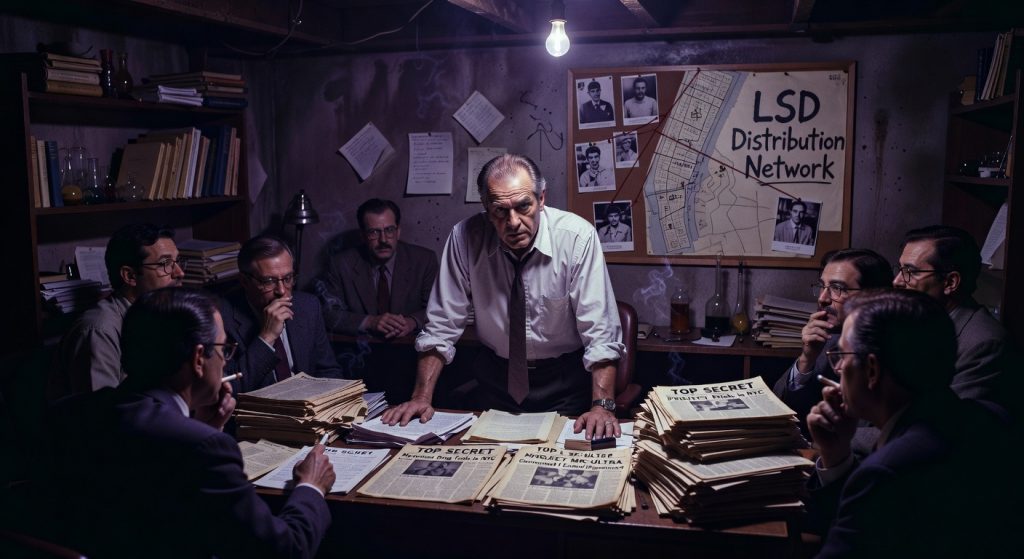
In the early 1950s, a quiet allergist with an office in New York City was doing something that would today land him in federal prison. Dr. Harold Abramson was dosing unwitting research subjects with lysergic acid diethylamide — LSD — at the behest of the Central Intelligence Agency, all under the sprawling umbrella of a covert program known as MKUltra. He wasn’t a fringe scientist working out of a basement. He was a respected physician, a Cold War insider, and the center of a loose but influential network of researchers, intellectuals, and government operatives who quietly turned New York City into the unofficial capital of American psychedelic experimentation.

This is the story of Harold Abramson, the New York LSD circle, and what happens when a government decides that the human mind is just another battlefield to conquer.


The Man Behind the Syringe

Harold Alexander Abramson was born in 1899 and built a respectable medical career as an allergist and immunologist. By the time the CIA came knocking, he was affiliated with Cold Spring Harbor Laboratory on Long Island — a prestigious research institution — and maintained a private practice in New York. On paper, he was the picture of mid-century American scientific respectability.

But Abramson had a curiosity that ran deeper than allergies. He had become fascinated by the psychological and psychiatric potential of LSD, which Swiss chemist Albert Hofmann had accidentally discovered in 1943. By the early 1950s, Abramson had established himself as one of the preeminent LSD researchers in the United States, publishing academic papers on its effects and conducting experiments that blurred the line between clinical science and something far darker.

His CIA connection came through Project ARTICHOKE — the precursor to MKUltra — and later through MKUltra itself, which officially launched in 1953 under the direction of CIA Director Allen Dulles. Abramson received CIA funding funneled through front foundations, a standard tradecraft technique of the era. His work was considered legitimate enough to publish in peer-reviewed journals, yet classified enough to keep its true sponsors hidden for decades.


The New York LSD Circle: A Who’s Who of the Psychedelic Underground

Abramson wasn’t operating in a vacuum. Around him coalesced a remarkable — and remarkably strange — network of physicians, psychiatrists, government employees, and intellectuals who shared a fascination with LSD’s potential. This loose affiliation, sometimes called the New York LSD circle, included figures who would go on to shape American culture, medicine, and intelligence in ways that reverberate to this day.

The Players

Margaret Mead, the legendary anthropologist, was reportedly among those who underwent LSD sessions facilitated by or associated with Abramson’s circle. So was Gregory Bateson, her former husband and a pioneering systems theorist. Aldous Huxley, the British author whose 1954 book The Doors of Perception would help spark the psychedelic revolution, was in correspondence with members of this network. Allen Ginsberg, the Beat poet, reportedly had early LSD experiences connected to these research circles.

The circle also included figures with direct intelligence ties. Frank Olson, an Army biochemist who would become the most tragic figure in the MKUltra story, was dosed without his knowledge at a CIA retreat in 1953 — just weeks later, he fell to his death from a New York hotel window. Abramson was the CIA physician called in to “treat” Olson in the days before his death. The circumstances remain deeply suspicious. Olson’s family has fought for decades to establish that his death was not suicide but murder, and in 1994, his body was exhumed. Forensic evidence suggested blunt force trauma before the fall.

The Social Scene

What made the New York LSD circle unusual wasn’t just the science — it was the social texture. These weren’t isolated laboratory experiments. Abramson hosted LSD sessions in his home and office that took on a cocktail-party atmosphere. Participants would take the drug in relatively comfortable settings, discuss their experiences, and contribute to what Abramson framed as legitimate psychotherapeutic research.

The Macy Conferences — a series of interdisciplinary meetings on cybernetics and the mind held in New York during the 1940s and 50s — brought together many of the same players. Abramson was a regular participant, and the conferences served as a kind of intellectual salon where the boundaries between science, government, and social experimentation were deliberately blurred.


MKUltra: The Bigger Picture

To understand Abramson’s work, you need to understand MKUltra — one of the most extensively documented and genuinely disturbing government programs in American history. Officially running from 1953 to 1973, MKUltra comprised at least 150 research projects conducted at universities, hospitals, prisons, and private clinics across the United States and Canada. Its goal was simple in theory and monstrous in practice: discover methods of psychological manipulation, behavior modification, and mind control that could be weaponized in the Cold War.

The fear driving MKUltra was real, if wildly distorted. American intelligence officials had watched Soviet and Chinese interrogators seemingly “break” captured POWs during the Korean War, producing confessions and apparent ideological conversions that seemed almost supernatural. They concluded — wrongly, as it turned out — that the communists had developed some form of chemical or psychological technology for controlling the human mind. MKUltra was the answer: if they had it, we needed it too.

LSD was considered one of the most promising tools. Early CIA reports suggested it might work as a truth serum, or could be used to disorient enemies, induce amnesia, or create psychological states that would make subjects susceptible to suggestion. The fact that these ideas were largely fantasy didn’t slow the program down.

According to the 1977 Senate Select Committee hearings on MKUltra, the program ultimately involved the dosing of subjects without their consent — including mental patients, prisoners, and ordinary civilians who had no idea they were part of a government experiment. The Church Committee investigations of the mid-1970s and the 1977 Senate hearings revealed the scope of what had been done, though a crucial cache of MKUltra documents was destroyed in 1973 on orders from CIA Director Richard Helms, leaving permanent gaps in the historical record.


Abramson’s Published Work: Science as Cover Story

One of the more chilling aspects of Harold Abramson’s career is how openly some of his work was published. Between 1955 and 1960, he authored and co-authored numerous papers on LSD’s psychotherapeutic applications, contributing to a body of literature that made the drug seem like a promising — if complex — tool for psychiatry.

This wasn’t entirely false. The early scientific literature on LSD genuinely suggested therapeutic potential for conditions including alcoholism, depression, and end-of-life anxiety. Some of that research was legitimate. But in Abramson’s case, the published work served a dual function: it advanced the science, and it provided academic cover for what was, at its core, a covert government program with no interest in therapeutic benefit and considerable interest in coercive applications.

The 1960 collection The Use of LSD in Psychotherapy, edited by Abramson, compiled proceedings from a 1959 conference he organized at the Hotel Commodore in New York. The conference brought together many of the key figures in American LSD research. The CIA’s fingerprints were not visible on the cover, but the money trail led directly to Langley.


The Frank Olson Connection: Death in Room 1018A

No account of Harold Abramson is complete without dwelling on Frank Olson. On November 28, 1953, Olson plunged from the window of Room 1018A at the Statler Hotel in New York City. He was 43 years old, a husband and father, and a scientist who worked with biological weapons at Fort Detrick, Maryland.

Nine days earlier, Olson had been covertly dosed with LSD at a CIA retreat called Deep Creek Lake in western Maryland. He had reportedly become agitated, withdrawn, and deeply troubled in the days that followed. The CIA sent him to New York to be treated — by Harold Abramson.

Abramson’s qualifications to treat acute psychiatric distress were, to put it charitably, limited. He was an allergist. But he had the CIA’s trust, which appears to have been the primary credential that mattered. In the days before his death, Olson met with Abramson multiple times. What was said in those meetings has never been fully established.

The official story was suicide. The CIA paid the Olson family $750,000 in 1976 after the story became public during the Church Committee investigations. But Eric Olson, Frank’s son, has spent his adult life arguing that his father was murdered — that he had learned too much about CIA activities, including potentially about biological weapons programs and Cold War operations that the agency could not afford to have him discuss.

In 2012, the Manhattan District Attorney’s office briefly reopened the investigation. It was quietly dropped. The question of what Harold Abramson knew — and what role he may have played — remains unresolved.


The Documents That Survived

In 1973, CIA Director Richard Helms ordered the destruction of MKUltra files, apparently anticipating the Congressional investigations that were coming. Most of the program’s records were shredded. It was a near-total erasure.

But not quite total. In 1977, a CIA employee discovered approximately 20,000 documents that had been misfiled in a financial records building and survived the purge. These documents — released through a FOIA request by journalist John Marks, who went on to write the definitive book The Search for the Manchurian Candidate — provided the foundation for much of what we now know about MKUltra, including Abramson’s role.

The surviving documents show that Abramson was paid directly by the CIA through a front organization, the Josiah Macy Jr. Foundation, which had legitimate philanthropic activities that provided cover for the arrangement. His work was considered valuable enough to be funded continuously through the 1950s. The documents also reveal the casual disregard for ethical constraints that characterized the program: subjects were to be dosed without consent, reactions were to be observed and recorded, and the therapeutic framing was explicitly secondary to the intelligence application.


Legacy: What the New York LSD Circle Left Behind

The story of Harold Abramson and the New York LSD circle is easy to dismiss as a Cold War aberration — the product of a specific paranoid moment in American history that produced some genuinely crazy government programs. And that’s partly true. The specific fears about Soviet mind control that drove MKUltra were misguided, the methods were illegal and unethical, and the program produced essentially no actionable intelligence.

But the legacy is more complicated than that.

The same network of researchers who worked under CIA auspices also produced some of the foundational literature on psychedelic therapy that is now experiencing a significant revival. Psilocybin studies at Johns Hopkins and NYU, MDMA-assisted therapy for PTSD, and ketamine treatments for depression all draw, at least in part, on a body of research that was partly contaminated by its origins in covert government programs.

The LSD counterculture of the 1960s — the movement that would reshape American society — emerged in part from the same research network. Timothy Leary‘s early LSD experiences were influenced by the scientific literature that Abramson and his colleagues helped produce. Ken Kesey, who would later organize the Merry Pranksters, first took LSD in a government-funded experiment at a VA hospital. The connections between CIA-funded research and the countercultural revolution that the CIA feared and hated are deeply ironic, and deeply real.

What the New York LSD circle represents, at its core, is the collision of institutional power and radical consciousness — and the uncomfortable reality that the two are more intertwined than either side would prefer to admit.


Conclusion: The Mind as a Cold War Battlefield

Harold Abramson died in 1980, largely forgotten outside specialized histories of American intelligence. He never faced legal consequences for his role in MKUltra. No one from the program ever did. The CIA’s institutional interest in mind control didn’t disappear with MKUltra — it evolved, adapted, and in various forms, continues to shape the intersection of psychology, pharmacology, and national security.

The story of the New York LSD circle asks us to sit with a genuinely uncomfortable question: when a government decides that understanding the human mind is a matter of national security, who protects the humans whose minds are being studied? In the 1950s, the answer was: no one. The subjects of MKUltra — the patients, prisoners, and ordinary people who were dosed without consent — had no protection, no recourse, and in some cases, no idea what had been done to them.

That’s not ancient history. That’s fifty years ago. And the documents that would tell the full story were shredded in 1973.

We don’t know everything that happened. We may never know. But we know enough to ask why it took so long for anyone to care.


Down the Rabbit Hole

  • Frank Olson: Suicide or CIA Hit? — A deep dive into the life and death of the Fort Detrick scientist who may have known too much, including the 1994 exhumation and the Manhattan DA’s investigation.
  • Project ARTICHOKE: Before MKUltra, There Was Something Worse — The CIA’s first systematic mind control program, which pioneered the use of drugs, hypnosis, and sensory deprivation in interrogation.
  • The Macy Conferences: Where Cybernetics Met the CIA — How a series of New York intellectual salons brought together the scientists, anthropologists, and government agents who shaped postwar American thought.
  • Ewen Cameron and the Montreal Experiments — The Canadian psychiatrist who received CIA funding to conduct some of the most brutal psychological experiments in MKUltra, including “psychic driving” and induced amnesia at McGill University.
  • LSD and the Counterculture: Did the CIA Accidentally Invent the 1960s? — Tracing the unlikely connections between Cold War mind control research and the psychedelic revolution that turned America upside down.

Disclaimer: This article is based on declassified government documents, congressional testimony, and published historical research. Where events remain disputed or unclear, this is noted. The Conspiracy Realist presents documented history and credible analysis — not speculation presented as fact.

dive down the rabbit hole

Harold Abramson and the New York LSD Circle

Conspiracy Realist
Harold Abramson and the New York LSD Circle

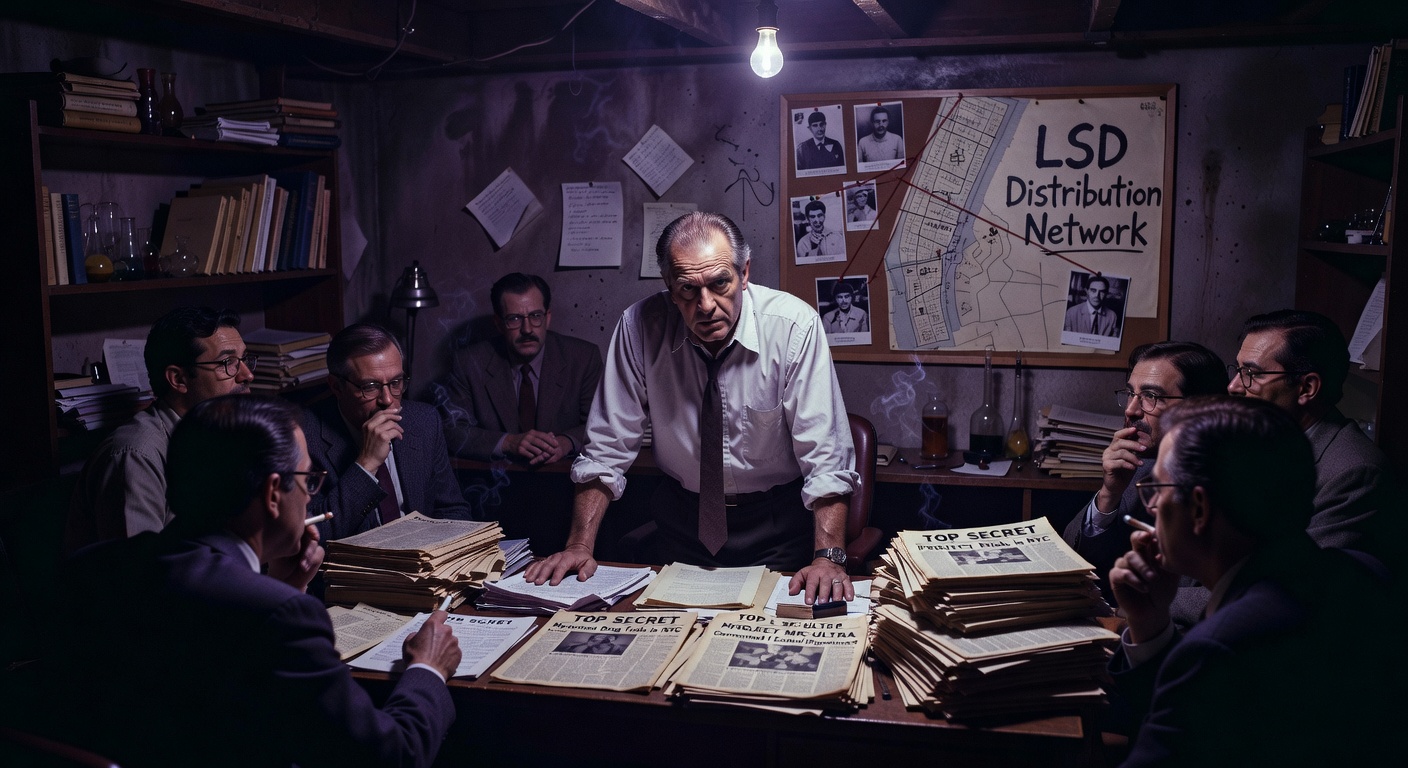
In the early 1950s, a quiet allergist with an office in New York City was doing something that would today land him in federal prison. Dr. Harold Abramson was dosing unwitting research subjects with lysergic acid diethylamide — LSD — at the behest of the Central Intelligence Agency, all under the sprawling umbrella of a covert program known as MKUltra. He wasn’t a fringe scientist working out of a basement. He was a respected physician, a Cold War insider, and the center of a loose but influential network of researchers, intellectuals, and government operatives who quietly turned New York City into the unofficial capital of American psychedelic experimentation.

This is the story of Harold Abramson, the New York LSD circle, and what happens when a government decides that the human mind is just another battlefield to conquer.


The Man Behind the Syringe

Harold Alexander Abramson was born in 1899 and built a respectable medical career as an allergist and immunologist. By the time the CIA came knocking, he was affiliated with Cold Spring Harbor Laboratory on Long Island — a prestigious research institution — and maintained a private practice in New York. On paper, he was the picture of mid-century American scientific respectability.

But Abramson had a curiosity that ran deeper than allergies. He had become fascinated by the psychological and psychiatric potential of LSD, which Swiss chemist Albert Hofmann had accidentally discovered in 1943. By the early 1950s, Abramson had established himself as one of the preeminent LSD researchers in the United States, publishing academic papers on its effects and conducting experiments that blurred the line between clinical science and something far darker.

His CIA connection came through Project ARTICHOKE — the precursor to MKUltra — and later through MKUltra itself, which officially launched in 1953 under the direction of CIA Director Allen Dulles. Abramson received CIA funding funneled through front foundations, a standard tradecraft technique of the era. His work was considered legitimate enough to publish in peer-reviewed journals, yet classified enough to keep its true sponsors hidden for decades.


The New York LSD Circle: A Who’s Who of the Psychedelic Underground

Abramson wasn’t operating in a vacuum. Around him coalesced a remarkable — and remarkably strange — network of physicians, psychiatrists, government employees, and intellectuals who shared a fascination with LSD’s potential. This loose affiliation, sometimes called the New York LSD circle, included figures who would go on to shape American culture, medicine, and intelligence in ways that reverberate to this day.

The Players

Margaret Mead, the legendary anthropologist, was reportedly among those who underwent LSD sessions facilitated by or associated with Abramson’s circle. So was Gregory Bateson, her former husband and a pioneering systems theorist. Aldous Huxley, the British author whose 1954 book The Doors of Perception would help spark the psychedelic revolution, was in correspondence with members of this network. Allen Ginsberg, the Beat poet, reportedly had early LSD experiences connected to these research circles.

The circle also included figures with direct intelligence ties. Frank Olson, an Army biochemist who would become the most tragic figure in the MKUltra story, was dosed without his knowledge at a CIA retreat in 1953 — just weeks later, he fell to his death from a New York hotel window. Abramson was the CIA physician called in to “treat” Olson in the days before his death. The circumstances remain deeply suspicious. Olson’s family has fought for decades to establish that his death was not suicide but murder, and in 1994, his body was exhumed. Forensic evidence suggested blunt force trauma before the fall.

The Social Scene

What made the New York LSD circle unusual wasn’t just the science — it was the social texture. These weren’t isolated laboratory experiments. Abramson hosted LSD sessions in his home and office that took on a cocktail-party atmosphere. Participants would take the drug in relatively comfortable settings, discuss their experiences, and contribute to what Abramson framed as legitimate psychotherapeutic research.

The Macy Conferences — a series of interdisciplinary meetings on cybernetics and the mind held in New York during the 1940s and 50s — brought together many of the same players. Abramson was a regular participant, and the conferences served as a kind of intellectual salon where the boundaries between science, government, and social experimentation were deliberately blurred.


MKUltra: The Bigger Picture

To understand Abramson’s work, you need to understand MKUltra — one of the most extensively documented and genuinely disturbing government programs in American history. Officially running from 1953 to 1973, MKUltra comprised at least 150 research projects conducted at universities, hospitals, prisons, and private clinics across the United States and Canada. Its goal was simple in theory and monstrous in practice: discover methods of psychological manipulation, behavior modification, and mind control that could be weaponized in the Cold War.

The fear driving MKUltra was real, if wildly distorted. American intelligence officials had watched Soviet and Chinese interrogators seemingly “break” captured POWs during the Korean War, producing confessions and apparent ideological conversions that seemed almost supernatural. They concluded — wrongly, as it turned out — that the communists had developed some form of chemical or psychological technology for controlling the human mind. MKUltra was the answer: if they had it, we needed it too.

LSD was considered one of the most promising tools. Early CIA reports suggested it might work as a truth serum, or could be used to disorient enemies, induce amnesia, or create psychological states that would make subjects susceptible to suggestion. The fact that these ideas were largely fantasy didn’t slow the program down.

According to the 1977 Senate Select Committee hearings on MKUltra, the program ultimately involved the dosing of subjects without their consent — including mental patients, prisoners, and ordinary civilians who had no idea they were part of a government experiment. The Church Committee investigations of the mid-1970s and the 1977 Senate hearings revealed the scope of what had been done, though a crucial cache of MKUltra documents was destroyed in 1973 on orders from CIA Director Richard Helms, leaving permanent gaps in the historical record.


Abramson’s Published Work: Science as Cover Story

One of the more chilling aspects of Harold Abramson’s career is how openly some of his work was published. Between 1955 and 1960, he authored and co-authored numerous papers on LSD’s psychotherapeutic applications, contributing to a body of literature that made the drug seem like a promising — if complex — tool for psychiatry.

This wasn’t entirely false. The early scientific literature on LSD genuinely suggested therapeutic potential for conditions including alcoholism, depression, and end-of-life anxiety. Some of that research was legitimate. But in Abramson’s case, the published work served a dual function: it advanced the science, and it provided academic cover for what was, at its core, a covert government program with no interest in therapeutic benefit and considerable interest in coercive applications.

The 1960 collection The Use of LSD in Psychotherapy, edited by Abramson, compiled proceedings from a 1959 conference he organized at the Hotel Commodore in New York. The conference brought together many of the key figures in American LSD research. The CIA’s fingerprints were not visible on the cover, but the money trail led directly to Langley.


The Frank Olson Connection: Death in Room 1018A

No account of Harold Abramson is complete without dwelling on Frank Olson. On November 28, 1953, Olson plunged from the window of Room 1018A at the Statler Hotel in New York City. He was 43 years old, a husband and father, and a scientist who worked with biological weapons at Fort Detrick, Maryland.

Nine days earlier, Olson had been covertly dosed with LSD at a CIA retreat called Deep Creek Lake in western Maryland. He had reportedly become agitated, withdrawn, and deeply troubled in the days that followed. The CIA sent him to New York to be treated — by Harold Abramson.

Abramson’s qualifications to treat acute psychiatric distress were, to put it charitably, limited. He was an allergist. But he had the CIA’s trust, which appears to have been the primary credential that mattered. In the days before his death, Olson met with Abramson multiple times. What was said in those meetings has never been fully established.

The official story was suicide. The CIA paid the Olson family $750,000 in 1976 after the story became public during the Church Committee investigations. But Eric Olson, Frank’s son, has spent his adult life arguing that his father was murdered — that he had learned too much about CIA activities, including potentially about biological weapons programs and Cold War operations that the agency could not afford to have him discuss.

In 2012, the Manhattan District Attorney’s office briefly reopened the investigation. It was quietly dropped. The question of what Harold Abramson knew — and what role he may have played — remains unresolved.


The Documents That Survived

In 1973, CIA Director Richard Helms ordered the destruction of MKUltra files, apparently anticipating the Congressional investigations that were coming. Most of the program’s records were shredded. It was a near-total erasure.

But not quite total. In 1977, a CIA employee discovered approximately 20,000 documents that had been misfiled in a financial records building and survived the purge. These documents — released through a FOIA request by journalist John Marks, who went on to write the definitive book The Search for the Manchurian Candidate — provided the foundation for much of what we now know about MKUltra, including Abramson’s role.

The surviving documents show that Abramson was paid directly by the CIA through a front organization, the Josiah Macy Jr. Foundation, which had legitimate philanthropic activities that provided cover for the arrangement. His work was considered valuable enough to be funded continuously through the 1950s. The documents also reveal the casual disregard for ethical constraints that characterized the program: subjects were to be dosed without consent, reactions were to be observed and recorded, and the therapeutic framing was explicitly secondary to the intelligence application.


Legacy: What the New York LSD Circle Left Behind

The story of Harold Abramson and the New York LSD circle is easy to dismiss as a Cold War aberration — the product of a specific paranoid moment in American history that produced some genuinely crazy government programs. And that’s partly true. The specific fears about Soviet mind control that drove MKUltra were misguided, the methods were illegal and unethical, and the program produced essentially no actionable intelligence.

But the legacy is more complicated than that.

The same network of researchers who worked under CIA auspices also produced some of the foundational literature on psychedelic therapy that is now experiencing a significant revival. Psilocybin studies at Johns Hopkins and NYU, MDMA-assisted therapy for PTSD, and ketamine treatments for depression all draw, at least in part, on a body of research that was partly contaminated by its origins in covert government programs.

The LSD counterculture of the 1960s — the movement that would reshape American society — emerged in part from the same research network. Timothy Leary‘s early LSD experiences were influenced by the scientific literature that Abramson and his colleagues helped produce. Ken Kesey, who would later organize the Merry Pranksters, first took LSD in a government-funded experiment at a VA hospital. The connections between CIA-funded research and the countercultural revolution that the CIA feared and hated are deeply ironic, and deeply real.

What the New York LSD circle represents, at its core, is the collision of institutional power and radical consciousness — and the uncomfortable reality that the two are more intertwined than either side would prefer to admit.


Conclusion: The Mind as a Cold War Battlefield

Harold Abramson died in 1980, largely forgotten outside specialized histories of American intelligence. He never faced legal consequences for his role in MKUltra. No one from the program ever did. The CIA’s institutional interest in mind control didn’t disappear with MKUltra — it evolved, adapted, and in various forms, continues to shape the intersection of psychology, pharmacology, and national security.

The story of the New York LSD circle asks us to sit with a genuinely uncomfortable question: when a government decides that understanding the human mind is a matter of national security, who protects the humans whose minds are being studied? In the 1950s, the answer was: no one. The subjects of MKUltra — the patients, prisoners, and ordinary people who were dosed without consent — had no protection, no recourse, and in some cases, no idea what had been done to them.

That’s not ancient history. That’s fifty years ago. And the documents that would tell the full story were shredded in 1973.

We don’t know everything that happened. We may never know. But we know enough to ask why it took so long for anyone to care.


Down the Rabbit Hole

  • Frank Olson: Suicide or CIA Hit? — A deep dive into the life and death of the Fort Detrick scientist who may have known too much, including the 1994 exhumation and the Manhattan DA’s investigation.
  • Project ARTICHOKE: Before MKUltra, There Was Something Worse — The CIA’s first systematic mind control program, which pioneered the use of drugs, hypnosis, and sensory deprivation in interrogation.
  • The Macy Conferences: Where Cybernetics Met the CIA — How a series of New York intellectual salons brought together the scientists, anthropologists, and government agents who shaped postwar American thought.
  • Ewen Cameron and the Montreal Experiments — The Canadian psychiatrist who received CIA funding to conduct some of the most brutal psychological experiments in MKUltra, including “psychic driving” and induced amnesia at McGill University.
  • LSD and the Counterculture: Did the CIA Accidentally Invent the 1960s? — Tracing the unlikely connections between Cold War mind control research and the psychedelic revolution that turned America upside down.

Disclaimer: This article is based on declassified government documents, congressional testimony, and published historical research. Where events remain disputed or unclear, this is noted. The Conspiracy Realist presents documented history and credible analysis — not speculation presented as fact.

Harold Abramson and the New York LSD Circle

Harold Abramson and the New York LSD Circle

In the early 1950s, a quiet allergist with an office in New York City was doing something that would today land him in federal prison. Dr. Harold Abramson was dosing unwitting research subjects with lysergic acid diethylamide — LSD — at the behest of the Central Intelligence Agency, all under the sprawling umbrella of a covert program known as MKUltra. He wasn’t a fringe scientist working out of a basement. He was a respected physician, a Cold War insider, and the center of a loose but influential network of researchers, intellectuals, and government operatives who quietly turned New York City into the unofficial capital of American psychedelic experimentation.

This is the story of Harold Abramson, the New York LSD circle, and what happens when a government decides that the human mind is just another battlefield to conquer.


The Man Behind the Syringe

Harold Alexander Abramson was born in 1899 and built a respectable medical career as an allergist and immunologist. By the time the CIA came knocking, he was affiliated with Cold Spring Harbor Laboratory on Long Island — a prestigious research institution — and maintained a private practice in New York. On paper, he was the picture of mid-century American scientific respectability.

But Abramson had a curiosity that ran deeper than allergies. He had become fascinated by the psychological and psychiatric potential of LSD, which Swiss chemist Albert Hofmann had accidentally discovered in 1943. By the early 1950s, Abramson had established himself as one of the preeminent LSD researchers in the United States, publishing academic papers on its effects and conducting experiments that blurred the line between clinical science and something far darker.

His CIA connection came through Project ARTICHOKE — the precursor to MKUltra — and later through MKUltra itself, which officially launched in 1953 under the direction of CIA Director Allen Dulles. Abramson received CIA funding funneled through front foundations, a standard tradecraft technique of the era. His work was considered legitimate enough to publish in peer-reviewed journals, yet classified enough to keep its true sponsors hidden for decades.


The New York LSD Circle: A Who’s Who of the Psychedelic Underground

Abramson wasn’t operating in a vacuum. Around him coalesced a remarkable — and remarkably strange — network of physicians, psychiatrists, government employees, and intellectuals who shared a fascination with LSD’s potential. This loose affiliation, sometimes called the New York LSD circle, included figures who would go on to shape American culture, medicine, and intelligence in ways that reverberate to this day.

The Players

Margaret Mead, the legendary anthropologist, was reportedly among those who underwent LSD sessions facilitated by or associated with Abramson’s circle. So was Gregory Bateson, her former husband and a pioneering systems theorist. Aldous Huxley, the British author whose 1954 book The Doors of Perception would help spark the psychedelic revolution, was in correspondence with members of this network. Allen Ginsberg, the Beat poet, reportedly had early LSD experiences connected to these research circles.

The circle also included figures with direct intelligence ties. Frank Olson, an Army biochemist who would become the most tragic figure in the MKUltra story, was dosed without his knowledge at a CIA retreat in 1953 — just weeks later, he fell to his death from a New York hotel window. Abramson was the CIA physician called in to “treat” Olson in the days before his death. The circumstances remain deeply suspicious. Olson’s family has fought for decades to establish that his death was not suicide but murder, and in 1994, his body was exhumed. Forensic evidence suggested blunt force trauma before the fall.

The Social Scene

What made the New York LSD circle unusual wasn’t just the science — it was the social texture. These weren’t isolated laboratory experiments. Abramson hosted LSD sessions in his home and office that took on a cocktail-party atmosphere. Participants would take the drug in relatively comfortable settings, discuss their experiences, and contribute to what Abramson framed as legitimate psychotherapeutic research.

The Macy Conferences — a series of interdisciplinary meetings on cybernetics and the mind held in New York during the 1940s and 50s — brought together many of the same players. Abramson was a regular participant, and the conferences served as a kind of intellectual salon where the boundaries between science, government, and social experimentation were deliberately blurred.


MKUltra: The Bigger Picture

To understand Abramson’s work, you need to understand MKUltra — one of the most extensively documented and genuinely disturbing government programs in American history. Officially running from 1953 to 1973, MKUltra comprised at least 150 research projects conducted at universities, hospitals, prisons, and private clinics across the United States and Canada. Its goal was simple in theory and monstrous in practice: discover methods of psychological manipulation, behavior modification, and mind control that could be weaponized in the Cold War.

The fear driving MKUltra was real, if wildly distorted. American intelligence officials had watched Soviet and Chinese interrogators seemingly “break” captured POWs during the Korean War, producing confessions and apparent ideological conversions that seemed almost supernatural. They concluded — wrongly, as it turned out — that the communists had developed some form of chemical or psychological technology for controlling the human mind. MKUltra was the answer: if they had it, we needed it too.

LSD was considered one of the most promising tools. Early CIA reports suggested it might work as a truth serum, or could be used to disorient enemies, induce amnesia, or create psychological states that would make subjects susceptible to suggestion. The fact that these ideas were largely fantasy didn’t slow the program down.

According to the 1977 Senate Select Committee hearings on MKUltra, the program ultimately involved the dosing of subjects without their consent — including mental patients, prisoners, and ordinary civilians who had no idea they were part of a government experiment. The Church Committee investigations of the mid-1970s and the 1977 Senate hearings revealed the scope of what had been done, though a crucial cache of MKUltra documents was destroyed in 1973 on orders from CIA Director Richard Helms, leaving permanent gaps in the historical record.


Abramson’s Published Work: Science as Cover Story

One of the more chilling aspects of Harold Abramson’s career is how openly some of his work was published. Between 1955 and 1960, he authored and co-authored numerous papers on LSD’s psychotherapeutic applications, contributing to a body of literature that made the drug seem like a promising — if complex — tool for psychiatry.

This wasn’t entirely false. The early scientific literature on LSD genuinely suggested therapeutic potential for conditions including alcoholism, depression, and end-of-life anxiety. Some of that research was legitimate. But in Abramson’s case, the published work served a dual function: it advanced the science, and it provided academic cover for what was, at its core, a covert government program with no interest in therapeutic benefit and considerable interest in coercive applications.

The 1960 collection The Use of LSD in Psychotherapy, edited by Abramson, compiled proceedings from a 1959 conference he organized at the Hotel Commodore in New York. The conference brought together many of the key figures in American LSD research. The CIA’s fingerprints were not visible on the cover, but the money trail led directly to Langley.


The Frank Olson Connection: Death in Room 1018A

No account of Harold Abramson is complete without dwelling on Frank Olson. On November 28, 1953, Olson plunged from the window of Room 1018A at the Statler Hotel in New York City. He was 43 years old, a husband and father, and a scientist who worked with biological weapons at Fort Detrick, Maryland.

Nine days earlier, Olson had been covertly dosed with LSD at a CIA retreat called Deep Creek Lake in western Maryland. He had reportedly become agitated, withdrawn, and deeply troubled in the days that followed. The CIA sent him to New York to be treated — by Harold Abramson.

Abramson’s qualifications to treat acute psychiatric distress were, to put it charitably, limited. He was an allergist. But he had the CIA’s trust, which appears to have been the primary credential that mattered. In the days before his death, Olson met with Abramson multiple times. What was said in those meetings has never been fully established.

The official story was suicide. The CIA paid the Olson family $750,000 in 1976 after the story became public during the Church Committee investigations. But Eric Olson, Frank’s son, has spent his adult life arguing that his father was murdered — that he had learned too much about CIA activities, including potentially about biological weapons programs and Cold War operations that the agency could not afford to have him discuss.

In 2012, the Manhattan District Attorney’s office briefly reopened the investigation. It was quietly dropped. The question of what Harold Abramson knew — and what role he may have played — remains unresolved.


The Documents That Survived

In 1973, CIA Director Richard Helms ordered the destruction of MKUltra files, apparently anticipating the Congressional investigations that were coming. Most of the program’s records were shredded. It was a near-total erasure.

But not quite total. In 1977, a CIA employee discovered approximately 20,000 documents that had been misfiled in a financial records building and survived the purge. These documents — released through a FOIA request by journalist John Marks, who went on to write the definitive book The Search for the Manchurian Candidate — provided the foundation for much of what we now know about MKUltra, including Abramson’s role.

The surviving documents show that Abramson was paid directly by the CIA through a front organization, the Josiah Macy Jr. Foundation, which had legitimate philanthropic activities that provided cover for the arrangement. His work was considered valuable enough to be funded continuously through the 1950s. The documents also reveal the casual disregard for ethical constraints that characterized the program: subjects were to be dosed without consent, reactions were to be observed and recorded, and the therapeutic framing was explicitly secondary to the intelligence application.


Legacy: What the New York LSD Circle Left Behind

The story of Harold Abramson and the New York LSD circle is easy to dismiss as a Cold War aberration — the product of a specific paranoid moment in American history that produced some genuinely crazy government programs. And that’s partly true. The specific fears about Soviet mind control that drove MKUltra were misguided, the methods were illegal and unethical, and the program produced essentially no actionable intelligence.

But the legacy is more complicated than that.

The same network of researchers who worked under CIA auspices also produced some of the foundational literature on psychedelic therapy that is now experiencing a significant revival. Psilocybin studies at Johns Hopkins and NYU, MDMA-assisted therapy for PTSD, and ketamine treatments for depression all draw, at least in part, on a body of research that was partly contaminated by its origins in covert government programs.

The LSD counterculture of the 1960s — the movement that would reshape American society — emerged in part from the same research network. Timothy Leary‘s early LSD experiences were influenced by the scientific literature that Abramson and his colleagues helped produce. Ken Kesey, who would later organize the Merry Pranksters, first took LSD in a government-funded experiment at a VA hospital. The connections between CIA-funded research and the countercultural revolution that the CIA feared and hated are deeply ironic, and deeply real.

What the New York LSD circle represents, at its core, is the collision of institutional power and radical consciousness — and the uncomfortable reality that the two are more intertwined than either side would prefer to admit.


Conclusion: The Mind as a Cold War Battlefield

Harold Abramson died in 1980, largely forgotten outside specialized histories of American intelligence. He never faced legal consequences for his role in MKUltra. No one from the program ever did. The CIA’s institutional interest in mind control didn’t disappear with MKUltra — it evolved, adapted, and in various forms, continues to shape the intersection of psychology, pharmacology, and national security.

The story of the New York LSD circle asks us to sit with a genuinely uncomfortable question: when a government decides that understanding the human mind is a matter of national security, who protects the humans whose minds are being studied? In the 1950s, the answer was: no one. The subjects of MKUltra — the patients, prisoners, and ordinary people who were dosed without consent — had no protection, no recourse, and in some cases, no idea what had been done to them.

That’s not ancient history. That’s fifty years ago. And the documents that would tell the full story were shredded in 1973.

We don’t know everything that happened. We may never know. But we know enough to ask why it took so long for anyone to care.


Down the Rabbit Hole

  • Frank Olson: Suicide or CIA Hit? — A deep dive into the life and death of the Fort Detrick scientist who may have known too much, including the 1994 exhumation and the Manhattan DA’s investigation.
  • Project ARTICHOKE: Before MKUltra, There Was Something Worse — The CIA’s first systematic mind control program, which pioneered the use of drugs, hypnosis, and sensory deprivation in interrogation.
  • The Macy Conferences: Where Cybernetics Met the CIA — How a series of New York intellectual salons brought together the scientists, anthropologists, and government agents who shaped postwar American thought.
  • Ewen Cameron and the Montreal Experiments — The Canadian psychiatrist who received CIA funding to conduct some of the most brutal psychological experiments in MKUltra, including “psychic driving” and induced amnesia at McGill University.
  • LSD and the Counterculture: Did the CIA Accidentally Invent the 1960s? — Tracing the unlikely connections between Cold War mind control research and the psychedelic revolution that turned America upside down.

Disclaimer: This article is based on declassified government documents, congressional testimony, and published historical research. Where events remain disputed or unclear, this is noted. The Conspiracy Realist presents documented history and credible analysis — not speculation presented as fact.

Table of contents