Menu

Hollow Moon Theory

Hollow Moon Theory

Hollow Moon

Exploring the Mysteries of Our Celestial Neighbor

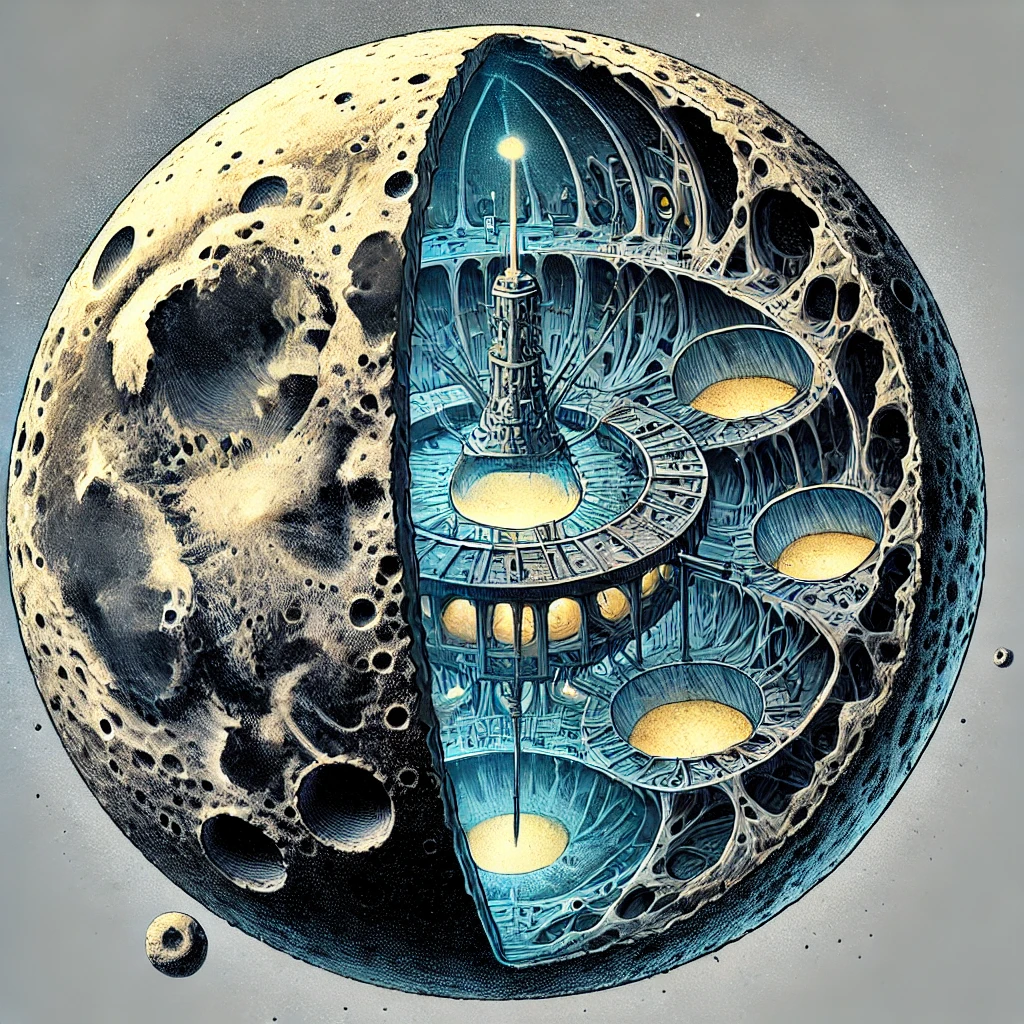
The Hollow Moon Theory is a captivating and controversial hypothesis suggesting that Earth’s Moon is not a solid celestial body but rather an artificial or hollow structure. This theory challenges conventional scientific understanding and has garnered interest from conspiracy theorists, researchers, and curious minds alike. In this comprehensive exploration, we will delve into the origins of the Hollow Moon theory, its implications, and connections to other intriguing lunar theories, such as the Moon being a projection and the Moon landing hoax.

The Origin of the Hollow Moon Theory

The Hollow Moon theory gained traction in the 1970s, primarily due to the work of various researchers, including physicist and author Don Wilson, who published the book Our Mysterious Spaceship Moon in 1975. This theory posits that the Moon is not a natural satellite formed through conventional processes but rather an artificial construct created by an advanced civilization or extraterrestrial beings.

Key Points of the Theory

  • Seismic Data: Proponents of the Hollow Moon theory often cite seismic data collected during the Apollo missions, which indicated that the Moon resonates like a bell when struck. This has led some to argue that a hollow structure would explain the unusual seismic activity.
  • Unusual Crater Patterns: The distribution and formation of craters on the Moon’s surface have also been used as evidence for the theory. Some theorists suggest that the size and shape of craters indicate that they were caused by external impacts on a hollow shell rather than a solid body.
  • Lunar Anomalies: Various anomalies observed on the Moon, such as unexplained lights and unusual geological formations, have been interpreted by some as signs of an artificial structure.

The Science of the Moon: Conventional Understanding

Before diving deeper into the Hollow Moon theory, it is essential to understand the conventional scientific perspective on the Moon.

Formation of the Moon

According to widely accepted theories, the Moon formed approximately 4.5 billion years ago, likely as a result of a massive collision between Earth and a Mars-sized body, often referred to as Theia. This impact theory explains the Moon’s composition, which is similar to that of Earth’s outer layers.

Physical Characteristics

  • Size and Distance: The Moon has a diameter of about 3,474 kilometers (2,159 miles) and is approximately 384,400 kilometers (238,855 miles) away from Earth.
  • Surface Composition: The lunar surface is composed of a mixture of basalt and anorthosite, with features such as maria (dark plains), highlands, and craters.
  • Seismic Activity: Scientific studies of lunar seismic activity have shown that the Moon experiences moonquakes, which can be attributed to tidal forces exerted by the Earth.

Implications of the Hollow Moon Theory

If the Hollow Moon theory were true, it would have profound implications for our understanding of the Moon, its origins, and our place in the universe.

Artificial Construction

The notion that the Moon is an artificial construct raises questions about the existence of advanced civilizations capable of creating such a massive structure. This could imply that extraterrestrial life has visited or influenced Earth in the distant past.

Reassessment of Lunar Exploration

The Hollow Moon theory challenges the validity of the data collected during the Apollo missions and subsequent lunar explorations. If the Moon is indeed hollow, it would necessitate a reevaluation of our understanding of lunar geology and the processes that shaped its surface.

Impact on Earth

The Moon plays a critical role in stabilizing Earth’s axial tilt and influencing tides. If the Moon were hollow, its gravitational effects might differ significantly, potentially affecting Earth’s climate and environmental systems.

Connections to Other Lunar Theories

The Hollow Moon theory does not exist in isolation; it connects to several other intriguing theories about the Moon’s nature and our understanding of it.

The Moon is a Projection

Another theory that has emerged in recent years is the idea that the Moon is a projection rather than a physical body. Proponents of this theory suggest that the Moon’s appearance may be artificially created using advanced technology, leading to discussions about the nature of reality and perception.

  • Supporting Arguments: Supporters argue that the Moon’s phases and surface features could be explained by projection technology rather than a solid body. This theory echoes themes found in philosophical discussions about the nature of reality, such as those explored in movies like The Matrix.

Moon Landing Hoax

The Moon landing hoax theory posits that the Apollo moon landings were staged by NASA and the U.S. government to win the Space Race against the Soviet Union. Proponents of this theory claim that evidence of the landings was fabricated, including photographs and videos.

  • Common Claims: Skeptics point to supposed anomalies in the lunar photographs, such as inconsistent shadows and the absence of stars in the background, as evidence of manipulation. The connection between the Hollow Moon theory and the Moon landing hoax lies in the skepticism surrounding official narratives about the Moon.

Curious Facts About the Moon

  • Moonquakes: The Apollo missions recorded moonquakes, which are less intense than earthquakes but can last longer. These seismic activities have been studied to understand the Moon’s internal structure.
  • Tidal Locking: The Moon is tidally locked with Earth, meaning that the same side always faces our planet. This phenomenon has led to speculation about the hidden side of the Moon and what it might contain.
  • Water Ice: Recent studies have confirmed the presence of water ice in permanently shadowed craters on the Moon, which raises possibilities for future lunar exploration and colonization.

The Legacy of the Hollow Moon Theory

The Hollow Moon theory remains a captivating topic within the realm of conspiracy theories and alternative science. Despite its lack of empirical evidence, it continues to inspire curiosity and debate among enthusiasts and researchers alike.

Cultural Impact

The idea of a hollow Moon has found its way into popular culture, inspiring films, books, and documentaries that explore the mysteries of our celestial neighbor. This cultural resonance reflects humanity’s ongoing fascination with the unknown and the potential for hidden truths in our universe.

The Enigma of the Hollow Moon

In conclusion, the Hollow Moon theory presents a provocative perspective on the nature of our Moon and the possibilities of extraterrestrial influence. While mainstream science supports the conventional understanding of the Moon as a solid body formed from cosmic events, the allure of the Hollow Moon theory invites us to explore deeper questions about existence, reality, and the mysteries of our universe.

As we continue to investigate the nature of the Moon and its significance, the Hollow Moon theory serves as a reminder of the rich tapestry of human curiosity and the desire to uncover the unknown. Whether viewed as a legitimate hypothesis or a fascinating piece of folklore, the concept of a hollow Moon encourages us to ponder the complexities of our celestial surroundings and our place within the cosmos.

Table of contents

Hollow Moon

Exploring the Mysteries of Our Celestial Neighbor

The Hollow Moon Theory is a captivating and controversial hypothesis suggesting that Earth’s Moon is not a solid celestial body but rather an artificial or hollow structure. This theory challenges conventional scientific understanding and has garnered interest from conspiracy theorists, researchers, and curious minds alike. In this comprehensive exploration, we will delve into the origins of the Hollow Moon theory, its implications, and connections to other intriguing lunar theories, such as the Moon being a projection and the Moon landing hoax.

The Origin of the Hollow Moon Theory

The Hollow Moon theory gained traction in the 1970s, primarily due to the work of various researchers, including physicist and author Don Wilson, who published the book Our Mysterious Spaceship Moon in 1975. This theory posits that the Moon is not a natural satellite formed through conventional processes but rather an artificial construct created by an advanced civilization or extraterrestrial beings.

Key Points of the Theory

  • Seismic Data: Proponents of the Hollow Moon theory often cite seismic data collected during the Apollo missions, which indicated that the Moon resonates like a bell when struck. This has led some to argue that a hollow structure would explain the unusual seismic activity.
  • Unusual Crater Patterns: The distribution and formation of craters on the Moon’s surface have also been used as evidence for the theory. Some theorists suggest that the size and shape of craters indicate that they were caused by external impacts on a hollow shell rather than a solid body.
  • Lunar Anomalies: Various anomalies observed on the Moon, such as unexplained lights and unusual geological formations, have been interpreted by some as signs of an artificial structure.

The Science of the Moon: Conventional Understanding

Before diving deeper into the Hollow Moon theory, it is essential to understand the conventional scientific perspective on the Moon.

Formation of the Moon

According to widely accepted theories, the Moon formed approximately 4.5 billion years ago, likely as a result of a massive collision between Earth and a Mars-sized body, often referred to as Theia. This impact theory explains the Moon’s composition, which is similar to that of Earth’s outer layers.

Physical Characteristics

  • Size and Distance: The Moon has a diameter of about 3,474 kilometers (2,159 miles) and is approximately 384,400 kilometers (238,855 miles) away from Earth.
  • Surface Composition: The lunar surface is composed of a mixture of basalt and anorthosite, with features such as maria (dark plains), highlands, and craters.
  • Seismic Activity: Scientific studies of lunar seismic activity have shown that the Moon experiences moonquakes, which can be attributed to tidal forces exerted by the Earth.

Implications of the Hollow Moon Theory

If the Hollow Moon theory were true, it would have profound implications for our understanding of the Moon, its origins, and our place in the universe.

Artificial Construction

The notion that the Moon is an artificial construct raises questions about the existence of advanced civilizations capable of creating such a massive structure. This could imply that extraterrestrial life has visited or influenced Earth in the distant past.

Reassessment of Lunar Exploration

The Hollow Moon theory challenges the validity of the data collected during the Apollo missions and subsequent lunar explorations. If the Moon is indeed hollow, it would necessitate a reevaluation of our understanding of lunar geology and the processes that shaped its surface.

Impact on Earth

The Moon plays a critical role in stabilizing Earth’s axial tilt and influencing tides. If the Moon were hollow, its gravitational effects might differ significantly, potentially affecting Earth’s climate and environmental systems.

Connections to Other Lunar Theories

The Hollow Moon theory does not exist in isolation; it connects to several other intriguing theories about the Moon’s nature and our understanding of it.

The Moon is a Projection

Another theory that has emerged in recent years is the idea that the Moon is a projection rather than a physical body. Proponents of this theory suggest that the Moon’s appearance may be artificially created using advanced technology, leading to discussions about the nature of reality and perception.

  • Supporting Arguments: Supporters argue that the Moon’s phases and surface features could be explained by projection technology rather than a solid body. This theory echoes themes found in philosophical discussions about the nature of reality, such as those explored in movies like The Matrix.

Moon Landing Hoax

The Moon landing hoax theory posits that the Apollo moon landings were staged by NASA and the U.S. government to win the Space Race against the Soviet Union. Proponents of this theory claim that evidence of the landings was fabricated, including photographs and videos.

  • Common Claims: Skeptics point to supposed anomalies in the lunar photographs, such as inconsistent shadows and the absence of stars in the background, as evidence of manipulation. The connection between the Hollow Moon theory and the Moon landing hoax lies in the skepticism surrounding official narratives about the Moon.

Curious Facts About the Moon

  • Moonquakes: The Apollo missions recorded moonquakes, which are less intense than earthquakes but can last longer. These seismic activities have been studied to understand the Moon’s internal structure.
  • Tidal Locking: The Moon is tidally locked with Earth, meaning that the same side always faces our planet. This phenomenon has led to speculation about the hidden side of the Moon and what it might contain.
  • Water Ice: Recent studies have confirmed the presence of water ice in permanently shadowed craters on the Moon, which raises possibilities for future lunar exploration and colonization.

The Legacy of the Hollow Moon Theory

The Hollow Moon theory remains a captivating topic within the realm of conspiracy theories and alternative science. Despite its lack of empirical evidence, it continues to inspire curiosity and debate among enthusiasts and researchers alike.

Cultural Impact

The idea of a hollow Moon has found its way into popular culture, inspiring films, books, and documentaries that explore the mysteries of our celestial neighbor. This cultural resonance reflects humanity’s ongoing fascination with the unknown and the potential for hidden truths in our universe.

The Enigma of the Hollow Moon

In conclusion, the Hollow Moon theory presents a provocative perspective on the nature of our Moon and the possibilities of extraterrestrial influence. While mainstream science supports the conventional understanding of the Moon as a solid body formed from cosmic events, the allure of the Hollow Moon theory invites us to explore deeper questions about existence, reality, and the mysteries of our universe.

As we continue to investigate the nature of the Moon and its significance, the Hollow Moon theory serves as a reminder of the rich tapestry of human curiosity and the desire to uncover the unknown. Whether viewed as a legitimate hypothesis or a fascinating piece of folklore, the concept of a hollow Moon encourages us to ponder the complexities of our celestial surroundings and our place within the cosmos.