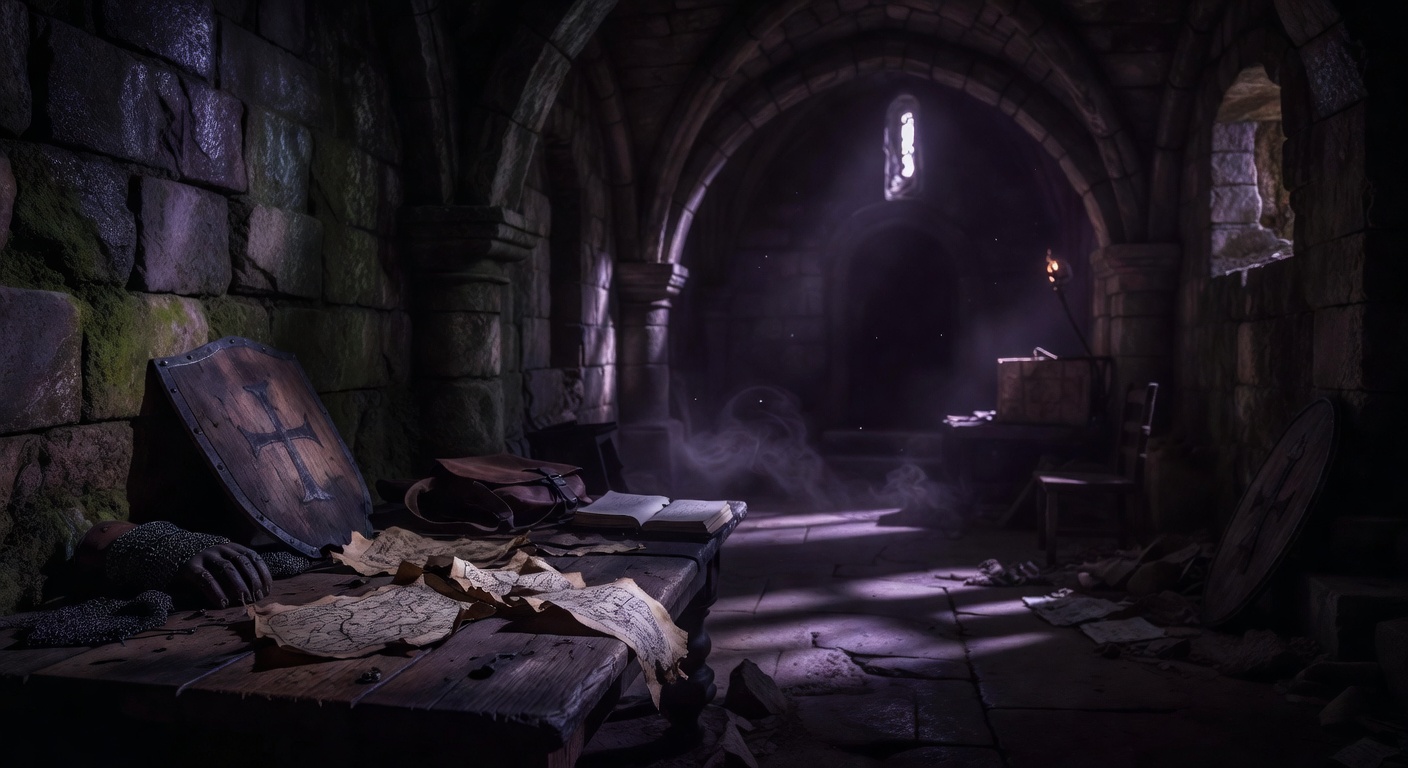
Imagine this: It’s 1307, and King Philip IV of France—deep in debt and eyeing easy riches—unleashes a midnight raid on France’s Templar strongholds. Knights in white mantles with red crosses are dragged from their beds, tortured into confessions of heresy, spitting, and idol worship. Their leader, Grand Master Jacques de Molay, burns at the stake in 1314, cursing the king and pope from the flames. Both men die within the year. Coincidence? Or the fiery end of a brotherhood that knew too much? Welcome to the shadowy world of the Knights Templar, where history blurs into legend, and every stone in Jerusalem hides a secret. Let’s unravel this thread by thread.
The Birth of a Warrior Monk Order
Picture the dusty roads to Jerusalem post-First Crusade (1099). Christian pilgrims, fresh from Europe’s safety, flock to the Holy Land but face constant banditry and Saracen raids. Enter Hugues de Payens, a French knight with a vision. Around 1119, he and eight comrades vow poverty, chastity, and obedience, dubbing themselves the Poor Fellow-Soldiers of Christ and of the Temple of Solomon. They set up shop on the Temple Mount, in what was once Solomon’s Temple stables—prime real estate for digging up biblical secrets.
These weren’t just bodyguards. At the Council of Troyes in 1129, Bernard of Clairvaux, the era’s rockstar abbot, penned their rulebook, blending Cistercian monasticism with knightly ferocity. Pope Innocent II sealed the deal with the 1139 bull Omne Datum Optimum, granting them autonomy: no taxes, their own chapels, and immunity from local laws. Donations poured in—land, gold, relics. By 1150, they had 1,200 commanderies across Europe. Evidence? The Vatican Secret Archives hold papal bulls confirming this, though accessing them? Good luck—scholars wait years.
From Pilgrim Protectors to Crusading Powerhouse
The Templars didn’t mess around in battle. Their signature: white surcoats with red crosses, heavy chainmail, and a “no surrender” ethos. At the Battle of Montgisard (1177), 500 Templars shredded Saladin‘s 26,000-strong army, saving Jerusalem. Chronicler William of Tyre called them “lions of Christ,” their discipline legendary—no looting, no ransoms, just holy fury.
They manned fortresses like Château Pèlerin (built 1218, held till 1291), a Crusader marvel with underground tunnels. Archaeological digs, like those by the Israel Antiquities Authority, unearthed Templar coins and seals there, proving their grip on the Levant. But power bred envy. King Richard the Lionheart praised them in his letters, yet by the Third Crusade, rival orders like the Hospitallers sniped at their turf.
Revolutionizing Money: The Templars’ Banking Empire
Here’s where it gets juicy. Pilgrims hauling gold to Jerusalem? Robbery bait. Templars innovated: deposit in Paris, withdraw in Acre via coded letters and chequers (early checks). Historian Dan Jones in The Templars details how they lent to kings—Henry II of England borrowed £5,000 (millions today) in 1187. They owned vineyards in France, sheep farms in England, sugar plantations in Cyprus. By 1300, their Paris preceptory rivaled the Louvre in wealth.
Evidence abounds: English Pipe Rolls record Templar loans funding Edward I‘s wars. They even issued letters of credit, precursors to modern banking. Conspiracy angle? Some say this network hid alchemical gold or Grail treasures, funding a shadow economy that scared monarchs stiff.
Whispers in the Dark: Secret Rites and Heresy Charges
Templar life was cloaked in ritual. New knights endured all-night vigils, skull oaths, and spit-on-the-cross trials—allegedly to test loyalty. Philippe IV‘s 1307 arrests yielded confessions under torture: kissing initiates’ rears, denying Christ, worshiping Baphomet (a bearded head idol). Were these real? Or fabricated by royal inquisitors?
Trial records, preserved in the Château de Chinon parchment (rediscovered 2001), show Pope Clement V initially exonerating them, but buckling to Philip. Historian Barbara Frale argues in her book The Templars and the Ark of the Covenant that these were smears to seize assets. Freemasons later romanticized the rites, claiming Templar survival underground.
The Ultimate Prize: Holy Relics and the Ark of the Covenant Hunt
Now, the rabbit hole deepens. Templars headquartered on the Temple Mount, site of Solomon’s Temple—rumored Ark hiding spot. Legend says Baazazeth, a 12th-century Templar, found it under Al-Aqsa Mosque. Chronicler Walter Map hinted at “gold beyond dreams” unearthed there. Did they ship it to Scotland (Rosslyn Chapel theories) or Ethiopia via Languedoc tunnels?
Holy Grail ties? Wolfram von Eschenbach‘s Parzival (c. 1200) names Templars (Temlpez) as Grail guardians. Shroud of Turin? Some carbon-date it to Templar era, with knightly images. True Cross fragments? They carried one into battle, lost at Hattin (1187). Alain Demurger’s The Last Templar* cites digs yielding Templar seals near Jerusalem’s golden gate—Ark escape route?
Vatican links? Post-dissolution, Clement V spirited treasures to Avignon. Rumors persist of Vatican Archives hiding Templar dossiers, including Ark maps. A 2007 Italian probe into rogue prelates echoed this, but details vanished.
Downfall: Betrayal, Trials, and Curses
Friday, October 13, 1307—Black Friday’s origin. Philip’s hit squads nabbed 15,000 Templars. Torture extracted wild tales: sodomy, cat worship. Jacques de Molay recanted, then cursed: Philip and Clement dead by year’s end (they were—stroke and cancer). Order dissolved at Council of Vienne (1312), assets to Hospitallers (Philip pocketed most).
Survivors fled: Portugal’s Order of Christ (Vasco da Gama’s backers), Scotland’s Sinclair family (Rosslyn builders). Freemasonic lineages claim direct descent.
Echoes Through Time: Templars in Modern Myths
Templars haunt pop culture—Assassin’s Creed, The Da Vinci Code (Rosslyn as Grail vault). But real echoes? Their cross adorns some Masonic lodges. Banking legacy? Modern Swiss vaults trace to Templar preceptories. Conspiracy fuel: Did they guard Black Madonna statues hiding Mary’s bloodline? Or encode Voynich Manuscript?
Scholars like Malcolm Barber (The New Knighthood) debunk extremes, but digs keep uncovering anomalies—Ethiopian claims of Ark custody via Templar-Prester John links, per 14th-century letters.
We’ve chased Templars from Jerusalem dust to pyres, from vaults to vaults unseen. Their story warns: power amassed in secret invites downfall. Yet whispers endure—perhaps because truth hides in the gaps history leaves. What relic do you think they truly found?
Down the Rabbit Hole
- Rosslyn Chapel Secrets: Did Scottish Sinclairs hide the Templar Grail? Explore carvings and underground vaults.
- Freemasonry’s Templar Roots: From suppression to lodge symbols—hidden continuity or Masonic myth?
- Order of Christ and Age of Discovery: Templar fleets funding Columbus—lost maps to the New World?
- Baphomet Unmasked: Heresy idol or coded Ark reference? Decoding Templar trial confessions.
- Templars vs. Assassins: Holy Land shadow war—forgotten alliances and betrayals.
Disclaimer: This article explores historical theories and conspiracies for entertainment and education. Claims are not verified facts; consult primary sources for research.