Menu

MKSEARCH: The Program That Followed MKULTRA

MKSEARCH: The Program That Followed MKULTRA

Imagine a world where your government could slip into your mind, tweak the dials, and send you back out as their unwitting puppet. That’s not the plot of a sci-fi thriller—it’s the chilling legacy of Project MKULTRA, the CIA’s infamous mind control program. But what happens when the curtain falls on one act? The show doesn’t end; it evolves. Enter MKSEARCH: the lesser-known sequel that kept the experiments alive, deeper in the shadows.

The Ghost of MKULTRA

Let’s rewind to the 1950s. The Cold War is raging, and the U.S. intelligence community is gripped by paranoia. Soviet brainwashing rumors swirl, and the CIA fears America is falling behind in the psychological arms race. Enter Allen Dulles, the agency’s slick director, who greenlights MKULTRA in 1953. Over two decades, the program funneled millions into over 150 subprojects, testing everything from LSD on unsuspecting civilians to electroshock therapy, hypnosis, and sensory deprivation. The scale was staggering: budgets exceeded $10 million annually by the 1960s, equivalent to over $100 million today, laundered through more than 80 institutions including universities, hospitals, prisons, and pharmaceutical companies.

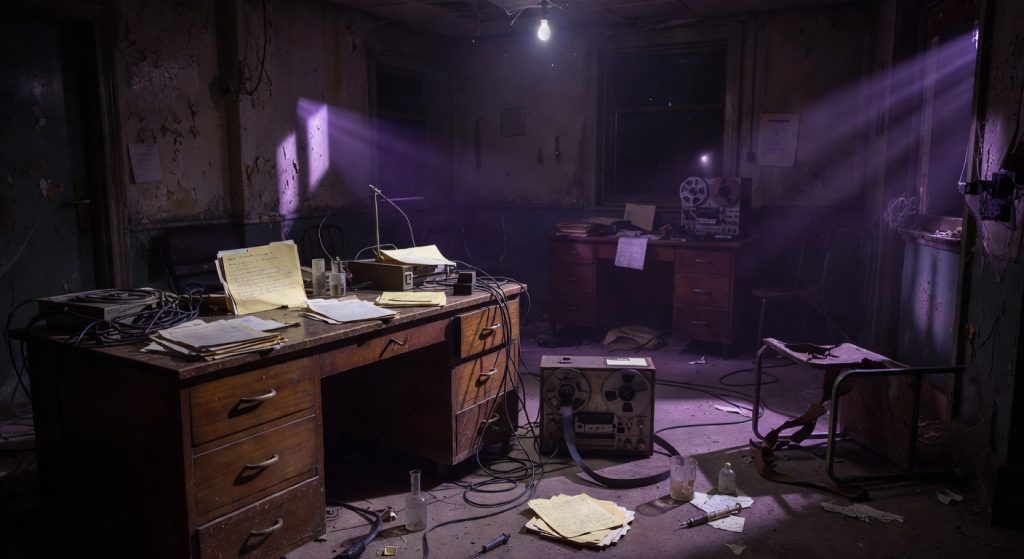
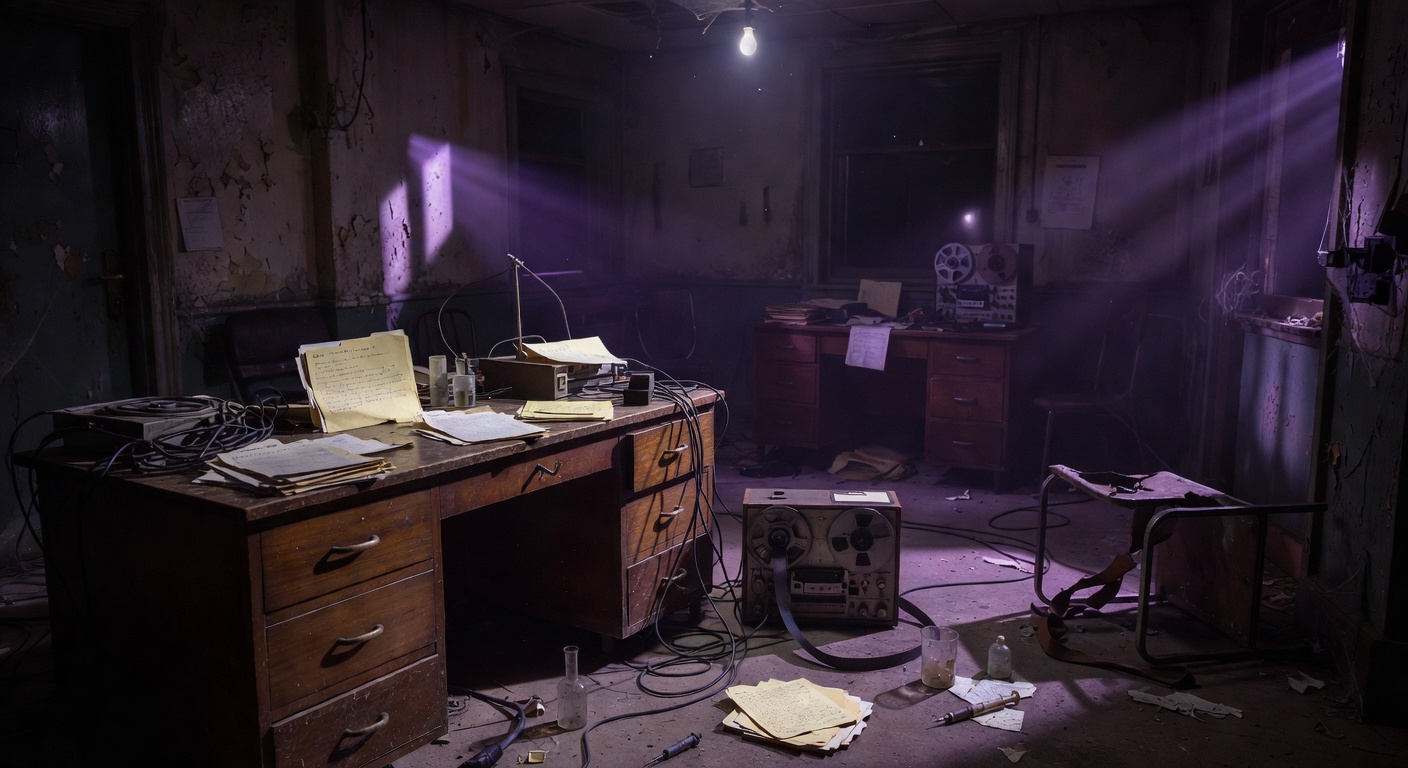
Picture this: In a San Francisco safehouse known as Operation Midnight Climax, CIA operative George Hunter White—a hard-drinking ex-cop turned spook—dosed partygoers with acid-laced drinks, filming their freakouts for “data” through one-way mirrors. Prostitutes lured johns back to the pad, where the CIA spiked their booze and observed the ensuing chaos. White’s notes, later declassified, bragged of “wild erotic scenes” captured on reel-to-reel. These sessions weren’t just voyeuristic spectacles; they aimed to map the boundaries of human suggestibility under duress, with White documenting how subjects confessed fabricated secrets or performed bizarre acts under the influence. The operation ran from 1955 to 1966, involving multiple locations across the Bay Area, and its exposure in the 1970s Senate hearings revealed the depths of ethical abdication.

Or consider unwitting patients at McGill University under Dr. Ewen Cameron, who blasted minds with “psychic driving”—repetitive audio loops played up to 16 hours a day after electroconvulsive shocks up to 75 times normal intensity. Patients emerged with erased personalities, unable to recall their own names or families. Cameron’s methods, funded by MKULTRA Subproject 68 to the tune of $69,000, sought to “depattern” the brain entirely, rebuilding it from scratch like a corrupted hard drive. Survivors like Velma Orlikow, wife of a Canadian MP, spent decades in therapy piecing together fragmented lives. The goal? A reliable truth serum, a Manchurian Candidate assassin, or soldiers who could withstand torture. These weren’t fringe ideas; they were pursued with the full weight of the national security state, drawing on Nazi scientists’ data via Operation Paperclip and echoing fears of Korean War POW “brainwashing.”

By 1973, it all unraveled amid mounting scandals. CIA Director Richard Helms ordered the shredding of most MKULTRA files in a panicked cover-up, but 20,000 surviving documents surfaced in 1977 thanks to Freedom of Information Act requests spearheaded by journalists and activists. Senate hearings, led by Frank Church, exposed the horrors: non-consensual dosing of mental patients, prisoners, and even agency employees. President Ford’s 1976 executive order banned human experimentation without informed consent, and MKULTRA was “officially” dead. But was it? Whispers from insiders suggested the research didn’t evaporate—it simply rebranded and burrowed deeper. The Church Committee’s exhaustive investigations, spanning 16 months and producing 14 volumes, painted a picture of unchecked power, yet gaps in the record hinted at ongoing shadows.

The Shredder’s Incomplete Job

Whistleblowers and survivors whispered that the experiments didn’t vanish—they morphed. Declassified memos reveal MKSEARCH emerged in 1964 as an offshoot under MKULTRA’s umbrella, but it didn’t truly take center stage until MKULTRA’s “demise” in 1973. Authorized under the same Technical Services Staff (TSS), led by chemists like Sidney Gottlieb—the “poisoner in chief” who oversaw LSD stockpiles and assassination plots—MKSEARCH absorbed key subprojects, focusing on practical applications like impairing enemy agents or enhancing interrogations. Where MKULTRA was a shotgun blast of psychedelics and fringe psych, MKSEARCH honed in on stealthier, battlefield-ready tools, prioritizing compounds with short half-lives and minimal detectability.

Why the name change? Plausible deniability. MKULTRA had become toxic after exposures like the Olson case; MKSEARCH was sleeker, more surgical, with a narrower mandate. It ran until at least 1977, possibly longer, with budgets funneled through front organizations like the Mackay Radio and Telegraph Company and the Society for the Investigation of Human Ecology, a CIA-funded think tank masquerading as an academic body. A 1973 internal memo, partially declassified, notes the transition: “MKULTRA projects of current relevance will be moved to MKSEARCH for continuation.” The shredder missed these threads, leaving a paper trail that FOIA eventually unearthed. Gottlieb himself testified in closed sessions, admitting selective destruction but insisting “irrelevant” files survived—conveniently, those pointing to successors.

This evolution wasn’t unique; it mirrored earlier shifts from Project Bluebird (1950), which probed hypnosis for espionage, to ARTICHOKE (1951), escalating to drug-induced assassins. MKSEARCH was the third act, refined by lessons from the first two’s excesses—Bluebird’s crude narco-hypnosis failures and ARTICHOKE’s botched field tests. Funding persisted via black budgets, evading congressional oversight, as the CIA’s inspector general later admitted in a 1977 report. These black budgets, shielded under national security exemptions, allowed seamless continuity, with TSS chemists like John K. Gittinger developing psychological profiling tools that fed into MKSEARCH’s targeting algorithms.

MKSEARCH Unmasked: What We Know from the Files

Fast-forward to 1977: The Church Committee hearings and subsequent FOIA dumps crack open the vault. Among the gems? A 1977 CIA inventory listing MKSEARCH as the direct successor, with 26 active subprojects. These aren’t wild theories—they’re stamped, signed bureaucratic records, complete with budget line items and progress reports. The Church Committee’s final report (Book I) details how MKULTRA’s “exotic” arms were curtailed, but behavioral modification tech lived on under new codes. Volume 1 alone spans hundreds of pages, cross-referencing MKSEARCH with TSS directives and exposing how post-1973 reforms were more cosmetic than substantive.

One standout: the declassified CIA document on MKSEARCH subprojects, detailing funding and objectives. It confirms MKSEARCH consolidated MKULTRA’s most promising (or pernicious) threads, dropping the wilder psychedelics in favor of targeted chemical and biological agents. Another file, CIA-RDP96-00788R001700210008-0, outlines MKSEARCH’s focus on “materials which will cause incapacitation without permanent damage.” Budgets? Over $1 million in 1975 alone for agent development, with line items for synthesis labs and animal proxies transitioning to human analogs. These documents, hosted on the CIA’s own reading room, provide irrefutable bureaucratic fingerprints.

These docs paint MKSEARCH as a bridge to the post-Watergate era, where ethics reforms forced subtlety. No more brothel freak shows; now it was lab-synthesized incapacitants deployable via aerosol or ingestion, perfect for deniable ops. Progress reports from 1974-1976 describe iterative testing: initial animal models refined into primate simulations, then “volunteer cohorts” with scrubbed identities. The shift emphasized reversibility—agents that disabled for 4-72 hours, allowing clean extractions—foreshadowing today’s non-lethal weaponry debates.

Subproject 54: The Skeleton Key

At MKSEARCH’s core was Subproject 54, a biochemical bonanza funded at $500,000+ annually. The CIA scoured for substances to induce “temporary psychosis,” amnesia, or suggestibility without leaving traces. Think incapacitating agents for covert ops—slip it in a dictator’s drink, and he’s babbling secrets or neutralized for hours. Edgewood Arsenal contracts detailed trials of over 100 compounds, from anticholinergics to deliriants, with quarterly evaluations benchmarking potency against LSD baselines.

Researchers at Edgewood Arsenal, the Army’s chemical weapons hub in Maryland, tested BZ (a hallucinogenic super-LSD, 100 times more potent), sarin derivatives, and organophosphates on soldiers and volunteers. Declassified reports, like those from the 1975 Joint Hearing Before the Senate Subcommittee, describe volunteers hallucinating spiders crawling from walls, convinced their skin was melting, only to snap back with no memory. Ethical? Hardly. Consent was often coerced via career threats, and long-term effects—like chronic depression, organ damage, or neuropathy—were ignored or downplayed. One soldier testified to 30 years of tremors post-BZ exposure. Edgewood’s chambers, dubbed “the oven,” exposed subjects to escalating doses in sealed environments, monitoring vitals via early telemetry.

But Subproject 54 went further. Contracts with universities like the University of Delaware and pharma firms like Heyden Chemical hunted plant-based toxins from around the globe. Amazonian vines yielding scopolamine, African roots with deliriant alkaloids—anything to create the perfect “knockout drop.” One memo hints at successes: a compound rendering targets immobile yet aware, ideal for kidnappings or assassinations. Field tests allegedly occurred in Europe and Asia, though details remain classified. By 1976, Subproject 54 produced prototypes for “non-lethal takedown,” precursors to modern crowd-control agents like fentanyl analogs. Collaborators included Dr. Seymour Hersh‘s reported sources, linking it to broader incapacitant R&D shared with NATO allies.

From Labs to the Field: Real-World Shadows

MKSEARCH wasn’t just petri dishes and white coats; it bled into operations. Consider the Jonestown Massacre in 1978. Officially, 900+ Peoples Temple members drank cyanide-laced Flavor Aid under Jim Jones‘s cult command. Conspiracy whispers link it to MKSEARCH: Jones had CIA ties from his Indianapolis days, where he hobnobbed with agency assets, and mass suicide fits the profile of a mind-controlled “extermination” test. Declassified FBI files note Jones’ access to psychoactive drugs stockpiled in barrels—cyanide plus sedatives mirroring Subproject 54 profiles. Autopsies revealed unusual drug cocktails, including sedatives like chloral hydrate, absent from standard cult narratives.

Evidence? Declassified files show CIA interest in mass behavioral control via cults, and Jonestown’s Guyana site was near a U.S. listening post monitoring South American commies. **Leo Ryan**, the congressman investigating, was assassinated en route by Temple gunmen—coincidence? While unproven, it echoes MKSEARCH’s goal of scalable incapacitation. Researchers like John Judge have documented Jones’ Intelligence connections via FOIA, including funding trails from CIA fronts. Jones’ sermons on “revolutionary suicide” paralleled MKULTRA hypnosis scripts, and Temple medical staff included ex-military pharmacists with access to restricted compounds.

Other shadows: The 1970s Unabomber? Ted Kaczynski was a Harvard psych subject in MKULTRA-linked experiments under Henry Murray, potentially seeding MKSEARCH behavioral models. Murray’s “stress tests” induced paranoia that haunted Kaczynski lifelong, per his brother’s accounts and trial testimony. Similar threads tie to the Finders cult scandals of the 1980s, with CIA-linked child behavioral experiments.

Unlikely Bedfellows: The Military Angle

MKSEARCH intertwined with Army programs like Project THIRD CHANCE (1960s BZ field tests in Laos) and DERBY HAT (incapacitant sprays in Vietnam). Imagine GIs spraying fog-like agents over villages, incapacitating Viet Cong without bullets—reports claim 90% efficacy in trials. A 1975 Senate report, “Project MKULTRA, The CIA’s Program of Research in Behavioral Modification,” confirms cross-agency collaboration, with MKSEARCH providing the R&D backbone. THIRD CHANCE logs describe aerial dispersals over enemy camps, yielding “catatonic states” for easy sweeps.

Whistleblower Victor Marchetti, ex-CIA exec and author of The CIA and the Cult of Intelligence (1974), alleged MKSEARCH tech influenced the “zombie dust” rumors from Haiti—scopalamine-laced powders turning victims into compliant slaves. Marchetti claimed personal knowledge of continuity ops into the 1980s, evading oversight via DoD cutouts. Similarly, ex-Army chemist James Ketchum‘s memoir Chemical Warfare Secrets Almost Forgotten details Edgewood’s MKSEARCH-era work, admitting human trials produced “zombielike” states lasting days. Ketchum’s accounts, corroborated by declassified Edgewood archives, describe subjects obeying commands in stupors, mimicking Haitian bokor rituals but engineered in U.S. labs.

The Human Cost: Faces Behind the Files

Numbers on paper don’t capture the toll. Take Frank Olson, a CIA scientist who “fell” from a 13th-story window in 1953 after unwitting LSD dosing at a retreat—a MKULTRA casualty whose family sued and won a $750,000 settlement in 1975 after exhumation revealed foul play. Olson’s son, Eric, uncovered diaries showing MKSEARCH-like follow-ups in agency psych evals. MKSEARCH echoed this: volunteers suffering permanent brain fog, veterans with unexplained tremors, families shattered by suicides.

Ken Kesey, author of One Flew Over the Cuckoo’s Nest, was a paid MKULTRA subject at Stanford whose LSD trips inspired the counterculture—and unwittingly spread acid nationwide via the Merry Pranksters. MKSEARCH phased out overt dosing but refined stealth delivery—skin patches, aerosols, contaminated water. Survivors’ testimonies, compiled in John Marks’ The Search for the ‘Manchurian Candidate’ (1979), paint a grim picture: shattered lives, erased memories, generations of PTSD. One veteran, Douglas Valentine, interviewed dosing victims with lifelong hallucinations; another, Wayne Ritchie, sued claiming a 1957 bourbon-spiked mission was MKULTRA/MKSEARCH, enduring migraines for decades.

Women and minorities bore disproportionate burdens: Black prisoners in Philadelphia dosed without recourse, Native American boarding school kids in sensory experiments. James “Whitey” Bulger, Boston mobster, endured MKULTRA isolation at Atlanta Penitentiary, later claiming it fueled his psychopathy. The 1980s saw lawsuits trickle in, but NDAs and classifications silenced most. A 1984 class-action by Canadian victims netted settlements, but U.S. claimants faced stonewalling, with VA records redacted.

Cover-Ups and Continuations

By 1977, MKSEARCH “ended” per official line, but threads persist. The American Psychological Association faced scrutiny for CIA funding into the 1980s via “learned helplessness” studies by Martin Seligman, consulted for Guantanamo. Modern programs like the post-9/11 Enhanced Interrogation Program? Echoes of MKSEARCH’s sensory overload, waterboarding, and drugs. Guantanamo logs, leaked via WikiLeaks, describe detainees dosed with truth serums like Versed—Subproject 54 redux. The 2014 Senate Torture Report nods to “experimental techniques” with historical roots, citing MKULTRA precedents in 500+ pages.

Ask yourself: If they shredded files once, what else is buried? FOIA lags, with 100,000+ MKULTRA pages still redacted, and black budgets balloon to $50 billion yearly. DARPA’s current “neurotechnology” programs, like N3 for brain interfaces and INSPECT for remote neural sensing, smell like MKSEARCH 2.0—non-invasive mind reading via nanoparticles. The Pentagon’s 2023 AI-driven psych ops tools build on Gittinger’s profiles. MKSEARCH proves one program’s death is another’s birth—question is, what’s next? With quantum computing cracking old encryptions, more files may surface, but vigilance is key.

Down the Rabbit Hole

  • Project Bluebird: The CIA’s first foray into mind control hypnosis—MKULTRA’s forgotten predecessor with hypnosis assassins and truth serums.
  • ARTICHOKE Assassins: Declassified docs on CIA plots to create real-life Manchurian Candidates through drugs and suggestion.
  • Edgewood Arsenal’s Human Lab Rats: 7,000 soldiers dosed with nerve agents and hallucinogens—what did they uncover?
  • **Dr. Ewen Cameron’s Psychic Driving**: The brutal MKULTRA therapy that wiped and rewrote patients’ minds at McGill University.
  • Jonestown and CIA Cult Control: Was the mass suicide a twisted MKSEARCH field test gone wrong?

Disclaimer: This article is for entertainment and educational exploration. Conspiracy theories are fascinating rabbit holes, but always dig into primary sources, question narratives, and form your own conclusions. The truth is out there—keep searching.

dive down the rabbit hole

MKSEARCH: The Program That Followed MKULTRA

Conspiracy Realist
MKSEARCH: The Program That Followed MKULTRA

Imagine a world where your government could slip into your mind, tweak the dials, and send you back out as their unwitting puppet. That’s not the plot of a sci-fi thriller—it’s the chilling legacy of Project MKULTRA, the CIA’s infamous mind control program. But what happens when the curtain falls on one act? The show doesn’t end; it evolves. Enter MKSEARCH: the lesser-known sequel that kept the experiments alive, deeper in the shadows.

The Ghost of MKULTRA

Let’s rewind to the 1950s. The Cold War is raging, and the U.S. intelligence community is gripped by paranoia. Soviet brainwashing rumors swirl, and the CIA fears America is falling behind in the psychological arms race. Enter Allen Dulles, the agency’s slick director, who greenlights MKULTRA in 1953. Over two decades, the program funneled millions into over 150 subprojects, testing everything from LSD on unsuspecting civilians to electroshock therapy, hypnosis, and sensory deprivation. The scale was staggering: budgets exceeded $10 million annually by the 1960s, equivalent to over $100 million today, laundered through more than 80 institutions including universities, hospitals, prisons, and pharmaceutical companies.

Picture this: In a San Francisco safehouse known as Operation Midnight Climax, CIA operative George Hunter White—a hard-drinking ex-cop turned spook—dosed partygoers with acid-laced drinks, filming their freakouts for “data” through one-way mirrors. Prostitutes lured johns back to the pad, where the CIA spiked their booze and observed the ensuing chaos. White’s notes, later declassified, bragged of “wild erotic scenes” captured on reel-to-reel. These sessions weren’t just voyeuristic spectacles; they aimed to map the boundaries of human suggestibility under duress, with White documenting how subjects confessed fabricated secrets or performed bizarre acts under the influence. The operation ran from 1955 to 1966, involving multiple locations across the Bay Area, and its exposure in the 1970s Senate hearings revealed the depths of ethical abdication.

Or consider unwitting patients at McGill University under Dr. Ewen Cameron, who blasted minds with “psychic driving”—repetitive audio loops played up to 16 hours a day after electroconvulsive shocks up to 75 times normal intensity. Patients emerged with erased personalities, unable to recall their own names or families. Cameron’s methods, funded by MKULTRA Subproject 68 to the tune of $69,000, sought to “depattern” the brain entirely, rebuilding it from scratch like a corrupted hard drive. Survivors like Velma Orlikow, wife of a Canadian MP, spent decades in therapy piecing together fragmented lives. The goal? A reliable truth serum, a Manchurian Candidate assassin, or soldiers who could withstand torture. These weren’t fringe ideas; they were pursued with the full weight of the national security state, drawing on Nazi scientists’ data via Operation Paperclip and echoing fears of Korean War POW “brainwashing.”

By 1973, it all unraveled amid mounting scandals. CIA Director Richard Helms ordered the shredding of most MKULTRA files in a panicked cover-up, but 20,000 surviving documents surfaced in 1977 thanks to Freedom of Information Act requests spearheaded by journalists and activists. Senate hearings, led by Frank Church, exposed the horrors: non-consensual dosing of mental patients, prisoners, and even agency employees. President Ford’s 1976 executive order banned human experimentation without informed consent, and MKULTRA was “officially” dead. But was it? Whispers from insiders suggested the research didn’t evaporate—it simply rebranded and burrowed deeper. The Church Committee’s exhaustive investigations, spanning 16 months and producing 14 volumes, painted a picture of unchecked power, yet gaps in the record hinted at ongoing shadows.

The Shredder’s Incomplete Job

Whistleblowers and survivors whispered that the experiments didn’t vanish—they morphed. Declassified memos reveal MKSEARCH emerged in 1964 as an offshoot under MKULTRA’s umbrella, but it didn’t truly take center stage until MKULTRA’s “demise” in 1973. Authorized under the same Technical Services Staff (TSS), led by chemists like Sidney Gottlieb—the “poisoner in chief” who oversaw LSD stockpiles and assassination plots—MKSEARCH absorbed key subprojects, focusing on practical applications like impairing enemy agents or enhancing interrogations. Where MKULTRA was a shotgun blast of psychedelics and fringe psych, MKSEARCH honed in on stealthier, battlefield-ready tools, prioritizing compounds with short half-lives and minimal detectability.

Why the name change? Plausible deniability. MKULTRA had become toxic after exposures like the Olson case; MKSEARCH was sleeker, more surgical, with a narrower mandate. It ran until at least 1977, possibly longer, with budgets funneled through front organizations like the Mackay Radio and Telegraph Company and the Society for the Investigation of Human Ecology, a CIA-funded think tank masquerading as an academic body. A 1973 internal memo, partially declassified, notes the transition: “MKULTRA projects of current relevance will be moved to MKSEARCH for continuation.” The shredder missed these threads, leaving a paper trail that FOIA eventually unearthed. Gottlieb himself testified in closed sessions, admitting selective destruction but insisting “irrelevant” files survived—conveniently, those pointing to successors.

This evolution wasn’t unique; it mirrored earlier shifts from Project Bluebird (1950), which probed hypnosis for espionage, to ARTICHOKE (1951), escalating to drug-induced assassins. MKSEARCH was the third act, refined by lessons from the first two’s excesses—Bluebird’s crude narco-hypnosis failures and ARTICHOKE’s botched field tests. Funding persisted via black budgets, evading congressional oversight, as the CIA’s inspector general later admitted in a 1977 report. These black budgets, shielded under national security exemptions, allowed seamless continuity, with TSS chemists like John K. Gittinger developing psychological profiling tools that fed into MKSEARCH’s targeting algorithms.

MKSEARCH Unmasked: What We Know from the Files

Fast-forward to 1977: The Church Committee hearings and subsequent FOIA dumps crack open the vault. Among the gems? A 1977 CIA inventory listing MKSEARCH as the direct successor, with 26 active subprojects. These aren’t wild theories—they’re stamped, signed bureaucratic records, complete with budget line items and progress reports. The Church Committee’s final report (Book I) details how MKULTRA’s “exotic” arms were curtailed, but behavioral modification tech lived on under new codes. Volume 1 alone spans hundreds of pages, cross-referencing MKSEARCH with TSS directives and exposing how post-1973 reforms were more cosmetic than substantive.

One standout: the declassified CIA document on MKSEARCH subprojects, detailing funding and objectives. It confirms MKSEARCH consolidated MKULTRA’s most promising (or pernicious) threads, dropping the wilder psychedelics in favor of targeted chemical and biological agents. Another file, CIA-RDP96-00788R001700210008-0, outlines MKSEARCH’s focus on “materials which will cause incapacitation without permanent damage.” Budgets? Over $1 million in 1975 alone for agent development, with line items for synthesis labs and animal proxies transitioning to human analogs. These documents, hosted on the CIA’s own reading room, provide irrefutable bureaucratic fingerprints.

These docs paint MKSEARCH as a bridge to the post-Watergate era, where ethics reforms forced subtlety. No more brothel freak shows; now it was lab-synthesized incapacitants deployable via aerosol or ingestion, perfect for deniable ops. Progress reports from 1974-1976 describe iterative testing: initial animal models refined into primate simulations, then “volunteer cohorts” with scrubbed identities. The shift emphasized reversibility—agents that disabled for 4-72 hours, allowing clean extractions—foreshadowing today’s non-lethal weaponry debates.

Subproject 54: The Skeleton Key

At MKSEARCH’s core was Subproject 54, a biochemical bonanza funded at $500,000+ annually. The CIA scoured for substances to induce “temporary psychosis,” amnesia, or suggestibility without leaving traces. Think incapacitating agents for covert ops—slip it in a dictator’s drink, and he’s babbling secrets or neutralized for hours. Edgewood Arsenal contracts detailed trials of over 100 compounds, from anticholinergics to deliriants, with quarterly evaluations benchmarking potency against LSD baselines.

Researchers at Edgewood Arsenal, the Army’s chemical weapons hub in Maryland, tested BZ (a hallucinogenic super-LSD, 100 times more potent), sarin derivatives, and organophosphates on soldiers and volunteers. Declassified reports, like those from the 1975 Joint Hearing Before the Senate Subcommittee, describe volunteers hallucinating spiders crawling from walls, convinced their skin was melting, only to snap back with no memory. Ethical? Hardly. Consent was often coerced via career threats, and long-term effects—like chronic depression, organ damage, or neuropathy—were ignored or downplayed. One soldier testified to 30 years of tremors post-BZ exposure. Edgewood’s chambers, dubbed “the oven,” exposed subjects to escalating doses in sealed environments, monitoring vitals via early telemetry.

But Subproject 54 went further. Contracts with universities like the University of Delaware and pharma firms like Heyden Chemical hunted plant-based toxins from around the globe. Amazonian vines yielding scopolamine, African roots with deliriant alkaloids—anything to create the perfect “knockout drop.” One memo hints at successes: a compound rendering targets immobile yet aware, ideal for kidnappings or assassinations. Field tests allegedly occurred in Europe and Asia, though details remain classified. By 1976, Subproject 54 produced prototypes for “non-lethal takedown,” precursors to modern crowd-control agents like fentanyl analogs. Collaborators included Dr. Seymour Hersh‘s reported sources, linking it to broader incapacitant R&D shared with NATO allies.

From Labs to the Field: Real-World Shadows

MKSEARCH wasn’t just petri dishes and white coats; it bled into operations. Consider the Jonestown Massacre in 1978. Officially, 900+ Peoples Temple members drank cyanide-laced Flavor Aid under Jim Jones‘s cult command. Conspiracy whispers link it to MKSEARCH: Jones had CIA ties from his Indianapolis days, where he hobnobbed with agency assets, and mass suicide fits the profile of a mind-controlled “extermination” test. Declassified FBI files note Jones’ access to psychoactive drugs stockpiled in barrels—cyanide plus sedatives mirroring Subproject 54 profiles. Autopsies revealed unusual drug cocktails, including sedatives like chloral hydrate, absent from standard cult narratives.

Evidence? Declassified files show CIA interest in mass behavioral control via cults, and Jonestown’s Guyana site was near a U.S. listening post monitoring South American commies. **Leo Ryan**, the congressman investigating, was assassinated en route by Temple gunmen—coincidence? While unproven, it echoes MKSEARCH’s goal of scalable incapacitation. Researchers like John Judge have documented Jones’ Intelligence connections via FOIA, including funding trails from CIA fronts. Jones’ sermons on “revolutionary suicide” paralleled MKULTRA hypnosis scripts, and Temple medical staff included ex-military pharmacists with access to restricted compounds.

Other shadows: The 1970s Unabomber? Ted Kaczynski was a Harvard psych subject in MKULTRA-linked experiments under Henry Murray, potentially seeding MKSEARCH behavioral models. Murray’s “stress tests” induced paranoia that haunted Kaczynski lifelong, per his brother’s accounts and trial testimony. Similar threads tie to the Finders cult scandals of the 1980s, with CIA-linked child behavioral experiments.

Unlikely Bedfellows: The Military Angle

MKSEARCH intertwined with Army programs like Project THIRD CHANCE (1960s BZ field tests in Laos) and DERBY HAT (incapacitant sprays in Vietnam). Imagine GIs spraying fog-like agents over villages, incapacitating Viet Cong without bullets—reports claim 90% efficacy in trials. A 1975 Senate report, “Project MKULTRA, The CIA’s Program of Research in Behavioral Modification,” confirms cross-agency collaboration, with MKSEARCH providing the R&D backbone. THIRD CHANCE logs describe aerial dispersals over enemy camps, yielding “catatonic states” for easy sweeps.

Whistleblower Victor Marchetti, ex-CIA exec and author of The CIA and the Cult of Intelligence (1974), alleged MKSEARCH tech influenced the “zombie dust” rumors from Haiti—scopalamine-laced powders turning victims into compliant slaves. Marchetti claimed personal knowledge of continuity ops into the 1980s, evading oversight via DoD cutouts. Similarly, ex-Army chemist James Ketchum‘s memoir Chemical Warfare Secrets Almost Forgotten details Edgewood’s MKSEARCH-era work, admitting human trials produced “zombielike” states lasting days. Ketchum’s accounts, corroborated by declassified Edgewood archives, describe subjects obeying commands in stupors, mimicking Haitian bokor rituals but engineered in U.S. labs.

The Human Cost: Faces Behind the Files

Numbers on paper don’t capture the toll. Take Frank Olson, a CIA scientist who “fell” from a 13th-story window in 1953 after unwitting LSD dosing at a retreat—a MKULTRA casualty whose family sued and won a $750,000 settlement in 1975 after exhumation revealed foul play. Olson’s son, Eric, uncovered diaries showing MKSEARCH-like follow-ups in agency psych evals. MKSEARCH echoed this: volunteers suffering permanent brain fog, veterans with unexplained tremors, families shattered by suicides.

Ken Kesey, author of One Flew Over the Cuckoo’s Nest, was a paid MKULTRA subject at Stanford whose LSD trips inspired the counterculture—and unwittingly spread acid nationwide via the Merry Pranksters. MKSEARCH phased out overt dosing but refined stealth delivery—skin patches, aerosols, contaminated water. Survivors’ testimonies, compiled in John Marks’ The Search for the ‘Manchurian Candidate’ (1979), paint a grim picture: shattered lives, erased memories, generations of PTSD. One veteran, Douglas Valentine, interviewed dosing victims with lifelong hallucinations; another, Wayne Ritchie, sued claiming a 1957 bourbon-spiked mission was MKULTRA/MKSEARCH, enduring migraines for decades.

Women and minorities bore disproportionate burdens: Black prisoners in Philadelphia dosed without recourse, Native American boarding school kids in sensory experiments. James “Whitey” Bulger, Boston mobster, endured MKULTRA isolation at Atlanta Penitentiary, later claiming it fueled his psychopathy. The 1980s saw lawsuits trickle in, but NDAs and classifications silenced most. A 1984 class-action by Canadian victims netted settlements, but U.S. claimants faced stonewalling, with VA records redacted.

Cover-Ups and Continuations

By 1977, MKSEARCH “ended” per official line, but threads persist. The American Psychological Association faced scrutiny for CIA funding into the 1980s via “learned helplessness” studies by Martin Seligman, consulted for Guantanamo. Modern programs like the post-9/11 Enhanced Interrogation Program? Echoes of MKSEARCH’s sensory overload, waterboarding, and drugs. Guantanamo logs, leaked via WikiLeaks, describe detainees dosed with truth serums like Versed—Subproject 54 redux. The 2014 Senate Torture Report nods to “experimental techniques” with historical roots, citing MKULTRA precedents in 500+ pages.

Ask yourself: If they shredded files once, what else is buried? FOIA lags, with 100,000+ MKULTRA pages still redacted, and black budgets balloon to $50 billion yearly. DARPA’s current “neurotechnology” programs, like N3 for brain interfaces and INSPECT for remote neural sensing, smell like MKSEARCH 2.0—non-invasive mind reading via nanoparticles. The Pentagon’s 2023 AI-driven psych ops tools build on Gittinger’s profiles. MKSEARCH proves one program’s death is another’s birth—question is, what’s next? With quantum computing cracking old encryptions, more files may surface, but vigilance is key.

Down the Rabbit Hole

  • Project Bluebird: The CIA’s first foray into mind control hypnosis—MKULTRA’s forgotten predecessor with hypnosis assassins and truth serums.
  • ARTICHOKE Assassins: Declassified docs on CIA plots to create real-life Manchurian Candidates through drugs and suggestion.
  • Edgewood Arsenal’s Human Lab Rats: 7,000 soldiers dosed with nerve agents and hallucinogens—what did they uncover?
  • **Dr. Ewen Cameron’s Psychic Driving**: The brutal MKULTRA therapy that wiped and rewrote patients’ minds at McGill University.
  • Jonestown and CIA Cult Control: Was the mass suicide a twisted MKSEARCH field test gone wrong?

Disclaimer: This article is for entertainment and educational exploration. Conspiracy theories are fascinating rabbit holes, but always dig into primary sources, question narratives, and form your own conclusions. The truth is out there—keep searching.

MKSEARCH: The Program That Followed MKULTRA

MKSEARCH: The Program That Followed MKULTRA

Imagine a world where your government could slip into your mind, tweak the dials, and send you back out as their unwitting puppet. That’s not the plot of a sci-fi thriller—it’s the chilling legacy of Project MKULTRA, the CIA’s infamous mind control program. But what happens when the curtain falls on one act? The show doesn’t end; it evolves. Enter MKSEARCH: the lesser-known sequel that kept the experiments alive, deeper in the shadows.

The Ghost of MKULTRA

Let’s rewind to the 1950s. The Cold War is raging, and the U.S. intelligence community is gripped by paranoia. Soviet brainwashing rumors swirl, and the CIA fears America is falling behind in the psychological arms race. Enter Allen Dulles, the agency’s slick director, who greenlights MKULTRA in 1953. Over two decades, the program funneled millions into over 150 subprojects, testing everything from LSD on unsuspecting civilians to electroshock therapy, hypnosis, and sensory deprivation. The scale was staggering: budgets exceeded $10 million annually by the 1960s, equivalent to over $100 million today, laundered through more than 80 institutions including universities, hospitals, prisons, and pharmaceutical companies.

Picture this: In a San Francisco safehouse known as Operation Midnight Climax, CIA operative George Hunter White—a hard-drinking ex-cop turned spook—dosed partygoers with acid-laced drinks, filming their freakouts for “data” through one-way mirrors. Prostitutes lured johns back to the pad, where the CIA spiked their booze and observed the ensuing chaos. White’s notes, later declassified, bragged of “wild erotic scenes” captured on reel-to-reel. These sessions weren’t just voyeuristic spectacles; they aimed to map the boundaries of human suggestibility under duress, with White documenting how subjects confessed fabricated secrets or performed bizarre acts under the influence. The operation ran from 1955 to 1966, involving multiple locations across the Bay Area, and its exposure in the 1970s Senate hearings revealed the depths of ethical abdication.

Or consider unwitting patients at McGill University under Dr. Ewen Cameron, who blasted minds with “psychic driving”—repetitive audio loops played up to 16 hours a day after electroconvulsive shocks up to 75 times normal intensity. Patients emerged with erased personalities, unable to recall their own names or families. Cameron’s methods, funded by MKULTRA Subproject 68 to the tune of $69,000, sought to “depattern” the brain entirely, rebuilding it from scratch like a corrupted hard drive. Survivors like Velma Orlikow, wife of a Canadian MP, spent decades in therapy piecing together fragmented lives. The goal? A reliable truth serum, a Manchurian Candidate assassin, or soldiers who could withstand torture. These weren’t fringe ideas; they were pursued with the full weight of the national security state, drawing on Nazi scientists’ data via Operation Paperclip and echoing fears of Korean War POW “brainwashing.”

By 1973, it all unraveled amid mounting scandals. CIA Director Richard Helms ordered the shredding of most MKULTRA files in a panicked cover-up, but 20,000 surviving documents surfaced in 1977 thanks to Freedom of Information Act requests spearheaded by journalists and activists. Senate hearings, led by Frank Church, exposed the horrors: non-consensual dosing of mental patients, prisoners, and even agency employees. President Ford’s 1976 executive order banned human experimentation without informed consent, and MKULTRA was “officially” dead. But was it? Whispers from insiders suggested the research didn’t evaporate—it simply rebranded and burrowed deeper. The Church Committee’s exhaustive investigations, spanning 16 months and producing 14 volumes, painted a picture of unchecked power, yet gaps in the record hinted at ongoing shadows.

The Shredder’s Incomplete Job

Whistleblowers and survivors whispered that the experiments didn’t vanish—they morphed. Declassified memos reveal MKSEARCH emerged in 1964 as an offshoot under MKULTRA’s umbrella, but it didn’t truly take center stage until MKULTRA’s “demise” in 1973. Authorized under the same Technical Services Staff (TSS), led by chemists like Sidney Gottlieb—the “poisoner in chief” who oversaw LSD stockpiles and assassination plots—MKSEARCH absorbed key subprojects, focusing on practical applications like impairing enemy agents or enhancing interrogations. Where MKULTRA was a shotgun blast of psychedelics and fringe psych, MKSEARCH honed in on stealthier, battlefield-ready tools, prioritizing compounds with short half-lives and minimal detectability.

Why the name change? Plausible deniability. MKULTRA had become toxic after exposures like the Olson case; MKSEARCH was sleeker, more surgical, with a narrower mandate. It ran until at least 1977, possibly longer, with budgets funneled through front organizations like the Mackay Radio and Telegraph Company and the Society for the Investigation of Human Ecology, a CIA-funded think tank masquerading as an academic body. A 1973 internal memo, partially declassified, notes the transition: “MKULTRA projects of current relevance will be moved to MKSEARCH for continuation.” The shredder missed these threads, leaving a paper trail that FOIA eventually unearthed. Gottlieb himself testified in closed sessions, admitting selective destruction but insisting “irrelevant” files survived—conveniently, those pointing to successors.

This evolution wasn’t unique; it mirrored earlier shifts from Project Bluebird (1950), which probed hypnosis for espionage, to ARTICHOKE (1951), escalating to drug-induced assassins. MKSEARCH was the third act, refined by lessons from the first two’s excesses—Bluebird’s crude narco-hypnosis failures and ARTICHOKE’s botched field tests. Funding persisted via black budgets, evading congressional oversight, as the CIA’s inspector general later admitted in a 1977 report. These black budgets, shielded under national security exemptions, allowed seamless continuity, with TSS chemists like John K. Gittinger developing psychological profiling tools that fed into MKSEARCH’s targeting algorithms.

MKSEARCH Unmasked: What We Know from the Files

Fast-forward to 1977: The Church Committee hearings and subsequent FOIA dumps crack open the vault. Among the gems? A 1977 CIA inventory listing MKSEARCH as the direct successor, with 26 active subprojects. These aren’t wild theories—they’re stamped, signed bureaucratic records, complete with budget line items and progress reports. The Church Committee’s final report (Book I) details how MKULTRA’s “exotic” arms were curtailed, but behavioral modification tech lived on under new codes. Volume 1 alone spans hundreds of pages, cross-referencing MKSEARCH with TSS directives and exposing how post-1973 reforms were more cosmetic than substantive.

One standout: the declassified CIA document on MKSEARCH subprojects, detailing funding and objectives. It confirms MKSEARCH consolidated MKULTRA’s most promising (or pernicious) threads, dropping the wilder psychedelics in favor of targeted chemical and biological agents. Another file, CIA-RDP96-00788R001700210008-0, outlines MKSEARCH’s focus on “materials which will cause incapacitation without permanent damage.” Budgets? Over $1 million in 1975 alone for agent development, with line items for synthesis labs and animal proxies transitioning to human analogs. These documents, hosted on the CIA’s own reading room, provide irrefutable bureaucratic fingerprints.

These docs paint MKSEARCH as a bridge to the post-Watergate era, where ethics reforms forced subtlety. No more brothel freak shows; now it was lab-synthesized incapacitants deployable via aerosol or ingestion, perfect for deniable ops. Progress reports from 1974-1976 describe iterative testing: initial animal models refined into primate simulations, then “volunteer cohorts” with scrubbed identities. The shift emphasized reversibility—agents that disabled for 4-72 hours, allowing clean extractions—foreshadowing today’s non-lethal weaponry debates.

Subproject 54: The Skeleton Key

At MKSEARCH’s core was Subproject 54, a biochemical bonanza funded at $500,000+ annually. The CIA scoured for substances to induce “temporary psychosis,” amnesia, or suggestibility without leaving traces. Think incapacitating agents for covert ops—slip it in a dictator’s drink, and he’s babbling secrets or neutralized for hours. Edgewood Arsenal contracts detailed trials of over 100 compounds, from anticholinergics to deliriants, with quarterly evaluations benchmarking potency against LSD baselines.

Researchers at Edgewood Arsenal, the Army’s chemical weapons hub in Maryland, tested BZ (a hallucinogenic super-LSD, 100 times more potent), sarin derivatives, and organophosphates on soldiers and volunteers. Declassified reports, like those from the 1975 Joint Hearing Before the Senate Subcommittee, describe volunteers hallucinating spiders crawling from walls, convinced their skin was melting, only to snap back with no memory. Ethical? Hardly. Consent was often coerced via career threats, and long-term effects—like chronic depression, organ damage, or neuropathy—were ignored or downplayed. One soldier testified to 30 years of tremors post-BZ exposure. Edgewood’s chambers, dubbed “the oven,” exposed subjects to escalating doses in sealed environments, monitoring vitals via early telemetry.

But Subproject 54 went further. Contracts with universities like the University of Delaware and pharma firms like Heyden Chemical hunted plant-based toxins from around the globe. Amazonian vines yielding scopolamine, African roots with deliriant alkaloids—anything to create the perfect “knockout drop.” One memo hints at successes: a compound rendering targets immobile yet aware, ideal for kidnappings or assassinations. Field tests allegedly occurred in Europe and Asia, though details remain classified. By 1976, Subproject 54 produced prototypes for “non-lethal takedown,” precursors to modern crowd-control agents like fentanyl analogs. Collaborators included Dr. Seymour Hersh‘s reported sources, linking it to broader incapacitant R&D shared with NATO allies.

From Labs to the Field: Real-World Shadows

MKSEARCH wasn’t just petri dishes and white coats; it bled into operations. Consider the Jonestown Massacre in 1978. Officially, 900+ Peoples Temple members drank cyanide-laced Flavor Aid under Jim Jones‘s cult command. Conspiracy whispers link it to MKSEARCH: Jones had CIA ties from his Indianapolis days, where he hobnobbed with agency assets, and mass suicide fits the profile of a mind-controlled “extermination” test. Declassified FBI files note Jones’ access to psychoactive drugs stockpiled in barrels—cyanide plus sedatives mirroring Subproject 54 profiles. Autopsies revealed unusual drug cocktails, including sedatives like chloral hydrate, absent from standard cult narratives.

Evidence? Declassified files show CIA interest in mass behavioral control via cults, and Jonestown’s Guyana site was near a U.S. listening post monitoring South American commies. **Leo Ryan**, the congressman investigating, was assassinated en route by Temple gunmen—coincidence? While unproven, it echoes MKSEARCH’s goal of scalable incapacitation. Researchers like John Judge have documented Jones’ Intelligence connections via FOIA, including funding trails from CIA fronts. Jones’ sermons on “revolutionary suicide” paralleled MKULTRA hypnosis scripts, and Temple medical staff included ex-military pharmacists with access to restricted compounds.

Other shadows: The 1970s Unabomber? Ted Kaczynski was a Harvard psych subject in MKULTRA-linked experiments under Henry Murray, potentially seeding MKSEARCH behavioral models. Murray’s “stress tests” induced paranoia that haunted Kaczynski lifelong, per his brother’s accounts and trial testimony. Similar threads tie to the Finders cult scandals of the 1980s, with CIA-linked child behavioral experiments.

Unlikely Bedfellows: The Military Angle

MKSEARCH intertwined with Army programs like Project THIRD CHANCE (1960s BZ field tests in Laos) and DERBY HAT (incapacitant sprays in Vietnam). Imagine GIs spraying fog-like agents over villages, incapacitating Viet Cong without bullets—reports claim 90% efficacy in trials. A 1975 Senate report, “Project MKULTRA, The CIA’s Program of Research in Behavioral Modification,” confirms cross-agency collaboration, with MKSEARCH providing the R&D backbone. THIRD CHANCE logs describe aerial dispersals over enemy camps, yielding “catatonic states” for easy sweeps.

Whistleblower Victor Marchetti, ex-CIA exec and author of The CIA and the Cult of Intelligence (1974), alleged MKSEARCH tech influenced the “zombie dust” rumors from Haiti—scopalamine-laced powders turning victims into compliant slaves. Marchetti claimed personal knowledge of continuity ops into the 1980s, evading oversight via DoD cutouts. Similarly, ex-Army chemist James Ketchum‘s memoir Chemical Warfare Secrets Almost Forgotten details Edgewood’s MKSEARCH-era work, admitting human trials produced “zombielike” states lasting days. Ketchum’s accounts, corroborated by declassified Edgewood archives, describe subjects obeying commands in stupors, mimicking Haitian bokor rituals but engineered in U.S. labs.

The Human Cost: Faces Behind the Files

Numbers on paper don’t capture the toll. Take Frank Olson, a CIA scientist who “fell” from a 13th-story window in 1953 after unwitting LSD dosing at a retreat—a MKULTRA casualty whose family sued and won a $750,000 settlement in 1975 after exhumation revealed foul play. Olson’s son, Eric, uncovered diaries showing MKSEARCH-like follow-ups in agency psych evals. MKSEARCH echoed this: volunteers suffering permanent brain fog, veterans with unexplained tremors, families shattered by suicides.

Ken Kesey, author of One Flew Over the Cuckoo’s Nest, was a paid MKULTRA subject at Stanford whose LSD trips inspired the counterculture—and unwittingly spread acid nationwide via the Merry Pranksters. MKSEARCH phased out overt dosing but refined stealth delivery—skin patches, aerosols, contaminated water. Survivors’ testimonies, compiled in John Marks’ The Search for the ‘Manchurian Candidate’ (1979), paint a grim picture: shattered lives, erased memories, generations of PTSD. One veteran, Douglas Valentine, interviewed dosing victims with lifelong hallucinations; another, Wayne Ritchie, sued claiming a 1957 bourbon-spiked mission was MKULTRA/MKSEARCH, enduring migraines for decades.

Women and minorities bore disproportionate burdens: Black prisoners in Philadelphia dosed without recourse, Native American boarding school kids in sensory experiments. James “Whitey” Bulger, Boston mobster, endured MKULTRA isolation at Atlanta Penitentiary, later claiming it fueled his psychopathy. The 1980s saw lawsuits trickle in, but NDAs and classifications silenced most. A 1984 class-action by Canadian victims netted settlements, but U.S. claimants faced stonewalling, with VA records redacted.

Cover-Ups and Continuations

By 1977, MKSEARCH “ended” per official line, but threads persist. The American Psychological Association faced scrutiny for CIA funding into the 1980s via “learned helplessness” studies by Martin Seligman, consulted for Guantanamo. Modern programs like the post-9/11 Enhanced Interrogation Program? Echoes of MKSEARCH’s sensory overload, waterboarding, and drugs. Guantanamo logs, leaked via WikiLeaks, describe detainees dosed with truth serums like Versed—Subproject 54 redux. The 2014 Senate Torture Report nods to “experimental techniques” with historical roots, citing MKULTRA precedents in 500+ pages.

Ask yourself: If they shredded files once, what else is buried? FOIA lags, with 100,000+ MKULTRA pages still redacted, and black budgets balloon to $50 billion yearly. DARPA’s current “neurotechnology” programs, like N3 for brain interfaces and INSPECT for remote neural sensing, smell like MKSEARCH 2.0—non-invasive mind reading via nanoparticles. The Pentagon’s 2023 AI-driven psych ops tools build on Gittinger’s profiles. MKSEARCH proves one program’s death is another’s birth—question is, what’s next? With quantum computing cracking old encryptions, more files may surface, but vigilance is key.

Down the Rabbit Hole

  • Project Bluebird: The CIA’s first foray into mind control hypnosis—MKULTRA’s forgotten predecessor with hypnosis assassins and truth serums.
  • ARTICHOKE Assassins: Declassified docs on CIA plots to create real-life Manchurian Candidates through drugs and suggestion.
  • Edgewood Arsenal’s Human Lab Rats: 7,000 soldiers dosed with nerve agents and hallucinogens—what did they uncover?
  • **Dr. Ewen Cameron’s Psychic Driving**: The brutal MKULTRA therapy that wiped and rewrote patients’ minds at McGill University.
  • Jonestown and CIA Cult Control: Was the mass suicide a twisted MKSEARCH field test gone wrong?

Disclaimer: This article is for entertainment and educational exploration. Conspiracy theories are fascinating rabbit holes, but always dig into primary sources, question narratives, and form your own conclusions. The truth is out there—keep searching.

Table of contents