Opens in a new tab
Menu

OCIMS and Quiet Skies: Where the Reports Went

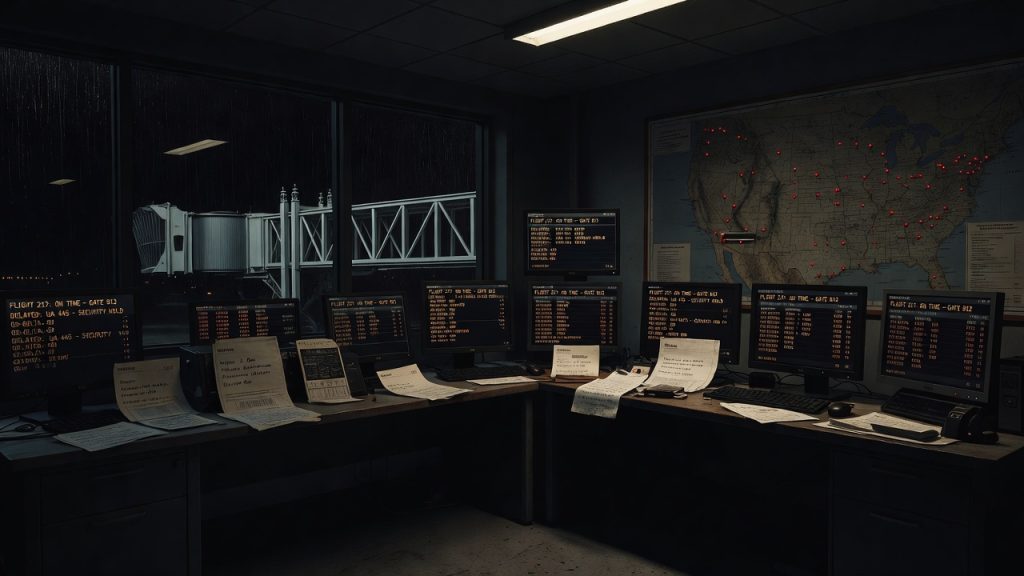
Empty TSA operations center representing OCIMS Quiet Skies reporting — ConspiracyRealist.com

Picture the flight already boarding. The gate scanners chirp, the jet bridge hums, and somewhere far from the window seat, a second trip is beginning in silence. Not for the passenger, but for the file. A name triggers extra scrutiny, an air marshal watches from a few rows back, a report is typed after wheels-up, and the official version says the watch is temporary. Then you find the storage room: a real system with a name, a privacy assessment, and a place to keep what the government learns when it decides a traveler deserves more attention than everyone else.

The Case For

The paper trail did not end at the checkpoint

The strongest argument that Quiet Skies was more than a fleeting screening tool is simple: TSA documented where the observations went. In its April 2019 Privacy Impact Assessment update for Secure Flight, Silent Partner, and Quiet Skies, the agency said Quiet Skies could lead not only to enhanced screening, but also to observation by the Federal Air Marshal Service in the airport or onboard the aircraft. That same PIA states that Federal Air Marshal after-action reporting would be stored in the TSA Operations Center Incident Management System, better known as OCIMS.

That matters because OCIMS was not built as a casual inbox. DHS describes it as the Transportation Security Operations Center’s WebEOC-based platform for transportation security incidents, coordination, and situational awareness. In plain English, Quiet Skies observations were routed into an operational system designed to collect and circulate transportation-security information.

By 2022, Quiet Skies was inside the system description itself

The trail gets stronger in the December 2022 OCIMS privacy update. TSA said the update reflected the addition of Silent Partner and Quiet Skies passenger information to an existing WebEOC board that already handled information about watchlisted individuals and co-travelers. The document also says that Silent Partner and Quiet Skies data in WebEOC support Secure Flight vetting and Federal Air Marshal Service flight-coverage assessments.

That sounds less like a one-off screening encounter and more like a bureaucratic ecosystem. Secure Flight identifies the passenger through intelligence-based rules, enhanced screening follows, air marshals may observe, and reports plus related passenger information then flow into OCIMS alongside other operational material. If a “temporary” traveler designation could generate a more lasting government record, OCIMS is the mechanism on paper.

The oversight reports sharpen the picture

Government oversight bodies filled in the rest. GAO reported in 2019 that, after a flight with a Quiet Skies list match, air marshals filed either a “nothing to report” note or an after-action report if they observed a security incident or suspicious activity. GAO also said TSA Intelligence and Analysis officials did not review those reports regularly. DHS’s Office of Inspector General went further in 2020, finding TSA lacked sufficient centralized oversight over Quiet Skies passenger data and noting that air-marshal surveillance began in March 2018, while the privacy update describing it did not arrive until April 2019.

Read beside Conspiracy Realist’s earlier reporting on what air marshals were instructed to log on Quiet Skies flights and how long Quiet Skies records could remain in government hands, OCIMS starts to look less like clerical plumbing and more like the room where a temporary suspicion became an institutional memory.

The Realist’s Eye

Storage is not proof of abuse

This is where the theory needs pressure-testing. Governments that run security programs create record systems. That fact alone does not prove a hidden domestic spying architecture. TSA’s explanation is that OCIMS supports incident management and situational awareness across transportation threats. If air marshals are tasked with observing selected passengers, some place has to receive those reports.

There is also an important distinction between being watchlisted and being rule-matched. The 2019 Quiet Skies PIA explicitly says individuals matched to Quiet Skies rules are not automatically considered known or suspected terrorists and are not nominated to the Terrorist Screening Database merely because they fit a rule. So the presence of Quiet Skies information in an OCIMS board that also contains watchlist-related information does not mean Quiet Skies passengers were being formally converted into terrorists on paper. That leap would go further than the documents support.

The documents show opacity, not omniscience

Another caution: the public record tells us where some data went, but not everything that happened after it got there. We know OCIMS stored after-action reporting and later folded in Silent Partner and Quiet Skies passenger information. We do not have a declassified map of every query, dissemination, or downstream analytic use. The leap from “stored in OCIMS” to “used to build permanent dossiers on ordinary Americans” remains unproven.

Even OIG’s criticism cuts two ways. Weak centralized oversight feeds suspicion, but bureaucratic sloppiness often looks conspiratorial because it is messy and hard to explain. A delayed privacy update may reflect a privacy failure or legal scramble rather than a grand design.

Still, the unresolved point remains

Yet the skeptic’s best defense does not erase the central discomfort. Quiet Skies was publicly framed as a risk-based, limited-duration program. The record shows that its outputs lived in a broader operational system, that oversight offices were late to fully grasp the air-marshal surveillance piece, and that TSA struggled to show the program’s effectiveness. That does not prove a secret-police file on every traveler. But it does show how quickly a narrow screening rationale can evolve into a durable reporting architecture once agencies decide the security exception applies.

What We Know For Certain

  • TSA’s April 2019 Quiet Skies privacy assessment said Federal Air Marshal after-action reports would be stored in the TSA Operations Center Incident Management System, or OCIMS.
  • DHS’s December 2022 OCIMS privacy update said Silent Partner and Quiet Skies passenger information had been added to an existing WebEOC board.
  • GAO reported that air marshals filed either “nothing to report” entries or after-action reports after flights involving Quiet Skies list matches.
  • DHS OIG found TSA lacked sufficient centralized oversight over management of Quiet Skies passenger data.
  • Federal Air Marshal surveillance of Quiet Skies passengers began in March 2018; the privacy update describing that surveillance was issued in April 2019.

The Unanswered Questions

  • How often was Quiet Skies information stored in OCIMS accessed outside the immediate operational need for a specific flight?
  • Which TSA or DHS components could view, export, or reuse Quiet Skies-related material once it entered WebEOC?
  • Did OCIMS records materially influence later traveler screening decisions, mission assignments, or redress outcomes?
  • How often did “nothing to report” files still remain associated with a traveler after no suspicious activity was observed?
  • What internal debates delayed the public privacy update on air-marshal surveillance for more than a year?

The Closer — You Decide

Sometimes the most revealing discovery is not a smoking gun, but a filing cabinet. Quiet Skies was sold as a temporary layer of aviation security. OCIMS shows where some of that temporary scrutiny settled into the machinery of government. The forms are real. The system is real. The oversight failures are real. Whether that amounts to prudent recordkeeping in a tense era or the quiet construction of a longer memory than the public was meant to see—that is the part no document settles for you. The evidence is on the table. You decide.

dive down the rabbit hole

OCIMS and Quiet Skies: Where the Reports Went

S-FX.com
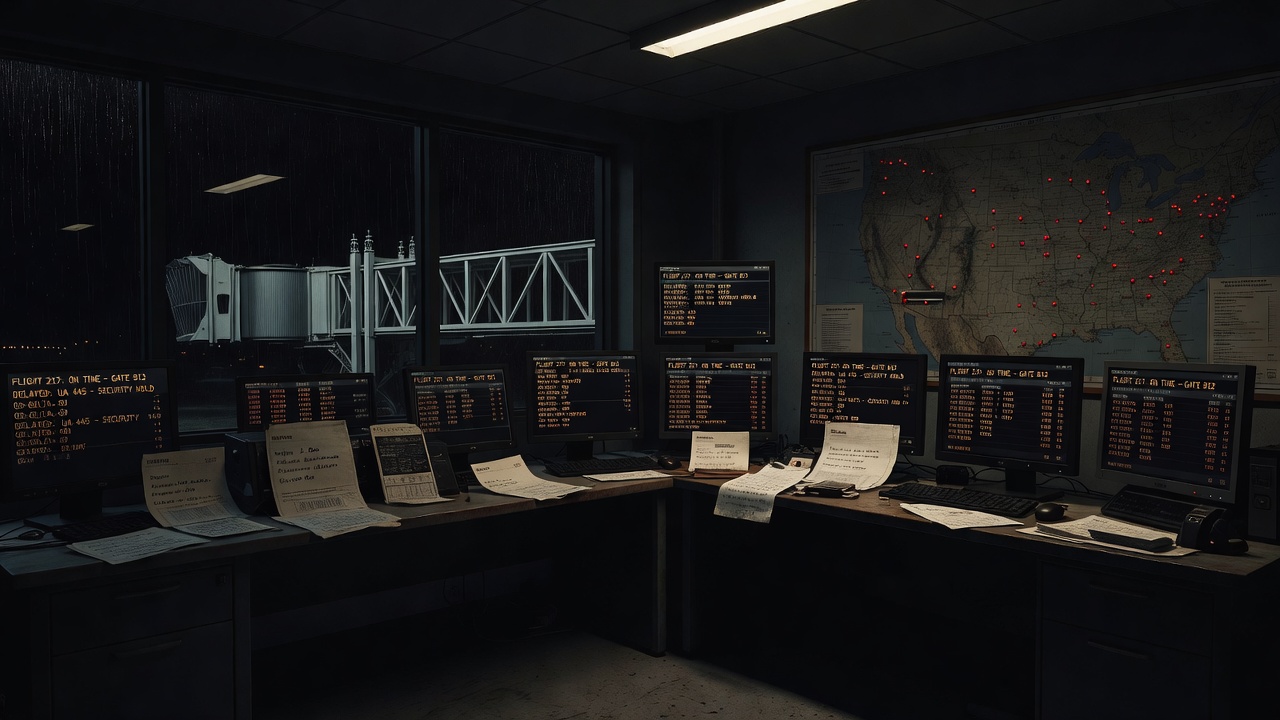
Empty TSA operations center representing OCIMS Quiet Skies reporting — ConspiracyRealist.com

Picture the flight already boarding. The gate scanners chirp, the jet bridge hums, and somewhere far from the window seat, a second trip is beginning in silence. Not for the passenger, but for the file. A name triggers extra scrutiny, an air marshal watches from a few rows back, a report is typed after wheels-up, and the official version says the watch is temporary. Then you find the storage room: a real system with a name, a privacy assessment, and a place to keep what the government learns when it decides a traveler deserves more attention than everyone else.

The Case For

The paper trail did not end at the checkpoint

The strongest argument that Quiet Skies was more than a fleeting screening tool is simple: TSA documented where the observations went. In its April 2019 Privacy Impact Assessment update for Secure Flight, Silent Partner, and Quiet Skies, the agency said Quiet Skies could lead not only to enhanced screening, but also to observation by the Federal Air Marshal Service in the airport or onboard the aircraft. That same PIA states that Federal Air Marshal after-action reporting would be stored in the TSA Operations Center Incident Management System, better known as OCIMS.

That matters because OCIMS was not built as a casual inbox. DHS describes it as the Transportation Security Operations Center’s WebEOC-based platform for transportation security incidents, coordination, and situational awareness. In plain English, Quiet Skies observations were routed into an operational system designed to collect and circulate transportation-security information.

By 2022, Quiet Skies was inside the system description itself

The trail gets stronger in the December 2022 OCIMS privacy update. TSA said the update reflected the addition of Silent Partner and Quiet Skies passenger information to an existing WebEOC board that already handled information about watchlisted individuals and co-travelers. The document also says that Silent Partner and Quiet Skies data in WebEOC support Secure Flight vetting and Federal Air Marshal Service flight-coverage assessments.

That sounds less like a one-off screening encounter and more like a bureaucratic ecosystem. Secure Flight identifies the passenger through intelligence-based rules, enhanced screening follows, air marshals may observe, and reports plus related passenger information then flow into OCIMS alongside other operational material. If a “temporary” traveler designation could generate a more lasting government record, OCIMS is the mechanism on paper.

The oversight reports sharpen the picture

Government oversight bodies filled in the rest. GAO reported in 2019 that, after a flight with a Quiet Skies list match, air marshals filed either a “nothing to report” note or an after-action report if they observed a security incident or suspicious activity. GAO also said TSA Intelligence and Analysis officials did not review those reports regularly. DHS’s Office of Inspector General went further in 2020, finding TSA lacked sufficient centralized oversight over Quiet Skies passenger data and noting that air-marshal surveillance began in March 2018, while the privacy update describing it did not arrive until April 2019.

Read beside Conspiracy Realist’s earlier reporting on what air marshals were instructed to log on Quiet Skies flights and how long Quiet Skies records could remain in government hands, OCIMS starts to look less like clerical plumbing and more like the room where a temporary suspicion became an institutional memory.

The Realist’s Eye

Storage is not proof of abuse

This is where the theory needs pressure-testing. Governments that run security programs create record systems. That fact alone does not prove a hidden domestic spying architecture. TSA’s explanation is that OCIMS supports incident management and situational awareness across transportation threats. If air marshals are tasked with observing selected passengers, some place has to receive those reports.

There is also an important distinction between being watchlisted and being rule-matched. The 2019 Quiet Skies PIA explicitly says individuals matched to Quiet Skies rules are not automatically considered known or suspected terrorists and are not nominated to the Terrorist Screening Database merely because they fit a rule. So the presence of Quiet Skies information in an OCIMS board that also contains watchlist-related information does not mean Quiet Skies passengers were being formally converted into terrorists on paper. That leap would go further than the documents support.

The documents show opacity, not omniscience

Another caution: the public record tells us where some data went, but not everything that happened after it got there. We know OCIMS stored after-action reporting and later folded in Silent Partner and Quiet Skies passenger information. We do not have a declassified map of every query, dissemination, or downstream analytic use. The leap from “stored in OCIMS” to “used to build permanent dossiers on ordinary Americans” remains unproven.

Even OIG’s criticism cuts two ways. Weak centralized oversight feeds suspicion, but bureaucratic sloppiness often looks conspiratorial because it is messy and hard to explain. A delayed privacy update may reflect a privacy failure or legal scramble rather than a grand design.

Still, the unresolved point remains

Yet the skeptic’s best defense does not erase the central discomfort. Quiet Skies was publicly framed as a risk-based, limited-duration program. The record shows that its outputs lived in a broader operational system, that oversight offices were late to fully grasp the air-marshal surveillance piece, and that TSA struggled to show the program’s effectiveness. That does not prove a secret-police file on every traveler. But it does show how quickly a narrow screening rationale can evolve into a durable reporting architecture once agencies decide the security exception applies.

What We Know For Certain

  • TSA’s April 2019 Quiet Skies privacy assessment said Federal Air Marshal after-action reports would be stored in the TSA Operations Center Incident Management System, or OCIMS.
  • DHS’s December 2022 OCIMS privacy update said Silent Partner and Quiet Skies passenger information had been added to an existing WebEOC board.
  • GAO reported that air marshals filed either “nothing to report” entries or after-action reports after flights involving Quiet Skies list matches.
  • DHS OIG found TSA lacked sufficient centralized oversight over management of Quiet Skies passenger data.
  • Federal Air Marshal surveillance of Quiet Skies passengers began in March 2018; the privacy update describing that surveillance was issued in April 2019.

The Unanswered Questions

  • How often was Quiet Skies information stored in OCIMS accessed outside the immediate operational need for a specific flight?
  • Which TSA or DHS components could view, export, or reuse Quiet Skies-related material once it entered WebEOC?
  • Did OCIMS records materially influence later traveler screening decisions, mission assignments, or redress outcomes?
  • How often did “nothing to report” files still remain associated with a traveler after no suspicious activity was observed?
  • What internal debates delayed the public privacy update on air-marshal surveillance for more than a year?

The Closer — You Decide

Sometimes the most revealing discovery is not a smoking gun, but a filing cabinet. Quiet Skies was sold as a temporary layer of aviation security. OCIMS shows where some of that temporary scrutiny settled into the machinery of government. The forms are real. The system is real. The oversight failures are real. Whether that amounts to prudent recordkeeping in a tense era or the quiet construction of a longer memory than the public was meant to see—that is the part no document settles for you. The evidence is on the table. You decide.

OCIMS and Quiet Skies: Where the Reports Went

Empty TSA operations center representing OCIMS Quiet Skies reporting — ConspiracyRealist.com

Picture the flight already boarding. The gate scanners chirp, the jet bridge hums, and somewhere far from the window seat, a second trip is beginning in silence. Not for the passenger, but for the file. A name triggers extra scrutiny, an air marshal watches from a few rows back, a report is typed after wheels-up, and the official version says the watch is temporary. Then you find the storage room: a real system with a name, a privacy assessment, and a place to keep what the government learns when it decides a traveler deserves more attention than everyone else.

The Case For

The paper trail did not end at the checkpoint

The strongest argument that Quiet Skies was more than a fleeting screening tool is simple: TSA documented where the observations went. In its April 2019 Privacy Impact Assessment update for Secure Flight, Silent Partner, and Quiet Skies, the agency said Quiet Skies could lead not only to enhanced screening, but also to observation by the Federal Air Marshal Service in the airport or onboard the aircraft. That same PIA states that Federal Air Marshal after-action reporting would be stored in the TSA Operations Center Incident Management System, better known as OCIMS.

That matters because OCIMS was not built as a casual inbox. DHS describes it as the Transportation Security Operations Center’s WebEOC-based platform for transportation security incidents, coordination, and situational awareness. In plain English, Quiet Skies observations were routed into an operational system designed to collect and circulate transportation-security information.

By 2022, Quiet Skies was inside the system description itself

The trail gets stronger in the December 2022 OCIMS privacy update. TSA said the update reflected the addition of Silent Partner and Quiet Skies passenger information to an existing WebEOC board that already handled information about watchlisted individuals and co-travelers. The document also says that Silent Partner and Quiet Skies data in WebEOC support Secure Flight vetting and Federal Air Marshal Service flight-coverage assessments.

That sounds less like a one-off screening encounter and more like a bureaucratic ecosystem. Secure Flight identifies the passenger through intelligence-based rules, enhanced screening follows, air marshals may observe, and reports plus related passenger information then flow into OCIMS alongside other operational material. If a “temporary” traveler designation could generate a more lasting government record, OCIMS is the mechanism on paper.

The oversight reports sharpen the picture

Government oversight bodies filled in the rest. GAO reported in 2019 that, after a flight with a Quiet Skies list match, air marshals filed either a “nothing to report” note or an after-action report if they observed a security incident or suspicious activity. GAO also said TSA Intelligence and Analysis officials did not review those reports regularly. DHS’s Office of Inspector General went further in 2020, finding TSA lacked sufficient centralized oversight over Quiet Skies passenger data and noting that air-marshal surveillance began in March 2018, while the privacy update describing it did not arrive until April 2019.

Read beside Conspiracy Realist’s earlier reporting on what air marshals were instructed to log on Quiet Skies flights and how long Quiet Skies records could remain in government hands, OCIMS starts to look less like clerical plumbing and more like the room where a temporary suspicion became an institutional memory.

The Realist’s Eye

Storage is not proof of abuse

This is where the theory needs pressure-testing. Governments that run security programs create record systems. That fact alone does not prove a hidden domestic spying architecture. TSA’s explanation is that OCIMS supports incident management and situational awareness across transportation threats. If air marshals are tasked with observing selected passengers, some place has to receive those reports.

There is also an important distinction between being watchlisted and being rule-matched. The 2019 Quiet Skies PIA explicitly says individuals matched to Quiet Skies rules are not automatically considered known or suspected terrorists and are not nominated to the Terrorist Screening Database merely because they fit a rule. So the presence of Quiet Skies information in an OCIMS board that also contains watchlist-related information does not mean Quiet Skies passengers were being formally converted into terrorists on paper. That leap would go further than the documents support.

The documents show opacity, not omniscience

Another caution: the public record tells us where some data went, but not everything that happened after it got there. We know OCIMS stored after-action reporting and later folded in Silent Partner and Quiet Skies passenger information. We do not have a declassified map of every query, dissemination, or downstream analytic use. The leap from “stored in OCIMS” to “used to build permanent dossiers on ordinary Americans” remains unproven.

Even OIG’s criticism cuts two ways. Weak centralized oversight feeds suspicion, but bureaucratic sloppiness often looks conspiratorial because it is messy and hard to explain. A delayed privacy update may reflect a privacy failure or legal scramble rather than a grand design.

Still, the unresolved point remains

Yet the skeptic’s best defense does not erase the central discomfort. Quiet Skies was publicly framed as a risk-based, limited-duration program. The record shows that its outputs lived in a broader operational system, that oversight offices were late to fully grasp the air-marshal surveillance piece, and that TSA struggled to show the program’s effectiveness. That does not prove a secret-police file on every traveler. But it does show how quickly a narrow screening rationale can evolve into a durable reporting architecture once agencies decide the security exception applies.

What We Know For Certain

  • TSA’s April 2019 Quiet Skies privacy assessment said Federal Air Marshal after-action reports would be stored in the TSA Operations Center Incident Management System, or OCIMS.
  • DHS’s December 2022 OCIMS privacy update said Silent Partner and Quiet Skies passenger information had been added to an existing WebEOC board.
  • GAO reported that air marshals filed either “nothing to report” entries or after-action reports after flights involving Quiet Skies list matches.
  • DHS OIG found TSA lacked sufficient centralized oversight over management of Quiet Skies passenger data.
  • Federal Air Marshal surveillance of Quiet Skies passengers began in March 2018; the privacy update describing that surveillance was issued in April 2019.

The Unanswered Questions

  • How often was Quiet Skies information stored in OCIMS accessed outside the immediate operational need for a specific flight?
  • Which TSA or DHS components could view, export, or reuse Quiet Skies-related material once it entered WebEOC?
  • Did OCIMS records materially influence later traveler screening decisions, mission assignments, or redress outcomes?
  • How often did “nothing to report” files still remain associated with a traveler after no suspicious activity was observed?
  • What internal debates delayed the public privacy update on air-marshal surveillance for more than a year?

The Closer — You Decide

Sometimes the most revealing discovery is not a smoking gun, but a filing cabinet. Quiet Skies was sold as a temporary layer of aviation security. OCIMS shows where some of that temporary scrutiny settled into the machinery of government. The forms are real. The system is real. The oversight failures are real. Whether that amounts to prudent recordkeeping in a tense era or the quiet construction of a longer memory than the public was meant to see—that is the part no document settles for you. The evidence is on the table. You decide.

Table of contents