Menu

Operation Big Itch: Fleas as a Cold War Weapon

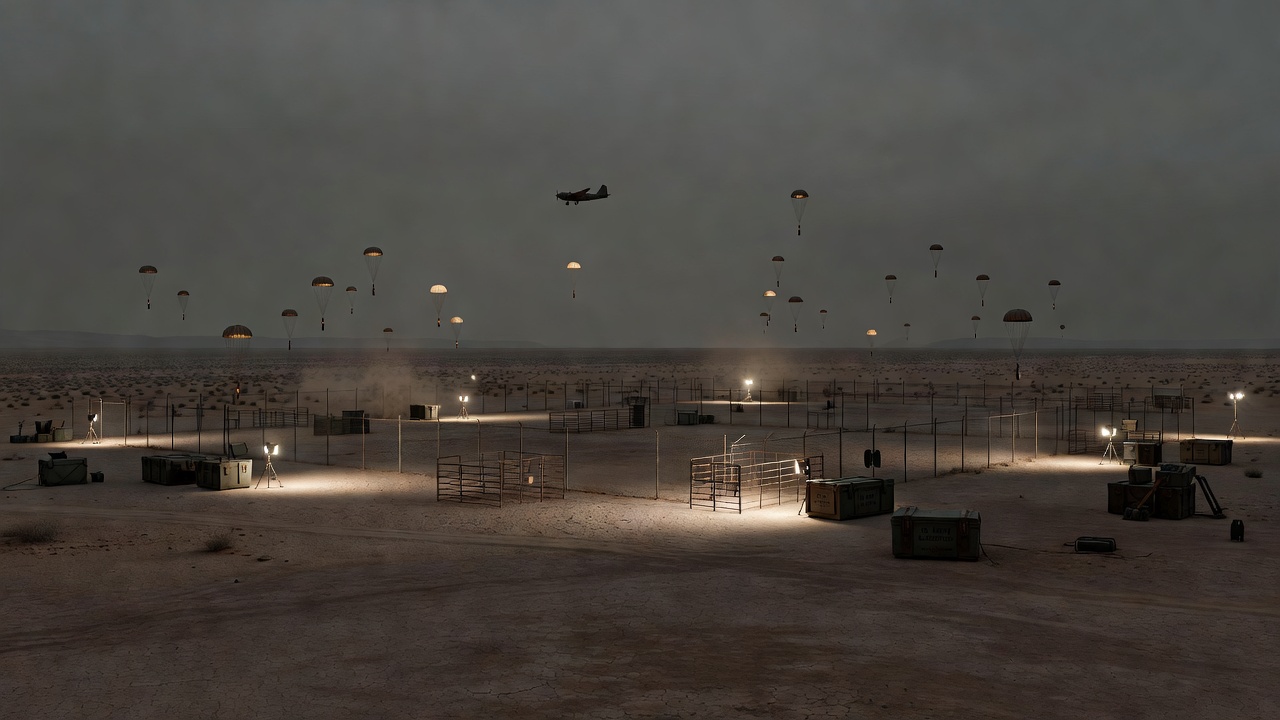
Cold War aircraft over Dugway Proving Ground evoking Operation Big Itch — ConspiracyRealist.com

Operation Big Itch: Fleas as a Cold War Weapon

The desert does strange things to sound at dawn. Engines carry farther. On a test range in Utah in 1954, the morning air held one more noise no one on the ground could hear: the soft, invisible scatter of fleas falling out of the sky. No sirens. No headlines. No public debate. Just a Cold War field test with a bland codename and a purpose ugly enough to survive mostly in fragments. Operation Big Itch sounds absurd until you meet the paperwork.

The Case For

The Army really did test fleas as delivery systems

The strongest argument for taking Operation Big Itch seriously is that the surviving record is direct. In the declassified Army report BW-I-55, Operation Big Itch, available via the Internet Archive’s copy of the Army document, the test objectives included investigating the suitability of E-14 and E-23 munitions for disseminating arthropod vectors, determining the survival rate and host-acquisition ability of Xenopsylla cheopis, and plotting the carrier patterns produced by the devices. That species matters. Xenopsylla cheopis is the oriental rat flea, historically associated with plague transmission. The Army was not studying a metaphor. It was studying whether fleas could be released, survive, spread, and find a host after an airdrop.

The same report says preliminary trials dropped eight E-23 and five E-14 munitions to test function, and that half of the E-23 munitions malfunctioned while all five E-14 devices worked properly. In the hot trial, the Army reported that the vectors were “successfully reared,” “dropped on the target,” and “successful in acquiring hosts,” though they were “not active longer than 24 hours unless protected.” The report’s bluntest sentence is the one that lingers: “The results of this test appear to justify continued research of Biological Warfare with arthropod vectors.” That is not conspiracy shorthand. That is the report’s own conclusion.

Big Itch was part of a broader biological warfare pipeline

A second source makes the larger context hard to dismiss. The Fort Detrick Entomology Division’s 1953–1954 annual report, preserved via the Pacific Asia War Archive entry sourced to NARA material, states that standardized items were being developed for disseminating lethal and epidemic disease agents by arthropod vectors. It lists yellow fever mosquitoes, plague fleas, and ticks as research priorities, then notes on page three that “OPERATION BIG ITCH was an entomological field test carried out at Dugway Proving Ground in September 1954” in which “three-quarter million fleas were airplane dropped 2000 feet in munitions.”

That wider frame matters. Big Itch does not look like an isolated science experiment dreamed up by a few odd officers. It looks like one working part of a larger Cold War attempt to turn insects into weapons platforms. Readers who followed our earlier dives into Operation Big Buzz and Operation Drop Kick will recognize the pattern: test dispersal, test host-seeking behavior, and keep the public outside the room.

There is also the operational logic. A plague vector is hard to see, hard to track, and easy to mistake for nature doing what nature does. For anyone inclined to believe the government explored every deniable route available during the Cold War, Big Itch looks less like a bizarre footnote and more like proof of mindset. If the weapon could walk, crawl, bite, and vanish into the landscape, so much the better.

The Realist’s Eye

The record confirms the test, but not an actual plague attack

This is where the story needs discipline. The documented test involved fleas, not a documented field release of plague itself. The Army report and archive descriptions indicate the fleas were used to test dissemination and host acquisition. That is deeply disturbing on its own, but it is not the same as proof that infected fleas were unleashed on an American town during Operation Big Itch. The distinction matters because it is the line between a proven weapons feasibility test and a broader allegation that requires more evidence than the current record provides.

The technical problems also complicate the darkest version of the story. Half of the E-23 munitions failed in preliminary testing. One munition in the hot trial malfunctioned. Fleas escaped into the aircraft before the drop, and the report says numerous fleas bit the pilot, bombardier, and observer. That detail makes the project feel real, but it also undercuts any fantasy of seamless super-science. Big Itch revealed feasibility, yes, but also control problems. A weapon that bites your own crew before it reaches the target is not exactly a masterpiece of precision.

The bigger scandal may be what the test says about doctrine

Even with those limits, the ethical problem does not shrink much. A government does not need to complete a full plague attack to cross a moral line. It only needs to invest serious resources in proving that living vectors can be mass-reared, packed into munitions, dropped from altitude, and pushed toward warm-blooded hosts. That is what the archive supports. And when President Nixon publicly renounced offensive biological weapons in 1969, he did so against a backdrop of research programs exactly like this one—programs whose paperwork showed how far the military imagination had already gone.

So the realist position is uncomfortable in the right way. Operation Big Itch is not a myth. The files are real. The species is real. The weapons interest is real. But the strongest documented case is not that the Army secretly started a plague outbreak. It is that the Army seriously explored whether plague-bearing fleas could become an aerial delivery system, learned enough from the test to recommend continued research, and left the public to discover that history decades later.

What We Know For Certain

  • Operation Big Itch was a real U.S. Army field test conducted at Dugway Proving Ground in September 1954.
  • The Army used Xenopsylla cheopis, the oriental rat flea, in the test.
  • The stated goals included measuring survival, dissemination, and host acquisition after aerial release from munitions.
  • The E-14 munition performed better than the E-23 in preliminary trials, while one munition malfunctioned during the hot test.
  • The official test report concluded that the results appeared to justify continued biological warfare research using arthropod vectors.

The Unanswered Questions

  • How much larger was the classified entomological warfare program beyond the documents that survived declassification?
  • What internal debates, if any, took place over the ethics and practicality of plague-vector research?
  • How often did technical failures like escape into the aircraft occur in related mosquito and flea trials?
  • What additional records remain buried, lost, or destroyed about follow-on arthropod weapons testing?

The Closer — You Decide

Operation Big Itch does not need embellishment. The declassified version is unsettling enough: fleas bred for a weapons test, packed into munitions, dropped over a range, then judged by how well they found blood. Maybe Cold War planners saw that as ordinary contingency research in an age drunk on worst-case scenarios. Maybe it was a line crossed long before the public knew where the line even was. Either way, the documents are real, the intent was real, and the questions are still alive in the shadows of the government secrets archive. The evidence is on the table. You decide.

dive down the rabbit hole

Operation Big Itch: Fleas as a Cold War Weapon

S-FX.com
Cold War aircraft over Dugway Proving Ground evoking Operation Big Itch — ConspiracyRealist.com

Operation Big Itch: Fleas as a Cold War Weapon

The desert does strange things to sound at dawn. Engines carry farther. On a test range in Utah in 1954, the morning air held one more noise no one on the ground could hear: the soft, invisible scatter of fleas falling out of the sky. No sirens. No headlines. No public debate. Just a Cold War field test with a bland codename and a purpose ugly enough to survive mostly in fragments. Operation Big Itch sounds absurd until you meet the paperwork.

The Case For

The Army really did test fleas as delivery systems

The strongest argument for taking Operation Big Itch seriously is that the surviving record is direct. In the declassified Army report BW-I-55, Operation Big Itch, available via the Internet Archive’s copy of the Army document, the test objectives included investigating the suitability of E-14 and E-23 munitions for disseminating arthropod vectors, determining the survival rate and host-acquisition ability of Xenopsylla cheopis, and plotting the carrier patterns produced by the devices. That species matters. Xenopsylla cheopis is the oriental rat flea, historically associated with plague transmission. The Army was not studying a metaphor. It was studying whether fleas could be released, survive, spread, and find a host after an airdrop.

The same report says preliminary trials dropped eight E-23 and five E-14 munitions to test function, and that half of the E-23 munitions malfunctioned while all five E-14 devices worked properly. In the hot trial, the Army reported that the vectors were “successfully reared,” “dropped on the target,” and “successful in acquiring hosts,” though they were “not active longer than 24 hours unless protected.” The report’s bluntest sentence is the one that lingers: “The results of this test appear to justify continued research of Biological Warfare with arthropod vectors.” That is not conspiracy shorthand. That is the report’s own conclusion.

Big Itch was part of a broader biological warfare pipeline

A second source makes the larger context hard to dismiss. The Fort Detrick Entomology Division’s 1953–1954 annual report, preserved via the Pacific Asia War Archive entry sourced to NARA material, states that standardized items were being developed for disseminating lethal and epidemic disease agents by arthropod vectors. It lists yellow fever mosquitoes, plague fleas, and ticks as research priorities, then notes on page three that “OPERATION BIG ITCH was an entomological field test carried out at Dugway Proving Ground in September 1954” in which “three-quarter million fleas were airplane dropped 2000 feet in munitions.”

That wider frame matters. Big Itch does not look like an isolated science experiment dreamed up by a few odd officers. It looks like one working part of a larger Cold War attempt to turn insects into weapons platforms. Readers who followed our earlier dives into Operation Big Buzz and Operation Drop Kick will recognize the pattern: test dispersal, test host-seeking behavior, and keep the public outside the room.

There is also the operational logic. A plague vector is hard to see, hard to track, and easy to mistake for nature doing what nature does. For anyone inclined to believe the government explored every deniable route available during the Cold War, Big Itch looks less like a bizarre footnote and more like proof of mindset. If the weapon could walk, crawl, bite, and vanish into the landscape, so much the better.

The Realist’s Eye

The record confirms the test, but not an actual plague attack

This is where the story needs discipline. The documented test involved fleas, not a documented field release of plague itself. The Army report and archive descriptions indicate the fleas were used to test dissemination and host acquisition. That is deeply disturbing on its own, but it is not the same as proof that infected fleas were unleashed on an American town during Operation Big Itch. The distinction matters because it is the line between a proven weapons feasibility test and a broader allegation that requires more evidence than the current record provides.

The technical problems also complicate the darkest version of the story. Half of the E-23 munitions failed in preliminary testing. One munition in the hot trial malfunctioned. Fleas escaped into the aircraft before the drop, and the report says numerous fleas bit the pilot, bombardier, and observer. That detail makes the project feel real, but it also undercuts any fantasy of seamless super-science. Big Itch revealed feasibility, yes, but also control problems. A weapon that bites your own crew before it reaches the target is not exactly a masterpiece of precision.

The bigger scandal may be what the test says about doctrine

Even with those limits, the ethical problem does not shrink much. A government does not need to complete a full plague attack to cross a moral line. It only needs to invest serious resources in proving that living vectors can be mass-reared, packed into munitions, dropped from altitude, and pushed toward warm-blooded hosts. That is what the archive supports. And when President Nixon publicly renounced offensive biological weapons in 1969, he did so against a backdrop of research programs exactly like this one—programs whose paperwork showed how far the military imagination had already gone.

So the realist position is uncomfortable in the right way. Operation Big Itch is not a myth. The files are real. The species is real. The weapons interest is real. But the strongest documented case is not that the Army secretly started a plague outbreak. It is that the Army seriously explored whether plague-bearing fleas could become an aerial delivery system, learned enough from the test to recommend continued research, and left the public to discover that history decades later.

What We Know For Certain

  • Operation Big Itch was a real U.S. Army field test conducted at Dugway Proving Ground in September 1954.
  • The Army used Xenopsylla cheopis, the oriental rat flea, in the test.
  • The stated goals included measuring survival, dissemination, and host acquisition after aerial release from munitions.
  • The E-14 munition performed better than the E-23 in preliminary trials, while one munition malfunctioned during the hot test.
  • The official test report concluded that the results appeared to justify continued biological warfare research using arthropod vectors.

The Unanswered Questions

  • How much larger was the classified entomological warfare program beyond the documents that survived declassification?
  • What internal debates, if any, took place over the ethics and practicality of plague-vector research?
  • How often did technical failures like escape into the aircraft occur in related mosquito and flea trials?
  • What additional records remain buried, lost, or destroyed about follow-on arthropod weapons testing?

The Closer — You Decide

Operation Big Itch does not need embellishment. The declassified version is unsettling enough: fleas bred for a weapons test, packed into munitions, dropped over a range, then judged by how well they found blood. Maybe Cold War planners saw that as ordinary contingency research in an age drunk on worst-case scenarios. Maybe it was a line crossed long before the public knew where the line even was. Either way, the documents are real, the intent was real, and the questions are still alive in the shadows of the government secrets archive. The evidence is on the table. You decide.

Operation Big Itch: Fleas as a Cold War Weapon

Cold War aircraft over Dugway Proving Ground evoking Operation Big Itch — ConspiracyRealist.com

Operation Big Itch: Fleas as a Cold War Weapon

The desert does strange things to sound at dawn. Engines carry farther. On a test range in Utah in 1954, the morning air held one more noise no one on the ground could hear: the soft, invisible scatter of fleas falling out of the sky. No sirens. No headlines. No public debate. Just a Cold War field test with a bland codename and a purpose ugly enough to survive mostly in fragments. Operation Big Itch sounds absurd until you meet the paperwork.

The Case For

The Army really did test fleas as delivery systems

The strongest argument for taking Operation Big Itch seriously is that the surviving record is direct. In the declassified Army report BW-I-55, Operation Big Itch, available via the Internet Archive’s copy of the Army document, the test objectives included investigating the suitability of E-14 and E-23 munitions for disseminating arthropod vectors, determining the survival rate and host-acquisition ability of Xenopsylla cheopis, and plotting the carrier patterns produced by the devices. That species matters. Xenopsylla cheopis is the oriental rat flea, historically associated with plague transmission. The Army was not studying a metaphor. It was studying whether fleas could be released, survive, spread, and find a host after an airdrop.

The same report says preliminary trials dropped eight E-23 and five E-14 munitions to test function, and that half of the E-23 munitions malfunctioned while all five E-14 devices worked properly. In the hot trial, the Army reported that the vectors were “successfully reared,” “dropped on the target,” and “successful in acquiring hosts,” though they were “not active longer than 24 hours unless protected.” The report’s bluntest sentence is the one that lingers: “The results of this test appear to justify continued research of Biological Warfare with arthropod vectors.” That is not conspiracy shorthand. That is the report’s own conclusion.

Big Itch was part of a broader biological warfare pipeline

A second source makes the larger context hard to dismiss. The Fort Detrick Entomology Division’s 1953–1954 annual report, preserved via the Pacific Asia War Archive entry sourced to NARA material, states that standardized items were being developed for disseminating lethal and epidemic disease agents by arthropod vectors. It lists yellow fever mosquitoes, plague fleas, and ticks as research priorities, then notes on page three that “OPERATION BIG ITCH was an entomological field test carried out at Dugway Proving Ground in September 1954” in which “three-quarter million fleas were airplane dropped 2000 feet in munitions.”

That wider frame matters. Big Itch does not look like an isolated science experiment dreamed up by a few odd officers. It looks like one working part of a larger Cold War attempt to turn insects into weapons platforms. Readers who followed our earlier dives into Operation Big Buzz and Operation Drop Kick will recognize the pattern: test dispersal, test host-seeking behavior, and keep the public outside the room.

There is also the operational logic. A plague vector is hard to see, hard to track, and easy to mistake for nature doing what nature does. For anyone inclined to believe the government explored every deniable route available during the Cold War, Big Itch looks less like a bizarre footnote and more like proof of mindset. If the weapon could walk, crawl, bite, and vanish into the landscape, so much the better.

The Realist’s Eye

The record confirms the test, but not an actual plague attack

This is where the story needs discipline. The documented test involved fleas, not a documented field release of plague itself. The Army report and archive descriptions indicate the fleas were used to test dissemination and host acquisition. That is deeply disturbing on its own, but it is not the same as proof that infected fleas were unleashed on an American town during Operation Big Itch. The distinction matters because it is the line between a proven weapons feasibility test and a broader allegation that requires more evidence than the current record provides.

The technical problems also complicate the darkest version of the story. Half of the E-23 munitions failed in preliminary testing. One munition in the hot trial malfunctioned. Fleas escaped into the aircraft before the drop, and the report says numerous fleas bit the pilot, bombardier, and observer. That detail makes the project feel real, but it also undercuts any fantasy of seamless super-science. Big Itch revealed feasibility, yes, but also control problems. A weapon that bites your own crew before it reaches the target is not exactly a masterpiece of precision.

The bigger scandal may be what the test says about doctrine

Even with those limits, the ethical problem does not shrink much. A government does not need to complete a full plague attack to cross a moral line. It only needs to invest serious resources in proving that living vectors can be mass-reared, packed into munitions, dropped from altitude, and pushed toward warm-blooded hosts. That is what the archive supports. And when President Nixon publicly renounced offensive biological weapons in 1969, he did so against a backdrop of research programs exactly like this one—programs whose paperwork showed how far the military imagination had already gone.

So the realist position is uncomfortable in the right way. Operation Big Itch is not a myth. The files are real. The species is real. The weapons interest is real. But the strongest documented case is not that the Army secretly started a plague outbreak. It is that the Army seriously explored whether plague-bearing fleas could become an aerial delivery system, learned enough from the test to recommend continued research, and left the public to discover that history decades later.

What We Know For Certain

  • Operation Big Itch was a real U.S. Army field test conducted at Dugway Proving Ground in September 1954.
  • The Army used Xenopsylla cheopis, the oriental rat flea, in the test.
  • The stated goals included measuring survival, dissemination, and host acquisition after aerial release from munitions.
  • The E-14 munition performed better than the E-23 in preliminary trials, while one munition malfunctioned during the hot test.
  • The official test report concluded that the results appeared to justify continued biological warfare research using arthropod vectors.

The Unanswered Questions

  • How much larger was the classified entomological warfare program beyond the documents that survived declassification?
  • What internal debates, if any, took place over the ethics and practicality of plague-vector research?
  • How often did technical failures like escape into the aircraft occur in related mosquito and flea trials?
  • What additional records remain buried, lost, or destroyed about follow-on arthropod weapons testing?

The Closer — You Decide

Operation Big Itch does not need embellishment. The declassified version is unsettling enough: fleas bred for a weapons test, packed into munitions, dropped over a range, then judged by how well they found blood. Maybe Cold War planners saw that as ordinary contingency research in an age drunk on worst-case scenarios. Maybe it was a line crossed long before the public knew where the line even was. Either way, the documents are real, the intent was real, and the questions are still alive in the shadows of the government secrets archive. The evidence is on the table. You decide.

Table of contents