Menu

The Piri Reis Map

The Piri Reis Map
The Piri Reis Map

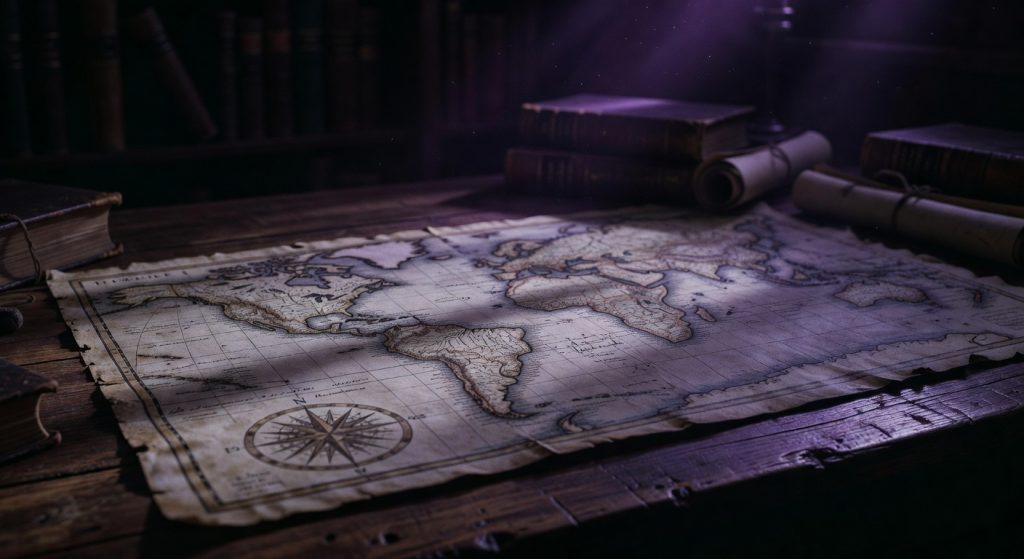
Imagine stumbling upon a map from 1513 that sketches the icy shores of Antarctica—a continent not “officially” discovered until 1820, and one that’s been locked under miles of ice for millions of years. Sounds impossible, right? Yet here it is: the Piri Reis Map, a weathered parchment that’s been tormenting historians, scientists, and conspiracy realists for decades. Drawn by an Ottoman admiral who swore he pulled from ancient sources predating Columbus, this isn’t just a pretty drawing—it’s a potential smoking gun for advanced civilizations we’ve been taught didn’t exist. Buckle up as we dissect its origins, decode its secrets, and chase the rabbit hole of what it really means for human history.

The Man Behind the Map: Who Was **Piri Reis**?

Let’s start with the creator. Piri Reis—born around 1465 in Gallipoli, in what’s now Turkey—was no desk-bound scholar. He was a battle-hardened naval commander in the mighty Ottoman Empire, sailing the Mediterranean, raiding Spanish galleons, and charting unclaimed waters. By 1513, at about 48 years old, he’d risen through the ranks, compiling nautical charts from captured Portuguese maps, Arab treatises, and whispers of even older knowledge.

Piri Reis didn’t just doodle in his downtime. He was obsessed with navigation, a skill that kept empires alive in the Age of Sail. His famous Kitab-ı Bahriye (Book of Navigation), finished later in 1521, is a 800-page masterpiece blending poetry, geography, and sailing tips. But the Piri Reis Map? That’s his crown jewel—or curse, depending on who you ask. Discovered in 1929 by German theologian Gustav Deissmann in the Topkapi Palace archives in Istanbul, it survived because Piri Reis gifted it to Ottoman Sultan Selim I. Only one-third of the original map remains, on gazelle skin parchment, measuring about 87×63 cm. The rest? Lost to time, war, or deliberate destruction.

What sets it apart? Piri Reis annotated it himself in Ottoman Turkish, boasting he’d synthesized 20 charts—including one from none other than Alexander the Great‘s era. He wrote: “These are the maps drawn in the time of Alexander the Great… from these we have made our map.” That’s not casual name-dropping; it’s a breadcrumb trail to antiquity.

Piecing Together the Puzzle: How the Map Was Born

Crafted in 1513, just 21 years after Columbus‘s first voyage, the map shows the Atlantic world with eerie precision. Western Africa bulges out accurately, Brazil’s curve hugs modern coastlines, and the Caribbean sprinkles like forgotten gems. But Piri Reis wasn’t flying solo. He credits Portuguese sources from 1502 expeditions, Spanish captives spilling secrets post-Granada conquest, and “four Portuguese maps” showing the New World. Even an “ancient” map from India, via Muslim sailors.

Dig deeper, and it gets weird. Piri Reis mentions “a map drawn by the Portuguese infidels in a great storm,” possibly referencing lost charts from early explorers. But the real kicker? He claims some sources predated ice ages. How? Enter the theory of source maps from a pre-flood civilization—echoing Plato‘s Atlantis or even older myths.

The map’s style screams sophistication: portolan projections (rhumb lines for navigation), fantastical sea monsters, and red-ink outlines for undiscovered lands. Annotations describe bountiful rivers in South America, matching Amazon tributaries unknown until the 1600s. It’s not primitive; it’s professional-grade, rivaling 20th-century drafts.

The Smoking Gun: Antarctica Without Ice?

Now, the bombshell. At the map’s bottom-right, a landmass sweeps eastward, terminating in what looks suspiciously like Antarctica‘s Queen Maud Land coast—over 6,000 miles from where Piri Reis sat. Discovered in 1820 by Russian explorers, Antarctica was ice-capped then, as now. But here’s the twist: this depiction shows rugged mountains and river valleys, ice-free, as if mapped during a warmer epoch.

In 1956, U.S. Navy officer Arlington H. Mallery, a hydrographic expert, dropped a nuke on skeptics. Analyzing the map with fresh Antarctic surveys, he declared it matched the subglacial coastline revealed by ice-penetrating radar. Antarctica‘s ice sheet averages 1.6 miles thick; melt it, and you’d see exactly those contours. Mallery presented this at the Smithsonian Institution, sparking frenzy.

Enter Charles Hapgood, Harvard historian and author of Maps of the Ancient Sea Kings (1966). Collaborating with Albert Einstein (who penned the foreword), Hapgood argued ancient mariners—perhaps 4,000+ years ago—charted these coasts during the last ice age thaw, around 9,000 BCE. He cited queen conch shells dredged from 32,000 feet deep off Antarctica, implying a temperate past. Hapgood’s book details how Piri Reis‘s sources likely cascaded from Phoenician traders to Alexandrian libraries, preserved by Arab scholars.

Skeptics? Plenty. Gregory McIntosh‘s The Piri Reis Map Revisited (2000) claims it’s just distorted South America—no Antarctica at all. The “coast” is Patagonia upside-down, he says, with artistic flourishes mimicking Columbus-era charts. Southampton University‘s Richard Furness tested this in 1956, projecting the map onto a globe: it fits Antarctica too well for coincidence. Yet mainstream dismisses it as pareidolia—seeing patterns where none exist.

Scientific Scrutiny: Does the Evidence Hold Up?

Let’s get evidence-forward. Radiocarbon dating pegs the parchment to 1513-ish, no debate. Geographic fidelity? Northwestern Brazil matches Vespucci‘s 1501 logs within 1 degree. African Cape Verde islands? Spot-on.

Antarctica claims get forensic. Gunnar Ruders (Danish cartographer) and Walther Linden (German admiral) independently confirmed in the 1960s: the map’s 50-degree-south latitude aligns with Queen Maud Land‘s sub-ice profile from Operation Highjump (1946-47 U.S. expedition). Satellite data from NASA’s Landsat later corroborated fjords and peaks invisible until radar tech.

Ice core samples from Vostok Station show Antarctica was ice-free as recently as 6,000 years ago in spots, per some models—but full deglaciation? That’s 10-12 million years back, per geologists. Hapgood’s pole-shift theory (crustal displacement) posits rapid 2,000-mile shifts around 9,600 BCE, thawing poles temporarily. Einstein backed it mathematically, citing geomagnetic anomalies.

Counter-evidence? The map lacks Antarctica‘s full peninsula or Ross Sea—it’s truncated. No latitudes marked precisely, and Piri Reis‘s sources could’ve been mythical. British Museum curator David Buisseret calls it “overhyped,” noting medieval maps often fudged southern lands from Marco Polo tales.

Still, the precision nags. How’d Piri Reis nail river deltas unseen by Europeans? Why do seismic profiles match his contours?

Echoes of Lost Worlds: Ancient Sources and Global Cartography

Piri Reis didn’t invent this knowledge; he compiled it. His annotations nod to Colae maps (Colombian? Or Ptolemaic?), Ibn Majid‘s Arab pilots, and a “very old” chart from an unnamed infidel. Conspiracy angle: these trace to a Bronze Age seafaring network—Phoenicians, Minoans, or pre-flood Atlanteans.

Compare to the Buache Map (1737), showing ice-free Antarctica from “ancient hydrographic data.” Or Oronteus Finaeus (1531), with detailed Ross Sea shelf. All post-Piri Reis, suggesting a shared ancient template.

Graham Hancock ties it to his Fingerprints of the Gods thesis: survivors of a cataclysm ~12,000 years ago seeded global civs, preserving ice-age maps in Egyptian and Indian lore. Randall Carlson‘s Younger Dryas comet hypothesis (12,800 BCE) aligns: megafloods, pole shifts, lost tech.

Implications That Shatter Timelines

If legit, the Piri Reis Map obliterates history books. No way 16th-century sailors hit Antarctica undetected. It demands advanced ancients with transoceanic ships, astronomy, and surveying—think Göbekli Tepe (9,600 BCE Turkey) levels of sophistication, but global.

Covers-ups? Admiral Byrd‘s 1947 Highjump fleet (4,700 men, 13 ships) allegedly found ruins—whispers of Nazi bases or ET tech persist. Modern gatekeeping? Academia clings to linear progress, ignoring anomalies like Baigong Pipes or Yonaguni monuments.

This map whispers: We’re not the pinnacle. Forgotten elders mapped worlds we’re only now rediscovering with tech they might’ve eclipsed.

Wrapping the Enigma: What Now?

The Piri Reis Map endures as a tantalizing “what if.” Proof of lost civs? Or masterful medieval guesswork? Evidence leans anomalous—too precise for its era, too prescient for coincidence. High-res scans and AI modeling could settle it; Turkey’s digitizing Topkapi holdings offers hope.

One thing’s clear: It forces us to question. Was Antarctica a hub of ancient life? Did pole shifts bury paradises? Dive in, skeptic or believer—the truth hides in the contours.

Down the Rabbit Hole

1. Göbekli Tepe: The 12,000-Year-Old Temple Complex Rewriting Civilization’s Dawn – Star maps in stone? Links to ancient surveying tech.

2. Admiral Byrd’s Antarctic Diaries: Hollow Earth, Nazis, or Alien Bases? – Operation Highjump secrets and forbidden ruins.

3. The Younger Dryas Cataclysm: Comet Impact, Megafloods, and Atlantis Survivors – How it froze the map’s knowledge.

4. Oronteus Finaeus Map: Another Ice-Free Antarctica Bombshell – Sister chart to Piri Reis, same impossible sources.

5. Graham Hancock’s Ancient Apocalypse: Evidence for a Global Pre-Ice Age Civilization – Maps as the final puzzle piece.

Disclaimer: ConspiracyRealist.com explores intriguing theories with an open mind. Content is for entertainment and discussion; verify claims independently. No endorsement of unproven hypotheses.

dive down the rabbit hole

The Piri Reis Map

S-FX.com
The Piri Reis Map

Imagine stumbling upon a map from 1513 that sketches the icy shores of Antarctica—a continent not “officially” discovered until 1820, and one that’s been locked under miles of ice for millions of years. Sounds impossible, right? Yet here it is: the Piri Reis Map, a weathered parchment that’s been tormenting historians, scientists, and conspiracy realists for decades. Drawn by an Ottoman admiral who swore he pulled from ancient sources predating Columbus, this isn’t just a pretty drawing—it’s a potential smoking gun for advanced civilizations we’ve been taught didn’t exist. Buckle up as we dissect its origins, decode its secrets, and chase the rabbit hole of what it really means for human history.

The Man Behind the Map: Who Was **Piri Reis**?

Let’s start with the creator. Piri Reis—born around 1465 in Gallipoli, in what’s now Turkey—was no desk-bound scholar. He was a battle-hardened naval commander in the mighty Ottoman Empire, sailing the Mediterranean, raiding Spanish galleons, and charting unclaimed waters. By 1513, at about 48 years old, he’d risen through the ranks, compiling nautical charts from captured Portuguese maps, Arab treatises, and whispers of even older knowledge.

Piri Reis didn’t just doodle in his downtime. He was obsessed with navigation, a skill that kept empires alive in the Age of Sail. His famous Kitab-ı Bahriye (Book of Navigation), finished later in 1521, is a 800-page masterpiece blending poetry, geography, and sailing tips. But the Piri Reis Map? That’s his crown jewel—or curse, depending on who you ask. Discovered in 1929 by German theologian Gustav Deissmann in the Topkapi Palace archives in Istanbul, it survived because Piri Reis gifted it to Ottoman Sultan Selim I. Only one-third of the original map remains, on gazelle skin parchment, measuring about 87×63 cm. The rest? Lost to time, war, or deliberate destruction.

What sets it apart? Piri Reis annotated it himself in Ottoman Turkish, boasting he’d synthesized 20 charts—including one from none other than Alexander the Great‘s era. He wrote: “These are the maps drawn in the time of Alexander the Great… from these we have made our map.” That’s not casual name-dropping; it’s a breadcrumb trail to antiquity.

Piecing Together the Puzzle: How the Map Was Born

Crafted in 1513, just 21 years after Columbus‘s first voyage, the map shows the Atlantic world with eerie precision. Western Africa bulges out accurately, Brazil’s curve hugs modern coastlines, and the Caribbean sprinkles like forgotten gems. But Piri Reis wasn’t flying solo. He credits Portuguese sources from 1502 expeditions, Spanish captives spilling secrets post-Granada conquest, and “four Portuguese maps” showing the New World. Even an “ancient” map from India, via Muslim sailors.

Dig deeper, and it gets weird. Piri Reis mentions “a map drawn by the Portuguese infidels in a great storm,” possibly referencing lost charts from early explorers. But the real kicker? He claims some sources predated ice ages. How? Enter the theory of source maps from a pre-flood civilization—echoing Plato‘s Atlantis or even older myths.

The map’s style screams sophistication: portolan projections (rhumb lines for navigation), fantastical sea monsters, and red-ink outlines for undiscovered lands. Annotations describe bountiful rivers in South America, matching Amazon tributaries unknown until the 1600s. It’s not primitive; it’s professional-grade, rivaling 20th-century drafts.

The Smoking Gun: Antarctica Without Ice?

Now, the bombshell. At the map’s bottom-right, a landmass sweeps eastward, terminating in what looks suspiciously like Antarctica‘s Queen Maud Land coast—over 6,000 miles from where Piri Reis sat. Discovered in 1820 by Russian explorers, Antarctica was ice-capped then, as now. But here’s the twist: this depiction shows rugged mountains and river valleys, ice-free, as if mapped during a warmer epoch.

In 1956, U.S. Navy officer Arlington H. Mallery, a hydrographic expert, dropped a nuke on skeptics. Analyzing the map with fresh Antarctic surveys, he declared it matched the subglacial coastline revealed by ice-penetrating radar. Antarctica‘s ice sheet averages 1.6 miles thick; melt it, and you’d see exactly those contours. Mallery presented this at the Smithsonian Institution, sparking frenzy.

Enter Charles Hapgood, Harvard historian and author of Maps of the Ancient Sea Kings (1966). Collaborating with Albert Einstein (who penned the foreword), Hapgood argued ancient mariners—perhaps 4,000+ years ago—charted these coasts during the last ice age thaw, around 9,000 BCE. He cited queen conch shells dredged from 32,000 feet deep off Antarctica, implying a temperate past. Hapgood’s book details how Piri Reis‘s sources likely cascaded from Phoenician traders to Alexandrian libraries, preserved by Arab scholars.

Skeptics? Plenty. Gregory McIntosh‘s The Piri Reis Map Revisited (2000) claims it’s just distorted South America—no Antarctica at all. The “coast” is Patagonia upside-down, he says, with artistic flourishes mimicking Columbus-era charts. Southampton University‘s Richard Furness tested this in 1956, projecting the map onto a globe: it fits Antarctica too well for coincidence. Yet mainstream dismisses it as pareidolia—seeing patterns where none exist.

Scientific Scrutiny: Does the Evidence Hold Up?

Let’s get evidence-forward. Radiocarbon dating pegs the parchment to 1513-ish, no debate. Geographic fidelity? Northwestern Brazil matches Vespucci‘s 1501 logs within 1 degree. African Cape Verde islands? Spot-on.

Antarctica claims get forensic. Gunnar Ruders (Danish cartographer) and Walther Linden (German admiral) independently confirmed in the 1960s: the map’s 50-degree-south latitude aligns with Queen Maud Land‘s sub-ice profile from Operation Highjump (1946-47 U.S. expedition). Satellite data from NASA’s Landsat later corroborated fjords and peaks invisible until radar tech.

Ice core samples from Vostok Station show Antarctica was ice-free as recently as 6,000 years ago in spots, per some models—but full deglaciation? That’s 10-12 million years back, per geologists. Hapgood’s pole-shift theory (crustal displacement) posits rapid 2,000-mile shifts around 9,600 BCE, thawing poles temporarily. Einstein backed it mathematically, citing geomagnetic anomalies.

Counter-evidence? The map lacks Antarctica‘s full peninsula or Ross Sea—it’s truncated. No latitudes marked precisely, and Piri Reis‘s sources could’ve been mythical. British Museum curator David Buisseret calls it “overhyped,” noting medieval maps often fudged southern lands from Marco Polo tales.

Still, the precision nags. How’d Piri Reis nail river deltas unseen by Europeans? Why do seismic profiles match his contours?

Echoes of Lost Worlds: Ancient Sources and Global Cartography

Piri Reis didn’t invent this knowledge; he compiled it. His annotations nod to Colae maps (Colombian? Or Ptolemaic?), Ibn Majid‘s Arab pilots, and a “very old” chart from an unnamed infidel. Conspiracy angle: these trace to a Bronze Age seafaring network—Phoenicians, Minoans, or pre-flood Atlanteans.

Compare to the Buache Map (1737), showing ice-free Antarctica from “ancient hydrographic data.” Or Oronteus Finaeus (1531), with detailed Ross Sea shelf. All post-Piri Reis, suggesting a shared ancient template.

Graham Hancock ties it to his Fingerprints of the Gods thesis: survivors of a cataclysm ~12,000 years ago seeded global civs, preserving ice-age maps in Egyptian and Indian lore. Randall Carlson‘s Younger Dryas comet hypothesis (12,800 BCE) aligns: megafloods, pole shifts, lost tech.

Implications That Shatter Timelines

If legit, the Piri Reis Map obliterates history books. No way 16th-century sailors hit Antarctica undetected. It demands advanced ancients with transoceanic ships, astronomy, and surveying—think Göbekli Tepe (9,600 BCE Turkey) levels of sophistication, but global.

Covers-ups? Admiral Byrd‘s 1947 Highjump fleet (4,700 men, 13 ships) allegedly found ruins—whispers of Nazi bases or ET tech persist. Modern gatekeeping? Academia clings to linear progress, ignoring anomalies like Baigong Pipes or Yonaguni monuments.

This map whispers: We’re not the pinnacle. Forgotten elders mapped worlds we’re only now rediscovering with tech they might’ve eclipsed.

Wrapping the Enigma: What Now?

The Piri Reis Map endures as a tantalizing “what if.” Proof of lost civs? Or masterful medieval guesswork? Evidence leans anomalous—too precise for its era, too prescient for coincidence. High-res scans and AI modeling could settle it; Turkey’s digitizing Topkapi holdings offers hope.

One thing’s clear: It forces us to question. Was Antarctica a hub of ancient life? Did pole shifts bury paradises? Dive in, skeptic or believer—the truth hides in the contours.

Down the Rabbit Hole

1. Göbekli Tepe: The 12,000-Year-Old Temple Complex Rewriting Civilization’s Dawn – Star maps in stone? Links to ancient surveying tech.

2. Admiral Byrd’s Antarctic Diaries: Hollow Earth, Nazis, or Alien Bases? – Operation Highjump secrets and forbidden ruins.

3. The Younger Dryas Cataclysm: Comet Impact, Megafloods, and Atlantis Survivors – How it froze the map’s knowledge.

4. Oronteus Finaeus Map: Another Ice-Free Antarctica Bombshell – Sister chart to Piri Reis, same impossible sources.

5. Graham Hancock’s Ancient Apocalypse: Evidence for a Global Pre-Ice Age Civilization – Maps as the final puzzle piece.

Disclaimer: ConspiracyRealist.com explores intriguing theories with an open mind. Content is for entertainment and discussion; verify claims independently. No endorsement of unproven hypotheses.

The Piri Reis Map

The Piri Reis Map

Imagine stumbling upon a map from 1513 that sketches the icy shores of Antarctica—a continent not “officially” discovered until 1820, and one that’s been locked under miles of ice for millions of years. Sounds impossible, right? Yet here it is: the Piri Reis Map, a weathered parchment that’s been tormenting historians, scientists, and conspiracy realists for decades. Drawn by an Ottoman admiral who swore he pulled from ancient sources predating Columbus, this isn’t just a pretty drawing—it’s a potential smoking gun for advanced civilizations we’ve been taught didn’t exist. Buckle up as we dissect its origins, decode its secrets, and chase the rabbit hole of what it really means for human history.

The Man Behind the Map: Who Was **Piri Reis**?

Let’s start with the creator. Piri Reis—born around 1465 in Gallipoli, in what’s now Turkey—was no desk-bound scholar. He was a battle-hardened naval commander in the mighty Ottoman Empire, sailing the Mediterranean, raiding Spanish galleons, and charting unclaimed waters. By 1513, at about 48 years old, he’d risen through the ranks, compiling nautical charts from captured Portuguese maps, Arab treatises, and whispers of even older knowledge.

Piri Reis didn’t just doodle in his downtime. He was obsessed with navigation, a skill that kept empires alive in the Age of Sail. His famous Kitab-ı Bahriye (Book of Navigation), finished later in 1521, is a 800-page masterpiece blending poetry, geography, and sailing tips. But the Piri Reis Map? That’s his crown jewel—or curse, depending on who you ask. Discovered in 1929 by German theologian Gustav Deissmann in the Topkapi Palace archives in Istanbul, it survived because Piri Reis gifted it to Ottoman Sultan Selim I. Only one-third of the original map remains, on gazelle skin parchment, measuring about 87×63 cm. The rest? Lost to time, war, or deliberate destruction.

What sets it apart? Piri Reis annotated it himself in Ottoman Turkish, boasting he’d synthesized 20 charts—including one from none other than Alexander the Great‘s era. He wrote: “These are the maps drawn in the time of Alexander the Great… from these we have made our map.” That’s not casual name-dropping; it’s a breadcrumb trail to antiquity.

Piecing Together the Puzzle: How the Map Was Born

Crafted in 1513, just 21 years after Columbus‘s first voyage, the map shows the Atlantic world with eerie precision. Western Africa bulges out accurately, Brazil’s curve hugs modern coastlines, and the Caribbean sprinkles like forgotten gems. But Piri Reis wasn’t flying solo. He credits Portuguese sources from 1502 expeditions, Spanish captives spilling secrets post-Granada conquest, and “four Portuguese maps” showing the New World. Even an “ancient” map from India, via Muslim sailors.

Dig deeper, and it gets weird. Piri Reis mentions “a map drawn by the Portuguese infidels in a great storm,” possibly referencing lost charts from early explorers. But the real kicker? He claims some sources predated ice ages. How? Enter the theory of source maps from a pre-flood civilization—echoing Plato‘s Atlantis or even older myths.

The map’s style screams sophistication: portolan projections (rhumb lines for navigation), fantastical sea monsters, and red-ink outlines for undiscovered lands. Annotations describe bountiful rivers in South America, matching Amazon tributaries unknown until the 1600s. It’s not primitive; it’s professional-grade, rivaling 20th-century drafts.

The Smoking Gun: Antarctica Without Ice?

Now, the bombshell. At the map’s bottom-right, a landmass sweeps eastward, terminating in what looks suspiciously like Antarctica‘s Queen Maud Land coast—over 6,000 miles from where Piri Reis sat. Discovered in 1820 by Russian explorers, Antarctica was ice-capped then, as now. But here’s the twist: this depiction shows rugged mountains and river valleys, ice-free, as if mapped during a warmer epoch.

In 1956, U.S. Navy officer Arlington H. Mallery, a hydrographic expert, dropped a nuke on skeptics. Analyzing the map with fresh Antarctic surveys, he declared it matched the subglacial coastline revealed by ice-penetrating radar. Antarctica‘s ice sheet averages 1.6 miles thick; melt it, and you’d see exactly those contours. Mallery presented this at the Smithsonian Institution, sparking frenzy.

Enter Charles Hapgood, Harvard historian and author of Maps of the Ancient Sea Kings (1966). Collaborating with Albert Einstein (who penned the foreword), Hapgood argued ancient mariners—perhaps 4,000+ years ago—charted these coasts during the last ice age thaw, around 9,000 BCE. He cited queen conch shells dredged from 32,000 feet deep off Antarctica, implying a temperate past. Hapgood’s book details how Piri Reis‘s sources likely cascaded from Phoenician traders to Alexandrian libraries, preserved by Arab scholars.

Skeptics? Plenty. Gregory McIntosh‘s The Piri Reis Map Revisited (2000) claims it’s just distorted South America—no Antarctica at all. The “coast” is Patagonia upside-down, he says, with artistic flourishes mimicking Columbus-era charts. Southampton University‘s Richard Furness tested this in 1956, projecting the map onto a globe: it fits Antarctica too well for coincidence. Yet mainstream dismisses it as pareidolia—seeing patterns where none exist.

Scientific Scrutiny: Does the Evidence Hold Up?

Let’s get evidence-forward. Radiocarbon dating pegs the parchment to 1513-ish, no debate. Geographic fidelity? Northwestern Brazil matches Vespucci‘s 1501 logs within 1 degree. African Cape Verde islands? Spot-on.

Antarctica claims get forensic. Gunnar Ruders (Danish cartographer) and Walther Linden (German admiral) independently confirmed in the 1960s: the map’s 50-degree-south latitude aligns with Queen Maud Land‘s sub-ice profile from Operation Highjump (1946-47 U.S. expedition). Satellite data from NASA’s Landsat later corroborated fjords and peaks invisible until radar tech.

Ice core samples from Vostok Station show Antarctica was ice-free as recently as 6,000 years ago in spots, per some models—but full deglaciation? That’s 10-12 million years back, per geologists. Hapgood’s pole-shift theory (crustal displacement) posits rapid 2,000-mile shifts around 9,600 BCE, thawing poles temporarily. Einstein backed it mathematically, citing geomagnetic anomalies.

Counter-evidence? The map lacks Antarctica‘s full peninsula or Ross Sea—it’s truncated. No latitudes marked precisely, and Piri Reis‘s sources could’ve been mythical. British Museum curator David Buisseret calls it “overhyped,” noting medieval maps often fudged southern lands from Marco Polo tales.

Still, the precision nags. How’d Piri Reis nail river deltas unseen by Europeans? Why do seismic profiles match his contours?

Echoes of Lost Worlds: Ancient Sources and Global Cartography

Piri Reis didn’t invent this knowledge; he compiled it. His annotations nod to Colae maps (Colombian? Or Ptolemaic?), Ibn Majid‘s Arab pilots, and a “very old” chart from an unnamed infidel. Conspiracy angle: these trace to a Bronze Age seafaring network—Phoenicians, Minoans, or pre-flood Atlanteans.

Compare to the Buache Map (1737), showing ice-free Antarctica from “ancient hydrographic data.” Or Oronteus Finaeus (1531), with detailed Ross Sea shelf. All post-Piri Reis, suggesting a shared ancient template.

Graham Hancock ties it to his Fingerprints of the Gods thesis: survivors of a cataclysm ~12,000 years ago seeded global civs, preserving ice-age maps in Egyptian and Indian lore. Randall Carlson‘s Younger Dryas comet hypothesis (12,800 BCE) aligns: megafloods, pole shifts, lost tech.

Implications That Shatter Timelines

If legit, the Piri Reis Map obliterates history books. No way 16th-century sailors hit Antarctica undetected. It demands advanced ancients with transoceanic ships, astronomy, and surveying—think Göbekli Tepe (9,600 BCE Turkey) levels of sophistication, but global.

Covers-ups? Admiral Byrd‘s 1947 Highjump fleet (4,700 men, 13 ships) allegedly found ruins—whispers of Nazi bases or ET tech persist. Modern gatekeeping? Academia clings to linear progress, ignoring anomalies like Baigong Pipes or Yonaguni monuments.

This map whispers: We’re not the pinnacle. Forgotten elders mapped worlds we’re only now rediscovering with tech they might’ve eclipsed.

Wrapping the Enigma: What Now?

The Piri Reis Map endures as a tantalizing “what if.” Proof of lost civs? Or masterful medieval guesswork? Evidence leans anomalous—too precise for its era, too prescient for coincidence. High-res scans and AI modeling could settle it; Turkey’s digitizing Topkapi holdings offers hope.

One thing’s clear: It forces us to question. Was Antarctica a hub of ancient life? Did pole shifts bury paradises? Dive in, skeptic or believer—the truth hides in the contours.

Down the Rabbit Hole

1. Göbekli Tepe: The 12,000-Year-Old Temple Complex Rewriting Civilization’s Dawn – Star maps in stone? Links to ancient surveying tech.

2. Admiral Byrd’s Antarctic Diaries: Hollow Earth, Nazis, or Alien Bases? – Operation Highjump secrets and forbidden ruins.

3. The Younger Dryas Cataclysm: Comet Impact, Megafloods, and Atlantis Survivors – How it froze the map’s knowledge.

4. Oronteus Finaeus Map: Another Ice-Free Antarctica Bombshell – Sister chart to Piri Reis, same impossible sources.

5. Graham Hancock’s Ancient Apocalypse: Evidence for a Global Pre-Ice Age Civilization – Maps as the final puzzle piece.

Disclaimer: ConspiracyRealist.com explores intriguing theories with an open mind. Content is for entertainment and discussion; verify claims independently. No endorsement of unproven hypotheses.

Table of contents