Menu

Preclearance vs. JSP: America’s Two Offshore Borders

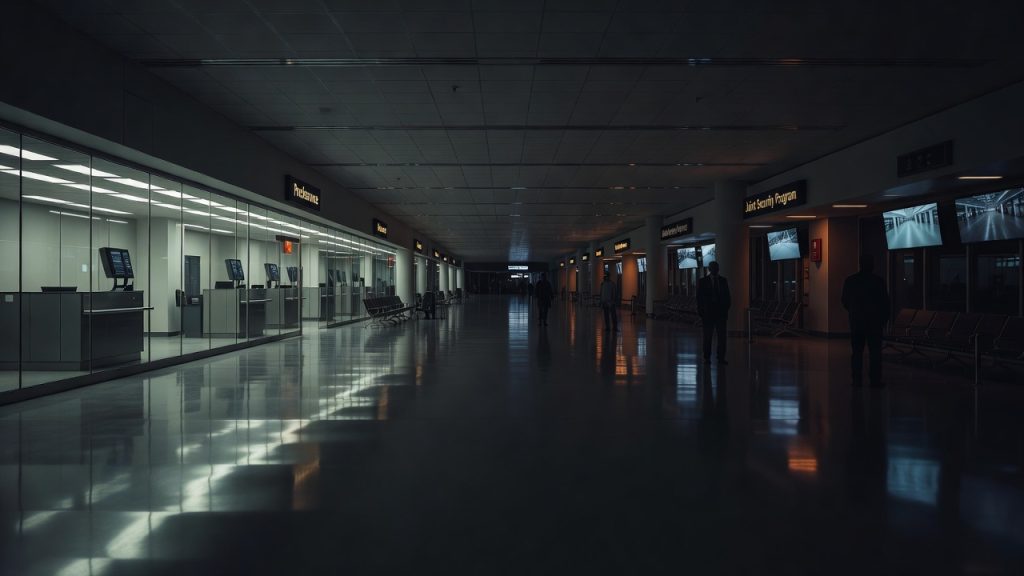
Dark foreign airport scene representing Preclearance vs JSP offshore border screening — ConspiracyRealist.com

At some airports, the American border does not begin when the wheels touch down. It begins under foreign fluorescent light, in a quiet room beyond the duty-free shops, where one line ends at a uniformed inspection booth and another ends with a gate agent suddenly saying no. Same destination. Same government mission. Two very different systems. One is visible, formal, and stamped into policy as U.S. Preclearance. The other works with less ceremony: plainclothes officers, host-country partners, airline cooperation, and a recommendation that usually lands with the force of an order. If you wanted to understand how the United States pushed border enforcement offshore, you could start with this split-screen: Preclearance on one side, the Joint Security Program on the other.

The Case For

Two models, one mission

The strongest case for seeing Preclearance and the Joint Security Program as two versions of the same offshore border comes straight from official records. In GAO-17-216, the Government Accountability Office described both programs as parts of CBP’s “predeparture programs,” designed to identify and interdict high-risk travelers before they board U.S.-bound flights. The logic is blunt: make America’s physical border the last line of defense, not the first.

Preclearance is the overt version. CBP’s own Preclearance page says officers stationed at designated foreign airports inspect travelers before departure, so they can arrive in the United States as if they were already domestically processed. It is formal, treaty-driven, and highly visible. Travelers see the booth. Airports advertise the convenience. DHS publicly promoted expansion in 2015, when it announced plans to negotiate new preclearance locations in nine countries as a way to push homeland security “beyond our borders.”

The Joint Security Program is the quieter version. GAO reported that JSP and the better-known Immigration Advisory Program place unarmed, plainclothes CBP officers in foreign airports to work with host governments and air carriers. Instead of making an admissibility ruling themselves, those officers help identify travelers who may be high-risk or inadmissible and recommend that airlines refuse boarding. According to GAO, CBP made 11,589 no-board recommendations through IAP, JSP, and related programs in fiscal year 2015 for roughly 88 million U.S.-bound travelers.

Why the quiet system can feel more unsettling

The conspiracy-minded reading is easy to see. Full Preclearance requires international agreements, public negotiations, and major airport infrastructure. GAO noted that expansion depends on host-government consent, diplomatic agreements, and cost-sharing, with airport authorities expected to reimburse most operating expenses in newer locations. JSP avoids much of that theater. It operates through partnership, access to sterile and boarding areas, and recommendations that airlines “almost always follow,” according to GAO’s interviews and observations.

That matters because the practical result can look similar from the traveler’s side. Whether a person is denied after a formal inspection booth or blocked at the gate after an airline accepts a no-board recommendation, the U.S. security perimeter has already reached overseas. That is why this recent look at the Joint Security Program’s no-board network feels less like an isolated program profile and more like one half of a larger architecture. The other half is the polished, publicly sold version described on CBP’s own Preclearance pages.

The Realist’s Eye

The differences are real, not cosmetic

But the harder look complicates the offshore-border thesis. Preclearance and JSP do not exercise the same power in the same way. Preclearance officers conduct actual U.S. inspection abroad. CBP says travelers clear immigration, customs, and agriculture controls before departure, and those flights can arrive at domestic terminals. That is a direct extension of U.S. border procedure, not just influence.

JSP is narrower. GAO’s wording matters: CBP may recommend that airlines deny boarding. In formal terms, the carrier still makes the transportation decision, and host-country sovereignty remains intact. That difference is not trivial. It means the quieter system often depends on airline liability rules, document-check obligations, and local cooperation rather than pure American command authority.

There is also a less sinister explanation for why airlines comply. GAO noted that carriers are generally responsible for transporting inadmissible passengers back to their point of departure under international aviation standards. If an airline is told a traveler will likely be refused on arrival, following the no-board recommendation is usually cheaper and simpler than testing the government’s judgment in real time. Compliance may look like secret coercion from the outside, but part of it is plain operational self-interest.

And even GAO saw limits, not omnipotence

Another check on the grander theory is that GAO criticized CBP not for hiding a flawlessly efficient offshore machine, but for failing to measure whether the whole predeparture system worked as claimed. In 2017, GAO said CBP lacked complete performance measures and baselines for these programs. That is not proof of innocence, but it is a reminder that bureaucratic opacity is not the same thing as total control. Sometimes the shadowy system is also a messy one.

That tension also shows up when you compare JSP with the Immigration Advisory Program’s hidden no-board net. The programs overlap, share personnel styles, and support the same predeparture mission. But the documentary trail does not show a secret treatyless border replacing Preclearance everywhere. It shows layered tools: some formal, some advisory, all aimed at moving scrutiny earlier in the travel chain.

What We Know For Certain

  • GAO identified Preclearance, IAP/JSP, and Regional Carrier Liaison Groups as CBP predeparture programs for U.S.-bound air travelers.
  • CBP states that Preclearance officers inspect travelers abroad before departure and allow qualifying flights to arrive at domestic U.S. terminals.
  • GAO reported that IAP and JSP use unarmed, plainclothes CBP officers stationed at foreign airports.
  • GAO found that airlines almost always followed IAP and JSP no-board recommendations during its review.
  • GAO said CBP had not fully evaluated overall predeparture-program effectiveness as of its 2017 report.

The Unanswered Questions

  • How often do airlines decline a JSP or IAP no-board recommendation, and under what circumstances?
  • What due-process options does a traveler realistically have when the effective decision is made overseas before boarding?
  • How much information from host-country partners feeds JSP decisions that never become visible to the traveler?
  • Did CBP’s post-2017 performance measures meaningfully test accuracy, or mainly count interdictions as success?
  • As Preclearance expansion slowed, did advisory programs quietly become the more scalable offshore model?

The Closer — You Decide

One offshore border wears a badge and a booth. The other works through a nod, a recommendation, and a gate that never opens. The documents do not show the same legal power in both systems, and that distinction matters. But they do show the same strategic instinct: move American screening as far upstream as possible, and keep the hard stop overseas if you can. That is not theory. That is policy. The paperwork is real. The unanswered questions are real. The evidence is on the table. You decide.

dive down the rabbit hole

Preclearance vs. JSP: America’s Two Offshore Borders

S-FX.com
Dark foreign airport scene representing Preclearance vs JSP offshore border screening — ConspiracyRealist.com

At some airports, the American border does not begin when the wheels touch down. It begins under foreign fluorescent light, in a quiet room beyond the duty-free shops, where one line ends at a uniformed inspection booth and another ends with a gate agent suddenly saying no. Same destination. Same government mission. Two very different systems. One is visible, formal, and stamped into policy as U.S. Preclearance. The other works with less ceremony: plainclothes officers, host-country partners, airline cooperation, and a recommendation that usually lands with the force of an order. If you wanted to understand how the United States pushed border enforcement offshore, you could start with this split-screen: Preclearance on one side, the Joint Security Program on the other.

The Case For

Two models, one mission

The strongest case for seeing Preclearance and the Joint Security Program as two versions of the same offshore border comes straight from official records. In GAO-17-216, the Government Accountability Office described both programs as parts of CBP’s “predeparture programs,” designed to identify and interdict high-risk travelers before they board U.S.-bound flights. The logic is blunt: make America’s physical border the last line of defense, not the first.

Preclearance is the overt version. CBP’s own Preclearance page says officers stationed at designated foreign airports inspect travelers before departure, so they can arrive in the United States as if they were already domestically processed. It is formal, treaty-driven, and highly visible. Travelers see the booth. Airports advertise the convenience. DHS publicly promoted expansion in 2015, when it announced plans to negotiate new preclearance locations in nine countries as a way to push homeland security “beyond our borders.”

The Joint Security Program is the quieter version. GAO reported that JSP and the better-known Immigration Advisory Program place unarmed, plainclothes CBP officers in foreign airports to work with host governments and air carriers. Instead of making an admissibility ruling themselves, those officers help identify travelers who may be high-risk or inadmissible and recommend that airlines refuse boarding. According to GAO, CBP made 11,589 no-board recommendations through IAP, JSP, and related programs in fiscal year 2015 for roughly 88 million U.S.-bound travelers.

Why the quiet system can feel more unsettling

The conspiracy-minded reading is easy to see. Full Preclearance requires international agreements, public negotiations, and major airport infrastructure. GAO noted that expansion depends on host-government consent, diplomatic agreements, and cost-sharing, with airport authorities expected to reimburse most operating expenses in newer locations. JSP avoids much of that theater. It operates through partnership, access to sterile and boarding areas, and recommendations that airlines “almost always follow,” according to GAO’s interviews and observations.

That matters because the practical result can look similar from the traveler’s side. Whether a person is denied after a formal inspection booth or blocked at the gate after an airline accepts a no-board recommendation, the U.S. security perimeter has already reached overseas. That is why this recent look at the Joint Security Program’s no-board network feels less like an isolated program profile and more like one half of a larger architecture. The other half is the polished, publicly sold version described on CBP’s own Preclearance pages.

The Realist’s Eye

The differences are real, not cosmetic

But the harder look complicates the offshore-border thesis. Preclearance and JSP do not exercise the same power in the same way. Preclearance officers conduct actual U.S. inspection abroad. CBP says travelers clear immigration, customs, and agriculture controls before departure, and those flights can arrive at domestic terminals. That is a direct extension of U.S. border procedure, not just influence.

JSP is narrower. GAO’s wording matters: CBP may recommend that airlines deny boarding. In formal terms, the carrier still makes the transportation decision, and host-country sovereignty remains intact. That difference is not trivial. It means the quieter system often depends on airline liability rules, document-check obligations, and local cooperation rather than pure American command authority.

There is also a less sinister explanation for why airlines comply. GAO noted that carriers are generally responsible for transporting inadmissible passengers back to their point of departure under international aviation standards. If an airline is told a traveler will likely be refused on arrival, following the no-board recommendation is usually cheaper and simpler than testing the government’s judgment in real time. Compliance may look like secret coercion from the outside, but part of it is plain operational self-interest.

And even GAO saw limits, not omnipotence

Another check on the grander theory is that GAO criticized CBP not for hiding a flawlessly efficient offshore machine, but for failing to measure whether the whole predeparture system worked as claimed. In 2017, GAO said CBP lacked complete performance measures and baselines for these programs. That is not proof of innocence, but it is a reminder that bureaucratic opacity is not the same thing as total control. Sometimes the shadowy system is also a messy one.

That tension also shows up when you compare JSP with the Immigration Advisory Program’s hidden no-board net. The programs overlap, share personnel styles, and support the same predeparture mission. But the documentary trail does not show a secret treatyless border replacing Preclearance everywhere. It shows layered tools: some formal, some advisory, all aimed at moving scrutiny earlier in the travel chain.

What We Know For Certain

  • GAO identified Preclearance, IAP/JSP, and Regional Carrier Liaison Groups as CBP predeparture programs for U.S.-bound air travelers.
  • CBP states that Preclearance officers inspect travelers abroad before departure and allow qualifying flights to arrive at domestic U.S. terminals.
  • GAO reported that IAP and JSP use unarmed, plainclothes CBP officers stationed at foreign airports.
  • GAO found that airlines almost always followed IAP and JSP no-board recommendations during its review.
  • GAO said CBP had not fully evaluated overall predeparture-program effectiveness as of its 2017 report.

The Unanswered Questions

  • How often do airlines decline a JSP or IAP no-board recommendation, and under what circumstances?
  • What due-process options does a traveler realistically have when the effective decision is made overseas before boarding?
  • How much information from host-country partners feeds JSP decisions that never become visible to the traveler?
  • Did CBP’s post-2017 performance measures meaningfully test accuracy, or mainly count interdictions as success?
  • As Preclearance expansion slowed, did advisory programs quietly become the more scalable offshore model?

The Closer — You Decide

One offshore border wears a badge and a booth. The other works through a nod, a recommendation, and a gate that never opens. The documents do not show the same legal power in both systems, and that distinction matters. But they do show the same strategic instinct: move American screening as far upstream as possible, and keep the hard stop overseas if you can. That is not theory. That is policy. The paperwork is real. The unanswered questions are real. The evidence is on the table. You decide.

Preclearance vs. JSP: America’s Two Offshore Borders

Dark foreign airport scene representing Preclearance vs JSP offshore border screening — ConspiracyRealist.com

At some airports, the American border does not begin when the wheels touch down. It begins under foreign fluorescent light, in a quiet room beyond the duty-free shops, where one line ends at a uniformed inspection booth and another ends with a gate agent suddenly saying no. Same destination. Same government mission. Two very different systems. One is visible, formal, and stamped into policy as U.S. Preclearance. The other works with less ceremony: plainclothes officers, host-country partners, airline cooperation, and a recommendation that usually lands with the force of an order. If you wanted to understand how the United States pushed border enforcement offshore, you could start with this split-screen: Preclearance on one side, the Joint Security Program on the other.

The Case For

Two models, one mission

The strongest case for seeing Preclearance and the Joint Security Program as two versions of the same offshore border comes straight from official records. In GAO-17-216, the Government Accountability Office described both programs as parts of CBP’s “predeparture programs,” designed to identify and interdict high-risk travelers before they board U.S.-bound flights. The logic is blunt: make America’s physical border the last line of defense, not the first.

Preclearance is the overt version. CBP’s own Preclearance page says officers stationed at designated foreign airports inspect travelers before departure, so they can arrive in the United States as if they were already domestically processed. It is formal, treaty-driven, and highly visible. Travelers see the booth. Airports advertise the convenience. DHS publicly promoted expansion in 2015, when it announced plans to negotiate new preclearance locations in nine countries as a way to push homeland security “beyond our borders.”

The Joint Security Program is the quieter version. GAO reported that JSP and the better-known Immigration Advisory Program place unarmed, plainclothes CBP officers in foreign airports to work with host governments and air carriers. Instead of making an admissibility ruling themselves, those officers help identify travelers who may be high-risk or inadmissible and recommend that airlines refuse boarding. According to GAO, CBP made 11,589 no-board recommendations through IAP, JSP, and related programs in fiscal year 2015 for roughly 88 million U.S.-bound travelers.

Why the quiet system can feel more unsettling

The conspiracy-minded reading is easy to see. Full Preclearance requires international agreements, public negotiations, and major airport infrastructure. GAO noted that expansion depends on host-government consent, diplomatic agreements, and cost-sharing, with airport authorities expected to reimburse most operating expenses in newer locations. JSP avoids much of that theater. It operates through partnership, access to sterile and boarding areas, and recommendations that airlines “almost always follow,” according to GAO’s interviews and observations.

That matters because the practical result can look similar from the traveler’s side. Whether a person is denied after a formal inspection booth or blocked at the gate after an airline accepts a no-board recommendation, the U.S. security perimeter has already reached overseas. That is why this recent look at the Joint Security Program’s no-board network feels less like an isolated program profile and more like one half of a larger architecture. The other half is the polished, publicly sold version described on CBP’s own Preclearance pages.

The Realist’s Eye

The differences are real, not cosmetic

But the harder look complicates the offshore-border thesis. Preclearance and JSP do not exercise the same power in the same way. Preclearance officers conduct actual U.S. inspection abroad. CBP says travelers clear immigration, customs, and agriculture controls before departure, and those flights can arrive at domestic terminals. That is a direct extension of U.S. border procedure, not just influence.

JSP is narrower. GAO’s wording matters: CBP may recommend that airlines deny boarding. In formal terms, the carrier still makes the transportation decision, and host-country sovereignty remains intact. That difference is not trivial. It means the quieter system often depends on airline liability rules, document-check obligations, and local cooperation rather than pure American command authority.

There is also a less sinister explanation for why airlines comply. GAO noted that carriers are generally responsible for transporting inadmissible passengers back to their point of departure under international aviation standards. If an airline is told a traveler will likely be refused on arrival, following the no-board recommendation is usually cheaper and simpler than testing the government’s judgment in real time. Compliance may look like secret coercion from the outside, but part of it is plain operational self-interest.

And even GAO saw limits, not omnipotence

Another check on the grander theory is that GAO criticized CBP not for hiding a flawlessly efficient offshore machine, but for failing to measure whether the whole predeparture system worked as claimed. In 2017, GAO said CBP lacked complete performance measures and baselines for these programs. That is not proof of innocence, but it is a reminder that bureaucratic opacity is not the same thing as total control. Sometimes the shadowy system is also a messy one.

That tension also shows up when you compare JSP with the Immigration Advisory Program’s hidden no-board net. The programs overlap, share personnel styles, and support the same predeparture mission. But the documentary trail does not show a secret treatyless border replacing Preclearance everywhere. It shows layered tools: some formal, some advisory, all aimed at moving scrutiny earlier in the travel chain.

What We Know For Certain

  • GAO identified Preclearance, IAP/JSP, and Regional Carrier Liaison Groups as CBP predeparture programs for U.S.-bound air travelers.
  • CBP states that Preclearance officers inspect travelers abroad before departure and allow qualifying flights to arrive at domestic U.S. terminals.
  • GAO reported that IAP and JSP use unarmed, plainclothes CBP officers stationed at foreign airports.
  • GAO found that airlines almost always followed IAP and JSP no-board recommendations during its review.
  • GAO said CBP had not fully evaluated overall predeparture-program effectiveness as of its 2017 report.

The Unanswered Questions

  • How often do airlines decline a JSP or IAP no-board recommendation, and under what circumstances?
  • What due-process options does a traveler realistically have when the effective decision is made overseas before boarding?
  • How much information from host-country partners feeds JSP decisions that never become visible to the traveler?
  • Did CBP’s post-2017 performance measures meaningfully test accuracy, or mainly count interdictions as success?
  • As Preclearance expansion slowed, did advisory programs quietly become the more scalable offshore model?

The Closer — You Decide

One offshore border wears a badge and a booth. The other works through a nod, a recommendation, and a gate that never opens. The documents do not show the same legal power in both systems, and that distinction matters. But they do show the same strategic instinct: move American screening as far upstream as possible, and keep the hard stop overseas if you can. That is not theory. That is policy. The paperwork is real. The unanswered questions are real. The evidence is on the table. You decide.

Table of contents