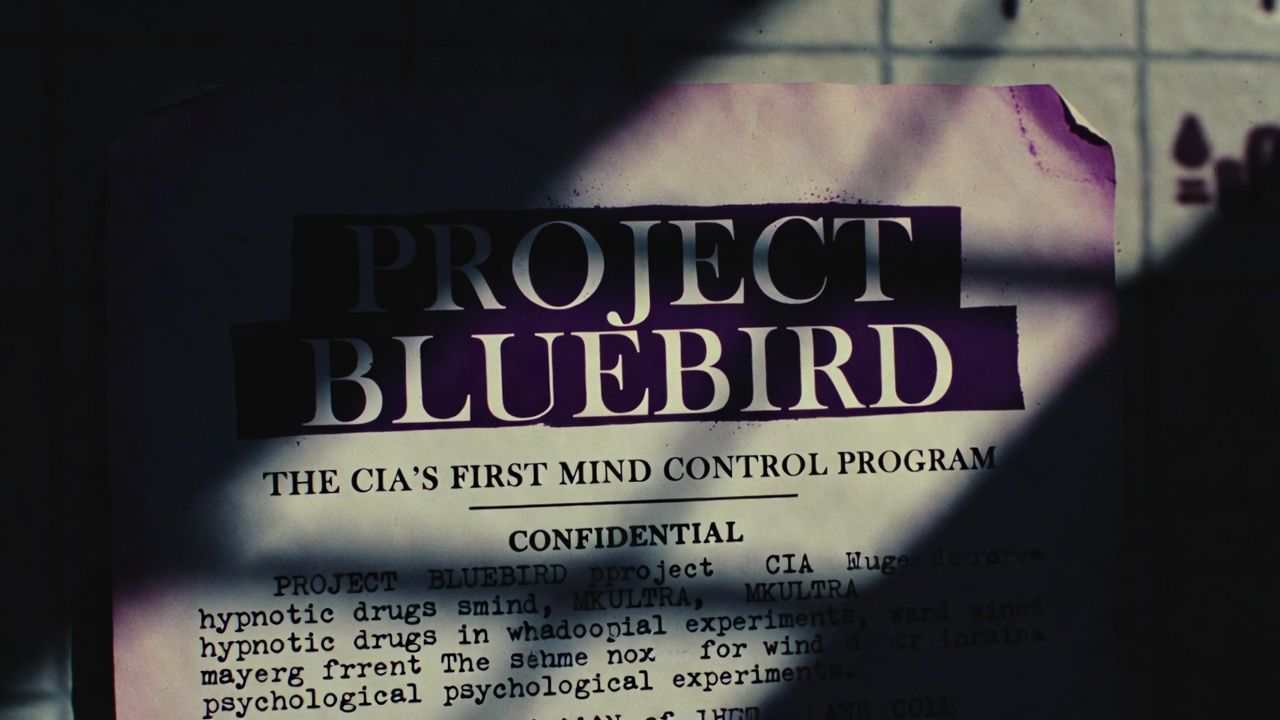
Before MKUltra became the infamous name synonymous with CIA mind control experiments, there was Project BLUEBIRD — the shadowy precursor that set the entire program in motion. Declassified documents, congressional testimony, and decades of investigative journalism have slowly peeled back the layers of one of the most disturbing chapters in American intelligence history. What began as post-World War II paranoia about Soviet brainwashing techniques evolved into a systematic, government-sanctioned program to bend the human mind to the will of its handlers.
Origins: Cold War Fear and the Race for the Mind
The year was 1950. The Cold War had barely begun, and American intelligence agencies were already consumed by a terrifying question: what if the Soviets had cracked the code of human consciousness? Reports of American POWs making inexplicable confessions during the Korean War, combined with the show trials of Eastern European political figures who appeared to publicly denounce their own beliefs with disturbing calm, sent shockwaves through the CIA’s upper echelons.
The agency’s response was Project BLUEBIRD, officially approved by CIA Director Roscoe Hillenkoetter on April 20, 1950. The project’s stated objectives were chillingly broad: to discover means of conditioning personnel to prevent unauthorized extraction of information, to investigate the possibility of control of an individual by application of special interrogation techniques, to investigate memory enhancement, and to establish defensive means for preventing hostile control of agency personnel.
In plain English: the CIA wanted to know if it could break people, control them, and protect its own agents from being broken and controlled. The Cold War had officially extended into the human mind.
The Nazi Shadow: Operation Paperclip’s Dark Gift
To understand Project BLUEBIRD fully, one must reckon with its disturbing parentage. In the aftermath of World War II, American intelligence agencies had quietly recruited dozens of former Nazi scientists under Operation Paperclip — a program that whitewashed war criminals and brought their expertise to American shores. Among these recruits were individuals with direct experience conducting non-consensual human experimentation.
The Nazi concentration camp experiments — conducted at places like Dachau — had produced data on human psychological and physiological limits that no ethical research program could ever replicate. The CIA, through intermediaries and cutouts, gained access to this research. Dr. Kurt Blome, who had worked on biological warfare for the Reich, was interviewed by the CIA. Walter Schreiber, the former Surgeon General of the German military who had overseen medical experiments on prisoners, was protected by American intelligence.
This morally compromised foundation would shape BLUEBIRD from its inception. The project was born in the shadow of atrocity, and it would not escape that shadow.
What They Actually Did: The Experiments Revealed
Declassified CIA documents — many released only after sustained Freedom of Information Act litigation — reveal the scope of BLUEBIRD’s activities. Teams of CIA-contracted psychiatrists, psychologists, and medical doctors conducted experiments using an array of techniques that would be illegal, unethical, and internationally condemned by today’s standards.
Hypnosis was one of the earliest and most extensively studied tools. BLUEBIRD researchers sought to determine whether hypnosis could be used to make an individual perform acts against their will, extract information from unwilling subjects, or create amnesia around sensitive operations. Researchers tested whether post-hypnotic suggestions could compel test subjects to carry out tasks they would normally refuse, and whether memories could be suppressed or implanted.
Pharmacological experimentation was equally central to BLUEBIRD’s mandate. The project tested a range of substances including barbiturates, amphetamines, mescaline, and various combinations thereof as potential “truth serums” — substances that would lower a subject’s inhibitions and compel honest disclosure. These experiments were conducted both on willing participants and, troublingly, on individuals who had no knowledge they were being drugged.
Electroconvulsive therapy (ECT) and other forms of physical intervention were explored as methods of breaking down psychological resistance. The question researchers pursued was stark: could the application of physical stress or electrical stimulation render a subject more susceptible to interrogation or suggestion?
Subjects for these experiments included prisoners, mental patients, foreign nationals, and in some cases, CIA employees themselves — though the latter were at least nominally voluntary. The use of individuals who could not meaningfully consent, or who were coerced by their circumstances, stands as one of the most damning aspects of the entire program.
BLUEBIRD Goes Global: Field Operations and Interrogations
Project BLUEBIRD was not confined to laboratory settings. The CIA deployed BLUEBIRD teams in the field, particularly in the Far East during the Korean War, where captured North Korean and Chinese prisoners were subjected to experimental interrogation techniques. A declassified 1952 document references a BLUEBIRD “special interrogation” team operating in Japan, conducting experiments on prisoners that included the use of drugs and hypnosis.
These field operations raise profound questions about the legal status of the subjects involved. Prisoners of war are protected under the Geneva Conventions; conducting non-consensual medical experiments on them is a war crime. Yet the documentation suggests these experiments proceeded with the full knowledge and authorization of senior CIA officials.
The project also had a domestic component. CIA safe houses in the United States were used for experiments on unwitting American citizens — a practice that would later be documented more extensively in the MKUltra investigations. The legal framework for such operations was essentially nonexistent; the CIA was operating in a gray zone where Cold War imperatives were deemed to supersede constitutional protections.
ARTICHOKE: The Evolution Continues
In August 1951, Project BLUEBIRD was renamed Project ARTICHOKE — a move that some researchers interpret as an attempt to distance the program from a compromised operational security posture, as BLUEBIRD’s existence had begun to leak through the intelligence community. But the rename was no reform; if anything, ARTICHOKE represented an escalation.
ARTICHOKE explicitly expanded the program’s scope to include the creation of “programmed” assassins — individuals who could be conditioned to carry out a killing and then have no memory of it. The infamous “Manchurian Candidate” scenario, popularized by Richard Condon’s 1959 novel, was not pure fiction. Declassified ARTICHOKE documents discuss the feasibility of creating exactly such an operative.
One particularly chilling ARTICHOKE document from 1952 poses the question directly: “Can we get control of an individual to the point where he will do our bidding against his will and even against fundamental laws of nature such as self-preservation?” The answer the program pursued, over years of experimentation, was a determined attempt to find out.
The Subjects: Who Was Experimented On?
Perhaps the most morally devastating aspect of Project BLUEBIRD and its successors is the question of who bore the burden of these experiments. The answer, drawn from the historical record, is consistently: the most vulnerable.
Mental patients in state hospitals provided a convenient pool of test subjects — individuals who were institutionalized, whose testimony would be readily dismissed, and who had limited legal recourse. Drug addicts were recruited at federal narcotics facilities like the Lexington Narcotics Farm in Kentucky, offered drugs in exchange for participation in experiments they often did not fully understand. Prisoners were tested in federal penitentiaries. Foreign nationals captured during wartime operations were subjected to interrogation experiments with no legal protection whatsoever.
CIA contractors — including academic researchers at prestigious universities who were funding their work through CIA front organizations — conducted these experiments with the knowledge that their subjects were not freely consenting. The academic veneer lent legitimacy to programs that were, at their core, systematic violations of human rights.
The Cover-Up: Document Destruction and Congressional Stonewalling
When the Church Committee — the Senate Select Committee to Study Governmental Operations with Respect to Intelligence Activities — began investigating CIA abuses in 1975, it encountered a wall of obstruction. CIA Director Richard Helms had ordered the destruction of MKUltra files in 1973, anticipating investigation in the wake of the Watergate scandal. The BLUEBIRD and ARTICHOKE files had already been partially purged.
What survived did so largely by accident. In 1977, a FOIA request by journalist John Marks uncovered approximately 20,000 documents that had been misfiled in a financial records building and thus escaped Helms’s destruction order. These documents — the foundation of Marks’s landmark 1979 book The Search for the Manchurian Candidate — provided the most comprehensive public accounting of BLUEBIRD, ARTICHOKE, and MKUltra to date.
The Senate hearings that followed were damning but incomplete. CIA officials invoked national security exemptions, memories proved conveniently faulty, and the full scope of experimentation on American citizens remained obscured. The victims of BLUEBIRD — many of whom never knew they had been experimented upon — received no notification, no apology, and no compensation.
The Unanswered Questions
Decades after Project BLUEBIRD’s inception, critical questions remain unanswered — and in some cases, unanswerable, given the systematic destruction of records.
Did the experiments achieve their stated objectives? The historical consensus is largely no — hypnosis proved an unreliable tool for covert operations, and pharmacological “truth serums” produced confabulation as readily as genuine disclosure. But the possibility that some techniques were refined and continue to inform interrogation practices in classified programs cannot be dismissed.
How many people were experimented upon without their knowledge or consent? The destroyed records make a definitive count impossible. Estimates range from hundreds to thousands, spanning the BLUEBIRD, ARTICHOKE, and MKUltra programs combined.
What became of the researchers and contractors who conducted these experiments? Most faced no legal consequences whatsoever. The academic and medical professionals who participated returned to their careers, their CIA affiliations shielded by classification. The institutions that hosted this research — universities, hospitals, prisons — were largely not held accountable.
And perhaps most disturbingly: what programs exist today, operating under classification levels that ensure we won’t learn their contents for decades, if ever?
Legacy: What BLUEBIRD Tells Us About Power
Project BLUEBIRD is not merely a historical curiosity. It is a case study in what happens when intelligence agencies operate without meaningful oversight, when Cold War imperatives are used to justify the suspension of ethical and legal constraints, and when the most vulnerable members of society are treated as raw material for state-sanctioned experimentation.
The program’s architects were not cartoon villains. Many were intelligent, patriotic individuals who genuinely believed they were protecting their country. That is precisely what makes BLUEBIRD so disturbing — it demonstrates that ordinary institutional pressures, ideological conviction, and bureaucratic momentum can produce systematic human rights violations without requiring extraordinary malice.
The Church Committee investigations produced reforms: the Foreign Intelligence Surveillance Act, new oversight mechanisms, executive orders prohibiting assassination and non-consensual human experimentation. Whether those reforms have held — whether classified programs today operate within genuine ethical constraints — is a question that citizens in a democracy must continue to press.
The historical record of Project BLUEBIRD demands that we ask uncomfortable questions about what our intelligence agencies do in the dark. Not because the answer is always sinister, but because the alternative — trusting that power will police itself — has already proven catastrophic once. The documented history of BLUEBIRD is a reminder that “conspiracy” is sometimes not theory at all, but documented fact waiting to be declassified.
Primary Sources and Further Reading
- John Marks, The Search for the Manchurian Candidate: The CIA and Mind Control (1979)
- Senate Select Committee Report: Project MKULTRA, The CIA’s Program of Research in Behavioral Modification (1977)
- CIA FOIA Reading Room: Declassified BLUEBIRD and ARTICHOKE documents
- Alfred McCoy, A Question of Torture: CIA Interrogation from the Cold War to the War on Terror (2006)
- Naomi Klein, The Shock Doctrine: The Rise of Disaster Capitalism (2007) — Chapter on CIA psychological research
All claims in this article are sourced from declassified government documents and peer-reviewed historical scholarship. Project BLUEBIRD is not speculation — it is documented history.