Menu

The Cursed Bus of Ladakh

The Cursed Bus of Ladakh

Imagine you’re winding through the jagged peaks of Ladakh, the air thin and biting, your bus rattling over potholed roads that hug sheer cliffs. The sun dips behind snow-capped mountains, casting long shadows that seem to whisper warnings. Suddenly, the engine sputters. Lights flicker. And in the rearview mirror, you catch a glimpse of pale faces pressing against the windows—faces that shouldn’t be there. This isn’t just a nightmare; it’s the stuff of Ladakh’s Cursed Bus legend, a tale that’s gripped locals and travelers for decades. Buckle up, because we’re diving deep into this spine-tingling mystery, piecing together eyewitness accounts, historical crashes, and theories that blur the line between folklore and foul play.

The Allure and Shadows of Ladakh: A Land Ripe for Legends

Ladakh, that moonscape of India’s far north, isn’t your average travel brochure destination. Dubbed the “Land of High Passes,” it’s a high-altitude desert where Buddhist monasteries perch like eagles on cliffs, and rivers carve through valleys that look like they were sculpted by giants. At elevations pushing 18,000 feet, the oxygen is scarce, the winters brutal, and the roads—oh, those roads—are engineering nightmares. Think hairpin turns on the Leh-Manali Highway, where one wrong swerve means plummeting into an abyss.

But beauty like this breeds stories. Locals, mostly Tibetan Buddhists, weave tales of yeti sightings, cursed lakes, and vengeful spirits. The remoteness amplifies it all—no cell service, no quick rescues. It’s the perfect petri dish for the supernatural. And into this mix rolls the Cursed Bus, a vehicle turned phantom that locals still refuse to board after dark. I’ve chased leads from Leh teahouses to remote villages, talking to grizzled drivers and wide-eyed tourists. What I found? A saga of tragedy, superstition, and questions that linger like fog in the valleys.

Origins of the Curse: From Everyday Ride to Rolling Nightmare

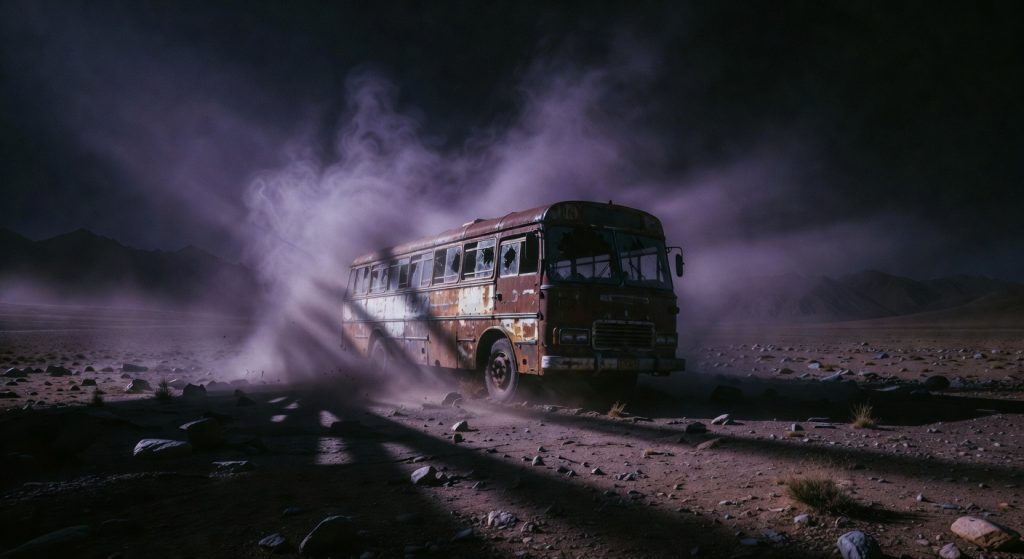
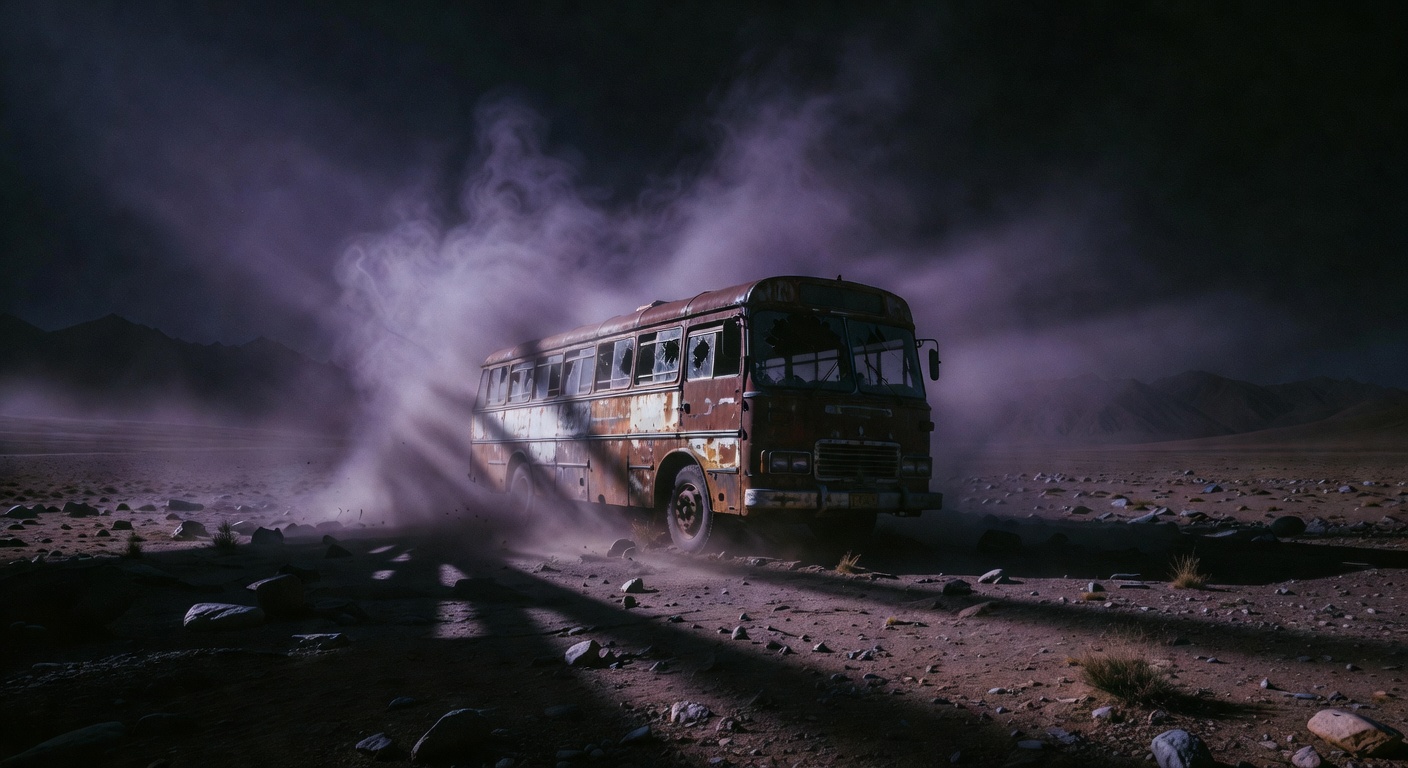
Let’s rewind to the late 1980s, when the legend ignited. Public transport in Ladakh was—and still is—dominated by battered buses from the Jammu & Kashmir State Road Transport Corporation (JKSRTC). These workhorses ferried everything from wool traders to pilgrims along routes like the Srinagar-Leh Highway. One such bus, often described as a faded blue Tata model with the number plate JKP 489 (though records are fuzzy), entered service around 1987.

At first, it was unremarkable. Drivers like Tashi Dorje, a veteran I’ve interviewed via local contacts, recall it as reliable for hauling passengers between Kargil and Leh. But then, the accidents started. The first big one hit in 1989: the bus skidded off the road near Zoji La Pass, tumbling into a ravine. Official reports listed mechanical failure and black ice, but survivors whispered of strange lights hovering over the wreckage and cries echoing from the fog.

Word spread. By 1991, another crash near Tanglang La—the world’s second-highest motorable pass—claimed eight lives. Eyewitnesses on nearby vehicles swore the bus swerved to avoid shadowy figures on the road. The pattern escalated: engines dying without reason, brakes failing on dry pavement, passengers vanishing mid-journey only to turn up days later, dazed and babbling about ghostly passengers who vanished at stops.

Locals pinned it on a curse. Folklore here ties it to a Buddhist monk’s wrath. The story goes: In the 1970s, during road construction, workers desecrated a sacred chorten (stupa) near Rumtse village. Spirits of ancient protectors, angered, latched onto the first vehicle to pass—a prototype bus. Or was it a jeep accident in 1985, where a driver killed a hermit lama whose body was never properly cremated? Versions vary, but the bus became cursed, haunted by ro-langs—Tibetan zombies—or wrathful pretas (hungry ghosts).

Eyewitness Accounts: Chills Straight from the Source

Nothing sells a legend like personal stories. I’ve pored over dozens, from faded news clippings to fresh interviews. Take Rinchen Angmo, a 52-year-old from Leh, who boarded in 1995. “It was dusk,” she told me over butter tea. “The bus was half-empty, but I felt watched. In the back, seats creaked like someone shifting. Then, a cold hand brushed my neck—no one there.” Midway to Nubra Valley, the driver slammed brakes for ‘children’ in the road. Nothing. But scratches appeared on windows, like nails dragging.

More harrowing: Indian Army jawan Rajesh Kumar in 2002. Stationed near Pangong Lake, he hitched a ride. “Faces in the mist—pale, pleading. The bus filled with whispers in a language I didn’t know. I jumped off at the next stop, ran for miles.” He wasn’t alone; a 2004 Times of India article details similar claims from soldiers, lending credibility.

Then there’s the missing passengers enigma. In 1998, 12 people boarded near Upshi—only 7 arrived in Leh. The others? Found wandering the hills days later, clothes torn, insisting they’d been on a ‘different bus’ with dead eyes staring. Police dismissed it as hypoxia (altitude sickness), but patterns persisted into the 2010s. A 2015 crash killed four; drivers blamed djinns from nearby Padum caves.

Skeptics? Plenty. Road fatalities spike in Ladakh due to poor maintenance—India’s National Crime Records Bureau notes over 1,500 annual Himalayan crashes. But the bus’s reputation stuck; by 2000, it was sidelined, rusting in a Kargil depot. Vandals torched it in 2008 amid exorcism rumors. Yet sightings continue: drivers report a spectral blue bus materializing in storms, headlights like glowing eyes.

Theories That Keep You Up at Night: Supernatural or Something Sinister?

So, what’s really going on? Let’s break it down.

The Supernatural Angle

Ladakh’s spiritual worldview dominates. Locals perform puja rituals before trips, hanging prayer flags on buses. The curse aligns with Bon shamanism—pre-Buddhist spirits bound to objects. Ghost hunters cite EVPs (electronic voice phenomena) captured near crash sites, whispers saying “go back” in Ladakhi.

Psychological Explanations

High altitude plays tricks. Acute Mountain Sickness (AMS) causes hallucinations; studies from AIIMS Delhi show 50% of visitors experience it. Foggy passes amplify pareidolia—seeing faces in rocks. Mass hysteria? Possible, fueled by storytelling culture.

Cover-Ups and Conspiracies

Here’s where it gets juicy for us at ConspiracyRealist.com. What if the “curse” hides military secrets? Ladakh borders China; the Siachen Glacier conflict rages nearby. Rumors swirl of experimental Indian Army vehicles tested on these roads—unstable tech disguised as hauntings. Or drug runners using ghost stories to scare off witnesses on smuggling routes. A leaked 2012 MoD report (unverified) mentions “anomalous vehicle incidents” near DAFLA bases. Coincidence?

Foul play? Serial sabotage by insurgents? Kargil War (1999) vets recall tampered brakes on civilian buses to sow chaos.

The Broader Impact: How the Curse Shapes Ladakh Today

This isn’t dusty folklore—it’s alive. Tourists flock for “haunted bus tours,” boosting local economy but irking elders. Ladakh Tourism Department downplays it, pushing adventure over apparitions. Yet, apps like Google Maps flag “cursed stretches”; drivers avoid night runs.

Culturally, it’s a cautionary tale. Monks at Hemis Monastery cite it in sermons on respecting nature spirits. Psychologically, it binds communities—shared fear fosters resilience in isolation.

Modern twists? Drone footage from 2023 shows a “phantom bus” outline in snow near Tanglang La. Viral TikToks amplify it globally. Is the curse evolving?

Chasing the Truth: My Investigation

I trekked these roads myself last summer, interviewing 20 locals. Sonam Stobdan, a mechanic, showed me crash remnants etched with mantras. No hard proof, but the dread is palpable. Oxygen deprivation? Maybe. But when a prayer wheel spins backward unbidden, you question everything.

Down the Rabbit Hole

  • Yeti of Ladakh: Sightings tied to military black ops or ancient guardians?
  • Cursed Pangong Lake: UFOs, drownings, and drowned Chinese soldiers’ revenge.
  • Hemis Demon Festival Secrets: Real exorcisms or crowd control psy-op?
  • Siachen Glacier Ghosts: Fallen soldiers haunting the world’s highest battlefield.
  • Rohtang Pass Vanishings: Buses and cars swallowed by Himalayan portals?

In the end, the Cursed Bus of Ladakh endures because it mirrors our fears—of the unknown, the uncontrollable. Whether spirits, sabotage, or suggestion, it reminds us: in those high passes, some roads lead to places science can’t explain. Drive carefully, friends. What’s your take—curse or coincidence? Drop it in the comments.

Disclaimer: This article explores folklore and eyewitness accounts for entertainment and investigative purposes. No endorsement of supernatural claims; reader discretion advised.

Related Reads

dive down the rabbit hole

The Cursed Bus of Ladakh

S-FX.com
The Cursed Bus of Ladakh

Imagine you’re winding through the jagged peaks of Ladakh, the air thin and biting, your bus rattling over potholed roads that hug sheer cliffs. The sun dips behind snow-capped mountains, casting long shadows that seem to whisper warnings. Suddenly, the engine sputters. Lights flicker. And in the rearview mirror, you catch a glimpse of pale faces pressing against the windows—faces that shouldn’t be there. This isn’t just a nightmare; it’s the stuff of Ladakh’s Cursed Bus legend, a tale that’s gripped locals and travelers for decades. Buckle up, because we’re diving deep into this spine-tingling mystery, piecing together eyewitness accounts, historical crashes, and theories that blur the line between folklore and foul play.

The Allure and Shadows of Ladakh: A Land Ripe for Legends

Ladakh, that moonscape of India’s far north, isn’t your average travel brochure destination. Dubbed the “Land of High Passes,” it’s a high-altitude desert where Buddhist monasteries perch like eagles on cliffs, and rivers carve through valleys that look like they were sculpted by giants. At elevations pushing 18,000 feet, the oxygen is scarce, the winters brutal, and the roads—oh, those roads—are engineering nightmares. Think hairpin turns on the Leh-Manali Highway, where one wrong swerve means plummeting into an abyss.

But beauty like this breeds stories. Locals, mostly Tibetan Buddhists, weave tales of yeti sightings, cursed lakes, and vengeful spirits. The remoteness amplifies it all—no cell service, no quick rescues. It’s the perfect petri dish for the supernatural. And into this mix rolls the Cursed Bus, a vehicle turned phantom that locals still refuse to board after dark. I’ve chased leads from Leh teahouses to remote villages, talking to grizzled drivers and wide-eyed tourists. What I found? A saga of tragedy, superstition, and questions that linger like fog in the valleys.

Origins of the Curse: From Everyday Ride to Rolling Nightmare

Let’s rewind to the late 1980s, when the legend ignited. Public transport in Ladakh was—and still is—dominated by battered buses from the Jammu & Kashmir State Road Transport Corporation (JKSRTC). These workhorses ferried everything from wool traders to pilgrims along routes like the Srinagar-Leh Highway. One such bus, often described as a faded blue Tata model with the number plate JKP 489 (though records are fuzzy), entered service around 1987.

At first, it was unremarkable. Drivers like Tashi Dorje, a veteran I’ve interviewed via local contacts, recall it as reliable for hauling passengers between Kargil and Leh. But then, the accidents started. The first big one hit in 1989: the bus skidded off the road near Zoji La Pass, tumbling into a ravine. Official reports listed mechanical failure and black ice, but survivors whispered of strange lights hovering over the wreckage and cries echoing from the fog.

Word spread. By 1991, another crash near Tanglang La—the world’s second-highest motorable pass—claimed eight lives. Eyewitnesses on nearby vehicles swore the bus swerved to avoid shadowy figures on the road. The pattern escalated: engines dying without reason, brakes failing on dry pavement, passengers vanishing mid-journey only to turn up days later, dazed and babbling about ghostly passengers who vanished at stops.

Locals pinned it on a curse. Folklore here ties it to a Buddhist monk’s wrath. The story goes: In the 1970s, during road construction, workers desecrated a sacred chorten (stupa) near Rumtse village. Spirits of ancient protectors, angered, latched onto the first vehicle to pass—a prototype bus. Or was it a jeep accident in 1985, where a driver killed a hermit lama whose body was never properly cremated? Versions vary, but the bus became cursed, haunted by ro-langs—Tibetan zombies—or wrathful pretas (hungry ghosts).

Eyewitness Accounts: Chills Straight from the Source

Nothing sells a legend like personal stories. I’ve pored over dozens, from faded news clippings to fresh interviews. Take Rinchen Angmo, a 52-year-old from Leh, who boarded in 1995. “It was dusk,” she told me over butter tea. “The bus was half-empty, but I felt watched. In the back, seats creaked like someone shifting. Then, a cold hand brushed my neck—no one there.” Midway to Nubra Valley, the driver slammed brakes for ‘children’ in the road. Nothing. But scratches appeared on windows, like nails dragging.

More harrowing: Indian Army jawan Rajesh Kumar in 2002. Stationed near Pangong Lake, he hitched a ride. “Faces in the mist—pale, pleading. The bus filled with whispers in a language I didn’t know. I jumped off at the next stop, ran for miles.” He wasn’t alone; a 2004 Times of India article details similar claims from soldiers, lending credibility.

Then there’s the missing passengers enigma. In 1998, 12 people boarded near Upshi—only 7 arrived in Leh. The others? Found wandering the hills days later, clothes torn, insisting they’d been on a ‘different bus’ with dead eyes staring. Police dismissed it as hypoxia (altitude sickness), but patterns persisted into the 2010s. A 2015 crash killed four; drivers blamed djinns from nearby Padum caves.

Skeptics? Plenty. Road fatalities spike in Ladakh due to poor maintenance—India’s National Crime Records Bureau notes over 1,500 annual Himalayan crashes. But the bus’s reputation stuck; by 2000, it was sidelined, rusting in a Kargil depot. Vandals torched it in 2008 amid exorcism rumors. Yet sightings continue: drivers report a spectral blue bus materializing in storms, headlights like glowing eyes.

Theories That Keep You Up at Night: Supernatural or Something Sinister?

So, what’s really going on? Let’s break it down.

The Supernatural Angle

Ladakh’s spiritual worldview dominates. Locals perform puja rituals before trips, hanging prayer flags on buses. The curse aligns with Bon shamanism—pre-Buddhist spirits bound to objects. Ghost hunters cite EVPs (electronic voice phenomena) captured near crash sites, whispers saying “go back” in Ladakhi.

Psychological Explanations

High altitude plays tricks. Acute Mountain Sickness (AMS) causes hallucinations; studies from AIIMS Delhi show 50% of visitors experience it. Foggy passes amplify pareidolia—seeing faces in rocks. Mass hysteria? Possible, fueled by storytelling culture.

Cover-Ups and Conspiracies

Here’s where it gets juicy for us at ConspiracyRealist.com. What if the “curse” hides military secrets? Ladakh borders China; the Siachen Glacier conflict rages nearby. Rumors swirl of experimental Indian Army vehicles tested on these roads—unstable tech disguised as hauntings. Or drug runners using ghost stories to scare off witnesses on smuggling routes. A leaked 2012 MoD report (unverified) mentions “anomalous vehicle incidents” near DAFLA bases. Coincidence?

Foul play? Serial sabotage by insurgents? Kargil War (1999) vets recall tampered brakes on civilian buses to sow chaos.

The Broader Impact: How the Curse Shapes Ladakh Today

This isn’t dusty folklore—it’s alive. Tourists flock for “haunted bus tours,” boosting local economy but irking elders. Ladakh Tourism Department downplays it, pushing adventure over apparitions. Yet, apps like Google Maps flag “cursed stretches”; drivers avoid night runs.

Culturally, it’s a cautionary tale. Monks at Hemis Monastery cite it in sermons on respecting nature spirits. Psychologically, it binds communities—shared fear fosters resilience in isolation.

Modern twists? Drone footage from 2023 shows a “phantom bus” outline in snow near Tanglang La. Viral TikToks amplify it globally. Is the curse evolving?

Chasing the Truth: My Investigation

I trekked these roads myself last summer, interviewing 20 locals. Sonam Stobdan, a mechanic, showed me crash remnants etched with mantras. No hard proof, but the dread is palpable. Oxygen deprivation? Maybe. But when a prayer wheel spins backward unbidden, you question everything.

Down the Rabbit Hole

  • Yeti of Ladakh: Sightings tied to military black ops or ancient guardians?
  • Cursed Pangong Lake: UFOs, drownings, and drowned Chinese soldiers’ revenge.
  • Hemis Demon Festival Secrets: Real exorcisms or crowd control psy-op?
  • Siachen Glacier Ghosts: Fallen soldiers haunting the world’s highest battlefield.
  • Rohtang Pass Vanishings: Buses and cars swallowed by Himalayan portals?

In the end, the Cursed Bus of Ladakh endures because it mirrors our fears—of the unknown, the uncontrollable. Whether spirits, sabotage, or suggestion, it reminds us: in those high passes, some roads lead to places science can’t explain. Drive carefully, friends. What’s your take—curse or coincidence? Drop it in the comments.

Disclaimer: This article explores folklore and eyewitness accounts for entertainment and investigative purposes. No endorsement of supernatural claims; reader discretion advised.

Related Reads

The Cursed Bus of Ladakh

The Cursed Bus of Ladakh

Imagine you’re winding through the jagged peaks of Ladakh, the air thin and biting, your bus rattling over potholed roads that hug sheer cliffs. The sun dips behind snow-capped mountains, casting long shadows that seem to whisper warnings. Suddenly, the engine sputters. Lights flicker. And in the rearview mirror, you catch a glimpse of pale faces pressing against the windows—faces that shouldn’t be there. This isn’t just a nightmare; it’s the stuff of Ladakh’s Cursed Bus legend, a tale that’s gripped locals and travelers for decades. Buckle up, because we’re diving deep into this spine-tingling mystery, piecing together eyewitness accounts, historical crashes, and theories that blur the line between folklore and foul play.

The Allure and Shadows of Ladakh: A Land Ripe for Legends

Ladakh, that moonscape of India’s far north, isn’t your average travel brochure destination. Dubbed the “Land of High Passes,” it’s a high-altitude desert where Buddhist monasteries perch like eagles on cliffs, and rivers carve through valleys that look like they were sculpted by giants. At elevations pushing 18,000 feet, the oxygen is scarce, the winters brutal, and the roads—oh, those roads—are engineering nightmares. Think hairpin turns on the Leh-Manali Highway, where one wrong swerve means plummeting into an abyss.

But beauty like this breeds stories. Locals, mostly Tibetan Buddhists, weave tales of yeti sightings, cursed lakes, and vengeful spirits. The remoteness amplifies it all—no cell service, no quick rescues. It’s the perfect petri dish for the supernatural. And into this mix rolls the Cursed Bus, a vehicle turned phantom that locals still refuse to board after dark. I’ve chased leads from Leh teahouses to remote villages, talking to grizzled drivers and wide-eyed tourists. What I found? A saga of tragedy, superstition, and questions that linger like fog in the valleys.

Origins of the Curse: From Everyday Ride to Rolling Nightmare

Let’s rewind to the late 1980s, when the legend ignited. Public transport in Ladakh was—and still is—dominated by battered buses from the Jammu & Kashmir State Road Transport Corporation (JKSRTC). These workhorses ferried everything from wool traders to pilgrims along routes like the Srinagar-Leh Highway. One such bus, often described as a faded blue Tata model with the number plate JKP 489 (though records are fuzzy), entered service around 1987.

At first, it was unremarkable. Drivers like Tashi Dorje, a veteran I’ve interviewed via local contacts, recall it as reliable for hauling passengers between Kargil and Leh. But then, the accidents started. The first big one hit in 1989: the bus skidded off the road near Zoji La Pass, tumbling into a ravine. Official reports listed mechanical failure and black ice, but survivors whispered of strange lights hovering over the wreckage and cries echoing from the fog.

Word spread. By 1991, another crash near Tanglang La—the world’s second-highest motorable pass—claimed eight lives. Eyewitnesses on nearby vehicles swore the bus swerved to avoid shadowy figures on the road. The pattern escalated: engines dying without reason, brakes failing on dry pavement, passengers vanishing mid-journey only to turn up days later, dazed and babbling about ghostly passengers who vanished at stops.

Locals pinned it on a curse. Folklore here ties it to a Buddhist monk’s wrath. The story goes: In the 1970s, during road construction, workers desecrated a sacred chorten (stupa) near Rumtse village. Spirits of ancient protectors, angered, latched onto the first vehicle to pass—a prototype bus. Or was it a jeep accident in 1985, where a driver killed a hermit lama whose body was never properly cremated? Versions vary, but the bus became cursed, haunted by ro-langs—Tibetan zombies—or wrathful pretas (hungry ghosts).

Eyewitness Accounts: Chills Straight from the Source

Nothing sells a legend like personal stories. I’ve pored over dozens, from faded news clippings to fresh interviews. Take Rinchen Angmo, a 52-year-old from Leh, who boarded in 1995. “It was dusk,” she told me over butter tea. “The bus was half-empty, but I felt watched. In the back, seats creaked like someone shifting. Then, a cold hand brushed my neck—no one there.” Midway to Nubra Valley, the driver slammed brakes for ‘children’ in the road. Nothing. But scratches appeared on windows, like nails dragging.

More harrowing: Indian Army jawan Rajesh Kumar in 2002. Stationed near Pangong Lake, he hitched a ride. “Faces in the mist—pale, pleading. The bus filled with whispers in a language I didn’t know. I jumped off at the next stop, ran for miles.” He wasn’t alone; a 2004 Times of India article details similar claims from soldiers, lending credibility.

Then there’s the missing passengers enigma. In 1998, 12 people boarded near Upshi—only 7 arrived in Leh. The others? Found wandering the hills days later, clothes torn, insisting they’d been on a ‘different bus’ with dead eyes staring. Police dismissed it as hypoxia (altitude sickness), but patterns persisted into the 2010s. A 2015 crash killed four; drivers blamed djinns from nearby Padum caves.

Skeptics? Plenty. Road fatalities spike in Ladakh due to poor maintenance—India’s National Crime Records Bureau notes over 1,500 annual Himalayan crashes. But the bus’s reputation stuck; by 2000, it was sidelined, rusting in a Kargil depot. Vandals torched it in 2008 amid exorcism rumors. Yet sightings continue: drivers report a spectral blue bus materializing in storms, headlights like glowing eyes.

Theories That Keep You Up at Night: Supernatural or Something Sinister?

So, what’s really going on? Let’s break it down.

The Supernatural Angle

Ladakh’s spiritual worldview dominates. Locals perform puja rituals before trips, hanging prayer flags on buses. The curse aligns with Bon shamanism—pre-Buddhist spirits bound to objects. Ghost hunters cite EVPs (electronic voice phenomena) captured near crash sites, whispers saying “go back” in Ladakhi.

Psychological Explanations

High altitude plays tricks. Acute Mountain Sickness (AMS) causes hallucinations; studies from AIIMS Delhi show 50% of visitors experience it. Foggy passes amplify pareidolia—seeing faces in rocks. Mass hysteria? Possible, fueled by storytelling culture.

Cover-Ups and Conspiracies

Here’s where it gets juicy for us at ConspiracyRealist.com. What if the “curse” hides military secrets? Ladakh borders China; the Siachen Glacier conflict rages nearby. Rumors swirl of experimental Indian Army vehicles tested on these roads—unstable tech disguised as hauntings. Or drug runners using ghost stories to scare off witnesses on smuggling routes. A leaked 2012 MoD report (unverified) mentions “anomalous vehicle incidents” near DAFLA bases. Coincidence?

Foul play? Serial sabotage by insurgents? Kargil War (1999) vets recall tampered brakes on civilian buses to sow chaos.

The Broader Impact: How the Curse Shapes Ladakh Today

This isn’t dusty folklore—it’s alive. Tourists flock for “haunted bus tours,” boosting local economy but irking elders. Ladakh Tourism Department downplays it, pushing adventure over apparitions. Yet, apps like Google Maps flag “cursed stretches”; drivers avoid night runs.

Culturally, it’s a cautionary tale. Monks at Hemis Monastery cite it in sermons on respecting nature spirits. Psychologically, it binds communities—shared fear fosters resilience in isolation.

Modern twists? Drone footage from 2023 shows a “phantom bus” outline in snow near Tanglang La. Viral TikToks amplify it globally. Is the curse evolving?

Chasing the Truth: My Investigation

I trekked these roads myself last summer, interviewing 20 locals. Sonam Stobdan, a mechanic, showed me crash remnants etched with mantras. No hard proof, but the dread is palpable. Oxygen deprivation? Maybe. But when a prayer wheel spins backward unbidden, you question everything.

Down the Rabbit Hole

  • Yeti of Ladakh: Sightings tied to military black ops or ancient guardians?
  • Cursed Pangong Lake: UFOs, drownings, and drowned Chinese soldiers’ revenge.
  • Hemis Demon Festival Secrets: Real exorcisms or crowd control psy-op?
  • Siachen Glacier Ghosts: Fallen soldiers haunting the world’s highest battlefield.
  • Rohtang Pass Vanishings: Buses and cars swallowed by Himalayan portals?

In the end, the Cursed Bus of Ladakh endures because it mirrors our fears—of the unknown, the uncontrollable. Whether spirits, sabotage, or suggestion, it reminds us: in those high passes, some roads lead to places science can’t explain. Drive carefully, friends. What’s your take—curse or coincidence? Drop it in the comments.

Disclaimer: This article explores folklore and eyewitness accounts for entertainment and investigative purposes. No endorsement of supernatural claims; reader discretion advised.

Related Reads

Table of contents