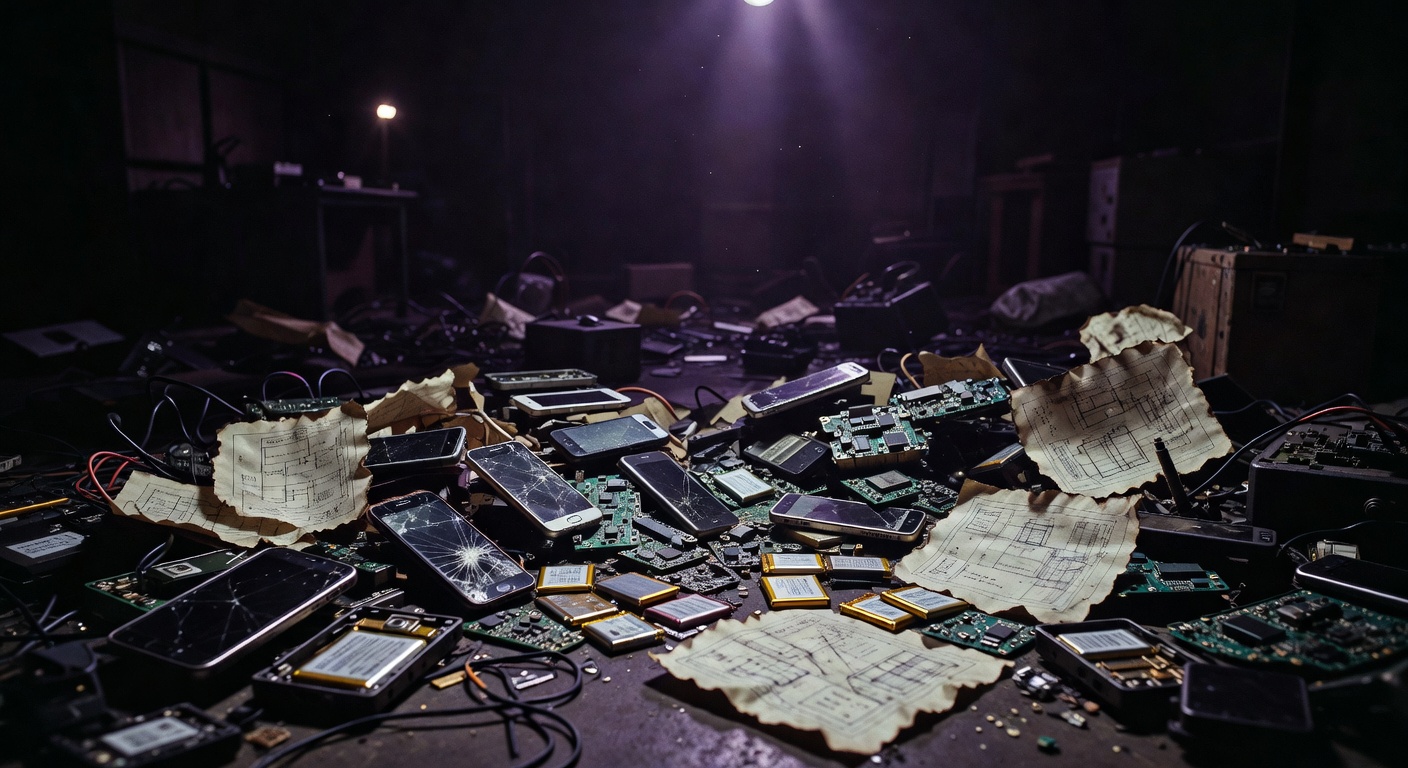
Imagine this: You’re staring at your shiny new smartphone, barely a year old, and suddenly it starts glitching. The battery dies in hours, apps crash, and that crucial software update? It bricks the whole thing. Coincidence? Or part of a grand design to keep you shelling out cash? Welcome to the shadowy world of planned obsolescence, where big corporations aren’t just selling products—they’re scripting your wallet’s demise. I’ve been digging into this for years, chasing leads from dusty archives to whistleblower leaks, and what I’ve found isn’t just frustrating; it’s a rabbit hole that makes you question every gadget in your home. Buckle up, because we’re about to expose how this “hidden agenda” isn’t accidental—it’s engineered to keep the economy humming at your expense.
What Exactly is Planned Obsolescence—and Why Does It Feel So Sneaky?
Let’s break it down like we’re chatting over coffee. Planned obsolescence is the deliberate strategy of building products to fail, become outdated, or just plain suck after a short time. It’s not about cutting corners by accident; it’s baked into the design from day one. Think light bulbs that burn out too fast, printers that choke on ink cartridges, or jeans that shred after a few washes. The goal? Force you to buy a replacement before you’re ready.
This isn’t some wild theory I cooked up. It’s been around since the early 20th century, when industrial titans realized eternal products = zero repeat sales. Fast-forward to today, and it’s everywhere: your iPhone slows down post-update, your Netflix smart TV pushes ads on you until you upgrade, even your car’s fancy infotainment system ghosts you after five years. It’s a cycle—buy, break, repeat—that feels normal because they’ve made it that way. But peel back the layers, and you start seeing the strings.
The Shocking Origin Story: **Phoebus Cartel** and the Light Bulb Conspiracy
Picture the 1920s: The world’s buzzing with electricity, and companies like General Electric, Osram, and Philips form the infamous Phoebus cartel. These guys weren’t competing; they were colluding. Light bulbs back then could last 2,500 hours. The cartel? They capped it at 1,000 hours max, fining anyone who dared make longer-lasting ones. Why? To keep the cash flowing.
Declassified docs from the era paint a damning picture. Check out this 1924 Phoebus agreement exposed by historian Markus Krajewski, where they literally plotted to murder bulb longevity. It wasn’t about quality; it was pure profit. This cartel controlled 90% of the global market, proving planned obsolescence was born from elite boardrooms, not consumer demand. Rabbit hole alert: Did this cartel ever really dissolve, or did it just evolve into today’s tech giants?
How They Pull It Off: The Sneaky Tactics Keeping You Hooked
Corporations don’t just wing it—they’ve got a playbook. Here’s the breakdown:
Hardware Sabotage: Designed to Die
Ever notice how your laptop’s battery swells after two years? That’s no fluke. Engineers use cheap components with finite lifespans, like capacitors that leak or solder joints that crack under “normal” use. Apple got slapped with a $113 million settlement in 2020 for slowing down older iPhones via software—admitting they throttled performance to mask battery degradation. But was it a one-off? Dig deeper, and insiders whisper about “fragility points” in everything from Samsung batteries that explode to Boeing parts engineered for quick swaps.
Software Kill Switches: The Digital Dagger
This is where it gets futuristic-dystopian. Updates that “brick” your device? Pure planned obsolescence. Microsoft kills Windows support for old PCs, forcing upgrades. John Deere tractors need proprietary software that locks out farmers from repairs—buy new or pay up. It’s control disguised as innovation. Imagine owning a car you can’t fix because the Tesla app says no.
Psychological Tricks: Making Old Feel Ugly
Fashion’s the OG here. Zara and H&M churn trends weekly, so your tee from last month looks trash. Tech does it with “aesthetic obsolescence”—your iPhone 12 feels clunky next to the 16’s sleeker bezels. They flood ads with “new = better,” tapping our lizard brains. Studies show we crave novelty; they exploit it ruthlessly.
Tech Titans: **Apple**, **Google**, and the Obsolescence Empire
Let’s name names. Apple is the poster child. Steve Jobs preached premium, but Tim Cook’s era? Batteries optimized to fail just post-warranty. That 2017 “Batterygate” scandal? Just the tip. Leaks from ex-employees reveal “end-of-life planning” where products are roadmap’d to obsolesce in 2-3 years.
Google‘s Pixel phones promise updates for seven years now, but pre-that? Four years max, while hardware lasted longer. Amazon Echo dots? Firmware updates nerf audio quality, pushing Echo Show upgrades. And don’t get me started on printer cartels—HP and Epson design chips that halt printing at “80% ink,” even if it’s not empty. A 2023 class-action suit called it “toner-gating.” These aren’t bugs; they’re features.
Fashion and Fast-Moving Goods: The Unsung Villains
It’s not just gadgets. Fast fashion’s Shein drops 6,000 new styles daily, using fabrics that pill and fade. Cars? GM and Ford phased out repairable parts for “modules” that fail holistically. Even razors—Gillette patented two-blade designs in the 1970s, then “innovated” five-blades that clog faster. Coincidence? Their parent Procter & Gamble rakes billions.
Economic Rabbit Hole: Growth or Globalist Grift?
On paper, planned obsolescence “stimulates GDP.” More sales = jobs, innovation, right? Bull. It props up a debt-fueled economy where consumers borrow to buy junk. The U.S. alone discards $400 billion in e-waste yearly, per UN stats. Resources? We’re mining rare earths in Congo slave pits for your next phone.
Conspiracy lens: Is this a World Economic Forum-style plot? Klaus Schwab’s “Great Reset” talks circular economies, but insiders say it’s cover for digital IDs tied to subscription gadgets. Perpetual buying keeps you broke, dependent, distracted from real power grabs. Follow the money: BlackRock owns stakes in every major player, voting for short-term profits over sustainability.
Environmental Armageddon: Planet as Collateral Damage
Here’s the gut punch. Planned obsolescence = mountains of trash. By 2050, e-waste hits 120 million tons annually (World Economic Forum). Lithium batteries poison rivers; plastic fashion chokes oceans. Greenpeace calls it “the biggest driver of overconsumption.” Yet, corporations greenwash—Apple boasts carbon neutral while lobbying against right-to-repair laws.
Rabbit hole: EU’s pushing “right to repair,” but U.S. states block it. Why? Lobbyists from CTIA (tech trade group) pour millions to keep you chained to new buys. France fined Apple €25 million in 2021 for this exact scam.
The Conspiracy Core: Who’s Really Pulling the Strings?
Alright, deep breath—this is where it gets spicy. Sure, profits motivate, but is there a bigger play? Theorists point to Rockefeller Foundation influence on consumerism post-WWII. Their 1950s reports pushed “dynamic obsolescence” to fight recessions. Fast-forward: WEF partners with Apple and Google on “sustainable tech”—code for tracked, upgradable everything.
Evidence? Circumstantial but stacking. Bernays-style PR (Edward Bernays, father of propaganda) turned desire into engineered need. Patent filings show “self-destruct” mechanisms, like IBM’s 1930s rubber heels designed to wear evenly… then fail. Governments? Complicit. U.S. FCC fast-tracks 5G, obsoleting 4G overnight.
Critics say “market forces.” Nah—cartels prove collusion. VHS vs. Betamax? Sony’s superior format lost because Matsushita (JVC backers) planned shorter lifespans for market share. Power, not progress.
Real-World Whistleblowers and Smoking Guns
Ex-Foxconn workers describe iPhone assembly lines using subpar screens that yellow deliberately. Right to Repair hero Kyle Wiens (iFixit) sued Microsoft over Surface bricks. Leaks from Qualcomm show modem chips with “thermal throttling” to force upgrades.
Global south suffers most—Ghana’s Agbogbloshie dump, “Sodom and Gomorrah,” buries Western e-waste. Kids scavenge, poisoned by our obsolete toys.
Fighting Back: Cracks in the Machine
Hope glimmers. EU Right to Repair mandates swappable parts by 2027. Fairphone builds modular phones lasting 7+ years. U.S. bills in Colorado, New York push back. Boycott brands like Apple (0/10 repairability per iFixit). Hack your printer chips—YouTube’s full of it.
Down the Rabbit Hole
- The Printer Ink Cartel: How HP and Canon collude on DRM to gouge you 500% markups.
- Right to Repair Wars: Governments vs. John Deere—who owns your tractor?
- Subscription Hell: Tesla and Adobe turning ownership into endless fees.
- WEF’s Circular Economy Con: Sustainable or surveillance state?
- Battery Black Market: Rare earth wars fueling child labor for your EV dreams.
Disclaimer: This article is for entertainment and educational purposes only. Explore these theories critically—ConspiracyRealist.com doesn’t endorse illegal actions or unverified claims. Always verify sources and think for yourself.