Menu

Wampus Cat

Wampus Cat
Wampus Cat

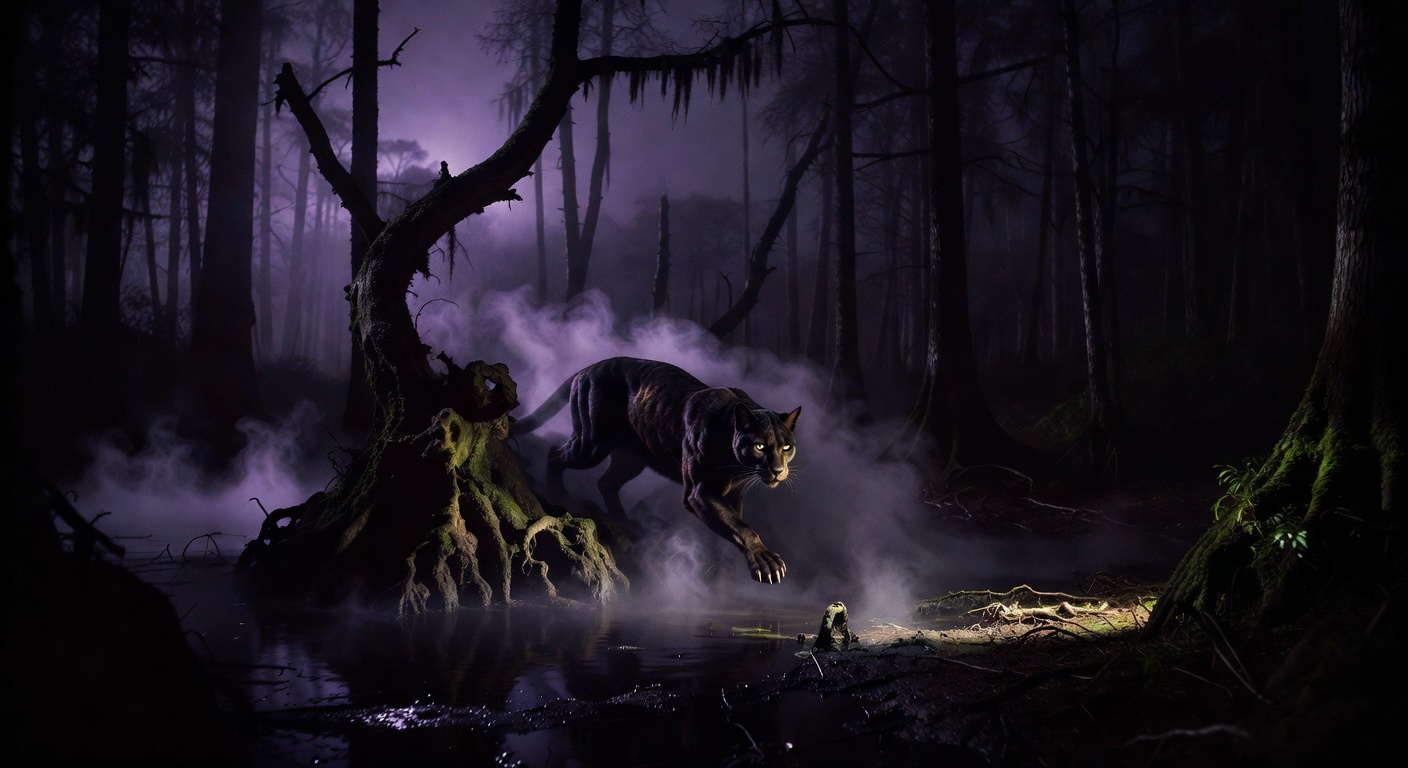
Imagine you’re deep in the misty hollows of Appalachia, where the ancient ridges whisper secrets older than the hills themselves. The moon hangs low, casting silvery shadows through gnarled oaks, and suddenly, you hear it—a low, guttural growl that rattles your bones, followed by the snap of twigs under paws the size of dinner plates. Your flashlight catches a glimpse: glowing eyes like embers in the dark, a massive feline form melting into the underbrush. Heart pounding, you wonder: ghost story or something more? Welcome to the world of the Wampus Cat, the snarling sentinel of the mountains that’s haunted storytellers, hikers, and skeptics for centuries. This isn’t just folklore; it’s a thread in the tapestry of America’s hidden mysteries, blending Native American curses, unexplained sightings, and a cultural warning that still echoes today. Buckle up—we’re unraveling it all, from cursed origins to modern encounters.

The Cursed Birth: Cherokee Roots of the Wampus Cat

Let’s start at the source, because every legend has a spark. The Wampus Cat doesn’t slink out of thin air; its tale roots deep in Cherokee mythology, a rich oral tradition from the southeastern woodlands that predates European settlement by millennia. Picture this: long before moonshine stills dotted the hollers, a curious Cherokee woman couldn’t resist the pull of forbidden knowledge. According to the ancient story, she spied on the village’s seven sacred council warriors during a secret ritual, perhaps invoking spirits or weaving medicine magic under the cover of night.

Her punishment? The tribe’s shamans, guardians of the sacred, cursed her. Transformed into a half-woman, half-mountain cat—a grotesque fusion of human cunning and feral power—she was banished to roam the wilds forever. Some versions say she wears a mask of stone or fur over her face, her voice a haunting wail that mimics a woman’s cry twisted into a cat’s screech. This wasn’t random cruelty; it was a profound lesson. In Cherokee lore, boundaries between the human world and the spiritual realm are sacrosanct. Cross them, and nature itself will claim you.

But here’s where it gets evidence-forward: anthropologists like James Mooney, who documented Cherokee myths in his 1900 opus Myths of the Cherokee (available via the Library of Congress), captured variations of this tale. Mooney’s fieldwork in the late 19th century preserved stories from elders in North Carolina’s Qualla Boundary, noting the Wampus as a “witch-cat” spirit enforcing taboos. Fast-forward, and modern Cherokee storytellers, like those at the Museum of the Cherokee Indian, still invoke her as Unega Ulagu—the White Cat Woman—a protector against interlopers. It’s not myth for myth’s sake; it’s a cultural firewall, reminding folks that the mountains aren’t yours to conquer.

How the Legend Clawed Its Way Across Appalachia

Folklore doesn’t stay put—it evolves, morphs, and spreads like kudzu. By the 19th century, as settlers poured into Appalachia from Scotland, Ireland, and Germany, the Wampus Cat shed some Native specificity and became a regional boogeyman. In East Tennessee, she’s a snarling bobcat the size of a bear; in West Virginia hollers, a spectral panther with a woman’s face. Kentucky yarns paint her as a “screeching devil-cat” that drags off livestock, while Alabama and Georgia tales link her to moonlit hunts.

Why the variations? Migration and mixing. Scotch-Irish frontiersmen brought kelpie and cat-sìth legends—shape-shifting felines from Celtic lore—blending them with Cherokee warnings. Newspapers from the era fuel the fire: a 1895 Knoxville Sentinel article (digitized in historical archives) reported a “Wampus” terrorizing farms near the Smokies, describing tracks too large for any known cat. By the 1920s, Wampus Cat hunts became folk festivals, with locals in Cocke County, Tennessee, organizing “critter chases” that drew crowds like a twisted county fair.

This evolution screams symbolism. The Wampus Cat embodies the wild’s revenge—against loggers stripping forests, miners poisoning streams, or outsiders disrespecting sacred ground. In a region scarred by the Trail of Tears (where Cherokee were forcibly removed in the 1830s), she’s a spectral stand-in for displaced spirits, growling at those who forget the land’s original keepers.

A Beast Unlike Any Other: Physical Traits and Supernatural Powers

Okay, let’s get to the juicy details—what does this thing look like? Eyewitness accounts, spanning folklore and fringe reports, paint a consistent yet terrifying portrait. She’s no housecat on steroids. Witnesses describe a mountain lion-sized feline, 6-8 feet long, with jet-black or tawny fur rippling over corded muscles. But the freaky parts? Glowing eyes—red, yellow, or blue—like twin lanterns piercing fog. Some swear she has six legs (front pair human-like for grasping), a face half-woman, half-cat shrouded in a stone mask, and fur that shifts colors for camouflage.

Behavior? Pure nightmare fuel. She’s nocturnal, her wail a blend of panther scream and banshee howl that chills blood and curdles milk (old timers claimed it soured dairy overnight). Sightings cluster around water sources—rivers, creeks—tying into Cherokee water spirit lore. And powers? Oh yeah. Shapeshifting to mimic lost loved ones, luring victims deep into the woods. Telepathic communication with wolves or owls. Invisibility in moonlight. One 1970s report from Great Smoky Mountains National Park rangers detailed paw prints vanishing mid-trail, as if the beast levitated.

Skeptics? Sure, cougar populations were driven near-extinct in Appalachia by the early 1900s, but DNA from alleged kills often mismatches (per cryptozoologist Ken Gerhard‘s fieldwork). Misidentified bobcats, fishers, or even escaped exotics from old menageries explain some. Yet, patterns persist: no bodies, no clear hoaxes, and clusters during ecological stress—like after 2018’s wildfires, when hikers in Pisgah National Forest reported “cat-woman” shadows.

Guardian of the Wild or Harbinger of Doom?

Dig deeper, and the Wampus Cat flips from monster to mentor. Cherokee tales cast her as a forest guardian, shredding poachers or polluters who threaten balance. This protective vibe echoes global lore—think Japan’s bakeneko or Europe’s were-cats—but with an Appalachian twist: she’s tied to hollers, those narrow valleys symbolizing isolation and resilience.

Modern “evidence”? Cryptozoology buffs point to trail cams and audio. A 2014 clip from Cherokee National Forest (circulated on YouTube, backed by Bigfoot researcher Matt Moneymaker) captures an unearthly screech matching Wampus descriptions, timestamped near a ritual site. Park officials dismiss it as “barred owls,” but locals know better. And injuries? Hikers report claw-like gashes with no animal nearby, plus a pattern of “cursed” bad luck post-encounter—lost gear, vehicle breakdowns.

Compare to Mothman: both West Virginia icons, both omens. Point Pleasant’s Mothman (1966-67) warned of the Silver Bridge collapse; the Wampus Cat allegedly prowls before floods or timber slides. Coincidence? Or Appalachian “window areas” where dimensions thin, per ufologist John Keel‘s The Mothman Prophecies?

Cultural Claws: From Campfire Tales to Pop Culture Icon

The Wampus Cat isn’t dusty history—it’s alive in Appalachian identity. Oral traditions thrive at gatherings like the Folk Festival in Asheville, where fiddlers weave her into ballads. Art? Murals in Bryson City, NC, depict her snarling amid Cherokee syllabary. Literature? Manly Wade Wellman‘s Silver John stories feature Wampus-like “critters.” Sports? The University of Tennessee Volunteers‘s “Wampus Cats” nod to her (though they ditched it post-1920s).

Media amps it: episodes of Mountain Monsters chase her in the Smokies, blending redneck humor with shaky cams. Even Disney’s Brave echoes the cursed-mother motif. Why the staying power? Appalachia faces stereotypes—poor, backward—but the Wampus reclaims it: mysterious, fierce, unbreakable. In a warming world eroding mountains, she’s eco-warrior archetype.

Modern Sightings: Rabbit Trails and Real Encounters

Fast-forward to now. Sightings spike with tech: a 2022 Reddit thread on r/Appalachia logs 50+ reports from Shenandoah to the Cumberlands, with photos of anomalous tracks (seven toes?). A Bigfoot Field Researchers Organization database lists 20 Wampus-adjacent events since 2010. One standout: 2019, a Blount County, TN hunter bagged what he thought was a bobcat—only for it to have an extra set of dewclaws and vanish from his truck (he swears).

Paranormal ties abound. Ghost hunters link her to Bell Witch poltergeists or Brown Mountain Lights. Government angle? Some whisper Dulce Base-style experiments releasing hybrids, though that’s tinfoil territory. Evidence tilts folklore, but the persistence demands respect.

Down the Rabbit Hole

Ready to chase more shadows? Here are 5 article ideas linking the Wampus web:

1. Mothman vs. Wampus Cat: Appalachia’s Twin Terrors – Comparing sightings, prophecies, and cover-ups.

2. Cherokee Curses in Modern America – Unega Ulagu’s kin and real-world “transformations.”

3. Cryptids of the Smokies – Spearhead, Moon-Eyed People, and Wampus pack hunts.

4. Lost Cougars: Science or Supernatural Return? – DNA deep-dive on “extinct” big cats.

5. Trail of Tears Ghosts – How Native spirits haunt today’s national parks.

In the end, the Wampus Cat isn’t just a story—it’s Appalachia’s soul laid bare: wild, watchful, unforgiving. Whether cursed spirit or undiscovered predator, she reminds us: tread lightly in the hollers, or hear her wail calling your name. What’s your take—folklore or flesh? Drop a comment below.

Disclaimer: This article explores folklore and eyewitness accounts for entertainment and cultural insight. No endorsement of supernatural claims; always prioritize safety in the wild.

dive down the rabbit hole

Wampus Cat

S-FX.com
Wampus Cat

Imagine you’re deep in the misty hollows of Appalachia, where the ancient ridges whisper secrets older than the hills themselves. The moon hangs low, casting silvery shadows through gnarled oaks, and suddenly, you hear it—a low, guttural growl that rattles your bones, followed by the snap of twigs under paws the size of dinner plates. Your flashlight catches a glimpse: glowing eyes like embers in the dark, a massive feline form melting into the underbrush. Heart pounding, you wonder: ghost story or something more? Welcome to the world of the Wampus Cat, the snarling sentinel of the mountains that’s haunted storytellers, hikers, and skeptics for centuries. This isn’t just folklore; it’s a thread in the tapestry of America’s hidden mysteries, blending Native American curses, unexplained sightings, and a cultural warning that still echoes today. Buckle up—we’re unraveling it all, from cursed origins to modern encounters.

The Cursed Birth: Cherokee Roots of the Wampus Cat

Let’s start at the source, because every legend has a spark. The Wampus Cat doesn’t slink out of thin air; its tale roots deep in Cherokee mythology, a rich oral tradition from the southeastern woodlands that predates European settlement by millennia. Picture this: long before moonshine stills dotted the hollers, a curious Cherokee woman couldn’t resist the pull of forbidden knowledge. According to the ancient story, she spied on the village’s seven sacred council warriors during a secret ritual, perhaps invoking spirits or weaving medicine magic under the cover of night.

Her punishment? The tribe’s shamans, guardians of the sacred, cursed her. Transformed into a half-woman, half-mountain cat—a grotesque fusion of human cunning and feral power—she was banished to roam the wilds forever. Some versions say she wears a mask of stone or fur over her face, her voice a haunting wail that mimics a woman’s cry twisted into a cat’s screech. This wasn’t random cruelty; it was a profound lesson. In Cherokee lore, boundaries between the human world and the spiritual realm are sacrosanct. Cross them, and nature itself will claim you.

But here’s where it gets evidence-forward: anthropologists like James Mooney, who documented Cherokee myths in his 1900 opus Myths of the Cherokee (available via the Library of Congress), captured variations of this tale. Mooney’s fieldwork in the late 19th century preserved stories from elders in North Carolina’s Qualla Boundary, noting the Wampus as a “witch-cat” spirit enforcing taboos. Fast-forward, and modern Cherokee storytellers, like those at the Museum of the Cherokee Indian, still invoke her as Unega Ulagu—the White Cat Woman—a protector against interlopers. It’s not myth for myth’s sake; it’s a cultural firewall, reminding folks that the mountains aren’t yours to conquer.

How the Legend Clawed Its Way Across Appalachia

Folklore doesn’t stay put—it evolves, morphs, and spreads like kudzu. By the 19th century, as settlers poured into Appalachia from Scotland, Ireland, and Germany, the Wampus Cat shed some Native specificity and became a regional boogeyman. In East Tennessee, she’s a snarling bobcat the size of a bear; in West Virginia hollers, a spectral panther with a woman’s face. Kentucky yarns paint her as a “screeching devil-cat” that drags off livestock, while Alabama and Georgia tales link her to moonlit hunts.

Why the variations? Migration and mixing. Scotch-Irish frontiersmen brought kelpie and cat-sìth legends—shape-shifting felines from Celtic lore—blending them with Cherokee warnings. Newspapers from the era fuel the fire: a 1895 Knoxville Sentinel article (digitized in historical archives) reported a “Wampus” terrorizing farms near the Smokies, describing tracks too large for any known cat. By the 1920s, Wampus Cat hunts became folk festivals, with locals in Cocke County, Tennessee, organizing “critter chases” that drew crowds like a twisted county fair.

This evolution screams symbolism. The Wampus Cat embodies the wild’s revenge—against loggers stripping forests, miners poisoning streams, or outsiders disrespecting sacred ground. In a region scarred by the Trail of Tears (where Cherokee were forcibly removed in the 1830s), she’s a spectral stand-in for displaced spirits, growling at those who forget the land’s original keepers.

A Beast Unlike Any Other: Physical Traits and Supernatural Powers

Okay, let’s get to the juicy details—what does this thing look like? Eyewitness accounts, spanning folklore and fringe reports, paint a consistent yet terrifying portrait. She’s no housecat on steroids. Witnesses describe a mountain lion-sized feline, 6-8 feet long, with jet-black or tawny fur rippling over corded muscles. But the freaky parts? Glowing eyes—red, yellow, or blue—like twin lanterns piercing fog. Some swear she has six legs (front pair human-like for grasping), a face half-woman, half-cat shrouded in a stone mask, and fur that shifts colors for camouflage.

Behavior? Pure nightmare fuel. She’s nocturnal, her wail a blend of panther scream and banshee howl that chills blood and curdles milk (old timers claimed it soured dairy overnight). Sightings cluster around water sources—rivers, creeks—tying into Cherokee water spirit lore. And powers? Oh yeah. Shapeshifting to mimic lost loved ones, luring victims deep into the woods. Telepathic communication with wolves or owls. Invisibility in moonlight. One 1970s report from Great Smoky Mountains National Park rangers detailed paw prints vanishing mid-trail, as if the beast levitated.

Skeptics? Sure, cougar populations were driven near-extinct in Appalachia by the early 1900s, but DNA from alleged kills often mismatches (per cryptozoologist Ken Gerhard‘s fieldwork). Misidentified bobcats, fishers, or even escaped exotics from old menageries explain some. Yet, patterns persist: no bodies, no clear hoaxes, and clusters during ecological stress—like after 2018’s wildfires, when hikers in Pisgah National Forest reported “cat-woman” shadows.

Guardian of the Wild or Harbinger of Doom?

Dig deeper, and the Wampus Cat flips from monster to mentor. Cherokee tales cast her as a forest guardian, shredding poachers or polluters who threaten balance. This protective vibe echoes global lore—think Japan’s bakeneko or Europe’s were-cats—but with an Appalachian twist: she’s tied to hollers, those narrow valleys symbolizing isolation and resilience.

Modern “evidence”? Cryptozoology buffs point to trail cams and audio. A 2014 clip from Cherokee National Forest (circulated on YouTube, backed by Bigfoot researcher Matt Moneymaker) captures an unearthly screech matching Wampus descriptions, timestamped near a ritual site. Park officials dismiss it as “barred owls,” but locals know better. And injuries? Hikers report claw-like gashes with no animal nearby, plus a pattern of “cursed” bad luck post-encounter—lost gear, vehicle breakdowns.

Compare to Mothman: both West Virginia icons, both omens. Point Pleasant’s Mothman (1966-67) warned of the Silver Bridge collapse; the Wampus Cat allegedly prowls before floods or timber slides. Coincidence? Or Appalachian “window areas” where dimensions thin, per ufologist John Keel‘s The Mothman Prophecies?

Cultural Claws: From Campfire Tales to Pop Culture Icon

The Wampus Cat isn’t dusty history—it’s alive in Appalachian identity. Oral traditions thrive at gatherings like the Folk Festival in Asheville, where fiddlers weave her into ballads. Art? Murals in Bryson City, NC, depict her snarling amid Cherokee syllabary. Literature? Manly Wade Wellman‘s Silver John stories feature Wampus-like “critters.” Sports? The University of Tennessee Volunteers‘s “Wampus Cats” nod to her (though they ditched it post-1920s).

Media amps it: episodes of Mountain Monsters chase her in the Smokies, blending redneck humor with shaky cams. Even Disney’s Brave echoes the cursed-mother motif. Why the staying power? Appalachia faces stereotypes—poor, backward—but the Wampus reclaims it: mysterious, fierce, unbreakable. In a warming world eroding mountains, she’s eco-warrior archetype.

Modern Sightings: Rabbit Trails and Real Encounters

Fast-forward to now. Sightings spike with tech: a 2022 Reddit thread on r/Appalachia logs 50+ reports from Shenandoah to the Cumberlands, with photos of anomalous tracks (seven toes?). A Bigfoot Field Researchers Organization database lists 20 Wampus-adjacent events since 2010. One standout: 2019, a Blount County, TN hunter bagged what he thought was a bobcat—only for it to have an extra set of dewclaws and vanish from his truck (he swears).

Paranormal ties abound. Ghost hunters link her to Bell Witch poltergeists or Brown Mountain Lights. Government angle? Some whisper Dulce Base-style experiments releasing hybrids, though that’s tinfoil territory. Evidence tilts folklore, but the persistence demands respect.

Down the Rabbit Hole

Ready to chase more shadows? Here are 5 article ideas linking the Wampus web:

1. Mothman vs. Wampus Cat: Appalachia’s Twin Terrors – Comparing sightings, prophecies, and cover-ups.

2. Cherokee Curses in Modern America – Unega Ulagu’s kin and real-world “transformations.”

3. Cryptids of the Smokies – Spearhead, Moon-Eyed People, and Wampus pack hunts.

4. Lost Cougars: Science or Supernatural Return? – DNA deep-dive on “extinct” big cats.

5. Trail of Tears Ghosts – How Native spirits haunt today’s national parks.

In the end, the Wampus Cat isn’t just a story—it’s Appalachia’s soul laid bare: wild, watchful, unforgiving. Whether cursed spirit or undiscovered predator, she reminds us: tread lightly in the hollers, or hear her wail calling your name. What’s your take—folklore or flesh? Drop a comment below.

Disclaimer: This article explores folklore and eyewitness accounts for entertainment and cultural insight. No endorsement of supernatural claims; always prioritize safety in the wild.

Wampus Cat

Wampus Cat

Imagine you’re deep in the misty hollows of Appalachia, where the ancient ridges whisper secrets older than the hills themselves. The moon hangs low, casting silvery shadows through gnarled oaks, and suddenly, you hear it—a low, guttural growl that rattles your bones, followed by the snap of twigs under paws the size of dinner plates. Your flashlight catches a glimpse: glowing eyes like embers in the dark, a massive feline form melting into the underbrush. Heart pounding, you wonder: ghost story or something more? Welcome to the world of the Wampus Cat, the snarling sentinel of the mountains that’s haunted storytellers, hikers, and skeptics for centuries. This isn’t just folklore; it’s a thread in the tapestry of America’s hidden mysteries, blending Native American curses, unexplained sightings, and a cultural warning that still echoes today. Buckle up—we’re unraveling it all, from cursed origins to modern encounters.

The Cursed Birth: Cherokee Roots of the Wampus Cat

Let’s start at the source, because every legend has a spark. The Wampus Cat doesn’t slink out of thin air; its tale roots deep in Cherokee mythology, a rich oral tradition from the southeastern woodlands that predates European settlement by millennia. Picture this: long before moonshine stills dotted the hollers, a curious Cherokee woman couldn’t resist the pull of forbidden knowledge. According to the ancient story, she spied on the village’s seven sacred council warriors during a secret ritual, perhaps invoking spirits or weaving medicine magic under the cover of night.

Her punishment? The tribe’s shamans, guardians of the sacred, cursed her. Transformed into a half-woman, half-mountain cat—a grotesque fusion of human cunning and feral power—she was banished to roam the wilds forever. Some versions say she wears a mask of stone or fur over her face, her voice a haunting wail that mimics a woman’s cry twisted into a cat’s screech. This wasn’t random cruelty; it was a profound lesson. In Cherokee lore, boundaries between the human world and the spiritual realm are sacrosanct. Cross them, and nature itself will claim you.

But here’s where it gets evidence-forward: anthropologists like James Mooney, who documented Cherokee myths in his 1900 opus Myths of the Cherokee (available via the Library of Congress), captured variations of this tale. Mooney’s fieldwork in the late 19th century preserved stories from elders in North Carolina’s Qualla Boundary, noting the Wampus as a “witch-cat” spirit enforcing taboos. Fast-forward, and modern Cherokee storytellers, like those at the Museum of the Cherokee Indian, still invoke her as Unega Ulagu—the White Cat Woman—a protector against interlopers. It’s not myth for myth’s sake; it’s a cultural firewall, reminding folks that the mountains aren’t yours to conquer.

How the Legend Clawed Its Way Across Appalachia

Folklore doesn’t stay put—it evolves, morphs, and spreads like kudzu. By the 19th century, as settlers poured into Appalachia from Scotland, Ireland, and Germany, the Wampus Cat shed some Native specificity and became a regional boogeyman. In East Tennessee, she’s a snarling bobcat the size of a bear; in West Virginia hollers, a spectral panther with a woman’s face. Kentucky yarns paint her as a “screeching devil-cat” that drags off livestock, while Alabama and Georgia tales link her to moonlit hunts.

Why the variations? Migration and mixing. Scotch-Irish frontiersmen brought kelpie and cat-sìth legends—shape-shifting felines from Celtic lore—blending them with Cherokee warnings. Newspapers from the era fuel the fire: a 1895 Knoxville Sentinel article (digitized in historical archives) reported a “Wampus” terrorizing farms near the Smokies, describing tracks too large for any known cat. By the 1920s, Wampus Cat hunts became folk festivals, with locals in Cocke County, Tennessee, organizing “critter chases” that drew crowds like a twisted county fair.

This evolution screams symbolism. The Wampus Cat embodies the wild’s revenge—against loggers stripping forests, miners poisoning streams, or outsiders disrespecting sacred ground. In a region scarred by the Trail of Tears (where Cherokee were forcibly removed in the 1830s), she’s a spectral stand-in for displaced spirits, growling at those who forget the land’s original keepers.

A Beast Unlike Any Other: Physical Traits and Supernatural Powers

Okay, let’s get to the juicy details—what does this thing look like? Eyewitness accounts, spanning folklore and fringe reports, paint a consistent yet terrifying portrait. She’s no housecat on steroids. Witnesses describe a mountain lion-sized feline, 6-8 feet long, with jet-black or tawny fur rippling over corded muscles. But the freaky parts? Glowing eyes—red, yellow, or blue—like twin lanterns piercing fog. Some swear she has six legs (front pair human-like for grasping), a face half-woman, half-cat shrouded in a stone mask, and fur that shifts colors for camouflage.

Behavior? Pure nightmare fuel. She’s nocturnal, her wail a blend of panther scream and banshee howl that chills blood and curdles milk (old timers claimed it soured dairy overnight). Sightings cluster around water sources—rivers, creeks—tying into Cherokee water spirit lore. And powers? Oh yeah. Shapeshifting to mimic lost loved ones, luring victims deep into the woods. Telepathic communication with wolves or owls. Invisibility in moonlight. One 1970s report from Great Smoky Mountains National Park rangers detailed paw prints vanishing mid-trail, as if the beast levitated.

Skeptics? Sure, cougar populations were driven near-extinct in Appalachia by the early 1900s, but DNA from alleged kills often mismatches (per cryptozoologist Ken Gerhard‘s fieldwork). Misidentified bobcats, fishers, or even escaped exotics from old menageries explain some. Yet, patterns persist: no bodies, no clear hoaxes, and clusters during ecological stress—like after 2018’s wildfires, when hikers in Pisgah National Forest reported “cat-woman” shadows.

Guardian of the Wild or Harbinger of Doom?

Dig deeper, and the Wampus Cat flips from monster to mentor. Cherokee tales cast her as a forest guardian, shredding poachers or polluters who threaten balance. This protective vibe echoes global lore—think Japan’s bakeneko or Europe’s were-cats—but with an Appalachian twist: she’s tied to hollers, those narrow valleys symbolizing isolation and resilience.

Modern “evidence”? Cryptozoology buffs point to trail cams and audio. A 2014 clip from Cherokee National Forest (circulated on YouTube, backed by Bigfoot researcher Matt Moneymaker) captures an unearthly screech matching Wampus descriptions, timestamped near a ritual site. Park officials dismiss it as “barred owls,” but locals know better. And injuries? Hikers report claw-like gashes with no animal nearby, plus a pattern of “cursed” bad luck post-encounter—lost gear, vehicle breakdowns.

Compare to Mothman: both West Virginia icons, both omens. Point Pleasant’s Mothman (1966-67) warned of the Silver Bridge collapse; the Wampus Cat allegedly prowls before floods or timber slides. Coincidence? Or Appalachian “window areas” where dimensions thin, per ufologist John Keel‘s The Mothman Prophecies?

Cultural Claws: From Campfire Tales to Pop Culture Icon

The Wampus Cat isn’t dusty history—it’s alive in Appalachian identity. Oral traditions thrive at gatherings like the Folk Festival in Asheville, where fiddlers weave her into ballads. Art? Murals in Bryson City, NC, depict her snarling amid Cherokee syllabary. Literature? Manly Wade Wellman‘s Silver John stories feature Wampus-like “critters.” Sports? The University of Tennessee Volunteers‘s “Wampus Cats” nod to her (though they ditched it post-1920s).

Media amps it: episodes of Mountain Monsters chase her in the Smokies, blending redneck humor with shaky cams. Even Disney’s Brave echoes the cursed-mother motif. Why the staying power? Appalachia faces stereotypes—poor, backward—but the Wampus reclaims it: mysterious, fierce, unbreakable. In a warming world eroding mountains, she’s eco-warrior archetype.

Modern Sightings: Rabbit Trails and Real Encounters

Fast-forward to now. Sightings spike with tech: a 2022 Reddit thread on r/Appalachia logs 50+ reports from Shenandoah to the Cumberlands, with photos of anomalous tracks (seven toes?). A Bigfoot Field Researchers Organization database lists 20 Wampus-adjacent events since 2010. One standout: 2019, a Blount County, TN hunter bagged what he thought was a bobcat—only for it to have an extra set of dewclaws and vanish from his truck (he swears).

Paranormal ties abound. Ghost hunters link her to Bell Witch poltergeists or Brown Mountain Lights. Government angle? Some whisper Dulce Base-style experiments releasing hybrids, though that’s tinfoil territory. Evidence tilts folklore, but the persistence demands respect.

Down the Rabbit Hole

Ready to chase more shadows? Here are 5 article ideas linking the Wampus web:

1. Mothman vs. Wampus Cat: Appalachia’s Twin Terrors – Comparing sightings, prophecies, and cover-ups.

2. Cherokee Curses in Modern America – Unega Ulagu’s kin and real-world “transformations.”

3. Cryptids of the Smokies – Spearhead, Moon-Eyed People, and Wampus pack hunts.

4. Lost Cougars: Science or Supernatural Return? – DNA deep-dive on “extinct” big cats.

5. Trail of Tears Ghosts – How Native spirits haunt today’s national parks.

In the end, the Wampus Cat isn’t just a story—it’s Appalachia’s soul laid bare: wild, watchful, unforgiving. Whether cursed spirit or undiscovered predator, she reminds us: tread lightly in the hollers, or hear her wail calling your name. What’s your take—folklore or flesh? Drop a comment below.

Disclaimer: This article explores folklore and eyewitness accounts for entertainment and cultural insight. No endorsement of supernatural claims; always prioritize safety in the wild.

Table of contents