The Most Popular Explanation Behind the Time Cube Conspiracy
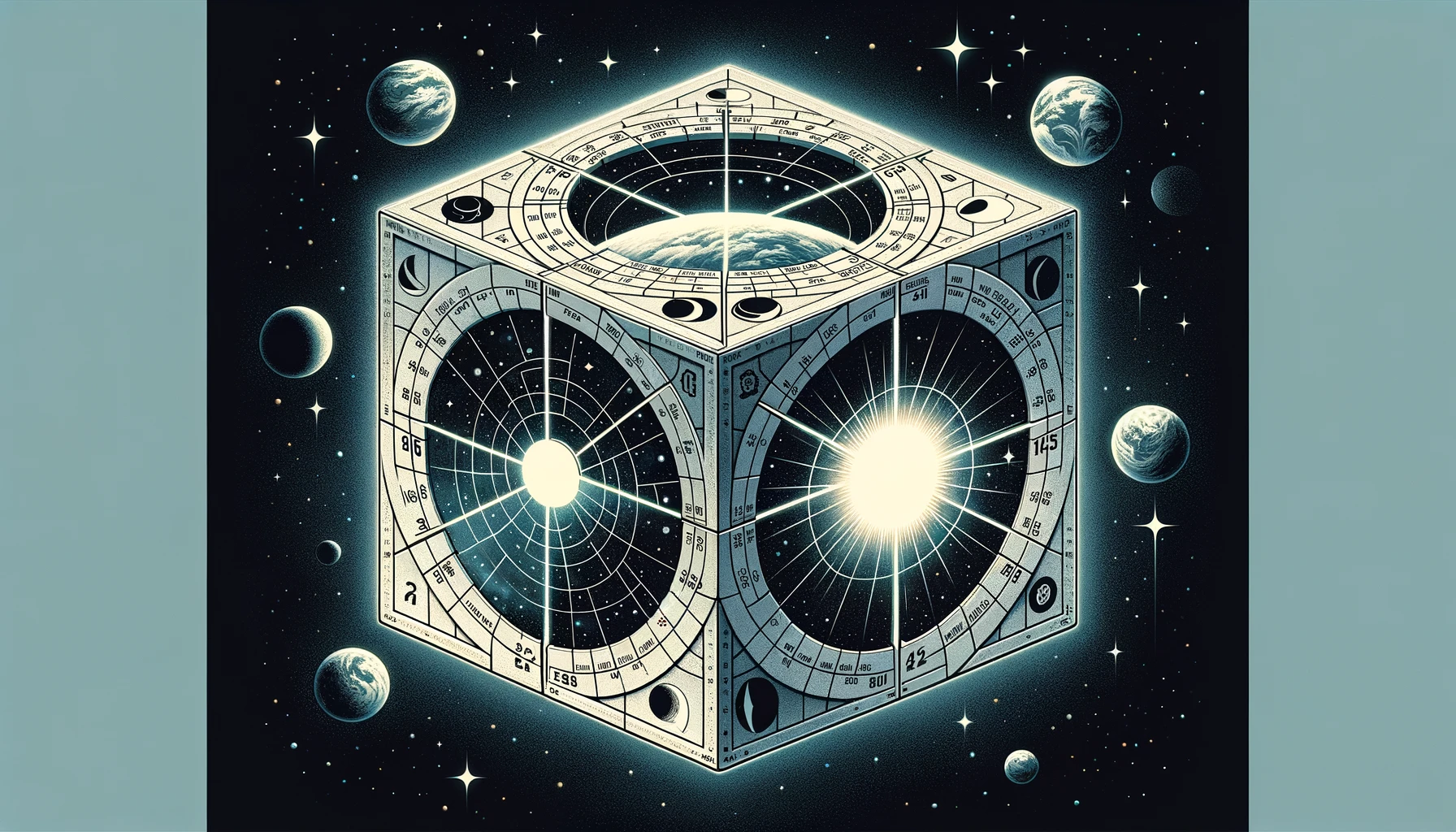
The Time Cube theory’s most popular explanation centers on its challenge to the conventional understanding of time. Ray argued that the traditional 24-hour day is a misleading construct that ignores the Earth’s inherent geometrical and temporal complexity. Instead, he proposed that each day comprises four distinct quarters—Sunup, Midday, Sundown, and Midnight—each representing a separate “day” within a single Earth rotation. This model suggests that at any given moment, four different days are occurring simultaneously, corresponding to the four corners of a cube, hence the name “Time Cube.”
This explanation goes beyond mere timekeeping, touching on broader themes of perception, reality, and the human experience. Ray contended that the suppression of Time Cube knowledge is part of a broader conspiracy by educational and scientific authorities to maintain control and prevent individuals from accessing higher truths about the universe. The Time Cube theory thus not only offers an alternative view of time but also critiques societal and institutional power structures.
Variations of the Time Cube Theory
While the core premise of the Time Cube theory remains consistent, various interpretations and extensions of Ray’s original ideas have emerged. Some proponents of the theory delve deeper into the philosophical and metaphysical implications, suggesting that the Time Cube model could offer insights into the nature of consciousness, the multiverse, and even the divine. Others focus on the potential practical applications of the theory, from revolutionizing timekeeping systems to rethinking the structure of societal and educational frameworks.
These variations reflect the Time Cube theory’s adaptability and the diverse interests of its followers. Despite the lack of empirical evidence and widespread skepticism, the theory’s flexibility and capacity to inspire imaginative thought contribute to its enduring appeal and the lively discourse surrounding it.
Evidence Opposing the Validity of the Time Cube Theory
Despite its intriguing premises, the Time Cube theory faces significant criticism and skepticism from the scientific and academic communities. Critics argue that the theory lacks empirical support and contradicts well-established scientific principles and observations. The concept of four simultaneous days within a single Earth rotation, for example, does not align with astronomical data or the understanding of time zones and the Earth’s rotation.
Moreover, the theory’s reliance on metaphorical and often convoluted explanations further challenges its credibility. The absence of clear, testable predictions or coherent mathematical models undermines the Time Cube’s standing as a viable scientific hypothesis. As a result, the theory is largely regarded as a pseudoscientific curiosity rather than a legitimate challenge to established scientific paradigms.
So, How Many Days a Day?
The Time Cube conspiracy theory, despite its lack of scientific validation, continues to captivate a niche audience with its bold challenge to conventional views of time and reality. Its creator, Gene Ray, presented a vision of the universe that, while controversial, encourages individuals to question and rethink the nature of existence and the structures of knowledge and power in society. Whether regarded as a curious anomaly or a profound truth, the Time Cube theory serves as a testament to the human imagination’s boundless capacity and the enduring allure of the mysterious and the unexplained.