

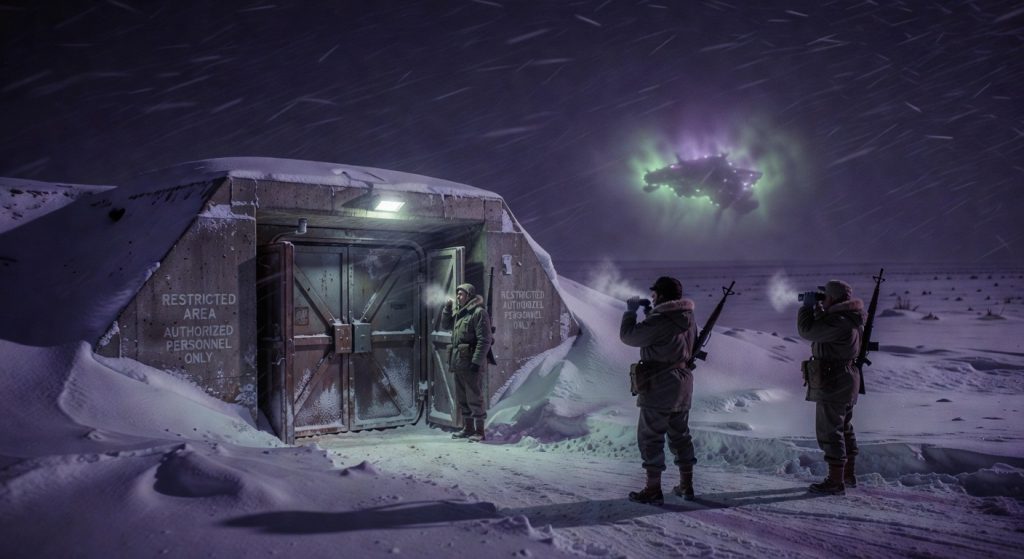
There are mysteries that fade once the headlines move on, and then there are cases that become cultural gravity wells. Cold War command systems, witness testimony, and the enduring claim that unidentified objects knocked U.S. nukes offline.
At Conspiracy Realist, we treat these stories like crime scenes: collect claims, separate provenance from legend, and ask what survives scrutiny.
Tonight, we follow the evidence trail and the folklore trail at the same time. Where they overlap is where things get interesting.
How the Story Entered Public Imagination
Most people encounter this case as a polished story, not a raw one. In Malmstrom Air Force Base, Montana, during 1967 Cold War period, witnesses, researchers, and skeptics built a layered story that refuses to stay simple. Every time the case looks solved, a new testimony, overlooked archive, or reinterpretation pulls us back. That tension matters: it shows how modern mythmaking and real historical uncertainty can occupy the same space. If we zoom in on what was actually observed, recorded, and repeated, we find a pattern of human perception under pressure—and that is often more revealing than any single theory. Segment 11 keeps the investigation grounded while still allowing the strangest possibilities to stay on the table.
Most people encounter this case as a polished story, not a raw one. In Malmstrom Air Force Base, Montana, during 1967 Cold War period, witnesses, researchers, and skeptics built a layered story that refuses to stay simple. Every time the case looks solved, a new testimony, overlooked archive, or reinterpretation pulls us back. That tension matters: it shows how modern mythmaking and real historical uncertainty can occupy the same space. If we zoom in on what was actually observed, recorded, and repeated, we find a pattern of human perception under pressure—and that is often more revealing than any single theory. Segment 12 keeps the investigation grounded while still allowing the strangest possibilities to stay on the table.
Most people encounter this case as a polished story, not a raw one. In Malmstrom Air Force Base, Montana, during 1967 Cold War period, witnesses, researchers, and skeptics built a layered story that refuses to stay simple. Every time the case looks solved, a new testimony, overlooked archive, or reinterpretation pulls us back. That tension matters: it shows how modern mythmaking and real historical uncertainty can occupy the same space. If we zoom in on what was actually observed, recorded, and repeated, we find a pattern of human perception under pressure—and that is often more revealing than any single theory. Segment 13 keeps the investigation grounded while still allowing the strangest possibilities to stay on the table.
Most people encounter this case as a polished story, not a raw one. In Malmstrom Air Force Base, Montana, during 1967 Cold War period, witnesses, researchers, and skeptics built a layered story that refuses to stay simple. Every time the case looks solved, a new testimony, overlooked archive, or reinterpretation pulls us back. That tension matters: it shows how modern mythmaking and real historical uncertainty can occupy the same space. If we zoom in on what was actually observed, recorded, and repeated, we find a pattern of human perception under pressure—and that is often more revealing than any single theory. Segment 14 keeps the investigation grounded while still allowing the strangest possibilities to stay on the table.
What Witnesses and Records Actually Say
When we strip away retellings, we usually discover fragmented documents and conflicting recollections. In Malmstrom Air Force Base, Montana, during 1967 Cold War period, witnesses, researchers, and skeptics built a layered story that refuses to stay simple. Every time the case looks solved, a new testimony, overlooked archive, or reinterpretation pulls us back. That tension matters: it shows how modern mythmaking and real historical uncertainty can occupy the same space. If we zoom in on what was actually observed, recorded, and repeated, we find a pattern of human perception under pressure—and that is often more revealing than any single theory. Segment 21 keeps the investigation grounded while still allowing the strangest possibilities to stay on the table.
When we strip away retellings, we usually discover fragmented documents and conflicting recollections. In Malmstrom Air Force Base, Montana, during 1967 Cold War period, witnesses, researchers, and skeptics built a layered story that refuses to stay simple. Every time the case looks solved, a new testimony, overlooked archive, or reinterpretation pulls us back. That tension matters: it shows how modern mythmaking and real historical uncertainty can occupy the same space. If we zoom in on what was actually observed, recorded, and repeated, we find a pattern of human perception under pressure—and that is often more revealing than any single theory. Segment 22 keeps the investigation grounded while still allowing the strangest possibilities to stay on the table.
When we strip away retellings, we usually discover fragmented documents and conflicting recollections. In Malmstrom Air Force Base, Montana, during 1967 Cold War period, witnesses, researchers, and skeptics built a layered story that refuses to stay simple. Every time the case looks solved, a new testimony, overlooked archive, or reinterpretation pulls us back. That tension matters: it shows how modern mythmaking and real historical uncertainty can occupy the same space. If we zoom in on what was actually observed, recorded, and repeated, we find a pattern of human perception under pressure—and that is often more revealing than any single theory. Segment 23 keeps the investigation grounded while still allowing the strangest possibilities to stay on the table.
When we strip away retellings, we usually discover fragmented documents and conflicting recollections. In Malmstrom Air Force Base, Montana, during 1967 Cold War period, witnesses, researchers, and skeptics built a layered story that refuses to stay simple. Every time the case looks solved, a new testimony, overlooked archive, or reinterpretation pulls us back. That tension matters: it shows how modern mythmaking and real historical uncertainty can occupy the same space. If we zoom in on what was actually observed, recorded, and repeated, we find a pattern of human perception under pressure—and that is often more revealing than any single theory. Segment 24 keeps the investigation grounded while still allowing the strangest possibilities to stay on the table.
Evidence checkpoints investigators should verify
- Original witness statements with dates and chain of custody
- Technical logs that were written before media coverage escalated
- Independent corroboration from radar, photography, or contemporaneous reporting
- Known environmental factors that could generate false positives
The Skeptical Case: Misidentification, Memory, and Narrative Drift
Skeptics often argue that ordinary explanations are enough, and sometimes they are. In Malmstrom Air Force Base, Montana, during 1967 Cold War period, witnesses, researchers, and skeptics built a layered story that refuses to stay simple. Every time the case looks solved, a new testimony, overlooked archive, or reinterpretation pulls us back. That tension matters: it shows how modern mythmaking and real historical uncertainty can occupy the same space. If we zoom in on what was actually observed, recorded, and repeated, we find a pattern of human perception under pressure—and that is often more revealing than any single theory. Segment 31 keeps the investigation grounded while still allowing the strangest possibilities to stay on the table.
Skeptics often argue that ordinary explanations are enough, and sometimes they are. In Malmstrom Air Force Base, Montana, during 1967 Cold War period, witnesses, researchers, and skeptics built a layered story that refuses to stay simple. Every time the case looks solved, a new testimony, overlooked archive, or reinterpretation pulls us back. That tension matters: it shows how modern mythmaking and real historical uncertainty can occupy the same space. If we zoom in on what was actually observed, recorded, and repeated, we find a pattern of human perception under pressure—and that is often more revealing than any single theory. Segment 32 keeps the investigation grounded while still allowing the strangest possibilities to stay on the table.
Skeptics often argue that ordinary explanations are enough, and sometimes they are. In Malmstrom Air Force Base, Montana, during 1967 Cold War period, witnesses, researchers, and skeptics built a layered story that refuses to stay simple. Every time the case looks solved, a new testimony, overlooked archive, or reinterpretation pulls us back. That tension matters: it shows how modern mythmaking and real historical uncertainty can occupy the same space. If we zoom in on what was actually observed, recorded, and repeated, we find a pattern of human perception under pressure—and that is often more revealing than any single theory. Segment 33 keeps the investigation grounded while still allowing the strangest possibilities to stay on the table.
Skeptics often argue that ordinary explanations are enough, and sometimes they are. In Malmstrom Air Force Base, Montana, during 1967 Cold War period, witnesses, researchers, and skeptics built a layered story that refuses to stay simple. Every time the case looks solved, a new testimony, overlooked archive, or reinterpretation pulls us back. That tension matters: it shows how modern mythmaking and real historical uncertainty can occupy the same space. If we zoom in on what was actually observed, recorded, and repeated, we find a pattern of human perception under pressure—and that is often more revealing than any single theory. Segment 34 keeps the investigation grounded while still allowing the strangest possibilities to stay on the table.
Why the Mystery Refuses to Die
Yet the unresolved residue keeps drawing investigators back. In Malmstrom Air Force Base, Montana, during 1967 Cold War period, witnesses, researchers, and skeptics built a layered story that refuses to stay simple. Every time the case looks solved, a new testimony, overlooked archive, or reinterpretation pulls us back. That tension matters: it shows how modern mythmaking and real historical uncertainty can occupy the same space. If we zoom in on what was actually observed, recorded, and repeated, we find a pattern of human perception under pressure—and that is often more revealing than any single theory. Segment 41 keeps the investigation grounded while still allowing the strangest possibilities to stay on the table.
Yet the unresolved residue keeps drawing investigators back. In Malmstrom Air Force Base, Montana, during 1967 Cold War period, witnesses, researchers, and skeptics built a layered story that refuses to stay simple. Every time the case looks solved, a new testimony, overlooked archive, or reinterpretation pulls us back. That tension matters: it shows how modern mythmaking and real historical uncertainty can occupy the same space. If we zoom in on what was actually observed, recorded, and repeated, we find a pattern of human perception under pressure—and that is often more revealing than any single theory. Segment 42 keeps the investigation grounded while still allowing the strangest possibilities to stay on the table.
Yet the unresolved residue keeps drawing investigators back. In Malmstrom Air Force Base, Montana, during 1967 Cold War period, witnesses, researchers, and skeptics built a layered story that refuses to stay simple. Every time the case looks solved, a new testimony, overlooked archive, or reinterpretation pulls us back. That tension matters: it shows how modern mythmaking and real historical uncertainty can occupy the same space. If we zoom in on what was actually observed, recorded, and repeated, we find a pattern of human perception under pressure—and that is often more revealing than any single theory. Segment 43 keeps the investigation grounded while still allowing the strangest possibilities to stay on the table.
Yet the unresolved residue keeps drawing investigators back. In Malmstrom Air Force Base, Montana, during 1967 Cold War period, witnesses, researchers, and skeptics built a layered story that refuses to stay simple. Every time the case looks solved, a new testimony, overlooked archive, or reinterpretation pulls us back. That tension matters: it shows how modern mythmaking and real historical uncertainty can occupy the same space. If we zoom in on what was actually observed, recorded, and repeated, we find a pattern of human perception under pressure—and that is often more revealing than any single theory. Segment 44 keeps the investigation grounded while still allowing the strangest possibilities to stay on the table.
Rebuilding the Timeline from Primary Material
A rigorous timeline reveals both the strength and weakness of the most famous claims. In Malmstrom Air Force Base, Montana, during 1967 Cold War period, witnesses, researchers, and skeptics built a layered story that refuses to stay simple. Every time the case looks solved, a new testimony, overlooked archive, or reinterpretation pulls us back. That tension matters: it shows how modern mythmaking and real historical uncertainty can occupy the same space. If we zoom in on what was actually observed, recorded, and repeated, we find a pattern of human perception under pressure—and that is often more revealing than any single theory. Segment 51 keeps the investigation grounded while still allowing the strangest possibilities to stay on the table.
A rigorous timeline reveals both the strength and weakness of the most famous claims. In Malmstrom Air Force Base, Montana, during 1967 Cold War period, witnesses, researchers, and skeptics built a layered story that refuses to stay simple. Every time the case looks solved, a new testimony, overlooked archive, or reinterpretation pulls us back. That tension matters: it shows how modern mythmaking and real historical uncertainty can occupy the same space. If we zoom in on what was actually observed, recorded, and repeated, we find a pattern of human perception under pressure—and that is often more revealing than any single theory. Segment 52 keeps the investigation grounded while still allowing the strangest possibilities to stay on the table.
A rigorous timeline reveals both the strength and weakness of the most famous claims. In Malmstrom Air Force Base, Montana, during 1967 Cold War period, witnesses, researchers, and skeptics built a layered story that refuses to stay simple. Every time the case looks solved, a new testimony, overlooked archive, or reinterpretation pulls us back. That tension matters: it shows how modern mythmaking and real historical uncertainty can occupy the same space. If we zoom in on what was actually observed, recorded, and repeated, we find a pattern of human perception under pressure—and that is often more revealing than any single theory. Segment 53 keeps the investigation grounded while still allowing the strangest possibilities to stay on the table.
A rigorous timeline reveals both the strength and weakness of the most famous claims. In Malmstrom Air Force Base, Montana, during 1967 Cold War period, witnesses, researchers, and skeptics built a layered story that refuses to stay simple. Every time the case looks solved, a new testimony, overlooked archive, or reinterpretation pulls us back. That tension matters: it shows how modern mythmaking and real historical uncertainty can occupy the same space. If we zoom in on what was actually observed, recorded, and repeated, we find a pattern of human perception under pressure—and that is often more revealing than any single theory. Segment 54 keeps the investigation grounded while still allowing the strangest possibilities to stay on the table.
Evidence checkpoints investigators should verify
- Original witness statements with dates and chain of custody
- Technical logs that were written before media coverage escalated
- Independent corroboration from radar, photography, or contemporaneous reporting
- Known environmental factors that could generate false positives
If the Wild Claims Were True, What Would Follow?
Entertaining extraordinary hypotheses is useful only when paired with measurable consequences. In Malmstrom Air Force Base, Montana, during 1967 Cold War period, witnesses, researchers, and skeptics built a layered story that refuses to stay simple. Every time the case looks solved, a new testimony, overlooked archive, or reinterpretation pulls us back. That tension matters: it shows how modern mythmaking and real historical uncertainty can occupy the same space. If we zoom in on what was actually observed, recorded, and repeated, we find a pattern of human perception under pressure—and that is often more revealing than any single theory. Segment 61 keeps the investigation grounded while still allowing the strangest possibilities to stay on the table.
Entertaining extraordinary hypotheses is useful only when paired with measurable consequences. In Malmstrom Air Force Base, Montana, during 1967 Cold War period, witnesses, researchers, and skeptics built a layered story that refuses to stay simple. Every time the case looks solved, a new testimony, overlooked archive, or reinterpretation pulls us back. That tension matters: it shows how modern mythmaking and real historical uncertainty can occupy the same space. If we zoom in on what was actually observed, recorded, and repeated, we find a pattern of human perception under pressure—and that is often more revealing than any single theory. Segment 62 keeps the investigation grounded while still allowing the strangest possibilities to stay on the table.
Entertaining extraordinary hypotheses is useful only when paired with measurable consequences. In Malmstrom Air Force Base, Montana, during 1967 Cold War period, witnesses, researchers, and skeptics built a layered story that refuses to stay simple. Every time the case looks solved, a new testimony, overlooked archive, or reinterpretation pulls us back. That tension matters: it shows how modern mythmaking and real historical uncertainty can occupy the same space. If we zoom in on what was actually observed, recorded, and repeated, we find a pattern of human perception under pressure—and that is often more revealing than any single theory. Segment 63 keeps the investigation grounded while still allowing the strangest possibilities to stay on the table.
Entertaining extraordinary hypotheses is useful only when paired with measurable consequences. In Malmstrom Air Force Base, Montana, during 1967 Cold War period, witnesses, researchers, and skeptics built a layered story that refuses to stay simple. Every time the case looks solved, a new testimony, overlooked archive, or reinterpretation pulls us back. That tension matters: it shows how modern mythmaking and real historical uncertainty can occupy the same space. If we zoom in on what was actually observed, recorded, and repeated, we find a pattern of human perception under pressure—and that is often more revealing than any single theory. Segment 64 keeps the investigation grounded while still allowing the strangest possibilities to stay on the table.
The Human Element Behind Extraordinary Belief
People are not just data points; they are storytellers under social pressure. In Malmstrom Air Force Base, Montana, during 1967 Cold War period, witnesses, researchers, and skeptics built a layered story that refuses to stay simple. Every time the case looks solved, a new testimony, overlooked archive, or reinterpretation pulls us back. That tension matters: it shows how modern mythmaking and real historical uncertainty can occupy the same space. If we zoom in on what was actually observed, recorded, and repeated, we find a pattern of human perception under pressure—and that is often more revealing than any single theory. Segment 71 keeps the investigation grounded while still allowing the strangest possibilities to stay on the table.
People are not just data points; they are storytellers under social pressure. In Malmstrom Air Force Base, Montana, during 1967 Cold War period, witnesses, researchers, and skeptics built a layered story that refuses to stay simple. Every time the case looks solved, a new testimony, overlooked archive, or reinterpretation pulls us back. That tension matters: it shows how modern mythmaking and real historical uncertainty can occupy the same space. If we zoom in on what was actually observed, recorded, and repeated, we find a pattern of human perception under pressure—and that is often more revealing than any single theory. Segment 72 keeps the investigation grounded while still allowing the strangest possibilities to stay on the table.
People are not just data points; they are storytellers under social pressure. In Malmstrom Air Force Base, Montana, during 1967 Cold War period, witnesses, researchers, and skeptics built a layered story that refuses to stay simple. Every time the case looks solved, a new testimony, overlooked archive, or reinterpretation pulls us back. That tension matters: it shows how modern mythmaking and real historical uncertainty can occupy the same space. If we zoom in on what was actually observed, recorded, and repeated, we find a pattern of human perception under pressure—and that is often more revealing than any single theory. Segment 73 keeps the investigation grounded while still allowing the strangest possibilities to stay on the table.
People are not just data points; they are storytellers under social pressure. In Malmstrom Air Force Base, Montana, during 1967 Cold War period, witnesses, researchers, and skeptics built a layered story that refuses to stay simple. Every time the case looks solved, a new testimony, overlooked archive, or reinterpretation pulls us back. That tension matters: it shows how modern mythmaking and real historical uncertainty can occupy the same space. If we zoom in on what was actually observed, recorded, and repeated, we find a pattern of human perception under pressure—and that is often more revealing than any single theory. Segment 74 keeps the investigation grounded while still allowing the strangest possibilities to stay on the table.
Conclusion: The Signal, the Noise, and the Open Question
In the end, uncertainty is not a failure—it’s an honest state of knowledge. In Malmstrom Air Force Base, Montana, during 1967 Cold War period, witnesses, researchers, and skeptics built a layered story that refuses to stay simple. Every time the case looks solved, a new testimony, overlooked archive, or reinterpretation pulls us back. That tension matters: it shows how modern mythmaking and real historical uncertainty can occupy the same space. If we zoom in on what was actually observed, recorded, and repeated, we find a pattern of human perception under pressure—and that is often more revealing than any single theory. Segment 81 keeps the investigation grounded while still allowing the strangest possibilities to stay on the table.
In the end, uncertainty is not a failure—it’s an honest state of knowledge. In Malmstrom Air Force Base, Montana, during 1967 Cold War period, witnesses, researchers, and skeptics built a layered story that refuses to stay simple. Every time the case looks solved, a new testimony, overlooked archive, or reinterpretation pulls us back. That tension matters: it shows how modern mythmaking and real historical uncertainty can occupy the same space. If we zoom in on what was actually observed, recorded, and repeated, we find a pattern of human perception under pressure—and that is often more revealing than any single theory. Segment 82 keeps the investigation grounded while still allowing the strangest possibilities to stay on the table.
In the end, uncertainty is not a failure—it’s an honest state of knowledge. In Malmstrom Air Force Base, Montana, during 1967 Cold War period, witnesses, researchers, and skeptics built a layered story that refuses to stay simple. Every time the case looks solved, a new testimony, overlooked archive, or reinterpretation pulls us back. That tension matters: it shows how modern mythmaking and real historical uncertainty can occupy the same space. If we zoom in on what was actually observed, recorded, and repeated, we find a pattern of human perception under pressure—and that is often more revealing than any single theory. Segment 83 keeps the investigation grounded while still allowing the strangest possibilities to stay on the table.
In the end, uncertainty is not a failure—it’s an honest state of knowledge. In Malmstrom Air Force Base, Montana, during 1967 Cold War period, witnesses, researchers, and skeptics built a layered story that refuses to stay simple. Every time the case looks solved, a new testimony, overlooked archive, or reinterpretation pulls us back. That tension matters: it shows how modern mythmaking and real historical uncertainty can occupy the same space. If we zoom in on what was actually observed, recorded, and repeated, we find a pattern of human perception under pressure—and that is often more revealing than any single theory. Segment 84 keeps the investigation grounded while still allowing the strangest possibilities to stay on the table.
For readers who want primary context, start with National Security Archive: UAP and nuclear weapons documents and cross-check against U.S. Air Force historical material on missile operations. Both provide useful anchors before diving into more speculative interpretations.
Down the Rabbit Hole
- What failure modes can disable multiple missile systems simultaneously?
- How should historians weigh sworn testimony versus incomplete technical logs?
- Were similar incidents reported at Soviet sites during the same era?
- Why do nuclear UFO stories persist across decades and institutions?
Disclaimer: This article explores disputed claims and historical interpretations for informational and entertainment purposes. It is not presented as definitive proof of extraterrestrial involvement.


