Menu

The BWC’s Confidentiality Commission That Never Was

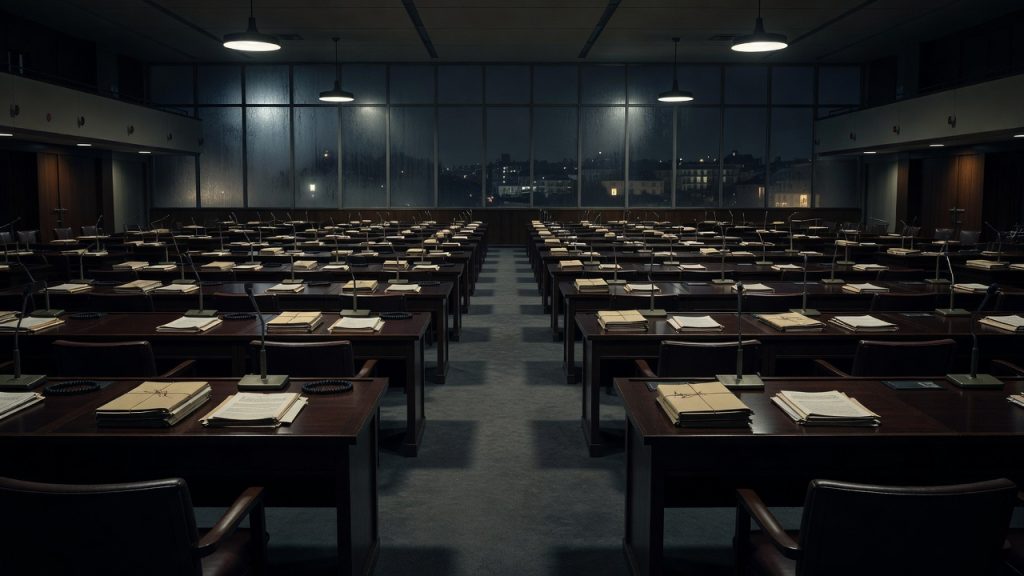
Empty Geneva conference chamber symbolizing the BWC confidentiality commission debate — ConspiracyRealist.com

The BWC’s Confidentiality Commission That Never Was

Inside the failed BWC safeguard meant to police leaks, calm industry fear, and keep inspections alive. In Geneva, negotiators spent years trying to design a biological weapons inspection regime that could enter sensitive facilities without turning every visit into industrial espionage. Hidden inside that blueprint was a strange insurance policy: a proposed Confidentiality Commission, built to handle leaks, breaches, and damage claims if inspectors or treaty staff mishandled protected information. It never came to life. And that failure still raises a hard question. Did the world lose a safety valve that might have made bioweapons oversight politically possible, or was the mechanism too fragile to save the treaty from the start?

The Case For

The draft protocol treated secrecy as a crisis serious enough to need its own tribunal

The strongest reason to take this forgotten mechanism seriously is that it appears in the official draft itself. The 2001 Biological Weapons Convention composite text, BWC/AD HOC GROUP/CRP.8, did not treat confidentiality as a minor administrative concern. Article 11 said the organization had to protect confidential information and data connected to declarations, visits, and investigations. More important, it laid out what would happen if that protection failed. If a state believed a breach of confidentiality had harmed it, and consultations did not solve the dispute, the case could be sent to a dedicated Confidentiality Commission established as a subsidiary organ of the Conference.

That is not decorative treaty language. It shows negotiators understood that the verification project would collapse unless governments, laboratories, and industry believed there was a formal path for redress. The same draft text said the commission would consider disputes related to confidentiality and that the Conference would adopt rules for its composition and procedures. Annex C went further, creating a Confidentiality Unit inside the Technical Secretariat, a classification system, need-to-know access rules, and recorded logs for access to sensitive material. In other words, the protocol did not just imagine inspections. It imagined the damage control system that inspections would require.

The U.S. record shows why that safeguard mattered

The second piece of the case comes from the public objections that helped kill the protocol. In his July 25, 2001 statement to the Ad Hoc Group, Ambassador Donald Mahley said the draft would put “national security and confidential business information” at risk. Earlier that month, in a House hearing on the protocol’s status and implications, Mahley testified that there was always danger when outside investigators entered places containing proprietary information or national-security information unrelated to biological weapons, even if negotiators had tried to reduce that danger through managed access and other protections.

That matters because it suggests the Confidentiality Commission was not some abstract legal flourish. It was part of a larger attempt to answer one of the treaty’s most politically explosive questions: if protected information leaks, who pays, who decides, and who can be trusted to judge the damage? Readers following our managed access deep dive and the VEREX secrecy fight article have already seen how commercial confidentiality haunted the whole process. The proposed commission was the institutional form of that fear.

The Realist’s Eye

A commission on paper is not the same thing as real protection

The realist has to slow the story down. A treaty can promise remedies without making anyone feel safe. CRP.8 said the commission would exist, but the details were still incomplete. The Conference would have to appoint it. The Conference would have to approve the rules. The Technical Secretariat would have to enforce classification, clearance, and secrecy procedures in real time across declarations, visits, and investigations. None of that guarantees that a pharmaceutical process, biodefense vulnerability, or classified procurement detail would remain protected once shared inside an international organization.

That gap between legal design and operational trust is exactly where suspicion survives. If a state or company feared that even one leak could expose valuable know-how or a sensitive national-security weakness, a future commission offering mediation or inquiry after the fact might not feel like meaningful insurance. It might feel like a coroner arriving after the fire.

The deeper obstacle may have been biology itself

There is also a harder structural problem. Even perfect secrecy rules would not solve the BWC’s core verification dilemma. Biology is dual-use almost by nature. The same fermenters, growth media, containment systems, and skilled personnel can support vaccine production, defensive research, or prohibited activity. As Edward Lacey told Congress in the July 10, 2001 hearing, determining whether a country is cheating on the BWC ultimately depends on broader national assessment and intelligence, not just on-site procedures.

That weakens the simplest conspiracy reading. The protocol did not fail only because states were afraid of leaks. It also struggled because even intrusive access might not have delivered decisive proof. A confidentiality commission could punish or mediate breaches. It could not magically make biological intent transparent. So the darker possibility is not just that secrecy protections were too weak. It is that negotiators were building a sophisticated safety system around an inspection model many powerful states already doubted would work.

Still, the commission remains revealing. Governments do not draft elaborate breach procedures unless they expect confidentiality to be one of the treaty’s breaking points. In the broader Government Secrets archive, that pattern shows up again and again: institutions admitting the danger in their own paperwork while failing to build the trust needed to survive it.

What We Know For Certain

  • CRP.8 proposed a Confidentiality Commission to handle unresolved disputes involving breaches of confidential information.
  • The same draft created a Confidentiality Unit, classification rules, and need-to-know access procedures in Annex C.
  • Donald Mahley publicly argued in July 2001 that the draft protocol put confidential business and national-security information at risk.
  • The BWC protocol was never adopted, so the Confidentiality Commission was never established.
  • The BWC still lacks a standing verification organization comparable to the OPCW.

The Unanswered Questions

  • Would a functioning Confidentiality Commission have reassured enough states and companies to keep the protocol alive?
  • Could any after-the-fact remedy truly offset the risk of exposing proprietary biotech knowledge during an inspection?
  • How much of the confidentiality debate reflected real technical fear, and how much reflected major powers protecting strategic opacity?
  • If a modern BWC protocol returned today, would states trust an international body to handle sensitive biological data any more than they did in 2001?

The Closer — You Decide

Some treaty failures happen in public speeches. Others are visible in the machinery left half-built behind them. The proposed Confidentiality Commission tells us the negotiators knew exactly where one of the pressure points was. They knew inspections without secrecy protections would be politically dead on arrival. They also knew secrecy protections alone could not make biology easy to verify. So the commission sits in the record like an empty chamber in a bunker: proof that the threat was anticipated, and proof that anticipation was not enough. The evidence is on the table. You decide.

dive down the rabbit hole

The BWC’s Confidentiality Commission That Never Was

S-FX.com
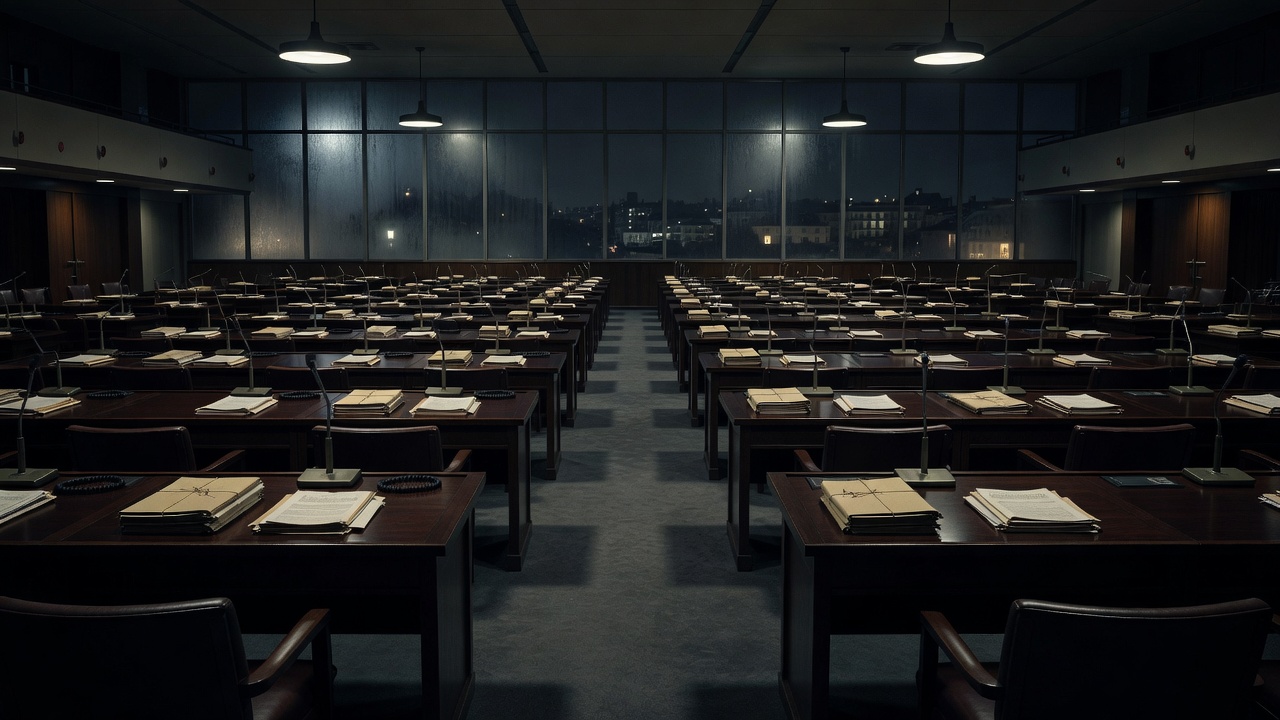
Empty Geneva conference chamber symbolizing the BWC confidentiality commission debate — ConspiracyRealist.com

The BWC’s Confidentiality Commission That Never Was

Inside the failed BWC safeguard meant to police leaks, calm industry fear, and keep inspections alive. In Geneva, negotiators spent years trying to design a biological weapons inspection regime that could enter sensitive facilities without turning every visit into industrial espionage. Hidden inside that blueprint was a strange insurance policy: a proposed Confidentiality Commission, built to handle leaks, breaches, and damage claims if inspectors or treaty staff mishandled protected information. It never came to life. And that failure still raises a hard question. Did the world lose a safety valve that might have made bioweapons oversight politically possible, or was the mechanism too fragile to save the treaty from the start?

The Case For

The draft protocol treated secrecy as a crisis serious enough to need its own tribunal

The strongest reason to take this forgotten mechanism seriously is that it appears in the official draft itself. The 2001 Biological Weapons Convention composite text, BWC/AD HOC GROUP/CRP.8, did not treat confidentiality as a minor administrative concern. Article 11 said the organization had to protect confidential information and data connected to declarations, visits, and investigations. More important, it laid out what would happen if that protection failed. If a state believed a breach of confidentiality had harmed it, and consultations did not solve the dispute, the case could be sent to a dedicated Confidentiality Commission established as a subsidiary organ of the Conference.

That is not decorative treaty language. It shows negotiators understood that the verification project would collapse unless governments, laboratories, and industry believed there was a formal path for redress. The same draft text said the commission would consider disputes related to confidentiality and that the Conference would adopt rules for its composition and procedures. Annex C went further, creating a Confidentiality Unit inside the Technical Secretariat, a classification system, need-to-know access rules, and recorded logs for access to sensitive material. In other words, the protocol did not just imagine inspections. It imagined the damage control system that inspections would require.

The U.S. record shows why that safeguard mattered

The second piece of the case comes from the public objections that helped kill the protocol. In his July 25, 2001 statement to the Ad Hoc Group, Ambassador Donald Mahley said the draft would put “national security and confidential business information” at risk. Earlier that month, in a House hearing on the protocol’s status and implications, Mahley testified that there was always danger when outside investigators entered places containing proprietary information or national-security information unrelated to biological weapons, even if negotiators had tried to reduce that danger through managed access and other protections.

That matters because it suggests the Confidentiality Commission was not some abstract legal flourish. It was part of a larger attempt to answer one of the treaty’s most politically explosive questions: if protected information leaks, who pays, who decides, and who can be trusted to judge the damage? Readers following our managed access deep dive and the VEREX secrecy fight article have already seen how commercial confidentiality haunted the whole process. The proposed commission was the institutional form of that fear.

The Realist’s Eye

A commission on paper is not the same thing as real protection

The realist has to slow the story down. A treaty can promise remedies without making anyone feel safe. CRP.8 said the commission would exist, but the details were still incomplete. The Conference would have to appoint it. The Conference would have to approve the rules. The Technical Secretariat would have to enforce classification, clearance, and secrecy procedures in real time across declarations, visits, and investigations. None of that guarantees that a pharmaceutical process, biodefense vulnerability, or classified procurement detail would remain protected once shared inside an international organization.

That gap between legal design and operational trust is exactly where suspicion survives. If a state or company feared that even one leak could expose valuable know-how or a sensitive national-security weakness, a future commission offering mediation or inquiry after the fact might not feel like meaningful insurance. It might feel like a coroner arriving after the fire.

The deeper obstacle may have been biology itself

There is also a harder structural problem. Even perfect secrecy rules would not solve the BWC’s core verification dilemma. Biology is dual-use almost by nature. The same fermenters, growth media, containment systems, and skilled personnel can support vaccine production, defensive research, or prohibited activity. As Edward Lacey told Congress in the July 10, 2001 hearing, determining whether a country is cheating on the BWC ultimately depends on broader national assessment and intelligence, not just on-site procedures.

That weakens the simplest conspiracy reading. The protocol did not fail only because states were afraid of leaks. It also struggled because even intrusive access might not have delivered decisive proof. A confidentiality commission could punish or mediate breaches. It could not magically make biological intent transparent. So the darker possibility is not just that secrecy protections were too weak. It is that negotiators were building a sophisticated safety system around an inspection model many powerful states already doubted would work.

Still, the commission remains revealing. Governments do not draft elaborate breach procedures unless they expect confidentiality to be one of the treaty’s breaking points. In the broader Government Secrets archive, that pattern shows up again and again: institutions admitting the danger in their own paperwork while failing to build the trust needed to survive it.

What We Know For Certain

  • CRP.8 proposed a Confidentiality Commission to handle unresolved disputes involving breaches of confidential information.
  • The same draft created a Confidentiality Unit, classification rules, and need-to-know access procedures in Annex C.
  • Donald Mahley publicly argued in July 2001 that the draft protocol put confidential business and national-security information at risk.
  • The BWC protocol was never adopted, so the Confidentiality Commission was never established.
  • The BWC still lacks a standing verification organization comparable to the OPCW.

The Unanswered Questions

  • Would a functioning Confidentiality Commission have reassured enough states and companies to keep the protocol alive?
  • Could any after-the-fact remedy truly offset the risk of exposing proprietary biotech knowledge during an inspection?
  • How much of the confidentiality debate reflected real technical fear, and how much reflected major powers protecting strategic opacity?
  • If a modern BWC protocol returned today, would states trust an international body to handle sensitive biological data any more than they did in 2001?

The Closer — You Decide

Some treaty failures happen in public speeches. Others are visible in the machinery left half-built behind them. The proposed Confidentiality Commission tells us the negotiators knew exactly where one of the pressure points was. They knew inspections without secrecy protections would be politically dead on arrival. They also knew secrecy protections alone could not make biology easy to verify. So the commission sits in the record like an empty chamber in a bunker: proof that the threat was anticipated, and proof that anticipation was not enough. The evidence is on the table. You decide.

The BWC’s Confidentiality Commission That Never Was

Empty Geneva conference chamber symbolizing the BWC confidentiality commission debate — ConspiracyRealist.com

The BWC’s Confidentiality Commission That Never Was

Inside the failed BWC safeguard meant to police leaks, calm industry fear, and keep inspections alive. In Geneva, negotiators spent years trying to design a biological weapons inspection regime that could enter sensitive facilities without turning every visit into industrial espionage. Hidden inside that blueprint was a strange insurance policy: a proposed Confidentiality Commission, built to handle leaks, breaches, and damage claims if inspectors or treaty staff mishandled protected information. It never came to life. And that failure still raises a hard question. Did the world lose a safety valve that might have made bioweapons oversight politically possible, or was the mechanism too fragile to save the treaty from the start?

The Case For

The draft protocol treated secrecy as a crisis serious enough to need its own tribunal

The strongest reason to take this forgotten mechanism seriously is that it appears in the official draft itself. The 2001 Biological Weapons Convention composite text, BWC/AD HOC GROUP/CRP.8, did not treat confidentiality as a minor administrative concern. Article 11 said the organization had to protect confidential information and data connected to declarations, visits, and investigations. More important, it laid out what would happen if that protection failed. If a state believed a breach of confidentiality had harmed it, and consultations did not solve the dispute, the case could be sent to a dedicated Confidentiality Commission established as a subsidiary organ of the Conference.

That is not decorative treaty language. It shows negotiators understood that the verification project would collapse unless governments, laboratories, and industry believed there was a formal path for redress. The same draft text said the commission would consider disputes related to confidentiality and that the Conference would adopt rules for its composition and procedures. Annex C went further, creating a Confidentiality Unit inside the Technical Secretariat, a classification system, need-to-know access rules, and recorded logs for access to sensitive material. In other words, the protocol did not just imagine inspections. It imagined the damage control system that inspections would require.

The U.S. record shows why that safeguard mattered

The second piece of the case comes from the public objections that helped kill the protocol. In his July 25, 2001 statement to the Ad Hoc Group, Ambassador Donald Mahley said the draft would put “national security and confidential business information” at risk. Earlier that month, in a House hearing on the protocol’s status and implications, Mahley testified that there was always danger when outside investigators entered places containing proprietary information or national-security information unrelated to biological weapons, even if negotiators had tried to reduce that danger through managed access and other protections.

That matters because it suggests the Confidentiality Commission was not some abstract legal flourish. It was part of a larger attempt to answer one of the treaty’s most politically explosive questions: if protected information leaks, who pays, who decides, and who can be trusted to judge the damage? Readers following our managed access deep dive and the VEREX secrecy fight article have already seen how commercial confidentiality haunted the whole process. The proposed commission was the institutional form of that fear.

The Realist’s Eye

A commission on paper is not the same thing as real protection

The realist has to slow the story down. A treaty can promise remedies without making anyone feel safe. CRP.8 said the commission would exist, but the details were still incomplete. The Conference would have to appoint it. The Conference would have to approve the rules. The Technical Secretariat would have to enforce classification, clearance, and secrecy procedures in real time across declarations, visits, and investigations. None of that guarantees that a pharmaceutical process, biodefense vulnerability, or classified procurement detail would remain protected once shared inside an international organization.

That gap between legal design and operational trust is exactly where suspicion survives. If a state or company feared that even one leak could expose valuable know-how or a sensitive national-security weakness, a future commission offering mediation or inquiry after the fact might not feel like meaningful insurance. It might feel like a coroner arriving after the fire.

The deeper obstacle may have been biology itself

There is also a harder structural problem. Even perfect secrecy rules would not solve the BWC’s core verification dilemma. Biology is dual-use almost by nature. The same fermenters, growth media, containment systems, and skilled personnel can support vaccine production, defensive research, or prohibited activity. As Edward Lacey told Congress in the July 10, 2001 hearing, determining whether a country is cheating on the BWC ultimately depends on broader national assessment and intelligence, not just on-site procedures.

That weakens the simplest conspiracy reading. The protocol did not fail only because states were afraid of leaks. It also struggled because even intrusive access might not have delivered decisive proof. A confidentiality commission could punish or mediate breaches. It could not magically make biological intent transparent. So the darker possibility is not just that secrecy protections were too weak. It is that negotiators were building a sophisticated safety system around an inspection model many powerful states already doubted would work.

Still, the commission remains revealing. Governments do not draft elaborate breach procedures unless they expect confidentiality to be one of the treaty’s breaking points. In the broader Government Secrets archive, that pattern shows up again and again: institutions admitting the danger in their own paperwork while failing to build the trust needed to survive it.

What We Know For Certain

  • CRP.8 proposed a Confidentiality Commission to handle unresolved disputes involving breaches of confidential information.
  • The same draft created a Confidentiality Unit, classification rules, and need-to-know access procedures in Annex C.
  • Donald Mahley publicly argued in July 2001 that the draft protocol put confidential business and national-security information at risk.
  • The BWC protocol was never adopted, so the Confidentiality Commission was never established.
  • The BWC still lacks a standing verification organization comparable to the OPCW.

The Unanswered Questions

  • Would a functioning Confidentiality Commission have reassured enough states and companies to keep the protocol alive?
  • Could any after-the-fact remedy truly offset the risk of exposing proprietary biotech knowledge during an inspection?
  • How much of the confidentiality debate reflected real technical fear, and how much reflected major powers protecting strategic opacity?
  • If a modern BWC protocol returned today, would states trust an international body to handle sensitive biological data any more than they did in 2001?

The Closer — You Decide

Some treaty failures happen in public speeches. Others are visible in the machinery left half-built behind them. The proposed Confidentiality Commission tells us the negotiators knew exactly where one of the pressure points was. They knew inspections without secrecy protections would be politically dead on arrival. They also knew secrecy protections alone could not make biology easy to verify. So the commission sits in the record like an empty chamber in a bunker: proof that the threat was anticipated, and proof that anticipation was not enough. The evidence is on the table. You decide.

Table of contents