Opens in a new tab
Menu

Special Mission Coverage: Quiet Skies in the Cabin

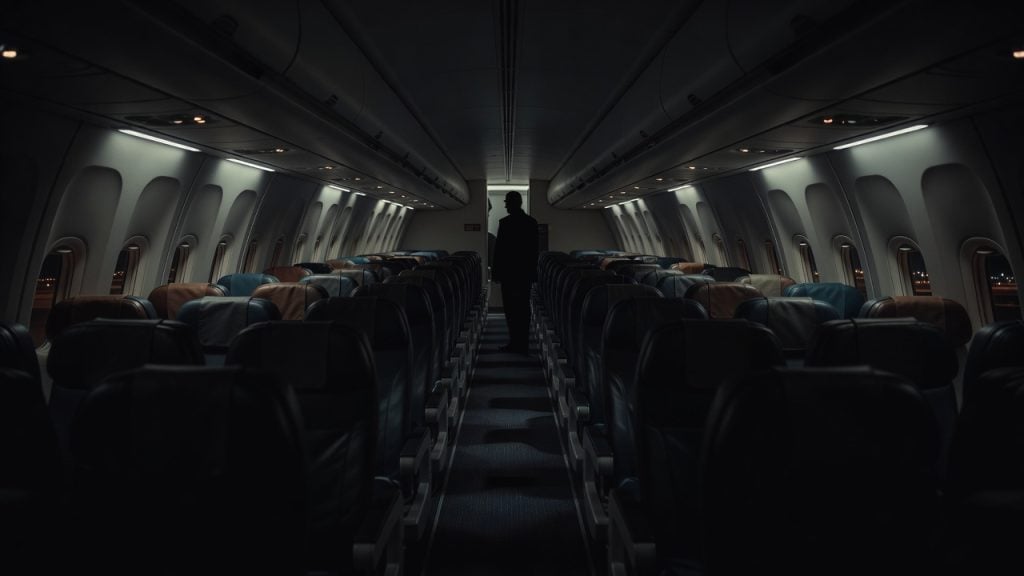
Shadowed aircraft cabin representing Special Mission Coverage Quiet Skies surveillance — ConspiracyRealist.com
Special Mission Coverage: Quiet Skies in the Cabin

Special Mission Coverage: Quiet Skies in the Cabin

At the checkpoint, the ritual is visible. Shoes in a bin. Laptop on the belt. A boarding pass that suddenly prints with a mark you never expected. But the deeper part of modern aviation security does not always happen under fluorescent lights. Sometimes it begins after the gate door closes, when the cabin settles into that strange pre-takeoff hush and someone on board is not just flying with you, but watching. For years, TSA’s Quiet Skies program was sold as enhanced screening for passengers who were not on the terrorist watchlist. The paperwork tells a darker story. By 2018, that screening had moved into the air itself through Federal Air Marshal Special Mission Coverage.

The Case For

Quiet Skies did not stop at the checkpoint

TSA’s own privacy records make the first point hard to dodge. The 2019 Privacy Impact Assessment for Secure Flight, Silent Partner, and Quiet Skies said Quiet Skies matches could trigger more than enhanced screening. They could also result in “observation by the TSA Federal Air Marshal Service (FAMS) while the individual is onboard the flight or in the airport.” That matters because Quiet Skies passengers were not, by TSA’s own definition, known or suspected terrorists merely because they matched the rule. They were travelers selected by intelligence-driven patterns, then moved into a surveillance layer built around live observation.

The paper trail gets even sharper in the 2022 OCIMS/WebEOC privacy update. TSA said WebEOC already maintained boards for people on Special Mission Coverage flights, and that the update added Silent Partner and Quiet Skies passenger information to an existing board that also held watchlist and co-traveler data. The same document said FAMS used Silent Partner and Quiet Skies data for flight coverage assessments. A temporary Quiet Skies match did not just mean extra swabbing at the checkpoint. It could help decide whether an air marshal mission would be flown.

A watchlist-style mission model was used on people who were not watchlisted

The strongest reason this story alarms civil-liberties critics comes from DHS’s own watchdog. In OIG-21-11, the Inspector General said TSA began Quiet Skies surveillance beyond the checkpoint in March 2018 “as part of its Federal Air Marshal Service’s Special Mission Coverage flights.” The same report said FAMS was using Special Mission Coverage guidance that applied to high-risk travelers on active federal watchlists, even though Quiet Skies passengers were described as unknown risks rather than confirmed watchlist subjects.

That is the hinge point. If Special Mission Coverage was designed for watchlisted known or suspected terrorists and then adapted to Quiet Skies, the government effectively borrowed a mission model built for one class of threat and applied it to another class of traveler without proving the two were equivalent. GAO’s 2019 Quiet Skies review adds another layer: senior FAMS officials said that after a flight with a Quiet Skies match, air marshals filed either a “nothing to report” entry or an after-action report if they observed suspicious activity. In other words, the surveillance engine was real enough to generate routine mission reporting, even when the result was officially nothing at all.

That architecture connects naturally to our earlier reporting on the Quiet Skies checklist air marshals used in the field and where those Quiet Skies reports landed inside OCIMS. Together, the documents describe a system where a traveler could be selected by an opaque rule, screened at the checkpoint, monitored in the airport or cabin, and written into an incident-management environment alongside watchlist and co-traveler data.

The Realist’s Eye

The documents show surveillance, not a secret arrest power

Still, a responsible reading has to separate mission creep from mythmaking. The same DHS records that make Quiet Skies unsettling also place limits on what it was. The 2019 PIA stressed that Quiet Skies rules were not used to deny boarding and that a match did not itself make someone a known or suspected terrorist. That distinction matters. A troubling surveillance regime is not automatically the same thing as a hidden no-fly system.

It also matters that Special Mission Coverage was part of an overt security bureaucracy, not a rogue shadow network discovered only through leaks. OCIMS was documented in a privacy assessment. Secure Flight’s Quiet Skies logic was documented in another. GAO and the Inspector General both reviewed the program. That does not erase the privacy problem, but it weakens the claim that this was wholly off-book.

Even the watchdogs found confusion more than airtight control

The strongest counterargument comes from the government’s own criticism of itself. GAO said TSA had not identified a comprehensive way to measure whether Quiet Skies rules actually improved aviation security. OIG went further, saying TSA lacked centralized oversight and had not developed outcome-based performance measures to show FAMS surveillance was effective. The watchdogs were not describing a precision machine that quietly neutralized threats. They were describing a program that collected observations, generated reports, and consumed resources without clearly demonstrating value.

There is also a timeline problem for the broadest conspiracy version. OIG noted that FAMS surveillance began in March 2018, while the public privacy update acknowledging that surveillance did not arrive until April 2019. That delay is troubling. But it suggests bureaucratic lag and internal disagreement as much as omnipotent concealment. And in June 2025, DHS rescinded Quiet Skies, saying the program had failed to prevent a terrorist attack and had lost public trust. The surveillance layer was real, the oversight record was weak, and the public still cannot see enough of the decision logic to know how often Special Mission Coverage genuinely changed an outcome.

What We Know For Certain

  • TSA’s 2019 Quiet Skies privacy assessment said a Quiet Skies match could lead to FAMS observation onboard a flight or in the airport.
  • The 2022 OCIMS privacy update said WebEOC maintained information on individuals on Special Mission Coverage flights and added Silent Partner/Quiet Skies passenger data to a related board.
  • DHS OIG reported that TSA began Quiet Skies surveillance beyond checkpoints in March 2018 as part of FAMS Special Mission Coverage flights.
  • GAO reported that air marshals filed either “nothing to report” entries or after-action reports after flights involving Quiet Skies matches.
  • DHS rescinded Quiet Skies on June 5, 2025.

The Unanswered Questions

  • How often did a Quiet Skies match actually trigger Special Mission Coverage rather than checkpoint screening alone?
  • What standards determined when FAMS observation produced a routine “nothing to report” entry versus a more durable intelligence or incident record?
  • How widely could Quiet Skies-linked Special Mission Coverage records be viewed once they entered WebEOC or related systems?
  • Did FAMS ever receive a Quiet Skies-specific mission doctrine, or were watchlist-era Special Mission Coverage procedures used longer than the public record shows?
  • How much of Quiet Skies survived operationally under other vetting or flight-coverage workflows after the 2025 rescission?

The Closer — You Decide

Some security programs stop a person at the door. Quiet Skies sometimes let the person board and sent the state in with them. The files show a surveillance layer tied to flights and air marshals, built on rules the public could barely inspect. The checkpoint was visible. The cabin mattered. The documents are on the table. You decide.

dive down the rabbit hole

Special Mission Coverage: Quiet Skies in the Cabin

S-FX.com
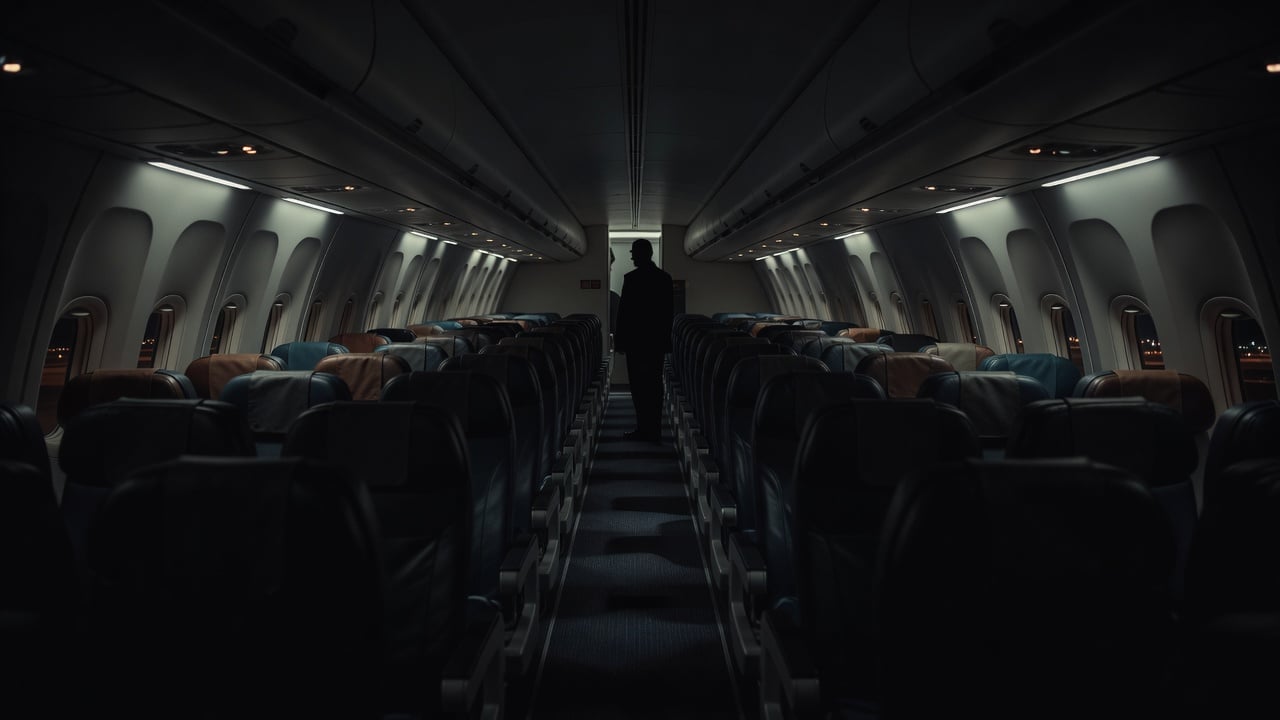
Shadowed aircraft cabin representing Special Mission Coverage Quiet Skies surveillance — ConspiracyRealist.com

Special Mission Coverage: Quiet Skies in the Cabin

At the checkpoint, the ritual is visible. Shoes in a bin. Laptop on the belt. A boarding pass that suddenly prints with a mark you never expected. But the deeper part of modern aviation security does not always happen under fluorescent lights. Sometimes it begins after the gate door closes, when the cabin settles into that strange pre-takeoff hush and someone on board is not just flying with you, but watching. For years, TSA’s Quiet Skies program was sold as enhanced screening for passengers who were not on the terrorist watchlist. The paperwork tells a darker story. By 2018, that screening had moved into the air itself through Federal Air Marshal Special Mission Coverage.

The Case For

Quiet Skies did not stop at the checkpoint

TSA’s own privacy records make the first point hard to dodge. The 2019 Privacy Impact Assessment for Secure Flight, Silent Partner, and Quiet Skies said Quiet Skies matches could trigger more than enhanced screening. They could also result in “observation by the TSA Federal Air Marshal Service (FAMS) while the individual is onboard the flight or in the airport.” That matters because Quiet Skies passengers were not, by TSA’s own definition, known or suspected terrorists merely because they matched the rule. They were travelers selected by intelligence-driven patterns, then moved into a surveillance layer built around live observation.

The paper trail gets even sharper in the 2022 OCIMS/WebEOC privacy update. TSA said WebEOC already maintained boards for people on Special Mission Coverage flights, and that the update added Silent Partner and Quiet Skies passenger information to an existing board that also held watchlist and co-traveler data. The same document said FAMS used Silent Partner and Quiet Skies data for flight coverage assessments. A temporary Quiet Skies match did not just mean extra swabbing at the checkpoint. It could help decide whether an air marshal mission would be flown.

A watchlist-style mission model was used on people who were not watchlisted

The strongest reason this story alarms civil-liberties critics comes from DHS’s own watchdog. In OIG-21-11, the Inspector General said TSA began Quiet Skies surveillance beyond the checkpoint in March 2018 “as part of its Federal Air Marshal Service’s Special Mission Coverage flights.” The same report said FAMS was using Special Mission Coverage guidance that applied to high-risk travelers on active federal watchlists, even though Quiet Skies passengers were described as unknown risks rather than confirmed watchlist subjects.

That is the hinge point. If Special Mission Coverage was designed for watchlisted known or suspected terrorists and then adapted to Quiet Skies, the government effectively borrowed a mission model built for one class of threat and applied it to another class of traveler without proving the two were equivalent. GAO’s 2019 Quiet Skies review adds another layer: senior FAMS officials said that after a flight with a Quiet Skies match, air marshals filed either a “nothing to report” entry or an after-action report if they observed suspicious activity. In other words, the surveillance engine was real enough to generate routine mission reporting, even when the result was officially nothing at all.

That architecture connects naturally to our earlier reporting on the Quiet Skies checklist air marshals used in the field and where those Quiet Skies reports landed inside OCIMS. Together, the documents describe a system where a traveler could be selected by an opaque rule, screened at the checkpoint, monitored in the airport or cabin, and written into an incident-management environment alongside watchlist and co-traveler data.

The Realist’s Eye

The documents show surveillance, not a secret arrest power

Still, a responsible reading has to separate mission creep from mythmaking. The same DHS records that make Quiet Skies unsettling also place limits on what it was. The 2019 PIA stressed that Quiet Skies rules were not used to deny boarding and that a match did not itself make someone a known or suspected terrorist. That distinction matters. A troubling surveillance regime is not automatically the same thing as a hidden no-fly system.

It also matters that Special Mission Coverage was part of an overt security bureaucracy, not a rogue shadow network discovered only through leaks. OCIMS was documented in a privacy assessment. Secure Flight’s Quiet Skies logic was documented in another. GAO and the Inspector General both reviewed the program. That does not erase the privacy problem, but it weakens the claim that this was wholly off-book.

Even the watchdogs found confusion more than airtight control

The strongest counterargument comes from the government’s own criticism of itself. GAO said TSA had not identified a comprehensive way to measure whether Quiet Skies rules actually improved aviation security. OIG went further, saying TSA lacked centralized oversight and had not developed outcome-based performance measures to show FAMS surveillance was effective. The watchdogs were not describing a precision machine that quietly neutralized threats. They were describing a program that collected observations, generated reports, and consumed resources without clearly demonstrating value.

There is also a timeline problem for the broadest conspiracy version. OIG noted that FAMS surveillance began in March 2018, while the public privacy update acknowledging that surveillance did not arrive until April 2019. That delay is troubling. But it suggests bureaucratic lag and internal disagreement as much as omnipotent concealment. And in June 2025, DHS rescinded Quiet Skies, saying the program had failed to prevent a terrorist attack and had lost public trust. The surveillance layer was real, the oversight record was weak, and the public still cannot see enough of the decision logic to know how often Special Mission Coverage genuinely changed an outcome.

What We Know For Certain

  • TSA’s 2019 Quiet Skies privacy assessment said a Quiet Skies match could lead to FAMS observation onboard a flight or in the airport.
  • The 2022 OCIMS privacy update said WebEOC maintained information on individuals on Special Mission Coverage flights and added Silent Partner/Quiet Skies passenger data to a related board.
  • DHS OIG reported that TSA began Quiet Skies surveillance beyond checkpoints in March 2018 as part of FAMS Special Mission Coverage flights.
  • GAO reported that air marshals filed either “nothing to report” entries or after-action reports after flights involving Quiet Skies matches.
  • DHS rescinded Quiet Skies on June 5, 2025.

The Unanswered Questions

  • How often did a Quiet Skies match actually trigger Special Mission Coverage rather than checkpoint screening alone?
  • What standards determined when FAMS observation produced a routine “nothing to report” entry versus a more durable intelligence or incident record?
  • How widely could Quiet Skies-linked Special Mission Coverage records be viewed once they entered WebEOC or related systems?
  • Did FAMS ever receive a Quiet Skies-specific mission doctrine, or were watchlist-era Special Mission Coverage procedures used longer than the public record shows?
  • How much of Quiet Skies survived operationally under other vetting or flight-coverage workflows after the 2025 rescission?

The Closer — You Decide

Some security programs stop a person at the door. Quiet Skies sometimes let the person board and sent the state in with them. The files show a surveillance layer tied to flights and air marshals, built on rules the public could barely inspect. The checkpoint was visible. The cabin mattered. The documents are on the table. You decide.

Special Mission Coverage: Quiet Skies in the Cabin

Shadowed aircraft cabin representing Special Mission Coverage Quiet Skies surveillance — ConspiracyRealist.com

Special Mission Coverage: Quiet Skies in the Cabin

At the checkpoint, the ritual is visible. Shoes in a bin. Laptop on the belt. A boarding pass that suddenly prints with a mark you never expected. But the deeper part of modern aviation security does not always happen under fluorescent lights. Sometimes it begins after the gate door closes, when the cabin settles into that strange pre-takeoff hush and someone on board is not just flying with you, but watching. For years, TSA’s Quiet Skies program was sold as enhanced screening for passengers who were not on the terrorist watchlist. The paperwork tells a darker story. By 2018, that screening had moved into the air itself through Federal Air Marshal Special Mission Coverage.

The Case For

Quiet Skies did not stop at the checkpoint

TSA’s own privacy records make the first point hard to dodge. The 2019 Privacy Impact Assessment for Secure Flight, Silent Partner, and Quiet Skies said Quiet Skies matches could trigger more than enhanced screening. They could also result in “observation by the TSA Federal Air Marshal Service (FAMS) while the individual is onboard the flight or in the airport.” That matters because Quiet Skies passengers were not, by TSA’s own definition, known or suspected terrorists merely because they matched the rule. They were travelers selected by intelligence-driven patterns, then moved into a surveillance layer built around live observation.

The paper trail gets even sharper in the 2022 OCIMS/WebEOC privacy update. TSA said WebEOC already maintained boards for people on Special Mission Coverage flights, and that the update added Silent Partner and Quiet Skies passenger information to an existing board that also held watchlist and co-traveler data. The same document said FAMS used Silent Partner and Quiet Skies data for flight coverage assessments. A temporary Quiet Skies match did not just mean extra swabbing at the checkpoint. It could help decide whether an air marshal mission would be flown.

A watchlist-style mission model was used on people who were not watchlisted

The strongest reason this story alarms civil-liberties critics comes from DHS’s own watchdog. In OIG-21-11, the Inspector General said TSA began Quiet Skies surveillance beyond the checkpoint in March 2018 “as part of its Federal Air Marshal Service’s Special Mission Coverage flights.” The same report said FAMS was using Special Mission Coverage guidance that applied to high-risk travelers on active federal watchlists, even though Quiet Skies passengers were described as unknown risks rather than confirmed watchlist subjects.

That is the hinge point. If Special Mission Coverage was designed for watchlisted known or suspected terrorists and then adapted to Quiet Skies, the government effectively borrowed a mission model built for one class of threat and applied it to another class of traveler without proving the two were equivalent. GAO’s 2019 Quiet Skies review adds another layer: senior FAMS officials said that after a flight with a Quiet Skies match, air marshals filed either a “nothing to report” entry or an after-action report if they observed suspicious activity. In other words, the surveillance engine was real enough to generate routine mission reporting, even when the result was officially nothing at all.

That architecture connects naturally to our earlier reporting on the Quiet Skies checklist air marshals used in the field and where those Quiet Skies reports landed inside OCIMS. Together, the documents describe a system where a traveler could be selected by an opaque rule, screened at the checkpoint, monitored in the airport or cabin, and written into an incident-management environment alongside watchlist and co-traveler data.

The Realist’s Eye

The documents show surveillance, not a secret arrest power

Still, a responsible reading has to separate mission creep from mythmaking. The same DHS records that make Quiet Skies unsettling also place limits on what it was. The 2019 PIA stressed that Quiet Skies rules were not used to deny boarding and that a match did not itself make someone a known or suspected terrorist. That distinction matters. A troubling surveillance regime is not automatically the same thing as a hidden no-fly system.

It also matters that Special Mission Coverage was part of an overt security bureaucracy, not a rogue shadow network discovered only through leaks. OCIMS was documented in a privacy assessment. Secure Flight’s Quiet Skies logic was documented in another. GAO and the Inspector General both reviewed the program. That does not erase the privacy problem, but it weakens the claim that this was wholly off-book.

Even the watchdogs found confusion more than airtight control

The strongest counterargument comes from the government’s own criticism of itself. GAO said TSA had not identified a comprehensive way to measure whether Quiet Skies rules actually improved aviation security. OIG went further, saying TSA lacked centralized oversight and had not developed outcome-based performance measures to show FAMS surveillance was effective. The watchdogs were not describing a precision machine that quietly neutralized threats. They were describing a program that collected observations, generated reports, and consumed resources without clearly demonstrating value.

There is also a timeline problem for the broadest conspiracy version. OIG noted that FAMS surveillance began in March 2018, while the public privacy update acknowledging that surveillance did not arrive until April 2019. That delay is troubling. But it suggests bureaucratic lag and internal disagreement as much as omnipotent concealment. And in June 2025, DHS rescinded Quiet Skies, saying the program had failed to prevent a terrorist attack and had lost public trust. The surveillance layer was real, the oversight record was weak, and the public still cannot see enough of the decision logic to know how often Special Mission Coverage genuinely changed an outcome.

What We Know For Certain

  • TSA’s 2019 Quiet Skies privacy assessment said a Quiet Skies match could lead to FAMS observation onboard a flight or in the airport.
  • The 2022 OCIMS privacy update said WebEOC maintained information on individuals on Special Mission Coverage flights and added Silent Partner/Quiet Skies passenger data to a related board.
  • DHS OIG reported that TSA began Quiet Skies surveillance beyond checkpoints in March 2018 as part of FAMS Special Mission Coverage flights.
  • GAO reported that air marshals filed either “nothing to report” entries or after-action reports after flights involving Quiet Skies matches.
  • DHS rescinded Quiet Skies on June 5, 2025.

The Unanswered Questions

  • How often did a Quiet Skies match actually trigger Special Mission Coverage rather than checkpoint screening alone?
  • What standards determined when FAMS observation produced a routine “nothing to report” entry versus a more durable intelligence or incident record?
  • How widely could Quiet Skies-linked Special Mission Coverage records be viewed once they entered WebEOC or related systems?
  • Did FAMS ever receive a Quiet Skies-specific mission doctrine, or were watchlist-era Special Mission Coverage procedures used longer than the public record shows?
  • How much of Quiet Skies survived operationally under other vetting or flight-coverage workflows after the 2025 rescission?

The Closer — You Decide

Some security programs stop a person at the door. Quiet Skies sometimes let the person board and sent the state in with them. The files show a surveillance layer tied to flights and air marshals, built on rules the public could barely inspect. The checkpoint was visible. The cabin mattered. The documents are on the table. You decide.

Table of contents