Menu

The Guatemalan Syphilis Experiment: A Dark Chapter in Medical Ethics

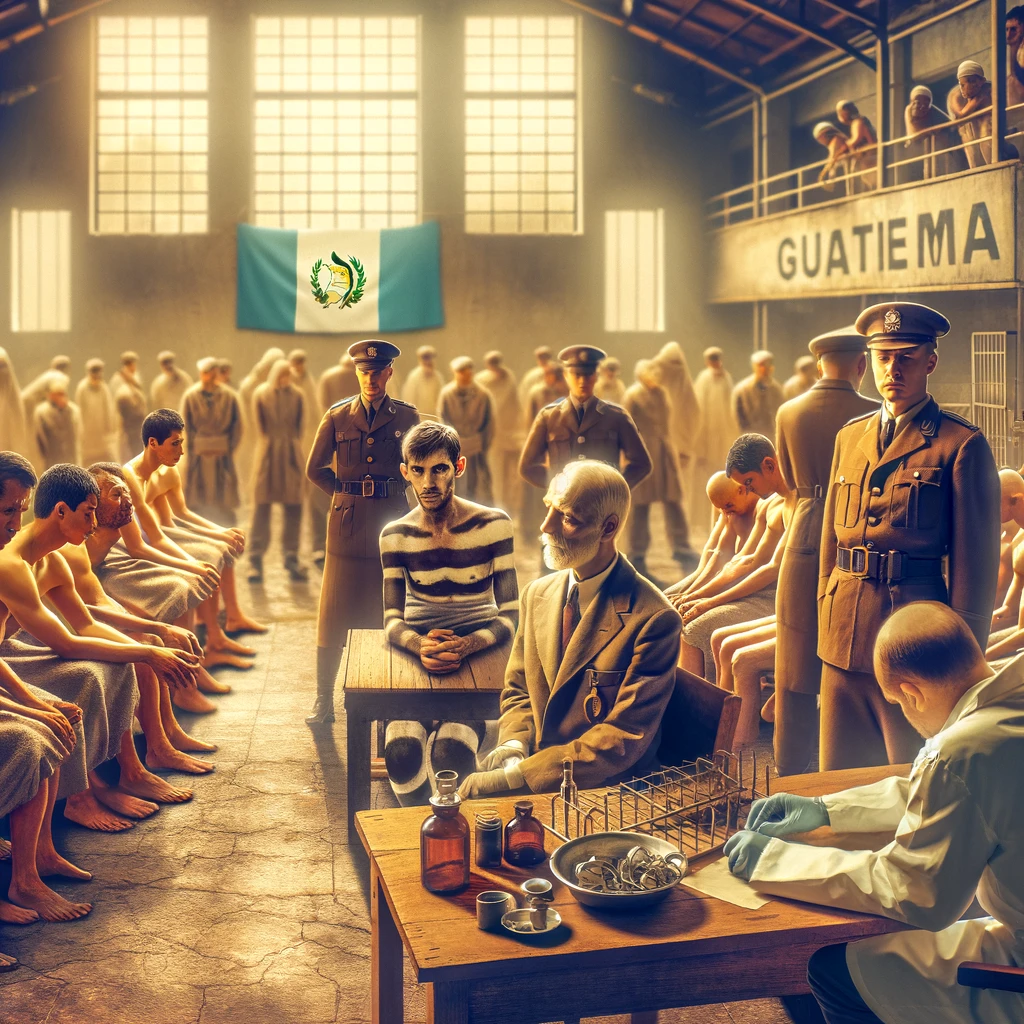
A 1940s medical setting in Guatemala showing researchers and vulnerable subjects, including prisoners and patients, highlighting the unethical nature of the Guatemalan Syphilis Experiment.
The Guatemalan Syphilis Experiment depicted in a 1940s medical setting with researchers and vulnerable subjects such as prisoners and patients, reflecting the unethical practices of the study.

The Guatemalan Syphilis Experiment was a series of medical studies conducted by the U.S. Public Health Service (PHS) and the Pan American Sanitary Bureau, with support from the Guatemalan government. The experiments took place in Guatemala City and targeted vulnerable groups, including prisoners, soldiers, and patients in mental health institutions. The primary objective was to investigate whether penicillin could be used not only to treat syphilis but also to prevent the infection.

The researchers deliberately infected the subjects with syphilis and other STIs through various methods, including direct inoculation and forced sexual contact with infected prostitutes. The subjects were then monitored and treated with penicillin to assess its efficacy. However, many subjects were not adequately treated, and some were left with severe health complications or died as a result of the infections.

The unethical nature of the study, including the lack of informed consent and the exploitation of vulnerable populations, remained hidden for decades. The experiment came to public attention in 2010, when historian Susan Reverby discovered documents detailing the study while researching the Tuskegee Syphilis Study. The revelation sparked widespread condemnation and led to official apologies from the U.S. government.

Most Popular Explanations Behind the Guatemalan Syphilis Experiment

Medical Curiosity and Public Health Goals

One explanation for the Guatemalan Syphilis Experiment lies in the context of medical curiosity and public health goals. In the 1940s, syphilis was a major public health concern, and penicillin had recently been discovered as an effective treatment. Researchers were eager to explore the drug’s potential not only for curing syphilis but also for preventing its spread. The experiment aimed to provide scientific data that could inform public health strategies and improve treatment protocols.

Ethical Lapses and Racism

The experiment is also explained by significant ethical lapses and underlying racism. The researchers exploited marginalized and vulnerable populations, viewing them as expendable and less deserving of ethical consideration. The Guatemalan subjects were seen as suitable for such experimentation due to their perceived inferiority and lack of power. This mindset reflects the broader context of racial and colonial attitudes prevalent at the time, where non-white populations were often subjected to unethical medical practices.

International Collaboration and Influence

The experiment was facilitated by international collaboration and influence. The U.S. researchers worked closely with Guatemalan officials, who provided access to institutions and subjects. This collaboration was driven by mutual interests in advancing medical knowledge and addressing public health challenges. However, the power dynamics were heavily skewed in favor of the U.S., allowing for unethical practices to be conducted with little oversight or accountability.

Variations of the Guatemalan Syphilis Experiment Conspiracy Theory

Deliberate Biological Warfare

One variation of the conspiracy theory suggests that the Guatemalan Syphilis Experiment was a form of deliberate biological warfare against the Guatemalan population. Proponents of this theory argue that the U.S. government intentionally infected individuals to weaken the population and maintain control over the region. This theory is fueled by historical instances of unethical medical experimentation and the covert operations conducted by the U.S. in Latin America during the Cold War.

Eugenics and Population Control

Another conspiracy theory posits that the experiment was part of a broader eugenics agenda aimed at controlling the population. This theory suggests that the intentional infections were designed to reduce the fertility and health of the Guatemalan population, aligning with eugenic ideologies that sought to improve the genetic quality of the population by targeting perceived “undesirable” groups. While there is no concrete evidence to support this theory, it reflects the deep mistrust of governmental and medical institutions.

Cover-Up and Suppression

A more plausible variation of the conspiracy theory revolves around the cover-up and suppression of the experiment’s details. Proponents argue that the U.S. government deliberately suppressed information about the study to avoid accountability and protect its reputation. This theory is supported by the fact that the experiment remained largely unknown until documents were discovered in 2010. The subsequent apologies and settlements have done little to alleviate suspicions of a deliberate cover-up.

Evidence Supporting the Unethical Nature of the Experiment

Historical Documentation

Extensive historical documentation provides clear evidence of the unethical nature of the Guatemalan Syphilis Experiment. The documents uncovered by Susan Reverby include detailed records of the experiment’s design, implementation, and outcomes. These records reveal the deliberate infection of subjects without their informed consent and the inadequate treatment provided to many participants. The documentation underscores the systematic exploitation of vulnerable populations for scientific research.

Official Apologies and Acknowledgments

The U.S. government’s official apologies and acknowledgments further support the unethical nature of the experiment. In 2010, President Barack Obama and Secretary of State Hillary Clinton issued formal apologies to the Guatemalan government and the victims of the study. The apologies recognized the egregious violations of medical ethics and human rights, affirming the need for accountability and justice. These official statements highlight the recognition of the experiment’s unethical conduct at the highest levels of government.

Legal Settlements and Reparations

Legal settlements and reparations provide additional evidence of the experiment’s unethical nature. In 2012, the U.S. government agreed to pay $1.8 million in settlements to the victims and their families. While the amount is relatively small compared to the suffering endured, it represents an acknowledgment of wrongdoing and an attempt to provide some measure of justice. The settlements underscore the recognition of the harm caused by the experiment and the need for reparations.

Evidence Opposing the Validity of Conspiracy Theories

Lack of Concrete Evidence

The conspiracy theories surrounding the Guatemalan Syphilis Experiment lack concrete evidence. Claims of deliberate biological warfare or eugenics agendas are not supported by the historical documentation or the statements of those involved in the study. While the unethical nature of the experiment is well-documented, there is no credible evidence to suggest that it was part of a larger conspiracy to harm the Guatemalan population intentionally.

Ethical Reforms and Oversight

The experiment’s exposure and the subsequent ethical reforms and oversight mechanisms provide evidence against the validity of conspiracy theories. The revelations about the Guatemalan Syphilis Experiment led to significant changes in medical research ethics, including the establishment of Institutional Review Boards (IRBs) and the implementation of strict informed consent processes. These reforms reflect a commitment to preventing similar abuses in the future and ensuring that medical research is conducted ethically.

International Condemnation

The international condemnation of the Guatemalan Syphilis Experiment further undermines the validity of conspiracy theories. The experiment was widely condemned by medical and human rights organizations worldwide, emphasizing the consensus that the study was a severe ethical violation. This condemnation highlights the global recognition of the experiment’s wrongdoing and the shared commitment to upholding ethical standards in medical research.

Impact on Medical Ethics and Research

The Guatemalan Syphilis Experiment had a profound impact on the field of medical ethics and research. It underscored the necessity of informed consent, transparency, and the protection of vulnerable populations in scientific research. The experiment’s legacy includes:

Ethical Guidelines and Informed Consent

The unethical conduct of the Guatemalan Syphilis Experiment prompted the development of stringent ethical guidelines and informed consent processes. The Declaration of Helsinki, adopted in 1964, established fundamental principles for conducting medical research involving human subjects, including the requirement for informed consent. These guidelines have become the cornerstone of ethical research practices, ensuring that participants are fully aware of the risks and benefits of a study before consenting to participate.

Institutional Review Boards (IRBs)

The establishment of Institutional Review Boards (IRBs) was another significant outcome of the Guatemalan Syphilis Experiment. IRBs are responsible for reviewing and overseeing research involving human subjects to ensure ethical standards are met. These boards play a critical role in protecting the rights and welfare of participants, preventing the recurrence of unethical practices observed in the Guatemalan study.

Public Awareness and Accountability

The exposure of the Guatemalan Syphilis Experiment has also increased public awareness and accountability in medical research. The revelations have led to greater scrutiny of research practices and a demand for transparency and accountability from researchers and institutions. This increased awareness has helped to prevent similar abuses and promote ethical conduct in scientific inquiry.

Human Rights and Medical Ethics Education

The Guatemalan Syphilis Experiment has also influenced the education of healthcare professionals and researchers. Medical and research ethics have become integral components of professional training, emphasizing the importance of respecting human rights and conducting research ethically. This education aims to instill a sense of responsibility and ethical conduct in future generations of healthcare professionals and researchers.

Conclusion

The Guatemalan Syphilis Experiment stands as a stark reminder of the dangers of unethical medical research and the exploitation of vulnerable populations. It highlights the importance of informed consent, transparency, and respect for human rights in scientific inquiry. The study’s legacy continues to shape medical ethics and research practices, emphasizing the need for vigilance and accountability to prevent similar abuses in the future.

dive down the rabbit hole

The Guatemalan Syphilis Experiment: A Dark Chapter in Medical Ethics

A 1940s medical setting in Guatemala showing researchers and vulnerable subjects, including prisoners and patients, highlighting the unethical nature of the Guatemalan Syphilis Experiment.

The Guatemalan Syphilis Experiment was a series of medical studies conducted by the U.S. Public Health Service (PHS) and the Pan American Sanitary Bureau, with support from the Guatemalan government. The experiments took place in Guatemala City and targeted vulnerable groups, including prisoners, soldiers, and patients in mental health institutions. The primary objective was to investigate whether penicillin could be used not only to treat syphilis but also to prevent the infection.

The researchers deliberately infected the subjects with syphilis and other STIs through various methods, including direct inoculation and forced sexual contact with infected prostitutes. The subjects were then monitored and treated with penicillin to assess its efficacy. However, many subjects were not adequately treated, and some were left with severe health complications or died as a result of the infections.

The unethical nature of the study, including the lack of informed consent and the exploitation of vulnerable populations, remained hidden for decades. The experiment came to public attention in 2010, when historian Susan Reverby discovered documents detailing the study while researching the Tuskegee Syphilis Study. The revelation sparked widespread condemnation and led to official apologies from the U.S. government.

Most Popular Explanations Behind the Guatemalan Syphilis Experiment

Medical Curiosity and Public Health Goals

One explanation for the Guatemalan Syphilis Experiment lies in the context of medical curiosity and public health goals. In the 1940s, syphilis was a major public health concern, and penicillin had recently been discovered as an effective treatment. Researchers were eager to explore the drug’s potential not only for curing syphilis but also for preventing its spread. The experiment aimed to provide scientific data that could inform public health strategies and improve treatment protocols.

Ethical Lapses and Racism

The experiment is also explained by significant ethical lapses and underlying racism. The researchers exploited marginalized and vulnerable populations, viewing them as expendable and less deserving of ethical consideration. The Guatemalan subjects were seen as suitable for such experimentation due to their perceived inferiority and lack of power. This mindset reflects the broader context of racial and colonial attitudes prevalent at the time, where non-white populations were often subjected to unethical medical practices.

International Collaboration and Influence

The experiment was facilitated by international collaboration and influence. The U.S. researchers worked closely with Guatemalan officials, who provided access to institutions and subjects. This collaboration was driven by mutual interests in advancing medical knowledge and addressing public health challenges. However, the power dynamics were heavily skewed in favor of the U.S., allowing for unethical practices to be conducted with little oversight or accountability.

Variations of the Guatemalan Syphilis Experiment Conspiracy Theory

Deliberate Biological Warfare

One variation of the conspiracy theory suggests that the Guatemalan Syphilis Experiment was a form of deliberate biological warfare against the Guatemalan population. Proponents of this theory argue that the U.S. government intentionally infected individuals to weaken the population and maintain control over the region. This theory is fueled by historical instances of unethical medical experimentation and the covert operations conducted by the U.S. in Latin America during the Cold War.

Eugenics and Population Control

Another conspiracy theory posits that the experiment was part of a broader eugenics agenda aimed at controlling the population. This theory suggests that the intentional infections were designed to reduce the fertility and health of the Guatemalan population, aligning with eugenic ideologies that sought to improve the genetic quality of the population by targeting perceived “undesirable” groups. While there is no concrete evidence to support this theory, it reflects the deep mistrust of governmental and medical institutions.

Cover-Up and Suppression

A more plausible variation of the conspiracy theory revolves around the cover-up and suppression of the experiment’s details. Proponents argue that the U.S. government deliberately suppressed information about the study to avoid accountability and protect its reputation. This theory is supported by the fact that the experiment remained largely unknown until documents were discovered in 2010. The subsequent apologies and settlements have done little to alleviate suspicions of a deliberate cover-up.

Evidence Supporting the Unethical Nature of the Experiment

Historical Documentation

Extensive historical documentation provides clear evidence of the unethical nature of the Guatemalan Syphilis Experiment. The documents uncovered by Susan Reverby include detailed records of the experiment’s design, implementation, and outcomes. These records reveal the deliberate infection of subjects without their informed consent and the inadequate treatment provided to many participants. The documentation underscores the systematic exploitation of vulnerable populations for scientific research.

Official Apologies and Acknowledgments

The U.S. government’s official apologies and acknowledgments further support the unethical nature of the experiment. In 2010, President Barack Obama and Secretary of State Hillary Clinton issued formal apologies to the Guatemalan government and the victims of the study. The apologies recognized the egregious violations of medical ethics and human rights, affirming the need for accountability and justice. These official statements highlight the recognition of the experiment’s unethical conduct at the highest levels of government.

Legal Settlements and Reparations

Legal settlements and reparations provide additional evidence of the experiment’s unethical nature. In 2012, the U.S. government agreed to pay $1.8 million in settlements to the victims and their families. While the amount is relatively small compared to the suffering endured, it represents an acknowledgment of wrongdoing and an attempt to provide some measure of justice. The settlements underscore the recognition of the harm caused by the experiment and the need for reparations.

Evidence Opposing the Validity of Conspiracy Theories

Lack of Concrete Evidence

The conspiracy theories surrounding the Guatemalan Syphilis Experiment lack concrete evidence. Claims of deliberate biological warfare or eugenics agendas are not supported by the historical documentation or the statements of those involved in the study. While the unethical nature of the experiment is well-documented, there is no credible evidence to suggest that it was part of a larger conspiracy to harm the Guatemalan population intentionally.

Ethical Reforms and Oversight

The experiment’s exposure and the subsequent ethical reforms and oversight mechanisms provide evidence against the validity of conspiracy theories. The revelations about the Guatemalan Syphilis Experiment led to significant changes in medical research ethics, including the establishment of Institutional Review Boards (IRBs) and the implementation of strict informed consent processes. These reforms reflect a commitment to preventing similar abuses in the future and ensuring that medical research is conducted ethically.

International Condemnation

The international condemnation of the Guatemalan Syphilis Experiment further undermines the validity of conspiracy theories. The experiment was widely condemned by medical and human rights organizations worldwide, emphasizing the consensus that the study was a severe ethical violation. This condemnation highlights the global recognition of the experiment’s wrongdoing and the shared commitment to upholding ethical standards in medical research.

Impact on Medical Ethics and Research

The Guatemalan Syphilis Experiment had a profound impact on the field of medical ethics and research. It underscored the necessity of informed consent, transparency, and the protection of vulnerable populations in scientific research. The experiment’s legacy includes:

Ethical Guidelines and Informed Consent

The unethical conduct of the Guatemalan Syphilis Experiment prompted the development of stringent ethical guidelines and informed consent processes. The Declaration of Helsinki, adopted in 1964, established fundamental principles for conducting medical research involving human subjects, including the requirement for informed consent. These guidelines have become the cornerstone of ethical research practices, ensuring that participants are fully aware of the risks and benefits of a study before consenting to participate.

Institutional Review Boards (IRBs)

The establishment of Institutional Review Boards (IRBs) was another significant outcome of the Guatemalan Syphilis Experiment. IRBs are responsible for reviewing and overseeing research involving human subjects to ensure ethical standards are met. These boards play a critical role in protecting the rights and welfare of participants, preventing the recurrence of unethical practices observed in the Guatemalan study.

Public Awareness and Accountability

The exposure of the Guatemalan Syphilis Experiment has also increased public awareness and accountability in medical research. The revelations have led to greater scrutiny of research practices and a demand for transparency and accountability from researchers and institutions. This increased awareness has helped to prevent similar abuses and promote ethical conduct in scientific inquiry.

Human Rights and Medical Ethics Education

The Guatemalan Syphilis Experiment has also influenced the education of healthcare professionals and researchers. Medical and research ethics have become integral components of professional training, emphasizing the importance of respecting human rights and conducting research ethically. This education aims to instill a sense of responsibility and ethical conduct in future generations of healthcare professionals and researchers.

Conclusion

The Guatemalan Syphilis Experiment stands as a stark reminder of the dangers of unethical medical research and the exploitation of vulnerable populations. It highlights the importance of informed consent, transparency, and respect for human rights in scientific inquiry. The study’s legacy continues to shape medical ethics and research practices, emphasizing the need for vigilance and accountability to prevent similar abuses in the future.

Table of contents

The Guatemalan Syphilis Experiment: A Dark Chapter in Medical Ethics

The Guatemalan Syphilis Experiment was a series of medical studies conducted by the U.S. Public Health Service (PHS) and the Pan American Sanitary Bureau, with support from the Guatemalan government. The experiments took place in Guatemala City and targeted vulnerable groups, including prisoners, soldiers, and patients in mental health institutions. The primary objective was to investigate whether penicillin could be used not only to treat syphilis but also to prevent the infection. The researchers deliberately infected the subjects with syphilis and other STIs through various methods, including direct inoculation and forced sexual contact with infected prostitutes. The subjects were…

S-FX.com
A 1940s medical setting in Guatemala showing researchers and vulnerable subjects, including prisoners and patients, highlighting the unethical nature of the Guatemalan Syphilis Experiment.
The Guatemalan Syphilis Experiment depicted in a 1940s medical setting with researchers and vulnerable subjects such as prisoners and patients, reflecting the unethical practices of the study.

The Guatemalan Syphilis Experiment was a series of medical studies conducted by the U.S. Public Health Service (PHS) and the Pan American Sanitary Bureau, with support from the Guatemalan government. The experiments took place in Guatemala City and targeted vulnerable groups, including prisoners, soldiers, and patients in mental health institutions. The primary objective was to investigate whether penicillin could be used not only to treat syphilis but also to prevent the infection.

The researchers deliberately infected the subjects with syphilis and other STIs through various methods, including direct inoculation and forced sexual contact with infected prostitutes. The subjects were then monitored and treated with penicillin to assess its efficacy. However, many subjects were not adequately treated, and some were left with severe health complications or died as a result of the infections.

The unethical nature of the study, including the lack of informed consent and the exploitation of vulnerable populations, remained hidden for decades. The experiment came to public attention in 2010, when historian Susan Reverby discovered documents detailing the study while researching the Tuskegee Syphilis Study. The revelation sparked widespread condemnation and led to official apologies from the U.S. government.

Most Popular Explanations Behind the Guatemalan Syphilis Experiment

Medical Curiosity and Public Health Goals

One explanation for the Guatemalan Syphilis Experiment lies in the context of medical curiosity and public health goals. In the 1940s, syphilis was a major public health concern, and penicillin had recently been discovered as an effective treatment. Researchers were eager to explore the drug’s potential not only for curing syphilis but also for preventing its spread. The experiment aimed to provide scientific data that could inform public health strategies and improve treatment protocols.

Ethical Lapses and Racism

The experiment is also explained by significant ethical lapses and underlying racism. The researchers exploited marginalized and vulnerable populations, viewing them as expendable and less deserving of ethical consideration. The Guatemalan subjects were seen as suitable for such experimentation due to their perceived inferiority and lack of power. This mindset reflects the broader context of racial and colonial attitudes prevalent at the time, where non-white populations were often subjected to unethical medical practices.

International Collaboration and Influence

The experiment was facilitated by international collaboration and influence. The U.S. researchers worked closely with Guatemalan officials, who provided access to institutions and subjects. This collaboration was driven by mutual interests in advancing medical knowledge and addressing public health challenges. However, the power dynamics were heavily skewed in favor of the U.S., allowing for unethical practices to be conducted with little oversight or accountability.

Variations of the Guatemalan Syphilis Experiment Conspiracy Theory

Deliberate Biological Warfare

One variation of the conspiracy theory suggests that the Guatemalan Syphilis Experiment was a form of deliberate biological warfare against the Guatemalan population. Proponents of this theory argue that the U.S. government intentionally infected individuals to weaken the population and maintain control over the region. This theory is fueled by historical instances of unethical medical experimentation and the covert operations conducted by the U.S. in Latin America during the Cold War.

Eugenics and Population Control

Another conspiracy theory posits that the experiment was part of a broader eugenics agenda aimed at controlling the population. This theory suggests that the intentional infections were designed to reduce the fertility and health of the Guatemalan population, aligning with eugenic ideologies that sought to improve the genetic quality of the population by targeting perceived “undesirable” groups. While there is no concrete evidence to support this theory, it reflects the deep mistrust of governmental and medical institutions.

Cover-Up and Suppression

A more plausible variation of the conspiracy theory revolves around the cover-up and suppression of the experiment’s details. Proponents argue that the U.S. government deliberately suppressed information about the study to avoid accountability and protect its reputation. This theory is supported by the fact that the experiment remained largely unknown until documents were discovered in 2010. The subsequent apologies and settlements have done little to alleviate suspicions of a deliberate cover-up.

Evidence Supporting the Unethical Nature of the Experiment

Historical Documentation

Extensive historical documentation provides clear evidence of the unethical nature of the Guatemalan Syphilis Experiment. The documents uncovered by Susan Reverby include detailed records of the experiment’s design, implementation, and outcomes. These records reveal the deliberate infection of subjects without their informed consent and the inadequate treatment provided to many participants. The documentation underscores the systematic exploitation of vulnerable populations for scientific research.

Official Apologies and Acknowledgments

The U.S. government’s official apologies and acknowledgments further support the unethical nature of the experiment. In 2010, President Barack Obama and Secretary of State Hillary Clinton issued formal apologies to the Guatemalan government and the victims of the study. The apologies recognized the egregious violations of medical ethics and human rights, affirming the need for accountability and justice. These official statements highlight the recognition of the experiment’s unethical conduct at the highest levels of government.

Legal Settlements and Reparations

Legal settlements and reparations provide additional evidence of the experiment’s unethical nature. In 2012, the U.S. government agreed to pay $1.8 million in settlements to the victims and their families. While the amount is relatively small compared to the suffering endured, it represents an acknowledgment of wrongdoing and an attempt to provide some measure of justice. The settlements underscore the recognition of the harm caused by the experiment and the need for reparations.

Evidence Opposing the Validity of Conspiracy Theories

Lack of Concrete Evidence

The conspiracy theories surrounding the Guatemalan Syphilis Experiment lack concrete evidence. Claims of deliberate biological warfare or eugenics agendas are not supported by the historical documentation or the statements of those involved in the study. While the unethical nature of the experiment is well-documented, there is no credible evidence to suggest that it was part of a larger conspiracy to harm the Guatemalan population intentionally.

Ethical Reforms and Oversight

The experiment’s exposure and the subsequent ethical reforms and oversight mechanisms provide evidence against the validity of conspiracy theories. The revelations about the Guatemalan Syphilis Experiment led to significant changes in medical research ethics, including the establishment of Institutional Review Boards (IRBs) and the implementation of strict informed consent processes. These reforms reflect a commitment to preventing similar abuses in the future and ensuring that medical research is conducted ethically.

International Condemnation

The international condemnation of the Guatemalan Syphilis Experiment further undermines the validity of conspiracy theories. The experiment was widely condemned by medical and human rights organizations worldwide, emphasizing the consensus that the study was a severe ethical violation. This condemnation highlights the global recognition of the experiment’s wrongdoing and the shared commitment to upholding ethical standards in medical research.

Impact on Medical Ethics and Research

The Guatemalan Syphilis Experiment had a profound impact on the field of medical ethics and research. It underscored the necessity of informed consent, transparency, and the protection of vulnerable populations in scientific research. The experiment’s legacy includes:

Ethical Guidelines and Informed Consent

The unethical conduct of the Guatemalan Syphilis Experiment prompted the development of stringent ethical guidelines and informed consent processes. The Declaration of Helsinki, adopted in 1964, established fundamental principles for conducting medical research involving human subjects, including the requirement for informed consent. These guidelines have become the cornerstone of ethical research practices, ensuring that participants are fully aware of the risks and benefits of a study before consenting to participate.

Institutional Review Boards (IRBs)

The establishment of Institutional Review Boards (IRBs) was another significant outcome of the Guatemalan Syphilis Experiment. IRBs are responsible for reviewing and overseeing research involving human subjects to ensure ethical standards are met. These boards play a critical role in protecting the rights and welfare of participants, preventing the recurrence of unethical practices observed in the Guatemalan study.

Public Awareness and Accountability

The exposure of the Guatemalan Syphilis Experiment has also increased public awareness and accountability in medical research. The revelations have led to greater scrutiny of research practices and a demand for transparency and accountability from researchers and institutions. This increased awareness has helped to prevent similar abuses and promote ethical conduct in scientific inquiry.

Human Rights and Medical Ethics Education

The Guatemalan Syphilis Experiment has also influenced the education of healthcare professionals and researchers. Medical and research ethics have become integral components of professional training, emphasizing the importance of respecting human rights and conducting research ethically. This education aims to instill a sense of responsibility and ethical conduct in future generations of healthcare professionals and researchers.

Conclusion

The Guatemalan Syphilis Experiment stands as a stark reminder of the dangers of unethical medical research and the exploitation of vulnerable populations. It highlights the importance of informed consent, transparency, and respect for human rights in scientific inquiry. The study’s legacy continues to shape medical ethics and research practices, emphasizing the need for vigilance and accountability to prevent similar abuses in the future.