Menu

The Tuskegee Experiment: A Dark Chapter in Medical History

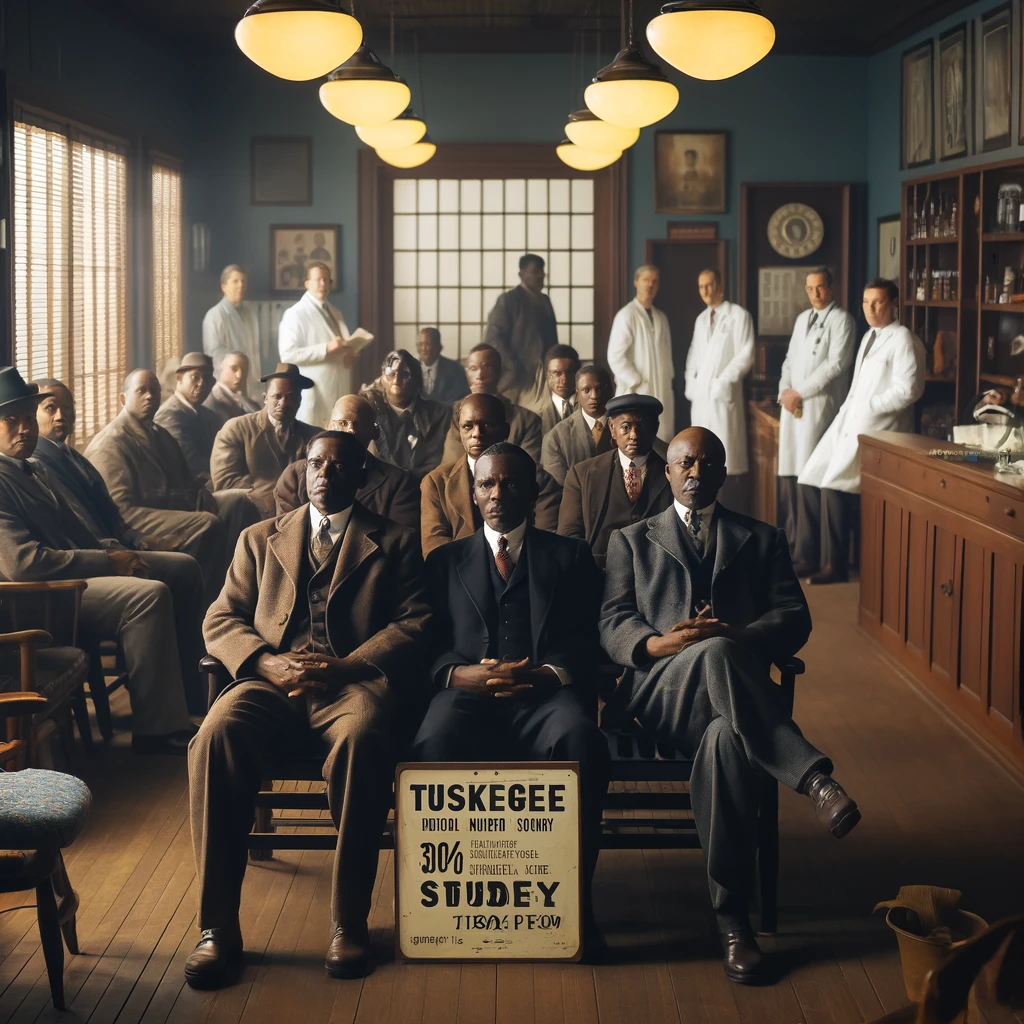
A historical medical study scene from the 1930s showing African American men sitting in a clinic waiting room with a sign reading "Tuskegee Study". The mood is serious and reflective.
A depiction of the Tuskegee Study, highlighting the serious and reflective atmosphere of the participants and medical staff.

What is the Tuskegee Experiment?

The Tuskegee Experiment began in 1932, during a time when syphilis was a major public health concern in the United States. The initial aim of the study was to record the natural history of syphilis to justify treatment programs for African Americans. The subjects involved were 600 African American men from Macon County, Alabama, 399 of whom had syphilis, while 201 did not. These men were promised free medical care, meals, and burial insurance in exchange for participating in the study. However, they were not informed of their diagnosis nor provided with adequate treatment, even when penicillin became the standard cure for syphilis in 1947.

The men were misled into believing they were receiving legitimate medical treatment for “bad blood,” a local term used to describe various ailments. Instead, they were subjected to various tests and procedures that provided no therapeutic benefit. The study’s unethical nature and the deliberate denial of treatment continued for 40 years until it was exposed by a whistleblower in 1972, leading to its termination.

Most Popular Explanation(s) Behind the Tuskegee Experiment

Medical Curiosity and Racial Bias

The Tuskegee Experiment is often explained through a combination of medical curiosity and deep-seated racial bias. At the time, there was a pervasive belief in scientific and medical communities that African Americans were biologically different from whites. This belief fueled the notion that syphilis might manifest differently in African Americans, and thus warranted separate study. The PHS wanted to understand the progression of the disease specifically in black men, under the guise of advancing medical knowledge.

Socioeconomic Exploitation

Another explanation revolves around socioeconomic exploitation. The men involved in the study were mostly poor sharecroppers with limited access to healthcare. Their socioeconomic status made them vulnerable to exploitation, as they were more likely to participate in the study due to the promise of free medical care and other benefits. This exploitation was compounded by a lack of informed consent, as the men were unaware of the true nature of the study and the risks involved.

Public Health Failures

The study also highlights significant public health failures. Despite the discovery of penicillin as an effective treatment for syphilis in the 1940s, the men in the study were deliberately denied this treatment. The PHS continued the study to observe the effects of untreated syphilis, prioritizing research outcomes over the well-being of the participants. This failure is a stark reminder of the consequences of placing scientific inquiry above human rights and ethical considerations.

Variations of the Tuskegee Experiment Conspiracy Theory

Government Conspiracy

One variation of the Tuskegee Experiment conspiracy theory suggests that the study was part of a larger government conspiracy to experiment on African Americans. Proponents of this theory argue that the government deliberately chose African American men as subjects to further their understanding of diseases and treatments, viewing them as expendable. This theory is fueled by historical instances of medical experimentation on marginalized communities and the lack of transparency surrounding the study.

Eugenics Agenda

Another variation posits that the Tuskegee Experiment was part of a eugenics agenda aimed at controlling the African American population. This theory is based on the belief that the study’s underlying goal was to observe the natural progression of syphilis in black men to support the idea of racial inferiority and justify discriminatory practices. The eugenics movement, which gained prominence in the early 20th century, advocated for the selective breeding of humans to improve the genetic composition of the population, often targeting minority groups.

Medical Experimentation as Warfare

A more extreme variation of the conspiracy theory suggests that the Tuskegee Experiment was a form of biological warfare against African Americans. This theory posits that the study was a deliberate attempt to inflict harm on the black community by allowing the disease to spread unchecked, thus weakening the population. While there is no concrete evidence to support this theory, it reflects the deep mistrust of the medical establishment and the government within the African American community.

Evidence Opposing the Validity of the Tuskegee Experiment Conspiracy Theories

Ethical Violations and Public Outcry

While conspiracy theories provide alternative explanations for the Tuskegee Experiment, the documented evidence points to severe ethical violations and systemic racism rather than a grand conspiracy. The study’s unethical nature was widely condemned once it came to light, leading to public outcry and significant changes in medical research ethics. The Belmont Report, published in 1979, established ethical principles and guidelines for research involving human subjects, emphasizing respect for persons, beneficence, and justice.

Legal and Institutional Reforms

In response to the Tuskegee Experiment, several legal and institutional reforms were implemented to prevent similar abuses in the future. The National Research Act of 1974 led to the establishment of Institutional Review Boards (IRBs) to oversee research involving human subjects. These boards are responsible for ensuring that studies comply with ethical standards and protect the rights and welfare of participants. The reforms highlight the recognition of the experiment’s failures and the commitment to preventing such occurrences in the future.

Acknowledgment and Apologies

The U.S. government has publicly acknowledged the wrongdoings of the Tuskegee Experiment and issued formal apologies. In 1997, President Bill Clinton formally apologized to the survivors of the study and their families, acknowledging the injustice and suffering caused by the experiment. The apology was a significant step in addressing the historical wrongs and rebuilding trust between the government and the African American community.

Documentation and Historical Research

Extensive documentation and historical research provide a comprehensive understanding of the Tuskegee Experiment. Scholars have meticulously examined the study’s records, correspondence, and internal communications, revealing the motivations, methodologies, and ethical lapses. This body of research underscores the importance of transparency and accountability in medical research and serves as a reminder of the need for vigilance in protecting human rights.

Impact on Medical Ethics and Research

The Tuskegee Experiment had a profound impact on the field of medical ethics and research. It underscored the necessity of informed consent, transparency, and the protection of vulnerable populations. The experiment’s legacy includes:

  • The establishment of IRBs to review and monitor research involving human subjects.
  • The creation of the Office for Human Research Protections (OHRP) to oversee ethical compliance.
  • The development of the Belmont Report, outlining ethical principles for research.
  • Ongoing efforts to address health disparities and ensure equitable access to healthcare.

Conclusion

The Tuskegee Experiment stands as a stark reminder of the dangers of unethical medical research and the exploitation of vulnerable populations. It highlights the importance of informed consent, transparency, and respect for human rights in scientific inquiry. The study’s legacy continues to shape medical ethics and research practices, emphasizing the need for vigilance and accountability to prevent similar abuses in the future.

Suggested Further Reading

If you’re interested in exploring other conspiracy theories related to medical ethics and government experimentation, consider the following:

  1. MK-Ultra: The CIA’s secret program to develop mind control techniques through the use of drugs and psychological manipulation.
  2. The Guatemalan Syphilis Experiment: A study conducted by the U.S. government in the 1940s, where Guatemalan prisoners, soldiers, and mental health patients were intentionally infected with syphilis.
  3. The HPV Vaccine Controversy: Debates and conspiracy theories surrounding the safety and efficacy of the human papillomavirus vaccine.

dive down the rabbit hole

The Tuskegee Experiment: A Dark Chapter in Medical History

A historical medical study scene from the 1930s showing African American men sitting in a clinic waiting room with a sign reading "Tuskegee Study". The mood is serious and reflective.

What is the Tuskegee Experiment?

The Tuskegee Experiment began in 1932, during a time when syphilis was a major public health concern in the United States. The initial aim of the study was to record the natural history of syphilis to justify treatment programs for African Americans. The subjects involved were 600 African American men from Macon County, Alabama, 399 of whom had syphilis, while 201 did not. These men were promised free medical care, meals, and burial insurance in exchange for participating in the study. However, they were not informed of their diagnosis nor provided with adequate treatment, even when penicillin became the standard cure for syphilis in 1947.

The men were misled into believing they were receiving legitimate medical treatment for “bad blood,” a local term used to describe various ailments. Instead, they were subjected to various tests and procedures that provided no therapeutic benefit. The study’s unethical nature and the deliberate denial of treatment continued for 40 years until it was exposed by a whistleblower in 1972, leading to its termination.

Most Popular Explanation(s) Behind the Tuskegee Experiment

Medical Curiosity and Racial Bias

The Tuskegee Experiment is often explained through a combination of medical curiosity and deep-seated racial bias. At the time, there was a pervasive belief in scientific and medical communities that African Americans were biologically different from whites. This belief fueled the notion that syphilis might manifest differently in African Americans, and thus warranted separate study. The PHS wanted to understand the progression of the disease specifically in black men, under the guise of advancing medical knowledge.

Socioeconomic Exploitation

Another explanation revolves around socioeconomic exploitation. The men involved in the study were mostly poor sharecroppers with limited access to healthcare. Their socioeconomic status made them vulnerable to exploitation, as they were more likely to participate in the study due to the promise of free medical care and other benefits. This exploitation was compounded by a lack of informed consent, as the men were unaware of the true nature of the study and the risks involved.

Public Health Failures

The study also highlights significant public health failures. Despite the discovery of penicillin as an effective treatment for syphilis in the 1940s, the men in the study were deliberately denied this treatment. The PHS continued the study to observe the effects of untreated syphilis, prioritizing research outcomes over the well-being of the participants. This failure is a stark reminder of the consequences of placing scientific inquiry above human rights and ethical considerations.

Variations of the Tuskegee Experiment Conspiracy Theory

Government Conspiracy

One variation of the Tuskegee Experiment conspiracy theory suggests that the study was part of a larger government conspiracy to experiment on African Americans. Proponents of this theory argue that the government deliberately chose African American men as subjects to further their understanding of diseases and treatments, viewing them as expendable. This theory is fueled by historical instances of medical experimentation on marginalized communities and the lack of transparency surrounding the study.

Eugenics Agenda

Another variation posits that the Tuskegee Experiment was part of a eugenics agenda aimed at controlling the African American population. This theory is based on the belief that the study’s underlying goal was to observe the natural progression of syphilis in black men to support the idea of racial inferiority and justify discriminatory practices. The eugenics movement, which gained prominence in the early 20th century, advocated for the selective breeding of humans to improve the genetic composition of the population, often targeting minority groups.

Medical Experimentation as Warfare

A more extreme variation of the conspiracy theory suggests that the Tuskegee Experiment was a form of biological warfare against African Americans. This theory posits that the study was a deliberate attempt to inflict harm on the black community by allowing the disease to spread unchecked, thus weakening the population. While there is no concrete evidence to support this theory, it reflects the deep mistrust of the medical establishment and the government within the African American community.

Evidence Opposing the Validity of the Tuskegee Experiment Conspiracy Theories

Ethical Violations and Public Outcry

While conspiracy theories provide alternative explanations for the Tuskegee Experiment, the documented evidence points to severe ethical violations and systemic racism rather than a grand conspiracy. The study’s unethical nature was widely condemned once it came to light, leading to public outcry and significant changes in medical research ethics. The Belmont Report, published in 1979, established ethical principles and guidelines for research involving human subjects, emphasizing respect for persons, beneficence, and justice.

Legal and Institutional Reforms

In response to the Tuskegee Experiment, several legal and institutional reforms were implemented to prevent similar abuses in the future. The National Research Act of 1974 led to the establishment of Institutional Review Boards (IRBs) to oversee research involving human subjects. These boards are responsible for ensuring that studies comply with ethical standards and protect the rights and welfare of participants. The reforms highlight the recognition of the experiment’s failures and the commitment to preventing such occurrences in the future.

Acknowledgment and Apologies

The U.S. government has publicly acknowledged the wrongdoings of the Tuskegee Experiment and issued formal apologies. In 1997, President Bill Clinton formally apologized to the survivors of the study and their families, acknowledging the injustice and suffering caused by the experiment. The apology was a significant step in addressing the historical wrongs and rebuilding trust between the government and the African American community.

Documentation and Historical Research

Extensive documentation and historical research provide a comprehensive understanding of the Tuskegee Experiment. Scholars have meticulously examined the study’s records, correspondence, and internal communications, revealing the motivations, methodologies, and ethical lapses. This body of research underscores the importance of transparency and accountability in medical research and serves as a reminder of the need for vigilance in protecting human rights.

Impact on Medical Ethics and Research

The Tuskegee Experiment had a profound impact on the field of medical ethics and research. It underscored the necessity of informed consent, transparency, and the protection of vulnerable populations. The experiment’s legacy includes:

  • The establishment of IRBs to review and monitor research involving human subjects.
  • The creation of the Office for Human Research Protections (OHRP) to oversee ethical compliance.
  • The development of the Belmont Report, outlining ethical principles for research.
  • Ongoing efforts to address health disparities and ensure equitable access to healthcare.

Conclusion

The Tuskegee Experiment stands as a stark reminder of the dangers of unethical medical research and the exploitation of vulnerable populations. It highlights the importance of informed consent, transparency, and respect for human rights in scientific inquiry. The study’s legacy continues to shape medical ethics and research practices, emphasizing the need for vigilance and accountability to prevent similar abuses in the future.

Suggested Further Reading

If you’re interested in exploring other conspiracy theories related to medical ethics and government experimentation, consider the following:

  1. MK-Ultra: The CIA’s secret program to develop mind control techniques through the use of drugs and psychological manipulation.
  2. The Guatemalan Syphilis Experiment: A study conducted by the U.S. government in the 1940s, where Guatemalan prisoners, soldiers, and mental health patients were intentionally infected with syphilis.
  3. The HPV Vaccine Controversy: Debates and conspiracy theories surrounding the safety and efficacy of the human papillomavirus vaccine.

Table of contents

The Tuskegee Experiment: A Dark Chapter in Medical History

What is the Tuskegee Experiment? The Tuskegee Experiment began in 1932, during a time when syphilis was a major public health concern in the United States. The initial aim of the study was to record the natural history of syphilis to justify treatment programs for African Americans. The subjects involved were 600 African American men from Macon County, Alabama, 399 of whom had syphilis, while 201 did not. These men were promised free medical care, meals, and burial insurance in exchange for participating in the study. However, they were not informed of their diagnosis nor provided with adequate treatment,…

S-FX.com
A historical medical study scene from the 1930s showing African American men sitting in a clinic waiting room with a sign reading "Tuskegee Study". The mood is serious and reflective.
A depiction of the Tuskegee Study, highlighting the serious and reflective atmosphere of the participants and medical staff.

What is the Tuskegee Experiment?

The Tuskegee Experiment began in 1932, during a time when syphilis was a major public health concern in the United States. The initial aim of the study was to record the natural history of syphilis to justify treatment programs for African Americans. The subjects involved were 600 African American men from Macon County, Alabama, 399 of whom had syphilis, while 201 did not. These men were promised free medical care, meals, and burial insurance in exchange for participating in the study. However, they were not informed of their diagnosis nor provided with adequate treatment, even when penicillin became the standard cure for syphilis in 1947.

The men were misled into believing they were receiving legitimate medical treatment for “bad blood,” a local term used to describe various ailments. Instead, they were subjected to various tests and procedures that provided no therapeutic benefit. The study’s unethical nature and the deliberate denial of treatment continued for 40 years until it was exposed by a whistleblower in 1972, leading to its termination.

Most Popular Explanation(s) Behind the Tuskegee Experiment

Medical Curiosity and Racial Bias

The Tuskegee Experiment is often explained through a combination of medical curiosity and deep-seated racial bias. At the time, there was a pervasive belief in scientific and medical communities that African Americans were biologically different from whites. This belief fueled the notion that syphilis might manifest differently in African Americans, and thus warranted separate study. The PHS wanted to understand the progression of the disease specifically in black men, under the guise of advancing medical knowledge.

Socioeconomic Exploitation

Another explanation revolves around socioeconomic exploitation. The men involved in the study were mostly poor sharecroppers with limited access to healthcare. Their socioeconomic status made them vulnerable to exploitation, as they were more likely to participate in the study due to the promise of free medical care and other benefits. This exploitation was compounded by a lack of informed consent, as the men were unaware of the true nature of the study and the risks involved.

Public Health Failures

The study also highlights significant public health failures. Despite the discovery of penicillin as an effective treatment for syphilis in the 1940s, the men in the study were deliberately denied this treatment. The PHS continued the study to observe the effects of untreated syphilis, prioritizing research outcomes over the well-being of the participants. This failure is a stark reminder of the consequences of placing scientific inquiry above human rights and ethical considerations.

Variations of the Tuskegee Experiment Conspiracy Theory

Government Conspiracy

One variation of the Tuskegee Experiment conspiracy theory suggests that the study was part of a larger government conspiracy to experiment on African Americans. Proponents of this theory argue that the government deliberately chose African American men as subjects to further their understanding of diseases and treatments, viewing them as expendable. This theory is fueled by historical instances of medical experimentation on marginalized communities and the lack of transparency surrounding the study.

Eugenics Agenda

Another variation posits that the Tuskegee Experiment was part of a eugenics agenda aimed at controlling the African American population. This theory is based on the belief that the study’s underlying goal was to observe the natural progression of syphilis in black men to support the idea of racial inferiority and justify discriminatory practices. The eugenics movement, which gained prominence in the early 20th century, advocated for the selective breeding of humans to improve the genetic composition of the population, often targeting minority groups.

Medical Experimentation as Warfare

A more extreme variation of the conspiracy theory suggests that the Tuskegee Experiment was a form of biological warfare against African Americans. This theory posits that the study was a deliberate attempt to inflict harm on the black community by allowing the disease to spread unchecked, thus weakening the population. While there is no concrete evidence to support this theory, it reflects the deep mistrust of the medical establishment and the government within the African American community.

Evidence Opposing the Validity of the Tuskegee Experiment Conspiracy Theories

Ethical Violations and Public Outcry

While conspiracy theories provide alternative explanations for the Tuskegee Experiment, the documented evidence points to severe ethical violations and systemic racism rather than a grand conspiracy. The study’s unethical nature was widely condemned once it came to light, leading to public outcry and significant changes in medical research ethics. The Belmont Report, published in 1979, established ethical principles and guidelines for research involving human subjects, emphasizing respect for persons, beneficence, and justice.

Legal and Institutional Reforms

In response to the Tuskegee Experiment, several legal and institutional reforms were implemented to prevent similar abuses in the future. The National Research Act of 1974 led to the establishment of Institutional Review Boards (IRBs) to oversee research involving human subjects. These boards are responsible for ensuring that studies comply with ethical standards and protect the rights and welfare of participants. The reforms highlight the recognition of the experiment’s failures and the commitment to preventing such occurrences in the future.

Acknowledgment and Apologies

The U.S. government has publicly acknowledged the wrongdoings of the Tuskegee Experiment and issued formal apologies. In 1997, President Bill Clinton formally apologized to the survivors of the study and their families, acknowledging the injustice and suffering caused by the experiment. The apology was a significant step in addressing the historical wrongs and rebuilding trust between the government and the African American community.

Documentation and Historical Research

Extensive documentation and historical research provide a comprehensive understanding of the Tuskegee Experiment. Scholars have meticulously examined the study’s records, correspondence, and internal communications, revealing the motivations, methodologies, and ethical lapses. This body of research underscores the importance of transparency and accountability in medical research and serves as a reminder of the need for vigilance in protecting human rights.

Impact on Medical Ethics and Research

The Tuskegee Experiment had a profound impact on the field of medical ethics and research. It underscored the necessity of informed consent, transparency, and the protection of vulnerable populations. The experiment’s legacy includes:

  • The establishment of IRBs to review and monitor research involving human subjects.
  • The creation of the Office for Human Research Protections (OHRP) to oversee ethical compliance.
  • The development of the Belmont Report, outlining ethical principles for research.
  • Ongoing efforts to address health disparities and ensure equitable access to healthcare.

Conclusion

The Tuskegee Experiment stands as a stark reminder of the dangers of unethical medical research and the exploitation of vulnerable populations. It highlights the importance of informed consent, transparency, and respect for human rights in scientific inquiry. The study’s legacy continues to shape medical ethics and research practices, emphasizing the need for vigilance and accountability to prevent similar abuses in the future.

Suggested Further Reading

If you’re interested in exploring other conspiracy theories related to medical ethics and government experimentation, consider the following:

  1. MK-Ultra: The CIA’s secret program to develop mind control techniques through the use of drugs and psychological manipulation.
  2. The Guatemalan Syphilis Experiment: A study conducted by the U.S. government in the 1940s, where Guatemalan prisoners, soldiers, and mental health patients were intentionally infected with syphilis.
  3. The HPV Vaccine Controversy: Debates and conspiracy theories surrounding the safety and efficacy of the human papillomavirus vaccine.