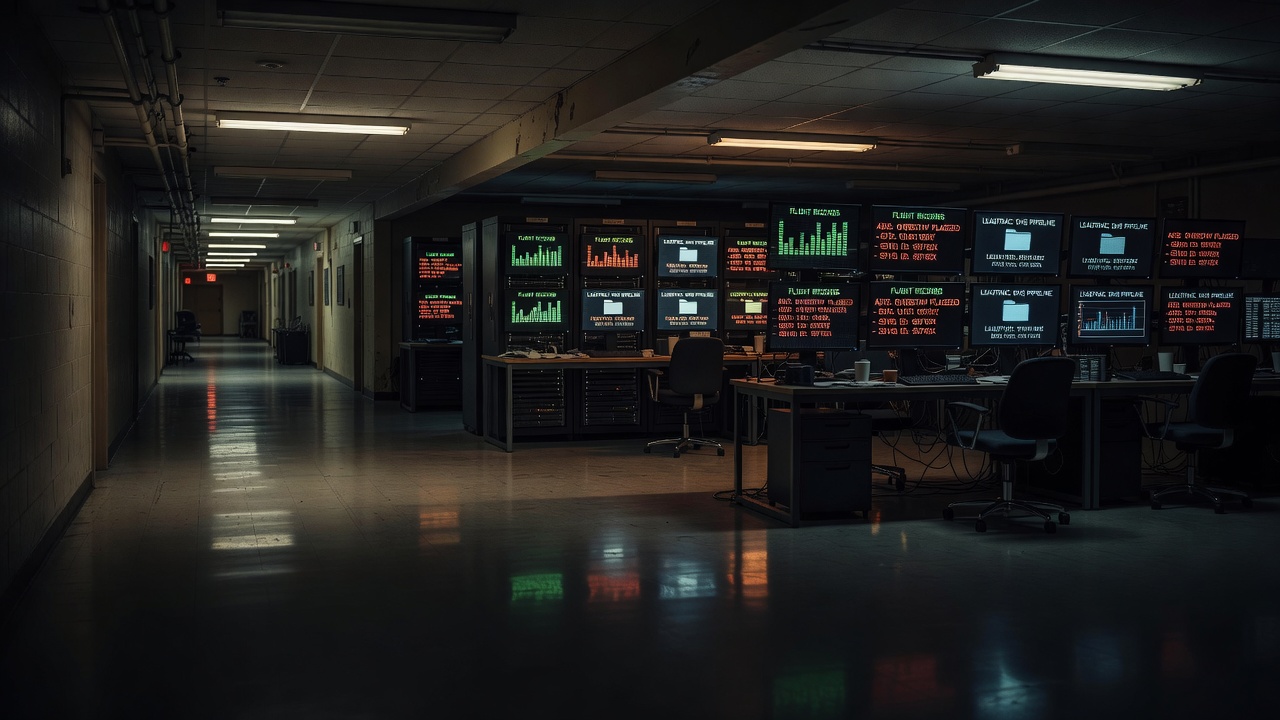
After midnight, nobody sees the handoff. A student misses no class. A plane lands, another departs, and somewhere behind the glass, federal systems compare timestamps against a deadline most travelers never remember signing. One database records entry. Another carries school updates. A third becomes the place where suspicion hardens into a lead. If you wanted to build a quiet domestic pipeline for finding people who have slipped out of status, you would build it to look exactly like paperwork.
The Case For
The chain is real, and DHS has described it in plain language
The strongest argument for taking this pipeline seriously is that the architecture is not rumor. It is documented. In the 2017 DHS Office of Inspector General report DHS Tracking of Visa Overstays Is Hindered by Insufficient Technology, auditors laid out the basic sequence: DHS identifies possible overstays primarily through the Arrival and Departure Information System, or ADIS. Student and exchange-visitor data entered by universities into SEVIS flows into that process. Those leads are then vetted against national-security data in ATS-P and sent into LeadTrac for Counterterrorism and Criminal Exploitation Unit review.
That matters because it means the government is not simply reacting to a missed departure. It is correlating border records, school reporting, and risk-based vetting across multiple systems before a human analyst ever opens the file. The 2016 Federal Register notice creating the LeadTrac system of records says CTCEU uses the platform to investigate foreign students, exchange visitors, and other nonimmigrant visitors who overstay or otherwise violate status. It also says the system can hold information on schools, universities, exchange programs, designated school officials, and associates of suspected violators.
LeadTrac is more than storage
The official LeadTrac privacy impact assessment makes the system sound less like a filing cabinet and more like an operational hub. ICE says LeadTrac supports a subject-centered model that links multiple leads about a single person, auto-prioritizes them according to mission needs, and lets analysts add results from additional database checks and open-source research. The same document explains that ADIS can send updated arrival and departure information back into LeadTrac after a lead already exists, while LeadTrac can also send indicators back to ADIS when updates are no longer needed.
For critics, that feedback loop is the real story. A traveler enters the country. A school reports a status change. ADIS compares arrival and departure records. ATS-P enriches the lead. LeadTrac consolidates it, ranks it, and keeps it moving. That is not an improvised search. It is a pipeline.
The system sits inside a broader watch-and-vet culture
The ATS privacy assessment helps explain why some readers see the pipeline as broader than ordinary compliance work. CBP describes ATS as a decision-support tool that compares traveler data against law-enforcement and intelligence holdings, uses rules and pattern matching, and gives authorized users a federated view across many systems. While ATS says passenger vetting does not assign a single traveler score, the architecture still relies on risk scenarios and consolidated data pulls. That gives ADIS and SEVIS leads a second life inside a system designed to look for patterns, flags, and priority.
If you have followed our earlier reporting on Domestic Mantis and the student tracking net or LeadTrac and CTCEU, this derivative article is the connective tissue. It shows how student records and border records can move from administrative compliance into investigative attention. The relevant archive lives in our Government Secrets coverage.
The Realist’s Eye
A documented pipeline is not the same thing as a hidden conspiracy
Here is where the realist has to slow down. The existence of ADIS, SEVIS, ATS-P, and LeadTrac does not prove an illegitimate surveillance plot. DHS openly acknowledges that visa overstays are an enforcement mission, and official records show the department has struggled for years to do it competently. The same OIG report that maps the pipeline also says the problem was fragmentation, manual work, unreliable exit information, and weak integration. That cuts against the idea of a sleek all-seeing machine. In many places, the system looks clumsy rather than omnipotent.
The LeadTrac privacy assessment also says the platform is not the original source of the personal information it holds and does not use predictive analytics to identify anomalous patterns on its own. Analysts still have to do manual workups, consult outside systems, and decide whether a lead is viable. In other words, the pipeline can generate suspicion, but it does not erase the bureaucracy sitting between a data mismatch and an enforcement action.
The gap between mission and mission creep is still hard to measure
The darker concern is not whether the pipeline exists. It does. The harder question is how far its logic extends. The Federal Register notice explicitly allows LeadTrac to hold records not just on suspected violators, but on organizations, school officials, employers, family members, and associates. That creates the possibility of networked scrutiny around a single immigration lead. Still, possibility is not proof of abuse. The public record shows the legal scope of collection more clearly than it shows how often that scope was pushed to its edge.
There is another restraint on the grandest reading: bureaucratic weakness. OIG found delays, backlogs, and incomplete information sharing. A system that misses departures, duplicates effort, and depends on analysts hopping across multiple databases may be intrusive, but it is not necessarily total. Sometimes the most unsettling part of a government pipeline is not that it works flawlessly. It is that it keeps gathering data even when the underlying machinery is messy enough to get people wrong.
What We Know For Certain
- DHS uses ADIS to match entry and departure records to identify possible overstays.
- SEVIS data from schools and exchange programs feeds into that broader overstay-identification process.
- ATS-P vets and enriches overstay-related leads before they reach ICE investigators.
- LeadTrac is a real ICE/HSI system used by CTCEU to manage and prioritize suspected status-violation leads.
- Official DHS notices say LeadTrac can also hold records on organizations, designated school officials, and associates tied to suspected violators.
The Unanswered Questions
- How often do ADIS or SEVIS mismatches generate false overstay leads that still remain open in LeadTrac for long periods?
- What internal standards govern when information about schools, employers, or associates is added to a LeadTrac case?
- How often are ATS-P risk patterns or watchlist-related enrichments decisive in whether a lead is referred to the field?
- What meaningful outside audit exists for the retention periods and Privacy Act exemptions attached to LeadTrac records?
The Closer — You Decide
Sometimes the most revealing conspiracy-adjacent stories are the ones hidden in policy diagrams. No midnight vans. No whispered code names. Just one system handing a name to the next until an administrative problem becomes an investigative file. The documents do not prove an all-powerful domestic dragnet. They do prove the pipeline is real, the categories are broad, and the oversight questions have not gone away. The evidence is on the table. You decide.