Menu

Domestic Mantis: The Student Tracking Net

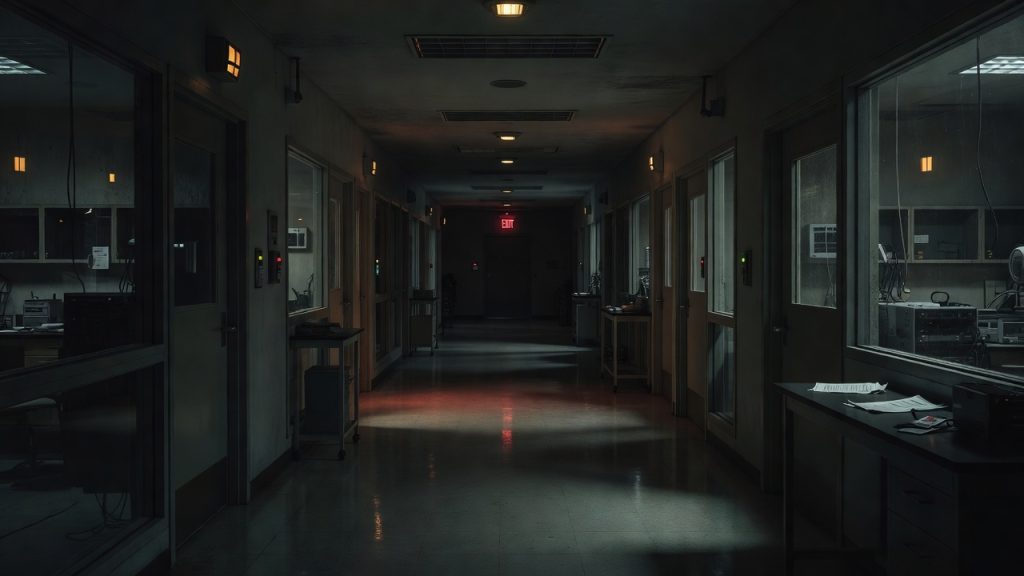
Night laboratory corridor for Domestic Mantis Initiative investigation — ConspiracyRealist.com

Night falls on a campus lab, and the hum of refrigeration units becomes the soundtrack to a different kind of border control. The student at the bench already cleared the airport months ago. The visa was issued. The interview ended. But somewhere inside federal systems, a second question lingered: what happens if a student who arrived to study one thing quietly pivots into another—into the kind of research field Washington treats like a doorway to missiles, pathogens, encryption, or nuclear know-how? That question helped give an obscure DHS pilot a name that sounds less like policy than surveillance doctrine: Domestic Mantis.

The Case For

A security check that did not end at the border

The documented case for Domestic Mantis begins with a real gap in the U.S. screening system. The State Department’s Visas Mantis process was built to catch technology-transfer concerns before a visa is issued overseas. A 2005 GAO report on the Visas Mantis program explained that consular officers use the Technology Alert List to flag applicants whose proposed work or study could expose them to sensitive fields tied to export controls, weapons proliferation, or militarily critical technologies. When that happens, applicants are commonly refused under INA 221(g) pending additional interagency review.

But that process focused on the interview stage. By design, it looked at who the applicant said they were and what they said they planned to do before entry. It did not fully solve the next problem: what if a student entered legally in a nonsensitive field, then changed course once inside the United States?

The pilot DHS admitted existed

That is where the paper trail gets interesting. In an August 1, 2016 report to Congress, ICE described the Domestic Mantis Initiative as part of its visa-overstay enforcement strategy. The report said Homeland Security Investigations wanted to identify nonimmigrant students who “entered the United States to study a nonsensitive field of study” and later “changed their field of study to a sensitive area.” ICE stated plainly that SEVIS lacked an automated way to identify and track such changes and that data had to be manually extracted.

The same report laid out the intended machinery. SEVIS data would be pulled to generate leads on students who shifted into sensitive areas identified by the Department of State’s Technology Alert List. ICE’s Counterterrorism and Criminal Exploitation Unit would then feed those names into LeadTrac for semiannual ingestion, continuous vetting, and monitoring. ICE estimated about 600 leads per semester and said the initiative would also assess former students who had already left the country after making the switch.

For anyone suspicious of mission creep, that reads like a surveillance bridge between visa adjudication, academic records, and national-security analysis. Domestic Mantis was framed as a tool to prevent the export of “goods, technology, or sensitive information” through graduate study, research, training, or employment. The government was not only worried about who crossed the border. It was worried about what knowledge they might later acquire after crossing it.

If you have followed our earlier look at Visa Mantis and the quiet tech-transfer gate or the Technology Alert List and the visa net, Domestic Mantis looks less like an isolated pilot and more like the inland extension of an existing logic: first screen the applicant, then screen the pathway, then screen the academic pivot.

The Realist’s Eye

A pilot on paper is not the same as a shadow program in practice

That is the strongest version of the theory. The weaker version starts where the evidence thins out. The 2016 ICE report proves the initiative was proposed and funded as part of an expenditure plan. It does not, by itself, prove the pilot matured into a sprawling operational dragnet, how many students were ultimately flagged, how many investigations followed, or whether the program survived in the form described. A bureaucratic blueprint is not automatically a fully realized machine.

There is also a more ordinary explanation for the initiative’s existence. Governments already monitor export-control risk, visa compliance, and status violations through multiple systems. Domestic Mantis may have been less a secret program than an attempt to connect existing databases that had blind spots after 9/11. Even the ominous name partly comes from an already public visa-screening term. That matters. Some of what feels sinister here may simply be the state giving an internal label to a problem it genuinely believed it had.

The national-security rationale is real, but so are the civil-liberties questions

The underlying risk is not invented. The same GAO reporting that described Visas Mantis also emphasized the government’s concern with proliferation, dual-use technology, and militarily critical research. Those are real policy priorities, not conspiracy folklore. But the realist problem is proportionality. A system designed to spot suspicious technology transfer can easily drift into suspicion by field of study, nationality, or association alone.

And there is another uncertainty. ICE’s report said SEVIS lacked automated tracking for students who transferred into prohibited majors or programs of concern, yet it did not publicly spell out the operational threshold that turned an academic change into an investigative lead. Was the trigger nationality, research area, institution, export-control exposure, or some combination of all four? Without that detail, it is hard to judge whether Domestic Mantis was a narrow counterproliferation filter or a broad monitoring net cast over legitimate academic mobility.

Then there is the silence after the announcement. Domestic Mantis does not sit in the public imagination the way PRISM or COINTELPRO does. That could mean the pilot never grew teeth. It could also mean the concept was absorbed into quieter compliance workflows under other names. The record proves intent. It does not fully prove scope.

What We Know For Certain

  • ICE described the Domestic Mantis Initiative in an August 1, 2016 report to Congress.
  • The initiative targeted students who entered in nonsensitive fields and later shifted into sensitive fields tied to the Technology Alert List.
  • ICE said SEVIS lacked an automated process for identifying and tracking those field-of-study changes.
  • The report estimated roughly 600 leads per semester for vetting by ICE’s Counterterrorism and Criminal Exploitation Unit.
  • Visas Mantis was already an established pre-entry security review tied to sensitive technology concerns and 221(g) administrative processing.

The Unanswered Questions

  • How often was Domestic Mantis actually used beyond the pilot stage described in the 2016 expenditure plan?
  • What exact criteria converted a student’s change of major or research area into a national-security lead?
  • How many students were flagged, investigated, cleared, or referred to field offices?
  • Did Domestic Mantis remain a standalone initiative, or was it folded into broader ICE or DHS vetting systems?
  • What safeguards, if any, prevented the program from treating ordinary academic mobility as suspicious by default?

The Closer — You Decide

The file exists. The language is real. A federal agency openly described a plan to watch for students who moved from ordinary study into sensitive fields after entry. Maybe Domestic Mantis was a prudent answer to a counterproliferation gap. Maybe it was the normalization of campus surveillance by another name. Either way, the documents put the question on the table. The evidence is there. So are the gaps. You decide.

dive down the rabbit hole

Domestic Mantis: The Student Tracking Net

S-FX.com
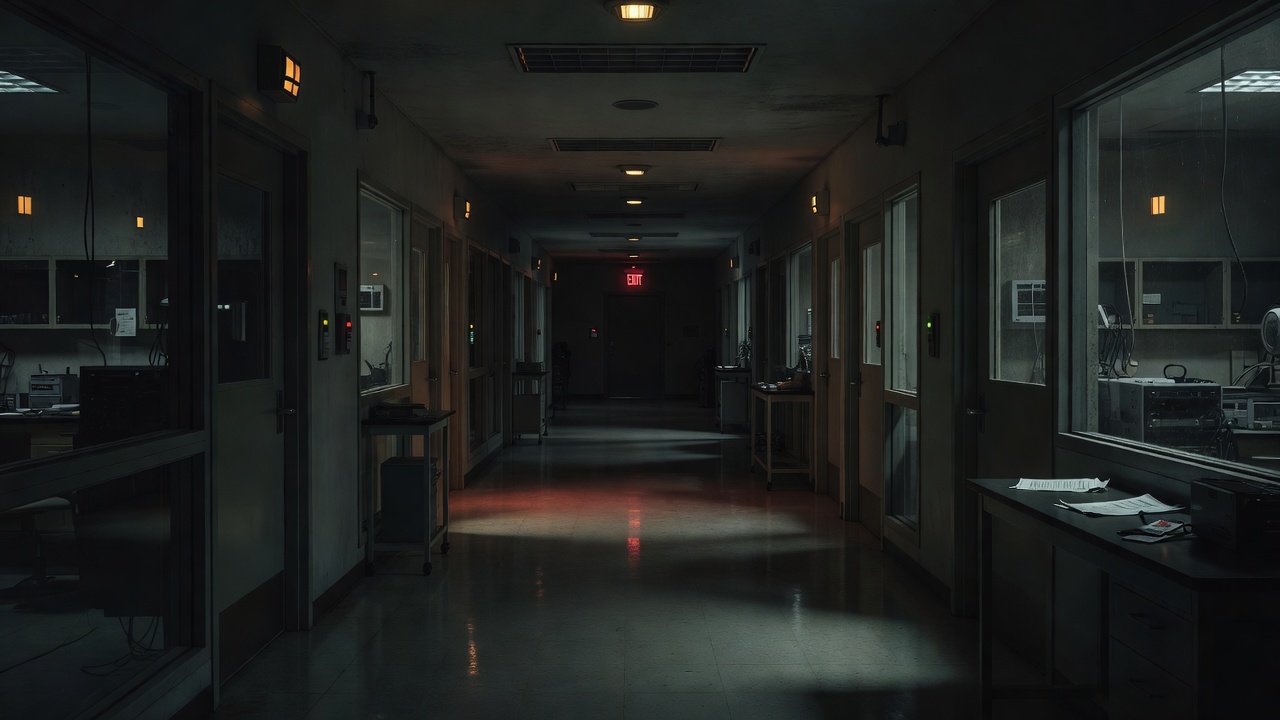
Night laboratory corridor for Domestic Mantis Initiative investigation — ConspiracyRealist.com

Night falls on a campus lab, and the hum of refrigeration units becomes the soundtrack to a different kind of border control. The student at the bench already cleared the airport months ago. The visa was issued. The interview ended. But somewhere inside federal systems, a second question lingered: what happens if a student who arrived to study one thing quietly pivots into another—into the kind of research field Washington treats like a doorway to missiles, pathogens, encryption, or nuclear know-how? That question helped give an obscure DHS pilot a name that sounds less like policy than surveillance doctrine: Domestic Mantis.

The Case For

A security check that did not end at the border

The documented case for Domestic Mantis begins with a real gap in the U.S. screening system. The State Department’s Visas Mantis process was built to catch technology-transfer concerns before a visa is issued overseas. A 2005 GAO report on the Visas Mantis program explained that consular officers use the Technology Alert List to flag applicants whose proposed work or study could expose them to sensitive fields tied to export controls, weapons proliferation, or militarily critical technologies. When that happens, applicants are commonly refused under INA 221(g) pending additional interagency review.

But that process focused on the interview stage. By design, it looked at who the applicant said they were and what they said they planned to do before entry. It did not fully solve the next problem: what if a student entered legally in a nonsensitive field, then changed course once inside the United States?

The pilot DHS admitted existed

That is where the paper trail gets interesting. In an August 1, 2016 report to Congress, ICE described the Domestic Mantis Initiative as part of its visa-overstay enforcement strategy. The report said Homeland Security Investigations wanted to identify nonimmigrant students who “entered the United States to study a nonsensitive field of study” and later “changed their field of study to a sensitive area.” ICE stated plainly that SEVIS lacked an automated way to identify and track such changes and that data had to be manually extracted.

The same report laid out the intended machinery. SEVIS data would be pulled to generate leads on students who shifted into sensitive areas identified by the Department of State’s Technology Alert List. ICE’s Counterterrorism and Criminal Exploitation Unit would then feed those names into LeadTrac for semiannual ingestion, continuous vetting, and monitoring. ICE estimated about 600 leads per semester and said the initiative would also assess former students who had already left the country after making the switch.

For anyone suspicious of mission creep, that reads like a surveillance bridge between visa adjudication, academic records, and national-security analysis. Domestic Mantis was framed as a tool to prevent the export of “goods, technology, or sensitive information” through graduate study, research, training, or employment. The government was not only worried about who crossed the border. It was worried about what knowledge they might later acquire after crossing it.

If you have followed our earlier look at Visa Mantis and the quiet tech-transfer gate or the Technology Alert List and the visa net, Domestic Mantis looks less like an isolated pilot and more like the inland extension of an existing logic: first screen the applicant, then screen the pathway, then screen the academic pivot.

The Realist’s Eye

A pilot on paper is not the same as a shadow program in practice

That is the strongest version of the theory. The weaker version starts where the evidence thins out. The 2016 ICE report proves the initiative was proposed and funded as part of an expenditure plan. It does not, by itself, prove the pilot matured into a sprawling operational dragnet, how many students were ultimately flagged, how many investigations followed, or whether the program survived in the form described. A bureaucratic blueprint is not automatically a fully realized machine.

There is also a more ordinary explanation for the initiative’s existence. Governments already monitor export-control risk, visa compliance, and status violations through multiple systems. Domestic Mantis may have been less a secret program than an attempt to connect existing databases that had blind spots after 9/11. Even the ominous name partly comes from an already public visa-screening term. That matters. Some of what feels sinister here may simply be the state giving an internal label to a problem it genuinely believed it had.

The national-security rationale is real, but so are the civil-liberties questions

The underlying risk is not invented. The same GAO reporting that described Visas Mantis also emphasized the government’s concern with proliferation, dual-use technology, and militarily critical research. Those are real policy priorities, not conspiracy folklore. But the realist problem is proportionality. A system designed to spot suspicious technology transfer can easily drift into suspicion by field of study, nationality, or association alone.

And there is another uncertainty. ICE’s report said SEVIS lacked automated tracking for students who transferred into prohibited majors or programs of concern, yet it did not publicly spell out the operational threshold that turned an academic change into an investigative lead. Was the trigger nationality, research area, institution, export-control exposure, or some combination of all four? Without that detail, it is hard to judge whether Domestic Mantis was a narrow counterproliferation filter or a broad monitoring net cast over legitimate academic mobility.

Then there is the silence after the announcement. Domestic Mantis does not sit in the public imagination the way PRISM or COINTELPRO does. That could mean the pilot never grew teeth. It could also mean the concept was absorbed into quieter compliance workflows under other names. The record proves intent. It does not fully prove scope.

What We Know For Certain

  • ICE described the Domestic Mantis Initiative in an August 1, 2016 report to Congress.
  • The initiative targeted students who entered in nonsensitive fields and later shifted into sensitive fields tied to the Technology Alert List.
  • ICE said SEVIS lacked an automated process for identifying and tracking those field-of-study changes.
  • The report estimated roughly 600 leads per semester for vetting by ICE’s Counterterrorism and Criminal Exploitation Unit.
  • Visas Mantis was already an established pre-entry security review tied to sensitive technology concerns and 221(g) administrative processing.

The Unanswered Questions

  • How often was Domestic Mantis actually used beyond the pilot stage described in the 2016 expenditure plan?
  • What exact criteria converted a student’s change of major or research area into a national-security lead?
  • How many students were flagged, investigated, cleared, or referred to field offices?
  • Did Domestic Mantis remain a standalone initiative, or was it folded into broader ICE or DHS vetting systems?
  • What safeguards, if any, prevented the program from treating ordinary academic mobility as suspicious by default?

The Closer — You Decide

The file exists. The language is real. A federal agency openly described a plan to watch for students who moved from ordinary study into sensitive fields after entry. Maybe Domestic Mantis was a prudent answer to a counterproliferation gap. Maybe it was the normalization of campus surveillance by another name. Either way, the documents put the question on the table. The evidence is there. So are the gaps. You decide.

Domestic Mantis: The Student Tracking Net

Night laboratory corridor for Domestic Mantis Initiative investigation — ConspiracyRealist.com

Night falls on a campus lab, and the hum of refrigeration units becomes the soundtrack to a different kind of border control. The student at the bench already cleared the airport months ago. The visa was issued. The interview ended. But somewhere inside federal systems, a second question lingered: what happens if a student who arrived to study one thing quietly pivots into another—into the kind of research field Washington treats like a doorway to missiles, pathogens, encryption, or nuclear know-how? That question helped give an obscure DHS pilot a name that sounds less like policy than surveillance doctrine: Domestic Mantis.

The Case For

A security check that did not end at the border

The documented case for Domestic Mantis begins with a real gap in the U.S. screening system. The State Department’s Visas Mantis process was built to catch technology-transfer concerns before a visa is issued overseas. A 2005 GAO report on the Visas Mantis program explained that consular officers use the Technology Alert List to flag applicants whose proposed work or study could expose them to sensitive fields tied to export controls, weapons proliferation, or militarily critical technologies. When that happens, applicants are commonly refused under INA 221(g) pending additional interagency review.

But that process focused on the interview stage. By design, it looked at who the applicant said they were and what they said they planned to do before entry. It did not fully solve the next problem: what if a student entered legally in a nonsensitive field, then changed course once inside the United States?

The pilot DHS admitted existed

That is where the paper trail gets interesting. In an August 1, 2016 report to Congress, ICE described the Domestic Mantis Initiative as part of its visa-overstay enforcement strategy. The report said Homeland Security Investigations wanted to identify nonimmigrant students who “entered the United States to study a nonsensitive field of study” and later “changed their field of study to a sensitive area.” ICE stated plainly that SEVIS lacked an automated way to identify and track such changes and that data had to be manually extracted.

The same report laid out the intended machinery. SEVIS data would be pulled to generate leads on students who shifted into sensitive areas identified by the Department of State’s Technology Alert List. ICE’s Counterterrorism and Criminal Exploitation Unit would then feed those names into LeadTrac for semiannual ingestion, continuous vetting, and monitoring. ICE estimated about 600 leads per semester and said the initiative would also assess former students who had already left the country after making the switch.

For anyone suspicious of mission creep, that reads like a surveillance bridge between visa adjudication, academic records, and national-security analysis. Domestic Mantis was framed as a tool to prevent the export of “goods, technology, or sensitive information” through graduate study, research, training, or employment. The government was not only worried about who crossed the border. It was worried about what knowledge they might later acquire after crossing it.

If you have followed our earlier look at Visa Mantis and the quiet tech-transfer gate or the Technology Alert List and the visa net, Domestic Mantis looks less like an isolated pilot and more like the inland extension of an existing logic: first screen the applicant, then screen the pathway, then screen the academic pivot.

The Realist’s Eye

A pilot on paper is not the same as a shadow program in practice

That is the strongest version of the theory. The weaker version starts where the evidence thins out. The 2016 ICE report proves the initiative was proposed and funded as part of an expenditure plan. It does not, by itself, prove the pilot matured into a sprawling operational dragnet, how many students were ultimately flagged, how many investigations followed, or whether the program survived in the form described. A bureaucratic blueprint is not automatically a fully realized machine.

There is also a more ordinary explanation for the initiative’s existence. Governments already monitor export-control risk, visa compliance, and status violations through multiple systems. Domestic Mantis may have been less a secret program than an attempt to connect existing databases that had blind spots after 9/11. Even the ominous name partly comes from an already public visa-screening term. That matters. Some of what feels sinister here may simply be the state giving an internal label to a problem it genuinely believed it had.

The national-security rationale is real, but so are the civil-liberties questions

The underlying risk is not invented. The same GAO reporting that described Visas Mantis also emphasized the government’s concern with proliferation, dual-use technology, and militarily critical research. Those are real policy priorities, not conspiracy folklore. But the realist problem is proportionality. A system designed to spot suspicious technology transfer can easily drift into suspicion by field of study, nationality, or association alone.

And there is another uncertainty. ICE’s report said SEVIS lacked automated tracking for students who transferred into prohibited majors or programs of concern, yet it did not publicly spell out the operational threshold that turned an academic change into an investigative lead. Was the trigger nationality, research area, institution, export-control exposure, or some combination of all four? Without that detail, it is hard to judge whether Domestic Mantis was a narrow counterproliferation filter or a broad monitoring net cast over legitimate academic mobility.

Then there is the silence after the announcement. Domestic Mantis does not sit in the public imagination the way PRISM or COINTELPRO does. That could mean the pilot never grew teeth. It could also mean the concept was absorbed into quieter compliance workflows under other names. The record proves intent. It does not fully prove scope.

What We Know For Certain

  • ICE described the Domestic Mantis Initiative in an August 1, 2016 report to Congress.
  • The initiative targeted students who entered in nonsensitive fields and later shifted into sensitive fields tied to the Technology Alert List.
  • ICE said SEVIS lacked an automated process for identifying and tracking those field-of-study changes.
  • The report estimated roughly 600 leads per semester for vetting by ICE’s Counterterrorism and Criminal Exploitation Unit.
  • Visas Mantis was already an established pre-entry security review tied to sensitive technology concerns and 221(g) administrative processing.

The Unanswered Questions

  • How often was Domestic Mantis actually used beyond the pilot stage described in the 2016 expenditure plan?
  • What exact criteria converted a student’s change of major or research area into a national-security lead?
  • How many students were flagged, investigated, cleared, or referred to field offices?
  • Did Domestic Mantis remain a standalone initiative, or was it folded into broader ICE or DHS vetting systems?
  • What safeguards, if any, prevented the program from treating ordinary academic mobility as suspicious by default?

The Closer — You Decide

The file exists. The language is real. A federal agency openly described a plan to watch for students who moved from ordinary study into sensitive fields after entry. Maybe Domestic Mantis was a prudent answer to a counterproliferation gap. Maybe it was the normalization of campus surveillance by another name. Either way, the documents put the question on the table. The evidence is there. So are the gaps. You decide.

Table of contents