Menu

BWC Article V: Consultation or Diplomatic Cul-de-Sac?

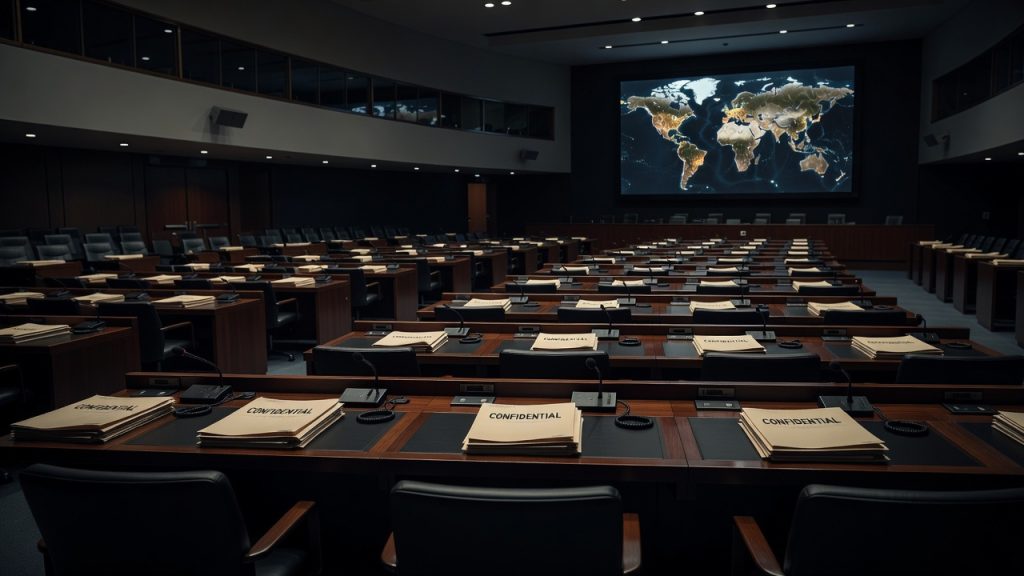
Empty United Nations conference chamber representing BWC Article V consultations — ConspiracyRealist.com

Geneva likes to imagine itself as neutral ground. Glass, flags, polished wood, the careful choreography of diplomats speaking in measured tones while the world outside burns a little hotter. But every treaty room has its own ghosts. In the Biological Weapons Convention, one of the quietest ghosts is Article V — a clause so brief it can disappear in a single glance, yet loaded with a dangerous promise. If a state believes something in the world of biowarfare does not add up, Article V says the parties can consult, cooperate, and try to force the ambiguity into daylight. The question is whether that mechanism brings clarity — or just gives suspicion a better conference room.

The Case For

A pressure valve built into the treaty

The case for taking Article V seriously starts with the treaty itself. The text of Article V is plain: states parties undertake to consult one another and cooperate in solving problems related to the Convention’s objective or application. That matters because the Biological Weapons Convention was never built with the kind of standing inspection machinery attached to later arms-control systems. UNODA’s overview of the BWC makes the tension clear: the treaty bans an entire class of weapons, but implementation has depended on follow-on understandings, review conferences, and political will.

In that world, Article V looks less like a footnote and more like a pressure valve. If one state sees troubling lab activity, undeclared biodefense work, or suspicious transfers, it does not have to jump immediately to the United Nations Security Council under Article VI. It can force a formal conversation. The process was expanded through later review conferences, which, as the United Nations Library & Archives Geneva notes, gave states the right to request a consultative meeting and later set timelines, procedures, and financing rules. In theory, that creates a middle lane between quiet bilateral protest and a full-blown accusation of treaty breach.

Why supporters say it still matters

There is also a realist argument in its favor. Biological programs are notoriously hard to read from the outside because the line between peaceful public-health work, defensive biodefense, and prohibited offensive capability can look thin on paper. A consultative process lets states air documents, technical claims, and rebuttals in one room. The 2022 formal consultative meeting under Article V — convened after Russia requested it over allegations tied to biological laboratories in Ukraine — showed that the mechanism is not dead. The meeting’s UNODA overview confirms the request timeline, the formal sessions in Geneva, and the treaty-based process behind them.

Supporters of Article V would say this is exactly the point. Even if the room is tense, even if the accusations are politically charged, the mechanism compels states to answer in a treaty framework rather than only through press conferences and intelligence leaks. It creates a record. It puts other states parties in a position to weigh what they heard. And in a treaty system already strained by the collapse of a verification protocol and the limits of annual reporting, that record can matter. It is one reason the BWC still leans on softer tools like confidence-building measures and broader category oversight through government-secrets investigations to keep the conversation alive.

The Realist’s Eye

A mechanism with almost no history of success

Now the harder question: does Article V actually resolve anything? The historical record says not much. The UN Library guide states the process has been invoked only twice: once by Cuba in 1997 and once by Russia in 2022. That rarity cuts two ways. You can call it a reserve power used only in extreme cases. Or you can call it a mechanism so awkward, political, and inconclusive that states avoid it unless they have no better theater for their dispute.

The 1997 case is revealing. The official 1997 report of the formal consultative meeting shows that after Cuba and the United States presented their positions, states parties still disagreed on whether the available time had resolved the outstanding ambiguities. Additional observations were invited after the meeting. The process continued on paper because the room itself had not settled the matter. According to the UN Library summary of that case, the final outcome still reached no “definitive conclusion.” That is a warning label, not a confidence booster.

What 2022 exposed

The 2022 consultative meeting may be an even sharper example. The advance version of the final report records that 89 states parties participated and that no consensus was reached regarding the outcome. That line tells the story. Article V can convene. It can collect statements. It can create official working papers. But when the core allegations are wrapped inside larger geopolitical warfare, the procedure may document division more effectively than it resolves it.

There is another structural problem. The same treaty family that relies on annual transparency filings also allows those filings to be limited in circulation. UNODA’s confidence-building measures page notes that states can choose whether submissions are public or restricted to other states parties. That means Article V sometimes operates in an environment where the available baseline information is already partial. And because the BWC lacks standing inspections, there is no independent body walking into facilities the way readers often imagine happens under arms-control law. If states come into the room with hardened narratives, Article V gives them microphones, not necessarily answers.

That is why the mechanism can look, depending on your angle, either like a sober diplomatic safeguard or a procedural cul-de-sac. It might defuse suspicion before it escalates. It might also simply preserve the ritual of consultation while leaving the underlying mistrust untouched. If you have already read how the BWC verification protocol collapsed, the weakness here will feel familiar. The treaty keeps finding ways to ask for trust after decades of proving how fragile trust really is.

What We Know For Certain

  • Article V of the Biological Weapons Convention requires states parties to consult and cooperate over problems related to the treaty’s objective or application.
  • The BWC entered into force in 1975 and remains the central international treaty banning biological and toxin weapons.
  • The formal Article V consultative process has been invoked only twice: in 1997 and in 2022.
  • The 2022 formal consultative meeting in Geneva ended without consensus on the outcome.

The Unanswered Questions

  • Can Article V work as a genuine clarification mechanism without a stronger verification system behind it?
  • What threshold of evidence should trigger a formal consultative meeting instead of a political information war?
  • Would more public disclosure of BWC confidence-building submissions make Article V more effective?
  • If Article V fails to resolve doubts, how often are states truly willing to escalate to Article VI and the Security Council?

The Closer — You Decide

Some clauses in international law roar. Article V barely whispers. But the whisper matters, because it tells you what the treaty fears most: not only biological weapons, but the fog that lets states hide behind peaceful language while suspicion spreads unchecked. The documents are real. The meetings happened. The lack of consensus happened too. Maybe Article V is a necessary safety valve. Maybe it is a ritual that arrives after trust is already gone. The evidence is on the table. You decide.

dive down the rabbit hole

BWC Article V: Consultation or Diplomatic Cul-de-Sac?

S-FX.com
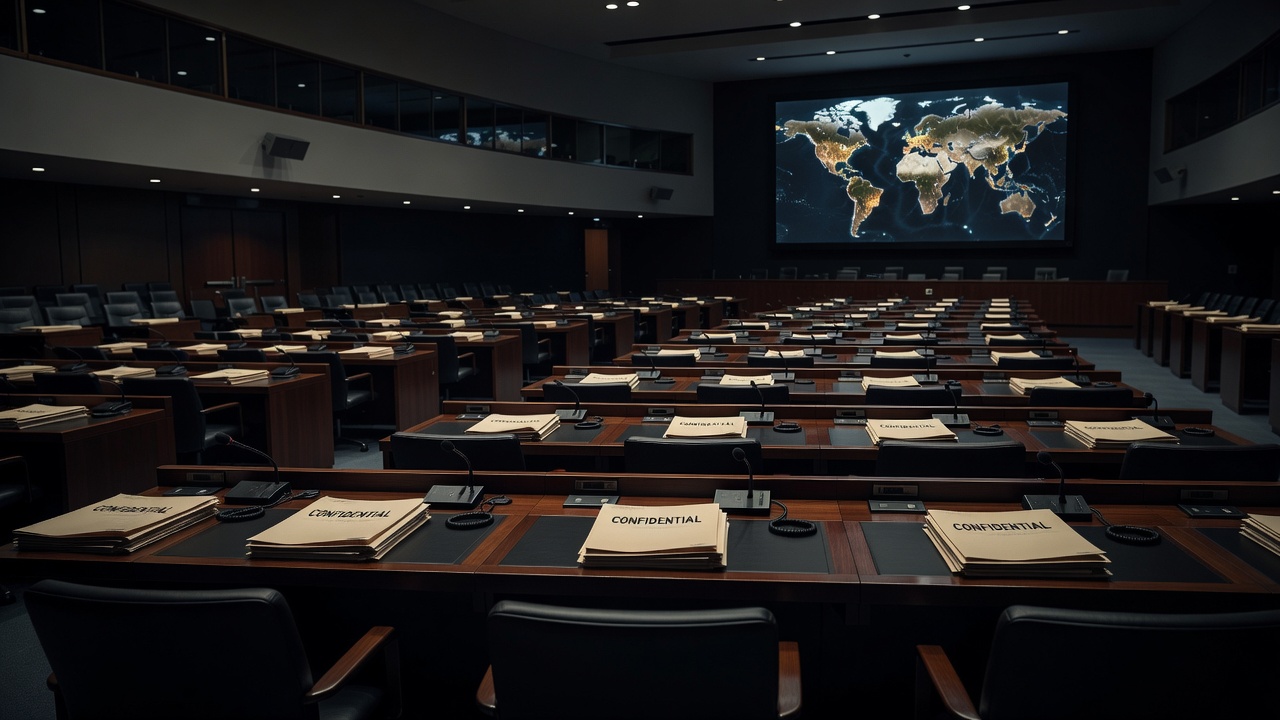
Empty United Nations conference chamber representing BWC Article V consultations — ConspiracyRealist.com

Geneva likes to imagine itself as neutral ground. Glass, flags, polished wood, the careful choreography of diplomats speaking in measured tones while the world outside burns a little hotter. But every treaty room has its own ghosts. In the Biological Weapons Convention, one of the quietest ghosts is Article V — a clause so brief it can disappear in a single glance, yet loaded with a dangerous promise. If a state believes something in the world of biowarfare does not add up, Article V says the parties can consult, cooperate, and try to force the ambiguity into daylight. The question is whether that mechanism brings clarity — or just gives suspicion a better conference room.

The Case For

A pressure valve built into the treaty

The case for taking Article V seriously starts with the treaty itself. The text of Article V is plain: states parties undertake to consult one another and cooperate in solving problems related to the Convention’s objective or application. That matters because the Biological Weapons Convention was never built with the kind of standing inspection machinery attached to later arms-control systems. UNODA’s overview of the BWC makes the tension clear: the treaty bans an entire class of weapons, but implementation has depended on follow-on understandings, review conferences, and political will.

In that world, Article V looks less like a footnote and more like a pressure valve. If one state sees troubling lab activity, undeclared biodefense work, or suspicious transfers, it does not have to jump immediately to the United Nations Security Council under Article VI. It can force a formal conversation. The process was expanded through later review conferences, which, as the United Nations Library & Archives Geneva notes, gave states the right to request a consultative meeting and later set timelines, procedures, and financing rules. In theory, that creates a middle lane between quiet bilateral protest and a full-blown accusation of treaty breach.

Why supporters say it still matters

There is also a realist argument in its favor. Biological programs are notoriously hard to read from the outside because the line between peaceful public-health work, defensive biodefense, and prohibited offensive capability can look thin on paper. A consultative process lets states air documents, technical claims, and rebuttals in one room. The 2022 formal consultative meeting under Article V — convened after Russia requested it over allegations tied to biological laboratories in Ukraine — showed that the mechanism is not dead. The meeting’s UNODA overview confirms the request timeline, the formal sessions in Geneva, and the treaty-based process behind them.

Supporters of Article V would say this is exactly the point. Even if the room is tense, even if the accusations are politically charged, the mechanism compels states to answer in a treaty framework rather than only through press conferences and intelligence leaks. It creates a record. It puts other states parties in a position to weigh what they heard. And in a treaty system already strained by the collapse of a verification protocol and the limits of annual reporting, that record can matter. It is one reason the BWC still leans on softer tools like confidence-building measures and broader category oversight through government-secrets investigations to keep the conversation alive.

The Realist’s Eye

A mechanism with almost no history of success

Now the harder question: does Article V actually resolve anything? The historical record says not much. The UN Library guide states the process has been invoked only twice: once by Cuba in 1997 and once by Russia in 2022. That rarity cuts two ways. You can call it a reserve power used only in extreme cases. Or you can call it a mechanism so awkward, political, and inconclusive that states avoid it unless they have no better theater for their dispute.

The 1997 case is revealing. The official 1997 report of the formal consultative meeting shows that after Cuba and the United States presented their positions, states parties still disagreed on whether the available time had resolved the outstanding ambiguities. Additional observations were invited after the meeting. The process continued on paper because the room itself had not settled the matter. According to the UN Library summary of that case, the final outcome still reached no “definitive conclusion.” That is a warning label, not a confidence booster.

What 2022 exposed

The 2022 consultative meeting may be an even sharper example. The advance version of the final report records that 89 states parties participated and that no consensus was reached regarding the outcome. That line tells the story. Article V can convene. It can collect statements. It can create official working papers. But when the core allegations are wrapped inside larger geopolitical warfare, the procedure may document division more effectively than it resolves it.

There is another structural problem. The same treaty family that relies on annual transparency filings also allows those filings to be limited in circulation. UNODA’s confidence-building measures page notes that states can choose whether submissions are public or restricted to other states parties. That means Article V sometimes operates in an environment where the available baseline information is already partial. And because the BWC lacks standing inspections, there is no independent body walking into facilities the way readers often imagine happens under arms-control law. If states come into the room with hardened narratives, Article V gives them microphones, not necessarily answers.

That is why the mechanism can look, depending on your angle, either like a sober diplomatic safeguard or a procedural cul-de-sac. It might defuse suspicion before it escalates. It might also simply preserve the ritual of consultation while leaving the underlying mistrust untouched. If you have already read how the BWC verification protocol collapsed, the weakness here will feel familiar. The treaty keeps finding ways to ask for trust after decades of proving how fragile trust really is.

What We Know For Certain

  • Article V of the Biological Weapons Convention requires states parties to consult and cooperate over problems related to the treaty’s objective or application.
  • The BWC entered into force in 1975 and remains the central international treaty banning biological and toxin weapons.
  • The formal Article V consultative process has been invoked only twice: in 1997 and in 2022.
  • The 2022 formal consultative meeting in Geneva ended without consensus on the outcome.

The Unanswered Questions

  • Can Article V work as a genuine clarification mechanism without a stronger verification system behind it?
  • What threshold of evidence should trigger a formal consultative meeting instead of a political information war?
  • Would more public disclosure of BWC confidence-building submissions make Article V more effective?
  • If Article V fails to resolve doubts, how often are states truly willing to escalate to Article VI and the Security Council?

The Closer — You Decide

Some clauses in international law roar. Article V barely whispers. But the whisper matters, because it tells you what the treaty fears most: not only biological weapons, but the fog that lets states hide behind peaceful language while suspicion spreads unchecked. The documents are real. The meetings happened. The lack of consensus happened too. Maybe Article V is a necessary safety valve. Maybe it is a ritual that arrives after trust is already gone. The evidence is on the table. You decide.

BWC Article V: Consultation or Diplomatic Cul-de-Sac?

Empty United Nations conference chamber representing BWC Article V consultations — ConspiracyRealist.com

Geneva likes to imagine itself as neutral ground. Glass, flags, polished wood, the careful choreography of diplomats speaking in measured tones while the world outside burns a little hotter. But every treaty room has its own ghosts. In the Biological Weapons Convention, one of the quietest ghosts is Article V — a clause so brief it can disappear in a single glance, yet loaded with a dangerous promise. If a state believes something in the world of biowarfare does not add up, Article V says the parties can consult, cooperate, and try to force the ambiguity into daylight. The question is whether that mechanism brings clarity — or just gives suspicion a better conference room.

The Case For

A pressure valve built into the treaty

The case for taking Article V seriously starts with the treaty itself. The text of Article V is plain: states parties undertake to consult one another and cooperate in solving problems related to the Convention’s objective or application. That matters because the Biological Weapons Convention was never built with the kind of standing inspection machinery attached to later arms-control systems. UNODA’s overview of the BWC makes the tension clear: the treaty bans an entire class of weapons, but implementation has depended on follow-on understandings, review conferences, and political will.

In that world, Article V looks less like a footnote and more like a pressure valve. If one state sees troubling lab activity, undeclared biodefense work, or suspicious transfers, it does not have to jump immediately to the United Nations Security Council under Article VI. It can force a formal conversation. The process was expanded through later review conferences, which, as the United Nations Library & Archives Geneva notes, gave states the right to request a consultative meeting and later set timelines, procedures, and financing rules. In theory, that creates a middle lane between quiet bilateral protest and a full-blown accusation of treaty breach.

Why supporters say it still matters

There is also a realist argument in its favor. Biological programs are notoriously hard to read from the outside because the line between peaceful public-health work, defensive biodefense, and prohibited offensive capability can look thin on paper. A consultative process lets states air documents, technical claims, and rebuttals in one room. The 2022 formal consultative meeting under Article V — convened after Russia requested it over allegations tied to biological laboratories in Ukraine — showed that the mechanism is not dead. The meeting’s UNODA overview confirms the request timeline, the formal sessions in Geneva, and the treaty-based process behind them.

Supporters of Article V would say this is exactly the point. Even if the room is tense, even if the accusations are politically charged, the mechanism compels states to answer in a treaty framework rather than only through press conferences and intelligence leaks. It creates a record. It puts other states parties in a position to weigh what they heard. And in a treaty system already strained by the collapse of a verification protocol and the limits of annual reporting, that record can matter. It is one reason the BWC still leans on softer tools like confidence-building measures and broader category oversight through government-secrets investigations to keep the conversation alive.

The Realist’s Eye

A mechanism with almost no history of success

Now the harder question: does Article V actually resolve anything? The historical record says not much. The UN Library guide states the process has been invoked only twice: once by Cuba in 1997 and once by Russia in 2022. That rarity cuts two ways. You can call it a reserve power used only in extreme cases. Or you can call it a mechanism so awkward, political, and inconclusive that states avoid it unless they have no better theater for their dispute.

The 1997 case is revealing. The official 1997 report of the formal consultative meeting shows that after Cuba and the United States presented their positions, states parties still disagreed on whether the available time had resolved the outstanding ambiguities. Additional observations were invited after the meeting. The process continued on paper because the room itself had not settled the matter. According to the UN Library summary of that case, the final outcome still reached no “definitive conclusion.” That is a warning label, not a confidence booster.

What 2022 exposed

The 2022 consultative meeting may be an even sharper example. The advance version of the final report records that 89 states parties participated and that no consensus was reached regarding the outcome. That line tells the story. Article V can convene. It can collect statements. It can create official working papers. But when the core allegations are wrapped inside larger geopolitical warfare, the procedure may document division more effectively than it resolves it.

There is another structural problem. The same treaty family that relies on annual transparency filings also allows those filings to be limited in circulation. UNODA’s confidence-building measures page notes that states can choose whether submissions are public or restricted to other states parties. That means Article V sometimes operates in an environment where the available baseline information is already partial. And because the BWC lacks standing inspections, there is no independent body walking into facilities the way readers often imagine happens under arms-control law. If states come into the room with hardened narratives, Article V gives them microphones, not necessarily answers.

That is why the mechanism can look, depending on your angle, either like a sober diplomatic safeguard or a procedural cul-de-sac. It might defuse suspicion before it escalates. It might also simply preserve the ritual of consultation while leaving the underlying mistrust untouched. If you have already read how the BWC verification protocol collapsed, the weakness here will feel familiar. The treaty keeps finding ways to ask for trust after decades of proving how fragile trust really is.

What We Know For Certain

  • Article V of the Biological Weapons Convention requires states parties to consult and cooperate over problems related to the treaty’s objective or application.
  • The BWC entered into force in 1975 and remains the central international treaty banning biological and toxin weapons.
  • The formal Article V consultative process has been invoked only twice: in 1997 and in 2022.
  • The 2022 formal consultative meeting in Geneva ended without consensus on the outcome.

The Unanswered Questions

  • Can Article V work as a genuine clarification mechanism without a stronger verification system behind it?
  • What threshold of evidence should trigger a formal consultative meeting instead of a political information war?
  • Would more public disclosure of BWC confidence-building submissions make Article V more effective?
  • If Article V fails to resolve doubts, how often are states truly willing to escalate to Article VI and the Security Council?

The Closer — You Decide

Some clauses in international law roar. Article V barely whispers. But the whisper matters, because it tells you what the treaty fears most: not only biological weapons, but the fog that lets states hide behind peaceful language while suspicion spreads unchecked. The documents are real. The meetings happened. The lack of consensus happened too. Maybe Article V is a necessary safety valve. Maybe it is a ritual that arrives after trust is already gone. The evidence is on the table. You decide.

Table of contents