Menu

BWC Confidence Measures: Transparency or Theater?

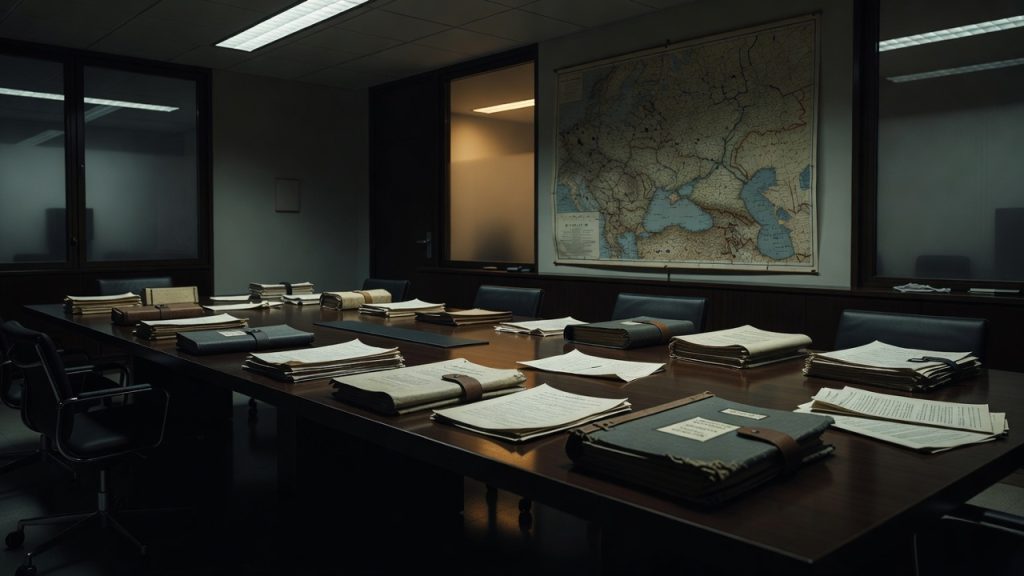
Empty Geneva conference room for BWC confidence-building measures — ConspiracyRealist.com

Every spring, governments that signed the world’s ban on biological weapons are supposed to file their homework. Not war plans. Not inspector access. Paper. Declarations about labs, biodefense programs, old offenses, vaccine plants, disease outbreaks. The language is calm. The mechanism is bureaucratic. But in the strange architecture of bioweapons control, these annual confidence-building measures are asked to carry a burden that sounds bigger than their name. They are supposed to reduce suspicion in a field built for secrecy. The question is whether they actually do—or whether they mostly keep the fear dressed in paperwork.

The Case For

The treaty’s transparency system looks thinner the closer you get

The United Nations Office for Disarmament Affairs says the Biological Weapons Convention’s confidence-building measures, or CBMs, were introduced in 1987 after the 1986 Second Review Conference. Their stated purpose is precise: to “prevent or reduce the occurrence of ambiguities, doubts and suspicions” and improve cooperation in peaceful biological work. On paper, that sounds like a sensible answer to a dangerous problem. In practice, it also sounds like an admission that the treaty still runs on uncertainty.

States Parties are supposed to submit annual reports by April 15 covering the previous year. Those reports can include declarations on research centers and laboratories, national biodefense programs, unusual disease outbreaks, national legislation, historical offensive or defensive programs, and vaccine production facilities. But UNODA also makes a crucial point: submissions can be made public or kept restricted to other States Parties. In other words, one of the treaty’s central transparency tools is not necessarily transparent to the public at all.

That is where the suspicion starts breathing. The 2025 Johns Hopkins analysis in Politics and the Life Sciences puts the problem plainly: CBM participation did not rise above half of all States Parties in any year until 2021, and of 104 submissions in 2023, only 31 were publicly available. That is not a fringe allegation. That is the treaty’s own support structure operating with patchy participation, limited visibility, and restricted outside scrutiny.

Paperwork can calm a room without proving much

If you already think governments prefer ambiguity in the bioweapons space, CBMs can look less like oversight than containment. They create the appearance of routine disclosure while leaving enormous room for omissions, soft descriptions, uneven detail, and simple nonparticipation. The BWC has no standing inspection organization comparable to the Chemical Weapons Convention. That means annual declarations are doing work that, in another arms-control regime, would be backed by inspectors, site visits, and a stronger institutional spine.

That tension fits naturally with this site’s growing biowarfare cluster. The Biological Weapons Convention: Ban or Blindfold? asked whether the treaty’s prohibition was stronger on principle than enforcement. Government Secrets has tracked the broader pattern for months: renunciations, restrictions, and reforms that still leave the public staring through frosted glass. In that light, CBMs can look like the perfect Cold War afterlife mechanism—enough disclosure to claim accountability, not enough to silence doubt.

The Realist’s Eye

Weak transparency is not the same thing as fake transparency

The realist objection matters here. CBMs were never designed to be a magic substitute for full verification. They were politically binding confidence measures built on cooperation, not a surprise-inspection regime with legal teeth. UNODA’s history of the system shows that the forms were expanded in 1991, improved again in 2006 with electronic submission, and revised in 2011. That record suggests an imperfect mechanism that States Parties kept trying to refine, not a completely cynical shell game.

There is also a practical reason the paperwork remains awkward. Biology is not missile counting. Dual-use research blurs lines that are already difficult to police. A vaccine facility, a biodefense laboratory, and a program with more troubling potential can share equipment, expertise, and methods. Governments do have legitimate reasons to protect sensitive health-security and commercial information. The U.S. State Department’s 2002 BWC fact sheet, written after the collapse of the protocol talks, argued that traditional verification tools were poorly suited to biology and pushed instead for a broader package of export controls, preparedness, and nonproliferation measures.

Even the Johns Hopkins paper, which is unsparing about low participation and limited public access, does not say CBMs are worthless. It argues they still matter because, in the absence of a treaty protocol or verification regime, they provide one of the few recurring channels for structured disclosure. The authors’ complaint is not that the system is imaginary. It is that the cost-benefit ratio is poor: too much burden, too little value, too little analysis, and too little incentive for states to make the reports more useful.

That is the harder conclusion to sit with. Maybe CBMs are not a theatrical decoy. Maybe they are the best modest tool a verification-starved treaty has managed to keep alive. But modest tools can still create false comfort when audiences assume they are stronger than they are. The files exist. The deadlines exist. The reporting forms exist. The open question is how much confidence any of that should buy.

What We Know For Certain

  • BWC confidence-building measures were introduced in 1987 following decisions taken at the 1986 Second Review Conference.
  • States Parties are expected to submit annual CBM reports by April 15 covering the previous calendar year.
  • Current CBM reporting covers laboratories and research centers, biodefense programs, outbreaks, legislation, past programs, and vaccine production facilities.
  • States Parties may choose whether their CBM submissions are publicly available or restricted to other States Parties.
  • A 2025 Johns Hopkins study reported that of 104 submissions in 2023, only 31 were publicly available.

The Unanswered Questions

  • How much can annual declarations deter cheating when many submissions remain nonpublic and participation has historically been inconsistent?
  • What information do states routinely omit because the forms are politically binding rather than enforceable in the way inspections would be?
  • How should the public evaluate biodefense declarations when modern biology makes legitimate and potentially threatening work hard to separate?
  • Would wider public release and independent analysis of CBMs increase confidence, or just reveal how thin the current system really is?
  • If the BWC still lacks a true verification regime, are CBMs a bridge to stronger oversight or the substitute the world settled for?

The Closer — You Decide

Some conspiracies survive because there is no paper trail. This one survives because there is one. Year after year, the treaty asks states to file declarations meant to narrow suspicion around one of the deadliest categories of weapons humanity ever designed. Yet the declarations themselves arrive with gaps, restrictions, and quiet caveats that keep the shadows where they were. Maybe that is diplomatic realism. Maybe it is transparency theater with better formatting. The documents are real. The limits are real. The evidence is on the table. You decide.


dive down the rabbit hole

BWC Confidence Measures: Transparency or Theater?

S-FX.com
Empty Geneva conference room for BWC confidence-building measures — ConspiracyRealist.com

Every spring, governments that signed the world’s ban on biological weapons are supposed to file their homework. Not war plans. Not inspector access. Paper. Declarations about labs, biodefense programs, old offenses, vaccine plants, disease outbreaks. The language is calm. The mechanism is bureaucratic. But in the strange architecture of bioweapons control, these annual confidence-building measures are asked to carry a burden that sounds bigger than their name. They are supposed to reduce suspicion in a field built for secrecy. The question is whether they actually do—or whether they mostly keep the fear dressed in paperwork.

The Case For

The treaty’s transparency system looks thinner the closer you get

The United Nations Office for Disarmament Affairs says the Biological Weapons Convention’s confidence-building measures, or CBMs, were introduced in 1987 after the 1986 Second Review Conference. Their stated purpose is precise: to “prevent or reduce the occurrence of ambiguities, doubts and suspicions” and improve cooperation in peaceful biological work. On paper, that sounds like a sensible answer to a dangerous problem. In practice, it also sounds like an admission that the treaty still runs on uncertainty.

States Parties are supposed to submit annual reports by April 15 covering the previous year. Those reports can include declarations on research centers and laboratories, national biodefense programs, unusual disease outbreaks, national legislation, historical offensive or defensive programs, and vaccine production facilities. But UNODA also makes a crucial point: submissions can be made public or kept restricted to other States Parties. In other words, one of the treaty’s central transparency tools is not necessarily transparent to the public at all.

That is where the suspicion starts breathing. The 2025 Johns Hopkins analysis in Politics and the Life Sciences puts the problem plainly: CBM participation did not rise above half of all States Parties in any year until 2021, and of 104 submissions in 2023, only 31 were publicly available. That is not a fringe allegation. That is the treaty’s own support structure operating with patchy participation, limited visibility, and restricted outside scrutiny.

Paperwork can calm a room without proving much

If you already think governments prefer ambiguity in the bioweapons space, CBMs can look less like oversight than containment. They create the appearance of routine disclosure while leaving enormous room for omissions, soft descriptions, uneven detail, and simple nonparticipation. The BWC has no standing inspection organization comparable to the Chemical Weapons Convention. That means annual declarations are doing work that, in another arms-control regime, would be backed by inspectors, site visits, and a stronger institutional spine.

That tension fits naturally with this site’s growing biowarfare cluster. The Biological Weapons Convention: Ban or Blindfold? asked whether the treaty’s prohibition was stronger on principle than enforcement. Government Secrets has tracked the broader pattern for months: renunciations, restrictions, and reforms that still leave the public staring through frosted glass. In that light, CBMs can look like the perfect Cold War afterlife mechanism—enough disclosure to claim accountability, not enough to silence doubt.

The Realist’s Eye

Weak transparency is not the same thing as fake transparency

The realist objection matters here. CBMs were never designed to be a magic substitute for full verification. They were politically binding confidence measures built on cooperation, not a surprise-inspection regime with legal teeth. UNODA’s history of the system shows that the forms were expanded in 1991, improved again in 2006 with electronic submission, and revised in 2011. That record suggests an imperfect mechanism that States Parties kept trying to refine, not a completely cynical shell game.

There is also a practical reason the paperwork remains awkward. Biology is not missile counting. Dual-use research blurs lines that are already difficult to police. A vaccine facility, a biodefense laboratory, and a program with more troubling potential can share equipment, expertise, and methods. Governments do have legitimate reasons to protect sensitive health-security and commercial information. The U.S. State Department’s 2002 BWC fact sheet, written after the collapse of the protocol talks, argued that traditional verification tools were poorly suited to biology and pushed instead for a broader package of export controls, preparedness, and nonproliferation measures.

Even the Johns Hopkins paper, which is unsparing about low participation and limited public access, does not say CBMs are worthless. It argues they still matter because, in the absence of a treaty protocol or verification regime, they provide one of the few recurring channels for structured disclosure. The authors’ complaint is not that the system is imaginary. It is that the cost-benefit ratio is poor: too much burden, too little value, too little analysis, and too little incentive for states to make the reports more useful.

That is the harder conclusion to sit with. Maybe CBMs are not a theatrical decoy. Maybe they are the best modest tool a verification-starved treaty has managed to keep alive. But modest tools can still create false comfort when audiences assume they are stronger than they are. The files exist. The deadlines exist. The reporting forms exist. The open question is how much confidence any of that should buy.

What We Know For Certain

  • BWC confidence-building measures were introduced in 1987 following decisions taken at the 1986 Second Review Conference.
  • States Parties are expected to submit annual CBM reports by April 15 covering the previous calendar year.
  • Current CBM reporting covers laboratories and research centers, biodefense programs, outbreaks, legislation, past programs, and vaccine production facilities.
  • States Parties may choose whether their CBM submissions are publicly available or restricted to other States Parties.
  • A 2025 Johns Hopkins study reported that of 104 submissions in 2023, only 31 were publicly available.

The Unanswered Questions

  • How much can annual declarations deter cheating when many submissions remain nonpublic and participation has historically been inconsistent?
  • What information do states routinely omit because the forms are politically binding rather than enforceable in the way inspections would be?
  • How should the public evaluate biodefense declarations when modern biology makes legitimate and potentially threatening work hard to separate?
  • Would wider public release and independent analysis of CBMs increase confidence, or just reveal how thin the current system really is?
  • If the BWC still lacks a true verification regime, are CBMs a bridge to stronger oversight or the substitute the world settled for?

The Closer — You Decide

Some conspiracies survive because there is no paper trail. This one survives because there is one. Year after year, the treaty asks states to file declarations meant to narrow suspicion around one of the deadliest categories of weapons humanity ever designed. Yet the declarations themselves arrive with gaps, restrictions, and quiet caveats that keep the shadows where they were. Maybe that is diplomatic realism. Maybe it is transparency theater with better formatting. The documents are real. The limits are real. The evidence is on the table. You decide.

BWC Confidence Measures: Transparency or Theater?

Empty Geneva conference room for BWC confidence-building measures — ConspiracyRealist.com

Every spring, governments that signed the world’s ban on biological weapons are supposed to file their homework. Not war plans. Not inspector access. Paper. Declarations about labs, biodefense programs, old offenses, vaccine plants, disease outbreaks. The language is calm. The mechanism is bureaucratic. But in the strange architecture of bioweapons control, these annual confidence-building measures are asked to carry a burden that sounds bigger than their name. They are supposed to reduce suspicion in a field built for secrecy. The question is whether they actually do—or whether they mostly keep the fear dressed in paperwork.

The Case For

The treaty’s transparency system looks thinner the closer you get

The United Nations Office for Disarmament Affairs says the Biological Weapons Convention’s confidence-building measures, or CBMs, were introduced in 1987 after the 1986 Second Review Conference. Their stated purpose is precise: to “prevent or reduce the occurrence of ambiguities, doubts and suspicions” and improve cooperation in peaceful biological work. On paper, that sounds like a sensible answer to a dangerous problem. In practice, it also sounds like an admission that the treaty still runs on uncertainty.

States Parties are supposed to submit annual reports by April 15 covering the previous year. Those reports can include declarations on research centers and laboratories, national biodefense programs, unusual disease outbreaks, national legislation, historical offensive or defensive programs, and vaccine production facilities. But UNODA also makes a crucial point: submissions can be made public or kept restricted to other States Parties. In other words, one of the treaty’s central transparency tools is not necessarily transparent to the public at all.

That is where the suspicion starts breathing. The 2025 Johns Hopkins analysis in Politics and the Life Sciences puts the problem plainly: CBM participation did not rise above half of all States Parties in any year until 2021, and of 104 submissions in 2023, only 31 were publicly available. That is not a fringe allegation. That is the treaty’s own support structure operating with patchy participation, limited visibility, and restricted outside scrutiny.

Paperwork can calm a room without proving much

If you already think governments prefer ambiguity in the bioweapons space, CBMs can look less like oversight than containment. They create the appearance of routine disclosure while leaving enormous room for omissions, soft descriptions, uneven detail, and simple nonparticipation. The BWC has no standing inspection organization comparable to the Chemical Weapons Convention. That means annual declarations are doing work that, in another arms-control regime, would be backed by inspectors, site visits, and a stronger institutional spine.

That tension fits naturally with this site’s growing biowarfare cluster. The Biological Weapons Convention: Ban or Blindfold? asked whether the treaty’s prohibition was stronger on principle than enforcement. Government Secrets has tracked the broader pattern for months: renunciations, restrictions, and reforms that still leave the public staring through frosted glass. In that light, CBMs can look like the perfect Cold War afterlife mechanism—enough disclosure to claim accountability, not enough to silence doubt.

The Realist’s Eye

Weak transparency is not the same thing as fake transparency

The realist objection matters here. CBMs were never designed to be a magic substitute for full verification. They were politically binding confidence measures built on cooperation, not a surprise-inspection regime with legal teeth. UNODA’s history of the system shows that the forms were expanded in 1991, improved again in 2006 with electronic submission, and revised in 2011. That record suggests an imperfect mechanism that States Parties kept trying to refine, not a completely cynical shell game.

There is also a practical reason the paperwork remains awkward. Biology is not missile counting. Dual-use research blurs lines that are already difficult to police. A vaccine facility, a biodefense laboratory, and a program with more troubling potential can share equipment, expertise, and methods. Governments do have legitimate reasons to protect sensitive health-security and commercial information. The U.S. State Department’s 2002 BWC fact sheet, written after the collapse of the protocol talks, argued that traditional verification tools were poorly suited to biology and pushed instead for a broader package of export controls, preparedness, and nonproliferation measures.

Even the Johns Hopkins paper, which is unsparing about low participation and limited public access, does not say CBMs are worthless. It argues they still matter because, in the absence of a treaty protocol or verification regime, they provide one of the few recurring channels for structured disclosure. The authors’ complaint is not that the system is imaginary. It is that the cost-benefit ratio is poor: too much burden, too little value, too little analysis, and too little incentive for states to make the reports more useful.

That is the harder conclusion to sit with. Maybe CBMs are not a theatrical decoy. Maybe they are the best modest tool a verification-starved treaty has managed to keep alive. But modest tools can still create false comfort when audiences assume they are stronger than they are. The files exist. The deadlines exist. The reporting forms exist. The open question is how much confidence any of that should buy.

What We Know For Certain

  • BWC confidence-building measures were introduced in 1987 following decisions taken at the 1986 Second Review Conference.
  • States Parties are expected to submit annual CBM reports by April 15 covering the previous calendar year.
  • Current CBM reporting covers laboratories and research centers, biodefense programs, outbreaks, legislation, past programs, and vaccine production facilities.
  • States Parties may choose whether their CBM submissions are publicly available or restricted to other States Parties.
  • A 2025 Johns Hopkins study reported that of 104 submissions in 2023, only 31 were publicly available.

The Unanswered Questions

  • How much can annual declarations deter cheating when many submissions remain nonpublic and participation has historically been inconsistent?
  • What information do states routinely omit because the forms are politically binding rather than enforceable in the way inspections would be?
  • How should the public evaluate biodefense declarations when modern biology makes legitimate and potentially threatening work hard to separate?
  • Would wider public release and independent analysis of CBMs increase confidence, or just reveal how thin the current system really is?
  • If the BWC still lacks a true verification regime, are CBMs a bridge to stronger oversight or the substitute the world settled for?

The Closer — You Decide

Some conspiracies survive because there is no paper trail. This one survives because there is one. Year after year, the treaty asks states to file declarations meant to narrow suspicion around one of the deadliest categories of weapons humanity ever designed. Yet the declarations themselves arrive with gaps, restrictions, and quiet caveats that keep the shadows where they were. Maybe that is diplomatic realism. Maybe it is transparency theater with better formatting. The documents are real. The limits are real. The evidence is on the table. You decide.

Table of contents