The Chain-of-Custody Conspiracy: How UAP Evidence Gets Filtered, Classified, and Handed Back Too Broken to Prove Anything
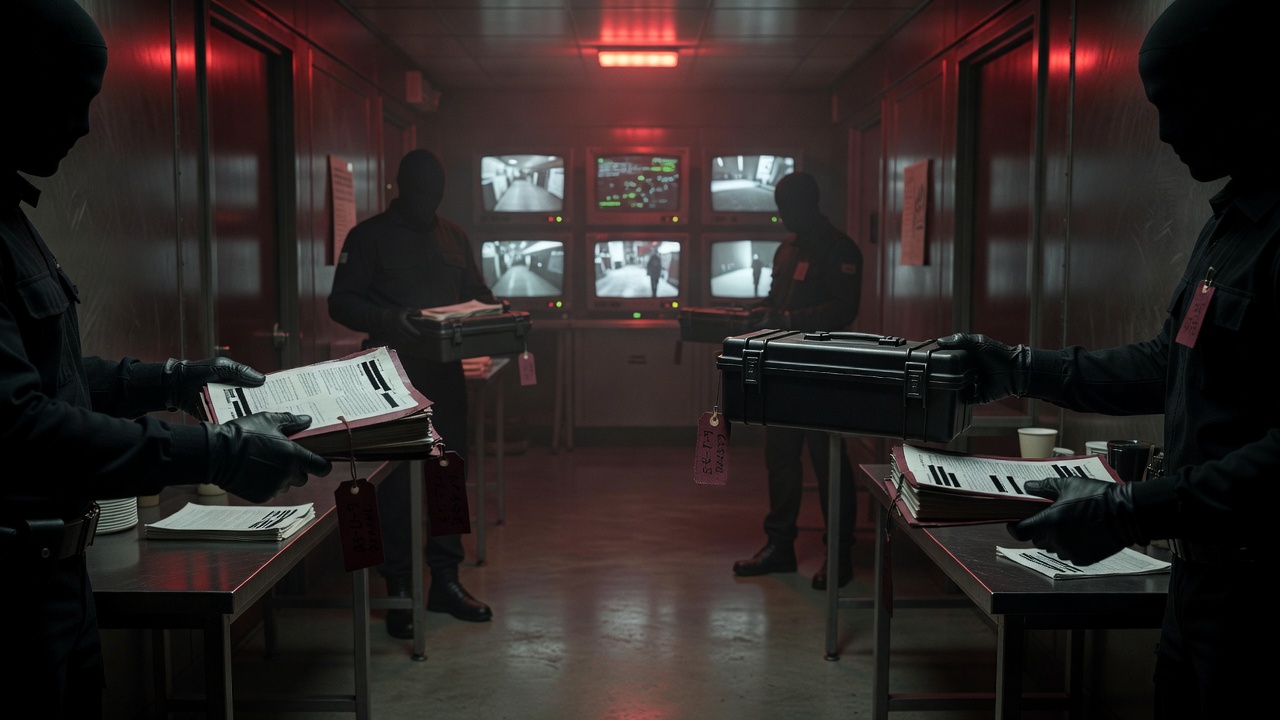
A strange object cuts across restricted airspace. A sensor locks on. A pilot reports it. Somewhere between the cockpit, the intel vault, the archive, and the public release, the sharpest edges vanish. The clip gets shorter. The context gets thinner. The paper trail goes cold. By the time the evidence reaches daylight, it is often intact enough to fascinate—but too fractured to convict reality of anything.
The Case For
The most explosive UAP mystery may not be what was seen, but what happens to the evidence afterward
The chain-of-custody conspiracy begins with a simple suspicion: the public is not merely starved of answers, it is shown evidence only after the evidence has passed through so many institutional hands that its decisive value is gone. NASA’s 2023 UAP Independent Study Team report says analysis is hampered by poor sensor calibration, too few measurements, weak baseline data, and a lack of sensor metadata. It also says eyewitness accounts usually lack the information needed to make definitive conclusions about a UAP’s provenance. That word matters. Provenance is another way of asking whether the record can be trusted from collection to interpretation.
The 2021 ODNI preliminary assessment sharpened the same point. It said limited high-quality reporting hampers firm conclusions, even though many reviewed incidents were registered across multiple sensors. In other words, some of the cases that matter most appear to begin with more than rumor. Yet the official system still says it lacks sufficient specificity. That tension is exactly where chain-of-custody suspicions grow: if the event was seen on radar, infrared, electro-optical systems, and by trained observers, why does the public record so often arrive as a clipped clip plus a shrug?
AARO’s FY2024 annual report said its ability to resolve cases remained constrained by a lack of timely and actionable sensor data. The FY2025 report repeated the same limiting factor while sending 191 reports into the Active Archive because the available information was not sufficient for resolution. That is a striking pattern. The government does not say it lacks interest. It says it lacks usable evidence at the stage where conclusions are made. Conspiracy realists hear that and ask whether the evidence is failing naturally—or being degraded by process.
The documentary trail around records management makes the suspicion more unsettling. The National Archives’ UAP Records Collection FAQ says agencies must identify UAP records in any format, transfer digital copies, include metadata, and simultaneously provide redacted and unredacted versions for publicly releasable records. That sounds like transparency, but it also confirms that metadata, version control, and transfer timing are now the battleground. We have seen the same tension in our reporting on the searchable transparency conspiracy and the metadata blackout conspiracy. The record survives, but its evidentiary chain keeps arriving damaged.
The Realist’s Eye
Broken custody does not automatically mean malicious tampering—but it does create the perfect habitat for permanent doubt
A sober view has to resist cinematic overreach. Military and intelligence systems are not built first for public persuasion. They are built for mission performance, compartmentation, and source protection. Files may be clipped because full sensor modes reveal capabilities. Operators may preserve only what seems operationally relevant. Legal review, declassification, and interagency routing can all slow or narrow what survives into the open record. None of that requires a secret cabal managing every frame.
There is also a practical reason chain-of-custody failures happen. As NASA noted, much UAP material comes from observations initially acquired for other purposes and not optimized for systematic scientific analysis. AARO’s FY2024 report says the majority of unresolved cases remain unresolved due to a lack of data needed for further analysis. The same report says AARO is authorized to receive classified UAP information at all levels, including restrictive and compartmented access controls. That cuts two ways. It weakens the claim that every crucial record is being hidden from all investigators. But it strengthens the idea that the public conversation is happening on a permanently incomplete copy of the file.
The 2025 AARO-sponsored workshop paper on narrative data, infrastructures, and analysis may be the most revealing document of all. It says most UAP reports are fragmented, sparse, and unstructured, and it names classification, retention failures, stigma, and inconsistent metadata as core barriers. That is not internet paranoia. That is an official-adjacent admission that evidence integrity problems sit at the center of the field. The realist conclusion is not that this proves nonhuman technology. The realist conclusion is that the institutional pipeline is so weak, opaque, and fragmented that even extraordinary cases can be converted into forever-ambiguous artifacts.
The 2023 House hearing on UAP transparency and national security added the human dimension. Ryan Graves said sightings are grossly underreported and that stigma remains powerful. If reporting starts late, classification walls rise early, and records become thinner as they move, then every later analyst inherits a weaker case than the original witness. That does not prove a coordinated deception. It does suggest a machinery of custody that routinely produces public uncertainty as its final product.
What We Know For Certain
- NASA said UAP analysis is hindered by missing metadata, weak calibration, too few measurements, and poor provenance for many reports.
- ODNI said many reviewed incidents involved multiple sensors, but the government still lacked sufficient specificity to draw firm conclusions.
- AARO’s FY2024 and FY2025 reports both said case resolution remains limited by a lack of timely, actionable sensor data.
- AARO’s FY2025 report said 191 reports were moved into the Active Archive because the available information was insufficient for resolution.
- The National Archives now requires metadata-rich digital transfers and paired redacted/unredacted versions for publicly releasable UAP records.
- The 2025 AARO-sponsored workshop identified classification, retention failures, stigma, and inconsistent metadata as major obstacles to trustworthy UAP analysis.
The Unanswered Questions
- How many strong UAP incidents begin with rich sensor data but lose decisive value during clipping, transfer, classification review, or public release?
- Who can audit the full custody trail when evidence moves across operators, commands, intelligence channels, archivists, and declassification offices?
- Will Record Group 615 expose enough metadata to reconstruct evidentiary history, or mostly preserve the shell of records after their critical context has been stripped away?
- If AARO can receive information at every classification level, why does the public side of the story still so often look like fragments detached from the original chain?
The Closer — You Decide
Maybe there is no master cover-up—only bureaucracy, secrecy rules, and evidence collected by systems never designed for public proof. But maybe that is exactly what makes the chain-of-custody conspiracy so durable. You do not need to destroy the truth if you can process it until it becomes permanently arguable. A sighting becomes a file. A file becomes an excerpt. An excerpt becomes a controversy. And somewhere between the first detection and the final release, certainty bleeds out. The question is no longer just what flew through the sky. The question is who handled the evidence, what was removed along the way, and whether the public is being asked to judge a case after the decisive pieces have already left the room.