The Searchable Transparency Conspiracy: How Governments Publish Secrets Where Nobody Can Find Them
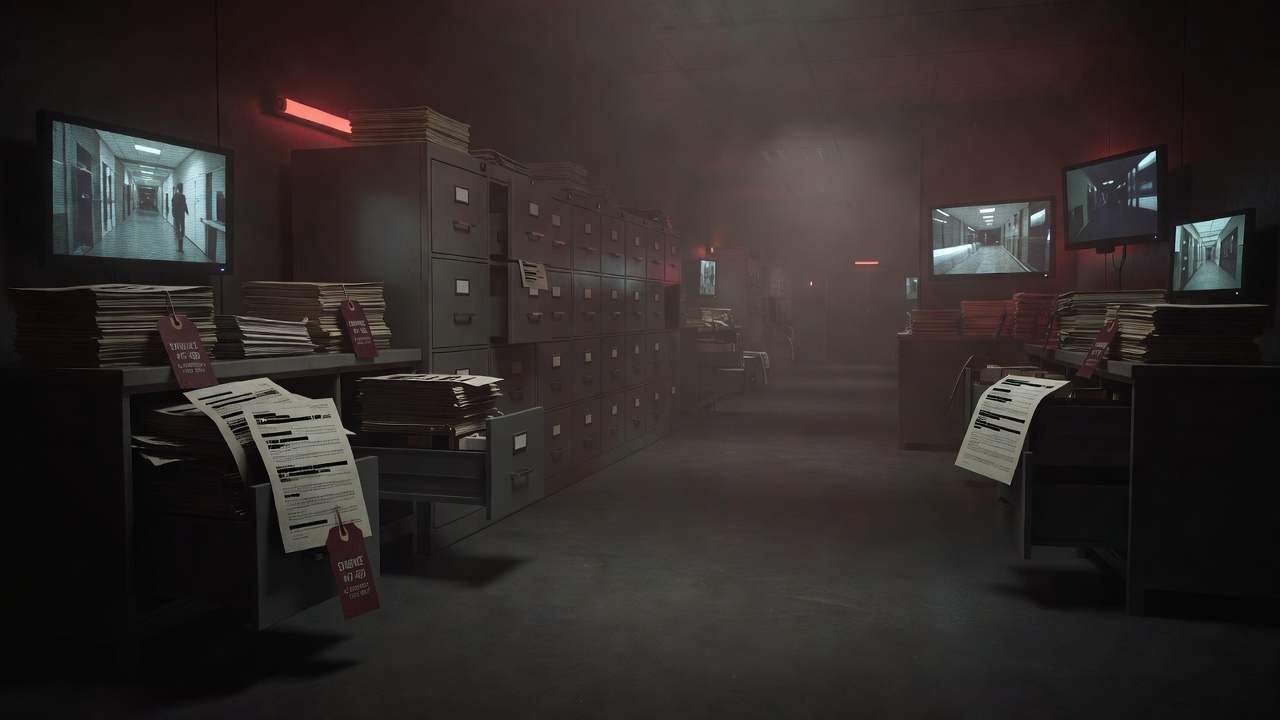
A file goes online at 2:13 a.m. A portal updates without fanfare. A PDF appears, searchable in theory, buried in practice. Somewhere in the machinery of modern disclosure, the searchable transparency conspiracy turns publication into camouflage—letting institutions say the record is public while making discovery feel like a scavenger hunt through smoke.
The Case For
A record can be technically public and still function like a secret
The searchable transparency conspiracy begins with an uncomfortable fact: governments no longer need to hide every record in a vault to keep the public in the dark. Sometimes they can publish it, label the system transparent, and rely on fragmentation, poor indexing, inconsistent metadata, and weak search design to do the rest. The file exists. The link exists. The disclosure happened. Yet the practical ability to locate, interpret, and connect the record to a larger pattern remains thin enough that secrecy survives in a more modern costume.
FOIA.gov says the public has a right to request agency records and also says agencies must proactively post certain categories of frequently requested material online. On paper, that sounds like the antidote to hidden government. But the law’s promise is only half the battle. A record dumped into a difficult reading room, posted with weak descriptions, or stranded in a format that resists useful searching can be “public” in the same hollow sense that a book is available when it has been shelved without a catalog number in a basement no one knows exists.
The Justice Department’s guidance on proactive disclosures quietly reveals how central usability really is. It says agency FOIA websites should be “easily navigable” and that records should be presented in the “most useful, searchable, and open formats possible.” That sentence matters because institutions do not issue guidance like that unless the opposite problem is real. If navigability, searchability, and open formats must be repeatedly emphasized, then confusing publication is not a paranoid fantasy. It is a known administrative risk built into the transparency system itself.
The same pattern appears in the Justice Department’s 2026 Chief FOIA Officer Report. DOJ reported 159,743 FOIA requests received in FY 2025, a 20.5% jump over the prior year, while backlog rose to 29,308. The report also says components maintain FOIA libraries, OIP posts monthly FOIA logs, and agencies are trying to place information in open, machine-readable, and machine-actionable formats. Read between the lines and the deeper story emerges: the state knows the public is drowning in volume, delay, and format problems at the same moment it is praising proactive disclosure. In a system like that, publication alone does not equal visibility. It can just as easily create a maze.
Search itself can become a gatekeeper, and the archives admit as much
The searchable transparency conspiracy becomes more plausible once you examine how archives describe their own search behavior. The National Archives’ Catalog Search Tips explain that multiple words entered without operators are automatically combined with AND, that exact phrases must be quoted, that stop words are ignored, and that search expansions are not turned on by default. In other words, finding records is not merely a matter of typing what you want. It depends on knowing the system’s logic, its quirks, and the vocabulary used by the institution that created the records.
The National Archives’ guide to using the Catalog adds another revealing detail: the catalog can pull results from multiple data sources, including archival descriptions, Archives.gov, and Presidential Libraries, and it notes that the catalog has no control over the relevancy ranking of federated results returned from outside sources. That is not evidence of bad faith by itself. It is evidence that the path from “this record is public” to “a researcher can reliably find it” is far more fragile than official transparency rhetoric suggests. Different repositories, ranking systems, descriptions, file formats, and metadata standards can fracture one story into many disconnected scraps.
Metadata is where this gets especially dark. The Office of Government Information Services’ FOIA Advisory Committee recommendations call for best practices on releasing records in native format, including metadata, and for regular online publication of searchable FOIA logs in Excel or CSV. That is practically a confession that too many public records still arrive stripped of context or trapped in forms that cannot be usefully sorted, filtered, or cross-referenced. When metadata is weak, missing, flattened, or inconsistently preserved, the public may receive the page while losing the architecture around the page—the dates, custodians, threading, revisions, and relationships that turn isolated disclosure into actual understanding.
And this is the key conspiratorial insight: modern secrecy may not depend on keeping every explosive document permanently hidden. It may depend on forcing outsiders to find needles in a warehouse of mislabeled boxes, then congratulating the warehouse for being open to visitors.
The Realist’s Eye
Not every bad search result is a plot, but the structure still rewards opacity
A disciplined reading requires restraint. Some of this chaos is mundane. Government information systems are old, decentralized, underfunded, and built by layers of contractors and agencies over decades. Anyone who has searched large institutional archives knows that clumsy interfaces, inconsistent indexing, and awkward PDFs can emerge from bureaucracy without a mastermind directing the fog. The searchable transparency conspiracy does not require omniscient villains at every keyboard.
But the absence of a mastermind does not make the effect less real. Systems can produce durable opacity because the incentives are aligned that way. Agencies are rewarded for legal compliance, not necessarily for maximum discoverability. They can count a disclosure as completed when the document is posted, even if the path to that document is cumbersome, badly labeled, or invisible to anyone lacking insider terminology. Once that happens, transparency becomes a box checked on an annual report while public comprehension remains stalled.
The official record itself points toward that gap. OGIS did not recommend searchable FOIA logs and metadata-aware releases for poetic reasons. DOJ did not tell agencies to prioritize navigable websites and open formats just to decorate a manual. Those recommendations exist because the system knows that records can be released in ways that frustrate actual use. The conspiracy frame, then, is not that every broken search bar conceals a scandal. It is that modern institutions have discovered a softer method of concealment: disclosure without discoverability.
The bigger pattern is managed transparency, not total secrecy
This is why the topic belongs to a larger high-level arc. In our recent reporting on the archive laundering conspiracy, the classification conspiracy, and the Glomar conspiracy, the same architecture keeps appearing. One doctrine withholds. Another delays. Another fragments. Another says the file is public but leaves it stranded in a metadata swamp. Different mechanisms, same destination: the state remains legible to itself before it becomes legible to the public.
The strongest version of the searchable transparency conspiracy is therefore not that governments never disclose anything important. Clearly they do. The stronger claim is that disclosure can be staged in forms that preserve institutional advantage. If the public must know exact terms, exact offices, exact date ranges, exact file series, and exact systems before it can meaningfully search, then the insider retains a structural lead over the outsider. The archive becomes a theater where openness is performed while comprehension is rationed.
There is also an epistemic cost. Researchers, journalists, and ordinary citizens may fail to connect records that sit in different silos under different labels. One office calls something a case file. Another calls it correspondence. Another calls it a briefing memo. Another posts it in a scanned PDF with flattened text. Another leaves it in a searchable spreadsheet that no one links from the main page. The public then experiences fragmentation not as censorship but as exhaustion. That kind of exhaustion may be one of the most elegant forms of secrecy ever devised.
What We Know For Certain
- FOIA.gov says agencies must release records unless an exemption applies and must proactively post certain categories of records online.
- DOJ’s proactive disclosure guidance says agency FOIA websites should be easily navigable and records should appear in useful, searchable, and open formats.
- The DOJ 2026 Chief FOIA Officer Report says DOJ received 159,743 FOIA requests in FY 2025 and that backlog rose to 29,308 even as agencies expanded proactive disclosures and FOIA logs.
- The National Archives’ Catalog Search Tips show that finding records depends on specific query logic, phrase handling, and optional expansions that are not enabled by default.
- The National Archives’ Catalog guide says search results can involve multiple data sources and differing relevancy ranking behaviors.
- OGIS’s FOIA Advisory Committee recommendations call for searchable FOIA logs in Excel/CSV and best practices for releases in native format, including metadata.
The Unanswered Questions
- How many officially public records remain functionally obscure because they are poorly tagged, weakly indexed, or isolated across incompatible repositories?
- How often do agencies satisfy the legal act of disclosure while falling short of meaningful discoverability for the public?
- When metadata is stripped, flattened, or inconsistently preserved, how much context disappears even though the document itself is technically released?
- Could searchable FOIA logs and native-format releases radically change what outsiders are able to piece together about hidden programs?
- At what point does transparency measured by upload count become indistinguishable from secrecy measured by navigational failure?
The Closer — You Decide
Maybe the searchable transparency conspiracy is just the inevitable friction of giant bureaucracies trying, imperfectly, to open immense archives. Maybe no one is deliberately burying anything. Maybe the maze is only a maze because the building is old.
But that defense has its own eerie logic. If a system repeatedly publishes records in ways that demand insider knowledge, patience, technical fluency, and luck, then the public is still being sorted by access—only now the barrier is not a locked drawer. It is discoverability itself. The file is “available.” The truth is “online.” The secret survives in the distance between those phrases.
That is why this conspiracy feels so modern. Yesterday’s state hid the dossier. Today’s state can upload the dossier, scatter the breadcrumbs across portals, flatten the metadata, drown the signal in volume, and call the matter resolved. In that world, secrecy does not always wear a black marker. Sometimes it wears a search box.