Menu

The CIA and Prison Experimentation: What Records Reveal

The CIA and Prison Experimentation: What Records Reveal

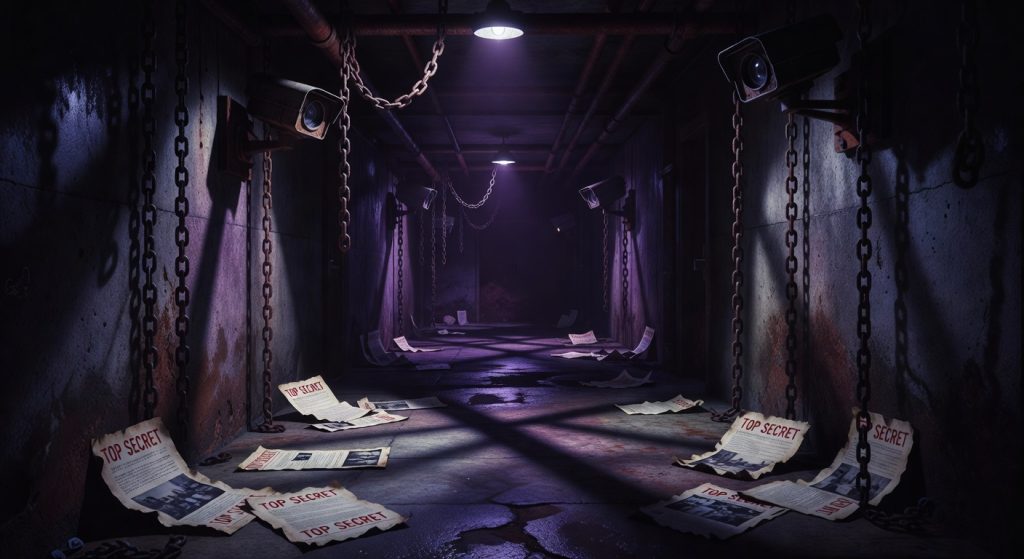
The file was labeled MKULTRA Subproject 35. Buried in a cardboard box at a records facility in Maryland, it sat untouched for decades — until a 1977 Senate hearing ripped it open. Inside was something most Americans weren’t prepared to believe their government had done: a methodical, CIA-funded program to experiment on unwitting prisoners, patients, and ordinary citizens, using LSD, electroshock, and psychological torture to crack open the human mind like a walnut.

What you’re about to read isn’t a theory. It’s history — documented, declassified, and still only partially understood.

The Program That Wasn’t Supposed to Exist

If you’d asked a CIA spokesperson in 1965 whether the agency ran mind control experiments on American prisoners, you’d have gotten a laugh and a denial. That denial lasted until 1977, when CIA Director Stansfield Turner admitted to the Senate that the agency had, in fact, conducted exactly that — for over two decades.

The program was called MKULTRA. It ran from 1953 to at least 1973, and according to declassified records, it encompassed 150 separate research projects conducted at 80 institutions — including universities, hospitals, and prisons. Its budget ran into the millions. Its human toll remains incalculable.

The impetus was fear. It was the height of the Cold War, and American intelligence believed the Soviets and Chinese had cracked the code on “brainwashing.” The CIA had watched as U.S. POWs came home from Korea making bizarre pro-communist statements. They needed answers — and they needed them fast. The question they were asking: Could you chemically, psychologically, or physically compel a person to reveal secrets? Could you wipe a mind clean and rewrite it?

To find out, they turned to the most vulnerable people they could find.

The Prison Connection: Where Experimentation Found Its Subjects

Prisons were, from the CIA’s perspective, logistically ideal. Prisoners couldn’t say no. They couldn’t leave. They could be observed around the clock. And in the 1950s and 60s, CIA prison experimentation didn’t carry the moral stigma it does today. Researchers had broad latitude, oversight was minimal, and many subjects genuinely didn’t know what was being done to them.

One of the most documented examples is the California Medical Facility at Vacaville. Through the 1960s and into the 1970s, this prison housed a research program that drew direct CIA interest. Inmates were administered experimental drugs, some psychedelic, some sedative, under the banner of psychiatric research. Records later obtained through the Freedom of Information Act showed connections between these studies and the broader MKULTRA network.

At Lexington Federal Narcotic Farm in Kentucky — a facility that was technically a hospital but functioned like a prison — CIA-funded researchers gave heroin addicts doses of LSD, mescaline, and other substances in exchange for drugs. The subjects were told this was treatment. It wasn’t. It was data collection. The project was run under Dr. Harris Isbell, who at one point kept seven Black inmates on LSD for 77 consecutive days — longer than any documented clinical trial before or since.

These weren’t rogue researchers acting alone. They were funded by the Society for the Investigation of Human Ecology — a CIA front organization — and operating under the direct supervision of MKULTRA’s chief architect, Dr. Sidney Gottlieb.

The Architect: Sidney Gottlieb and the Quest to Control Minds

To understand CIA prison experimentation, you have to understand Sidney Gottlieb — the brilliant, morally detached chemist who ran MKULTRA from its inception.

Gottlieb had a PhD from Caltech and a club foot he’d lived with his whole life. He kept goats. He folk danced. He also, for over two decades, oversaw some of the most grotesque human experiments ever funded by a democratic government.

Under Gottlieb’s direction, MKULTRA researchers explored every conceivable method of psychological manipulation. Mind control techniques tested on unwitting subjects included:

  • Massive doses of LSD — sometimes given without warning to CIA employees, mental patients, and prisoners
  • Extended sensory deprivation
  • Electroconvulsive therapy applied beyond clinical norms
  • Hypnosis combined with chemical sedation
  • Prolonged sleep deprivation
  • Verbal and psychological harassment designed to induce dissociation

The goal, per internal CIA memos obtained through FOIA, was to develop “the ability to plant suggestions, memories, and directives in the minds of subjects without their awareness.” They wanted sleeper agents. They wanted confessions on demand. They wanted leverage.

What they got, mostly, was chaos — and a body count.

Frank Olson and the Cost of Unwitting Experimentation

The most famous casualty of MKULTRA’s unwitting subject policy was Frank Olson, a U.S. Army biochemist and CIA contractor who was secretly dosed with LSD by Gottlieb at a retreat in Maryland in November 1953. Nine days later, Olson fell — or was pushed — from a 13th-floor window of the Hotel Statler in New York City. He died instantly.

For decades, the CIA classified the circumstances of Olson’s death. His family was told it was a suicide. Only in 1975, when the Rockefeller Commission investigated CIA domestic activities, did the agency admit it had drugged Olson without his knowledge. The Ford administration paid the family $750,000 in a quiet settlement.

Olson’s son Eric spent the rest of his adult life convinced his father was murdered — not because he cracked under LSD, but because he was about to blow the whistle on CIA biological weapons programs. In 1994, Olson’s body was exhumed. A forensic pathologist found evidence consistent with a blow to the head before the fall.

No one was ever charged.

What the Declassified Records Actually Show

In 1973, Gottlieb ordered MKULTRA files destroyed. Most were shredded. But in 1977, a CIA records search turned up approximately 20,000 documents that had been misfiled in a financial building — the bureaucratic equivalent of a skeleton in the wrong closet.

Those surviving declassified records are available today through the National Security Archive and partially through the CIA’s own FOIA Reading Room. What they reveal is systematic, not incidental, wrongdoing. The experimentation wasn’t a few bad actors — it was policy.

Key findings from declassified MKULTRA documents include:

  • Subproject 3: Testing of LSD on prisoner populations to measure “loss of integration” and suggestibility
  • Subproject 35: Funding of a research wing at a private psychiatric hospital (later identified as Allan Memorial Institute in Montreal) where Dr. Ewen Cameron conducted “psychic driving” — looping recorded messages to patients for 16 hours a day while they were kept in chemically induced comas
  • Subproject 68: Study of electroshock therapy at extreme intensities, specifically to induce amnesia and “wipe” prior personality

Cameron’s work at McGill University’s Allan Memorial Institute was perhaps the most disturbing subset of the entire MKULTRA program. His patients — mostly people seeking help for depression and anxiety — were subjected to months of drug-induced sleep, sensory deprivation, and intensive electroshock. Many emerged with no memory of their pasts. Some forgot how to read. Some forgot their own children.

Canada’s government paid reparations to survivors in the 1990s. The CIA quietly settled with others. You can read the Senate’s original hearing transcripts here: Project MKULTRA: The CIA’s Program of Research in Behavioral Modification (1977 Senate Hearing).

Operation Midnight Climax: The San Francisco Safe Houses

If MKULTRA’s prison experiments were the methodical arm of the program, Operation Midnight Climax was its wild, paranoid cousin.

From the late 1950s into the early 1960s, a CIA operative named George White ran a safe house in San Francisco’s Telegraph Hill neighborhood. The décor included one-way mirrors, recording equipment, and a steady supply of LSD. Sex workers, hired by White, would lure men back to the apartment. The men would be dosed with LSD without their knowledge. White would watch from behind the mirror, sipping martinis and taking notes.

The theory was that men in compromised states — sexually and chemically — might be more susceptible to interrogation or persuasion. The reality was that White appeared to enjoy the operation for its own sake.

White himself later wrote, with stunning candor: “I was a very minor missionary, actually a heretic, but I toiled wholeheartedly in the vineyards because it was fun, fun, fun. Where else could a red-blooded American boy lie, kill, cheat, steal, rape, and pillage with the sanction and blessing of the All-Highest?”

His files were among those Gottlieb ordered destroyed. But enough survived — and enough witnesses testified — that the Senate Church Committee could piece together the basic outline.

The Legal Void: How Was This Allowed?

The answer is uncomfortable: there were almost no legal protections for prisoners, mental patients, or involuntary subjects in the 1950s and 60s. The Nuremberg Code, developed after World War II specifically to prevent state-sponsored human experimentation, wasn’t legally binding in the United States. The National Research Act — which established the requirement for informed consent in federally funded research — wasn’t passed until 1974.

By then, most of the damage was done.

The CIA operated under a legal gray zone, using front organizations like the Human Ecology Fund and the Josiah Macy Jr. Foundation (some of whose funding the CIA influenced) to launder money into research grants. University researchers often didn’t know who was ultimately funding them. Prison doctors sometimes did — and complied anyway.

The accountability, when it came, was largely symbolic. No CIA officer was prosecuted. No MKULTRA researcher faced criminal charges. Gottlieb retired with a CIA commendation, moved to a Virginia farm, and raised goats until his death in 1999.

The Programs That Came After: MKSEARCH and ARTICHOKE

MKULTRA is the name history remembers, but it wasn’t the only program — and it wasn’t the first. Before MKULTRA came Project ARTICHOKE (1951–1953), which tested narcotics, hypnosis, and extreme interrogation on prisoners, defectors, and foreign nationals held in overseas CIA facilities. After MKULTRA came MKSEARCH (1964–1972), which continued behavioral modification research under a more restricted framework after growing internal concern about the program’s exposure risk.

What this chronology tells us is that CIA prison experimentation wasn’t an aberration. It was a sustained institutional commitment spanning at least two decades, with roots in the agency’s earliest days and successors that continued well after public exposure began.

Whether anything resembling these programs exists today remains unknown. The CIA’s current interrogation framework — governed post-9/11 by legal opinions later deemed torture — has its own documented history of abuse. The Senate Intelligence Committee’s Torture Report (2014) describes rectal feeding, sleep deprivation beyond 180 hours, and “enhanced interrogation” methods that bear uncomfortable similarities to MKULTRA-era techniques.

The methods evolved. The impulse didn’t.

What We Still Don’t Know

Even with 20,000 surviving documents, the MKULTRA record is incomplete by design. Gottlieb’s destruction order was thorough. Entire subprojects exist only as line items in financial ledgers, their contents unknown. We know 150 research projects were funded — we have detailed records on fewer than a third of them.

We don’t know exactly how many people were experimented on without their consent. Estimates range from several hundred to several thousand. We don’t know how many died as a result. We don’t know the full extent of experimentation conducted outside U.S. borders, where legal protections were even weaker.

We don’t know what Gottlieb knew about the Olson case that he took to his grave.

And we don’t know — not with any certainty — whether the appetite for this kind of research ever truly went away, or merely found quieter venues.

The Records Are the Point

The most disturbing thing about CIA prison experimentation isn’t the LSD or the electroshock or the safe houses with one-way mirrors. It’s that we know about most of it only because of bureaucratic accident — a misfiled box of documents, a Senate investigation that caught the CIA off guard, a few whistleblowers who decided their conscience outweighed their clearance.

Without that accident, MKULTRA stays buried. Frank Olson dies a suicide. The men at Midnight Climax never get a name attached to their dosing. The prisoners at Vacaville and Lexington remain unnamed data points in destroyed files.

The declassified records that survived aren’t just historical artifacts. They’re proof of what institutions will do when accountability is absent — when subjects can’t say no, when researchers are shielded by classification, and when the ends are defined broadly enough to justify almost any means.

The records are the point. They’re why FOIA exists. They’re why we read them.

And they’re why, when someone tells you a government wouldn’t do something like that to its own people — you remember the box of files sitting in that Maryland warehouse, waiting to be found.


Down the Rabbit Hole

If this article cracked open something you can’t stop thinking about, here are five angles worth exploring next:

  1. Dr. Ewen Cameron and the Montreal Experiments — The Canadian psychiatrist who turned MKULTRA funding into a campaign to “de-pattern” human minds, and the decades-long legal fight by his victims for recognition
  2. Project ARTICHOKE: The Program Before the Program — The CIA’s pre-MKULTRA interrogation research and its use of prisoners held in secret overseas locations
  3. George White and Operation Midnight Climax — The full story of the San Francisco safe houses, the one-way mirrors, and the man who called it “fun”
  4. The CIA’s Torture Report and the MKULTRA Legacy — How post-9/11 “enhanced interrogation” techniques trace a direct line back to behavioral modification research from the 1950s
  5. Frank Olson: Suicide or Silenced? — Why one family spent 50 years demanding answers about a death the CIA spent decades hiding

Disclaimer: This article is produced for educational and entertainment purposes. All claims are based on publicly available declassified government documents, congressional testimony, and investigative journalism. Conspiracy Realist does not endorse or encourage illegal activity of any kind.

dive down the rabbit hole

The CIA and Prison Experimentation: What Records Reveal

Conspiracy Realist
The CIA and Prison Experimentation: What Records Reveal

The file was labeled MKULTRA Subproject 35. Buried in a cardboard box at a records facility in Maryland, it sat untouched for decades — until a 1977 Senate hearing ripped it open. Inside was something most Americans weren’t prepared to believe their government had done: a methodical, CIA-funded program to experiment on unwitting prisoners, patients, and ordinary citizens, using LSD, electroshock, and psychological torture to crack open the human mind like a walnut.

What you’re about to read isn’t a theory. It’s history — documented, declassified, and still only partially understood.

The Program That Wasn’t Supposed to Exist

If you’d asked a CIA spokesperson in 1965 whether the agency ran mind control experiments on American prisoners, you’d have gotten a laugh and a denial. That denial lasted until 1977, when CIA Director Stansfield Turner admitted to the Senate that the agency had, in fact, conducted exactly that — for over two decades.

The program was called MKULTRA. It ran from 1953 to at least 1973, and according to declassified records, it encompassed 150 separate research projects conducted at 80 institutions — including universities, hospitals, and prisons. Its budget ran into the millions. Its human toll remains incalculable.

The impetus was fear. It was the height of the Cold War, and American intelligence believed the Soviets and Chinese had cracked the code on “brainwashing.” The CIA had watched as U.S. POWs came home from Korea making bizarre pro-communist statements. They needed answers — and they needed them fast. The question they were asking: Could you chemically, psychologically, or physically compel a person to reveal secrets? Could you wipe a mind clean and rewrite it?

To find out, they turned to the most vulnerable people they could find.

The Prison Connection: Where Experimentation Found Its Subjects

Prisons were, from the CIA’s perspective, logistically ideal. Prisoners couldn’t say no. They couldn’t leave. They could be observed around the clock. And in the 1950s and 60s, CIA prison experimentation didn’t carry the moral stigma it does today. Researchers had broad latitude, oversight was minimal, and many subjects genuinely didn’t know what was being done to them.

One of the most documented examples is the California Medical Facility at Vacaville. Through the 1960s and into the 1970s, this prison housed a research program that drew direct CIA interest. Inmates were administered experimental drugs, some psychedelic, some sedative, under the banner of psychiatric research. Records later obtained through the Freedom of Information Act showed connections between these studies and the broader MKULTRA network.

At Lexington Federal Narcotic Farm in Kentucky — a facility that was technically a hospital but functioned like a prison — CIA-funded researchers gave heroin addicts doses of LSD, mescaline, and other substances in exchange for drugs. The subjects were told this was treatment. It wasn’t. It was data collection. The project was run under Dr. Harris Isbell, who at one point kept seven Black inmates on LSD for 77 consecutive days — longer than any documented clinical trial before or since.

These weren’t rogue researchers acting alone. They were funded by the Society for the Investigation of Human Ecology — a CIA front organization — and operating under the direct supervision of MKULTRA’s chief architect, Dr. Sidney Gottlieb.

The Architect: Sidney Gottlieb and the Quest to Control Minds

To understand CIA prison experimentation, you have to understand Sidney Gottlieb — the brilliant, morally detached chemist who ran MKULTRA from its inception.

Gottlieb had a PhD from Caltech and a club foot he’d lived with his whole life. He kept goats. He folk danced. He also, for over two decades, oversaw some of the most grotesque human experiments ever funded by a democratic government.

Under Gottlieb’s direction, MKULTRA researchers explored every conceivable method of psychological manipulation. Mind control techniques tested on unwitting subjects included:

  • Massive doses of LSD — sometimes given without warning to CIA employees, mental patients, and prisoners
  • Extended sensory deprivation
  • Electroconvulsive therapy applied beyond clinical norms
  • Hypnosis combined with chemical sedation
  • Prolonged sleep deprivation
  • Verbal and psychological harassment designed to induce dissociation

The goal, per internal CIA memos obtained through FOIA, was to develop “the ability to plant suggestions, memories, and directives in the minds of subjects without their awareness.” They wanted sleeper agents. They wanted confessions on demand. They wanted leverage.

What they got, mostly, was chaos — and a body count.

Frank Olson and the Cost of Unwitting Experimentation

The most famous casualty of MKULTRA’s unwitting subject policy was Frank Olson, a U.S. Army biochemist and CIA contractor who was secretly dosed with LSD by Gottlieb at a retreat in Maryland in November 1953. Nine days later, Olson fell — or was pushed — from a 13th-floor window of the Hotel Statler in New York City. He died instantly.

For decades, the CIA classified the circumstances of Olson’s death. His family was told it was a suicide. Only in 1975, when the Rockefeller Commission investigated CIA domestic activities, did the agency admit it had drugged Olson without his knowledge. The Ford administration paid the family $750,000 in a quiet settlement.

Olson’s son Eric spent the rest of his adult life convinced his father was murdered — not because he cracked under LSD, but because he was about to blow the whistle on CIA biological weapons programs. In 1994, Olson’s body was exhumed. A forensic pathologist found evidence consistent with a blow to the head before the fall.

No one was ever charged.

What the Declassified Records Actually Show

In 1973, Gottlieb ordered MKULTRA files destroyed. Most were shredded. But in 1977, a CIA records search turned up approximately 20,000 documents that had been misfiled in a financial building — the bureaucratic equivalent of a skeleton in the wrong closet.

Those surviving declassified records are available today through the National Security Archive and partially through the CIA’s own FOIA Reading Room. What they reveal is systematic, not incidental, wrongdoing. The experimentation wasn’t a few bad actors — it was policy.

Key findings from declassified MKULTRA documents include:

  • Subproject 3: Testing of LSD on prisoner populations to measure “loss of integration” and suggestibility
  • Subproject 35: Funding of a research wing at a private psychiatric hospital (later identified as Allan Memorial Institute in Montreal) where Dr. Ewen Cameron conducted “psychic driving” — looping recorded messages to patients for 16 hours a day while they were kept in chemically induced comas
  • Subproject 68: Study of electroshock therapy at extreme intensities, specifically to induce amnesia and “wipe” prior personality

Cameron’s work at McGill University’s Allan Memorial Institute was perhaps the most disturbing subset of the entire MKULTRA program. His patients — mostly people seeking help for depression and anxiety — were subjected to months of drug-induced sleep, sensory deprivation, and intensive electroshock. Many emerged with no memory of their pasts. Some forgot how to read. Some forgot their own children.

Canada’s government paid reparations to survivors in the 1990s. The CIA quietly settled with others. You can read the Senate’s original hearing transcripts here: Project MKULTRA: The CIA’s Program of Research in Behavioral Modification (1977 Senate Hearing).

Operation Midnight Climax: The San Francisco Safe Houses

If MKULTRA’s prison experiments were the methodical arm of the program, Operation Midnight Climax was its wild, paranoid cousin.

From the late 1950s into the early 1960s, a CIA operative named George White ran a safe house in San Francisco’s Telegraph Hill neighborhood. The décor included one-way mirrors, recording equipment, and a steady supply of LSD. Sex workers, hired by White, would lure men back to the apartment. The men would be dosed with LSD without their knowledge. White would watch from behind the mirror, sipping martinis and taking notes.

The theory was that men in compromised states — sexually and chemically — might be more susceptible to interrogation or persuasion. The reality was that White appeared to enjoy the operation for its own sake.

White himself later wrote, with stunning candor: “I was a very minor missionary, actually a heretic, but I toiled wholeheartedly in the vineyards because it was fun, fun, fun. Where else could a red-blooded American boy lie, kill, cheat, steal, rape, and pillage with the sanction and blessing of the All-Highest?”

His files were among those Gottlieb ordered destroyed. But enough survived — and enough witnesses testified — that the Senate Church Committee could piece together the basic outline.

The Legal Void: How Was This Allowed?

The answer is uncomfortable: there were almost no legal protections for prisoners, mental patients, or involuntary subjects in the 1950s and 60s. The Nuremberg Code, developed after World War II specifically to prevent state-sponsored human experimentation, wasn’t legally binding in the United States. The National Research Act — which established the requirement for informed consent in federally funded research — wasn’t passed until 1974.

By then, most of the damage was done.

The CIA operated under a legal gray zone, using front organizations like the Human Ecology Fund and the Josiah Macy Jr. Foundation (some of whose funding the CIA influenced) to launder money into research grants. University researchers often didn’t know who was ultimately funding them. Prison doctors sometimes did — and complied anyway.

The accountability, when it came, was largely symbolic. No CIA officer was prosecuted. No MKULTRA researcher faced criminal charges. Gottlieb retired with a CIA commendation, moved to a Virginia farm, and raised goats until his death in 1999.

The Programs That Came After: MKSEARCH and ARTICHOKE

MKULTRA is the name history remembers, but it wasn’t the only program — and it wasn’t the first. Before MKULTRA came Project ARTICHOKE (1951–1953), which tested narcotics, hypnosis, and extreme interrogation on prisoners, defectors, and foreign nationals held in overseas CIA facilities. After MKULTRA came MKSEARCH (1964–1972), which continued behavioral modification research under a more restricted framework after growing internal concern about the program’s exposure risk.

What this chronology tells us is that CIA prison experimentation wasn’t an aberration. It was a sustained institutional commitment spanning at least two decades, with roots in the agency’s earliest days and successors that continued well after public exposure began.

Whether anything resembling these programs exists today remains unknown. The CIA’s current interrogation framework — governed post-9/11 by legal opinions later deemed torture — has its own documented history of abuse. The Senate Intelligence Committee’s Torture Report (2014) describes rectal feeding, sleep deprivation beyond 180 hours, and “enhanced interrogation” methods that bear uncomfortable similarities to MKULTRA-era techniques.

The methods evolved. The impulse didn’t.

What We Still Don’t Know

Even with 20,000 surviving documents, the MKULTRA record is incomplete by design. Gottlieb’s destruction order was thorough. Entire subprojects exist only as line items in financial ledgers, their contents unknown. We know 150 research projects were funded — we have detailed records on fewer than a third of them.

We don’t know exactly how many people were experimented on without their consent. Estimates range from several hundred to several thousand. We don’t know how many died as a result. We don’t know the full extent of experimentation conducted outside U.S. borders, where legal protections were even weaker.

We don’t know what Gottlieb knew about the Olson case that he took to his grave.

And we don’t know — not with any certainty — whether the appetite for this kind of research ever truly went away, or merely found quieter venues.

The Records Are the Point

The most disturbing thing about CIA prison experimentation isn’t the LSD or the electroshock or the safe houses with one-way mirrors. It’s that we know about most of it only because of bureaucratic accident — a misfiled box of documents, a Senate investigation that caught the CIA off guard, a few whistleblowers who decided their conscience outweighed their clearance.

Without that accident, MKULTRA stays buried. Frank Olson dies a suicide. The men at Midnight Climax never get a name attached to their dosing. The prisoners at Vacaville and Lexington remain unnamed data points in destroyed files.

The declassified records that survived aren’t just historical artifacts. They’re proof of what institutions will do when accountability is absent — when subjects can’t say no, when researchers are shielded by classification, and when the ends are defined broadly enough to justify almost any means.

The records are the point. They’re why FOIA exists. They’re why we read them.

And they’re why, when someone tells you a government wouldn’t do something like that to its own people — you remember the box of files sitting in that Maryland warehouse, waiting to be found.


Down the Rabbit Hole

If this article cracked open something you can’t stop thinking about, here are five angles worth exploring next:

  1. Dr. Ewen Cameron and the Montreal Experiments — The Canadian psychiatrist who turned MKULTRA funding into a campaign to “de-pattern” human minds, and the decades-long legal fight by his victims for recognition
  2. Project ARTICHOKE: The Program Before the Program — The CIA’s pre-MKULTRA interrogation research and its use of prisoners held in secret overseas locations
  3. George White and Operation Midnight Climax — The full story of the San Francisco safe houses, the one-way mirrors, and the man who called it “fun”
  4. The CIA’s Torture Report and the MKULTRA Legacy — How post-9/11 “enhanced interrogation” techniques trace a direct line back to behavioral modification research from the 1950s
  5. Frank Olson: Suicide or Silenced? — Why one family spent 50 years demanding answers about a death the CIA spent decades hiding

Disclaimer: This article is produced for educational and entertainment purposes. All claims are based on publicly available declassified government documents, congressional testimony, and investigative journalism. Conspiracy Realist does not endorse or encourage illegal activity of any kind.

The CIA and Prison Experimentation: What Records Reveal

The CIA and Prison Experimentation: What Records Reveal

The file was labeled MKULTRA Subproject 35. Buried in a cardboard box at a records facility in Maryland, it sat untouched for decades — until a 1977 Senate hearing ripped it open. Inside was something most Americans weren’t prepared to believe their government had done: a methodical, CIA-funded program to experiment on unwitting prisoners, patients, and ordinary citizens, using LSD, electroshock, and psychological torture to crack open the human mind like a walnut.

What you’re about to read isn’t a theory. It’s history — documented, declassified, and still only partially understood.

The Program That Wasn’t Supposed to Exist

If you’d asked a CIA spokesperson in 1965 whether the agency ran mind control experiments on American prisoners, you’d have gotten a laugh and a denial. That denial lasted until 1977, when CIA Director Stansfield Turner admitted to the Senate that the agency had, in fact, conducted exactly that — for over two decades.

The program was called MKULTRA. It ran from 1953 to at least 1973, and according to declassified records, it encompassed 150 separate research projects conducted at 80 institutions — including universities, hospitals, and prisons. Its budget ran into the millions. Its human toll remains incalculable.

The impetus was fear. It was the height of the Cold War, and American intelligence believed the Soviets and Chinese had cracked the code on “brainwashing.” The CIA had watched as U.S. POWs came home from Korea making bizarre pro-communist statements. They needed answers — and they needed them fast. The question they were asking: Could you chemically, psychologically, or physically compel a person to reveal secrets? Could you wipe a mind clean and rewrite it?

To find out, they turned to the most vulnerable people they could find.

The Prison Connection: Where Experimentation Found Its Subjects

Prisons were, from the CIA’s perspective, logistically ideal. Prisoners couldn’t say no. They couldn’t leave. They could be observed around the clock. And in the 1950s and 60s, CIA prison experimentation didn’t carry the moral stigma it does today. Researchers had broad latitude, oversight was minimal, and many subjects genuinely didn’t know what was being done to them.

One of the most documented examples is the California Medical Facility at Vacaville. Through the 1960s and into the 1970s, this prison housed a research program that drew direct CIA interest. Inmates were administered experimental drugs, some psychedelic, some sedative, under the banner of psychiatric research. Records later obtained through the Freedom of Information Act showed connections between these studies and the broader MKULTRA network.

At Lexington Federal Narcotic Farm in Kentucky — a facility that was technically a hospital but functioned like a prison — CIA-funded researchers gave heroin addicts doses of LSD, mescaline, and other substances in exchange for drugs. The subjects were told this was treatment. It wasn’t. It was data collection. The project was run under Dr. Harris Isbell, who at one point kept seven Black inmates on LSD for 77 consecutive days — longer than any documented clinical trial before or since.

These weren’t rogue researchers acting alone. They were funded by the Society for the Investigation of Human Ecology — a CIA front organization — and operating under the direct supervision of MKULTRA’s chief architect, Dr. Sidney Gottlieb.

The Architect: Sidney Gottlieb and the Quest to Control Minds

To understand CIA prison experimentation, you have to understand Sidney Gottlieb — the brilliant, morally detached chemist who ran MKULTRA from its inception.

Gottlieb had a PhD from Caltech and a club foot he’d lived with his whole life. He kept goats. He folk danced. He also, for over two decades, oversaw some of the most grotesque human experiments ever funded by a democratic government.

Under Gottlieb’s direction, MKULTRA researchers explored every conceivable method of psychological manipulation. Mind control techniques tested on unwitting subjects included:

  • Massive doses of LSD — sometimes given without warning to CIA employees, mental patients, and prisoners
  • Extended sensory deprivation
  • Electroconvulsive therapy applied beyond clinical norms
  • Hypnosis combined with chemical sedation
  • Prolonged sleep deprivation
  • Verbal and psychological harassment designed to induce dissociation

The goal, per internal CIA memos obtained through FOIA, was to develop “the ability to plant suggestions, memories, and directives in the minds of subjects without their awareness.” They wanted sleeper agents. They wanted confessions on demand. They wanted leverage.

What they got, mostly, was chaos — and a body count.

Frank Olson and the Cost of Unwitting Experimentation

The most famous casualty of MKULTRA’s unwitting subject policy was Frank Olson, a U.S. Army biochemist and CIA contractor who was secretly dosed with LSD by Gottlieb at a retreat in Maryland in November 1953. Nine days later, Olson fell — or was pushed — from a 13th-floor window of the Hotel Statler in New York City. He died instantly.

For decades, the CIA classified the circumstances of Olson’s death. His family was told it was a suicide. Only in 1975, when the Rockefeller Commission investigated CIA domestic activities, did the agency admit it had drugged Olson without his knowledge. The Ford administration paid the family $750,000 in a quiet settlement.

Olson’s son Eric spent the rest of his adult life convinced his father was murdered — not because he cracked under LSD, but because he was about to blow the whistle on CIA biological weapons programs. In 1994, Olson’s body was exhumed. A forensic pathologist found evidence consistent with a blow to the head before the fall.

No one was ever charged.

What the Declassified Records Actually Show

In 1973, Gottlieb ordered MKULTRA files destroyed. Most were shredded. But in 1977, a CIA records search turned up approximately 20,000 documents that had been misfiled in a financial building — the bureaucratic equivalent of a skeleton in the wrong closet.

Those surviving declassified records are available today through the National Security Archive and partially through the CIA’s own FOIA Reading Room. What they reveal is systematic, not incidental, wrongdoing. The experimentation wasn’t a few bad actors — it was policy.

Key findings from declassified MKULTRA documents include:

  • Subproject 3: Testing of LSD on prisoner populations to measure “loss of integration” and suggestibility
  • Subproject 35: Funding of a research wing at a private psychiatric hospital (later identified as Allan Memorial Institute in Montreal) where Dr. Ewen Cameron conducted “psychic driving” — looping recorded messages to patients for 16 hours a day while they were kept in chemically induced comas
  • Subproject 68: Study of electroshock therapy at extreme intensities, specifically to induce amnesia and “wipe” prior personality

Cameron’s work at McGill University’s Allan Memorial Institute was perhaps the most disturbing subset of the entire MKULTRA program. His patients — mostly people seeking help for depression and anxiety — were subjected to months of drug-induced sleep, sensory deprivation, and intensive electroshock. Many emerged with no memory of their pasts. Some forgot how to read. Some forgot their own children.

Canada’s government paid reparations to survivors in the 1990s. The CIA quietly settled with others. You can read the Senate’s original hearing transcripts here: Project MKULTRA: The CIA’s Program of Research in Behavioral Modification (1977 Senate Hearing).

Operation Midnight Climax: The San Francisco Safe Houses

If MKULTRA’s prison experiments were the methodical arm of the program, Operation Midnight Climax was its wild, paranoid cousin.

From the late 1950s into the early 1960s, a CIA operative named George White ran a safe house in San Francisco’s Telegraph Hill neighborhood. The décor included one-way mirrors, recording equipment, and a steady supply of LSD. Sex workers, hired by White, would lure men back to the apartment. The men would be dosed with LSD without their knowledge. White would watch from behind the mirror, sipping martinis and taking notes.

The theory was that men in compromised states — sexually and chemically — might be more susceptible to interrogation or persuasion. The reality was that White appeared to enjoy the operation for its own sake.

White himself later wrote, with stunning candor: “I was a very minor missionary, actually a heretic, but I toiled wholeheartedly in the vineyards because it was fun, fun, fun. Where else could a red-blooded American boy lie, kill, cheat, steal, rape, and pillage with the sanction and blessing of the All-Highest?”

His files were among those Gottlieb ordered destroyed. But enough survived — and enough witnesses testified — that the Senate Church Committee could piece together the basic outline.

The Legal Void: How Was This Allowed?

The answer is uncomfortable: there were almost no legal protections for prisoners, mental patients, or involuntary subjects in the 1950s and 60s. The Nuremberg Code, developed after World War II specifically to prevent state-sponsored human experimentation, wasn’t legally binding in the United States. The National Research Act — which established the requirement for informed consent in federally funded research — wasn’t passed until 1974.

By then, most of the damage was done.

The CIA operated under a legal gray zone, using front organizations like the Human Ecology Fund and the Josiah Macy Jr. Foundation (some of whose funding the CIA influenced) to launder money into research grants. University researchers often didn’t know who was ultimately funding them. Prison doctors sometimes did — and complied anyway.

The accountability, when it came, was largely symbolic. No CIA officer was prosecuted. No MKULTRA researcher faced criminal charges. Gottlieb retired with a CIA commendation, moved to a Virginia farm, and raised goats until his death in 1999.

The Programs That Came After: MKSEARCH and ARTICHOKE

MKULTRA is the name history remembers, but it wasn’t the only program — and it wasn’t the first. Before MKULTRA came Project ARTICHOKE (1951–1953), which tested narcotics, hypnosis, and extreme interrogation on prisoners, defectors, and foreign nationals held in overseas CIA facilities. After MKULTRA came MKSEARCH (1964–1972), which continued behavioral modification research under a more restricted framework after growing internal concern about the program’s exposure risk.

What this chronology tells us is that CIA prison experimentation wasn’t an aberration. It was a sustained institutional commitment spanning at least two decades, with roots in the agency’s earliest days and successors that continued well after public exposure began.

Whether anything resembling these programs exists today remains unknown. The CIA’s current interrogation framework — governed post-9/11 by legal opinions later deemed torture — has its own documented history of abuse. The Senate Intelligence Committee’s Torture Report (2014) describes rectal feeding, sleep deprivation beyond 180 hours, and “enhanced interrogation” methods that bear uncomfortable similarities to MKULTRA-era techniques.

The methods evolved. The impulse didn’t.

What We Still Don’t Know

Even with 20,000 surviving documents, the MKULTRA record is incomplete by design. Gottlieb’s destruction order was thorough. Entire subprojects exist only as line items in financial ledgers, their contents unknown. We know 150 research projects were funded — we have detailed records on fewer than a third of them.

We don’t know exactly how many people were experimented on without their consent. Estimates range from several hundred to several thousand. We don’t know how many died as a result. We don’t know the full extent of experimentation conducted outside U.S. borders, where legal protections were even weaker.

We don’t know what Gottlieb knew about the Olson case that he took to his grave.

And we don’t know — not with any certainty — whether the appetite for this kind of research ever truly went away, or merely found quieter venues.

The Records Are the Point

The most disturbing thing about CIA prison experimentation isn’t the LSD or the electroshock or the safe houses with one-way mirrors. It’s that we know about most of it only because of bureaucratic accident — a misfiled box of documents, a Senate investigation that caught the CIA off guard, a few whistleblowers who decided their conscience outweighed their clearance.

Without that accident, MKULTRA stays buried. Frank Olson dies a suicide. The men at Midnight Climax never get a name attached to their dosing. The prisoners at Vacaville and Lexington remain unnamed data points in destroyed files.

The declassified records that survived aren’t just historical artifacts. They’re proof of what institutions will do when accountability is absent — when subjects can’t say no, when researchers are shielded by classification, and when the ends are defined broadly enough to justify almost any means.

The records are the point. They’re why FOIA exists. They’re why we read them.

And they’re why, when someone tells you a government wouldn’t do something like that to its own people — you remember the box of files sitting in that Maryland warehouse, waiting to be found.


Down the Rabbit Hole

If this article cracked open something you can’t stop thinking about, here are five angles worth exploring next:

  1. Dr. Ewen Cameron and the Montreal Experiments — The Canadian psychiatrist who turned MKULTRA funding into a campaign to “de-pattern” human minds, and the decades-long legal fight by his victims for recognition
  2. Project ARTICHOKE: The Program Before the Program — The CIA’s pre-MKULTRA interrogation research and its use of prisoners held in secret overseas locations
  3. George White and Operation Midnight Climax — The full story of the San Francisco safe houses, the one-way mirrors, and the man who called it “fun”
  4. The CIA’s Torture Report and the MKULTRA Legacy — How post-9/11 “enhanced interrogation” techniques trace a direct line back to behavioral modification research from the 1950s
  5. Frank Olson: Suicide or Silenced? — Why one family spent 50 years demanding answers about a death the CIA spent decades hiding

Disclaimer: This article is produced for educational and entertainment purposes. All claims are based on publicly available declassified government documents, congressional testimony, and investigative journalism. Conspiracy Realist does not endorse or encourage illegal activity of any kind.

Table of contents