The Civilian Reporting Vacuum Conspiracy: Why the Public Still Has No Real Federal Pipeline for the Strangest UAP Sightings
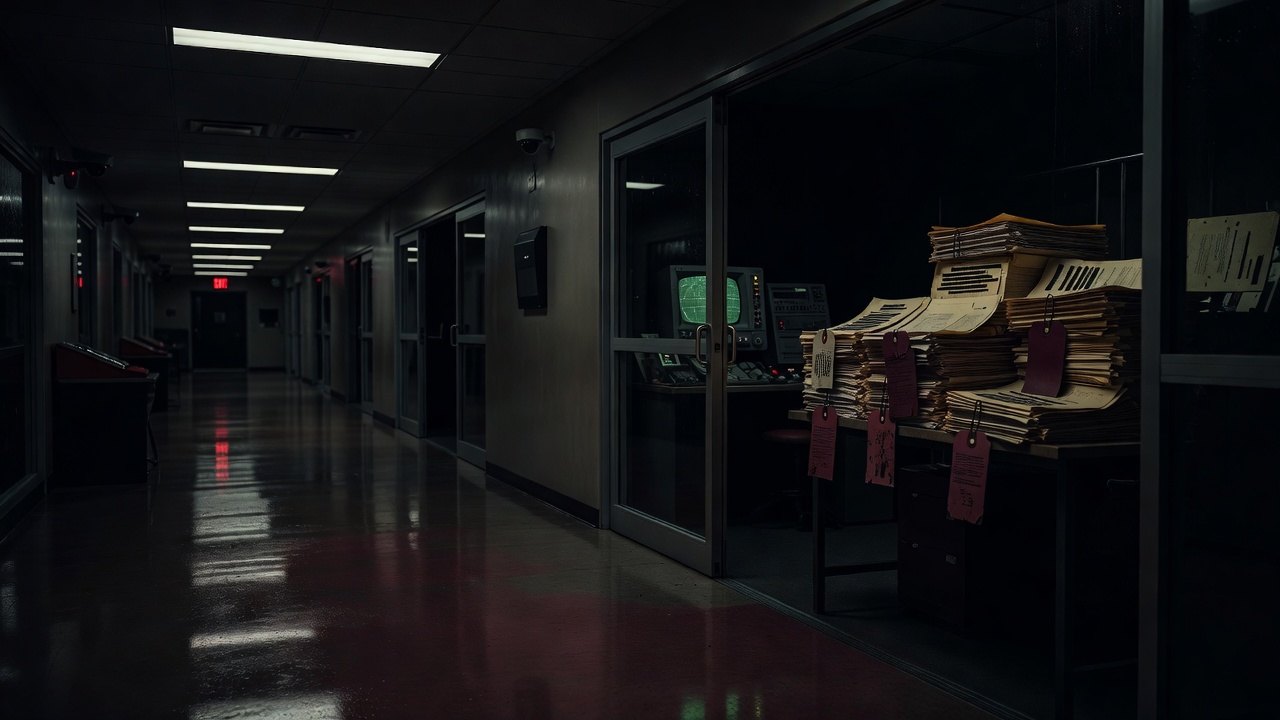
The lights are wrong. A pilot files a report. A radar scope stores a trace. A civilian on the ground catches a few impossible seconds and is left staring at a screen with nowhere truly official to send them. That is the cinematic core of the civilian reporting vacuum conspiracy: the public is allowed to witness the mystery, but not to enter the serious intake system built to define it.
The Case For
The official UAP record still privileges military and insider channels over the public
The ODNI’s 2021 preliminary UAP assessment said its dataset was “currently limited primarily to U.S. Government reporting.” It also said no standardized reporting mechanism existed until the Navy established one in 2019, and even then the process remained limited to U.S. government reporting. More unsettling, the report said investigators heard anecdotally about other observations that were never captured in formal or informal reporting. The government was effectively admitting that some unknown portion of the phenomenon never even reaches the system.
NASA’s 2023 independent study report made the public-side gap even clearer. The panel said there is “currently no standardized system for making civilian UAP reports,” resulting in sparse and incomplete data without curation or vetting protocols. It recommended that NASA help AARO develop such a federal system. That is a remarkable place for the record to stand after years of disclosure headlines. The public has official footage, hearings, and reassurances—but still no mature federal lane for submitting unusual sightings into a trusted national process.
The FY24 AARO annual report reinforces the same picture. AARO said it received 757 reports in the period covered, including 392 from the FAA, and that all reports came through military operational channels or FAA civil and commercial aviation logs. It also said 444 cases lacked enough data for analysis and were sent into the Active Archive. The pipeline exists, but it is still narrow, technical, and tilted toward institutional collection.
The asymmetry becomes even sharper when you look at who does get an official protected door. AARO’s FY24 report says the office hosts a secure reporting mechanism for current or former U.S. government employees, service members, and contractors, and that it can receive information regardless of restrictive access controls or compartmented programs. That is important for insiders. But it also reveals the deeper imbalance: if you worked near the secret, there is a mechanism; if you are a civilian who saw something extraordinary, there still is not a comparably mature one.
The result is a two-tier mystery
This is why the conspiracy framing sticks. The strongest cases are more likely to be born inside military cockpits, FAA logs, or classified sensor environments. Civilian sightings, by contrast, scatter into social media, local news, podcasts, and private tip lines. Without a standardized intake process, those public cases often lose metadata, follow-up, chain of custody, and credibility before analysis even starts. The effect is a permanent split: serious cases above, noisy folklore below.
That pattern fits what we have already seen in the sensor gatekeeping conspiracy, the active archive conspiracy, and the reporting stigma conspiracy. The best sensors are hidden, unresolved cases drift into limbo, witnesses fear ridicule, and the public lacks a clean pipeline. Each piece on its own sounds bureaucratic. Together they start to look like an architecture.
The Realist’s Eye
A missing civilian pipeline is not proof of a cover-up, but it is proof of a structural blind spot
A sober reading matters. Civilian reporting is hard to handle. Hoaxes, low-resolution phone clips, missing timestamps, and misidentified ordinary objects can flood any open channel with junk. Analysts need standards if they want evidence instead of chaos. That is the strongest non-conspiratorial explanation for the vacuum.
But that defense only goes so far, because NASA’s panel explicitly said the absence of a standardized civilian system is already producing sparse, incomplete, and weakly curated data. In other words, the current setup is not neutral. It predictably strips potential evidence of context before professionals ever see it.
The 2023 House hearing on UAP, national security, public safety, and government transparency echoed that tension. Members said the lack of transparency had fueled speculation and eroded public trust, and several stressed that stigma around reporting has kept the country from getting a complete picture. That does not validate every viral clip. It does show that the collection gap itself is now part of the official discussion.
There is also a political consequence to the present system. Governments naturally trust reports from trained observers and technical sensors more than reports from random citizens. Fair enough. But when the same institutions accused of managing the narrative also control the only serious intake lanes, legitimacy becomes self-reinforcing. The public is asked to trust a process it cannot meaningfully enter.
The darker possibility is managed permeability
The National Archives’ UAP Records Collection FAQ says agencies are transferring UAP records to NARA on an ongoing, rolling basis for public release. That is real transparency of a kind. But archives come at the end of the chain, after collection, review, classification, and disclosure decisions have already been made. If the intake system favors insiders from the start, the archive may preserve only the version of the mystery official systems were built to catch.
What We Know For Certain
- ODNI’s 2021 UAP assessment said its dataset was limited primarily to U.S. government reporting.
- The same report said no standardized reporting mechanism existed until 2019 and that other observations were never captured in reporting.
- NASA’s 2023 study said there is currently no standardized system for civilian UAP reports and urged work on a federal one.
- AARO’s FY24 report said its reports in the covered period came through military channels or FAA logs.
- AARO’s FY24 report said 444 cases lacked enough data for analysis and were placed in the Active Archive.
- The National Archives says agencies are transferring UAP records on a rolling basis into Record Group 615.
The Unanswered Questions
- Why is there still no mature public-facing federal UAP intake system after years of official acknowledgment?
- How many strong civilian cases die before metadata, interviews, and chain-of-custody procedures even begin?
- Does the current model guarantee that only institutionally captured anomalies can become “serious” cases?
- How much evidence never reaches the archive because it never entered the official pipeline at all?
The Closer — You Decide
Maybe this is just bureaucracy lagging behind fascination. Maybe the government has been slow, not sinister. But there is a darker reading that refuses to go away: a mystery routed mainly through military filters, insider channels, and delayed archival releases is a mystery whose public edge can be managed forever.
The lights in the sky may be unexplained. The architecture around them is not. Right now the ordinary citizen still stands outside the real intake door—and when that door stays hidden long enough, the vacuum starts to look less like an accident and more like part of the design.