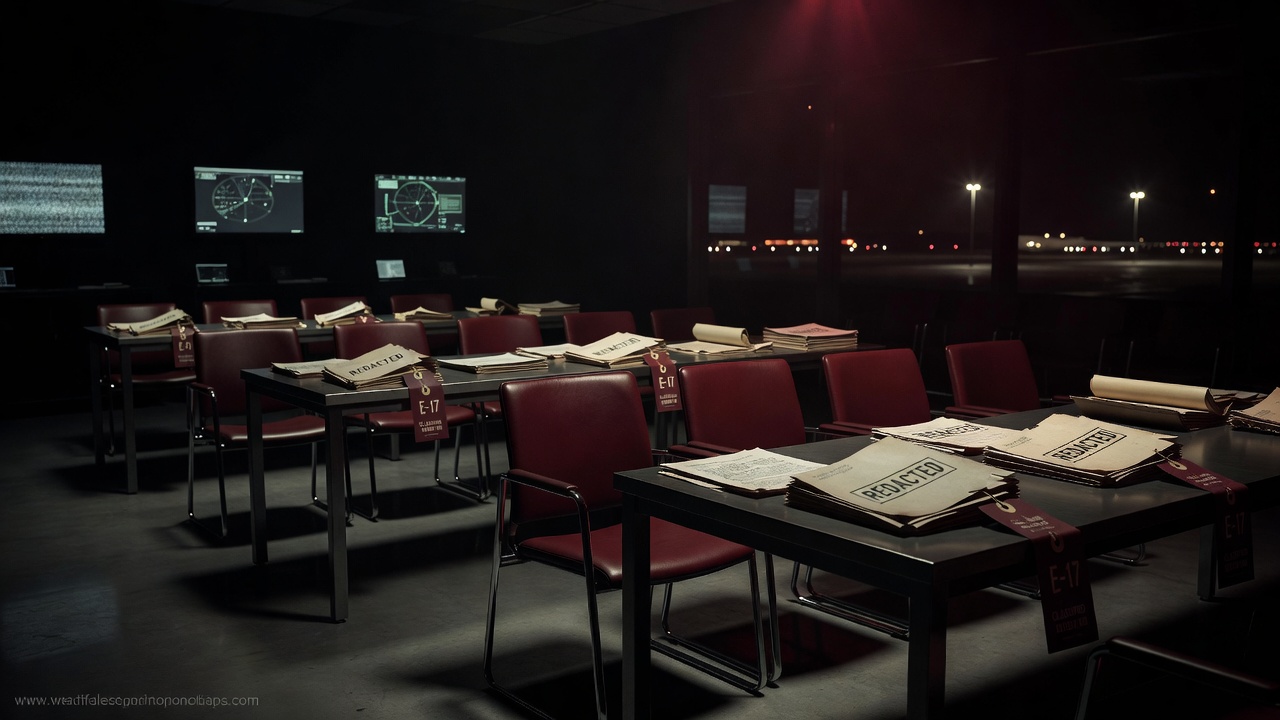
The Reporting Stigma Conspiracy: How Ridicule, Classification, and Career Risk Keep the Best UAP Evidence in the Dark
A pilot lands, says nothing, and goes home. A radar operator sees something impossible, then decides silence is safer than paperwork. In that dark interval between sighting and statement, the reporting stigma conspiracy does its work: the strongest evidence can vanish before it ever becomes a file.
The Case For
The easiest way to control a mystery is to make credible witnesses fear sounding unbelievable
Most people imagine secrecy as a locked vault or a blacked-out memo. But the reporting stigma conspiracy suggests a softer and more durable machine. If serious witnesses are conditioned to avoid reporting unusual events, institutions do not need to erase every record later. The record arrives already thinned out. The conspiracy, in that sense, begins before classification.
The official record openly supports the idea that stigma has distorted UAP evidence. The ODNI’s 2022 Annual Report on UAP said the rise in reporting was partly due to “reduced stigma surrounding UAP reporting.” If reduced stigma increased reporting, then stigma had previously reduced reporting. The same report said the catalog grew to 510 cases as of August 30, 2022. In plain language: the file expanded not just because more things were seen, but because more people felt able to speak.
NASA’s 2023 UAP Independent Study Team report used even sharper wording. It said stigma associated with UAP reporting “almost certainly leads to data attrition at present.” That is an extraordinary phrase coming from a federal scientific panel. Data attrition means the evidence base is being degraded upstream. Cases do not merely remain unresolved later. Some of the best cases may be weakened, delayed, or lost before analysts ever touch them.
The 2023 House hearing on UAP, national security, public safety, and government transparency drove the same point home. Lawmakers said they repeatedly heard that stigma blocks real answers. Ryan Graves testified that UAP are “grossly under reported” and that sightings are routine rather than rare. Members also emphasized the need for a safe and transparent reporting process. That does not sound like a mature system. It sounds like a pipeline that has spent years discouraging its own witnesses.
Every new reporting portal is also an admission that the old culture failed
The conspiracy frame gets stronger when you look at the bureaucracy built to repair the silence. The AARO FY2024 report said AARO received 757 reports during the covered period and launched a secure reporting mechanism on October 31, 2023. The same report said case resolution remains constrained by a lack of timely and actionable sensor data. That is the tell. If reporting is late, thin, or hesitant, the sensor package often decays before investigators arrive. The result is a public mystery with half the evidence missing.
Even AARO now treats stigma reduction as operational work. In the Defense Department transcript of Dr. Jon Kosloski’s media roundtable on the FY2024 report, he said AARO had taken meaningful steps to improve data collection and retention and to “reduce the stigma of reporting a UAP event.” He also said that stigma could create an opportunity for adversaries if personnel choose not to report unusual activity. Once a government office says social ridicule can create a national-security blind spot, stigma stops looking like a fringe complaint and starts looking like infrastructure.
The archive tells a similar story. The National Archives’ UAP Records Collection FAQ says agencies must identify and transfer UAP records to Record Group 615 on a rolling basis. But an archive can only preserve what enters the stream. If pilots and analysts withhold reports at the source, the public may later get a polished digital archive of omission. That is why this topic connects so naturally to the official acknowledgment conspiracy, the sensor gatekeeping conspiracy, and the rolling disclosure conspiracy. If the witness hesitates first, everything downstream becomes easier to manage.
The Realist’s Eye
Stigma is real, but it does not automatically prove a single hidden hand
A sober reading matters. Stigma does not prove that every missing report was deliberately suppressed by a master office in the shadows. Some witnesses may misidentify objects. Some may stay quiet because they are uncertain, embarrassed, or simply lack corroboration. NASA also stressed that UAP analysis is limited mainly by poor-quality data. Some of that poor quality comes from human perception itself, not just institutional pressure.
The same caution applies to sensational testimony. The 2023 hearing included extraordinary claims, while AARO’s FY2024 report said it found no evidence of extraterrestrial beings, activity, or technology. Both facts belong in the same frame. The reporting stigma conspiracy is not proof that every dramatic allegation is true. It is evidence that the public record may be systematically incomplete before truth claims are ever tested.
But once every major institution admits stigma warps the evidence, the burden shifts back to the institutions
Here is the hard part to ignore. ODNI said reduced stigma increased reporting. NASA said stigma almost certainly causes data attrition. AARO said it is actively trying to reduce the stigma of reporting. Congress said a safe and transparent process is needed. Once all four points line up, the public no longer has to guess whether the distortion exists. The real question becomes who benefited while it persisted.
The answer may be less theatrical and more structural. Institutions benefit when anomalies stay underreported. Underreporting narrows oversight, lowers pressure for disclosure, and makes the subject easier to dismiss as rumor. Nobody has to issue an order saying “silence the pilots” if the culture already teaches pilots and operators that speaking plainly could damage their credibility. In that sense, stigma works like a soft form of classification: it keeps sensitive information out of circulation without ever showing the public a stamped denial.
What We Know For Certain
- The ODNI 2022 UAP report said increased reporting was partly due to reduced stigma surrounding UAP reporting.
- NASA’s 2023 UAP study said stigma “almost certainly” causes data attrition.
- The 2023 House hearing repeatedly described stigma and the need for safer reporting channels.
- The AARO FY2024 report said 757 reports were received in the covered period and that case resolution is constrained by untimely or non-actionable sensor data.
- The National Archives says agencies are transferring UAP records to Record Group 615 on a rolling basis.
The Unanswered Questions
- How many important UAP cases were never fully reported because the personal cost felt too high?
- How much sensor context was lost because witnesses hesitated or used weak reporting channels?
- If stigma is now treated as a national-security problem, why was it tolerated for decades?
- Does the public archive reflect the phenomenon itself, or only the fraction that survived ridicule, bureaucracy, and classification?
The Closer — You Decide
Maybe the reporting stigma conspiracy is just human caution around strange sightings. But there is a darker possibility: the best way to manage a dangerous mystery is to make credible people afraid to describe it. The witness self-censors. The sensor trail decays. The archive arrives thin.
That is the elegance of this conspiracy. The missing evidence never has to be burned if it can be made embarrassing to file. Then secrecy wins before secrecy officially begins.