Menu

Why CWC Challenge Inspections Never Happen

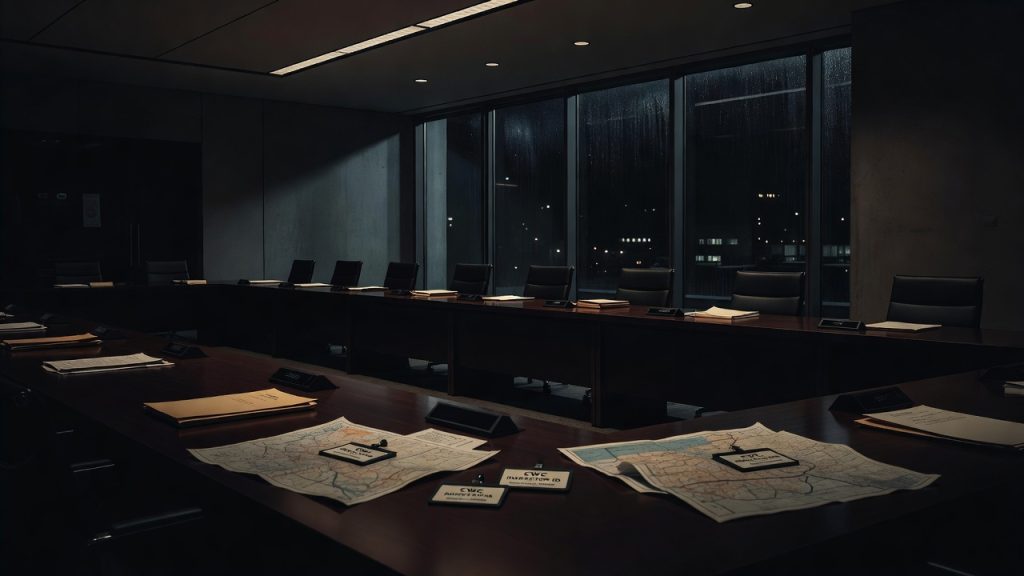
Empty treaty chamber evoking why CWC challenge inspections never happen — ConspiracyRealist.com

Why CWC Challenge Inspections Never Happen

There are inspection powers that exist to be used, and inspection powers that exist to keep everyone guessing. Somewhere between those two categories sits one of the strangest tools in modern arms control: the Chemical Weapons Convention challenge inspection. On paper, it is the sharpest blade in the treaty drawer — an any-time, almost anywhere mechanism built to cut through denial and force open suspicious doors. In practice, it has never been used. For a treaty system born from decades of chemical warfare and Cold War distrust, that silence is not a footnote. That’s the mystery.

The Case For

The treaty built a no-refusal tool and then left it in the box

The suspicious reading begins with the mechanism itself. The OPCW’s overview of the Chemical Weapons Convention describes challenge inspections as a unique feature of the treaty: a State Party can request a surprise inspection under an “any time, anywhere” principle with no right of refusal. Article IX says the inspection is for the sole purpose of determining facts related to possible non-compliance, while the inspected state can still protect confidential information through managed-access rules.

The U.S. Bureau of Industry and Security’s official Challenge Inspection Overview says the OPCW Executive Council has only twelve hours to vote down a request as frivolous, abusive, or outside the treaty’s scope. If that override fails, inspectors move quickly from notification to perimeter negotiations and on-site monitoring. This was not drafted as symbolic theater. It was engineered as pressure.

And yet the same BIS bulletin states, plainly, that there had been no challenge inspections in the United States or worldwide. That gap matters because the Chemical Weapons Convention was supposed to solve a problem older arms-control systems could not: how to investigate compliance concerns without waiting for the accused state to volunteer cooperation. The treaty created the power. States then behaved as if touching it might trigger a diplomatic fire alarm.

That reluctance looks even stranger beside our recent deep dive on the challenge-inspection gap between the CWC and BWC. It also fits Conspiracy Realist’s Government Secrets archive. Chemistry got the stronger enforcement tool. Biology never did. But even chemistry’s hardest-edged power has remained locked behind political glass.

Experts have been warning for years that politics, not law, are freezing the tool

The most conspiratorial interpretation is not that states forgot challenge inspections existed. It is that they collectively decided the tool was too dangerous to normalize. In a 2007 Arms Control Today analysis, Jonathan B. Tucker noted several disincentives: a requesting state may have to expose sensitive intelligence, risk failing to find a smoking gun, or invite retaliation through a reciprocal inspection of one of its own sensitive sites. He also warned that the longer the mechanism remains unused, the higher the political hurdle becomes.

That is the part conspiracy-minded readers find hard to ignore. A treaty tool advertised as no-refusal and anytime-anywhere can still be neutralized if every major state quietly understands that using it would open doors nobody wants opened. Defense facilities, industrial plants, biodefense-adjacent labs, military logistics hubs — these are not just inspection sites. They are repositories of trade secrets, intelligence methods, and national vulnerabilities. The result is a system where the legal weapon exists, the inspectors train, the procedures are rehearsed, and the trigger remains untouched.

The Realist’s Eye

Unused does not automatically mean secretly suppressed

The realist has to slow the story down here. The absence of challenge inspections is suspicious, but it is not self-proving. States have other tools before reaching for the most confrontational one. Article IX itself allows clarification requests, consultations, and fact-finding steps short of a full challenge inspection. Diplomats often prefer quiet exchanges and pressure behind closed doors to a public move that could harden a dispute and fail spectacularly.

There is also the problem of proof. Challenge inspections sound dramatic, but they are not magic warrants that guarantee a confession in the first room. The inspected state can use managed access to shield unrelated confidential information. Inspectors can face time pressure and facilities with legitimate dual-use activities. If a requesting state launches the treaty’s biggest compliance move and comes away with ambiguity, the political cost can fall on the accuser as much as the accused.

The tool may be strongest as deterrent, not as routine practice

There is a narrower, less cinematic explanation: challenge inspections may function mainly because they are possible, not because they happen. The legal architecture still matters. States know the option exists. Industry facilities prepare for it. National authorities rehearse timelines, warrants, perimeter plans, and escort procedures. OPCW documents on Article IX procedures and BIS guidance both show a system designed for readiness, not improvisation.

That does not make the silence meaningless. It just means the silence can be read two ways at once. One reading says powerful states quietly insulated themselves from the treaty’s sharpest compliance tool. The other says the mere possibility of a challenge inspection has helped keep serious disputes below the threshold where anyone dares to test it. The first interpretation points to hidden mutual protection. The second points to deterrence working in an uncomfortable, invisible way.

The realist conclusion, then, is neither clean nor comforting. If challenge inspections never happen because they are too politically explosive to use, the treaty’s strongest enforcement provision is weaker than it looks. If they never happen because the threat alone shapes behavior, then one of global disarmament’s most important tools works mostly in the shadows. Either way, the public record leaves a strange impression: the mechanism is real, the readiness is real, and the moment of truth never comes.

What We Know For Certain

  • The Chemical Weapons Convention allows a State Party to request a challenge inspection at a facility or location under another State Party’s jurisdiction or control.
  • Under the CWC system, the OPCW Executive Council has a limited window to stop a request as frivolous, abusive, or outside the treaty’s scope.
  • The OPCW describes challenge inspections as an “any time, anywhere” mechanism with no right of refusal.
  • The BIS Challenge Inspection Overview states that no challenge inspection had occurred in the United States or worldwide at the time of publication.
  • Managed-access rules allow inspected states to protect confidential information during the inspection process.

The Unanswered Questions

  • How many major compliance disputes were steered into private diplomacy specifically to avoid triggering a challenge inspection?
  • Would a first real challenge inspection strengthen the treaty by normalizing the tool, or weaken it if the result proved inconclusive?
  • How much does fear of reciprocal inspections deter states from making requests they might otherwise pursue?
  • At what point does a never-used enforcement power stop being a deterrent and start looking like political décor?

The Closer — You Decide

Some doors stay shut because nobody can open them. Others stay shut because everyone in the building understands the cost of trying. Maybe that is quiet deterrence doing its job. Maybe it is a gentleman’s agreement among governments that some inspections are too dangerous to make real. The mechanism exists. The silence exists too. The evidence is on the table. You decide.

dive down the rabbit hole

Why CWC Challenge Inspections Never Happen

S-FX.com
Empty treaty chamber evoking why CWC challenge inspections never happen — ConspiracyRealist.com

Why CWC Challenge Inspections Never Happen

There are inspection powers that exist to be used, and inspection powers that exist to keep everyone guessing. Somewhere between those two categories sits one of the strangest tools in modern arms control: the Chemical Weapons Convention challenge inspection. On paper, it is the sharpest blade in the treaty drawer — an any-time, almost anywhere mechanism built to cut through denial and force open suspicious doors. In practice, it has never been used. For a treaty system born from decades of chemical warfare and Cold War distrust, that silence is not a footnote. That’s the mystery.

The Case For

The treaty built a no-refusal tool and then left it in the box

The suspicious reading begins with the mechanism itself. The OPCW’s overview of the Chemical Weapons Convention describes challenge inspections as a unique feature of the treaty: a State Party can request a surprise inspection under an “any time, anywhere” principle with no right of refusal. Article IX says the inspection is for the sole purpose of determining facts related to possible non-compliance, while the inspected state can still protect confidential information through managed-access rules.

The U.S. Bureau of Industry and Security’s official Challenge Inspection Overview says the OPCW Executive Council has only twelve hours to vote down a request as frivolous, abusive, or outside the treaty’s scope. If that override fails, inspectors move quickly from notification to perimeter negotiations and on-site monitoring. This was not drafted as symbolic theater. It was engineered as pressure.

And yet the same BIS bulletin states, plainly, that there had been no challenge inspections in the United States or worldwide. That gap matters because the Chemical Weapons Convention was supposed to solve a problem older arms-control systems could not: how to investigate compliance concerns without waiting for the accused state to volunteer cooperation. The treaty created the power. States then behaved as if touching it might trigger a diplomatic fire alarm.

That reluctance looks even stranger beside our recent deep dive on the challenge-inspection gap between the CWC and BWC. It also fits Conspiracy Realist’s Government Secrets archive. Chemistry got the stronger enforcement tool. Biology never did. But even chemistry’s hardest-edged power has remained locked behind political glass.

Experts have been warning for years that politics, not law, are freezing the tool

The most conspiratorial interpretation is not that states forgot challenge inspections existed. It is that they collectively decided the tool was too dangerous to normalize. In a 2007 Arms Control Today analysis, Jonathan B. Tucker noted several disincentives: a requesting state may have to expose sensitive intelligence, risk failing to find a smoking gun, or invite retaliation through a reciprocal inspection of one of its own sensitive sites. He also warned that the longer the mechanism remains unused, the higher the political hurdle becomes.

That is the part conspiracy-minded readers find hard to ignore. A treaty tool advertised as no-refusal and anytime-anywhere can still be neutralized if every major state quietly understands that using it would open doors nobody wants opened. Defense facilities, industrial plants, biodefense-adjacent labs, military logistics hubs — these are not just inspection sites. They are repositories of trade secrets, intelligence methods, and national vulnerabilities. The result is a system where the legal weapon exists, the inspectors train, the procedures are rehearsed, and the trigger remains untouched.

The Realist’s Eye

Unused does not automatically mean secretly suppressed

The realist has to slow the story down here. The absence of challenge inspections is suspicious, but it is not self-proving. States have other tools before reaching for the most confrontational one. Article IX itself allows clarification requests, consultations, and fact-finding steps short of a full challenge inspection. Diplomats often prefer quiet exchanges and pressure behind closed doors to a public move that could harden a dispute and fail spectacularly.

There is also the problem of proof. Challenge inspections sound dramatic, but they are not magic warrants that guarantee a confession in the first room. The inspected state can use managed access to shield unrelated confidential information. Inspectors can face time pressure and facilities with legitimate dual-use activities. If a requesting state launches the treaty’s biggest compliance move and comes away with ambiguity, the political cost can fall on the accuser as much as the accused.

The tool may be strongest as deterrent, not as routine practice

There is a narrower, less cinematic explanation: challenge inspections may function mainly because they are possible, not because they happen. The legal architecture still matters. States know the option exists. Industry facilities prepare for it. National authorities rehearse timelines, warrants, perimeter plans, and escort procedures. OPCW documents on Article IX procedures and BIS guidance both show a system designed for readiness, not improvisation.

That does not make the silence meaningless. It just means the silence can be read two ways at once. One reading says powerful states quietly insulated themselves from the treaty’s sharpest compliance tool. The other says the mere possibility of a challenge inspection has helped keep serious disputes below the threshold where anyone dares to test it. The first interpretation points to hidden mutual protection. The second points to deterrence working in an uncomfortable, invisible way.

The realist conclusion, then, is neither clean nor comforting. If challenge inspections never happen because they are too politically explosive to use, the treaty’s strongest enforcement provision is weaker than it looks. If they never happen because the threat alone shapes behavior, then one of global disarmament’s most important tools works mostly in the shadows. Either way, the public record leaves a strange impression: the mechanism is real, the readiness is real, and the moment of truth never comes.

What We Know For Certain

  • The Chemical Weapons Convention allows a State Party to request a challenge inspection at a facility or location under another State Party’s jurisdiction or control.
  • Under the CWC system, the OPCW Executive Council has a limited window to stop a request as frivolous, abusive, or outside the treaty’s scope.
  • The OPCW describes challenge inspections as an “any time, anywhere” mechanism with no right of refusal.
  • The BIS Challenge Inspection Overview states that no challenge inspection had occurred in the United States or worldwide at the time of publication.
  • Managed-access rules allow inspected states to protect confidential information during the inspection process.

The Unanswered Questions

  • How many major compliance disputes were steered into private diplomacy specifically to avoid triggering a challenge inspection?
  • Would a first real challenge inspection strengthen the treaty by normalizing the tool, or weaken it if the result proved inconclusive?
  • How much does fear of reciprocal inspections deter states from making requests they might otherwise pursue?
  • At what point does a never-used enforcement power stop being a deterrent and start looking like political décor?

The Closer — You Decide

Some doors stay shut because nobody can open them. Others stay shut because everyone in the building understands the cost of trying. Maybe that is quiet deterrence doing its job. Maybe it is a gentleman’s agreement among governments that some inspections are too dangerous to make real. The mechanism exists. The silence exists too. The evidence is on the table. You decide.

Why CWC Challenge Inspections Never Happen

Empty treaty chamber evoking why CWC challenge inspections never happen — ConspiracyRealist.com

Why CWC Challenge Inspections Never Happen

There are inspection powers that exist to be used, and inspection powers that exist to keep everyone guessing. Somewhere between those two categories sits one of the strangest tools in modern arms control: the Chemical Weapons Convention challenge inspection. On paper, it is the sharpest blade in the treaty drawer — an any-time, almost anywhere mechanism built to cut through denial and force open suspicious doors. In practice, it has never been used. For a treaty system born from decades of chemical warfare and Cold War distrust, that silence is not a footnote. That’s the mystery.

The Case For

The treaty built a no-refusal tool and then left it in the box

The suspicious reading begins with the mechanism itself. The OPCW’s overview of the Chemical Weapons Convention describes challenge inspections as a unique feature of the treaty: a State Party can request a surprise inspection under an “any time, anywhere” principle with no right of refusal. Article IX says the inspection is for the sole purpose of determining facts related to possible non-compliance, while the inspected state can still protect confidential information through managed-access rules.

The U.S. Bureau of Industry and Security’s official Challenge Inspection Overview says the OPCW Executive Council has only twelve hours to vote down a request as frivolous, abusive, or outside the treaty’s scope. If that override fails, inspectors move quickly from notification to perimeter negotiations and on-site monitoring. This was not drafted as symbolic theater. It was engineered as pressure.

And yet the same BIS bulletin states, plainly, that there had been no challenge inspections in the United States or worldwide. That gap matters because the Chemical Weapons Convention was supposed to solve a problem older arms-control systems could not: how to investigate compliance concerns without waiting for the accused state to volunteer cooperation. The treaty created the power. States then behaved as if touching it might trigger a diplomatic fire alarm.

That reluctance looks even stranger beside our recent deep dive on the challenge-inspection gap between the CWC and BWC. It also fits Conspiracy Realist’s Government Secrets archive. Chemistry got the stronger enforcement tool. Biology never did. But even chemistry’s hardest-edged power has remained locked behind political glass.

Experts have been warning for years that politics, not law, are freezing the tool

The most conspiratorial interpretation is not that states forgot challenge inspections existed. It is that they collectively decided the tool was too dangerous to normalize. In a 2007 Arms Control Today analysis, Jonathan B. Tucker noted several disincentives: a requesting state may have to expose sensitive intelligence, risk failing to find a smoking gun, or invite retaliation through a reciprocal inspection of one of its own sensitive sites. He also warned that the longer the mechanism remains unused, the higher the political hurdle becomes.

That is the part conspiracy-minded readers find hard to ignore. A treaty tool advertised as no-refusal and anytime-anywhere can still be neutralized if every major state quietly understands that using it would open doors nobody wants opened. Defense facilities, industrial plants, biodefense-adjacent labs, military logistics hubs — these are not just inspection sites. They are repositories of trade secrets, intelligence methods, and national vulnerabilities. The result is a system where the legal weapon exists, the inspectors train, the procedures are rehearsed, and the trigger remains untouched.

The Realist’s Eye

Unused does not automatically mean secretly suppressed

The realist has to slow the story down here. The absence of challenge inspections is suspicious, but it is not self-proving. States have other tools before reaching for the most confrontational one. Article IX itself allows clarification requests, consultations, and fact-finding steps short of a full challenge inspection. Diplomats often prefer quiet exchanges and pressure behind closed doors to a public move that could harden a dispute and fail spectacularly.

There is also the problem of proof. Challenge inspections sound dramatic, but they are not magic warrants that guarantee a confession in the first room. The inspected state can use managed access to shield unrelated confidential information. Inspectors can face time pressure and facilities with legitimate dual-use activities. If a requesting state launches the treaty’s biggest compliance move and comes away with ambiguity, the political cost can fall on the accuser as much as the accused.

The tool may be strongest as deterrent, not as routine practice

There is a narrower, less cinematic explanation: challenge inspections may function mainly because they are possible, not because they happen. The legal architecture still matters. States know the option exists. Industry facilities prepare for it. National authorities rehearse timelines, warrants, perimeter plans, and escort procedures. OPCW documents on Article IX procedures and BIS guidance both show a system designed for readiness, not improvisation.

That does not make the silence meaningless. It just means the silence can be read two ways at once. One reading says powerful states quietly insulated themselves from the treaty’s sharpest compliance tool. The other says the mere possibility of a challenge inspection has helped keep serious disputes below the threshold where anyone dares to test it. The first interpretation points to hidden mutual protection. The second points to deterrence working in an uncomfortable, invisible way.

The realist conclusion, then, is neither clean nor comforting. If challenge inspections never happen because they are too politically explosive to use, the treaty’s strongest enforcement provision is weaker than it looks. If they never happen because the threat alone shapes behavior, then one of global disarmament’s most important tools works mostly in the shadows. Either way, the public record leaves a strange impression: the mechanism is real, the readiness is real, and the moment of truth never comes.

What We Know For Certain

  • The Chemical Weapons Convention allows a State Party to request a challenge inspection at a facility or location under another State Party’s jurisdiction or control.
  • Under the CWC system, the OPCW Executive Council has a limited window to stop a request as frivolous, abusive, or outside the treaty’s scope.
  • The OPCW describes challenge inspections as an “any time, anywhere” mechanism with no right of refusal.
  • The BIS Challenge Inspection Overview states that no challenge inspection had occurred in the United States or worldwide at the time of publication.
  • Managed-access rules allow inspected states to protect confidential information during the inspection process.

The Unanswered Questions

  • How many major compliance disputes were steered into private diplomacy specifically to avoid triggering a challenge inspection?
  • Would a first real challenge inspection strengthen the treaty by normalizing the tool, or weaken it if the result proved inconclusive?
  • How much does fear of reciprocal inspections deter states from making requests they might otherwise pursue?
  • At what point does a never-used enforcement power stop being a deterrent and start looking like political décor?

The Closer — You Decide

Some doors stay shut because nobody can open them. Others stay shut because everyone in the building understands the cost of trying. Maybe that is quiet deterrence doing its job. Maybe it is a gentleman’s agreement among governments that some inspections are too dangerous to make real. The mechanism exists. The silence exists too. The evidence is on the table. You decide.

Table of contents