Menu

Germany’s 2006 OPCW Challenge Inspection Drill

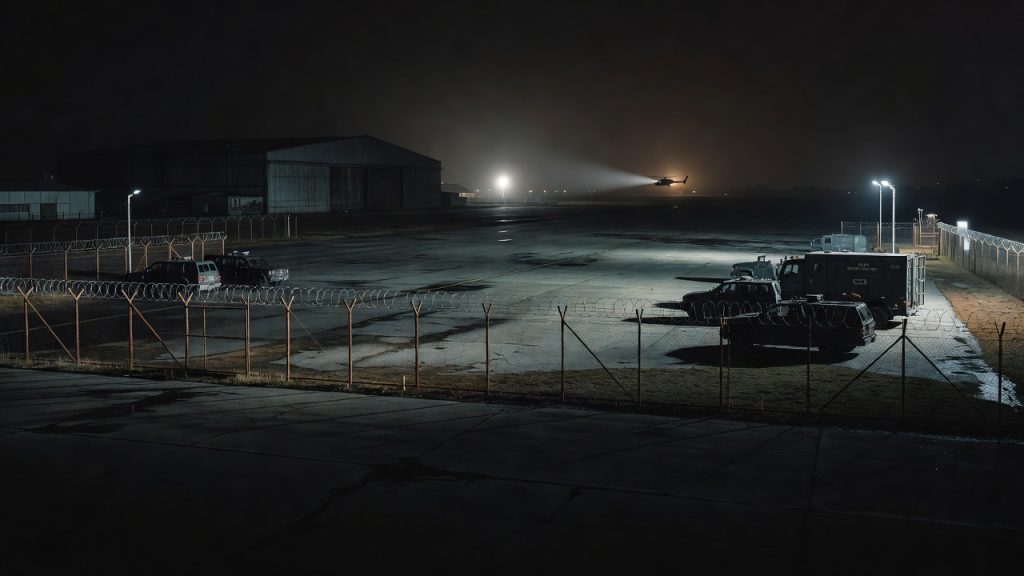
OPCW challenge inspection drill at a dark military airbase perimeter in Germany — ConspiracyRealist.com

Germany’s 2006 OPCW Challenge Inspection Drill

Night falls over Lagerlechfeld, a military airbase near Augsburg, and the silence feels staged. Somewhere beyond the fence line, a simulated allegation has landed in The Hague. Within hours, the bureaucracy of chemical disarmament begins to move like an emergency response unit: notifications, aircraft, inspectors, perimeter maps, sample kits, mobile labs. On paper, the Chemical Weapons Convention promises that any state can trigger a no-notice challenge inspection almost anywhere. In the real world, that power has always looked too explosive to test for real. So in March 2006, Germany did the next most revealing thing. It rehearsed the nightmare in public and let the world see how much friction hides inside the word inspection.

The Case For

A treaty power that sounds almost too strong

Article IX of the Chemical Weapons Convention gives each State Party the right to request an on-site challenge inspection for the sole purpose of clarifying possible non-compliance. The treaty language is blunt. The inspection can be requested without delay, and the Verification Annex lays out a compressed clock: the inspected state must be notified at least 12 hours before the team reaches the point of entry, access inside the requested perimeter must be provided as soon as possible and no later than 108 hours after arrival, and the inspection period itself is capped at 84 hours unless both sides agree otherwise.

Germany’s 2006 exercise showed the machinery is real

According to an OPCW release, Germany hosted a full challenge inspection exercise from 26 to 31 March 2006 to test its readiness to receive one. The scenario began on 24 March at OPCW headquarters in The Hague with a simulated request naming the Lagerlechfeld airbase as the inspection site. Germany was notified the next day. Fifteen international inspectors then deployed through Munich on 26 March, concluded entry procedures the same day, and were granted swift access to the inspection area on 27 March.

This was not a tabletop seminar dressed up as field work. The inspection zone reportedly covered the entire twelve square kilometres of the airbase. Inspectors conducted helicopter overflights, used non-destructive testing equipment, and operated a mobile laboratory to analyze swipe and soil samples.

That matters because the deeper fear behind chemical-weapons treaties has never been paperwork. It is concealment. A state that expected only polite diplomatic notes could stall. A state facing a rapid inspection team, perimeter monitoring, and sampling protocols has a much narrower window.

The readiness culture never really went away

The OPCW’s more recent readiness updates show the same concern still alive nearly two decades later. A 2023 Director-General note said exercises remain essential to ensuring a response to a challenge inspection or an investigation of alleged use. It also warned that readiness can be weakened by practical problems: inspector turnover, training costs, visa gaps, and missing designated points of entry from some States Parties. That gives the 2006 Germany drill a longer shadow. It was not just a one-off spectacle. It was evidence that the treaty’s strongest tool survives only if states keep rehearsing a mission they hope never to use.

For readers tracking the wider pattern of inspection politics, that is the same tension running through our coverage of why CWC challenge inspections never happen and the broader government secrets archive: the document says one thing, state behavior often says another, and the gap is where the real story lives.

The Realist’s Eye

A rehearsal is not proof the system would survive a live confrontation

The strongest caution is obvious. Germany’s 2006 event was a simulated inspection hosted by a cooperative State Party. That is useful, but it is not the same as a hostile, politically charged real-world accusation. In an exercise, the host knows the purpose is readiness. In a genuine compliance crisis, every hour would carry legal, diplomatic, and intelligence consequences. Managed access rules exist precisely because inspected states may protect sensitive installations and confidential information not related to the Convention. Those protections are legitimate, but they also create friction.

Part X of the Verification Annex tries to balance those interests by requiring the greatest degree of access while still allowing measures to protect national security and proprietary information. That balancing act is elegant on paper and messy on the ground. A large site, multiple buildings, military restrictions, and debates over the final perimeter could burn time quickly. A skilled evader would count on that.

Domestic law can slow international urgency

The U.S. implementation rules show how complicated challenge inspections become once treaty obligations collide with domestic procedure. Under 15 CFR 717.1, a facility subject to a clarification request must provide relevant information to BIS within five working days. BIS guidance from 2006 also explains that a challenge inspection at a U.S. facility may require consent or, if consent is refused, a criminal warrant.

So the realist problem is not whether the mechanism exists. It does. The problem is whether the mechanism can stay fast enough, intrusive enough, and politically durable enough when the target is not a friendly exercise host but a state facing severe reputational damage.

The bigger mystery is political will

The OPCW’s 2024 implementation reporting shows that no challenge inspections were requested that year, even as the Secretariat kept training for them. That does not prove the mechanism is a bluff. But it does suggest that states prefer quieter tools first: consultations, clarification requests, and pressure outside the inspection trigger. Germany’s 2006 exercise may therefore reveal two truths at once. The technical system is real. The political threshold for using it may be so high that the rehearsal becomes more familiar than the mission.

What We Know For Certain

  • Germany hosted an OPCW challenge inspection exercise from 26 to 31 March 2006 at Lagerlechfeld airbase.
  • The scenario began with a simulated request at OPCW headquarters on 24 March 2006, and Germany was notified on 25 March.
  • Fifteen OPCW inspectors deployed through Munich and used standard inspection equipment, including detection tools and a mobile laboratory.
  • Article IX and Part X of the Chemical Weapons Convention provide for challenge inspections with tight timelines, managed access, and perimeter procedures.
  • OPCW readiness reports in recent years continue to describe exercises and training as necessary for challenge-inspection preparedness.

The Unanswered Questions

  • How much delay would managed-access negotiations introduce during a genuinely adversarial inspection on a sensitive military site?
  • Would domestic legal requirements in major States Parties slow access enough to compromise an inspection’s fact-finding value?
  • How many States Parties still lack the visa, point-of-entry, or escort arrangements needed for rapid deployment?
  • If a live challenge inspection were requested tomorrow, would the political cost deter the requesting state before the inspectors ever boarded a plane?

The Closer — You Decide

The 2006 Germany drill did not expose a secret stockpile. It exposed something quieter and, maybe, more unsettling: how much of the world’s toughest arms-control language depends on readiness drills, cooperative hosts, and political nerve. The forms are real. The timelines are real. The sampling kits are real. So is the hesitation surrounding them. The evidence is on the table. You decide.

dive down the rabbit hole

Germany’s 2006 OPCW Challenge Inspection Drill

S-FX.com
OPCW challenge inspection drill at a dark military airbase perimeter in Germany — ConspiracyRealist.com

Germany’s 2006 OPCW Challenge Inspection Drill

Night falls over Lagerlechfeld, a military airbase near Augsburg, and the silence feels staged. Somewhere beyond the fence line, a simulated allegation has landed in The Hague. Within hours, the bureaucracy of chemical disarmament begins to move like an emergency response unit: notifications, aircraft, inspectors, perimeter maps, sample kits, mobile labs. On paper, the Chemical Weapons Convention promises that any state can trigger a no-notice challenge inspection almost anywhere. In the real world, that power has always looked too explosive to test for real. So in March 2006, Germany did the next most revealing thing. It rehearsed the nightmare in public and let the world see how much friction hides inside the word inspection.

The Case For

A treaty power that sounds almost too strong

Article IX of the Chemical Weapons Convention gives each State Party the right to request an on-site challenge inspection for the sole purpose of clarifying possible non-compliance. The treaty language is blunt. The inspection can be requested without delay, and the Verification Annex lays out a compressed clock: the inspected state must be notified at least 12 hours before the team reaches the point of entry, access inside the requested perimeter must be provided as soon as possible and no later than 108 hours after arrival, and the inspection period itself is capped at 84 hours unless both sides agree otherwise.

Germany’s 2006 exercise showed the machinery is real

According to an OPCW release, Germany hosted a full challenge inspection exercise from 26 to 31 March 2006 to test its readiness to receive one. The scenario began on 24 March at OPCW headquarters in The Hague with a simulated request naming the Lagerlechfeld airbase as the inspection site. Germany was notified the next day. Fifteen international inspectors then deployed through Munich on 26 March, concluded entry procedures the same day, and were granted swift access to the inspection area on 27 March.

This was not a tabletop seminar dressed up as field work. The inspection zone reportedly covered the entire twelve square kilometres of the airbase. Inspectors conducted helicopter overflights, used non-destructive testing equipment, and operated a mobile laboratory to analyze swipe and soil samples.

That matters because the deeper fear behind chemical-weapons treaties has never been paperwork. It is concealment. A state that expected only polite diplomatic notes could stall. A state facing a rapid inspection team, perimeter monitoring, and sampling protocols has a much narrower window.

The readiness culture never really went away

The OPCW’s more recent readiness updates show the same concern still alive nearly two decades later. A 2023 Director-General note said exercises remain essential to ensuring a response to a challenge inspection or an investigation of alleged use. It also warned that readiness can be weakened by practical problems: inspector turnover, training costs, visa gaps, and missing designated points of entry from some States Parties. That gives the 2006 Germany drill a longer shadow. It was not just a one-off spectacle. It was evidence that the treaty’s strongest tool survives only if states keep rehearsing a mission they hope never to use.

For readers tracking the wider pattern of inspection politics, that is the same tension running through our coverage of why CWC challenge inspections never happen and the broader government secrets archive: the document says one thing, state behavior often says another, and the gap is where the real story lives.

The Realist’s Eye

A rehearsal is not proof the system would survive a live confrontation

The strongest caution is obvious. Germany’s 2006 event was a simulated inspection hosted by a cooperative State Party. That is useful, but it is not the same as a hostile, politically charged real-world accusation. In an exercise, the host knows the purpose is readiness. In a genuine compliance crisis, every hour would carry legal, diplomatic, and intelligence consequences. Managed access rules exist precisely because inspected states may protect sensitive installations and confidential information not related to the Convention. Those protections are legitimate, but they also create friction.

Part X of the Verification Annex tries to balance those interests by requiring the greatest degree of access while still allowing measures to protect national security and proprietary information. That balancing act is elegant on paper and messy on the ground. A large site, multiple buildings, military restrictions, and debates over the final perimeter could burn time quickly. A skilled evader would count on that.

Domestic law can slow international urgency

The U.S. implementation rules show how complicated challenge inspections become once treaty obligations collide with domestic procedure. Under 15 CFR 717.1, a facility subject to a clarification request must provide relevant information to BIS within five working days. BIS guidance from 2006 also explains that a challenge inspection at a U.S. facility may require consent or, if consent is refused, a criminal warrant.

So the realist problem is not whether the mechanism exists. It does. The problem is whether the mechanism can stay fast enough, intrusive enough, and politically durable enough when the target is not a friendly exercise host but a state facing severe reputational damage.

The bigger mystery is political will

The OPCW’s 2024 implementation reporting shows that no challenge inspections were requested that year, even as the Secretariat kept training for them. That does not prove the mechanism is a bluff. But it does suggest that states prefer quieter tools first: consultations, clarification requests, and pressure outside the inspection trigger. Germany’s 2006 exercise may therefore reveal two truths at once. The technical system is real. The political threshold for using it may be so high that the rehearsal becomes more familiar than the mission.

What We Know For Certain

  • Germany hosted an OPCW challenge inspection exercise from 26 to 31 March 2006 at Lagerlechfeld airbase.
  • The scenario began with a simulated request at OPCW headquarters on 24 March 2006, and Germany was notified on 25 March.
  • Fifteen OPCW inspectors deployed through Munich and used standard inspection equipment, including detection tools and a mobile laboratory.
  • Article IX and Part X of the Chemical Weapons Convention provide for challenge inspections with tight timelines, managed access, and perimeter procedures.
  • OPCW readiness reports in recent years continue to describe exercises and training as necessary for challenge-inspection preparedness.

The Unanswered Questions

  • How much delay would managed-access negotiations introduce during a genuinely adversarial inspection on a sensitive military site?
  • Would domestic legal requirements in major States Parties slow access enough to compromise an inspection’s fact-finding value?
  • How many States Parties still lack the visa, point-of-entry, or escort arrangements needed for rapid deployment?
  • If a live challenge inspection were requested tomorrow, would the political cost deter the requesting state before the inspectors ever boarded a plane?

The Closer — You Decide

The 2006 Germany drill did not expose a secret stockpile. It exposed something quieter and, maybe, more unsettling: how much of the world’s toughest arms-control language depends on readiness drills, cooperative hosts, and political nerve. The forms are real. The timelines are real. The sampling kits are real. So is the hesitation surrounding them. The evidence is on the table. You decide.

Germany’s 2006 OPCW Challenge Inspection Drill

OPCW challenge inspection drill at a dark military airbase perimeter in Germany — ConspiracyRealist.com

Germany’s 2006 OPCW Challenge Inspection Drill

Night falls over Lagerlechfeld, a military airbase near Augsburg, and the silence feels staged. Somewhere beyond the fence line, a simulated allegation has landed in The Hague. Within hours, the bureaucracy of chemical disarmament begins to move like an emergency response unit: notifications, aircraft, inspectors, perimeter maps, sample kits, mobile labs. On paper, the Chemical Weapons Convention promises that any state can trigger a no-notice challenge inspection almost anywhere. In the real world, that power has always looked too explosive to test for real. So in March 2006, Germany did the next most revealing thing. It rehearsed the nightmare in public and let the world see how much friction hides inside the word inspection.

The Case For

A treaty power that sounds almost too strong

Article IX of the Chemical Weapons Convention gives each State Party the right to request an on-site challenge inspection for the sole purpose of clarifying possible non-compliance. The treaty language is blunt. The inspection can be requested without delay, and the Verification Annex lays out a compressed clock: the inspected state must be notified at least 12 hours before the team reaches the point of entry, access inside the requested perimeter must be provided as soon as possible and no later than 108 hours after arrival, and the inspection period itself is capped at 84 hours unless both sides agree otherwise.

Germany’s 2006 exercise showed the machinery is real

According to an OPCW release, Germany hosted a full challenge inspection exercise from 26 to 31 March 2006 to test its readiness to receive one. The scenario began on 24 March at OPCW headquarters in The Hague with a simulated request naming the Lagerlechfeld airbase as the inspection site. Germany was notified the next day. Fifteen international inspectors then deployed through Munich on 26 March, concluded entry procedures the same day, and were granted swift access to the inspection area on 27 March.

This was not a tabletop seminar dressed up as field work. The inspection zone reportedly covered the entire twelve square kilometres of the airbase. Inspectors conducted helicopter overflights, used non-destructive testing equipment, and operated a mobile laboratory to analyze swipe and soil samples.

That matters because the deeper fear behind chemical-weapons treaties has never been paperwork. It is concealment. A state that expected only polite diplomatic notes could stall. A state facing a rapid inspection team, perimeter monitoring, and sampling protocols has a much narrower window.

The readiness culture never really went away

The OPCW’s more recent readiness updates show the same concern still alive nearly two decades later. A 2023 Director-General note said exercises remain essential to ensuring a response to a challenge inspection or an investigation of alleged use. It also warned that readiness can be weakened by practical problems: inspector turnover, training costs, visa gaps, and missing designated points of entry from some States Parties. That gives the 2006 Germany drill a longer shadow. It was not just a one-off spectacle. It was evidence that the treaty’s strongest tool survives only if states keep rehearsing a mission they hope never to use.

For readers tracking the wider pattern of inspection politics, that is the same tension running through our coverage of why CWC challenge inspections never happen and the broader government secrets archive: the document says one thing, state behavior often says another, and the gap is where the real story lives.

The Realist’s Eye

A rehearsal is not proof the system would survive a live confrontation

The strongest caution is obvious. Germany’s 2006 event was a simulated inspection hosted by a cooperative State Party. That is useful, but it is not the same as a hostile, politically charged real-world accusation. In an exercise, the host knows the purpose is readiness. In a genuine compliance crisis, every hour would carry legal, diplomatic, and intelligence consequences. Managed access rules exist precisely because inspected states may protect sensitive installations and confidential information not related to the Convention. Those protections are legitimate, but they also create friction.

Part X of the Verification Annex tries to balance those interests by requiring the greatest degree of access while still allowing measures to protect national security and proprietary information. That balancing act is elegant on paper and messy on the ground. A large site, multiple buildings, military restrictions, and debates over the final perimeter could burn time quickly. A skilled evader would count on that.

Domestic law can slow international urgency

The U.S. implementation rules show how complicated challenge inspections become once treaty obligations collide with domestic procedure. Under 15 CFR 717.1, a facility subject to a clarification request must provide relevant information to BIS within five working days. BIS guidance from 2006 also explains that a challenge inspection at a U.S. facility may require consent or, if consent is refused, a criminal warrant.

So the realist problem is not whether the mechanism exists. It does. The problem is whether the mechanism can stay fast enough, intrusive enough, and politically durable enough when the target is not a friendly exercise host but a state facing severe reputational damage.

The bigger mystery is political will

The OPCW’s 2024 implementation reporting shows that no challenge inspections were requested that year, even as the Secretariat kept training for them. That does not prove the mechanism is a bluff. But it does suggest that states prefer quieter tools first: consultations, clarification requests, and pressure outside the inspection trigger. Germany’s 2006 exercise may therefore reveal two truths at once. The technical system is real. The political threshold for using it may be so high that the rehearsal becomes more familiar than the mission.

What We Know For Certain

  • Germany hosted an OPCW challenge inspection exercise from 26 to 31 March 2006 at Lagerlechfeld airbase.
  • The scenario began with a simulated request at OPCW headquarters on 24 March 2006, and Germany was notified on 25 March.
  • Fifteen OPCW inspectors deployed through Munich and used standard inspection equipment, including detection tools and a mobile laboratory.
  • Article IX and Part X of the Chemical Weapons Convention provide for challenge inspections with tight timelines, managed access, and perimeter procedures.
  • OPCW readiness reports in recent years continue to describe exercises and training as necessary for challenge-inspection preparedness.

The Unanswered Questions

  • How much delay would managed-access negotiations introduce during a genuinely adversarial inspection on a sensitive military site?
  • Would domestic legal requirements in major States Parties slow access enough to compromise an inspection’s fact-finding value?
  • How many States Parties still lack the visa, point-of-entry, or escort arrangements needed for rapid deployment?
  • If a live challenge inspection were requested tomorrow, would the political cost deter the requesting state before the inspectors ever boarded a plane?

The Closer — You Decide

The 2006 Germany drill did not expose a secret stockpile. It exposed something quieter and, maybe, more unsettling: how much of the world’s toughest arms-control language depends on readiness drills, cooperative hosts, and political nerve. The forms are real. The timelines are real. The sampling kits are real. So is the hesitation surrounding them. The evidence is on the table. You decide.

Table of contents