Opens in a new tab
Menu

Fort Greely and Project 112’s Arctic Tests

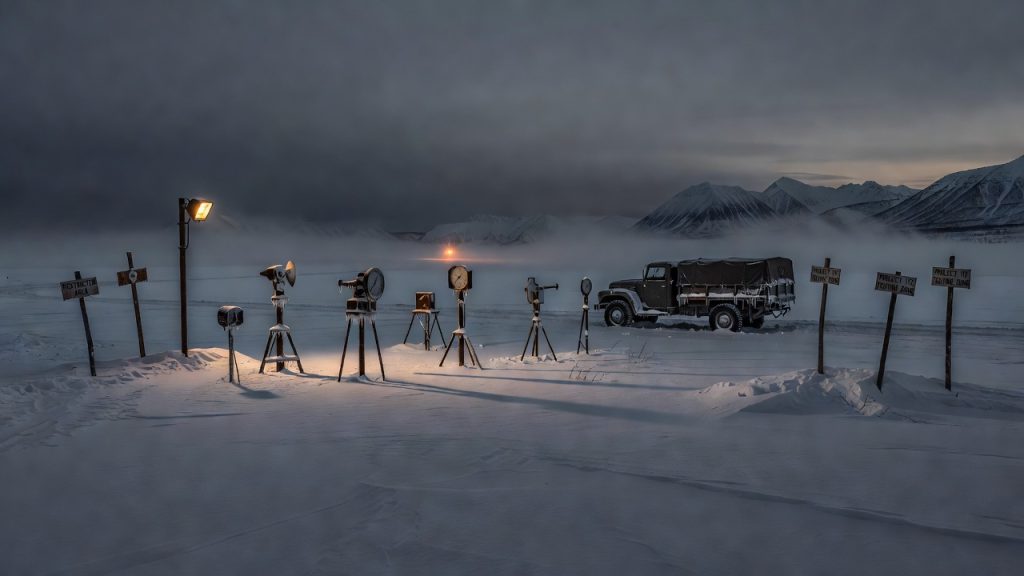
Remote Arctic Project 112 test range at Fort Greely, Alaska — ConspiracyRealist.com

Cold Open

The snow at Fort Greely does something strange at night. It erases edges. Runway lights blur into the dark. Sound carries differently. A truck can move half a mile away and seem like it is right behind you. In the early 1960s, that frozen silence made the Alaskan post look like the perfect laboratory for a Cold War question no one wanted to ask in public: if nerve agents or biological clouds hit American forces in subzero conditions, what would actually happen on the ground? That question led to Project 112. And some of its most unsettling answers were tested in the Arctic.

The Case For

Fort Greely was not a rumor. It was a test site.

If you strip away the mythology, the first hard fact is already enough to raise your pulse. The Department of Defense’s own Project 112/SHAD overview says the Deseret Test Center ran land-based and sea-based chemical and biological warfare tests from 1962 to 1973. Health.mil’s fact-sheet index places multiple land tests at Fort Greely, Alaska, including Whistle Down, Night Train, West Side, Elk Hunt, Sun Down, and Devil Hole. This was not one odd experiment. It was a cluster.

The official Fort Greely record matters because it widens the frame beyond the ships and sea sprays that get most of the attention. If our earlier Project SHAD investigation showed how the military tested ships at sea, Fort Greely suggests the same Cold War machine was also using remote Arctic terrain to answer how agents behaved on snow, frozen ground, and under inversion layers. That makes Alaska look less like a side note and more like a strategic proving ground inside the larger government secrets archive.

Some of the tests were more than harmless weather drills.

The 2002 Health.mil fact sheet for Whistle Down states that the test at Fort Greely’s Gerstle River site investigated the hazard posed by sarin and VX on environmental clothing, snow, and frozen ground. The same fact sheet says remotely detonated sarin-filled M55 rockets and M121 shells, along with VX-filled M23 land mines, were part of the setup. That is not fringe speculation. That is the Pentagon’s own retrospective description.

Another Fort Greely test, Night Train, focused on biological aerosol behavior in Arctic conditions. According to the fact sheet, 14 airborne trials released Bacillus globigii from aircraft-mounted spray tanks, while four surface trials dispersed the simulant from a moving personnel carrier. The release was accompanied by zinc cadmium sulfide tracer particles to track the cloud. Officially, the goal was dispersion science. Unofficially, it shows how far the military was willing to go to model biological warfare under real environmental conditions.

The broader paper trail makes the secrecy harder to dismiss. A 2002 House Veterans’ Affairs hearing on Military Operations Aspects of SHAD and Project 112 recorded DOD testimony that 134 tests were planned, with dozens completed and others still under review. Lawmakers openly criticized the Pentagon’s years of denial and delay. The conspiracy case, then, is not that Fort Greely hosted fantasy science. It is that the government ran real chemical and biological warfare tests in Alaska, disclosed them late, and still left the public with a fragmented record.

The Realist’s Eye

Documented secrecy is not the same thing as a hidden mass-casualty scandal.

This is where the story tightens. The strongest version of the conspiracy says Fort Greely proves the U.S. military recklessly exposed troops or civilians to catastrophic danger and then buried the consequences. But the available record is uneven. In Whistle Down, the fact sheet describes manikins in arctic clothing positioned downwind of nerve-agent detonations. It does not identify exposed troop formations in the way some readers might assume. Night Train used a biological simulant rather than a live biological warfare agent, and the fact sheet cites later review concluding the risk to surrounding populations was low.

That does not erase the ethical problem. It does matter, however, when separating what is documented from what is inferred. Project 112’s official summaries repeatedly state that the Department of Defense found no records showing deaths from Deseret Test Center exposures and no confirmed illnesses at the time of testing. Critics will hear that as institutional self-protection. Skeptics will hear it as the best surviving evidence. Both reactions are rational.

The records themselves are part of the problem.

The Health.mil Project 112 page admits the classified SHAD record was never fully cataloged in one place and that the Deseret Test Center closed in the 1970s, scattering documents across services and locations. Even the VA notices that it cannot independently verify every detail extracted from old classified files. So the realist problem is obvious: incomplete archives create a vacuum, and vacuums attract conclusions the surviving evidence cannot fully carry.

There is also a scale problem. Fort Greely hosted multiple tests over multiple years, but that does not automatically mean every rumored Arctic exposure story belongs to Project 112. Some claims online blur together simulant tests, live-agent trials, local illnesses, and unrelated military programs. Once those threads tangle, the narrative gets stronger emotionally and weaker evidentially. The deeper truth may be less cinematic but still disturbing: a real secret program can generate enough documented wrongdoing that it no longer needs embellishment.

What We Know For Certain

  • The Deseret Test Center ran Project 112 land-based and sea-based chemical and biological warfare tests from 1962 to 1973, according to DOD and VA materials.
  • Fort Greely, Alaska appears repeatedly in official Project 112 fact sheets, including Whistle Down and Night Train.
  • Whistle Down involved sarin and VX hazard testing on snow, frozen ground, and arctic clothing at the Gerstle River site.
  • Night Train involved airborne and surface releases of Bacillus globigii simulant with zinc cadmium sulfide tracer particles near Fort Greely.
  • Congress held hearings in 2002 after years of pressure over delayed disclosure to veterans and the public.

The Unanswered Questions

  • How complete are the surviving Fort Greely records after the Deseret Test Center’s closure and decades of classification?
  • Were all military personnel, contractors, and nearby communities fully identified in later exposure reviews?
  • How much confidence should researchers place in DOD health conclusions drawn from incomplete archival material?
  • What additional Alaska-specific documents remain outside the public Project 112 fact-sheet archive?

The Closer — You Decide

Fort Greely does not need embellishment to feel eerie. The official record is eerie enough. Arctic test names. Nerve agents on frozen ground. Biological clouds tracked across winter air. A government that admitted the program only after decades of pressure. Maybe that proves a deeper cover-up. Maybe it proves something narrower but still serious: that Cold War secrecy outlived the tests themselves. The documents are real. The gaps are real. And what those gaps mean is still sitting in the snow. The evidence is on the table. You decide.

dive down the rabbit hole

Fort Greely and Project 112’s Arctic Tests

S-FX.com
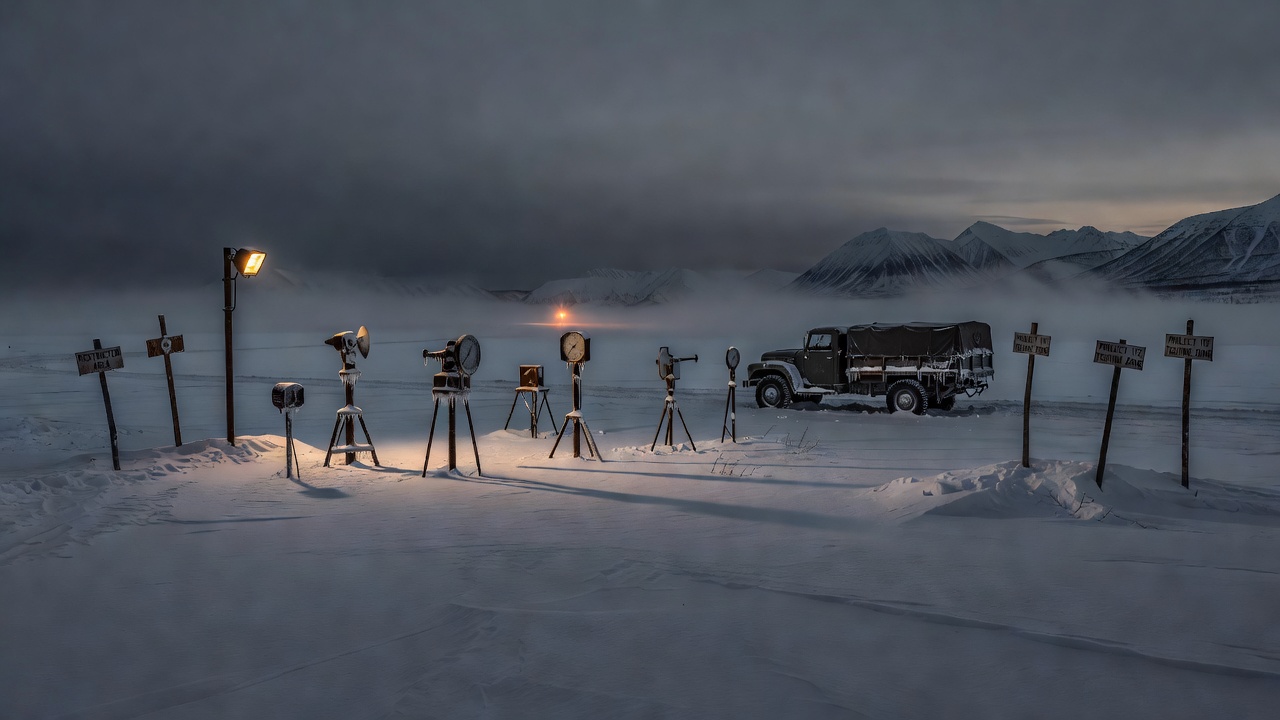
Remote Arctic Project 112 test range at Fort Greely, Alaska — ConspiracyRealist.com

Cold Open

The snow at Fort Greely does something strange at night. It erases edges. Runway lights blur into the dark. Sound carries differently. A truck can move half a mile away and seem like it is right behind you. In the early 1960s, that frozen silence made the Alaskan post look like the perfect laboratory for a Cold War question no one wanted to ask in public: if nerve agents or biological clouds hit American forces in subzero conditions, what would actually happen on the ground? That question led to Project 112. And some of its most unsettling answers were tested in the Arctic.

The Case For

Fort Greely was not a rumor. It was a test site.

If you strip away the mythology, the first hard fact is already enough to raise your pulse. The Department of Defense’s own Project 112/SHAD overview says the Deseret Test Center ran land-based and sea-based chemical and biological warfare tests from 1962 to 1973. Health.mil’s fact-sheet index places multiple land tests at Fort Greely, Alaska, including Whistle Down, Night Train, West Side, Elk Hunt, Sun Down, and Devil Hole. This was not one odd experiment. It was a cluster.

The official Fort Greely record matters because it widens the frame beyond the ships and sea sprays that get most of the attention. If our earlier Project SHAD investigation showed how the military tested ships at sea, Fort Greely suggests the same Cold War machine was also using remote Arctic terrain to answer how agents behaved on snow, frozen ground, and under inversion layers. That makes Alaska look less like a side note and more like a strategic proving ground inside the larger government secrets archive.

Some of the tests were more than harmless weather drills.

The 2002 Health.mil fact sheet for Whistle Down states that the test at Fort Greely’s Gerstle River site investigated the hazard posed by sarin and VX on environmental clothing, snow, and frozen ground. The same fact sheet says remotely detonated sarin-filled M55 rockets and M121 shells, along with VX-filled M23 land mines, were part of the setup. That is not fringe speculation. That is the Pentagon’s own retrospective description.

Another Fort Greely test, Night Train, focused on biological aerosol behavior in Arctic conditions. According to the fact sheet, 14 airborne trials released Bacillus globigii from aircraft-mounted spray tanks, while four surface trials dispersed the simulant from a moving personnel carrier. The release was accompanied by zinc cadmium sulfide tracer particles to track the cloud. Officially, the goal was dispersion science. Unofficially, it shows how far the military was willing to go to model biological warfare under real environmental conditions.

The broader paper trail makes the secrecy harder to dismiss. A 2002 House Veterans’ Affairs hearing on Military Operations Aspects of SHAD and Project 112 recorded DOD testimony that 134 tests were planned, with dozens completed and others still under review. Lawmakers openly criticized the Pentagon’s years of denial and delay. The conspiracy case, then, is not that Fort Greely hosted fantasy science. It is that the government ran real chemical and biological warfare tests in Alaska, disclosed them late, and still left the public with a fragmented record.

The Realist’s Eye

Documented secrecy is not the same thing as a hidden mass-casualty scandal.

This is where the story tightens. The strongest version of the conspiracy says Fort Greely proves the U.S. military recklessly exposed troops or civilians to catastrophic danger and then buried the consequences. But the available record is uneven. In Whistle Down, the fact sheet describes manikins in arctic clothing positioned downwind of nerve-agent detonations. It does not identify exposed troop formations in the way some readers might assume. Night Train used a biological simulant rather than a live biological warfare agent, and the fact sheet cites later review concluding the risk to surrounding populations was low.

That does not erase the ethical problem. It does matter, however, when separating what is documented from what is inferred. Project 112’s official summaries repeatedly state that the Department of Defense found no records showing deaths from Deseret Test Center exposures and no confirmed illnesses at the time of testing. Critics will hear that as institutional self-protection. Skeptics will hear it as the best surviving evidence. Both reactions are rational.

The records themselves are part of the problem.

The Health.mil Project 112 page admits the classified SHAD record was never fully cataloged in one place and that the Deseret Test Center closed in the 1970s, scattering documents across services and locations. Even the VA notices that it cannot independently verify every detail extracted from old classified files. So the realist problem is obvious: incomplete archives create a vacuum, and vacuums attract conclusions the surviving evidence cannot fully carry.

There is also a scale problem. Fort Greely hosted multiple tests over multiple years, but that does not automatically mean every rumored Arctic exposure story belongs to Project 112. Some claims online blur together simulant tests, live-agent trials, local illnesses, and unrelated military programs. Once those threads tangle, the narrative gets stronger emotionally and weaker evidentially. The deeper truth may be less cinematic but still disturbing: a real secret program can generate enough documented wrongdoing that it no longer needs embellishment.

What We Know For Certain

  • The Deseret Test Center ran Project 112 land-based and sea-based chemical and biological warfare tests from 1962 to 1973, according to DOD and VA materials.
  • Fort Greely, Alaska appears repeatedly in official Project 112 fact sheets, including Whistle Down and Night Train.
  • Whistle Down involved sarin and VX hazard testing on snow, frozen ground, and arctic clothing at the Gerstle River site.
  • Night Train involved airborne and surface releases of Bacillus globigii simulant with zinc cadmium sulfide tracer particles near Fort Greely.
  • Congress held hearings in 2002 after years of pressure over delayed disclosure to veterans and the public.

The Unanswered Questions

  • How complete are the surviving Fort Greely records after the Deseret Test Center’s closure and decades of classification?
  • Were all military personnel, contractors, and nearby communities fully identified in later exposure reviews?
  • How much confidence should researchers place in DOD health conclusions drawn from incomplete archival material?
  • What additional Alaska-specific documents remain outside the public Project 112 fact-sheet archive?

The Closer — You Decide

Fort Greely does not need embellishment to feel eerie. The official record is eerie enough. Arctic test names. Nerve agents on frozen ground. Biological clouds tracked across winter air. A government that admitted the program only after decades of pressure. Maybe that proves a deeper cover-up. Maybe it proves something narrower but still serious: that Cold War secrecy outlived the tests themselves. The documents are real. The gaps are real. And what those gaps mean is still sitting in the snow. The evidence is on the table. You decide.

Fort Greely and Project 112’s Arctic Tests

Remote Arctic Project 112 test range at Fort Greely, Alaska — ConspiracyRealist.com

Cold Open

The snow at Fort Greely does something strange at night. It erases edges. Runway lights blur into the dark. Sound carries differently. A truck can move half a mile away and seem like it is right behind you. In the early 1960s, that frozen silence made the Alaskan post look like the perfect laboratory for a Cold War question no one wanted to ask in public: if nerve agents or biological clouds hit American forces in subzero conditions, what would actually happen on the ground? That question led to Project 112. And some of its most unsettling answers were tested in the Arctic.

The Case For

Fort Greely was not a rumor. It was a test site.

If you strip away the mythology, the first hard fact is already enough to raise your pulse. The Department of Defense’s own Project 112/SHAD overview says the Deseret Test Center ran land-based and sea-based chemical and biological warfare tests from 1962 to 1973. Health.mil’s fact-sheet index places multiple land tests at Fort Greely, Alaska, including Whistle Down, Night Train, West Side, Elk Hunt, Sun Down, and Devil Hole. This was not one odd experiment. It was a cluster.

The official Fort Greely record matters because it widens the frame beyond the ships and sea sprays that get most of the attention. If our earlier Project SHAD investigation showed how the military tested ships at sea, Fort Greely suggests the same Cold War machine was also using remote Arctic terrain to answer how agents behaved on snow, frozen ground, and under inversion layers. That makes Alaska look less like a side note and more like a strategic proving ground inside the larger government secrets archive.

Some of the tests were more than harmless weather drills.

The 2002 Health.mil fact sheet for Whistle Down states that the test at Fort Greely’s Gerstle River site investigated the hazard posed by sarin and VX on environmental clothing, snow, and frozen ground. The same fact sheet says remotely detonated sarin-filled M55 rockets and M121 shells, along with VX-filled M23 land mines, were part of the setup. That is not fringe speculation. That is the Pentagon’s own retrospective description.

Another Fort Greely test, Night Train, focused on biological aerosol behavior in Arctic conditions. According to the fact sheet, 14 airborne trials released Bacillus globigii from aircraft-mounted spray tanks, while four surface trials dispersed the simulant from a moving personnel carrier. The release was accompanied by zinc cadmium sulfide tracer particles to track the cloud. Officially, the goal was dispersion science. Unofficially, it shows how far the military was willing to go to model biological warfare under real environmental conditions.

The broader paper trail makes the secrecy harder to dismiss. A 2002 House Veterans’ Affairs hearing on Military Operations Aspects of SHAD and Project 112 recorded DOD testimony that 134 tests were planned, with dozens completed and others still under review. Lawmakers openly criticized the Pentagon’s years of denial and delay. The conspiracy case, then, is not that Fort Greely hosted fantasy science. It is that the government ran real chemical and biological warfare tests in Alaska, disclosed them late, and still left the public with a fragmented record.

The Realist’s Eye

Documented secrecy is not the same thing as a hidden mass-casualty scandal.

This is where the story tightens. The strongest version of the conspiracy says Fort Greely proves the U.S. military recklessly exposed troops or civilians to catastrophic danger and then buried the consequences. But the available record is uneven. In Whistle Down, the fact sheet describes manikins in arctic clothing positioned downwind of nerve-agent detonations. It does not identify exposed troop formations in the way some readers might assume. Night Train used a biological simulant rather than a live biological warfare agent, and the fact sheet cites later review concluding the risk to surrounding populations was low.

That does not erase the ethical problem. It does matter, however, when separating what is documented from what is inferred. Project 112’s official summaries repeatedly state that the Department of Defense found no records showing deaths from Deseret Test Center exposures and no confirmed illnesses at the time of testing. Critics will hear that as institutional self-protection. Skeptics will hear it as the best surviving evidence. Both reactions are rational.

The records themselves are part of the problem.

The Health.mil Project 112 page admits the classified SHAD record was never fully cataloged in one place and that the Deseret Test Center closed in the 1970s, scattering documents across services and locations. Even the VA notices that it cannot independently verify every detail extracted from old classified files. So the realist problem is obvious: incomplete archives create a vacuum, and vacuums attract conclusions the surviving evidence cannot fully carry.

There is also a scale problem. Fort Greely hosted multiple tests over multiple years, but that does not automatically mean every rumored Arctic exposure story belongs to Project 112. Some claims online blur together simulant tests, live-agent trials, local illnesses, and unrelated military programs. Once those threads tangle, the narrative gets stronger emotionally and weaker evidentially. The deeper truth may be less cinematic but still disturbing: a real secret program can generate enough documented wrongdoing that it no longer needs embellishment.

What We Know For Certain

  • The Deseret Test Center ran Project 112 land-based and sea-based chemical and biological warfare tests from 1962 to 1973, according to DOD and VA materials.
  • Fort Greely, Alaska appears repeatedly in official Project 112 fact sheets, including Whistle Down and Night Train.
  • Whistle Down involved sarin and VX hazard testing on snow, frozen ground, and arctic clothing at the Gerstle River site.
  • Night Train involved airborne and surface releases of Bacillus globigii simulant with zinc cadmium sulfide tracer particles near Fort Greely.
  • Congress held hearings in 2002 after years of pressure over delayed disclosure to veterans and the public.

The Unanswered Questions

  • How complete are the surviving Fort Greely records after the Deseret Test Center’s closure and decades of classification?
  • Were all military personnel, contractors, and nearby communities fully identified in later exposure reviews?
  • How much confidence should researchers place in DOD health conclusions drawn from incomplete archival material?
  • What additional Alaska-specific documents remain outside the public Project 112 fact-sheet archive?

The Closer — You Decide

Fort Greely does not need embellishment to feel eerie. The official record is eerie enough. Arctic test names. Nerve agents on frozen ground. Biological clouds tracked across winter air. A government that admitted the program only after decades of pressure. Maybe that proves a deeper cover-up. Maybe it proves something narrower but still serious: that Cold War secrecy outlived the tests themselves. The documents are real. The gaps are real. And what those gaps mean is still sitting in the snow. The evidence is on the table. You decide.

Table of contents