Menu

Fred Hampton’s Assassination: FBI, COINTELPRO, and a Murder in the Dark

Fred Hampton's Assassination: FBI, COINTELPRO, and a Murder in the Dark

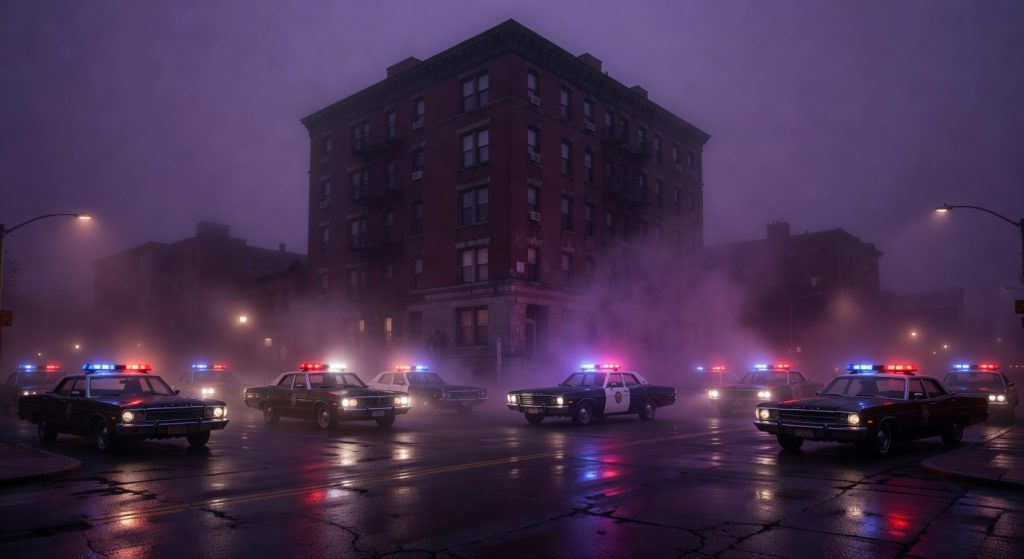
At 4:45 in the morning of December 4, 1969, a team of Cook County State’s Attorney’s police officers — working from a floor plan and a detailed briefing provided by the FBI — raided an apartment at 2337 West Monroe Street in Chicago. They were armed with a submachine gun, shotguns, and handguns. They had been told they might encounter resistance from a heavily armed gang.

What they encountered was mostly sleeping people. Fred Hampton — the 21-year-old chairman of the Illinois chapter of the Black Panther Party, one of the most gifted political organizers of his generation — was in his bed. Witnesses and subsequent forensic analysis established that he never got up. He was shot twice in the head at close range while he lay unconscious, possibly drugged by a federal informant who had added a barbiturate to his drink the night before.

Fred Hampton was killed in his sleep by law enforcement agents operating with intelligence and tactical support provided by the FBI’s COINTELPRO program. He was 21 years old. His pregnant fiancée, Deborah Johnson, was in the bed beside him when he was shot. She survived. Their son, Fred Hampton Jr., was born 25 days later.

The killing of Fred Hampton is not a conspiracy theory. It is documented history — confirmed by federal courts, congressional investigations, and the FBI’s own records. It is also one of the most troubling examples of state-sponsored political murder in American history.

Who Was Fred Hampton?

To understand why the FBI considered Fred Hampton dangerous enough to warrant assassination, you need to understand what he had accomplished by the age of 21. Born in 1948 and raised in Maywood, Illinois, Hampton was a prodigy of political organizing. As a teenager, he built the NAACP Youth Council in Maywood from a handful of members to more than 500. He was a natural orator with an ability to translate complex political ideas into language that resonated with working-class Black youth in ways that the established civil rights movement often didn’t.

When Hampton joined the Illinois chapter of the Black Panther Party in 1968, he brought those organizing skills with him. Within a year, he had transformed a small, struggling organization into one of the most dynamic chapters in the country. He organized free breakfast programs for children, free medical clinics, and after-school tutoring programs. He negotiated a non-aggression pact between Chicago’s major street gangs — the Blackstone Rangers, the Disciples, the Young Patriots (a white working-class organization), and the Young Lords (Puerto Rican) — drawing them into a coalition he called the Rainbow Coalition.

This last achievement was particularly alarming to the FBI. Hampton was building bridges across racial lines, uniting poor and working-class communities of different ethnicities around shared economic interests. An FBI memo written after Hampton forged the Rainbow Coalition described him as potentially “the messiah” of the Black liberation movement. In the paranoid, racist framework of J. Edgar Hoover’s COINTELPRO, that made Fred Hampton the most dangerous man in Chicago.

COINTELPRO’s War on the Black Panthers

The Black Panther Party was COINTELPRO’s primary target by the late 1960s. A 1968 FBI memo — subsequently revealed in the Church Committee investigation — identified “the Prevention of the Rise of a ‘Black Messiah’ who could unify and electrify the militant black nationalist movement” as a top program priority. Hoover had publicly called the Panthers “the greatest threat to the internal security of the country.”

The methods used against the Panthers included:

  • Infiltration: FBI informants were planted throughout Panther chapters to gather intelligence, disrupt operations, and — in the most extreme cases — provide tactical information to law enforcement for raids
  • Forged correspondence: The FBI manufactured letters designed to provoke violent confrontations between the Panthers and rival organizations, including the US Organization in California, a conflict that resulted in multiple murders
  • False stories: The FBI fed fabricated news stories to friendly journalists, portraying Panthers as criminals and terrorists
  • Legal harassment: FBI pressure led to Panthers being prosecuted on questionable charges across the country, draining the organization’s resources
  • Disinformation campaigns: Anonymous letters and phone calls were used to sow distrust within the organization

In Chicago, the primary FBI instrument was William O’Neal, an informant who had been recruited in 1969 and who rose within the Illinois chapter to become Hampton’s chief of security — one of the highest trust positions in the organization. O’Neal’s handler was Special Agent Roy Mitchell of the Chicago FBI field office.

The Floor Plan That Killed Fred Hampton

In November 1969, William O’Neal provided FBI Special Agent Mitchell with a detailed floor plan of the apartment at 2337 West Monroe Street — the apartment where Fred Hampton lived. The floor plan showed the layout of the rooms, the location of the furniture, and — critically — the location of Hampton’s bed.

This floor plan was transmitted to the FBI’s Chicago office and then provided to Cook County State’s Attorney Edward Hanrahan, whose office planned and executed the raid. Hanrahan was a Democrat with close ties to Mayor Richard J. Daley‘s machine — and a deep antagonism toward the Panthers.

On the night of December 3-4, O’Neal attended a Panther meeting at the apartment and, according to subsequent forensic toxicology and testimony, added a large dose of secobarbital — a powerful barbiturate — to Hampton’s drink. Hampton was reportedly so drowsy that he fell asleep during the meeting and could barely be roused afterward.

The raid began at 4:45 AM. The police entered through the front and back doors simultaneously. The shooting was intense and nearly immediate. Mark Clark, a Panther from Peoria who was sleeping in the front room with a shotgun across his lap, was shot and killed. His gun fired once — investigators later determined this was likely a reflexive muscle contraction as he died, not a voluntary act of resistance.

Fred Hampton never got up. Gunfire entered his bedroom through the wall. Witnesses who survived — including Deborah Johnson — testified that Hampton was alive and semi-conscious when officers entered the bedroom. Two shots were then fired into his head at close range. The medical examiner later confirmed that the fatal shots were fired from a distance of less than a foot.

The Cover-Up: “They Died in a Wild Gun Battle”

State’s Attorney Hanrahan went on television to describe the raid as a “violent” confrontation in which police had come under “sustained attack” from heavily armed Panthers. He displayed photographs of what he said were bullet holes made by Panther gunfire into the front door.

Reporters from the Chicago Tribune visited the apartment and found that the “bullet holes” in the front door were, in fact, nail heads. The actual bullet patterns showed an overwhelming preponderance of fire directed inward — from police into the apartment — rather than outward from the Panthers. Of the nearly 100 rounds fired during the raid, investigators would later establish that only one — the likely-involuntary discharge from Mark Clark’s gun — came from inside the apartment.

A federal grand jury investigation eventually concluded that the official account of the raid was false. Hanrahan and several officers were indicted — but the charges were later dropped. A civil lawsuit filed by Hampton’s family and other survivors — after thirteen years of litigation — resulted in a settlement of $1.85 million in 1982, paid by the federal government, the city of Chicago, and Cook County. The settlement was accompanied by no admission of wrongdoing.

William O’Neal, the informant who had provided the floor plan and allegedly drugged Hampton, received a $300 bonus from the FBI for his work on the night of the raid. He died in 1990 in what was ruled a suicide — stepping in front of a car on a Chicago expressway on the night a PBS documentary about Fred Hampton’s death aired.

Congressional Confirmation: The Church Committee’s Findings

The Church Committee examined the Hampton case in detail during its 1975-1976 investigation of COINTELPRO. Its findings confirmed that the FBI’s provision of the apartment floor plan to local law enforcement was part of a systematic pattern of using informants and intelligence to enable raids on Panther offices and residences across the country.

The committee documented 233 “counterintelligence actions” taken against the Black Panther Party between 1967 and 1971 — the most of any COINTELPRO target. It confirmed the use of forged letters to incite gang warfare, the fabrication of news stories, and the systematic use of informants to penetrate and disrupt the organization.

What the committee stopped short of stating — what no official investigation has ever formally concluded — is that the Hampton raid was a planned assassination rather than a law enforcement operation that went wrong. But the evidence that accumulated in subsequent decades has persuaded many historians, civil rights scholars, and legal analysts that this is the most accurate characterization of what happened.

Fred Hampton’s Legacy

Fred Hampton died at 21. The question of what he might have achieved had he lived is one of the haunting counterfactuals of the civil rights era. His Rainbow Coalition — the alliance of Black, white, and Latino working-class organizations he had assembled in Chicago — was a genuinely novel political formation, one that pointed toward a kind of class-based multiracial politics that the American left has struggled to reconstruct ever since.

His son, Fred Hampton Jr., has continued organizing in Chicago, founding the Black Panther Party Cubs and later the Prisoners of Conscience Committee. The apartment building where Hampton was killed has become a site of pilgrimage for historians and activists. A 2021 biopic, Judas and the Black Messiah, introduced Hampton’s story to a new generation.

The FBI informant William O’Neal is played in the film as a complex, tragic figure — a man manipulated by the system into a role he may not have fully understood would result in death. Whether that’s the right characterization is something reasonable people disagree about. The floor plan he drew, and the bed it showed, are facts of record.

A Thought-Provoking Conclusion

The killing of Fred Hampton is the sharpest possible test of how seriously a society takes its stated commitments to free speech, political organizing, and equal justice under law. Here is a 21-year-old man who was killed in his bed by a law enforcement operation directed, guided, and supported by the federal government — killed because he was effective at organizing poor people across racial lines.

The institutions responsible were never held to genuine account. The civil settlement came with no admission of wrongdoing. The men who planned and executed the raid faced no criminal consequences. The FBI director who oversaw the COINTELPRO program died in office, having served for nearly 48 years, and was eulogized by presidents.

If you’re looking for a single case that illustrates what the American shadow government was capable of doing to its own citizens — not in a foreign country, not against armed enemies, but against a sleeping 21-year-old in his Chicago apartment — this is it.

Down the Rabbit Hole

  • COINTELPRO’s Full Scope: Hampton’s killing was one of hundreds of documented COINTELPRO operations. Explore the full program — its targets, methods, and the question of how much has never been fully disclosed.
  • The Rainbow Coalition: Hampton’s cross-racial coalition-building was unprecedented. Trace the history of multiracial working-class organizing in America and the forces that have consistently worked to prevent it.
  • J. Edgar Hoover’s Secret Files: What was in the thousands of secret dossiers Hoover maintained on American politicians, celebrities, and activists? What became of them when he died?
  • The Black Panther Party’s Community Programs: Beyond the revolutionary rhetoric, the Panthers built an extraordinary network of social services. Why is this history so rarely taught, and who benefits from its erasure?
  • Political Prisoner Cases: Several individuals convicted of crimes connected to the Panther era — including Mumia Abu-Jamal and Peltier — continue to claim their prosecutions were politically motivated. Examine the evidence and the ongoing debates.

Disclaimer: This article is intended for educational and entertainment purposes. The events described are documented historical facts supported by federal court proceedings, congressional investigations, and the FBI’s own declassified records. Readers are encouraged to consult primary sources.

dive down the rabbit hole

Fred Hampton’s Assassination: FBI, COINTELPRO, and a Murder in the Dark

Conspiracy Realist
Fred Hampton's Assassination: FBI, COINTELPRO, and a Murder in the Dark

At 4:45 in the morning of December 4, 1969, a team of Cook County State’s Attorney’s police officers — working from a floor plan and a detailed briefing provided by the FBI — raided an apartment at 2337 West Monroe Street in Chicago. They were armed with a submachine gun, shotguns, and handguns. They had been told they might encounter resistance from a heavily armed gang.

What they encountered was mostly sleeping people. Fred Hampton — the 21-year-old chairman of the Illinois chapter of the Black Panther Party, one of the most gifted political organizers of his generation — was in his bed. Witnesses and subsequent forensic analysis established that he never got up. He was shot twice in the head at close range while he lay unconscious, possibly drugged by a federal informant who had added a barbiturate to his drink the night before.

Fred Hampton was killed in his sleep by law enforcement agents operating with intelligence and tactical support provided by the FBI’s COINTELPRO program. He was 21 years old. His pregnant fiancée, Deborah Johnson, was in the bed beside him when he was shot. She survived. Their son, Fred Hampton Jr., was born 25 days later.

The killing of Fred Hampton is not a conspiracy theory. It is documented history — confirmed by federal courts, congressional investigations, and the FBI’s own records. It is also one of the most troubling examples of state-sponsored political murder in American history.

Who Was Fred Hampton?

To understand why the FBI considered Fred Hampton dangerous enough to warrant assassination, you need to understand what he had accomplished by the age of 21. Born in 1948 and raised in Maywood, Illinois, Hampton was a prodigy of political organizing. As a teenager, he built the NAACP Youth Council in Maywood from a handful of members to more than 500. He was a natural orator with an ability to translate complex political ideas into language that resonated with working-class Black youth in ways that the established civil rights movement often didn’t.

When Hampton joined the Illinois chapter of the Black Panther Party in 1968, he brought those organizing skills with him. Within a year, he had transformed a small, struggling organization into one of the most dynamic chapters in the country. He organized free breakfast programs for children, free medical clinics, and after-school tutoring programs. He negotiated a non-aggression pact between Chicago’s major street gangs — the Blackstone Rangers, the Disciples, the Young Patriots (a white working-class organization), and the Young Lords (Puerto Rican) — drawing them into a coalition he called the Rainbow Coalition.

This last achievement was particularly alarming to the FBI. Hampton was building bridges across racial lines, uniting poor and working-class communities of different ethnicities around shared economic interests. An FBI memo written after Hampton forged the Rainbow Coalition described him as potentially “the messiah” of the Black liberation movement. In the paranoid, racist framework of J. Edgar Hoover’s COINTELPRO, that made Fred Hampton the most dangerous man in Chicago.

COINTELPRO’s War on the Black Panthers

The Black Panther Party was COINTELPRO’s primary target by the late 1960s. A 1968 FBI memo — subsequently revealed in the Church Committee investigation — identified “the Prevention of the Rise of a ‘Black Messiah’ who could unify and electrify the militant black nationalist movement” as a top program priority. Hoover had publicly called the Panthers “the greatest threat to the internal security of the country.”

The methods used against the Panthers included:

  • Infiltration: FBI informants were planted throughout Panther chapters to gather intelligence, disrupt operations, and — in the most extreme cases — provide tactical information to law enforcement for raids
  • Forged correspondence: The FBI manufactured letters designed to provoke violent confrontations between the Panthers and rival organizations, including the US Organization in California, a conflict that resulted in multiple murders
  • False stories: The FBI fed fabricated news stories to friendly journalists, portraying Panthers as criminals and terrorists
  • Legal harassment: FBI pressure led to Panthers being prosecuted on questionable charges across the country, draining the organization’s resources
  • Disinformation campaigns: Anonymous letters and phone calls were used to sow distrust within the organization

In Chicago, the primary FBI instrument was William O’Neal, an informant who had been recruited in 1969 and who rose within the Illinois chapter to become Hampton’s chief of security — one of the highest trust positions in the organization. O’Neal’s handler was Special Agent Roy Mitchell of the Chicago FBI field office.

The Floor Plan That Killed Fred Hampton

In November 1969, William O’Neal provided FBI Special Agent Mitchell with a detailed floor plan of the apartment at 2337 West Monroe Street — the apartment where Fred Hampton lived. The floor plan showed the layout of the rooms, the location of the furniture, and — critically — the location of Hampton’s bed.

This floor plan was transmitted to the FBI’s Chicago office and then provided to Cook County State’s Attorney Edward Hanrahan, whose office planned and executed the raid. Hanrahan was a Democrat with close ties to Mayor Richard J. Daley‘s machine — and a deep antagonism toward the Panthers.

On the night of December 3-4, O’Neal attended a Panther meeting at the apartment and, according to subsequent forensic toxicology and testimony, added a large dose of secobarbital — a powerful barbiturate — to Hampton’s drink. Hampton was reportedly so drowsy that he fell asleep during the meeting and could barely be roused afterward.

The raid began at 4:45 AM. The police entered through the front and back doors simultaneously. The shooting was intense and nearly immediate. Mark Clark, a Panther from Peoria who was sleeping in the front room with a shotgun across his lap, was shot and killed. His gun fired once — investigators later determined this was likely a reflexive muscle contraction as he died, not a voluntary act of resistance.

Fred Hampton never got up. Gunfire entered his bedroom through the wall. Witnesses who survived — including Deborah Johnson — testified that Hampton was alive and semi-conscious when officers entered the bedroom. Two shots were then fired into his head at close range. The medical examiner later confirmed that the fatal shots were fired from a distance of less than a foot.

The Cover-Up: “They Died in a Wild Gun Battle”

State’s Attorney Hanrahan went on television to describe the raid as a “violent” confrontation in which police had come under “sustained attack” from heavily armed Panthers. He displayed photographs of what he said were bullet holes made by Panther gunfire into the front door.

Reporters from the Chicago Tribune visited the apartment and found that the “bullet holes” in the front door were, in fact, nail heads. The actual bullet patterns showed an overwhelming preponderance of fire directed inward — from police into the apartment — rather than outward from the Panthers. Of the nearly 100 rounds fired during the raid, investigators would later establish that only one — the likely-involuntary discharge from Mark Clark’s gun — came from inside the apartment.

A federal grand jury investigation eventually concluded that the official account of the raid was false. Hanrahan and several officers were indicted — but the charges were later dropped. A civil lawsuit filed by Hampton’s family and other survivors — after thirteen years of litigation — resulted in a settlement of $1.85 million in 1982, paid by the federal government, the city of Chicago, and Cook County. The settlement was accompanied by no admission of wrongdoing.

William O’Neal, the informant who had provided the floor plan and allegedly drugged Hampton, received a $300 bonus from the FBI for his work on the night of the raid. He died in 1990 in what was ruled a suicide — stepping in front of a car on a Chicago expressway on the night a PBS documentary about Fred Hampton’s death aired.

Congressional Confirmation: The Church Committee’s Findings

The Church Committee examined the Hampton case in detail during its 1975-1976 investigation of COINTELPRO. Its findings confirmed that the FBI’s provision of the apartment floor plan to local law enforcement was part of a systematic pattern of using informants and intelligence to enable raids on Panther offices and residences across the country.

The committee documented 233 “counterintelligence actions” taken against the Black Panther Party between 1967 and 1971 — the most of any COINTELPRO target. It confirmed the use of forged letters to incite gang warfare, the fabrication of news stories, and the systematic use of informants to penetrate and disrupt the organization.

What the committee stopped short of stating — what no official investigation has ever formally concluded — is that the Hampton raid was a planned assassination rather than a law enforcement operation that went wrong. But the evidence that accumulated in subsequent decades has persuaded many historians, civil rights scholars, and legal analysts that this is the most accurate characterization of what happened.

Fred Hampton’s Legacy

Fred Hampton died at 21. The question of what he might have achieved had he lived is one of the haunting counterfactuals of the civil rights era. His Rainbow Coalition — the alliance of Black, white, and Latino working-class organizations he had assembled in Chicago — was a genuinely novel political formation, one that pointed toward a kind of class-based multiracial politics that the American left has struggled to reconstruct ever since.

His son, Fred Hampton Jr., has continued organizing in Chicago, founding the Black Panther Party Cubs and later the Prisoners of Conscience Committee. The apartment building where Hampton was killed has become a site of pilgrimage for historians and activists. A 2021 biopic, Judas and the Black Messiah, introduced Hampton’s story to a new generation.

The FBI informant William O’Neal is played in the film as a complex, tragic figure — a man manipulated by the system into a role he may not have fully understood would result in death. Whether that’s the right characterization is something reasonable people disagree about. The floor plan he drew, and the bed it showed, are facts of record.

A Thought-Provoking Conclusion

The killing of Fred Hampton is the sharpest possible test of how seriously a society takes its stated commitments to free speech, political organizing, and equal justice under law. Here is a 21-year-old man who was killed in his bed by a law enforcement operation directed, guided, and supported by the federal government — killed because he was effective at organizing poor people across racial lines.

The institutions responsible were never held to genuine account. The civil settlement came with no admission of wrongdoing. The men who planned and executed the raid faced no criminal consequences. The FBI director who oversaw the COINTELPRO program died in office, having served for nearly 48 years, and was eulogized by presidents.

If you’re looking for a single case that illustrates what the American shadow government was capable of doing to its own citizens — not in a foreign country, not against armed enemies, but against a sleeping 21-year-old in his Chicago apartment — this is it.

Down the Rabbit Hole

  • COINTELPRO’s Full Scope: Hampton’s killing was one of hundreds of documented COINTELPRO operations. Explore the full program — its targets, methods, and the question of how much has never been fully disclosed.
  • The Rainbow Coalition: Hampton’s cross-racial coalition-building was unprecedented. Trace the history of multiracial working-class organizing in America and the forces that have consistently worked to prevent it.
  • J. Edgar Hoover’s Secret Files: What was in the thousands of secret dossiers Hoover maintained on American politicians, celebrities, and activists? What became of them when he died?
  • The Black Panther Party’s Community Programs: Beyond the revolutionary rhetoric, the Panthers built an extraordinary network of social services. Why is this history so rarely taught, and who benefits from its erasure?
  • Political Prisoner Cases: Several individuals convicted of crimes connected to the Panther era — including Mumia Abu-Jamal and Peltier — continue to claim their prosecutions were politically motivated. Examine the evidence and the ongoing debates.

Disclaimer: This article is intended for educational and entertainment purposes. The events described are documented historical facts supported by federal court proceedings, congressional investigations, and the FBI’s own declassified records. Readers are encouraged to consult primary sources.

Fred Hampton’s Assassination: FBI, COINTELPRO, and a Murder in the Dark

Fred Hampton's Assassination: FBI, COINTELPRO, and a Murder in the Dark

At 4:45 in the morning of December 4, 1969, a team of Cook County State’s Attorney’s police officers — working from a floor plan and a detailed briefing provided by the FBI — raided an apartment at 2337 West Monroe Street in Chicago. They were armed with a submachine gun, shotguns, and handguns. They had been told they might encounter resistance from a heavily armed gang.

What they encountered was mostly sleeping people. Fred Hampton — the 21-year-old chairman of the Illinois chapter of the Black Panther Party, one of the most gifted political organizers of his generation — was in his bed. Witnesses and subsequent forensic analysis established that he never got up. He was shot twice in the head at close range while he lay unconscious, possibly drugged by a federal informant who had added a barbiturate to his drink the night before.

Fred Hampton was killed in his sleep by law enforcement agents operating with intelligence and tactical support provided by the FBI’s COINTELPRO program. He was 21 years old. His pregnant fiancée, Deborah Johnson, was in the bed beside him when he was shot. She survived. Their son, Fred Hampton Jr., was born 25 days later.

The killing of Fred Hampton is not a conspiracy theory. It is documented history — confirmed by federal courts, congressional investigations, and the FBI’s own records. It is also one of the most troubling examples of state-sponsored political murder in American history.

Who Was Fred Hampton?

To understand why the FBI considered Fred Hampton dangerous enough to warrant assassination, you need to understand what he had accomplished by the age of 21. Born in 1948 and raised in Maywood, Illinois, Hampton was a prodigy of political organizing. As a teenager, he built the NAACP Youth Council in Maywood from a handful of members to more than 500. He was a natural orator with an ability to translate complex political ideas into language that resonated with working-class Black youth in ways that the established civil rights movement often didn’t.

When Hampton joined the Illinois chapter of the Black Panther Party in 1968, he brought those organizing skills with him. Within a year, he had transformed a small, struggling organization into one of the most dynamic chapters in the country. He organized free breakfast programs for children, free medical clinics, and after-school tutoring programs. He negotiated a non-aggression pact between Chicago’s major street gangs — the Blackstone Rangers, the Disciples, the Young Patriots (a white working-class organization), and the Young Lords (Puerto Rican) — drawing them into a coalition he called the Rainbow Coalition.

This last achievement was particularly alarming to the FBI. Hampton was building bridges across racial lines, uniting poor and working-class communities of different ethnicities around shared economic interests. An FBI memo written after Hampton forged the Rainbow Coalition described him as potentially “the messiah” of the Black liberation movement. In the paranoid, racist framework of J. Edgar Hoover’s COINTELPRO, that made Fred Hampton the most dangerous man in Chicago.

COINTELPRO’s War on the Black Panthers

The Black Panther Party was COINTELPRO’s primary target by the late 1960s. A 1968 FBI memo — subsequently revealed in the Church Committee investigation — identified “the Prevention of the Rise of a ‘Black Messiah’ who could unify and electrify the militant black nationalist movement” as a top program priority. Hoover had publicly called the Panthers “the greatest threat to the internal security of the country.”

The methods used against the Panthers included:

  • Infiltration: FBI informants were planted throughout Panther chapters to gather intelligence, disrupt operations, and — in the most extreme cases — provide tactical information to law enforcement for raids
  • Forged correspondence: The FBI manufactured letters designed to provoke violent confrontations between the Panthers and rival organizations, including the US Organization in California, a conflict that resulted in multiple murders
  • False stories: The FBI fed fabricated news stories to friendly journalists, portraying Panthers as criminals and terrorists
  • Legal harassment: FBI pressure led to Panthers being prosecuted on questionable charges across the country, draining the organization’s resources
  • Disinformation campaigns: Anonymous letters and phone calls were used to sow distrust within the organization

In Chicago, the primary FBI instrument was William O’Neal, an informant who had been recruited in 1969 and who rose within the Illinois chapter to become Hampton’s chief of security — one of the highest trust positions in the organization. O’Neal’s handler was Special Agent Roy Mitchell of the Chicago FBI field office.

The Floor Plan That Killed Fred Hampton

In November 1969, William O’Neal provided FBI Special Agent Mitchell with a detailed floor plan of the apartment at 2337 West Monroe Street — the apartment where Fred Hampton lived. The floor plan showed the layout of the rooms, the location of the furniture, and — critically — the location of Hampton’s bed.

This floor plan was transmitted to the FBI’s Chicago office and then provided to Cook County State’s Attorney Edward Hanrahan, whose office planned and executed the raid. Hanrahan was a Democrat with close ties to Mayor Richard J. Daley‘s machine — and a deep antagonism toward the Panthers.

On the night of December 3-4, O’Neal attended a Panther meeting at the apartment and, according to subsequent forensic toxicology and testimony, added a large dose of secobarbital — a powerful barbiturate — to Hampton’s drink. Hampton was reportedly so drowsy that he fell asleep during the meeting and could barely be roused afterward.

The raid began at 4:45 AM. The police entered through the front and back doors simultaneously. The shooting was intense and nearly immediate. Mark Clark, a Panther from Peoria who was sleeping in the front room with a shotgun across his lap, was shot and killed. His gun fired once — investigators later determined this was likely a reflexive muscle contraction as he died, not a voluntary act of resistance.

Fred Hampton never got up. Gunfire entered his bedroom through the wall. Witnesses who survived — including Deborah Johnson — testified that Hampton was alive and semi-conscious when officers entered the bedroom. Two shots were then fired into his head at close range. The medical examiner later confirmed that the fatal shots were fired from a distance of less than a foot.

The Cover-Up: “They Died in a Wild Gun Battle”

State’s Attorney Hanrahan went on television to describe the raid as a “violent” confrontation in which police had come under “sustained attack” from heavily armed Panthers. He displayed photographs of what he said were bullet holes made by Panther gunfire into the front door.

Reporters from the Chicago Tribune visited the apartment and found that the “bullet holes” in the front door were, in fact, nail heads. The actual bullet patterns showed an overwhelming preponderance of fire directed inward — from police into the apartment — rather than outward from the Panthers. Of the nearly 100 rounds fired during the raid, investigators would later establish that only one — the likely-involuntary discharge from Mark Clark’s gun — came from inside the apartment.

A federal grand jury investigation eventually concluded that the official account of the raid was false. Hanrahan and several officers were indicted — but the charges were later dropped. A civil lawsuit filed by Hampton’s family and other survivors — after thirteen years of litigation — resulted in a settlement of $1.85 million in 1982, paid by the federal government, the city of Chicago, and Cook County. The settlement was accompanied by no admission of wrongdoing.

William O’Neal, the informant who had provided the floor plan and allegedly drugged Hampton, received a $300 bonus from the FBI for his work on the night of the raid. He died in 1990 in what was ruled a suicide — stepping in front of a car on a Chicago expressway on the night a PBS documentary about Fred Hampton’s death aired.

Congressional Confirmation: The Church Committee’s Findings

The Church Committee examined the Hampton case in detail during its 1975-1976 investigation of COINTELPRO. Its findings confirmed that the FBI’s provision of the apartment floor plan to local law enforcement was part of a systematic pattern of using informants and intelligence to enable raids on Panther offices and residences across the country.

The committee documented 233 “counterintelligence actions” taken against the Black Panther Party between 1967 and 1971 — the most of any COINTELPRO target. It confirmed the use of forged letters to incite gang warfare, the fabrication of news stories, and the systematic use of informants to penetrate and disrupt the organization.

What the committee stopped short of stating — what no official investigation has ever formally concluded — is that the Hampton raid was a planned assassination rather than a law enforcement operation that went wrong. But the evidence that accumulated in subsequent decades has persuaded many historians, civil rights scholars, and legal analysts that this is the most accurate characterization of what happened.

Fred Hampton’s Legacy

Fred Hampton died at 21. The question of what he might have achieved had he lived is one of the haunting counterfactuals of the civil rights era. His Rainbow Coalition — the alliance of Black, white, and Latino working-class organizations he had assembled in Chicago — was a genuinely novel political formation, one that pointed toward a kind of class-based multiracial politics that the American left has struggled to reconstruct ever since.

His son, Fred Hampton Jr., has continued organizing in Chicago, founding the Black Panther Party Cubs and later the Prisoners of Conscience Committee. The apartment building where Hampton was killed has become a site of pilgrimage for historians and activists. A 2021 biopic, Judas and the Black Messiah, introduced Hampton’s story to a new generation.

The FBI informant William O’Neal is played in the film as a complex, tragic figure — a man manipulated by the system into a role he may not have fully understood would result in death. Whether that’s the right characterization is something reasonable people disagree about. The floor plan he drew, and the bed it showed, are facts of record.

A Thought-Provoking Conclusion

The killing of Fred Hampton is the sharpest possible test of how seriously a society takes its stated commitments to free speech, political organizing, and equal justice under law. Here is a 21-year-old man who was killed in his bed by a law enforcement operation directed, guided, and supported by the federal government — killed because he was effective at organizing poor people across racial lines.

The institutions responsible were never held to genuine account. The civil settlement came with no admission of wrongdoing. The men who planned and executed the raid faced no criminal consequences. The FBI director who oversaw the COINTELPRO program died in office, having served for nearly 48 years, and was eulogized by presidents.

If you’re looking for a single case that illustrates what the American shadow government was capable of doing to its own citizens — not in a foreign country, not against armed enemies, but against a sleeping 21-year-old in his Chicago apartment — this is it.

Down the Rabbit Hole

  • COINTELPRO’s Full Scope: Hampton’s killing was one of hundreds of documented COINTELPRO operations. Explore the full program — its targets, methods, and the question of how much has never been fully disclosed.
  • The Rainbow Coalition: Hampton’s cross-racial coalition-building was unprecedented. Trace the history of multiracial working-class organizing in America and the forces that have consistently worked to prevent it.
  • J. Edgar Hoover’s Secret Files: What was in the thousands of secret dossiers Hoover maintained on American politicians, celebrities, and activists? What became of them when he died?
  • The Black Panther Party’s Community Programs: Beyond the revolutionary rhetoric, the Panthers built an extraordinary network of social services. Why is this history so rarely taught, and who benefits from its erasure?
  • Political Prisoner Cases: Several individuals convicted of crimes connected to the Panther era — including Mumia Abu-Jamal and Peltier — continue to claim their prosecutions were politically motivated. Examine the evidence and the ongoing debates.

Disclaimer: This article is intended for educational and entertainment purposes. The events described are documented historical facts supported by federal court proceedings, congressional investigations, and the FBI’s own declassified records. Readers are encouraged to consult primary sources.

Table of contents