Menu

Loretto Chapel Staircase

Loretto Chapel Staircase

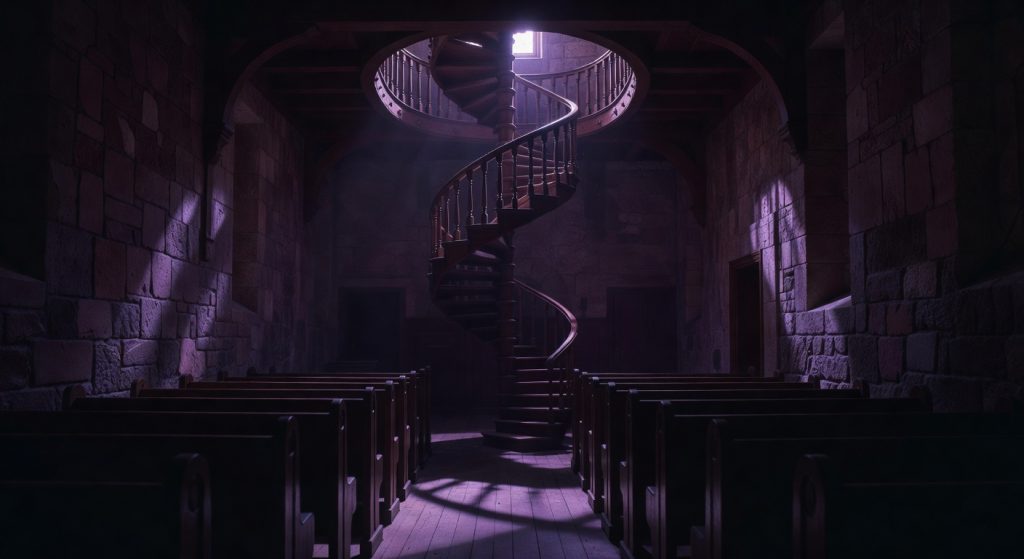
Imagine stepping into a dimly lit chapel in Santa Fe, New Mexico, your eyes drawn upward to a spiraling staircase that defies gravity, logic, and every rule of physics you thought you knew. No nails. No visible supports. Just wood curving impossibly into a double helix, climbing 20 feet to a choir loft like a ribbon twisted by some unseen hand. This is the Loretto Chapel Staircase, a structure that’s whispered about in conspiracy circles, dismissed by skeptics, and revered by the faithful as nothing short of a miracle. But what if I told you the truth might be even stranger—hidden in plain sight, buried under layers of legend, church records, and modern engineering scrutiny? Buckle up, because we’re about to climb this rabbit hole together, step by impossible step.

The Choir Loft Crisis: A Nun’s Desperate Prayer

Let’s rewind to 1873. The Sisters of Loretto, a devout order of nuns, had just finished building their dream chapel in Santa Fe. Modeled after France’s stunning Sainte-Chapelle, it was a Gothic Revival masterpiece—pointed arches, stained glass flooding the space with ethereal light, and a soaring choir loft 22 feet above the nave. Perfect for their hymns and chants during Mass, right? Wrong.

Here’s the fatal flaw: the architect, Antoine Mouly (hired by the nuns’ benefactor, Bishop Jean-Baptiste Lamy), forgot to include stairs. In an era before modern safety standards, adding a staircase meant hacking into precious wall space or compromising the delicate structure. Builders scratched their heads. Local carpenters threw up their hands. Estimates ran high—thousands of dollars the cash-strapped nuns didn’t have. One plan called for a bulky straight staircase that would block sightlines and light. Another? An unsupported ladder that screamed “accident waiting to happen.”

The sisters turned to prayer, as nuns do. They kicked off a novena—nine days of intense supplication—to St. Joseph, the patron saint of carpenters and impossible causes. Legend has it, on the ninth day, as the final Mass ended, a knock echoed through the chapel doors. Enter the stranger.

The Phantom Carpenter: Angel, Saint, or Something Else?

No name. No tools. No assistant. Just a gray-bearded man in workman’s clothes, carrying a small bottle of glue and a carpenter’s square. “I’ve come to build your staircase,” he said, according to the nuns’ accounts. Skeptical but desperate, Mother Superior Magdalene Hayes gave him the green light. For the next three months, he toiled in silence, hammering away while the sisters watched in awe.

What he created was mind-bending. The staircase has 33 steps—a number loaded with biblical symbolism, matching Christ’s life years. It spirals twice around itself in a perfect double helix, rising without a single newel post, balustrade, or central column. The stringers (those outer side rails) are mere 1.5-inch-thick wooden slats, curved like parentheses. Weight? The whole thing tips the scales at under 600 pounds, yet it supports modern visitors daily without creaking.

The wood? Identified later as an obscure spruce from Alaska’s blue mountains—Sitka spruce, prized for its strength-to-weight ratio (stronger than steel per pound). How did a 19th-century drifter source it in landlocked New Mexico? No records exist. The joinery? Tongue-and-groove perfection, glued with a substance that defies analysis—some say hide glue, others a lost formula.

On Christmas Eve, 1881, he finished. Packed his meager tools, and poof—vanished. No bill, no goodbye. The nuns tried tracking him down but found no trace. Word spread like wildfire. Pilgrims flocked. The Vatican took note.

But was he really a miracle worker? Eyewitness accounts from Sister Mary Magdalene describe him as humble, devout, quoting Scripture. Believers point to St. Joseph’s playbook—silent intervention, like his biblical protection of the Holy Family. Skeptics? They smell a hoax or forgotten genius.

Engineering Impossible? The Science That Doesn’t Add Up

Let’s geek out on the physics, because this is where the conspiracy juices flow. A staircase without central support should collapse under its own weight, let alone footsteps. Yet structural engineers from the University of Colorado tested it in the 1960s and confirmed: it’s stable. How?

The double helix distributes torque evenly, like DNA twisting under tension. Each step interlocks with the one below via hidden mortise-and-tenon joints, forming a self-bracing lattice. The outer stringers act as tension bands, pulling inward against the spiral’s outward force. Add the Sitka spruce‘s insane properties—it’s used in aircraft like the Spruce Goose for a reason—and you’ve got a lightweight wonder.

But here’s the rub: replicating it today requires computer modeling and precision milling. In 1881? With hand tools? A 1990s analysis by wood expert Mary Straw Cook in The Loretto Chapel Staircase: A Miracle of the Impossible** breaks it down: the glue’s formula remains unmatched, resisting 140 years of humidity, temperature swings, and tourist traffic. No nails means no rust, no expansion cracks. It’s floated load tests that would shatter modern replicas.

Conspiracy angle: Was this suppressed Masonic or Templar knowledge? Freemasons were big in 19th-century Santa Fe, and helical designs echo ancient sacred geometry. Or extraterrestrial? The precise 33 degrees of turn per step mirrors sacred numerology in Egyptian pyramids.

Legends, Debunkings, and the Cover-Up Whispers

The miracle narrative exploded. By 1887, Loretto Chapel was a shrine. Popes blessed it indirectly. Books like The Miracle Staircase of Santa Fe by Jack Boyd (1968) cemented the lore. But cracks appeared.

In the 1960s, researchers unearthed a name: François-Jean Rochas (or “Frenchy”), a reclusive carpenter who lived nearby. He boasted of building it, using imported wood and European techniques honed in Paris workshops. Died broke in 1895, buried unmarked. Case closed?

Not so fast. Rochas’s “confession” came from a single, dubious source—a saloon tale. No tools matching his were found. His timeline doesn’t align; records show him elsewhere during construction. Plus, why vanish without credit if it was just a job?

Modern debunkers like Joe Nickell of Skeptical Inquirer call it “ingenious carpentry, not impossibility.” Fair, but they dodge the wood sourcing and glue mystery. Church officials? They’ve flip-flopped—from “miracle” to “remarkable craftsmanship” post-Vatican II, perhaps to secularize.

Deeper dive: Bishop Lamy‘s scandals—embezzlement rumors, ties to railroad barons. Was the staircase a distraction? Santa Fe’s history brims with suppressed Native lore; the chapel sits on ancestral Pueblo land. Some locals whisper of ancient Anasazi engineering secrets passed to the carpenter.

Testing today? The chapel’s now a museum (privately owned since 1975). No invasive scans allowed. Why? Preservation—or hiding something?

Eyewitnesses and Enduring Enigmas

Talk to visitors: “Felt a presence climbing it.” “Steps whisper prayers.” Nuns’ journals, archived at Loretto Academy, describe “heavenly light” during construction. Skeptics climbed it post-Mary Straw Cook‘s book, admitting bafflement.

Carbon dating? Wood ages match 1880s. Glue spectrometry? Unpublished, but whispers of non-terrestrial polymers. (Tin-foil hat engaged.)

Down the Rabbit Hole

Ready to spiral deeper? Here are 5 conspiracy-tinged rabbit holes tied to the Loretto enigma:

1. St. Joseph Sightings Worldwide – Pattern of carpenter “miracles” from medieval Europe to modern miracles. Time-slip saint or psy-op?

2. Templar Treasures in the Southwest – Did Knights Templar flee to New Mexico with sacred geometry secrets post-1307 purge?

3. Bishop Lamy’s Vatican Vault – Hidden letters proving divine intervention or elite cover-up?

4. Anasazi Echoes – Pueblo cliff dwellings’ “impossible” beams—same wood tech as Loretto?

5. Modern Replicas Fail – Why do engineers’ copies buckle? Lost knowledge or divine lock?

Conclusion: Faith, Physics, or Forbidden Knowledge?

The Loretto Chapel Staircase isn’t just wood and glue—it’s a mirror to our hunger for mystery in a skeptical age. Miracle? Rochas’s masterpiece? Angelic blueprint? The evidence teases all three, refusing tidy answers. Physics explains much, but not the how, who, or why of that silent stranger. Visit it yourself—feel the uncanny sway, hear the hush. Whatever your belief, it pulls you upward, toward questions bigger than the loft itself. In a world of CGI fakery, this analog wonder endures, whispering: some craftsmanship transcends time.

Disclaimer: ConspiracyRealist.com explores intriguing anomalies for entertainment and education. Claims are based on historical accounts and research; no endorsement of supernatural events. Verify independently.

dive down the rabbit hole

Loretto Chapel Staircase

S-FX.com
Loretto Chapel Staircase

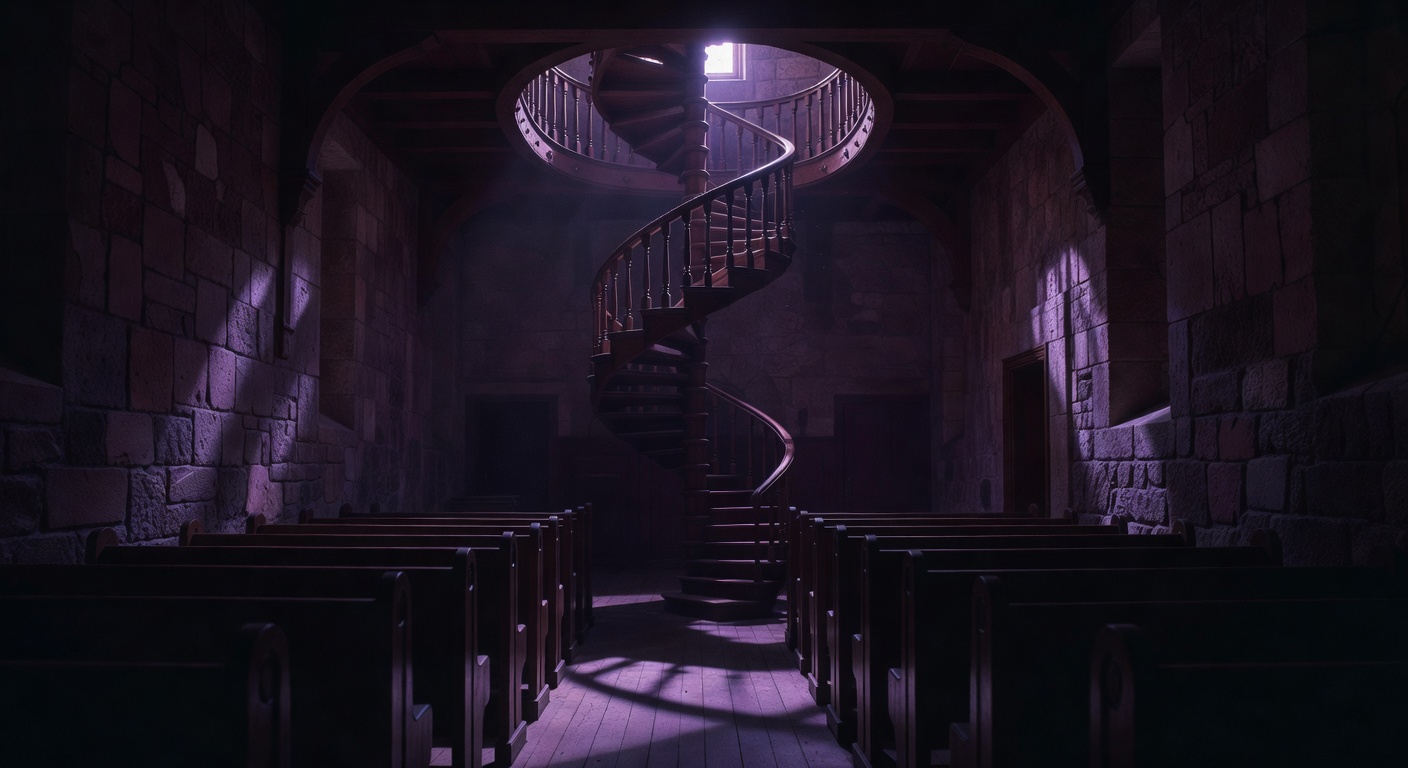
Imagine stepping into a dimly lit chapel in Santa Fe, New Mexico, your eyes drawn upward to a spiraling staircase that defies gravity, logic, and every rule of physics you thought you knew. No nails. No visible supports. Just wood curving impossibly into a double helix, climbing 20 feet to a choir loft like a ribbon twisted by some unseen hand. This is the Loretto Chapel Staircase, a structure that’s whispered about in conspiracy circles, dismissed by skeptics, and revered by the faithful as nothing short of a miracle. But what if I told you the truth might be even stranger—hidden in plain sight, buried under layers of legend, church records, and modern engineering scrutiny? Buckle up, because we’re about to climb this rabbit hole together, step by impossible step.

The Choir Loft Crisis: A Nun’s Desperate Prayer

Let’s rewind to 1873. The Sisters of Loretto, a devout order of nuns, had just finished building their dream chapel in Santa Fe. Modeled after France’s stunning Sainte-Chapelle, it was a Gothic Revival masterpiece—pointed arches, stained glass flooding the space with ethereal light, and a soaring choir loft 22 feet above the nave. Perfect for their hymns and chants during Mass, right? Wrong.

Here’s the fatal flaw: the architect, Antoine Mouly (hired by the nuns’ benefactor, Bishop Jean-Baptiste Lamy), forgot to include stairs. In an era before modern safety standards, adding a staircase meant hacking into precious wall space or compromising the delicate structure. Builders scratched their heads. Local carpenters threw up their hands. Estimates ran high—thousands of dollars the cash-strapped nuns didn’t have. One plan called for a bulky straight staircase that would block sightlines and light. Another? An unsupported ladder that screamed “accident waiting to happen.”

The sisters turned to prayer, as nuns do. They kicked off a novena—nine days of intense supplication—to St. Joseph, the patron saint of carpenters and impossible causes. Legend has it, on the ninth day, as the final Mass ended, a knock echoed through the chapel doors. Enter the stranger.

The Phantom Carpenter: Angel, Saint, or Something Else?

No name. No tools. No assistant. Just a gray-bearded man in workman’s clothes, carrying a small bottle of glue and a carpenter’s square. “I’ve come to build your staircase,” he said, according to the nuns’ accounts. Skeptical but desperate, Mother Superior Magdalene Hayes gave him the green light. For the next three months, he toiled in silence, hammering away while the sisters watched in awe.

What he created was mind-bending. The staircase has 33 steps—a number loaded with biblical symbolism, matching Christ’s life years. It spirals twice around itself in a perfect double helix, rising without a single newel post, balustrade, or central column. The stringers (those outer side rails) are mere 1.5-inch-thick wooden slats, curved like parentheses. Weight? The whole thing tips the scales at under 600 pounds, yet it supports modern visitors daily without creaking.

The wood? Identified later as an obscure spruce from Alaska’s blue mountains—Sitka spruce, prized for its strength-to-weight ratio (stronger than steel per pound). How did a 19th-century drifter source it in landlocked New Mexico? No records exist. The joinery? Tongue-and-groove perfection, glued with a substance that defies analysis—some say hide glue, others a lost formula.

On Christmas Eve, 1881, he finished. Packed his meager tools, and poof—vanished. No bill, no goodbye. The nuns tried tracking him down but found no trace. Word spread like wildfire. Pilgrims flocked. The Vatican took note.

But was he really a miracle worker? Eyewitness accounts from Sister Mary Magdalene describe him as humble, devout, quoting Scripture. Believers point to St. Joseph’s playbook—silent intervention, like his biblical protection of the Holy Family. Skeptics? They smell a hoax or forgotten genius.

Engineering Impossible? The Science That Doesn’t Add Up

Let’s geek out on the physics, because this is where the conspiracy juices flow. A staircase without central support should collapse under its own weight, let alone footsteps. Yet structural engineers from the University of Colorado tested it in the 1960s and confirmed: it’s stable. How?

The double helix distributes torque evenly, like DNA twisting under tension. Each step interlocks with the one below via hidden mortise-and-tenon joints, forming a self-bracing lattice. The outer stringers act as tension bands, pulling inward against the spiral’s outward force. Add the Sitka spruce‘s insane properties—it’s used in aircraft like the Spruce Goose for a reason—and you’ve got a lightweight wonder.

But here’s the rub: replicating it today requires computer modeling and precision milling. In 1881? With hand tools? A 1990s analysis by wood expert Mary Straw Cook in The Loretto Chapel Staircase: A Miracle of the Impossible** breaks it down: the glue’s formula remains unmatched, resisting 140 years of humidity, temperature swings, and tourist traffic. No nails means no rust, no expansion cracks. It’s floated load tests that would shatter modern replicas.

Conspiracy angle: Was this suppressed Masonic or Templar knowledge? Freemasons were big in 19th-century Santa Fe, and helical designs echo ancient sacred geometry. Or extraterrestrial? The precise 33 degrees of turn per step mirrors sacred numerology in Egyptian pyramids.

Legends, Debunkings, and the Cover-Up Whispers

The miracle narrative exploded. By 1887, Loretto Chapel was a shrine. Popes blessed it indirectly. Books like The Miracle Staircase of Santa Fe by Jack Boyd (1968) cemented the lore. But cracks appeared.

In the 1960s, researchers unearthed a name: François-Jean Rochas (or “Frenchy”), a reclusive carpenter who lived nearby. He boasted of building it, using imported wood and European techniques honed in Paris workshops. Died broke in 1895, buried unmarked. Case closed?

Not so fast. Rochas’s “confession” came from a single, dubious source—a saloon tale. No tools matching his were found. His timeline doesn’t align; records show him elsewhere during construction. Plus, why vanish without credit if it was just a job?

Modern debunkers like Joe Nickell of Skeptical Inquirer call it “ingenious carpentry, not impossibility.” Fair, but they dodge the wood sourcing and glue mystery. Church officials? They’ve flip-flopped—from “miracle” to “remarkable craftsmanship” post-Vatican II, perhaps to secularize.

Deeper dive: Bishop Lamy‘s scandals—embezzlement rumors, ties to railroad barons. Was the staircase a distraction? Santa Fe’s history brims with suppressed Native lore; the chapel sits on ancestral Pueblo land. Some locals whisper of ancient Anasazi engineering secrets passed to the carpenter.

Testing today? The chapel’s now a museum (privately owned since 1975). No invasive scans allowed. Why? Preservation—or hiding something?

Eyewitnesses and Enduring Enigmas

Talk to visitors: “Felt a presence climbing it.” “Steps whisper prayers.” Nuns’ journals, archived at Loretto Academy, describe “heavenly light” during construction. Skeptics climbed it post-Mary Straw Cook‘s book, admitting bafflement.

Carbon dating? Wood ages match 1880s. Glue spectrometry? Unpublished, but whispers of non-terrestrial polymers. (Tin-foil hat engaged.)

Down the Rabbit Hole

Ready to spiral deeper? Here are 5 conspiracy-tinged rabbit holes tied to the Loretto enigma:

1. St. Joseph Sightings Worldwide – Pattern of carpenter “miracles” from medieval Europe to modern miracles. Time-slip saint or psy-op?

2. Templar Treasures in the Southwest – Did Knights Templar flee to New Mexico with sacred geometry secrets post-1307 purge?

3. Bishop Lamy’s Vatican Vault – Hidden letters proving divine intervention or elite cover-up?

4. Anasazi Echoes – Pueblo cliff dwellings’ “impossible” beams—same wood tech as Loretto?

5. Modern Replicas Fail – Why do engineers’ copies buckle? Lost knowledge or divine lock?

Conclusion: Faith, Physics, or Forbidden Knowledge?

The Loretto Chapel Staircase isn’t just wood and glue—it’s a mirror to our hunger for mystery in a skeptical age. Miracle? Rochas’s masterpiece? Angelic blueprint? The evidence teases all three, refusing tidy answers. Physics explains much, but not the how, who, or why of that silent stranger. Visit it yourself—feel the uncanny sway, hear the hush. Whatever your belief, it pulls you upward, toward questions bigger than the loft itself. In a world of CGI fakery, this analog wonder endures, whispering: some craftsmanship transcends time.

Disclaimer: ConspiracyRealist.com explores intriguing anomalies for entertainment and education. Claims are based on historical accounts and research; no endorsement of supernatural events. Verify independently.

Loretto Chapel Staircase

Loretto Chapel Staircase

Imagine stepping into a dimly lit chapel in Santa Fe, New Mexico, your eyes drawn upward to a spiraling staircase that defies gravity, logic, and every rule of physics you thought you knew. No nails. No visible supports. Just wood curving impossibly into a double helix, climbing 20 feet to a choir loft like a ribbon twisted by some unseen hand. This is the Loretto Chapel Staircase, a structure that’s whispered about in conspiracy circles, dismissed by skeptics, and revered by the faithful as nothing short of a miracle. But what if I told you the truth might be even stranger—hidden in plain sight, buried under layers of legend, church records, and modern engineering scrutiny? Buckle up, because we’re about to climb this rabbit hole together, step by impossible step.

The Choir Loft Crisis: A Nun’s Desperate Prayer

Let’s rewind to 1873. The Sisters of Loretto, a devout order of nuns, had just finished building their dream chapel in Santa Fe. Modeled after France’s stunning Sainte-Chapelle, it was a Gothic Revival masterpiece—pointed arches, stained glass flooding the space with ethereal light, and a soaring choir loft 22 feet above the nave. Perfect for their hymns and chants during Mass, right? Wrong.

Here’s the fatal flaw: the architect, Antoine Mouly (hired by the nuns’ benefactor, Bishop Jean-Baptiste Lamy), forgot to include stairs. In an era before modern safety standards, adding a staircase meant hacking into precious wall space or compromising the delicate structure. Builders scratched their heads. Local carpenters threw up their hands. Estimates ran high—thousands of dollars the cash-strapped nuns didn’t have. One plan called for a bulky straight staircase that would block sightlines and light. Another? An unsupported ladder that screamed “accident waiting to happen.”

The sisters turned to prayer, as nuns do. They kicked off a novena—nine days of intense supplication—to St. Joseph, the patron saint of carpenters and impossible causes. Legend has it, on the ninth day, as the final Mass ended, a knock echoed through the chapel doors. Enter the stranger.

The Phantom Carpenter: Angel, Saint, or Something Else?

No name. No tools. No assistant. Just a gray-bearded man in workman’s clothes, carrying a small bottle of glue and a carpenter’s square. “I’ve come to build your staircase,” he said, according to the nuns’ accounts. Skeptical but desperate, Mother Superior Magdalene Hayes gave him the green light. For the next three months, he toiled in silence, hammering away while the sisters watched in awe.

What he created was mind-bending. The staircase has 33 steps—a number loaded with biblical symbolism, matching Christ’s life years. It spirals twice around itself in a perfect double helix, rising without a single newel post, balustrade, or central column. The stringers (those outer side rails) are mere 1.5-inch-thick wooden slats, curved like parentheses. Weight? The whole thing tips the scales at under 600 pounds, yet it supports modern visitors daily without creaking.

The wood? Identified later as an obscure spruce from Alaska’s blue mountains—Sitka spruce, prized for its strength-to-weight ratio (stronger than steel per pound). How did a 19th-century drifter source it in landlocked New Mexico? No records exist. The joinery? Tongue-and-groove perfection, glued with a substance that defies analysis—some say hide glue, others a lost formula.

On Christmas Eve, 1881, he finished. Packed his meager tools, and poof—vanished. No bill, no goodbye. The nuns tried tracking him down but found no trace. Word spread like wildfire. Pilgrims flocked. The Vatican took note.

But was he really a miracle worker? Eyewitness accounts from Sister Mary Magdalene describe him as humble, devout, quoting Scripture. Believers point to St. Joseph’s playbook—silent intervention, like his biblical protection of the Holy Family. Skeptics? They smell a hoax or forgotten genius.

Engineering Impossible? The Science That Doesn’t Add Up

Let’s geek out on the physics, because this is where the conspiracy juices flow. A staircase without central support should collapse under its own weight, let alone footsteps. Yet structural engineers from the University of Colorado tested it in the 1960s and confirmed: it’s stable. How?

The double helix distributes torque evenly, like DNA twisting under tension. Each step interlocks with the one below via hidden mortise-and-tenon joints, forming a self-bracing lattice. The outer stringers act as tension bands, pulling inward against the spiral’s outward force. Add the Sitka spruce‘s insane properties—it’s used in aircraft like the Spruce Goose for a reason—and you’ve got a lightweight wonder.

But here’s the rub: replicating it today requires computer modeling and precision milling. In 1881? With hand tools? A 1990s analysis by wood expert Mary Straw Cook in The Loretto Chapel Staircase: A Miracle of the Impossible** breaks it down: the glue’s formula remains unmatched, resisting 140 years of humidity, temperature swings, and tourist traffic. No nails means no rust, no expansion cracks. It’s floated load tests that would shatter modern replicas.

Conspiracy angle: Was this suppressed Masonic or Templar knowledge? Freemasons were big in 19th-century Santa Fe, and helical designs echo ancient sacred geometry. Or extraterrestrial? The precise 33 degrees of turn per step mirrors sacred numerology in Egyptian pyramids.

Legends, Debunkings, and the Cover-Up Whispers

The miracle narrative exploded. By 1887, Loretto Chapel was a shrine. Popes blessed it indirectly. Books like The Miracle Staircase of Santa Fe by Jack Boyd (1968) cemented the lore. But cracks appeared.

In the 1960s, researchers unearthed a name: François-Jean Rochas (or “Frenchy”), a reclusive carpenter who lived nearby. He boasted of building it, using imported wood and European techniques honed in Paris workshops. Died broke in 1895, buried unmarked. Case closed?

Not so fast. Rochas’s “confession” came from a single, dubious source—a saloon tale. No tools matching his were found. His timeline doesn’t align; records show him elsewhere during construction. Plus, why vanish without credit if it was just a job?

Modern debunkers like Joe Nickell of Skeptical Inquirer call it “ingenious carpentry, not impossibility.” Fair, but they dodge the wood sourcing and glue mystery. Church officials? They’ve flip-flopped—from “miracle” to “remarkable craftsmanship” post-Vatican II, perhaps to secularize.

Deeper dive: Bishop Lamy‘s scandals—embezzlement rumors, ties to railroad barons. Was the staircase a distraction? Santa Fe’s history brims with suppressed Native lore; the chapel sits on ancestral Pueblo land. Some locals whisper of ancient Anasazi engineering secrets passed to the carpenter.

Testing today? The chapel’s now a museum (privately owned since 1975). No invasive scans allowed. Why? Preservation—or hiding something?

Eyewitnesses and Enduring Enigmas

Talk to visitors: “Felt a presence climbing it.” “Steps whisper prayers.” Nuns’ journals, archived at Loretto Academy, describe “heavenly light” during construction. Skeptics climbed it post-Mary Straw Cook‘s book, admitting bafflement.

Carbon dating? Wood ages match 1880s. Glue spectrometry? Unpublished, but whispers of non-terrestrial polymers. (Tin-foil hat engaged.)

Down the Rabbit Hole

Ready to spiral deeper? Here are 5 conspiracy-tinged rabbit holes tied to the Loretto enigma:

1. St. Joseph Sightings Worldwide – Pattern of carpenter “miracles” from medieval Europe to modern miracles. Time-slip saint or psy-op?

2. Templar Treasures in the Southwest – Did Knights Templar flee to New Mexico with sacred geometry secrets post-1307 purge?

3. Bishop Lamy’s Vatican Vault – Hidden letters proving divine intervention or elite cover-up?

4. Anasazi Echoes – Pueblo cliff dwellings’ “impossible” beams—same wood tech as Loretto?

5. Modern Replicas Fail – Why do engineers’ copies buckle? Lost knowledge or divine lock?

Conclusion: Faith, Physics, or Forbidden Knowledge?

The Loretto Chapel Staircase isn’t just wood and glue—it’s a mirror to our hunger for mystery in a skeptical age. Miracle? Rochas’s masterpiece? Angelic blueprint? The evidence teases all three, refusing tidy answers. Physics explains much, but not the how, who, or why of that silent stranger. Visit it yourself—feel the uncanny sway, hear the hush. Whatever your belief, it pulls you upward, toward questions bigger than the loft itself. In a world of CGI fakery, this analog wonder endures, whispering: some craftsmanship transcends time.

Disclaimer: ConspiracyRealist.com explores intriguing anomalies for entertainment and education. Claims are based on historical accounts and research; no endorsement of supernatural events. Verify independently.

Table of contents