The Rolling Disclosure Conspiracy: Why UAP Records Arrive in Controlled Waves Instead of One Full Release
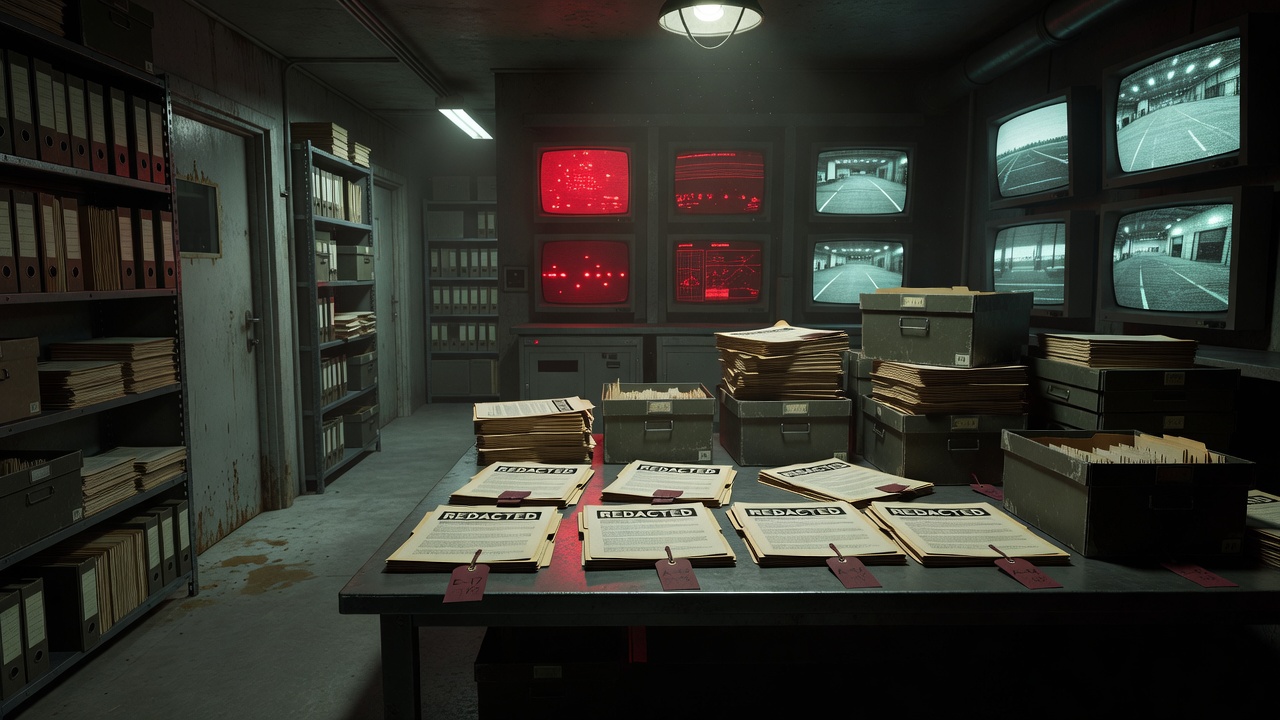
A vault cracks open by inches. A hearing erupts, a dossier appears, a new archive goes live, and then the lights dim again. That stop-start rhythm is the cinematic core of the rolling disclosure conspiracy: the suspicion that the biggest UAP secret is not merely hidden, but released in carefully timed waves that keep the public permanently chasing the next fragment.
The Case For
The modern UAP record does not arrive like a confession. It arrives like a serialized campaign.
If you step back from the daily noise, the pattern is hard to ignore. First there are decades of stigma and denials. Then a narrow leak or two. Then a hearing. Then a new office. Then a report that confirms the problem is real while refusing to resolve the deepest questions. Then a records collection that promises future clarity on a rolling basis. The public is never handed one clean package. It is handed episodes.
The National Archives now openly says that this process is happening in stages. In its UAP Records Collection FAQ, NARA explains that the 2024 National Defense Authorization Act required the creation of a formal Unidentified Anomalous Phenomena Records Collection and that agencies must identify, organize, and transfer relevant records for disclosure. But the same FAQ also says NARA is receiving those records on an “ongoing, rolling basis.” That phrase matters. It means the public archive for one of the most controversial subjects in American secrecy is explicitly designed to arrive in installments.
That rolling structure does not merely affect convenience. It shapes perception. A record dropped today can dominate the conversation before the next context-setting file appears weeks or months later. A partially redacted release can spark endless speculation until a later batch clarifies or narrows what the public thought it saw. The archive becomes not just a repository, but a tempo-setting machine.
The All-domain Anomaly Resolution Office reinforces the same pattern from another angle. Its FY2024 consolidated annual report says AARO received 757 UAP reports during the period, including 272 older incidents from 2021 and 2022 that were only reported during this later cycle. That is not a steady, transparent stream of knowledge. It is a delayed cascade, where old cases are folded into new reporting windows long after the public moment that would have given them full impact. AARO also says its ability to resolve cases remains constrained by a lack of timely and actionable sensor data. The result is a bureaucratic theater of incompleteness: new numbers arrive, but the clearest answers stay deferred.
Even the public-facing architecture now looks built for incrementalism. AARO notes that it launched its website and secure reporting mechanism in late 2023 for government personnel and contractors with direct knowledge claims dating back to 1945. That sounds like a transparency milestone. It is also a funnel. Claims do not spill directly into the public square. They are routed into a new gate, processed inside an official channel, and potentially converted into future controlled outputs.
That makes the conspiracy frame more than internet paranoia. If institutions decide which records get transferred first, which remain under review, which arrive heavily redacted, and which are wrapped inside annual summaries rather than raw case files, then disclosure itself becomes a managed instrument. The state is not merely responding to curiosity. It is pacing the revelation.
The milestones of recent UAP history look less like one breakthrough than a sequence of calibrated permission slips
The 2023 House hearing on UAP, national security, public safety, and government transparency captured that feeling perfectly. Ryan Graves said UAP are in our airspace and are “grossly under reported.” He also said the stigma attached to UAP is “real and powerful.” David Grusch described an urgent-concern whistleblower process, alleged long-running hidden programs, and said he was denied access to certain information. Regardless of where one lands on every allegation, the hearing itself functioned as a stage-managed threshold event. Suddenly a once-marginal topic was not fringe chatter. It was congressional theater backed by official microphones.
NASA’s independent study report added another layer of permission. The agency said UAP study is a legitimate scientific opportunity, but emphasized that analysis is hampered by poor sensor calibration, missing metadata, and the lack of multiple measurements. NASA also said the negative perception around reporting UAP is an obstacle and moved to centralize communications through a director of UAP research. Again, disclosure expanded without fully opening the vault. The public was told the issue is serious enough for science, but still dependent on future systems, better data, and officially curated pipelines.
We have seen this pattern before across the secrecy state. In our coverage of the classification conspiracy, archive laundering, and official acknowledgment, the same machinery appears in different costumes. The public is promised openness, but what arrives is often filtered by sequence, format, and timing. With UAP, the suspense is especially potent because every new batch can be sold as a breakthrough while also preserving the deeper unknown.
That is why so many observers feel trapped in an endless disclosure season. The mystery never quite closes, but it never fully bursts open either. Instead, it advances in authorized beats: enough to renew attention, not enough to dissolve institutional control.
The Realist’s Eye
A rolling records process is not proof of a sinister master plan. It may also be what large bureaucracies look like when they are forced to reveal complicated things slowly.
There is a responsible counterargument. Agencies really do sit on sprawling, uneven records systems. Sensitive material may be mixed with routine material. Classification reviews, referral processes, privacy concerns, and source protection all slow disclosure. NARA’s FAQ itself shows a massive compliance exercise: agencies must identify records across formats, create digital copies, attach metadata, and in some cases transfer both redacted and unredacted versions simultaneously. A staggered process may reflect administrative reality more than theatrical manipulation.
AARO’s annual report also cuts against the wilder versions of the story. It explicitly says AARO has discovered no evidence of extraterrestrial beings, activity, or technology, and no data indicating capture or exploitation of UAP. It says none of the resolved cases substantiated advanced foreign adversarial breakthrough aerospace capabilities either. In plain language, the official record still points mostly to uncertainty, data problems, and ordinary explanations for the cases it could close.
NASA strikes the same restrained note. The report is clear that there is no conclusive evidence in peer-reviewed literature suggesting an extraterrestrial origin for UAP. Its central plea is methodological: better sensors, better metadata, better reporting, better analysis. That is not the language of a confession. It is the language of institutions trying to turn a chaotic subject into a governable one.
So the realist should resist the temptation to overclaim. The public record does not prove that one hidden committee is scripting every UAP release for psychological effect. It does not prove that every delay masks a bombshell. It does not prove that every redaction conceals nonhuman technology. Much of the staggered flow could be explained by process, caution, and the natural sluggishness of national-security bureaucracies.
But even the mundane explanation leaves a darker possibility intact: institutions may not need a perfect plot if the process itself already produces narrative control
This is where the conspiracy becomes more sophisticated. You do not need omnipotent coordinators in a smoke-filled room if the disclosure pipeline naturally advantages the state. An agency that controls review timelines, records formatting, referral chains, redaction decisions, archive placement, report summaries, and hearing access already controls the emotional tempo of public knowledge. It does not have to fabricate everything. It only has to decide when each partial truth matures.
That matters because timing changes meaning. A report dropped after the news cycle has moved can bury urgency. A hearing before the release of raw underlying materials can inflate speculation while limiting verification. A searchable archive that grows slowly can create the appearance of openness while keeping synthesis difficult. A yearly report can consolidate hundreds of cases into digestible statistics while leaving the most dramatic incidents unresolved in the shadows.
NARA’s own rolling-basis language, AARO’s backlog of older reports, NASA’s emphasis on future collection infrastructure, and Congress’s periodic threshold hearings all point in the same direction: whatever else the UAP story is, it is being metabolized by institutions through managed phases. That does not prove bad faith. But it does mean the public learns on a timetable that is not its own.
And once you notice that, the deepest suspicion becomes hard to shake. Maybe the disclosure process is not designed to end the mystery. Maybe it is designed to stabilize it — to keep the issue serious enough to manage, but never sudden enough to overwhelm the managers.
What We Know For Certain
- The National Archives UAP FAQ says the 2024 NDAA required a formal UAP Records Collection and that agencies are transferring records to NARA on an ongoing, rolling basis.
- The same NARA FAQ says agencies must identify UAP records in any format, create digital copies, and in some cases transfer both redacted and unredacted versions.
- AARO’s FY2024 annual report says it received 757 reports in the cycle, including 272 incidents from earlier years that were only reported later.
- The same AARO report says case resolution remains constrained by a lack of timely and actionable sensor data.
- The 2023 House UAP hearing centered transparency, stigma, aviation safety, and oversight as core public issues.
- NASA’s independent study report says current UAP analysis is hampered by poor sensor calibration, missing metadata, and limited multi-sensor measurements.
- FOIA.gov confirms agencies can release records only after review and redaction under statutory exemptions, reinforcing that public disclosure is a processed event rather than an automatic one.
The Unanswered Questions
- How many high-value UAP records are already identified internally but still waiting in transfer, review, referral, or redaction pipelines?
- When older incidents appear in later annual reports, what was lost in timing, context, and public accountability?
- Will the UAP Records Collection eventually produce a coherent picture, or simply a growing mountain of fragments that keeps the synthesis burden on outsiders?
- How much of the most decisive sensor evidence will remain outside public reach even as the disclosure machinery expands?
- Is rolling disclosure the unavoidable shape of responsible transparency, or the perfect way to release just enough truth to preserve institutional control?
The Closer — You Decide
Maybe the rolling disclosure conspiracy is just what modern government looks like when it tries to unwind a controversial subject without breaking classification rules, investigative standards, or public trust all at once. That is the charitable view. But it is also exactly how a sophisticated secrecy regime would behave if it wanted revelation without surrender.
Not one final dump. Not one undeniable archive. Not one clean answer. Just the next report, the next hearing, the next portal, the next partially illuminated corridor. Enough disclosure to keep belief alive. Enough ambiguity to keep power centralized.
That is why the topic feels so unnerving. The public may not be confronting a simple cover-up or a simple truth. It may be confronting a release strategy — a system that turns disclosure into a drip feed, mystery into programming, and history into scheduled waves. If so, the most important secret is not only what the files contain. It is who controls the tide.