

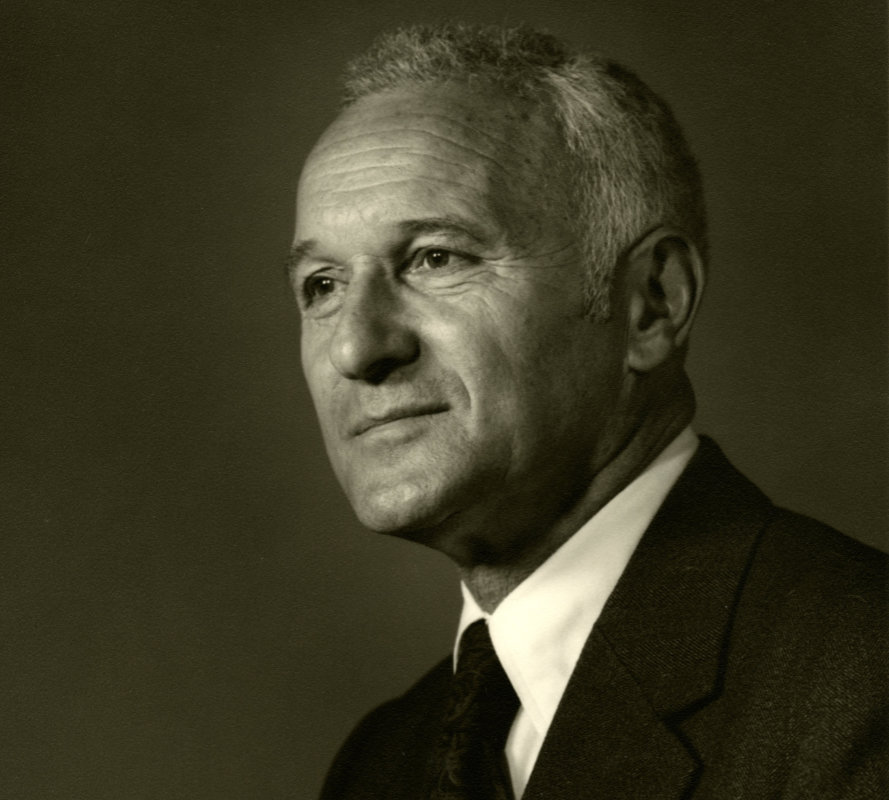
He worked in the shadows of the United States government for over two decades, commanding a secret empire of laboratories, safe houses, and human subjects. He dosed unwitting citizens with LSD, collaborated with torturers, and helped plan assassinations of foreign leaders. His name was Sidney Gottlieb — and for most of his career, almost no one knew he existed.
This is the story of one of the most disturbing chapters in American history, a chapter that was deliberately buried, shredded, and denied for decades. If you’ve ever wondered how far your government might go in the name of “national security,” the life of Sidney Gottlieb will give you a deeply unsettling answer.
Who Was Sidney Gottlieb?
Born on August 3, 1918, in New York City to Jewish immigrant parents, Sidney Gottlieb grew up with a club foot and a stutter — physical challenges that may have fueled an intense drive to prove himself. He excelled academically, eventually earning a Ph.D. in biochemistry from the California Institute of Technology. By all outward appearances, he was a mild-mannered scientist who kept goats on his rural Virginia farm and practiced folk dancing in his free time.
But behind that pastoral image lived one of the CIA’s most powerful and feared operatives. Beginning in 1951, Gottlieb served as the head of the Technical Services Staff (TSS) for the Central Intelligence Agency — the division responsible for creating poisons, developing disguises, and devising methods of assassination and covert control. For over two decades, he operated with near-total impunity, wielding a budget and authority that few people inside or outside the agency fully understood.
The Birth of MKUltra
In the early 1950s, the Cold War was in full swing, and the CIA was gripped by fear. Reports were emerging that the Soviet Union, China, and North Korea had developed methods of “brainwashing” — techniques capable of turning loyal Americans into communist puppets. Whether or not those fears were exaggerated, they gave men like Gottlieb exactly the mandate they needed.
In April 1953, CIA Director Allen Dulles officially approved what would become known as Project MKUltra. Gottlieb was its chief architect and driving force. The program’s stated goal: to develop methods of mind control, interrogation enhancement, and psychological manipulation that could give the United States a decisive edge over its enemies.
What followed was a 20-year program of systematic human experimentation — much of it conducted without the knowledge or consent of the subjects. At its peak, MKUltra consisted of over 150 subprojects spanning universities, hospitals, prisons, and CIA safe houses across the United States and Canada. It involved unwitting subjects, coerced participation, and deliberate harm — all in the name of national security.
According to the 1977 Senate Select Committee on Intelligence report on MKUltra, the program tested substances and procedures on “human subjects at all times without their knowledge and against their will.”
LSD: A Weapon Against the Mind
LSD was Gottlieb’s drug of choice — and he used it with terrifying creativity and recklessness. The CIA first learned about lysergic acid diethylamide in the late 1940s, when it appeared that the Soviets might be acquiring large quantities from a Swiss pharmaceutical company. Gottlieb became convinced that LSD could be the key to unlocking the secrets of mind control.
Under his direction, the CIA conducted extensive LSD experiments. Some subjects were volunteers — often soldiers or prisoners who agreed to take the drug in exchange for compensation or reduced sentences. But in the most disturbing cases, LSD was administered covertly to people who had no idea what was happening to them.
In one infamous program called Operation Midnight Climax, the CIA set up safe houses in San Francisco and New York where CIA operatives hired sex workers to lure unsuspecting men off the streets. The men would then be secretly dosed with LSD while CIA agents watched from behind one-way mirrors, taking notes on the effects. This program ran from 1954 to 1966.
Even Gottlieb’s own colleagues weren’t safe. In 1953, CIA officer Frank Olson was secretly given LSD at a work retreat without his knowledge or consent. Olson suffered a severe psychological breakdown in the days that followed. One week later, he fell from a window of the Statler Hotel in New York City and died. His death was ruled a suicide, but his family has long maintained that he was murdered — a conclusion that gained credence when his body was exhumed in 1994 and forensic evidence suggested he may have been rendered unconscious before falling. The Olson case remains one of the most haunting and unresolved mysteries connected to MKUltra.
Torture, Sensory Deprivation, and the Cameron Connection
LSD was just one tool in Gottlieb’s arsenal. MKUltra also explored hypnosis, electroconvulsive therapy, sensory deprivation, psychological torture, and a bewildering array of other drugs including mescaline, heroin, barbiturates, and more.
One of the most disturbing subprojects involved Canadian psychiatrist Dr. Ewen Cameron at the Allan Memorial Institute in Montreal. Cameron, funded covertly through the CIA via the Society for the Investigation of Human Ecology, subjected his patients to a process he called “psychic driving” — a brutal regimen designed to erase the patient’s existing personality and rebuild it from scratch.
Patients at the Allan Memorial Institute were subjected to drug-induced comas lasting weeks or months, intense electroconvulsive shock treatment administered at dosages far beyond anything medically accepted, and audio loops played through speakers hidden under their pillows — sometimes for 20 hours a day. Cameron believed he could wipe the human mind clean and implant new behaviors and beliefs. Instead, he caused catastrophic, irreversible damage to dozens of patients who had come to him seeking help for depression or anxiety.
The Canadian government and the CIA eventually reached out-of-court settlements with survivors and their families — an implicit acknowledgment of wrongdoing that never came with a formal apology.
The Poisoner’s Art: Assassination Plots and Biological Weapons
Gottlieb’s ambitions extended well beyond the laboratory. As the CIA’s chief poison-maker, he was directly involved in multiple plots to assassinate foreign leaders — plots that read more like spy fiction than reality, except that they actually happened.
Perhaps the most audacious was the plot against Cuban leader Fidel Castro. Over the years, Gottlieb and his team devised an almost comical range of assassination schemes: poisoned cigars, a toxic diving suit, a booby-trapped conch shell, a pen equipped with a hypodermic needle. None succeeded, but the fact that a senior CIA official was spending taxpayer money on exploding cigars tells you something about the surreal world Gottlieb inhabited.
He was also involved in the 1960 plot to assassinate Congolese Prime Minister Patrice Lumumba. Gottlieb personally traveled to the Congo with a kit containing a biological toxin intended to be applied to Lumumba’s toothbrush or food. The plot was ultimately abandoned after Lumumba was captured and killed by Congolese rivals — but the CIA’s role in destabilizing the Congo and enabling Lumumba’s death has been extensively documented.
In the years that followed, Gottlieb oversaw the development of a staggering range of covert weapons: shellfish toxin dart guns that could deliver a nearly undetectable poison, water supply contamination agents, airborne pathogens, and sophisticated delivery systems for biological and chemical warfare agents. He ran what amounted to a secret poison factory inside the United States government.
The Shredding: A Deliberate Erasure of History
By the early 1970s, the winds were shifting. Watergate had shaken public trust in government. Congressional investigations were beginning to probe the intelligence community. Gottlieb, sensing what was coming, took drastic action.
In 1973, shortly before he retired from the CIA, Gottlieb ordered the destruction of virtually all MKUltra records. Boxes upon boxes of files — covering two decades of human experimentation, assassination plots, and covert chemical warfare — were fed into shredders or burned. It was one of the most consequential acts of document destruction in American history, carried out with the full knowledge and apparent approval of CIA Director Richard Helms.
The destruction was nearly total. When the Senate began its investigation in 1975, and when journalist Seymour Hersh began exposing CIA abuses, investigators found almost nothing. It seemed as though MKUltra had been successfully buried.
Then, in 1977, a clerical error changed everything. A CIA archivist discovered roughly 20,000 documents relating to MKUltra that had been misfiled in a financial records building and escaped the shredding. Those documents became the foundation of everything we know about the program today.
Senate Hearings and the Limits of Accountability
In 1977, the Senate Select Committee on Intelligence held public hearings on MKUltra. CIA Director Stansfield Turner testified. So did Sidney Gottlieb himself, who appeared under a grant of immunity and answered questions in vague, carefully hedged language.
Despite the disturbing revelations — unwitting human subjects, deaths, psychological torture, assassination plots — no one went to prison. Gottlieb retired to a farm in rural Virginia, where he tended his goats, read poetry, and took occasional medical volunteer trips to India. He died in 1999, three weeks before a book about his life was published.
The lack of accountability remains one of the most troubling aspects of the MKUltra saga. Victims and their families received no formal apology from the United States government. Some survivors received civil settlements, but the full extent of the harm — the number of people affected, the experiments that were never documented — will never be known.
Legacy: What MKUltra Tells Us About Power
It would be comforting to dismiss MKUltra and Sidney Gottlieb as aberrations — products of a particularly paranoid Cold War moment that could never be repeated. But history doesn’t offer that comfort easily.
The conditions that enabled MKUltra — institutional secrecy, fear-driven policy, the dehumanization of subjects in the name of national security, and a culture of unaccountability — are not unique to the 1950s and 1960s. They are recurring features of powerful institutions operating without adequate oversight.
MKUltra also reminds us that conspiracies, in the true sense of the word, are not always fevered fantasies. Sometimes they are documented government programs, authorized at the highest levels, carried out by credentialed professionals, and hidden from the public for decades. The question is not whether governments engage in secret programs that harm their own citizens — history proves they do. The question is how we build systems strong enough to stop them.
For researchers interested in how the surveillance state continues to evolve, our articles on COINTELPRO and the FBI’s war on dissent and the Operation Paperclip recruitment of Nazi scientists offer important additional context on how the intelligence community has historically operated outside public scrutiny.
The Man Behind the Myth
What makes Sidney Gottlieb so fascinating and so disturbing is the gap between his private persona and his professional one. By all accounts, he was a gentle, even spiritual man in his personal life — a devoted father, an environmentalist, a lover of poetry who wrote verse in his retirement. He sought meaning. He cared about the natural world. He wanted to leave something good behind.
And yet, for more than two decades, he ran one of the most ethically monstrous programs in American government history. He ordered the dosing of unconsenting civilians. He helped plan murders. He directed the psychological destruction of vulnerable patients in Canadian hospitals. And when the walls began closing in, he shredded the evidence.
The lesson of Sidney Gottlieb may be this: evil doesn’t always announce itself. It doesn’t always come in the form of a villain with obvious malice. Sometimes it comes wearing a lab coat, quoting poetry, tending goats — and quietly running a secret empire of human suffering in service of an idea it truly believes in.
Final Thoughts
MKUltra was officially acknowledged. The documents — what survived — are publicly available. Senate testimony is on the record. This is not a theory. This is history.
But the questions it raises are timeless: Who watches the watchers? What happens when institutions with enormous power operate in the dark? And how many other programs, with other names, remain buried in archives we haven’t found yet — or in files that were shredded before we had the chance?
Sidney Gottlieb spent the last years of his life farming, meditating, and working with dying patients in hospice care — as if trying to balance some terrible ledger. Whether he ever reckoned honestly with what he had done, we’ll never know. He took that secret to his grave.
But his legacy lives on in declassified documents, in the testimony of survivors, and in the permanent, unsettling question his life forces us to ask: What else don’t we know?

