Menu

The Mystery Behind the Nazca Lines. Who made them?

The Mystery Behind the Nazca Lines. Who made them?

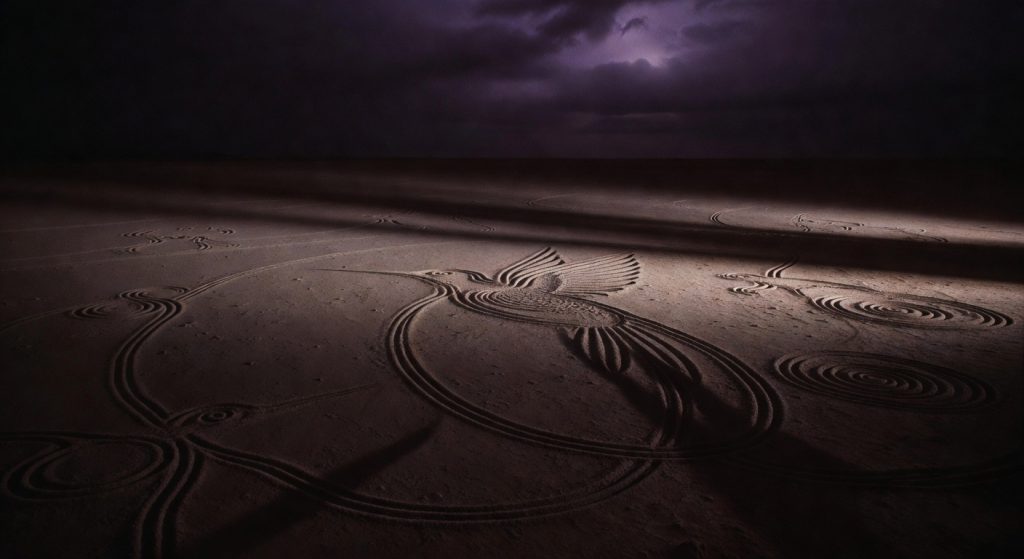
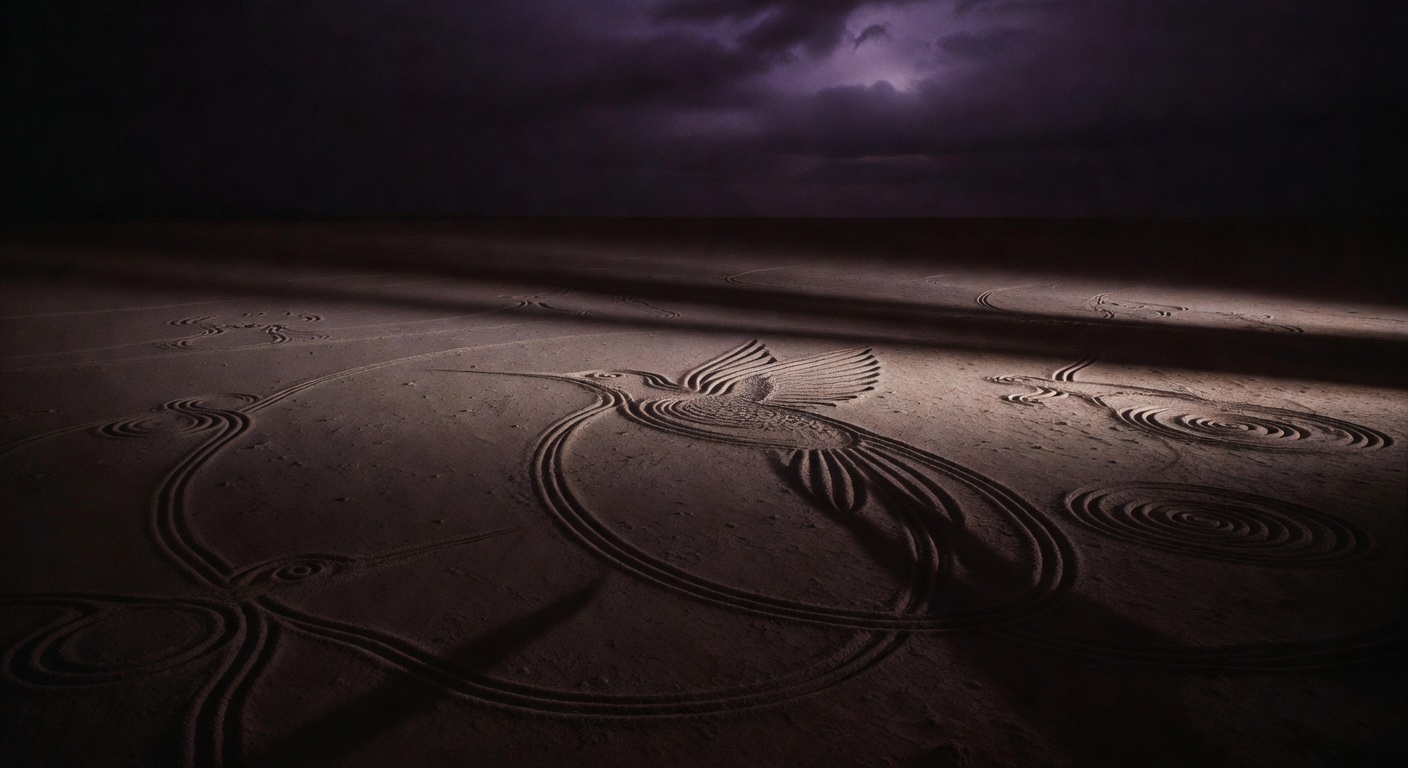
Imagine stumbling upon a desert canvas the size of a small city, etched with hummingbirds, spiders the length of football fields, and straight lines stretching for miles—like a cosmic runway party no one showed up to. That’s the Nazca Lines, a mind-bending array of geoglyphs in southern Peru that have kept truth-seekers, archaeologists, and armchair theorists up at night for nearly a century. Discovered in the 1920s by pilots buzzing overhead, these massive figures scream “only visible from the sky,” sparking whispers of extraterrestrials dropping in for a visit. But who really made them? Was it the humble Nazca culture scratching out prayers for rain, or something far wilder—like ancient aliens leaving calling cards? Buckle up; we’re about to chase this rabbit hole through history, high-flying speculation, and dusty evidence that might just rewrite what we think we know.

The Discovery That Ignited a Global Obsession

Picture this: It’s 1927, and commercial pilot Jim Edwards is flying his rickety plane over the bone-dry Nazca Desert. Below, he spots these enormous shapes—animals, plants, trapezoids—carved into the red earth like some giant kid’s doodles. He lands, tells a few folks, but it doesn’t explode until the 1930s when more pilots and archaeologists get wind. Fast-forward to 1968, and American historian Tony Morrison hikes out there, mapping hundreds of figures. But the real fireworks? Enter Erich von Däniken, the Swiss hotel manager turned ancient astronaut evangelist.

In his 1968 blockbuster Chariots of the Gods?, von Däniken doesn’t just dip a toe—he cannonballs into the Nazca pool, declaring these lines “landing strips for alien spacecraft.” Why? Because no way could ancient folks pull off such precision without flyboys from the stars. Suddenly, everyone’s talking: Were the Nazca people signaling UFOs? Or was this a forgotten airport for interstellar travelers? It’s the kind of hook that turns skeptics into late-night researchers, and honestly, who wouldn’t want to believe we’re not alone?

Peering into the Desert Canvas: What Exactly Are We Looking At?

Spread across 190 square miles between the towns of Nazca and Palpa, the lines number over 800 straight lines, 300 geometric shapes, and 70 biomorphs (that’s the fun animal and human-like ones). The biggest? A pelican stretching 935 feet, a condor at 443 feet, and that eerie “astronaut” figure that’s basically a stick man in a spacesuit waving hello.

They’re made simple: Remove the iron oxide pebbles from the surface, exposing the lighter soil underneath. No paint, no cement—just desert surgery, some say dating back 500 BCE to 500 CE, during the Nazca culture‘s heyday. But here’s the kicker: From ground level, they’re subtle lines. Climb a nearby hill, and shapes emerge. Hop in a plane? Boom—full Picasso gallery from above. This aerial exclusivity is the conspiracy kindling. How did pre-Inca peeps know to make sky art without planes? Coincidence… or cosmic blueprint?

The Alien Airstrip Theory: Runways for Starships?

Let’s dive into the juiciest theory, popularized by Erich von Däniken. He argues those long, straight lines—some 30km long and dead straight—aren’t random. Nope, they’re runways for alien craft. The figures? Beacons saying, “Land here, space pals!” Take the “astronaut” geoglyph: 32 meters tall, helmeted, antennae—looks like it stepped off a saucer. Proponents say it’s not Nazca; it’s an ET left behind.

Fueling this? The precision. Lines converge at “dead ends” like taxiways, and trapezoids mimic modern airstrips. Von Däniken even claims soil tests show harder-packed earth, perfect for heavy landings. Wild, right? And it’s not just him—Zecharia Sitchin, decoder of Sumerian texts, ties Nazca to Anunnaki gods from Nibiru engineering human civs. Imagine: Aliens mine gold in Peru, leave landing pads as souvenirs. Rabbit hole level: Expert.

Variations on the Cosmic Theme: Gods, Calendars, and Lost Tech

The alien airstrip is king, but the theories branch like desert cracks. One spin: The lines are an astronomical calendar. Maria Reiche, the “Lady of the Lines” who mapped them for decades, saw math in the madness—alignments with solstices, constellations. But theorists amp it up: Not for stars, but incoming ships navigating by the figures.

Then there’s the advanced ancient civ angle. What if a pre-Nazca super-culture with flight tech (Atlantis 2.0?) built them? Proponents point to the “hands” figure with seven fingers—symbol of forgotten knowledge? Or water channels mistaken for lines, built by levitation tech. Some whisper Vimanas from Hindu epics—flying chariots—touched down here.

Don’t sleep on the spiritual beacon idea: Lines as prayers to sky gods, visible only to them. Mix in Shamanic rituals with hallucinogens, projecting visions onto earth. Or my favorite fringe: Time travelers marking spots for future pickup. Each twist pulls you deeper, blending myth, math, and maybe-just-maybe truth.

The Official Story: Simple Tools, Sacred Rituals?

Mainstream archaeologists yawn at the ET hype. Anthony Aveni, astronomer extraordinaire, says the Nazca used stakes, ropes, and math—hilltop views for planning, team labor for execution. Purpose? Water rituals in a drought-plagued desert. Lines point to aqueducts and sacred springs; animal figures invoke fertility gods like the spider (water bringer in Andean lore).

Johannes Maria Parzinger and teams from Germany’s DAI Institute used drones and LiDAR, confirming human hands—no lasers needed. Visible from foothills, not just skies. Carbon dating pins it to Nazca culture, post-dating “alien visits.” Case closed? Hardly. Critics say experiments replicating small figures flop at scale. How’d they stay un-eroded for millennia? (Answer: Dry winds, no rain.)

Cracks in the Mainstream Narrative: Anomalies That Won’t Quit

Okay, let’s get real—official explanations feel tidy, but poke ’em, and weirdness oozes out. First, those straight lines: Dead flat over undulating terrain. Modern surveyors struggle; ancient ones nailed it? A 2020 study in Latin American Antiquity (linked here) admits alignments with stars and aqueducts, but can’t explain why some figures twist illogically unless viewed from specific altitudes.

Soil anomalies persist. 1970s tests by Gerald Hawkins found packed gravel suggesting heavy use—like vehicles? The “astronaut” has no Nazca parallel; it’s got modern helmet vibes. And new lines keep popping up via satellite—over 200 “new” ones found in 2022 by Archaeology Magazine (source), some with orcas and cats, hinting ongoing mystery.

Declassified CIA docs from the 1970s (peek here) even nod to “unexplained aerial phenomena” over Peru, though that’s a stretch. Coincidence? These glitches keep the fire burning.

Modern Twists: Drones, Satellites, and Fresh Fuel

Tech’s shaking things up. IBM’s World Community Grid analyzed satellite data, spotting hidden lines. Archaeologists use AI now, but theorists cry cover-up—why bury “new” ET-proof figures? Drone footage reveals wear patterns like foot (or tread?) traffic. And climate change? Eroding lines expose buried secrets.

Enter Jimmy Blanks, a pilot documenting via YouTube—his vids show “impossible” perspectives only craft could intend. Meanwhile, Peru’s government limits access, fueling “they’re hiding something” vibes. In 2023, UNESCO threats over vandalism highlight stakes, but also how lines endure like ancient graffiti daring us to decode.

Global Echoes: Nazca’s Kin in the Sky Art World

Nazca ain’t alone. Paracas skulls nearby? Elongated, big-brained—alien hybrids? Atacama Desert giants in Chile, Sego Canyon petroglyphs in Utah with “astronauts.” Australia’s Wandjina figures beam sky knowledge. Pattern? Worldwide “runways” for star visitors. Thor Heyerdahl‘s expeditions linked Polynesia to Peru via reed boats—maybe aliens too?

Weighing the Scales: Human Ingenuity or Help from Above?

Let’s chat pros/cons like pals over coffee. Alien theory wins on wow-factor: Explains scale, aerial view, “astronaut.” But lacks hardware—no crashed saucers. Human theory fits tools, culture, but strains credulity on precision. Fertility rites explain some, not the gridlock runways.

Me? I lean rabbit hole. History’s full of “impossible” feats: Egyptian pyramids, Puma Punku blocks. Why not Nazca? A 2019 paper in Antiquity journal admits “ritual processions” might’ve used the lines, but aerial intent lingers unexplained. Truth’s probably layered—locals with a nudge from… something.

Visiting the Lines: Your Portal to the Puzzle

Dreaming of boots-on-desert? Fly into Nazca Aerodrome for 30-min buzz tours ($80-100). Walk from hill viewpoints (Mirador). Stay in Nazca town—hostels buzz with theorists. Pro tip: Go dawn; fewer crowds, magic light. Respect—no stepping on lines, per UNESCO. Virtual tours via Google Earth scratch the itch.

Down the Rabbit Hole

  • Puma Punku’s Precision Stones: Did the same lost tech carve Bolivia’s interlocking megaliths?
  • Paracas Elongated Skulls: Alien DNA in Peru’s coneheads—hoax or hybrid proof?
  • Vimanas and Ancient Flight: Hindu texts’ UFOs that mirror Nazca runways.
  • Doggerland’s Sunken Secrets: Europe’s Atlantis and its potential sky signals.
  • Rongorongo Script: Easter Island’s undeciphered code—ET instructions?

Disclaimer: This piece is for entertainment and educational exploration. Theories presented are speculative; always cross-reference with scientific sources. ConspiracyRealist.com doesn’t endorse unverified claims.

Related Reads

dive down the rabbit hole

The Mystery Behind the Nazca Lines. Who made them?

Conspiracy Realist
The Mystery Behind the Nazca Lines. Who made them?

Imagine stumbling upon a desert canvas the size of a small city, etched with hummingbirds, spiders the length of football fields, and straight lines stretching for miles—like a cosmic runway party no one showed up to. That’s the Nazca Lines, a mind-bending array of geoglyphs in southern Peru that have kept truth-seekers, archaeologists, and armchair theorists up at night for nearly a century. Discovered in the 1920s by pilots buzzing overhead, these massive figures scream “only visible from the sky,” sparking whispers of extraterrestrials dropping in for a visit. But who really made them? Was it the humble Nazca culture scratching out prayers for rain, or something far wilder—like ancient aliens leaving calling cards? Buckle up; we’re about to chase this rabbit hole through history, high-flying speculation, and dusty evidence that might just rewrite what we think we know.

The Discovery That Ignited a Global Obsession

Picture this: It’s 1927, and commercial pilot Jim Edwards is flying his rickety plane over the bone-dry Nazca Desert. Below, he spots these enormous shapes—animals, plants, trapezoids—carved into the red earth like some giant kid’s doodles. He lands, tells a few folks, but it doesn’t explode until the 1930s when more pilots and archaeologists get wind. Fast-forward to 1968, and American historian Tony Morrison hikes out there, mapping hundreds of figures. But the real fireworks? Enter Erich von Däniken, the Swiss hotel manager turned ancient astronaut evangelist.

In his 1968 blockbuster Chariots of the Gods?, von Däniken doesn’t just dip a toe—he cannonballs into the Nazca pool, declaring these lines “landing strips for alien spacecraft.” Why? Because no way could ancient folks pull off such precision without flyboys from the stars. Suddenly, everyone’s talking: Were the Nazca people signaling UFOs? Or was this a forgotten airport for interstellar travelers? It’s the kind of hook that turns skeptics into late-night researchers, and honestly, who wouldn’t want to believe we’re not alone?

Peering into the Desert Canvas: What Exactly Are We Looking At?

Spread across 190 square miles between the towns of Nazca and Palpa, the lines number over 800 straight lines, 300 geometric shapes, and 70 biomorphs (that’s the fun animal and human-like ones). The biggest? A pelican stretching 935 feet, a condor at 443 feet, and that eerie “astronaut” figure that’s basically a stick man in a spacesuit waving hello.

They’re made simple: Remove the iron oxide pebbles from the surface, exposing the lighter soil underneath. No paint, no cement—just desert surgery, some say dating back 500 BCE to 500 CE, during the Nazca culture‘s heyday. But here’s the kicker: From ground level, they’re subtle lines. Climb a nearby hill, and shapes emerge. Hop in a plane? Boom—full Picasso gallery from above. This aerial exclusivity is the conspiracy kindling. How did pre-Inca peeps know to make sky art without planes? Coincidence… or cosmic blueprint?

The Alien Airstrip Theory: Runways for Starships?

Let’s dive into the juiciest theory, popularized by Erich von Däniken. He argues those long, straight lines—some 30km long and dead straight—aren’t random. Nope, they’re runways for alien craft. The figures? Beacons saying, “Land here, space pals!” Take the “astronaut” geoglyph: 32 meters tall, helmeted, antennae—looks like it stepped off a saucer. Proponents say it’s not Nazca; it’s an ET left behind.

Fueling this? The precision. Lines converge at “dead ends” like taxiways, and trapezoids mimic modern airstrips. Von Däniken even claims soil tests show harder-packed earth, perfect for heavy landings. Wild, right? And it’s not just him—Zecharia Sitchin, decoder of Sumerian texts, ties Nazca to Anunnaki gods from Nibiru engineering human civs. Imagine: Aliens mine gold in Peru, leave landing pads as souvenirs. Rabbit hole level: Expert.

Variations on the Cosmic Theme: Gods, Calendars, and Lost Tech

The alien airstrip is king, but the theories branch like desert cracks. One spin: The lines are an astronomical calendar. Maria Reiche, the “Lady of the Lines” who mapped them for decades, saw math in the madness—alignments with solstices, constellations. But theorists amp it up: Not for stars, but incoming ships navigating by the figures.

Then there’s the advanced ancient civ angle. What if a pre-Nazca super-culture with flight tech (Atlantis 2.0?) built them? Proponents point to the “hands” figure with seven fingers—symbol of forgotten knowledge? Or water channels mistaken for lines, built by levitation tech. Some whisper Vimanas from Hindu epics—flying chariots—touched down here.

Don’t sleep on the spiritual beacon idea: Lines as prayers to sky gods, visible only to them. Mix in Shamanic rituals with hallucinogens, projecting visions onto earth. Or my favorite fringe: Time travelers marking spots for future pickup. Each twist pulls you deeper, blending myth, math, and maybe-just-maybe truth.

The Official Story: Simple Tools, Sacred Rituals?

Mainstream archaeologists yawn at the ET hype. Anthony Aveni, astronomer extraordinaire, says the Nazca used stakes, ropes, and math—hilltop views for planning, team labor for execution. Purpose? Water rituals in a drought-plagued desert. Lines point to aqueducts and sacred springs; animal figures invoke fertility gods like the spider (water bringer in Andean lore).

Johannes Maria Parzinger and teams from Germany’s DAI Institute used drones and LiDAR, confirming human hands—no lasers needed. Visible from foothills, not just skies. Carbon dating pins it to Nazca culture, post-dating “alien visits.” Case closed? Hardly. Critics say experiments replicating small figures flop at scale. How’d they stay un-eroded for millennia? (Answer: Dry winds, no rain.)

Cracks in the Mainstream Narrative: Anomalies That Won’t Quit

Okay, let’s get real—official explanations feel tidy, but poke ’em, and weirdness oozes out. First, those straight lines: Dead flat over undulating terrain. Modern surveyors struggle; ancient ones nailed it? A 2020 study in Latin American Antiquity (linked here) admits alignments with stars and aqueducts, but can’t explain why some figures twist illogically unless viewed from specific altitudes.

Soil anomalies persist. 1970s tests by Gerald Hawkins found packed gravel suggesting heavy use—like vehicles? The “astronaut” has no Nazca parallel; it’s got modern helmet vibes. And new lines keep popping up via satellite—over 200 “new” ones found in 2022 by Archaeology Magazine (source), some with orcas and cats, hinting ongoing mystery.

Declassified CIA docs from the 1970s (peek here) even nod to “unexplained aerial phenomena” over Peru, though that’s a stretch. Coincidence? These glitches keep the fire burning.

Modern Twists: Drones, Satellites, and Fresh Fuel

Tech’s shaking things up. IBM’s World Community Grid analyzed satellite data, spotting hidden lines. Archaeologists use AI now, but theorists cry cover-up—why bury “new” ET-proof figures? Drone footage reveals wear patterns like foot (or tread?) traffic. And climate change? Eroding lines expose buried secrets.

Enter Jimmy Blanks, a pilot documenting via YouTube—his vids show “impossible” perspectives only craft could intend. Meanwhile, Peru’s government limits access, fueling “they’re hiding something” vibes. In 2023, UNESCO threats over vandalism highlight stakes, but also how lines endure like ancient graffiti daring us to decode.

Global Echoes: Nazca’s Kin in the Sky Art World

Nazca ain’t alone. Paracas skulls nearby? Elongated, big-brained—alien hybrids? Atacama Desert giants in Chile, Sego Canyon petroglyphs in Utah with “astronauts.” Australia’s Wandjina figures beam sky knowledge. Pattern? Worldwide “runways” for star visitors. Thor Heyerdahl‘s expeditions linked Polynesia to Peru via reed boats—maybe aliens too?

Weighing the Scales: Human Ingenuity or Help from Above?

Let’s chat pros/cons like pals over coffee. Alien theory wins on wow-factor: Explains scale, aerial view, “astronaut.” But lacks hardware—no crashed saucers. Human theory fits tools, culture, but strains credulity on precision. Fertility rites explain some, not the gridlock runways.

Me? I lean rabbit hole. History’s full of “impossible” feats: Egyptian pyramids, Puma Punku blocks. Why not Nazca? A 2019 paper in Antiquity journal admits “ritual processions” might’ve used the lines, but aerial intent lingers unexplained. Truth’s probably layered—locals with a nudge from… something.

Visiting the Lines: Your Portal to the Puzzle

Dreaming of boots-on-desert? Fly into Nazca Aerodrome for 30-min buzz tours ($80-100). Walk from hill viewpoints (Mirador). Stay in Nazca town—hostels buzz with theorists. Pro tip: Go dawn; fewer crowds, magic light. Respect—no stepping on lines, per UNESCO. Virtual tours via Google Earth scratch the itch.

Down the Rabbit Hole

  • Puma Punku’s Precision Stones: Did the same lost tech carve Bolivia’s interlocking megaliths?
  • Paracas Elongated Skulls: Alien DNA in Peru’s coneheads—hoax or hybrid proof?
  • Vimanas and Ancient Flight: Hindu texts’ UFOs that mirror Nazca runways.
  • Doggerland’s Sunken Secrets: Europe’s Atlantis and its potential sky signals.
  • Rongorongo Script: Easter Island’s undeciphered code—ET instructions?

Disclaimer: This piece is for entertainment and educational exploration. Theories presented are speculative; always cross-reference with scientific sources. ConspiracyRealist.com doesn’t endorse unverified claims.

Related Reads

The Mystery Behind the Nazca Lines. Who made them?

The Mystery Behind the Nazca Lines. Who made them?

Imagine stumbling upon a desert canvas the size of a small city, etched with hummingbirds, spiders the length of football fields, and straight lines stretching for miles—like a cosmic runway party no one showed up to. That’s the Nazca Lines, a mind-bending array of geoglyphs in southern Peru that have kept truth-seekers, archaeologists, and armchair theorists up at night for nearly a century. Discovered in the 1920s by pilots buzzing overhead, these massive figures scream “only visible from the sky,” sparking whispers of extraterrestrials dropping in for a visit. But who really made them? Was it the humble Nazca culture scratching out prayers for rain, or something far wilder—like ancient aliens leaving calling cards? Buckle up; we’re about to chase this rabbit hole through history, high-flying speculation, and dusty evidence that might just rewrite what we think we know.

The Discovery That Ignited a Global Obsession

Picture this: It’s 1927, and commercial pilot Jim Edwards is flying his rickety plane over the bone-dry Nazca Desert. Below, he spots these enormous shapes—animals, plants, trapezoids—carved into the red earth like some giant kid’s doodles. He lands, tells a few folks, but it doesn’t explode until the 1930s when more pilots and archaeologists get wind. Fast-forward to 1968, and American historian Tony Morrison hikes out there, mapping hundreds of figures. But the real fireworks? Enter Erich von Däniken, the Swiss hotel manager turned ancient astronaut evangelist.

In his 1968 blockbuster Chariots of the Gods?, von Däniken doesn’t just dip a toe—he cannonballs into the Nazca pool, declaring these lines “landing strips for alien spacecraft.” Why? Because no way could ancient folks pull off such precision without flyboys from the stars. Suddenly, everyone’s talking: Were the Nazca people signaling UFOs? Or was this a forgotten airport for interstellar travelers? It’s the kind of hook that turns skeptics into late-night researchers, and honestly, who wouldn’t want to believe we’re not alone?

Peering into the Desert Canvas: What Exactly Are We Looking At?

Spread across 190 square miles between the towns of Nazca and Palpa, the lines number over 800 straight lines, 300 geometric shapes, and 70 biomorphs (that’s the fun animal and human-like ones). The biggest? A pelican stretching 935 feet, a condor at 443 feet, and that eerie “astronaut” figure that’s basically a stick man in a spacesuit waving hello.

They’re made simple: Remove the iron oxide pebbles from the surface, exposing the lighter soil underneath. No paint, no cement—just desert surgery, some say dating back 500 BCE to 500 CE, during the Nazca culture‘s heyday. But here’s the kicker: From ground level, they’re subtle lines. Climb a nearby hill, and shapes emerge. Hop in a plane? Boom—full Picasso gallery from above. This aerial exclusivity is the conspiracy kindling. How did pre-Inca peeps know to make sky art without planes? Coincidence… or cosmic blueprint?

The Alien Airstrip Theory: Runways for Starships?

Let’s dive into the juiciest theory, popularized by Erich von Däniken. He argues those long, straight lines—some 30km long and dead straight—aren’t random. Nope, they’re runways for alien craft. The figures? Beacons saying, “Land here, space pals!” Take the “astronaut” geoglyph: 32 meters tall, helmeted, antennae—looks like it stepped off a saucer. Proponents say it’s not Nazca; it’s an ET left behind.

Fueling this? The precision. Lines converge at “dead ends” like taxiways, and trapezoids mimic modern airstrips. Von Däniken even claims soil tests show harder-packed earth, perfect for heavy landings. Wild, right? And it’s not just him—Zecharia Sitchin, decoder of Sumerian texts, ties Nazca to Anunnaki gods from Nibiru engineering human civs. Imagine: Aliens mine gold in Peru, leave landing pads as souvenirs. Rabbit hole level: Expert.

Variations on the Cosmic Theme: Gods, Calendars, and Lost Tech

The alien airstrip is king, but the theories branch like desert cracks. One spin: The lines are an astronomical calendar. Maria Reiche, the “Lady of the Lines” who mapped them for decades, saw math in the madness—alignments with solstices, constellations. But theorists amp it up: Not for stars, but incoming ships navigating by the figures.

Then there’s the advanced ancient civ angle. What if a pre-Nazca super-culture with flight tech (Atlantis 2.0?) built them? Proponents point to the “hands” figure with seven fingers—symbol of forgotten knowledge? Or water channels mistaken for lines, built by levitation tech. Some whisper Vimanas from Hindu epics—flying chariots—touched down here.

Don’t sleep on the spiritual beacon idea: Lines as prayers to sky gods, visible only to them. Mix in Shamanic rituals with hallucinogens, projecting visions onto earth. Or my favorite fringe: Time travelers marking spots for future pickup. Each twist pulls you deeper, blending myth, math, and maybe-just-maybe truth.

The Official Story: Simple Tools, Sacred Rituals?

Mainstream archaeologists yawn at the ET hype. Anthony Aveni, astronomer extraordinaire, says the Nazca used stakes, ropes, and math—hilltop views for planning, team labor for execution. Purpose? Water rituals in a drought-plagued desert. Lines point to aqueducts and sacred springs; animal figures invoke fertility gods like the spider (water bringer in Andean lore).

Johannes Maria Parzinger and teams from Germany’s DAI Institute used drones and LiDAR, confirming human hands—no lasers needed. Visible from foothills, not just skies. Carbon dating pins it to Nazca culture, post-dating “alien visits.” Case closed? Hardly. Critics say experiments replicating small figures flop at scale. How’d they stay un-eroded for millennia? (Answer: Dry winds, no rain.)

Cracks in the Mainstream Narrative: Anomalies That Won’t Quit

Okay, let’s get real—official explanations feel tidy, but poke ’em, and weirdness oozes out. First, those straight lines: Dead flat over undulating terrain. Modern surveyors struggle; ancient ones nailed it? A 2020 study in Latin American Antiquity (linked here) admits alignments with stars and aqueducts, but can’t explain why some figures twist illogically unless viewed from specific altitudes.

Soil anomalies persist. 1970s tests by Gerald Hawkins found packed gravel suggesting heavy use—like vehicles? The “astronaut” has no Nazca parallel; it’s got modern helmet vibes. And new lines keep popping up via satellite—over 200 “new” ones found in 2022 by Archaeology Magazine (source), some with orcas and cats, hinting ongoing mystery.

Declassified CIA docs from the 1970s (peek here) even nod to “unexplained aerial phenomena” over Peru, though that’s a stretch. Coincidence? These glitches keep the fire burning.

Modern Twists: Drones, Satellites, and Fresh Fuel

Tech’s shaking things up. IBM’s World Community Grid analyzed satellite data, spotting hidden lines. Archaeologists use AI now, but theorists cry cover-up—why bury “new” ET-proof figures? Drone footage reveals wear patterns like foot (or tread?) traffic. And climate change? Eroding lines expose buried secrets.

Enter Jimmy Blanks, a pilot documenting via YouTube—his vids show “impossible” perspectives only craft could intend. Meanwhile, Peru’s government limits access, fueling “they’re hiding something” vibes. In 2023, UNESCO threats over vandalism highlight stakes, but also how lines endure like ancient graffiti daring us to decode.

Global Echoes: Nazca’s Kin in the Sky Art World

Nazca ain’t alone. Paracas skulls nearby? Elongated, big-brained—alien hybrids? Atacama Desert giants in Chile, Sego Canyon petroglyphs in Utah with “astronauts.” Australia’s Wandjina figures beam sky knowledge. Pattern? Worldwide “runways” for star visitors. Thor Heyerdahl‘s expeditions linked Polynesia to Peru via reed boats—maybe aliens too?

Weighing the Scales: Human Ingenuity or Help from Above?

Let’s chat pros/cons like pals over coffee. Alien theory wins on wow-factor: Explains scale, aerial view, “astronaut.” But lacks hardware—no crashed saucers. Human theory fits tools, culture, but strains credulity on precision. Fertility rites explain some, not the gridlock runways.

Me? I lean rabbit hole. History’s full of “impossible” feats: Egyptian pyramids, Puma Punku blocks. Why not Nazca? A 2019 paper in Antiquity journal admits “ritual processions” might’ve used the lines, but aerial intent lingers unexplained. Truth’s probably layered—locals with a nudge from… something.

Visiting the Lines: Your Portal to the Puzzle

Dreaming of boots-on-desert? Fly into Nazca Aerodrome for 30-min buzz tours ($80-100). Walk from hill viewpoints (Mirador). Stay in Nazca town—hostels buzz with theorists. Pro tip: Go dawn; fewer crowds, magic light. Respect—no stepping on lines, per UNESCO. Virtual tours via Google Earth scratch the itch.

Down the Rabbit Hole

  • Puma Punku’s Precision Stones: Did the same lost tech carve Bolivia’s interlocking megaliths?
  • Paracas Elongated Skulls: Alien DNA in Peru’s coneheads—hoax or hybrid proof?
  • Vimanas and Ancient Flight: Hindu texts’ UFOs that mirror Nazca runways.
  • Doggerland’s Sunken Secrets: Europe’s Atlantis and its potential sky signals.
  • Rongorongo Script: Easter Island’s undeciphered code—ET instructions?

Disclaimer: This piece is for entertainment and educational exploration. Theories presented are speculative; always cross-reference with scientific sources. ConspiracyRealist.com doesn’t endorse unverified claims.

Related Reads

Table of contents