Menu

The Vaccine Inspection Trial That Haunts VEREX

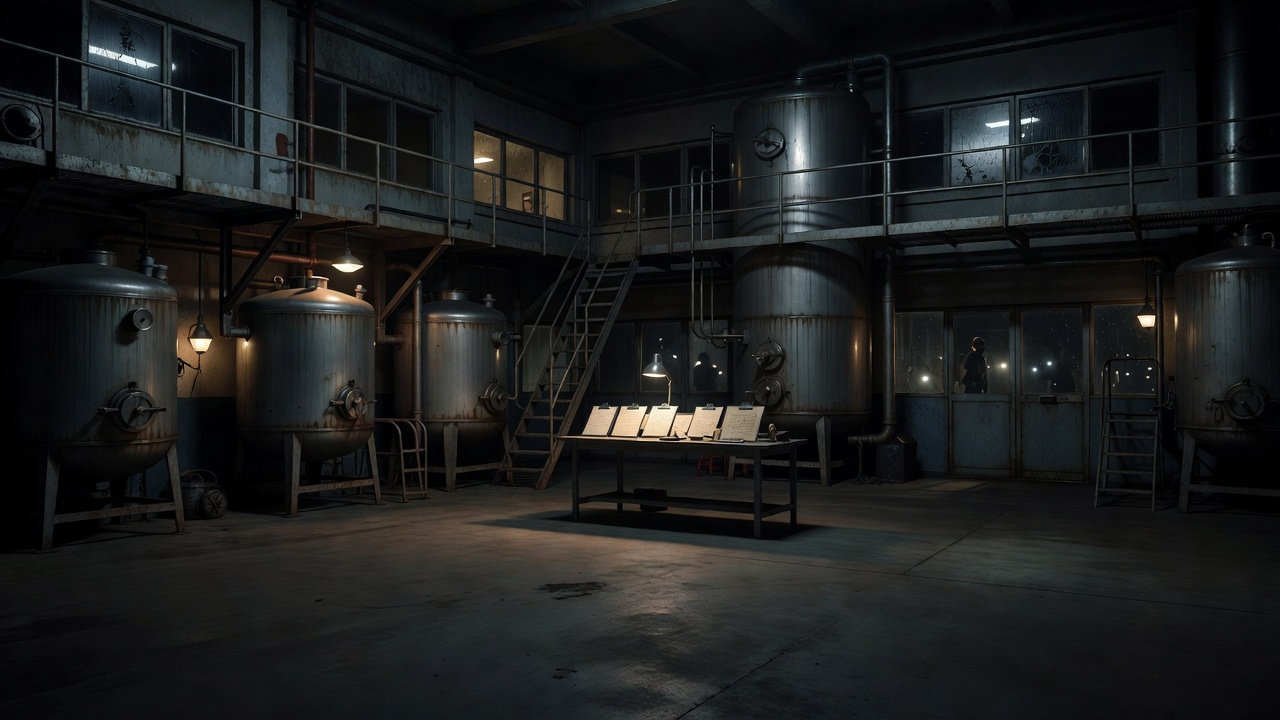
Dim vaccine production facility from the VEREX vaccine inspection trial — ConspiracyRealist.com

At first it looks like the safest room in the world. Stainless steel. Clean lines. Airlocks. White coats. A place built to keep disease out and medicine moving. But in the early 1990s, arms-control experts walked into a vaccine plant and saw something darker hiding in plain sight. The same fermenters that can scale up a human vaccine can also scale up something far less merciful. The same paperwork that proves legitimate production can bury intent under technical language. For two days in May 1993, a trial inspection forced the Biological Weapons Convention to stare at its own blind spot. It never fully looked away.

The Case For

A real inspection drill exposed a very real dual-use problem

The conspiracy-adjacent question here is not whether one specific vaccine plant was secretly making bioweapons. There is no verified public evidence that it was. The darker question is whether the treaty system already knew that a perfectly legal biomedical facility could double as the ideal camouflage for a prohibited program. The record says yes.

At the 1991 Third Review Conference of the Biological Weapons Convention, states parties expanded their confidence-building measures to include declarations on past offensive programs and human vaccine production facilities. That was not a cosmetic change. Vaccine facilities landed on the list because they sat in the most uncomfortable part of the dual-use map: large fermenters, containment suites, drying systems, filtration, and trained staff can serve public health or clandestine production depending on intent.

That concern moved from theory to practice under VEREX, the expert process created to test possible verification tools. The official 1993 VEREX report records that delegates discussed lessons from a Netherlands-Canada paper titled Bilateral Trial Inspection in a Large Vaccine Production Facility. The UNODA document listing for that working paper says the bilateral exercise took place in the first week of May 1993 and lasted two days. That matters. Governments were not just gaming out abstract declarations in Geneva. They were rehearsing what it would mean to step inside a legitimate commercial site and ask whether peaceful production could be distinguished from prohibited capacity.

The inspection problem was never really about bunkers

VEREX examined 21 potential verification measures, including declarations, visual inspection, interviews, auditing, identifying key equipment, and on-site sampling. Its consensus finding was blunt: no single measure could determine on its own whether a state was violating the Convention. That sounds technical, but it lands like a warning. The most plausible cover for a biological weapons program was never going to be a cartoon villain’s underground lab. It was always more likely to look like ordinary industry.

That is why the vaccine-facility trial still hits a nerve. It showed inspectors chasing the exact point where peaceful biology and prohibited capability overlap. The same VEREX record notes that combinations of measures could improve confidence, but only by layering access, records, interviews, and technical context. Even then, the issue of vaccine facilities as a verification fault line remained unresolved.

That reading also fits the wider historical pattern across government secrets and covert capability stories. Bureaucracies do not always hide the danger by denying it exists. Sometimes they acknowledge the blind spot, study it carefully, and then fail to build a system strong enough to close it. Our earlier look at VEREX and the inspections that never came traced that larger collapse. The vaccine trial is where the abstract weakness becomes concrete.

The Realist’s Eye

A dual-use facility is not proof of a hidden program

This is where the realist has to tighten the screws. A vaccine plant with large-scale biological production equipment is not evidence of a covert weapons line. It is evidence of a vaccine plant with large-scale biological production equipment. Public-health manufacturing needs fermenters, containment systems, sterilization routines, and highly trained technicians. Those facts make a site capable in one sense, but capability alone does not prove criminal intent.

The VEREX documents do not claim the Netherlands-Canada trial uncovered wrongdoing. They do something more restrained and more useful: they show how difficult it is to discriminate between permitted and prohibited activity in biology. That difficulty cuts both ways. It means a bad actor could exploit ambiguity. It also means an overeager inspection regime could misread normal industrial practice as something sinister.

The same documents that raise suspicion also explain caution

The official record keeps returning to commercial proprietary information, confidentiality, and the practical limits of access. That was not corporate whining. It was a real constraint. A pharmaceutical or vaccine site contains trade secrets, quality-control methods, client information, and process details that governments and companies do not hand over lightly. The Canadian government’s own overview of the BTWC still states that the Convention has no mechanism for verifying compliance, even while Canada publishes confidence-building measures to promote transparency. That tells you the gap never vanished.

It also tells you why this story resists easy endings. The conspiracy frame says the inspection trial proved the system knew legal biotech could shield illegal work. The skeptical frame says the same trial proved states were trying, in good faith, to build workable safeguards without wrecking legitimate science. Both readings have evidence behind them. What the record does not show is a clean smoking gun, a named covert plant, or a confirmed weapons line hiding behind a vaccine label. The strongest honest conclusion is narrower: the treaty system identified a dangerous ambiguity, tested it in the real world, and still left future investigators with too much uncertainty.

What We Know For Certain

  • The 1991 Third Review Conference of the Biological Weapons Convention expanded confidence-building measures to include declarations on human vaccine production facilities.
  • VEREX was established to identify and examine potential verification measures for the Convention from a scientific and technical standpoint.
  • The 1993 VEREX report records discussion of a Netherlands-Canada working paper on a bilateral trial inspection in a large vaccine production facility.
  • The UNODA listing for that working paper says the exercise took place in the first week of May 1993 and lasted two days.
  • Canada publicly states that the Biological and Toxin Weapons Convention still lacks a verification mechanism.

The Unanswered Questions

  • How much access did inspectors actually need inside a legitimate vaccine facility before commercial secrecy became a hard stop?
  • What technical indicators, if any, could reliably distinguish peaceful surge capacity from prohibited biological-weapons production?
  • Did the lessons from the Netherlands-Canada trial meaningfully shape later inspection proposals, or were they mostly absorbed into a process that eventually stalled?
  • How many declared biodefense or vaccine facilities worldwide still sit inside the same dual-use gray zone VEREX identified three decades ago?

The Closer — You Decide

No black helicopters. No dramatic raid. Just a legal vaccine plant, a two-day trial inspection, and a treaty regime confronting the possibility that the cleanest facilities can hide the dirtiest questions. That is what gives this story its staying power. The documents are real. The ambiguity is real. And the uneasy truth remains on the table: when biology can wear two faces at once, transparency becomes a fragile thing. The evidence is on the table. You decide.

dive down the rabbit hole

The Vaccine Inspection Trial That Haunts VEREX

S-FX.com
Dim vaccine production facility from the VEREX vaccine inspection trial — ConspiracyRealist.com

At first it looks like the safest room in the world. Stainless steel. Clean lines. Airlocks. White coats. A place built to keep disease out and medicine moving. But in the early 1990s, arms-control experts walked into a vaccine plant and saw something darker hiding in plain sight. The same fermenters that can scale up a human vaccine can also scale up something far less merciful. The same paperwork that proves legitimate production can bury intent under technical language. For two days in May 1993, a trial inspection forced the Biological Weapons Convention to stare at its own blind spot. It never fully looked away.

The Case For

A real inspection drill exposed a very real dual-use problem

The conspiracy-adjacent question here is not whether one specific vaccine plant was secretly making bioweapons. There is no verified public evidence that it was. The darker question is whether the treaty system already knew that a perfectly legal biomedical facility could double as the ideal camouflage for a prohibited program. The record says yes.

At the 1991 Third Review Conference of the Biological Weapons Convention, states parties expanded their confidence-building measures to include declarations on past offensive programs and human vaccine production facilities. That was not a cosmetic change. Vaccine facilities landed on the list because they sat in the most uncomfortable part of the dual-use map: large fermenters, containment suites, drying systems, filtration, and trained staff can serve public health or clandestine production depending on intent.

That concern moved from theory to practice under VEREX, the expert process created to test possible verification tools. The official 1993 VEREX report records that delegates discussed lessons from a Netherlands-Canada paper titled Bilateral Trial Inspection in a Large Vaccine Production Facility. The UNODA document listing for that working paper says the bilateral exercise took place in the first week of May 1993 and lasted two days. That matters. Governments were not just gaming out abstract declarations in Geneva. They were rehearsing what it would mean to step inside a legitimate commercial site and ask whether peaceful production could be distinguished from prohibited capacity.

The inspection problem was never really about bunkers

VEREX examined 21 potential verification measures, including declarations, visual inspection, interviews, auditing, identifying key equipment, and on-site sampling. Its consensus finding was blunt: no single measure could determine on its own whether a state was violating the Convention. That sounds technical, but it lands like a warning. The most plausible cover for a biological weapons program was never going to be a cartoon villain’s underground lab. It was always more likely to look like ordinary industry.

That is why the vaccine-facility trial still hits a nerve. It showed inspectors chasing the exact point where peaceful biology and prohibited capability overlap. The same VEREX record notes that combinations of measures could improve confidence, but only by layering access, records, interviews, and technical context. Even then, the issue of vaccine facilities as a verification fault line remained unresolved.

That reading also fits the wider historical pattern across government secrets and covert capability stories. Bureaucracies do not always hide the danger by denying it exists. Sometimes they acknowledge the blind spot, study it carefully, and then fail to build a system strong enough to close it. Our earlier look at VEREX and the inspections that never came traced that larger collapse. The vaccine trial is where the abstract weakness becomes concrete.

The Realist’s Eye

A dual-use facility is not proof of a hidden program

This is where the realist has to tighten the screws. A vaccine plant with large-scale biological production equipment is not evidence of a covert weapons line. It is evidence of a vaccine plant with large-scale biological production equipment. Public-health manufacturing needs fermenters, containment systems, sterilization routines, and highly trained technicians. Those facts make a site capable in one sense, but capability alone does not prove criminal intent.

The VEREX documents do not claim the Netherlands-Canada trial uncovered wrongdoing. They do something more restrained and more useful: they show how difficult it is to discriminate between permitted and prohibited activity in biology. That difficulty cuts both ways. It means a bad actor could exploit ambiguity. It also means an overeager inspection regime could misread normal industrial practice as something sinister.

The same documents that raise suspicion also explain caution

The official record keeps returning to commercial proprietary information, confidentiality, and the practical limits of access. That was not corporate whining. It was a real constraint. A pharmaceutical or vaccine site contains trade secrets, quality-control methods, client information, and process details that governments and companies do not hand over lightly. The Canadian government’s own overview of the BTWC still states that the Convention has no mechanism for verifying compliance, even while Canada publishes confidence-building measures to promote transparency. That tells you the gap never vanished.

It also tells you why this story resists easy endings. The conspiracy frame says the inspection trial proved the system knew legal biotech could shield illegal work. The skeptical frame says the same trial proved states were trying, in good faith, to build workable safeguards without wrecking legitimate science. Both readings have evidence behind them. What the record does not show is a clean smoking gun, a named covert plant, or a confirmed weapons line hiding behind a vaccine label. The strongest honest conclusion is narrower: the treaty system identified a dangerous ambiguity, tested it in the real world, and still left future investigators with too much uncertainty.

What We Know For Certain

  • The 1991 Third Review Conference of the Biological Weapons Convention expanded confidence-building measures to include declarations on human vaccine production facilities.
  • VEREX was established to identify and examine potential verification measures for the Convention from a scientific and technical standpoint.
  • The 1993 VEREX report records discussion of a Netherlands-Canada working paper on a bilateral trial inspection in a large vaccine production facility.
  • The UNODA listing for that working paper says the exercise took place in the first week of May 1993 and lasted two days.
  • Canada publicly states that the Biological and Toxin Weapons Convention still lacks a verification mechanism.

The Unanswered Questions

  • How much access did inspectors actually need inside a legitimate vaccine facility before commercial secrecy became a hard stop?
  • What technical indicators, if any, could reliably distinguish peaceful surge capacity from prohibited biological-weapons production?
  • Did the lessons from the Netherlands-Canada trial meaningfully shape later inspection proposals, or were they mostly absorbed into a process that eventually stalled?
  • How many declared biodefense or vaccine facilities worldwide still sit inside the same dual-use gray zone VEREX identified three decades ago?

The Closer — You Decide

No black helicopters. No dramatic raid. Just a legal vaccine plant, a two-day trial inspection, and a treaty regime confronting the possibility that the cleanest facilities can hide the dirtiest questions. That is what gives this story its staying power. The documents are real. The ambiguity is real. And the uneasy truth remains on the table: when biology can wear two faces at once, transparency becomes a fragile thing. The evidence is on the table. You decide.

The Vaccine Inspection Trial That Haunts VEREX

Dim vaccine production facility from the VEREX vaccine inspection trial — ConspiracyRealist.com

At first it looks like the safest room in the world. Stainless steel. Clean lines. Airlocks. White coats. A place built to keep disease out and medicine moving. But in the early 1990s, arms-control experts walked into a vaccine plant and saw something darker hiding in plain sight. The same fermenters that can scale up a human vaccine can also scale up something far less merciful. The same paperwork that proves legitimate production can bury intent under technical language. For two days in May 1993, a trial inspection forced the Biological Weapons Convention to stare at its own blind spot. It never fully looked away.

The Case For

A real inspection drill exposed a very real dual-use problem

The conspiracy-adjacent question here is not whether one specific vaccine plant was secretly making bioweapons. There is no verified public evidence that it was. The darker question is whether the treaty system already knew that a perfectly legal biomedical facility could double as the ideal camouflage for a prohibited program. The record says yes.

At the 1991 Third Review Conference of the Biological Weapons Convention, states parties expanded their confidence-building measures to include declarations on past offensive programs and human vaccine production facilities. That was not a cosmetic change. Vaccine facilities landed on the list because they sat in the most uncomfortable part of the dual-use map: large fermenters, containment suites, drying systems, filtration, and trained staff can serve public health or clandestine production depending on intent.

That concern moved from theory to practice under VEREX, the expert process created to test possible verification tools. The official 1993 VEREX report records that delegates discussed lessons from a Netherlands-Canada paper titled Bilateral Trial Inspection in a Large Vaccine Production Facility. The UNODA document listing for that working paper says the bilateral exercise took place in the first week of May 1993 and lasted two days. That matters. Governments were not just gaming out abstract declarations in Geneva. They were rehearsing what it would mean to step inside a legitimate commercial site and ask whether peaceful production could be distinguished from prohibited capacity.

The inspection problem was never really about bunkers

VEREX examined 21 potential verification measures, including declarations, visual inspection, interviews, auditing, identifying key equipment, and on-site sampling. Its consensus finding was blunt: no single measure could determine on its own whether a state was violating the Convention. That sounds technical, but it lands like a warning. The most plausible cover for a biological weapons program was never going to be a cartoon villain’s underground lab. It was always more likely to look like ordinary industry.

That is why the vaccine-facility trial still hits a nerve. It showed inspectors chasing the exact point where peaceful biology and prohibited capability overlap. The same VEREX record notes that combinations of measures could improve confidence, but only by layering access, records, interviews, and technical context. Even then, the issue of vaccine facilities as a verification fault line remained unresolved.

That reading also fits the wider historical pattern across government secrets and covert capability stories. Bureaucracies do not always hide the danger by denying it exists. Sometimes they acknowledge the blind spot, study it carefully, and then fail to build a system strong enough to close it. Our earlier look at VEREX and the inspections that never came traced that larger collapse. The vaccine trial is where the abstract weakness becomes concrete.

The Realist’s Eye

A dual-use facility is not proof of a hidden program

This is where the realist has to tighten the screws. A vaccine plant with large-scale biological production equipment is not evidence of a covert weapons line. It is evidence of a vaccine plant with large-scale biological production equipment. Public-health manufacturing needs fermenters, containment systems, sterilization routines, and highly trained technicians. Those facts make a site capable in one sense, but capability alone does not prove criminal intent.

The VEREX documents do not claim the Netherlands-Canada trial uncovered wrongdoing. They do something more restrained and more useful: they show how difficult it is to discriminate between permitted and prohibited activity in biology. That difficulty cuts both ways. It means a bad actor could exploit ambiguity. It also means an overeager inspection regime could misread normal industrial practice as something sinister.

The same documents that raise suspicion also explain caution

The official record keeps returning to commercial proprietary information, confidentiality, and the practical limits of access. That was not corporate whining. It was a real constraint. A pharmaceutical or vaccine site contains trade secrets, quality-control methods, client information, and process details that governments and companies do not hand over lightly. The Canadian government’s own overview of the BTWC still states that the Convention has no mechanism for verifying compliance, even while Canada publishes confidence-building measures to promote transparency. That tells you the gap never vanished.

It also tells you why this story resists easy endings. The conspiracy frame says the inspection trial proved the system knew legal biotech could shield illegal work. The skeptical frame says the same trial proved states were trying, in good faith, to build workable safeguards without wrecking legitimate science. Both readings have evidence behind them. What the record does not show is a clean smoking gun, a named covert plant, or a confirmed weapons line hiding behind a vaccine label. The strongest honest conclusion is narrower: the treaty system identified a dangerous ambiguity, tested it in the real world, and still left future investigators with too much uncertainty.

What We Know For Certain

  • The 1991 Third Review Conference of the Biological Weapons Convention expanded confidence-building measures to include declarations on human vaccine production facilities.
  • VEREX was established to identify and examine potential verification measures for the Convention from a scientific and technical standpoint.
  • The 1993 VEREX report records discussion of a Netherlands-Canada working paper on a bilateral trial inspection in a large vaccine production facility.
  • The UNODA listing for that working paper says the exercise took place in the first week of May 1993 and lasted two days.
  • Canada publicly states that the Biological and Toxin Weapons Convention still lacks a verification mechanism.

The Unanswered Questions

  • How much access did inspectors actually need inside a legitimate vaccine facility before commercial secrecy became a hard stop?
  • What technical indicators, if any, could reliably distinguish peaceful surge capacity from prohibited biological-weapons production?
  • Did the lessons from the Netherlands-Canada trial meaningfully shape later inspection proposals, or were they mostly absorbed into a process that eventually stalled?
  • How many declared biodefense or vaccine facilities worldwide still sit inside the same dual-use gray zone VEREX identified three decades ago?

The Closer — You Decide

No black helicopters. No dramatic raid. Just a legal vaccine plant, a two-day trial inspection, and a treaty regime confronting the possibility that the cleanest facilities can hide the dirtiest questions. That is what gives this story its staying power. The documents are real. The ambiguity is real. And the uneasy truth remains on the table: when biology can wear two faces at once, transparency becomes a fragile thing. The evidence is on the table. You decide.

Table of contents